Memo - Mandated Equal Employment Opportunity Training
What this document covers
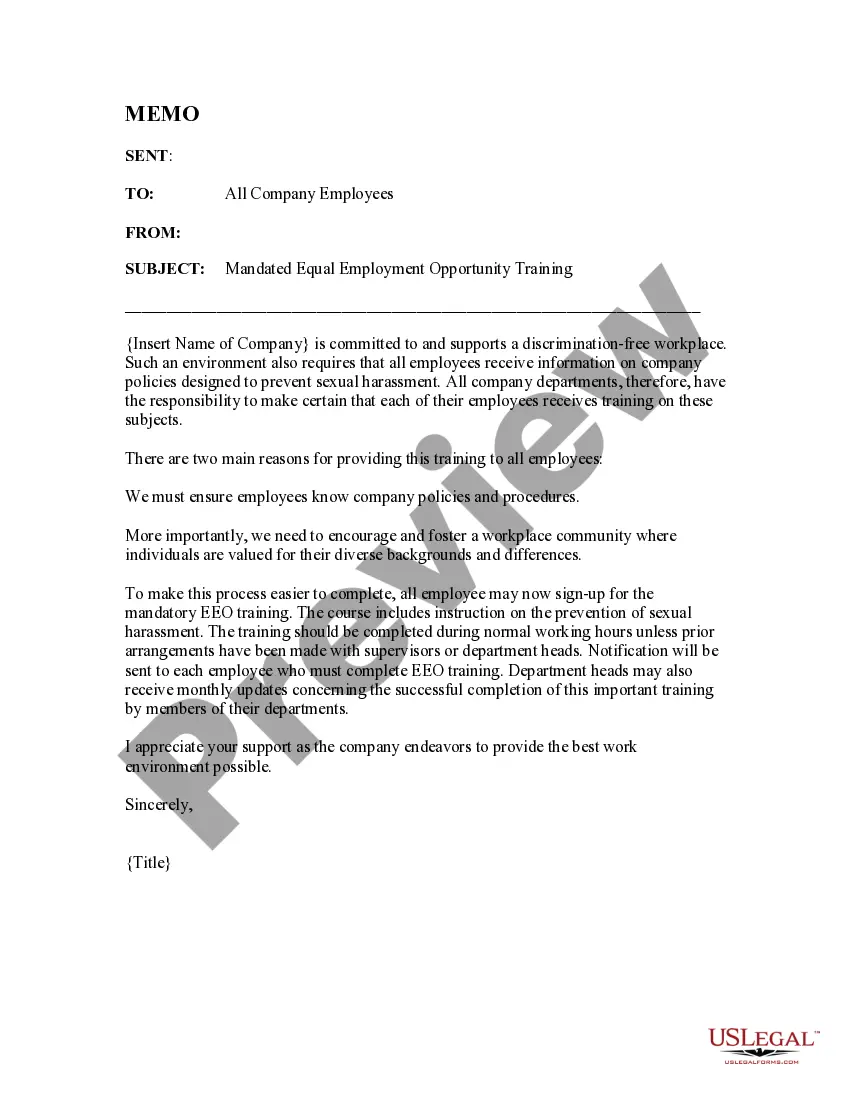
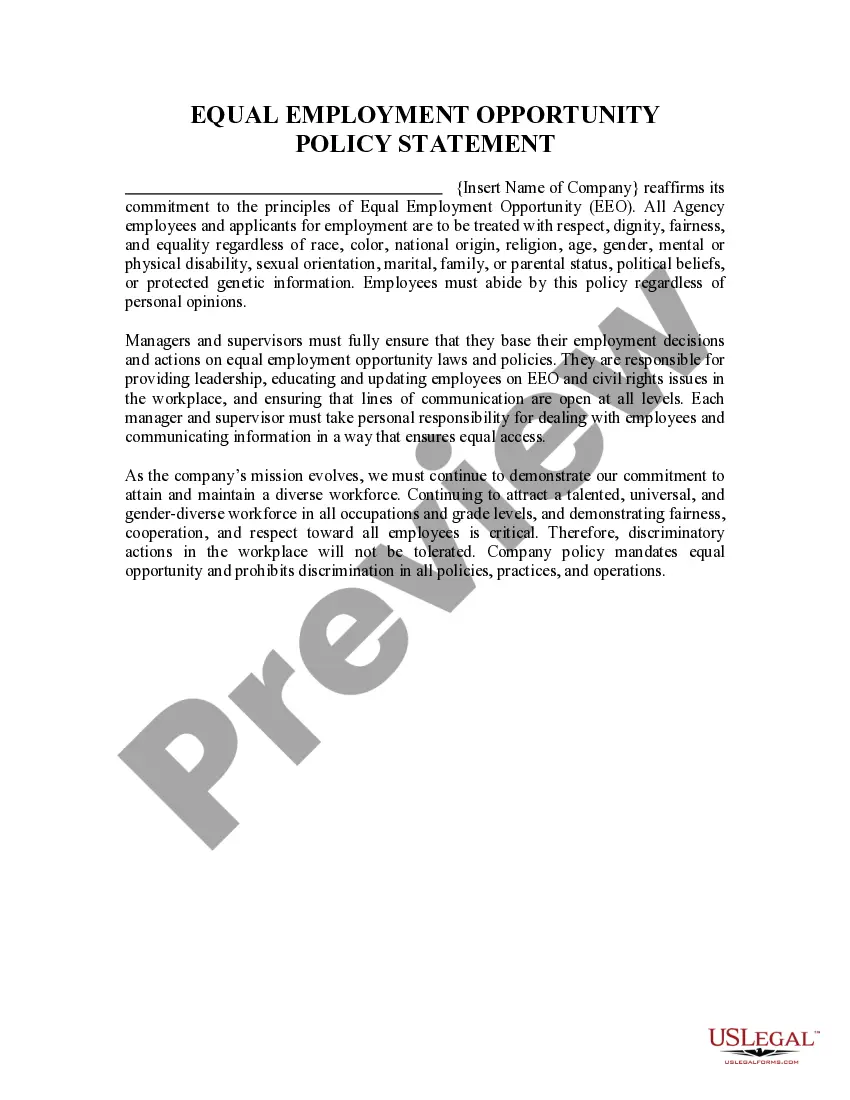
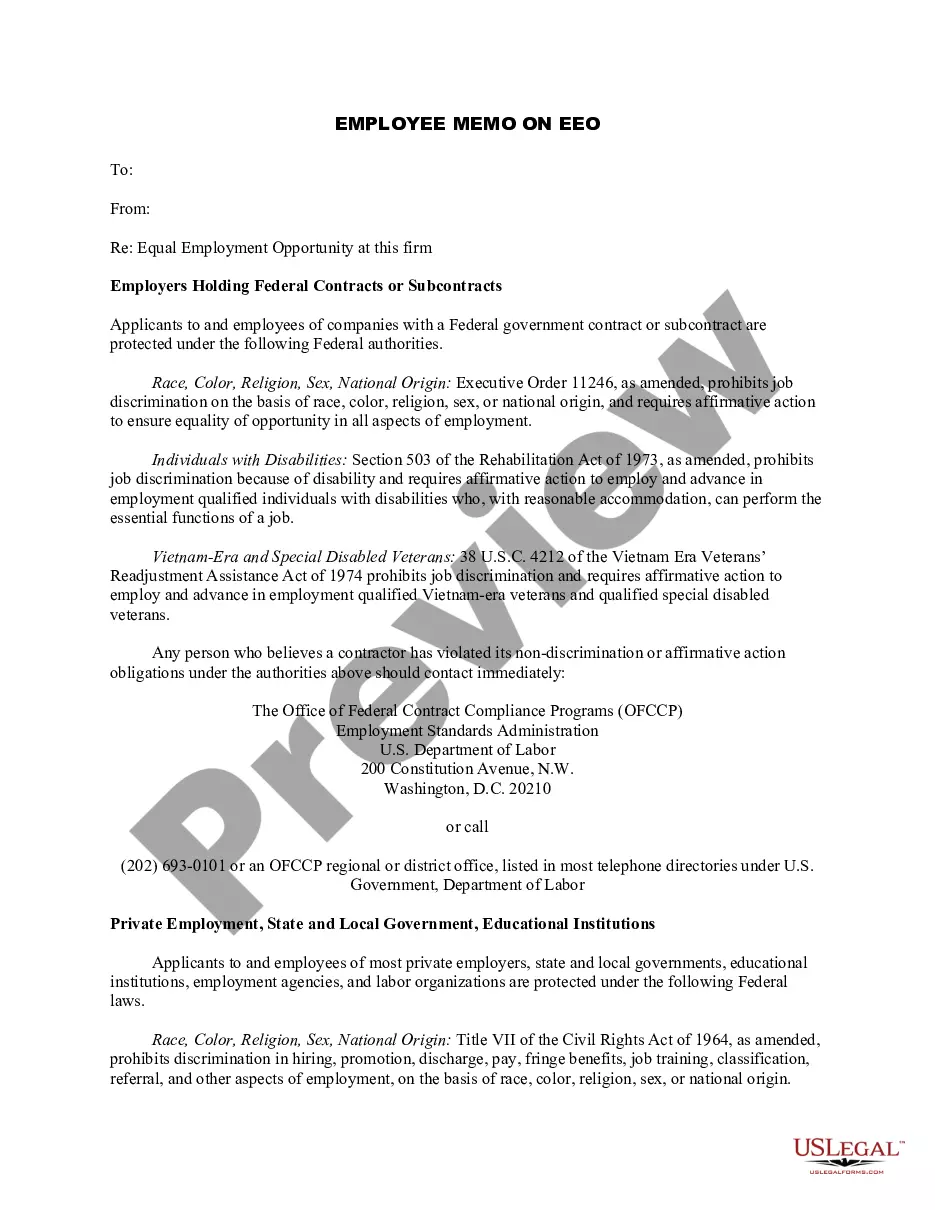
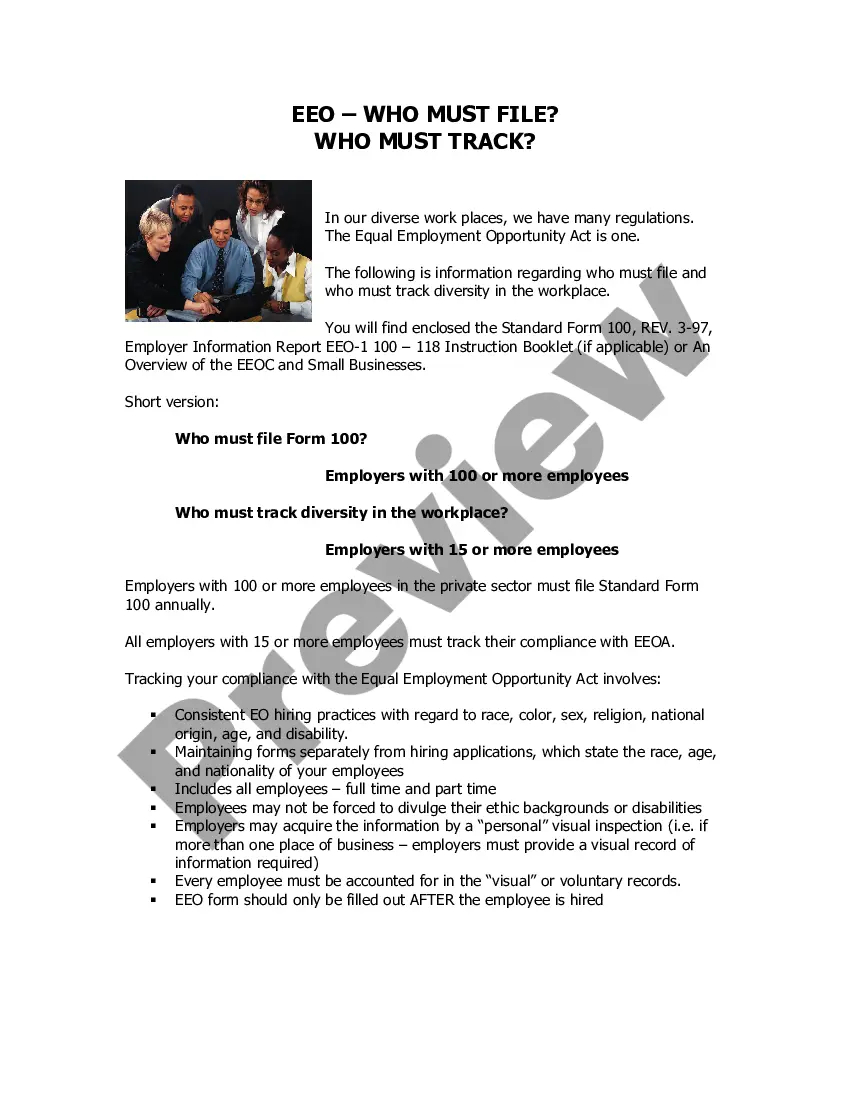
The Memo - Mandated Equal Employment Opportunity Training is a formal document used by employers to communicate the requirement for all employees to participate in equal employment opportunity training. This training aims to educate employees on company policies related to diversity, inclusion, and the prevention of sexual harassment, fostering a respectful workplace. This form differs from other HR documents as it specifically addresses the training mandate and serves as a notification tool for employees.
Form components explained
- Training purpose and objectives: Clarifies the importance of EEO training.
- Notification details: Informs employees about the requirement to complete the training.
- Sign-up process: Provides instructions on how employees can enroll in the mandatory training.
- Completion monitoring: Describes how department heads receive updates on training completion.
- Training timing: Specifies that training should take place during normal working hours unless otherwise arranged.

When this form is needed
This form should be used when an employer needs to inform employees of their obligation to complete equal employment opportunity training. It is particularly important in organizations that prioritize diversity and compliance with workplace laws. This form is appropriate for use during annual refreshers or when updating training policies and procedures.
Who this form is for
This memo is intended for:
- HR departments managing employee training programs.
- Managers and supervisors responsible for overseeing compliance with workplace training.
- Any organization, regardless of size, aiming to educate employees about EEO policies.
Completing this form step by step
- Clearly state the purpose of the memo at the beginning.
- Outline the training objectives and expectations for the employees.
- Specify the process for employees to sign up for the mandatory training.
- Include instructions for completion timing and any exceptions that may apply.
- Inform about the notification and monitoring process for successful training completion.
Notarization guidance
Notarization is not commonly needed for this form. However, certain documents or local rules may make it necessary. Our notarization service, powered by Notarize, allows you to finalize it securely online anytime, day or night.
Get your form ready online
Our built-in tools help you complete, sign, share, and store your documents in one place.
Make edits, fill in missing information, and update formatting in US Legal Forms—just like you would in MS Word.
Download a copy, print it, send it by email, or mail it via USPS—whatever works best for your next step.
Sign and collect signatures with our SignNow integration. Send to multiple recipients, set reminders, and more. Go Premium to unlock E-Sign.
If this form requires notarization, complete it online through a secure video call—no need to meet a notary in person or wait for an appointment.
We protect your documents and personal data by following strict security and privacy standards.

Make edits, fill in missing information, and update formatting in US Legal Forms—just like you would in MS Word.

Download a copy, print it, send it by email, or mail it via USPS—whatever works best for your next step.

Sign and collect signatures with our SignNow integration. Send to multiple recipients, set reminders, and more. Go Premium to unlock E-Sign.

If this form requires notarization, complete it online through a secure video call—no need to meet a notary in person or wait for an appointment.

We protect your documents and personal data by following strict security and privacy standards.
Common mistakes to avoid
- Failing to clearly communicate the training schedule and requirements.
- Not providing a straightforward sign-up process for employees.
- Overlooking the need to remind employees of the training deadline.
Advantages of online completion
- Easy access: Employees can download and review the form at their convenience.
- Editability: The form can be customized to meet specific company policies or state requirements.
- Reliability: Using an official form drafted by licensed attorneys ensures legal compliance.
Summary of main points
- The Memo - Mandated Equal Employment Opportunity Training is essential for ensuring compliance with EEO laws.
- This form helps to notify employees about the importance of diversity and workplace policies.
- Timely communication and execution of this training benefit both employees and employers.
Looking for another form?
Form popularity
FAQ
Right to a safe workplace free of dangerous conditions, toxic substances, and other potential safety hazards; Right to be free from retaliation for filing a claim or complaint against an employer (these are sometimes called "whistleblower" rights); and. Right to fair wages for work performed.
The term mandatory employee benefits refers to the programs all employers are legally required to provide their employees. Mandatory benefits include unemployment insurance, workers' compensation, and disability insurance.
Medicare & Social Security Contributions Social security and Medicare are two federally mandated benefits programs that all employees in the U.S. pay into while they work and then benefit from later in life. Medicare and Social Security taxes are paid by both the employee and their employer as payroll deductions.
Legally required benefits. A grouping of benefits that employers typically are expected to participate in and con- tribute toward. The grouping includes Social Security, Medicare, federal and state unemployment insurance, and workers' compensation. These benefits are affected by federal and state laws.
An EEO policy may highlight equal opportunities that are available to employees. For example, the policy can state if there are: workplace flexibility policies for parents or those with carer responsibilities; equal training opportunities for men and women in the workplace; or.
The aim of our equality opportunity training is just what it sounds like it promotes the fairness and equal treatment of employees and lets everyone know how they can enjoy a healthy working environment that's free from prejudice, bias and discrimination.
Equal employment opportunity (EEO) compliance means not discriminating against employees and job applicants based on protected factors. The EEO laws businesses must follow at all times depend on their size.
While it's not mandatory for most businesses to participate in training, companies that hire employees usually require EEO training as part of their human resources policies.