General Release for Employment or Job Termination
Overview of this form
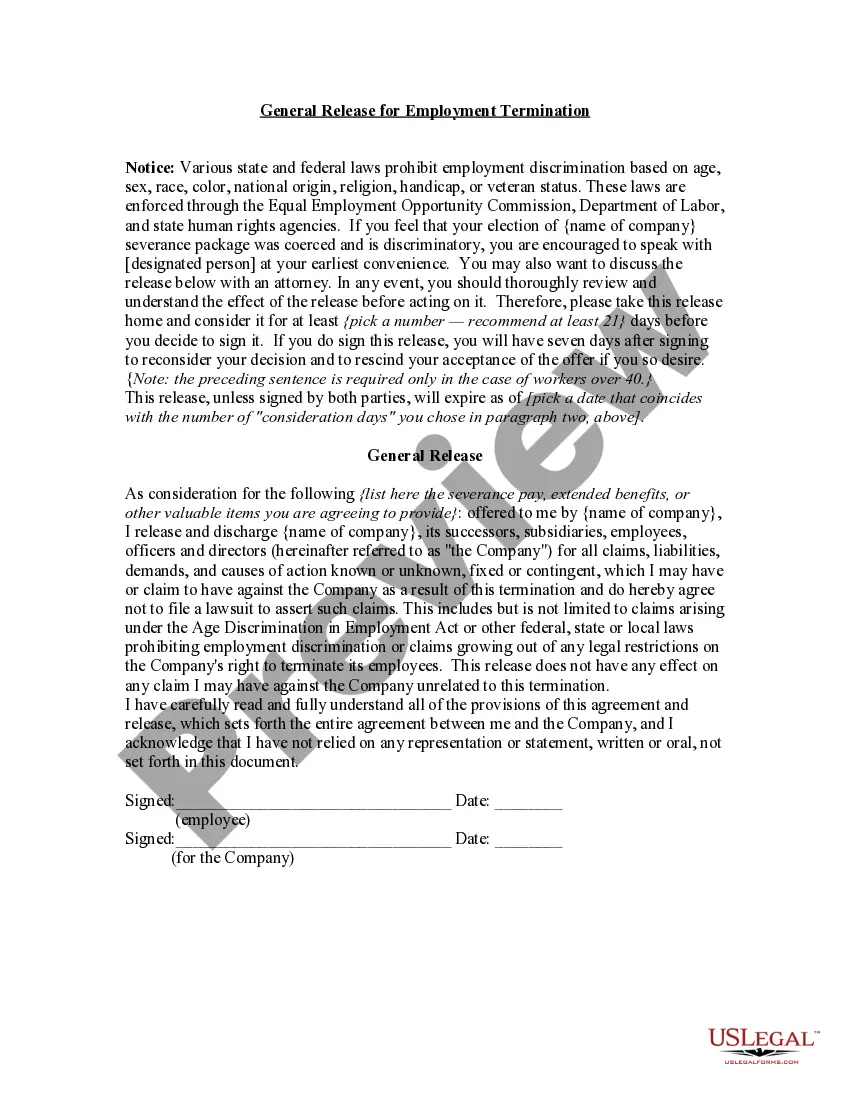
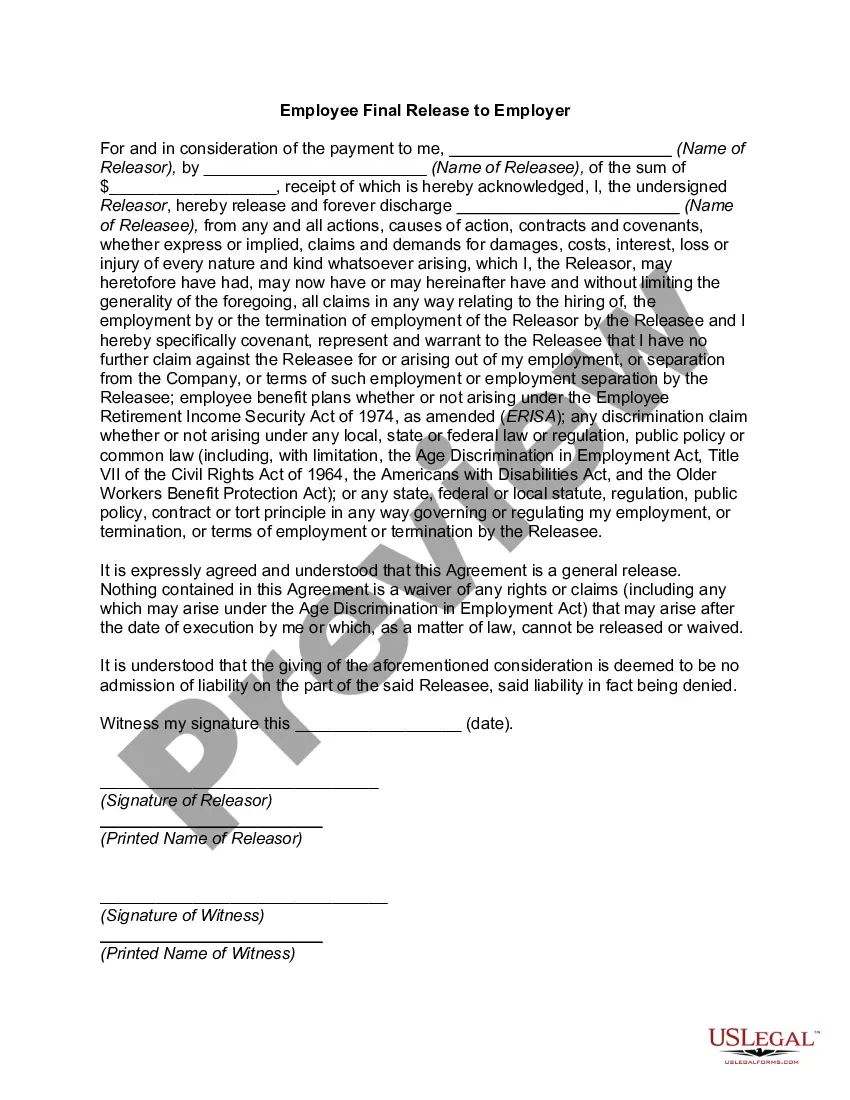
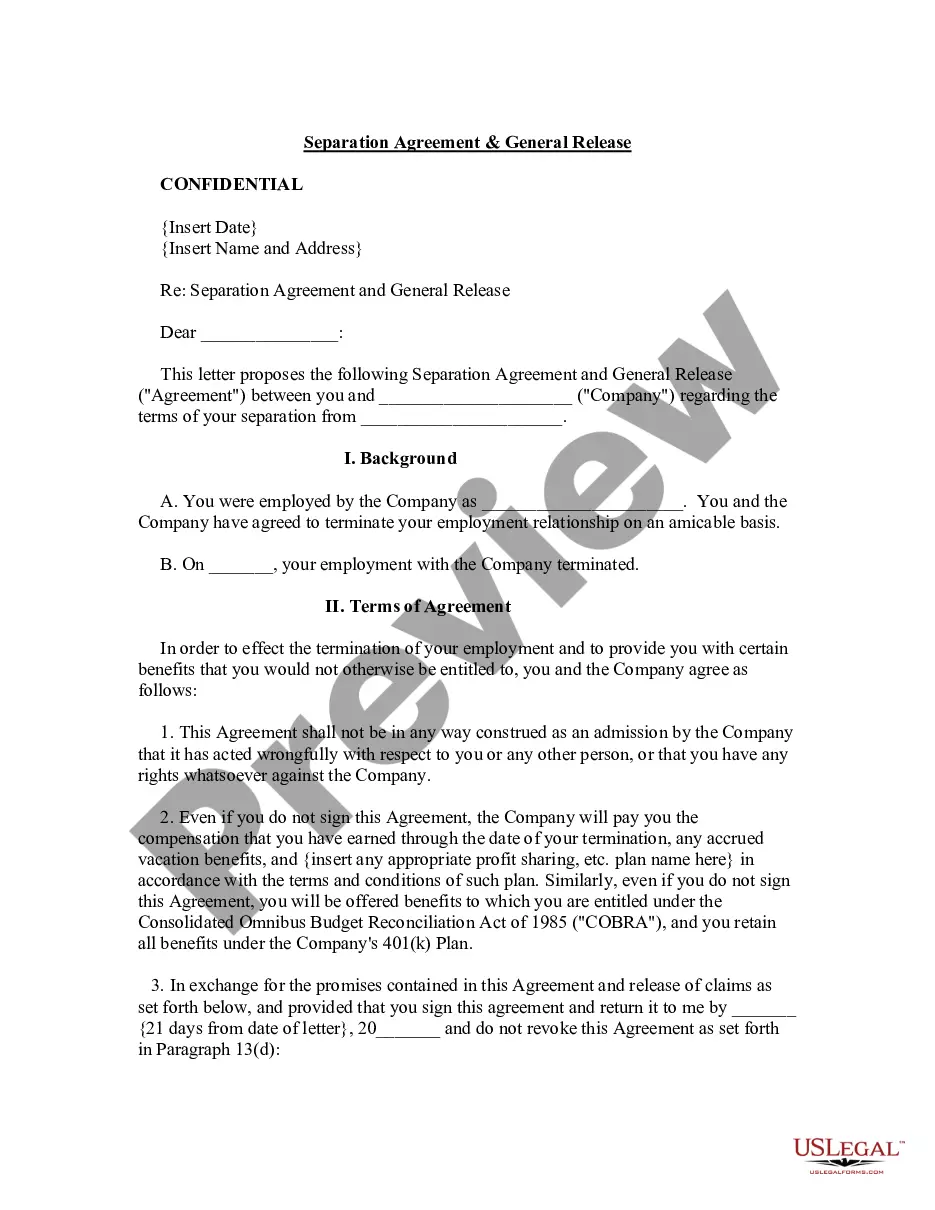
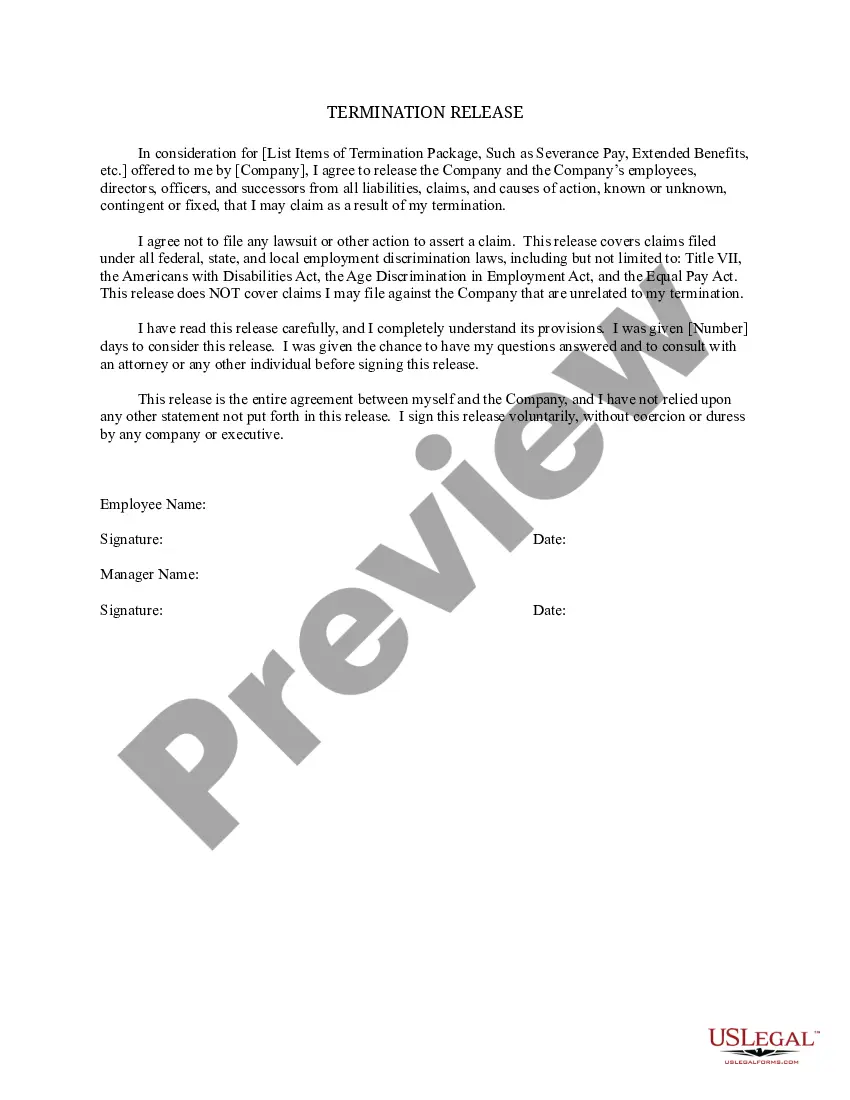
The General Release for Employment or Job Termination is a legal document that outlines the terms of separation between an employee and a company. This form establishes a mutual agreement where the employee releases the company from any future claims related to their employment and termination. Unlike other employment-related forms, this release specifically addresses the waiver of claims that may arise under various employment laws.
Key components of this form
- Notice of rights under various state and federal discrimination laws
- Statement regarding voluntary nature and consideration period prior to signing
- Release clause covering all claims against the company upon termination
- Provision for reconsideration period after signing
- Signatures of both the employee and an authorized company representative
Situations where this form applies
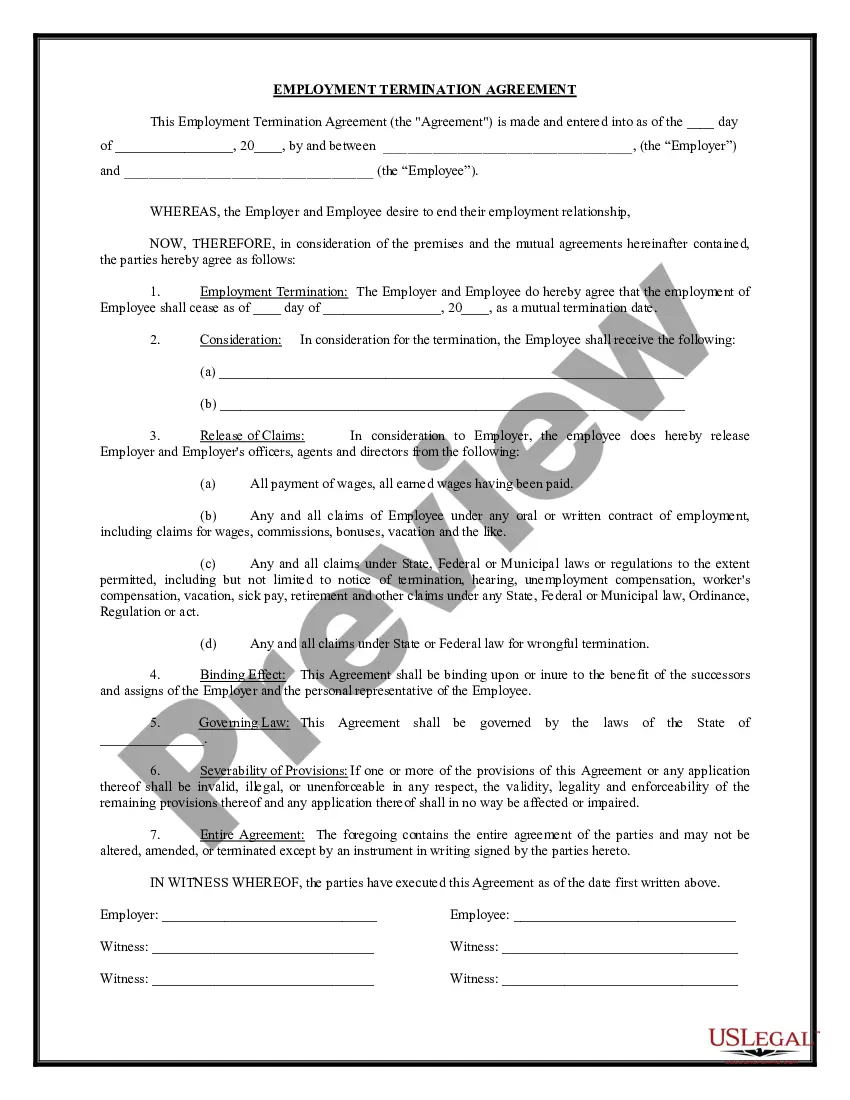
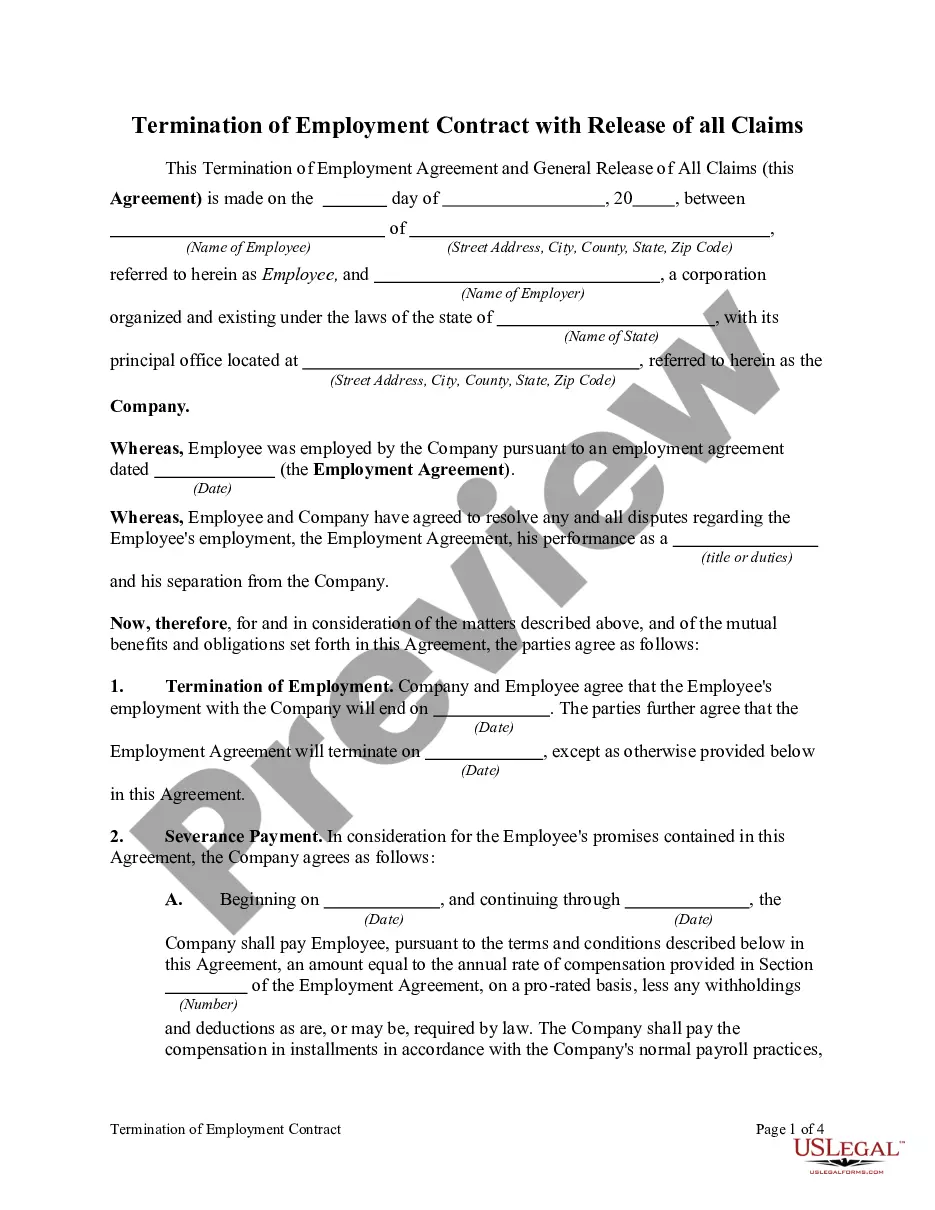
This form should be used when an employee is exiting a company, either through resignation or termination, and the company offers severance pay or benefits. It helps clarify the terms of the separation and ensures that both parties understand their rights and responsibilities moving forward. Use this form to formally document the agreement and avoid potential legal disputes later on.
Who should use this form
- Employees who are terminating their employment and receiving a severance package
- Employers seeking to formalize the separation process and protect against future claims
- Company representatives involved in employee separations and human resources
- Legal professionals advising clients on employment terminations
Instructions for completing this form
- Determine the parties involved: identify the employee and the company.
- Review the notice and terms set forth in the release, including the 21-day consideration period.
- Fill in the required details, such as the severance pay or benefits being provided.
- Sign and date the form by both the employee and an authorized representative of the company.
- Keep copies of the signed release for personal and company records.
Is notarization required?
This form does not typically require notarization unless specified by local law. However, having a notary verify the signatures can provide an additional layer of authenticity and legal assurance.
Get your form ready online
Our built-in tools help you complete, sign, share, and store your documents in one place.
Make edits, fill in missing information, and update formatting in US Legal Forms—just like you would in MS Word.
Download a copy, print it, send it by email, or mail it via USPS—whatever works best for your next step.
Sign and collect signatures with our SignNow integration. Send to multiple recipients, set reminders, and more. Go Premium to unlock E-Sign.
If this form requires notarization, complete it online through a secure video call—no need to meet a notary in person or wait for an appointment.
We protect your documents and personal data by following strict security and privacy standards.

Make edits, fill in missing information, and update formatting in US Legal Forms—just like you would in MS Word.

Download a copy, print it, send it by email, or mail it via USPS—whatever works best for your next step.

Sign and collect signatures with our SignNow integration. Send to multiple recipients, set reminders, and more. Go Premium to unlock E-Sign.

If this form requires notarization, complete it online through a secure video call—no need to meet a notary in person or wait for an appointment.

We protect your documents and personal data by following strict security and privacy standards.
Mistakes to watch out for
- Failing to review the form thoroughly before signing.
- Not allowing the full 21-day consideration period for employees over 40.
- Omitting the signatures of both parties.
- Not understanding the implications of the release on future claims.
Advantages of online completion
- Convenience of downloading the form at any time.
- Editability allows customization to fit specific needs.
- Access to forms drafted by licensed attorneys for legal reliability.
Legal use & context
- The form must be executed in compliance with state and federal employment laws.
- Employers and employees should ensure they clearly understand the release terms.
- Misunderstandings about the release can lead to disputes or legal challenges.
Summary of main points
- The General Release for Employment or Job Termination clarifies the terms of separation between employee and employer.
- It is crucial for both parties to understand the implications before signing.
- The form includes a built-in review period and consideration specifics to secure fairness.
Looking for another form?





Form popularity
FAQ
Sometimes, employers will instruct you to sign a release under the guise that it is required to obtain your earned vacation pay, a reference, or severance. In most circumstances, be suspicious if an employer wants a signature on the spot. Typically, you are signing away some important legal right.
1) Names And All Employee Information. 2) Dates. 3) Reason For Termination. 4) Receipt Of Company Property. 5) Severance, Benefits, And Other Compensation Information. 6) Legal Agreements. 7) Details About Their Final Paycheck. 1) Severance To Waive Legal Claims.
When your employment is terminated, your employer may instruct you to sign documents relating to your discharge. YOU ARE NOT REQUIRED TO SIGN ANY DOCUMENTS!!!Sometimes, employers will instruct you to sign a release under the guise that it is required to obtain your earned vacation pay, a reference, or severance.
Dear ABC, We regret to inform you that your employment with (add company name) shall officially get terminated on (add date). The reason for termination of employment and the details of your severance benefit and compensation are mentioned in the attached document. The decision is final and irrevocable.
A general release is a document in which one person releases another from any claims or threats of lawsuits.Generally, releases are effective to eliminate all claims you may have up until the time of the release.
The words you use to terminate an employee should be simple and to-the-point. Don't waffle. Go somewhere private and then lead with the punch line, says Glickman. She suggests you begin by saying, I have some bad news for you.
Notify the employee of their termination date. State the reason(s) for termination. Explain their compensation and benefits going forward. Notify them of any company property they must return. Remind them of signed agreements. Include HR contact information.
A release is an agreement not to sue; it waives your right to sue and company and "releases" your employer from legal liability for claims you may have against it.Or, in a broad release, you might waive your right to sue over any and all claims arising out of your employment.
The short answer is no. You don't have to accept what your employer offers, nor do you have to sign a release. A release is valid only if it's voluntary: If your employer requires or coerces you sign, it won't be upheld in court. This doesn't mean, however, that you are entitled to severance.