Checklist of Standard and Illegal Hiring Interview Questions
About this form
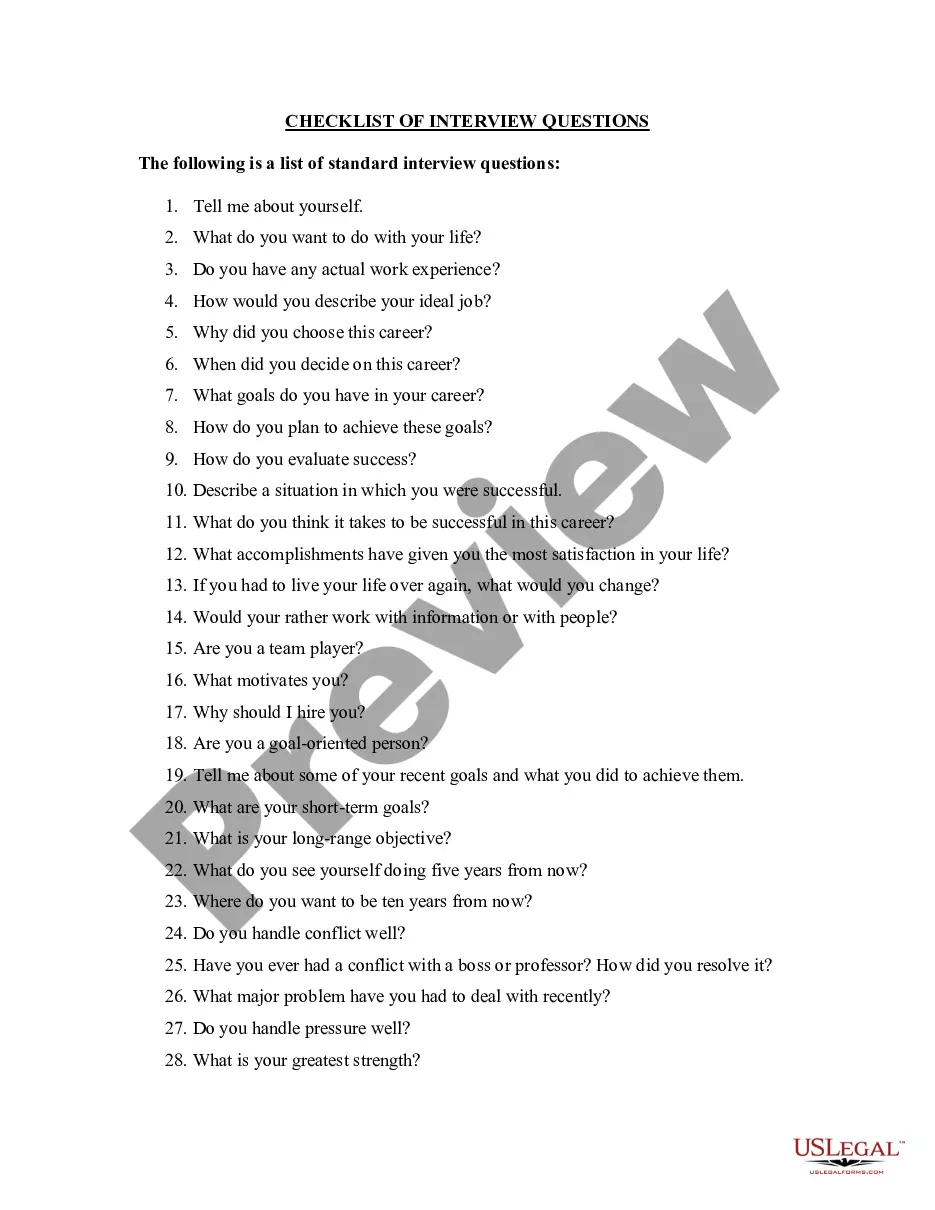
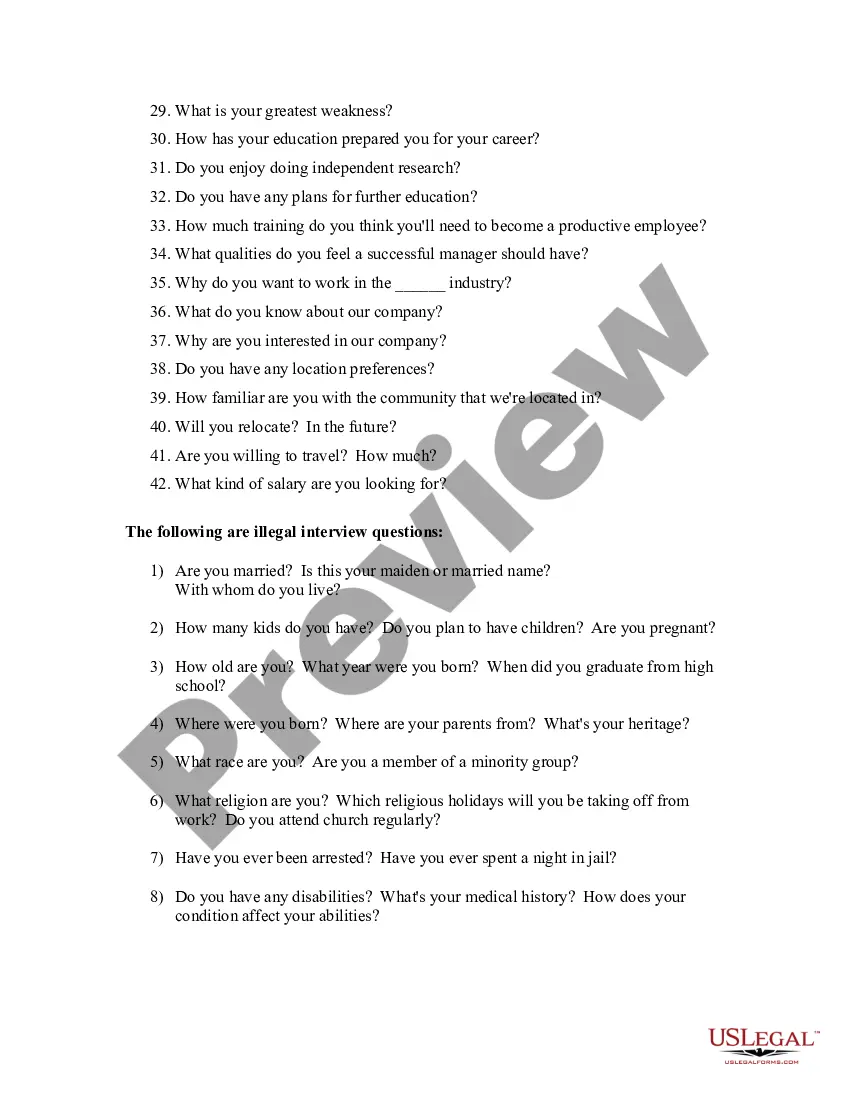
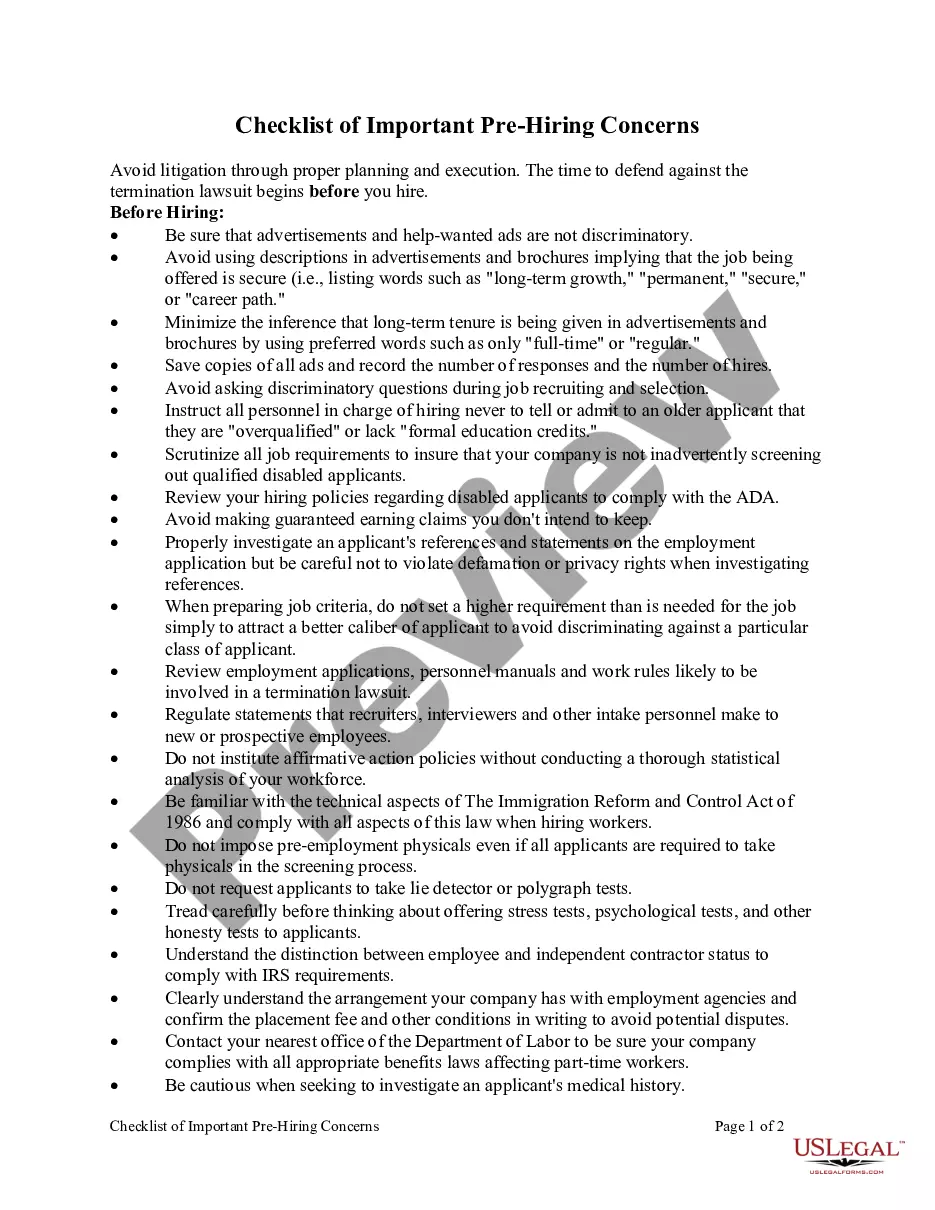
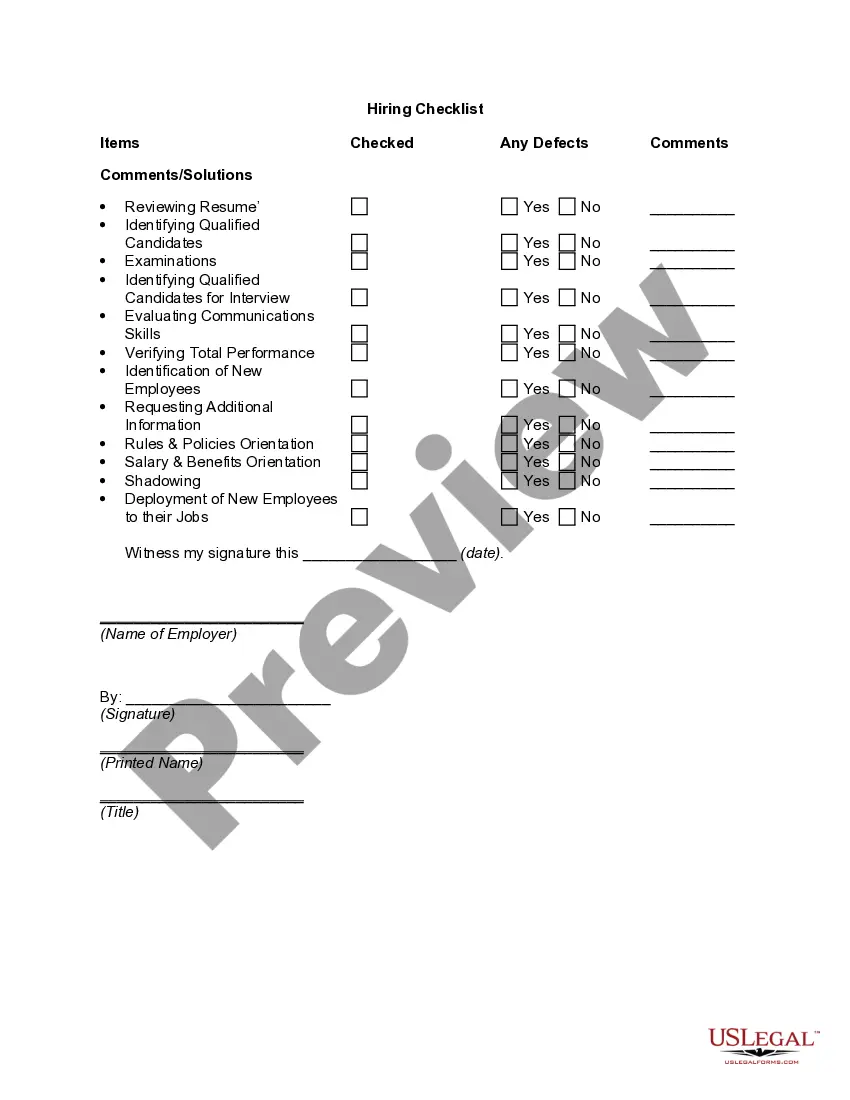
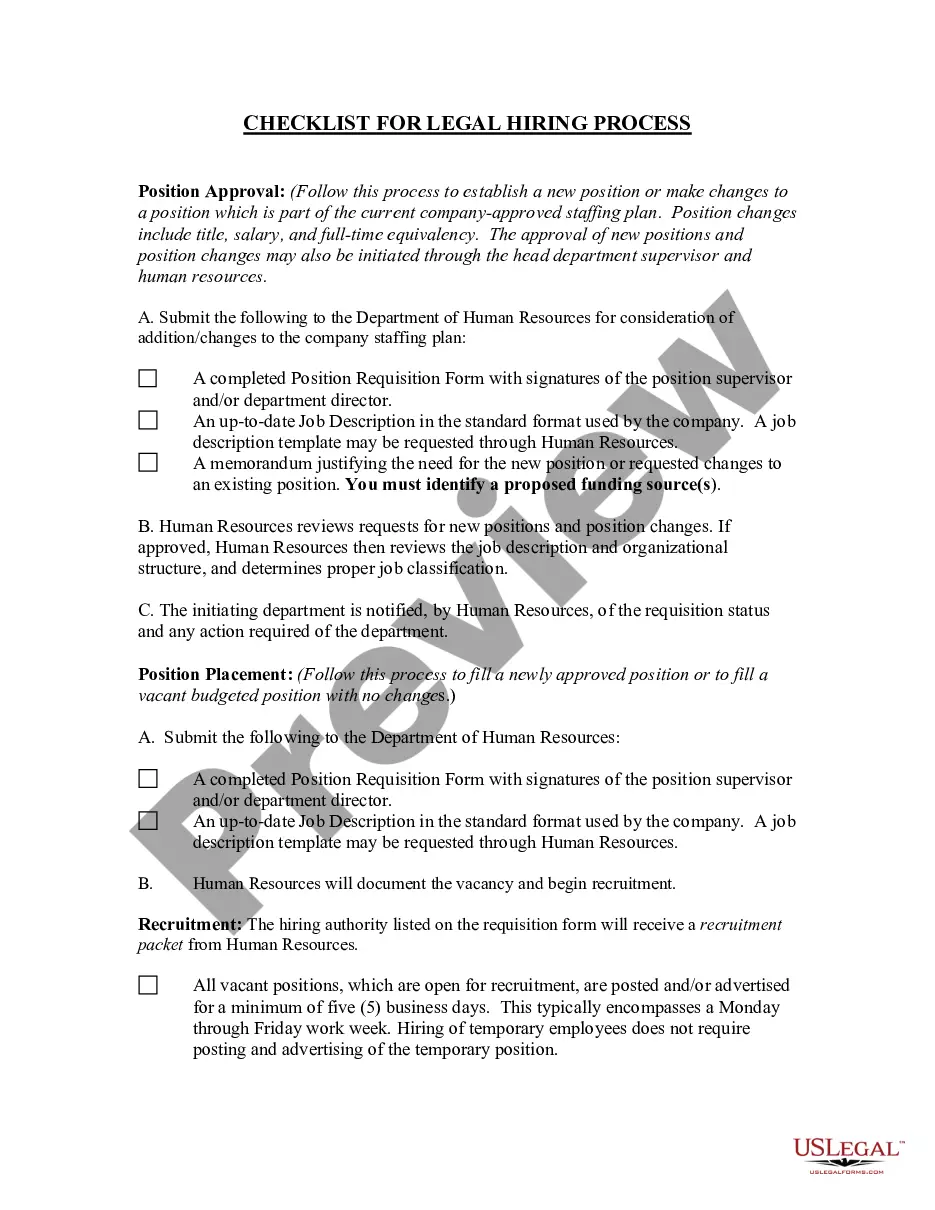
The Checklist of Standard and Illegal Hiring Interview Questions is a valuable tool for employers and human resources professionals. This checklist provides a range of legitimate interview questions that help assess a candidate's qualifications and fit for the role, while also highlighting questions that are considered illegal to ask during an interview. Understanding these distinctions aids in creating fair hiring practices and avoiding potential legal issues associated with discriminatory questioning.
Key components of this form
- Standard interview questions covering various areas such as career goals, conflict resolution, and personal motivations.
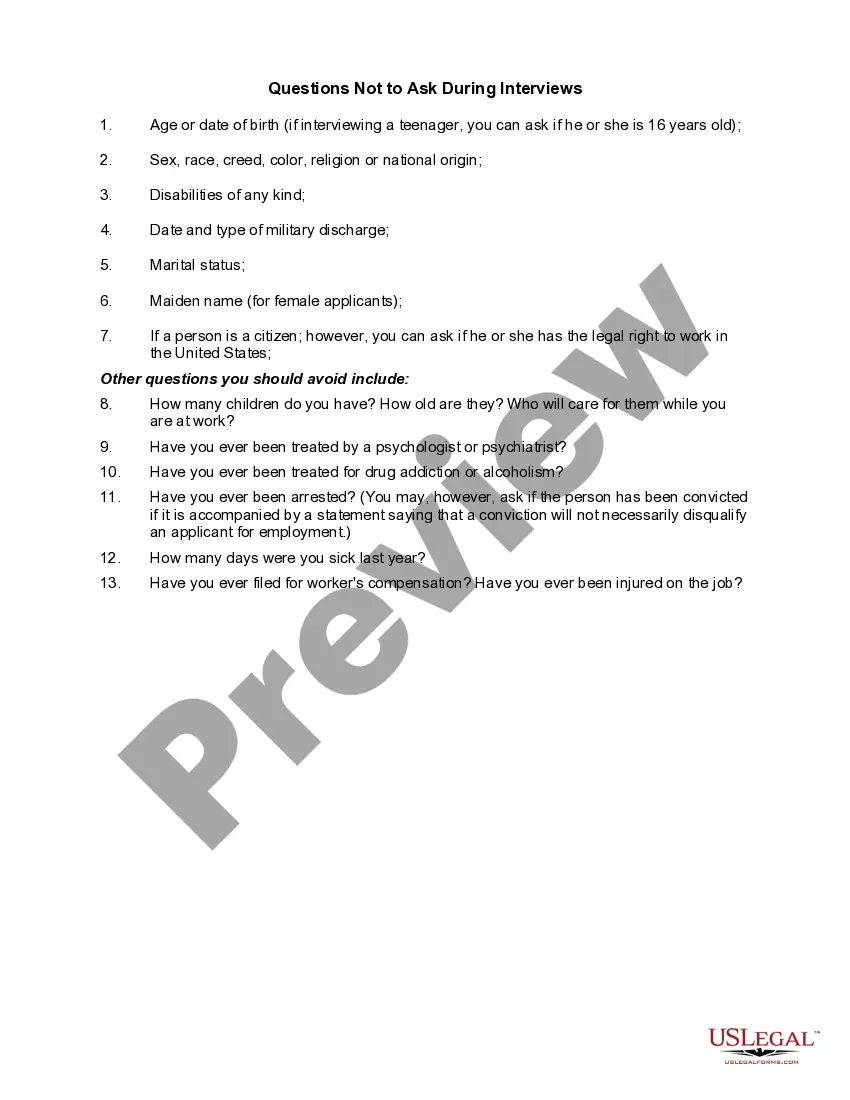
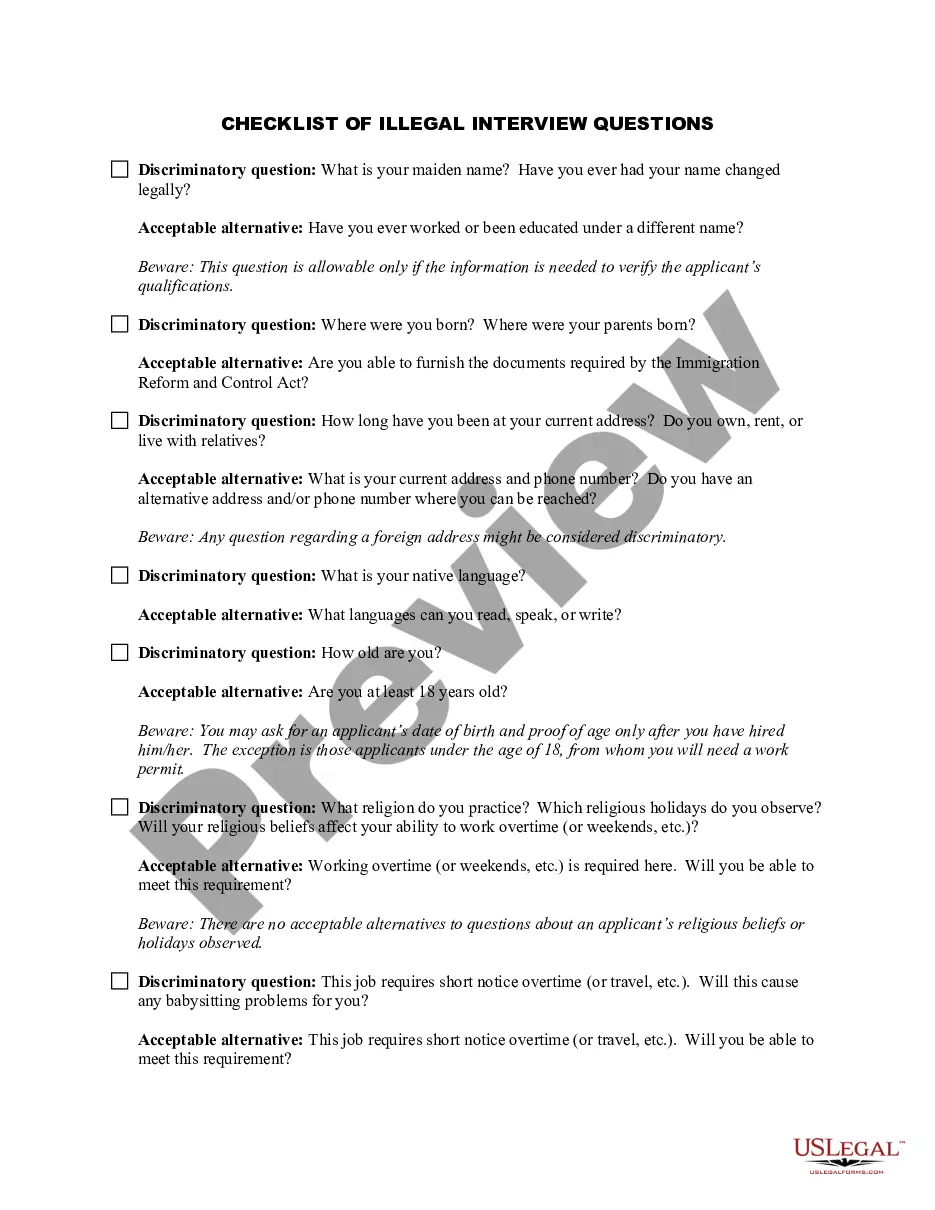
- Examples of illegal interview questions that should be avoided to ensure compliance with employment laws.
- Guidelines on how to appropriately assess candidate responses without crossing legal boundaries.
Common use cases
This checklist is essential for hiring managers and interviewers preparing for job interviews. It serves as a reference to ensure that all questions asked promote a fair evaluation process while steering clear of illegal inquiries. Use this form whenever you conduct interviews to standardize your approach and maintain compliance with employment regulations.
Who needs this form
- Employers looking to create structured interviewing processes.
- Human resources professionals responsible for recruitment and compliance.
- Hiring managers from various industries seeking to standardize their interview questions.
- Anyone involved in the interview process who wants to avoid legal pitfalls associated with hiring practices.
Completing this form step by step
- Review the list of standard interview questions to select those most relevant to the position being filled.
- Familiarize yourself with the illegal questions to avoid during the interview process.
- Prepare your interview framework by incorporating the selected standard questions into a cohesive format.
- Train interviewers on the importance of adhering to the checklist for legal compliance.
- Utilize the checklist as a guide during actual interviews to ensure all questions are appropriate and legal.
Notarization requirements for this form
Notarization is not commonly needed for this form. However, certain documents or local rules may make it necessary. Our notarization service, powered by Notarize, allows you to finalize it securely online anytime, day or night.
Get your form ready online
Our built-in tools help you complete, sign, share, and store your documents in one place.
Make edits, fill in missing information, and update formatting in US Legal Forms—just like you would in MS Word.
Download a copy, print it, send it by email, or mail it via USPS—whatever works best for your next step.
Sign and collect signatures with our SignNow integration. Send to multiple recipients, set reminders, and more. Go Premium to unlock E-Sign.
If this form requires notarization, complete it online through a secure video call—no need to meet a notary in person or wait for an appointment.
We protect your documents and personal data by following strict security and privacy standards.
Make edits, fill in missing information, and update formatting in US Legal Forms—just like you would in MS Word.
Download a copy, print it, send it by email, or mail it via USPS—whatever works best for your next step.
Sign and collect signatures with our SignNow integration. Send to multiple recipients, set reminders, and more. Go Premium to unlock E-Sign.
If this form requires notarization, complete it online through a secure video call—no need to meet a notary in person or wait for an appointment.
We protect your documents and personal data by following strict security and privacy standards.
Mistakes to watch out for
- Asking personal questions that could be considered discriminatory.
- Failing to prepare a structured set of questions, leading to inconsistent interviews.
- Not training interviewers on the legal implications of their questions.
Why complete this form online
- Convenience of immediate access to the checklist for quick reference.
- Editability allows users to customize questions based on specific roles or organizational needs.
- Reliability in ensuring that interview processes remain compliant with legal standards.
Legal use & context
- This checklist helps employers navigate the complexities of employment laws regarding interviewing.
- Understanding illegal questions can protect organizations from legal repercussions.
- Using standardized questions promotes a fair hiring process, reducing discrimination claims.
What to keep in mind
- Utilizing this checklist helps ensure fair and compliant hiring practices.
- Awareness of illegal questions is crucial for mitigating legal risks in interviews.
- A structured approach to interviews is beneficial for both employers and candidates.
Looking for another form?

Form popularity
FAQ
Race, Color, or National Origin. Religion. Sex, Gender Identity, or Sexual Orientation. Pregnancy status. Disability. Age or Genetic Information. Citizenship. Marital Status or Number of Children.
Make an informal complaint. Call, email, or ask to speak with someone from the HR department and address the issue. Make a formal complaint. You can contact your local U.S. Equal Employment Opportunity Commission (EEOC) office and report the incident.
Gracefully avoid the question and steer the conversation elsewhere. Keep your answers short, broad and general. Redirect a question to your interviewer. Ask the interviewer why the question is relevant to your job.
Can you sue an employer because you weren't hired or because of things the employer said or did during the hiring process? In some situations, the answer is yes. However, these claims can be tough to win.
Gracefully avoid the question and steer the conversation elsewhere. Keep your answers short, broad and general. Redirect a question to your interviewer. Ask the interviewer why the question is relevant to your job.
If you are asked an illegal interview question or the questions begin to follow an illegal trend, you always have the option to end the interview or refuse to answer the question. It may be uncomfortable to do, but you need to be comfortable working at the company.
How many children do you have? This question is inappropriate for two reasons. What country are your parents from? What is your native language? What is your height? Have you ever been arrested? Do you own your own home? Did you serve in the military? How old are you?
While you can't sue just because you were asked a question, being asked an inappropriate question could be evidence of discrimination if you aren't hired. Questions that are inappropriate are those that relate to legally-protected categories under the law.