Signature and Name Affidavit
Understanding this form
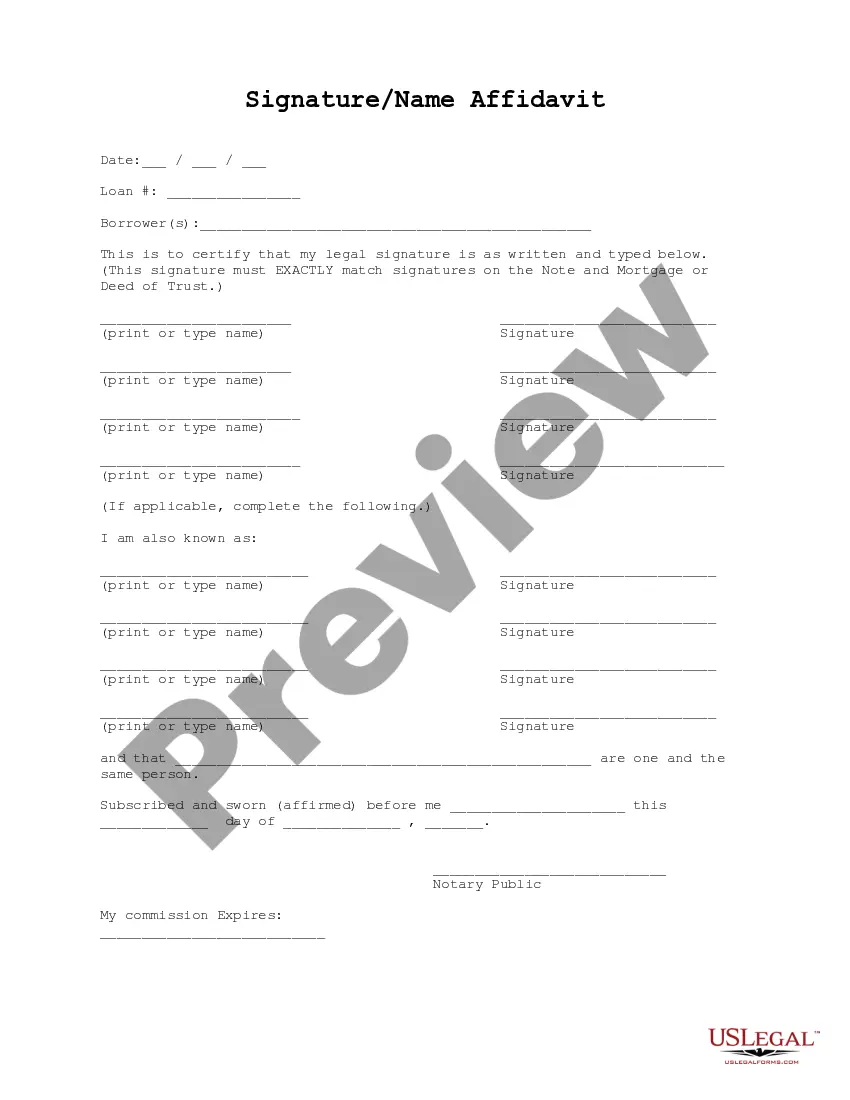
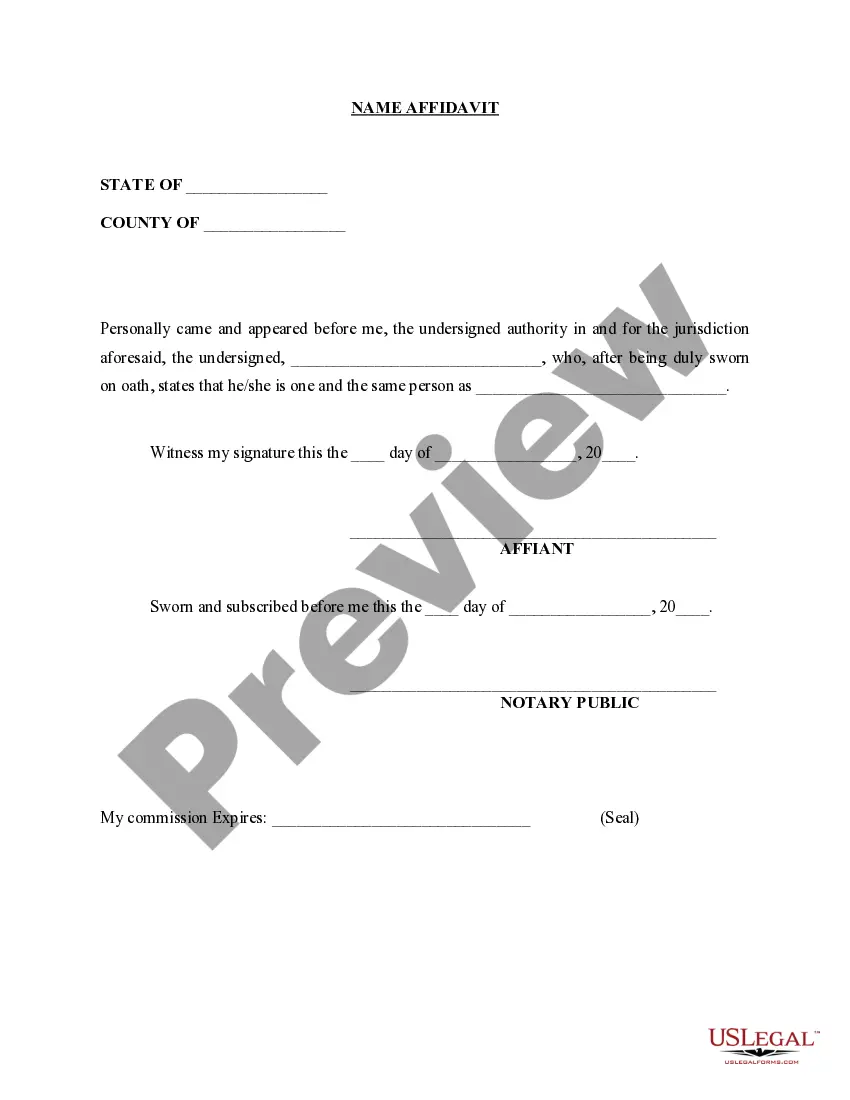
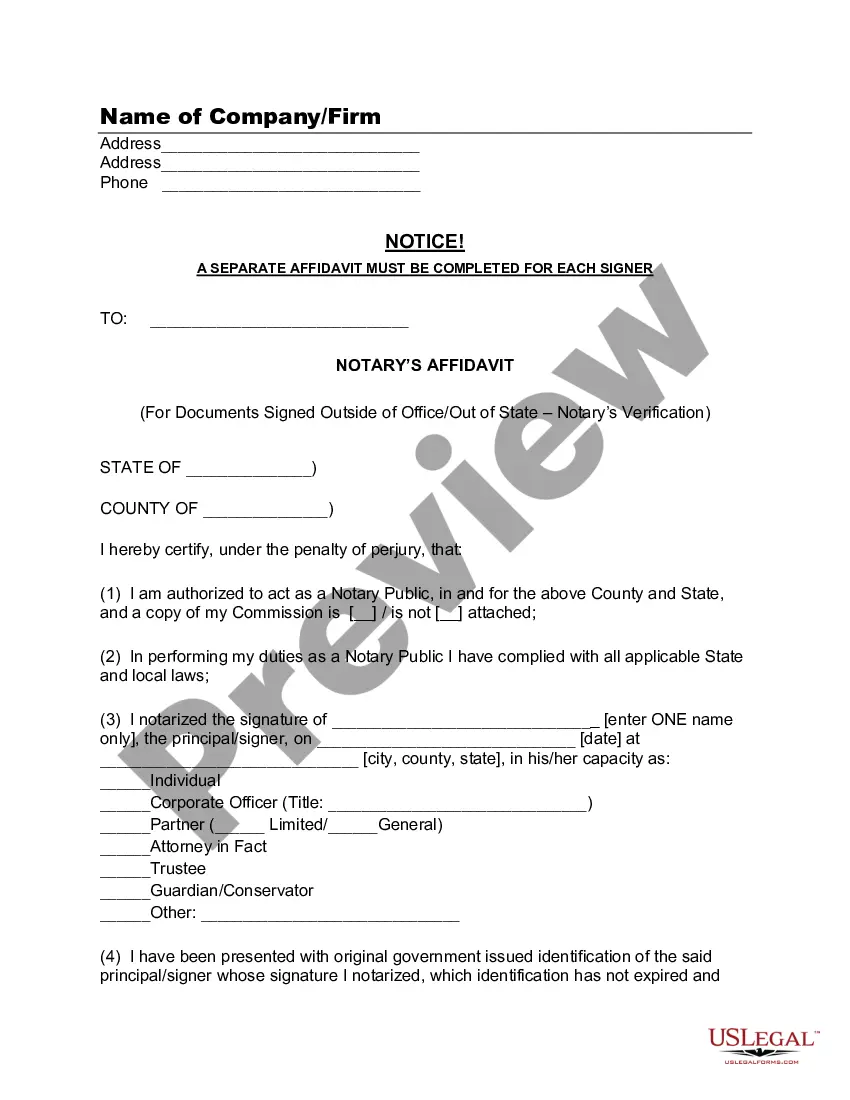
The Signature and Name Affidavit is a legal document in which the affiant confirms that their legal signature matches the signatures recorded on related financial documents, such as a note or mortgage. This affidavit helps to verify identity and ensures consistency across important legal agreements.
Main sections of this form
- Date of the affidavit
- Loan details and borrower(s) information
- Legal signature verification statement
- Print or type name sections for each signer
- Notary section for validation
When this form is needed
This form is used when an individual needs to confirm their legal signature for purposes related to mortgages, loans, or other legal documents. It is particularly relevant when there is a requirement for authenticity in financial transactions or when discrepancies in signatures need to be rectified.
Intended users of this form
This affidavit is beneficial for:
- Individuals borrowing money or entering into mortgage agreements
- Property owners needing to verify their identity for legal purposes
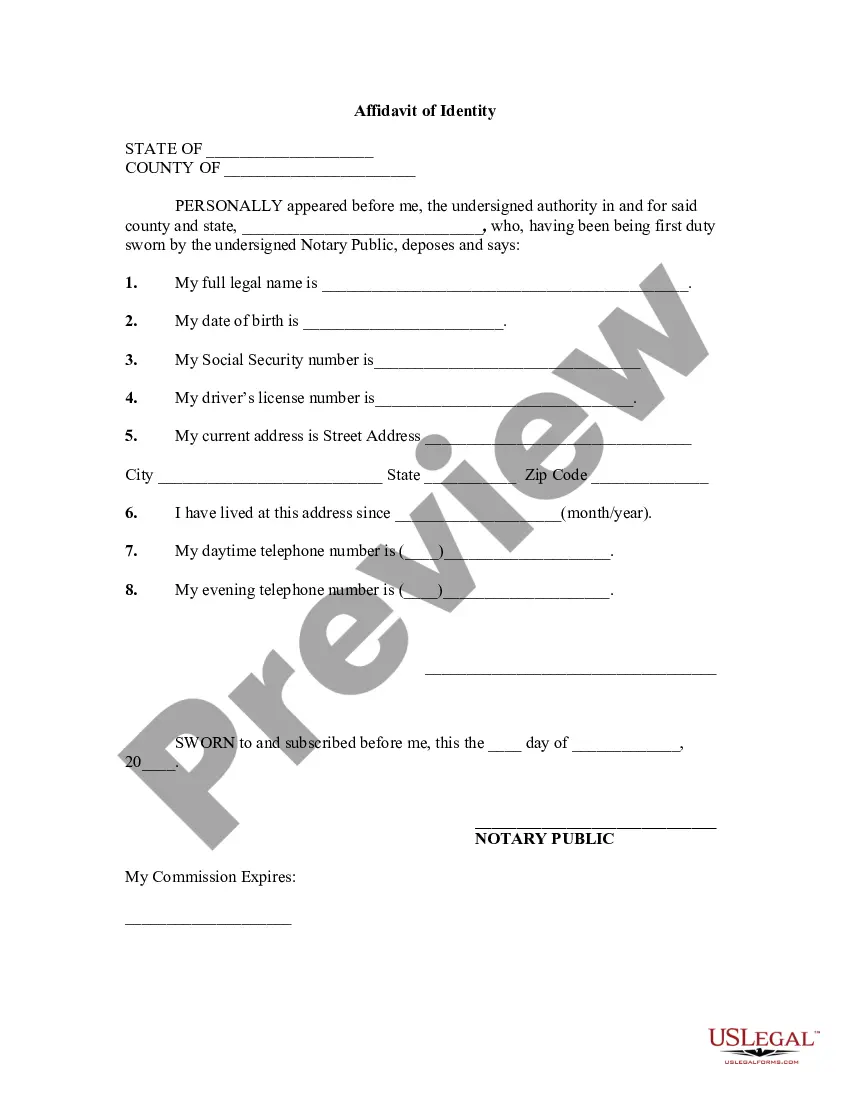
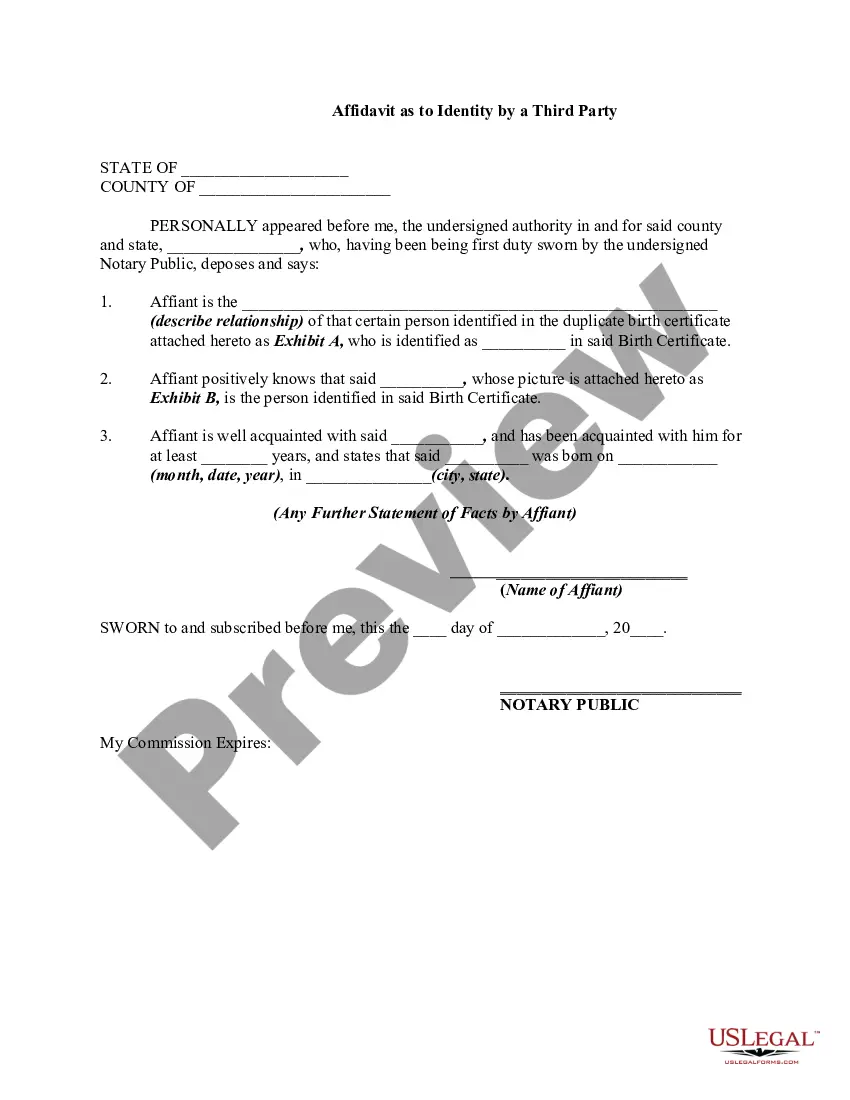
- Anyone needing to confirm that multiple names or signatures refer to the same individual
How to prepare this document
- Enter the current date at the top of the affidavit.
- Provide loan details and the names of all borrowers involved.
- Carefully type or print your legal name and provide your signature, ensuring it matches previously used signatures on financial documents.
- If applicable, include any other commonly used names in the designated section.
- Sign the affidavit and ensure it is notarized for legal validity.
Does this form need to be notarized?
To make this form legally binding, it must be notarized. Our online notarization service, powered by Notarize, lets you verify and sign documents remotely through an encrypted video session.
Get your form ready online
Our built-in tools help you complete, sign, share, and store your documents in one place.
Make edits, fill in missing information, and update formatting in US Legal Forms—just like you would in MS Word.
Download a copy, print it, send it by email, or mail it via USPS—whatever works best for your next step.
Sign and collect signatures with our SignNow integration. Send to multiple recipients, set reminders, and more. Go Premium to unlock E-Sign.
If this form requires notarization, complete it online through a secure video call—no need to meet a notary in person or wait for an appointment.
We protect your documents and personal data by following strict security and privacy standards.

Make edits, fill in missing information, and update formatting in US Legal Forms—just like you would in MS Word.

Download a copy, print it, send it by email, or mail it via USPS—whatever works best for your next step.

Sign and collect signatures with our SignNow integration. Send to multiple recipients, set reminders, and more. Go Premium to unlock E-Sign.

If this form requires notarization, complete it online through a secure video call—no need to meet a notary in person or wait for an appointment.

We protect your documents and personal data by following strict security and privacy standards.
Common mistakes to avoid
- Not ensuring that the signature matches those on the note or mortgage.
- Failing to notarize the document as required.
- Leaving out additional names in case of aliases or name changes.
Why complete this form online
- Quick and easy access to the form anytime.
- Edit and customize the form as needed.
- Reliable templates drafted by licensed attorneys.
Summary of main points
- The Signature and Name Affidavit is crucial for verifying signatures used in legal documents.
- Ensure that all provided signatures match those on corresponding financial agreements.
- Notarization is necessary for this form to be legally effective.
Looking for another form?







Form popularity
FAQ
An affidavit is a written statement that is notarized.The information in an affidavit must be first-hand information. It cannot be second-hand information or speculation. Affidavits can be written in your own handwriting or typed.
Title the affidavit. First, you'll need to title your affidavit. Craft a statement of identity. The very next section of your affidavit is what's known as a statement of identity. Write a statement of truth. State the facts. Reiterate your statement of truth. Sign and notarize.
In the sentence, the person writing the statement must state that he or she is stating that the information is accurate. (Example: I, Jane Doe, solemnly swear that the contents of this document are true and correct, and that I agree to abide by the terms in this affidavit.)
Yes. If the document is dated in the future, there is nothing in the law that prohibits you from notarizing it as long as you clearly indicate the date you notarized the signature of the signer on the notarial certificate.
A person who makes an affidavit is called a Deponent or an Affiant. The person who has authority to attest a certificate may be a Magistrate who may in turn be either a Judicial or an Executive Magistrate, a Notary Public or a Commissioner of Oaths depending upon the affidavit which needs to be attested.
In a nutshell, an affidavit is a sworn statement that is in writing. Affidavits are usually used in a court or in negotiations. They are common in family law cases and bankruptcy cases. They are also used in civil and criminal cases, though not as often as family or bankruptcy law cases.
As long as the signer is personally present before the notary and acknowledges the signature, then the notary can proceed with performing the notarial act.If the document has already been signed, the signer can sign his or her name again above or next to the first signature. You can then proceed with the notarization.
One of the main ways that a notary prevents fraud in written transactions is to require that the document signer personally appear before the notary at the time of the notarization. In fact, the law prohibits a notary from notarizing a signature if the signer is not present.
An affidavit is a sworn or affirmed statement made before a notary public or any public official who has the authority to administer oaths. It is made under penalty of perjury.A notarized affidavit is one in which you swear the content is true before a notary public.