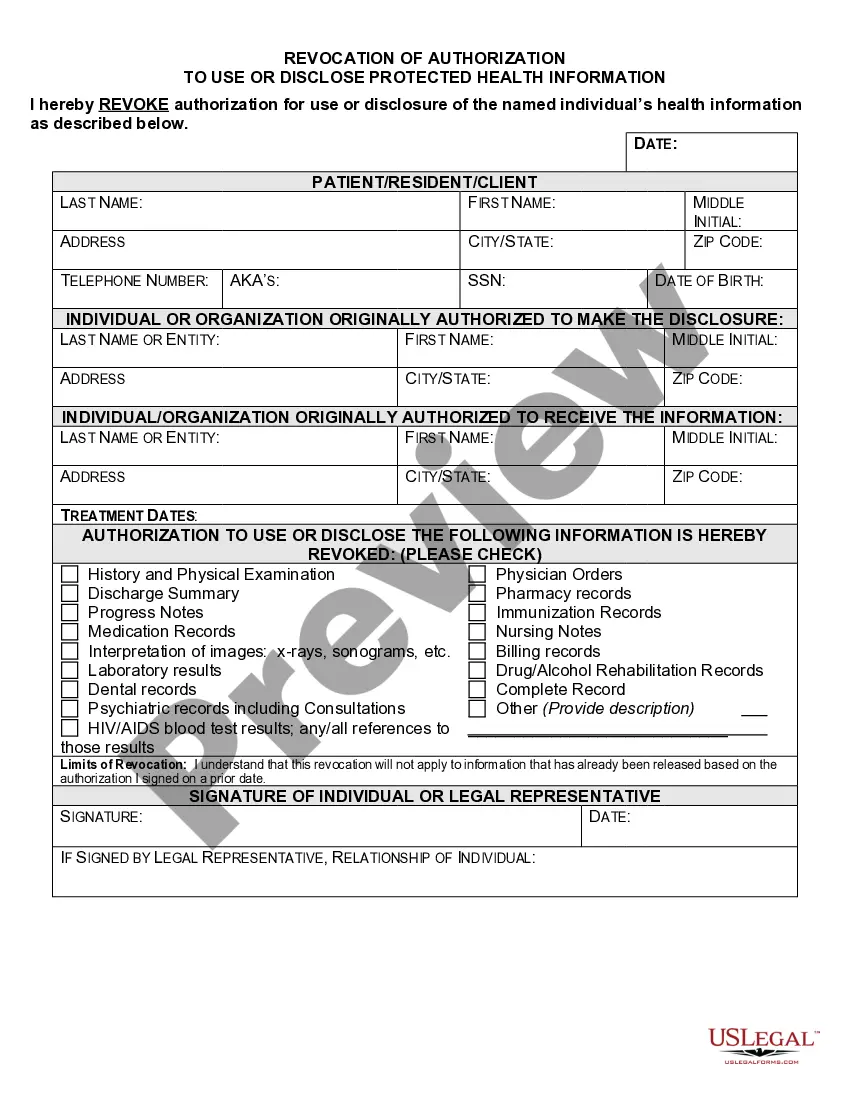
Revocation of Authorization To Use or Disclose Protected Health Information
What is this form?
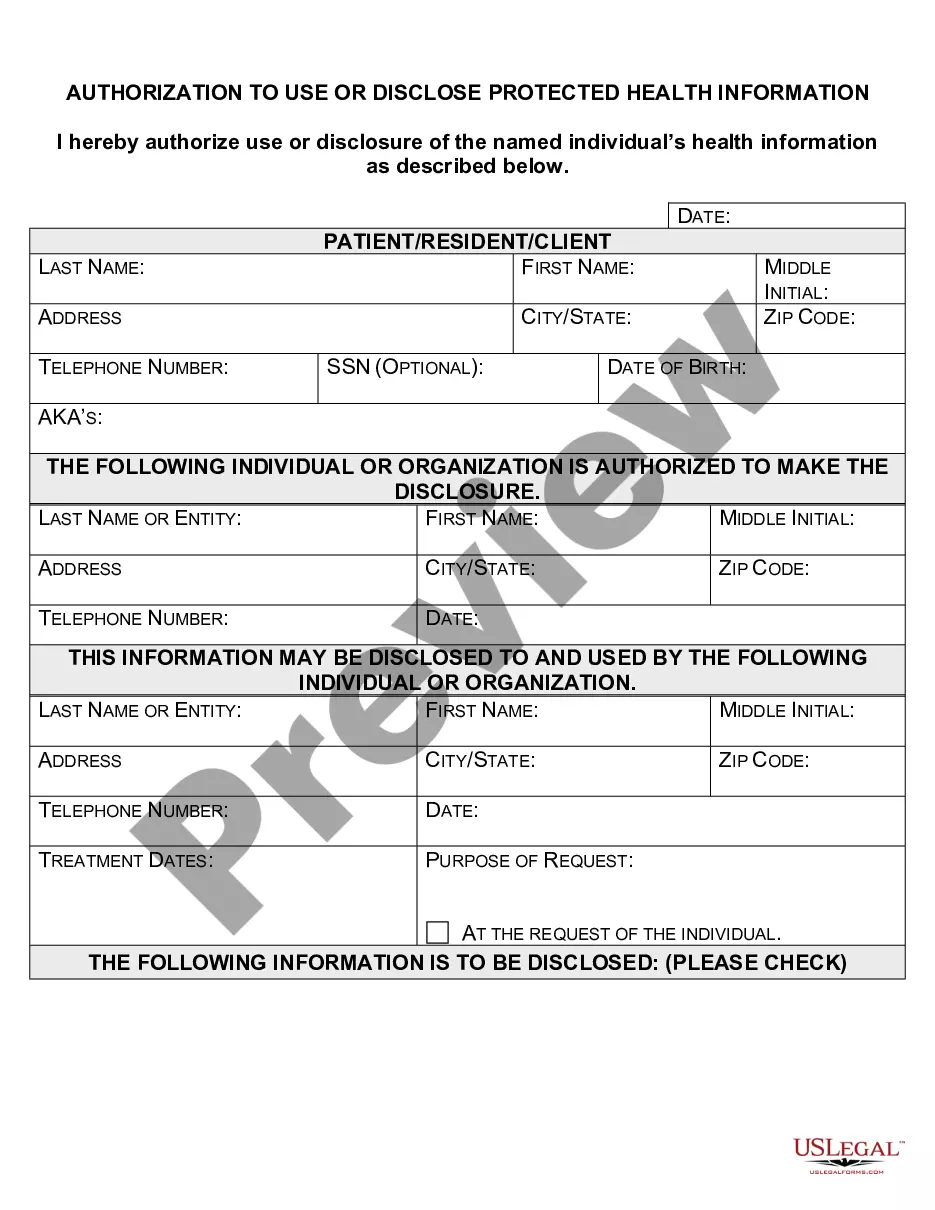
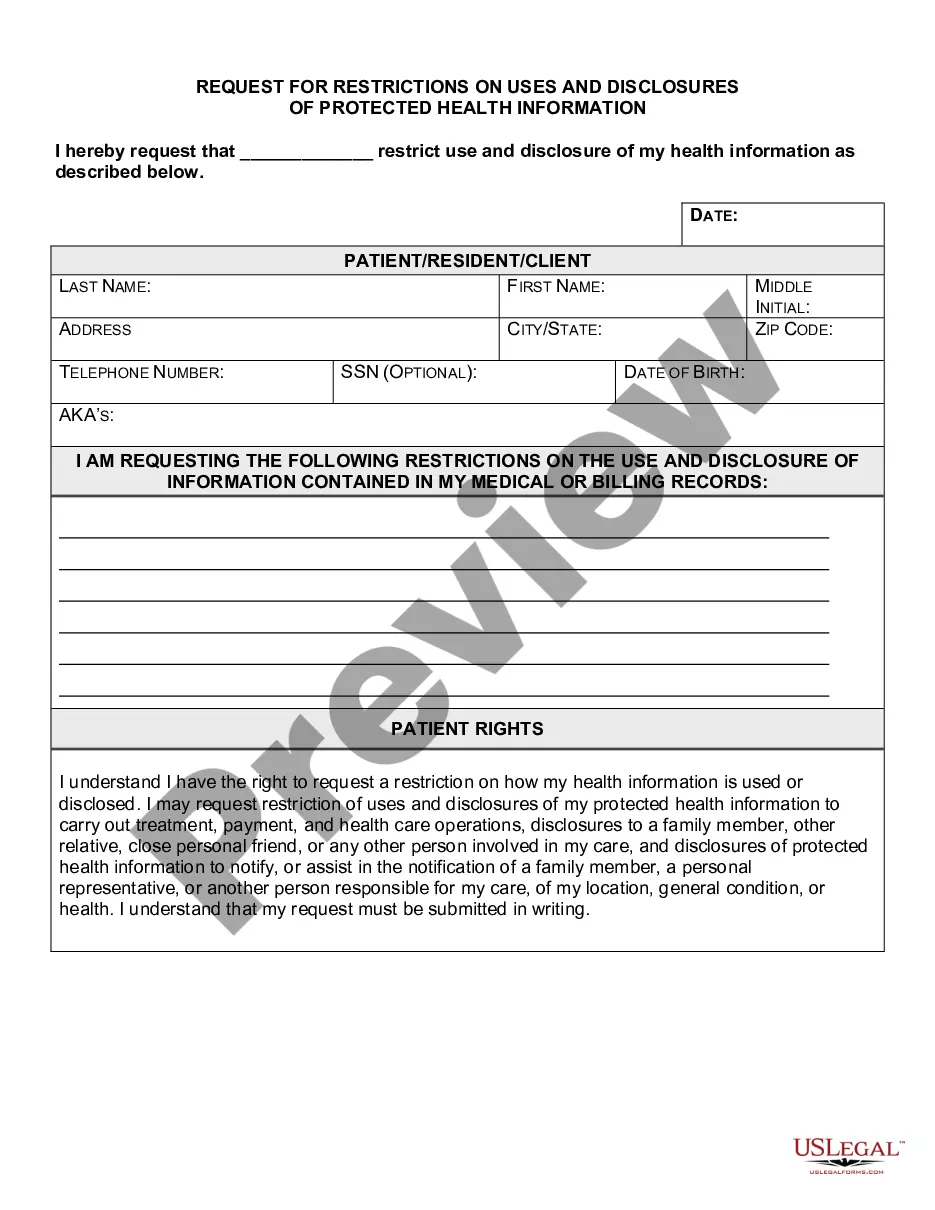
The Revocation of Authorization to Use or Disclose Protected Health Information is a legal document that allows individuals to withdraw their permission for healthcare providers or other entities to use or share their private health information. This form is distinct because it specifically addresses the revocation process, ensuring that once consent is revoked, the covered entities can no longer access or disseminate the individual's health records. It's an essential tool for maintaining control over personal health data and ensuring privacy.
Key parts of this document
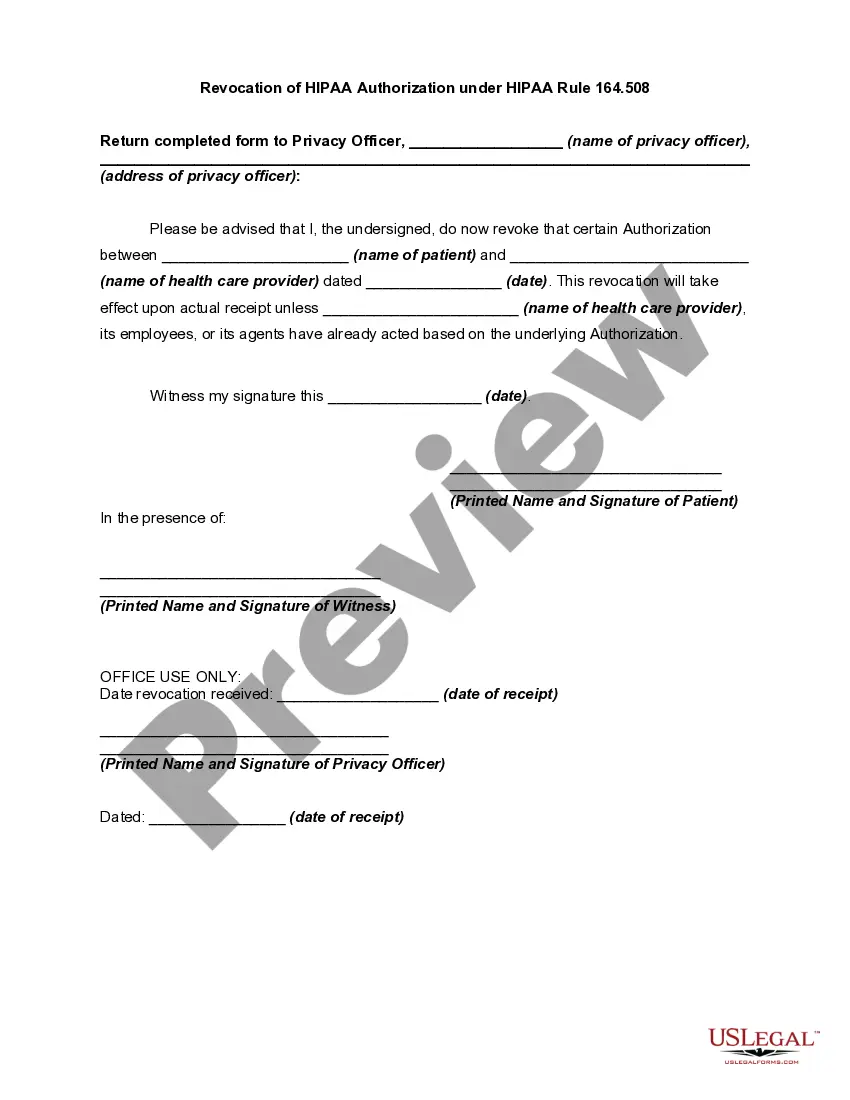
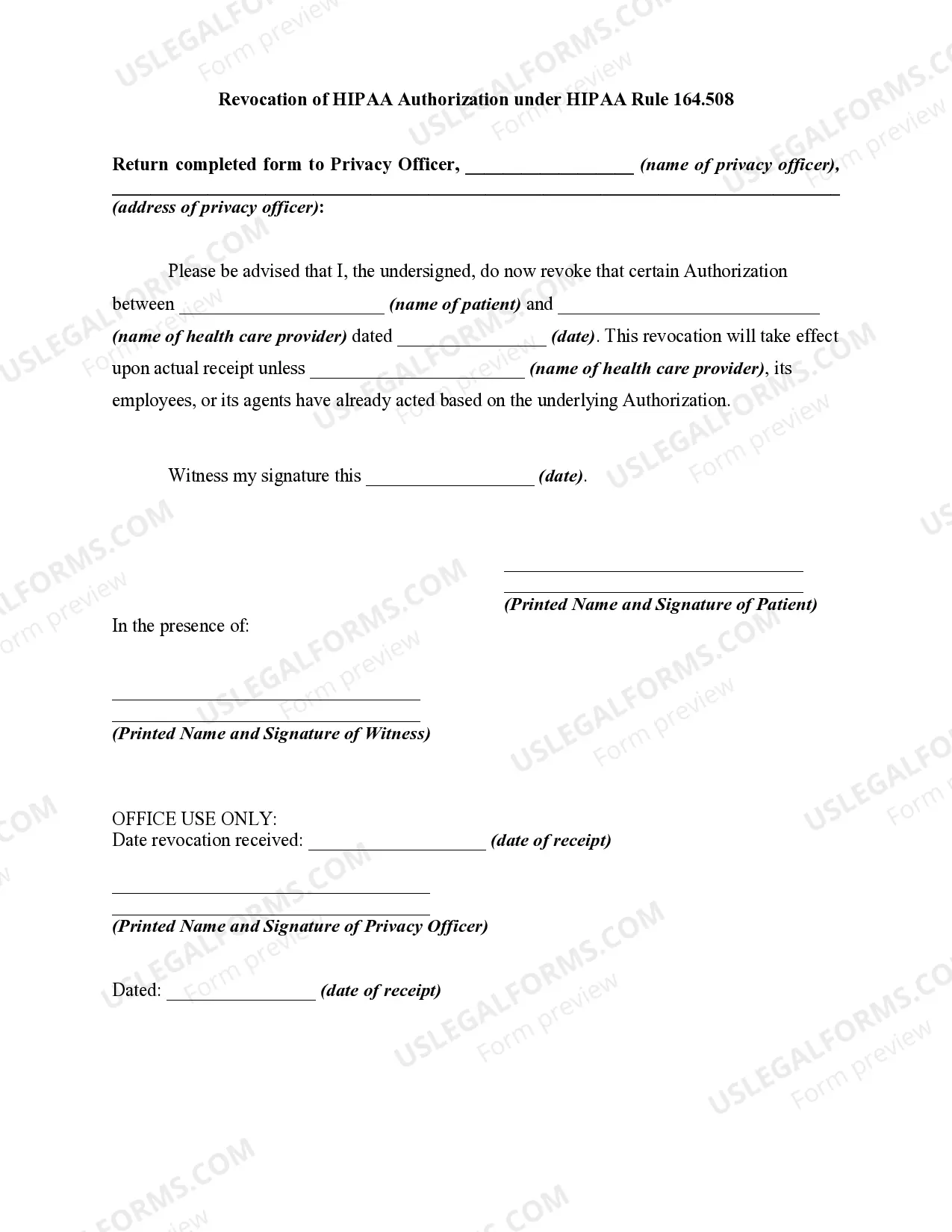
- Identification of the individual revoking authorization
- Details of the original authorization being revoked
- Effective date of the revocation
- Signature of the individual revoking authorization
When to use this document
This form should be used whenever an individual decides they no longer want to allow a healthcare provider or organization to access or share their protected health information. Common scenarios include changing healthcare providers, concerns about how their information is being handled, or a decision to keep their health records private after previously granting permission.
Who should use this form
Individuals who should consider using this form include:
- Patients who wish to revoke consent previously given for sharing their health information
- Individuals concerned about their privacy and security of health data
- Family members managing health care decisions for loved ones
How to prepare this document
- Identify yourself by providing your full name and contact information.
- Specify the details of the original authorization you are revoking.
- Indicate the effective date of the revocation.
- Sign and date the form to formally execute the revocation.
Does this document require notarization?
This form does not typically require notarization unless specified by local law. However, it's advisable to check local regulations to ensure compliance.
Get your form ready online
Our built-in tools help you complete, sign, share, and store your documents in one place.
Make edits, fill in missing information, and update formatting in US Legal Forms—just like you would in MS Word.
Download a copy, print it, send it by email, or mail it via USPS—whatever works best for your next step.
Sign and collect signatures with our SignNow integration. Send to multiple recipients, set reminders, and more. Go Premium to unlock E-Sign.
If this form requires notarization, complete it online through a secure video call—no need to meet a notary in person or wait for an appointment.
We protect your documents and personal data by following strict security and privacy standards.

Make edits, fill in missing information, and update formatting in US Legal Forms—just like you would in MS Word.

Download a copy, print it, send it by email, or mail it via USPS—whatever works best for your next step.

Sign and collect signatures with our SignNow integration. Send to multiple recipients, set reminders, and more. Go Premium to unlock E-Sign.

If this form requires notarization, complete it online through a secure video call—no need to meet a notary in person or wait for an appointment.

We protect your documents and personal data by following strict security and privacy standards.
Common mistakes
- Failing to include the effective date for the revocation.
- Not signing the form, which could render it invalid.
- Leaving out details of the original authorization being revoked.
Benefits of completing this form online
- Convenience of downloading and completing the form at your own pace.
- Easy to edit and customize according to your specific needs.
- Reliable templates created by licensed attorneys, ensuring legality.
Legal use & context
- This revocation is necessary to maintain control over who has access to your protected health information.
- Failure to properly revoke authorization may lead to unintended disclosures of sensitive information.
Quick recap
- The form is essential for individuals wanting to limit access to their health information.
- Completing the form correctly prevents unauthorized disclosure.
- Always review state-specific regulations to ensure compliance.
Looking for another form?




Form popularity
FAQ
The Revocation of Authorization to Use or Disclose Protected Health Information lets a patient withdraw permission for providers to access or share their PHI. Use it when you no longer want access, such as after changing providers or privacy concerns. The form requires identifying the revoking individual, details of the original authorization, the effective date, and the revoker's signature; after signing, entities should stop using or disclosing PHI as of the effective date.
Yes. This form is designed to revoke a previously granted HIPAA authorization. After you sign and date it, covered entities must stop using or disclosing your PHI as stated by the revocation and as of the effective date. The form requires identifying the revoking individual, details of the original authorization, the effective date, and the revoker's signature; some disclosures may have already occurred.
Completing this revocation requires four items: identifying the revoking individual, details of the original authorization being revoked, the effective date of the revocation, and the revoker's signature. If any item is missing or inconsistent, the revocation may not be valid or enforceable, and future access could continue under the original authorization.
After revoking authorization, continuing to use or disclose PHI without a valid authorization could constitute a HIPAA violation. The form is meant to end future access as of the stated effective date, but disclosures already made may remain. Entities should comply promptly, and individuals may seek legal guidance if needed.
Using this form helps protect privacy by ending future access to PHI held by providers or other entities. When revoking, ensure the revocation is delivered to the relevant recipients and that the effective date is clear. Remember that some records or disclosures already in existence may not be retroactively erased, so privacy protections may vary by situation.
The Revocation form withdraws permission rather than granting it. It requires identifying the revoking individual, details of the original authorization, the effective date, and the revoker's signature, and it stops future use or disclosure of PHI by covered entities as of the effective date. By contrast, the original authorization granted access and sharing rights for PHI.