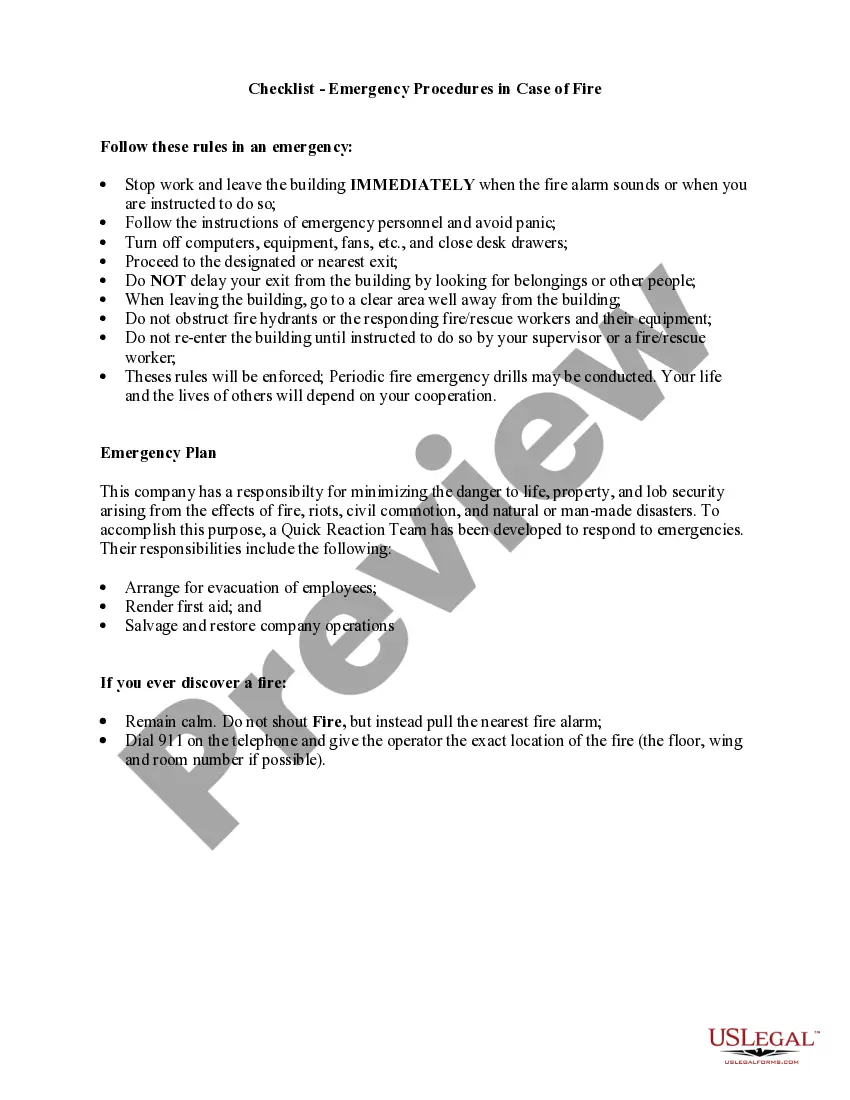
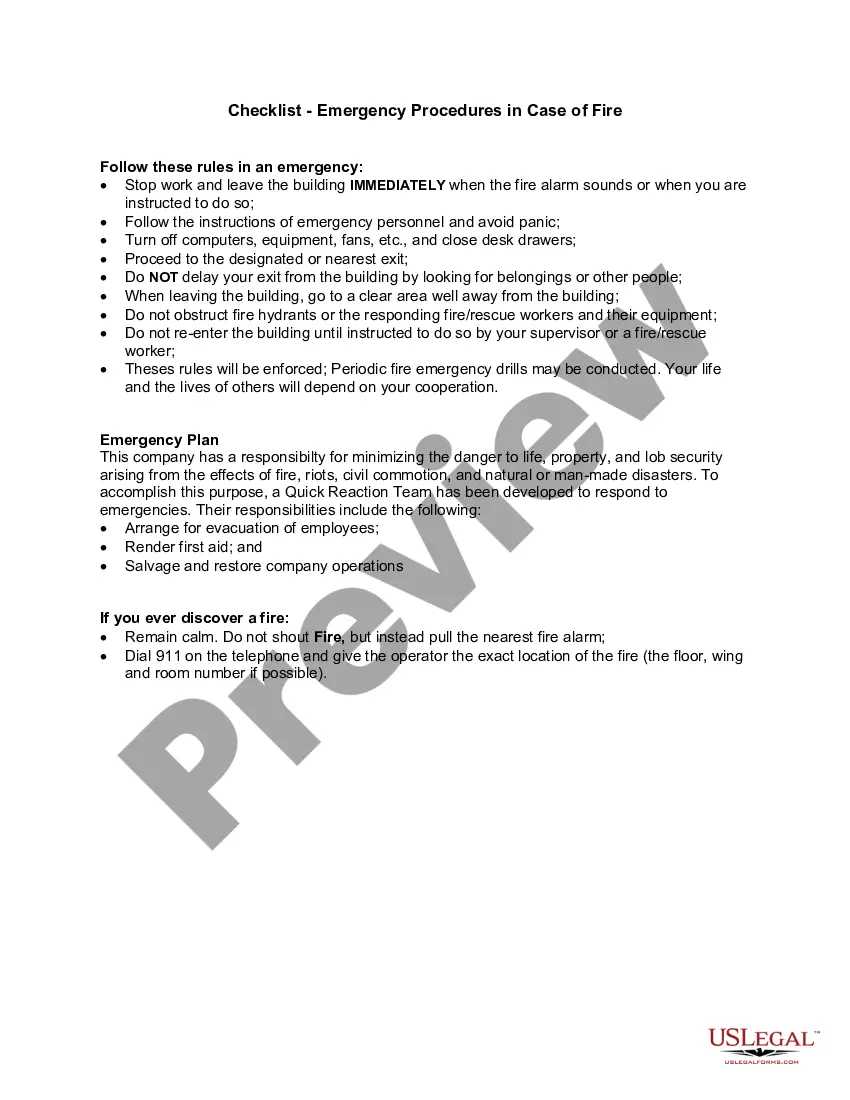
Checklist - Emergency Procedures in Case of Fire
About this form
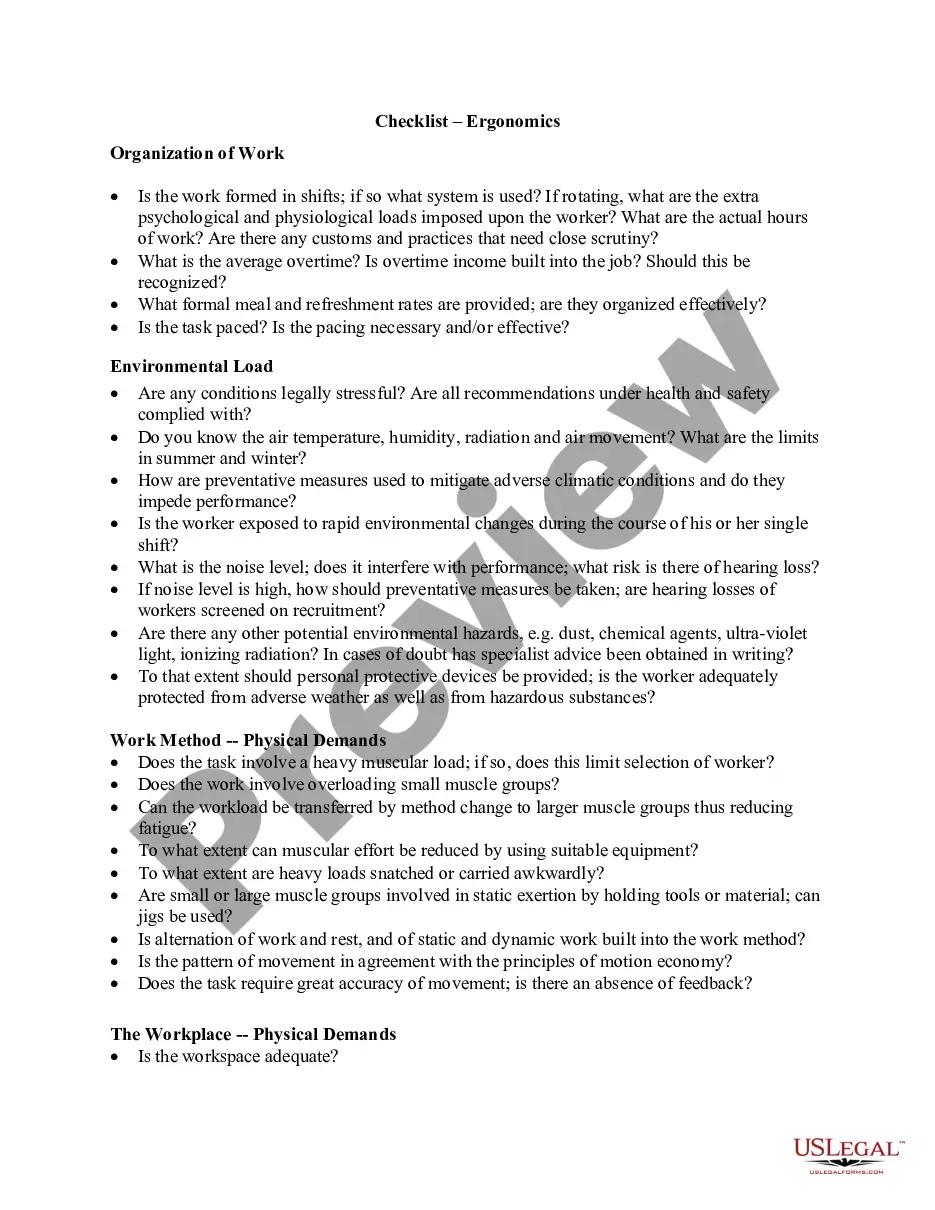
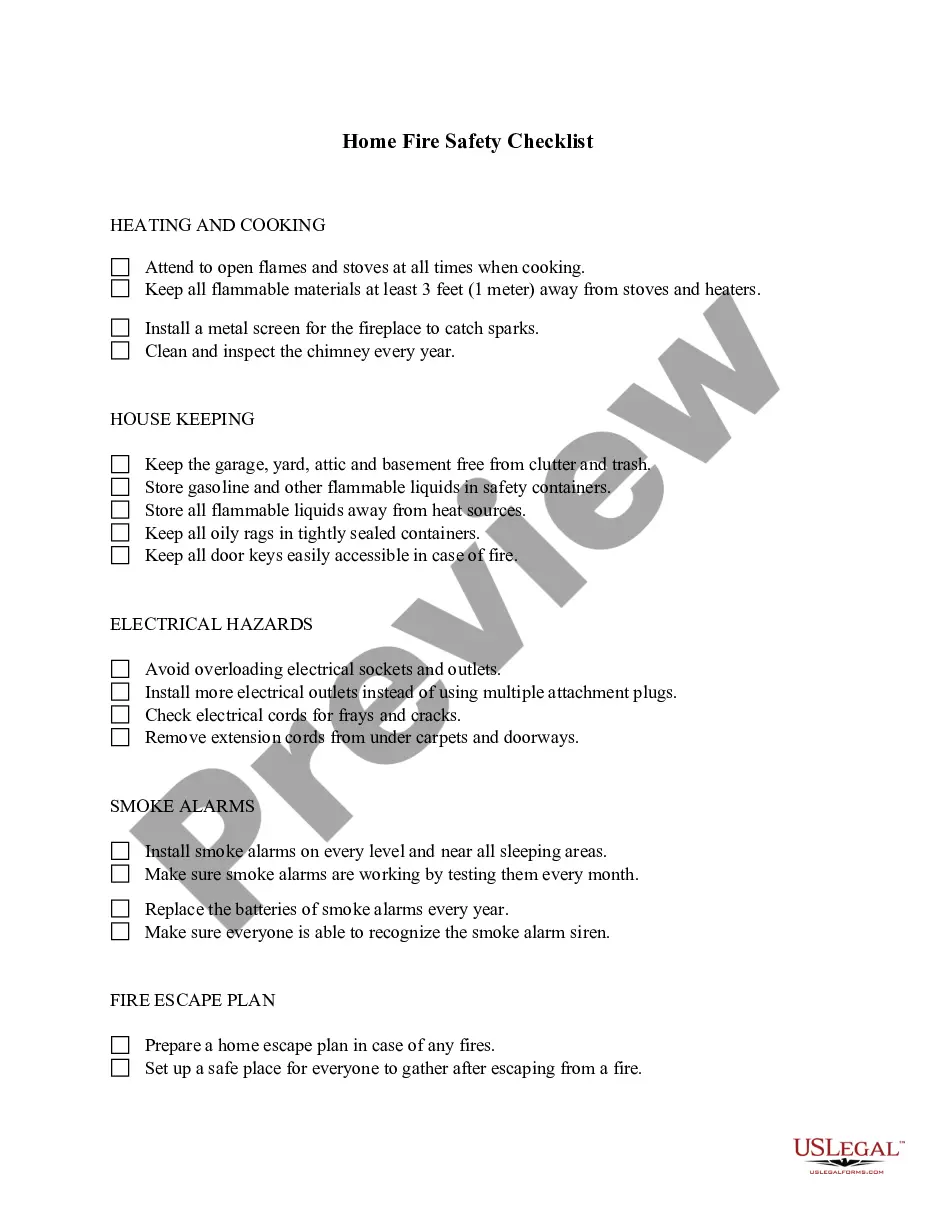
The Checklist - Emergency Procedures in Case of Fire is a vital document designed for employees in the event of a fire emergency. It outlines essential steps and guidelines to ensure their safety and the safety of others during such incidents. This checklist is specifically tailored for fire emergencies, distinguishing it from other emergency procedure forms that may cover a wider range of threats, like natural disasters or medical emergencies.
Main sections of this form
- Immediate evacuation rules when the fire alarm sounds.
- Instructions for interacting with emergency personnel.
- Guidelines for dealing with computers and equipment during an emergency.
- Emergency plan roles and responsibilities of a Quick Reaction Team.
- Steps to take if a fire is discovered.
When to use this document
This checklist should be used by all employees to prepare for potential fire emergencies. It is particularly important to familiarize oneself with the checklist during onboarding or training sessions. Additionally, it serves as a reference during fire drills and real-life scenarios where safety protocols must be followed to ensure orderly evacuation and response.
Who can use this document
- All employees working in offices or facilities prone to fire hazards.
- Management and supervisors responsible for employee safety.
- Human resources professionals during training and orientation programs.
How to prepare this document
- Read through all the emergency procedures outlined in the checklist.
- Familiarize yourself with designated exits and assembly points in your workplace.
- Participate actively in periodic fire drills to practice these procedures.
- Communicate any questions or clarifications about the checklist to your supervisor.
- Ensure that all equipment mentioned in the form is available and functioning during emergencies.
Does this form need to be notarized?
In most cases, this form does not require notarization. However, some jurisdictions or signing circumstances might. US Legal Forms offers online notarization powered by Notarize, accessible 24/7 for a quick, remote process.
Get your form ready online
Our built-in tools help you complete, sign, share, and store your documents in one place.
Make edits, fill in missing information, and update formatting in US Legal Forms—just like you would in MS Word.
Download a copy, print it, send it by email, or mail it via USPS—whatever works best for your next step.
Sign and collect signatures with our SignNow integration. Send to multiple recipients, set reminders, and more. Go Premium to unlock E-Sign.
If this form requires notarization, complete it online through a secure video call—no need to meet a notary in person or wait for an appointment.
We protect your documents and personal data by following strict security and privacy standards.

Make edits, fill in missing information, and update formatting in US Legal Forms—just like you would in MS Word.

Download a copy, print it, send it by email, or mail it via USPS—whatever works best for your next step.

Sign and collect signatures with our SignNow integration. Send to multiple recipients, set reminders, and more. Go Premium to unlock E-Sign.

If this form requires notarization, complete it online through a secure video call—no need to meet a notary in person or wait for an appointment.

We protect your documents and personal data by following strict security and privacy standards.
Avoid these common issues
- Ignoring the checklist during emergency drills.
- Failing to familiarize oneself with the nearest exits.
- Delaying evacuation to gather personal belongings.
- Panic during an emergency which may hinder proper response.
Benefits of using this form online
- Convenient access to the checklist anytime it is needed.
- Easy to download and print for physical distribution among employees.
- Regular updates ensure compliance with the latest safety guidelines.
Looking for another form?
Form popularity
FAQ
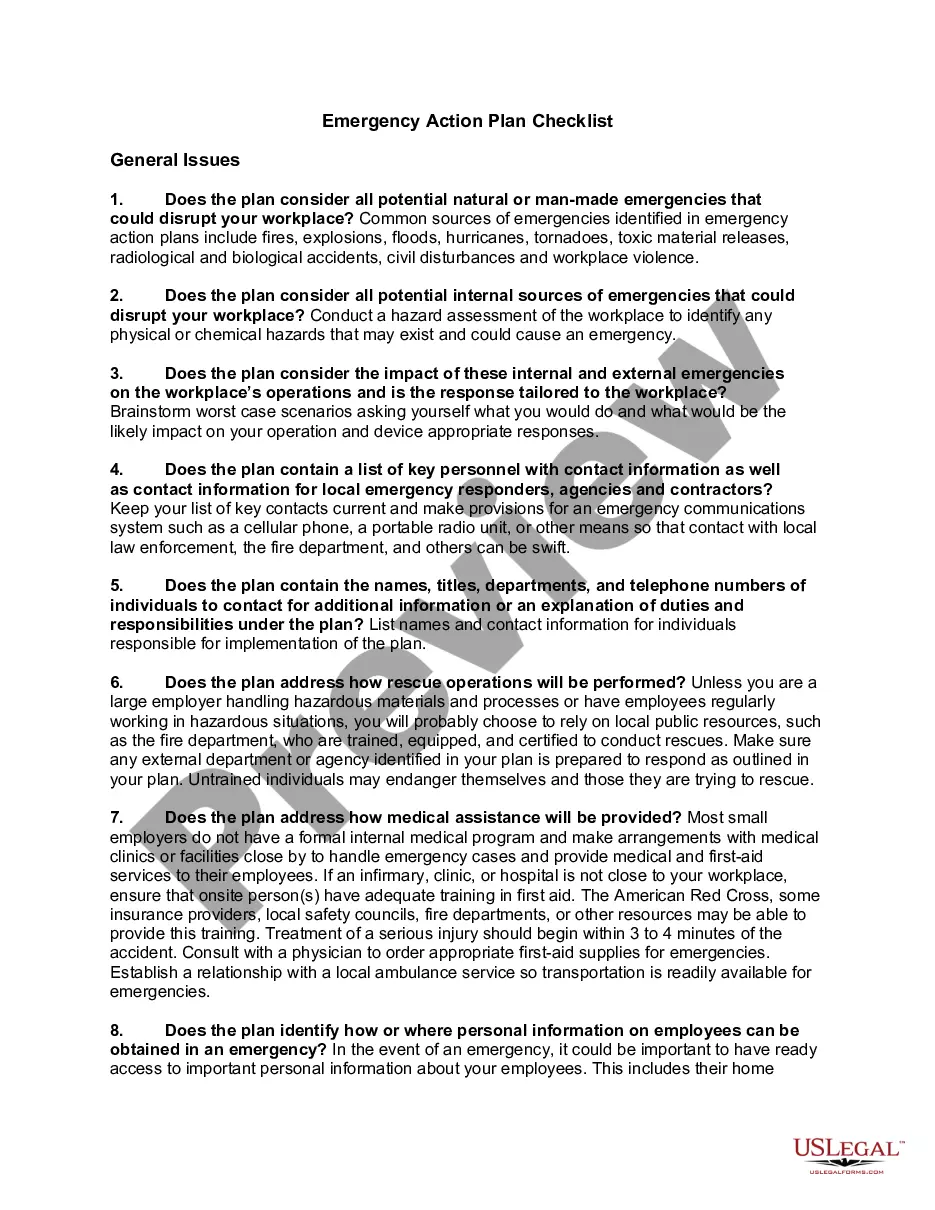
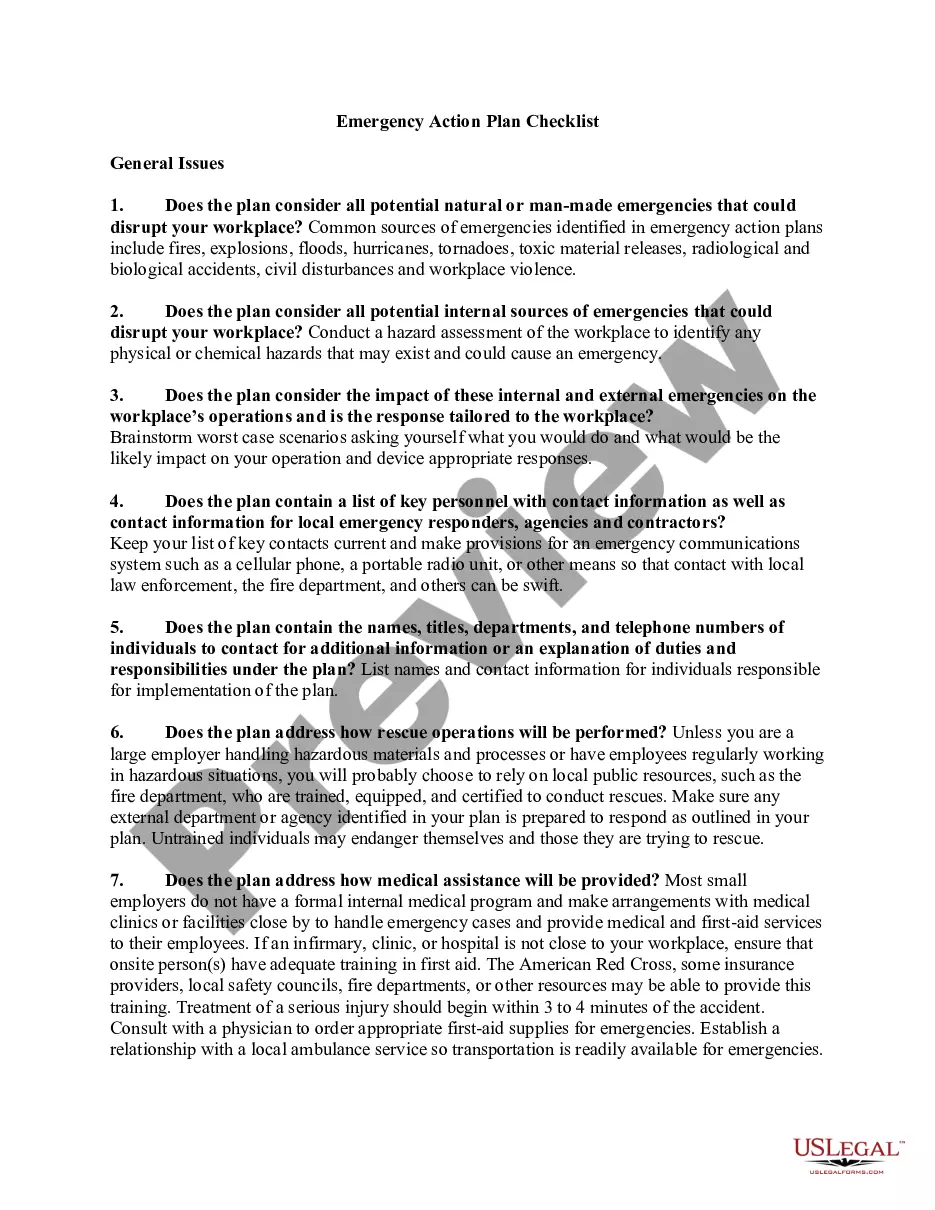
Be Prepared: The 7 Components of an Emergency Plan Planning ? Work through many emergency scenarios.Training ?Drills ?Education ?Technology ?Coordination ?Communication ?
Inform people in the immediate area to evacuate. If you witness a fire, activate the nearest building fire alarm and exit the building. When safe, immediately call 911. If the fire is small (wastebasket sized or smaller) and you have been trained to use a fire extinguisher, you may attempt to extinguish the fire.
The Joint Commission has identified a hospital emergency operation plan's six key elements: communication, resources and assets, safety and security, staff responsibilities, utilities, and clinical and support activities.
Fire in Your Work Space Evacuate the building to the designated emergency assembly area. Pull the fire alarm and warn others nearby as you are leaving. Close doors and windows if time permits. Move away from the fire and smoke whenever possible.
Plans should show the layout of access roads, parking areas, buildings on the property, building entrances, the locations of emergency equipment and the locations of controls for building utility and protection systems. Instructions for operating all systems and equipment should be accessible to emergency responders.
Prevention, mitigation, preparedness, response and recovery are the five steps of Emergency Management.
The Seven Elements of Successful Emergency Action Planning Consider the situations.Determine the correct actions.Create rally points.Verify safe routes.Account for everyone.Drill (or not).Keep reviewing.
Emergency Supply Kit Checklist Face masks or coverings. Three-day supply of non-perishable food and three gallons of water per person. Map marked with at least two evacuation routes. Prescriptions or special medications. Change of clothing. Extra eyeglasses or contact lenses.