Guidelines for Writing Effective Goals
Understanding this form
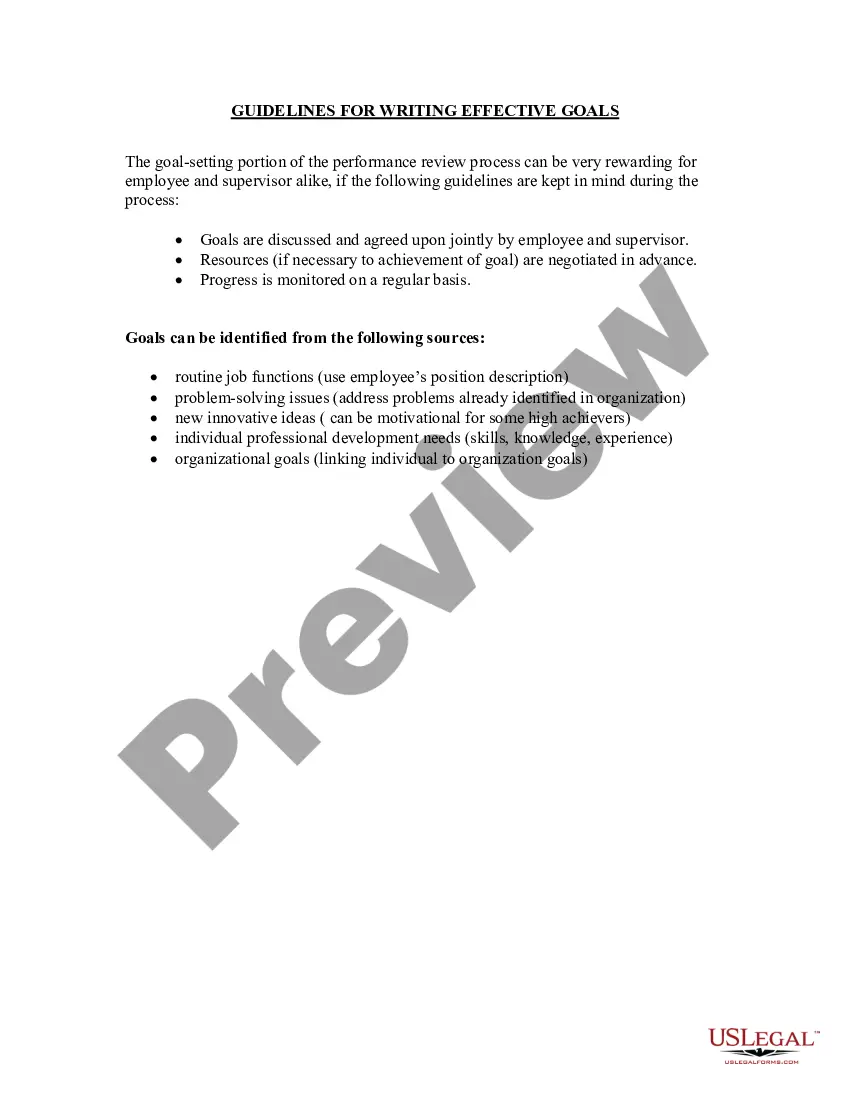
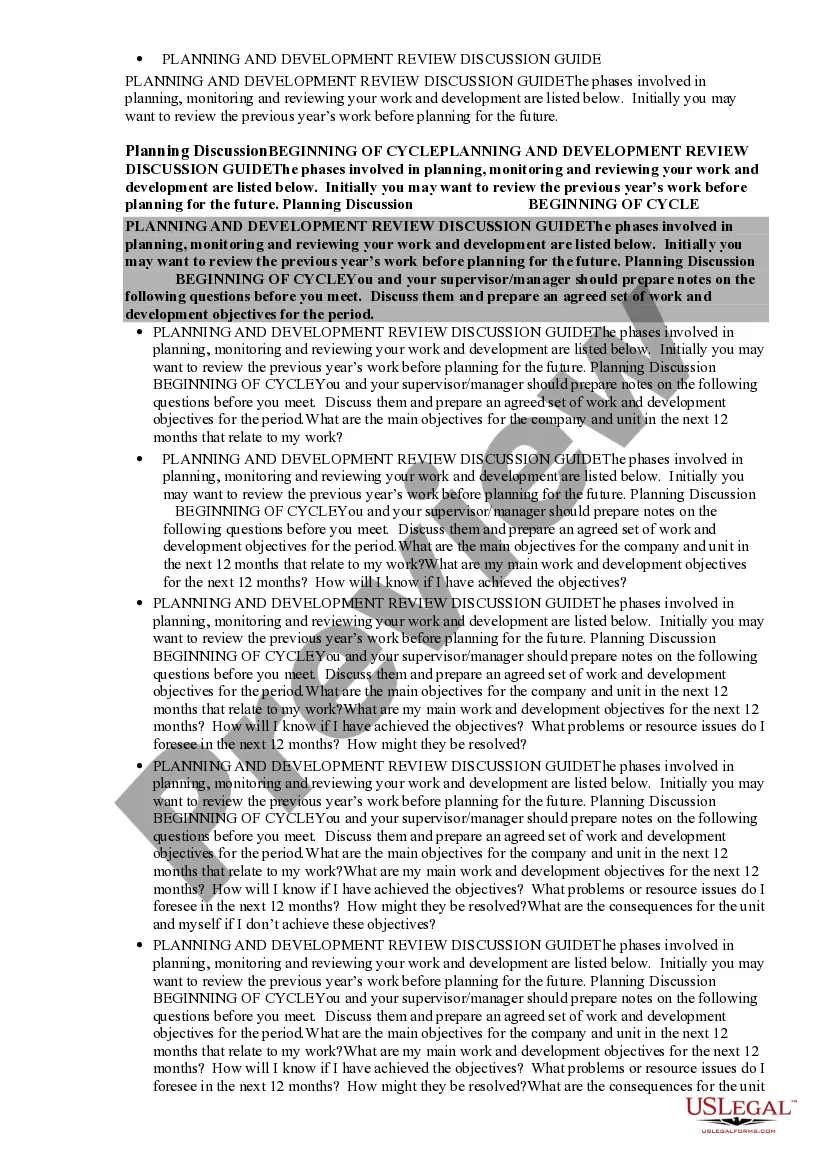
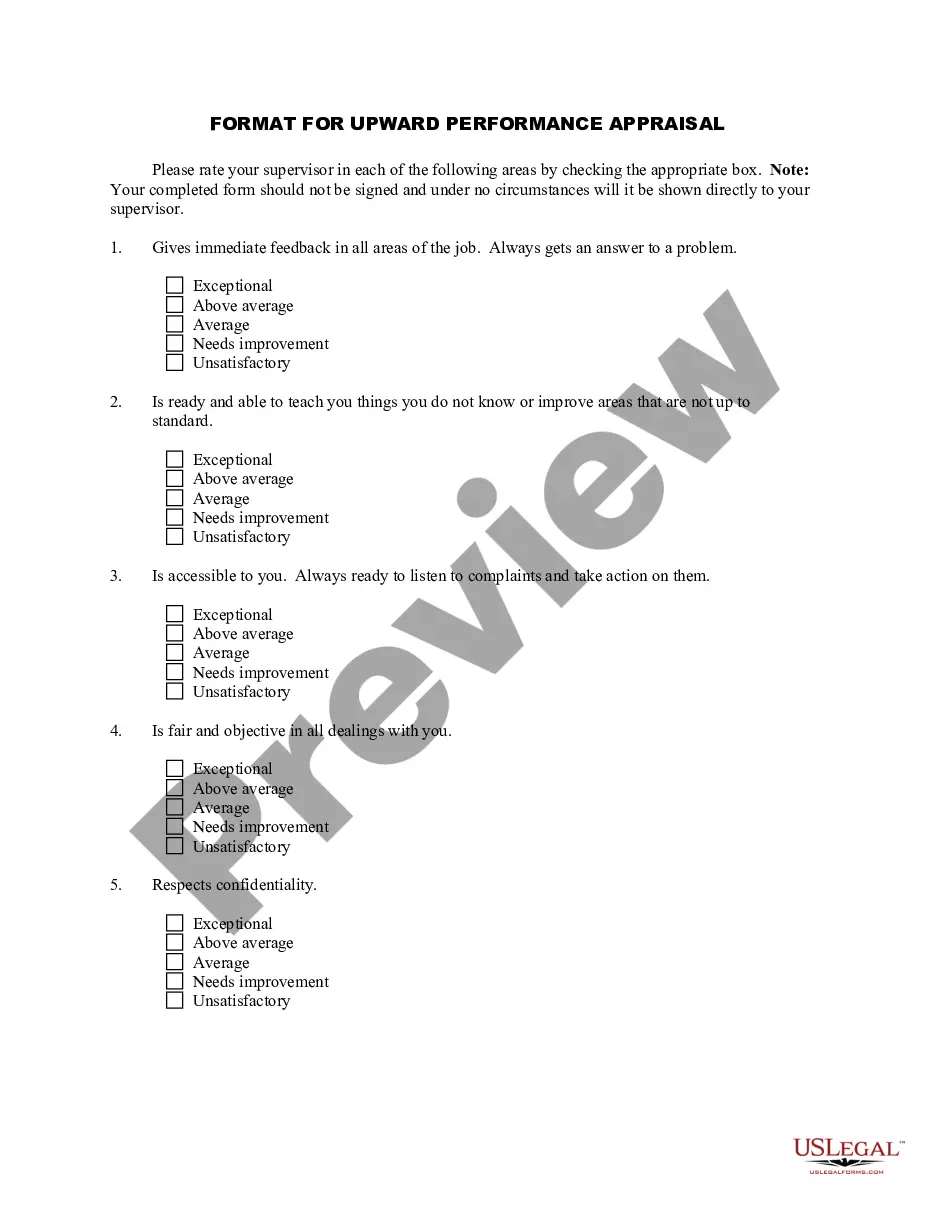
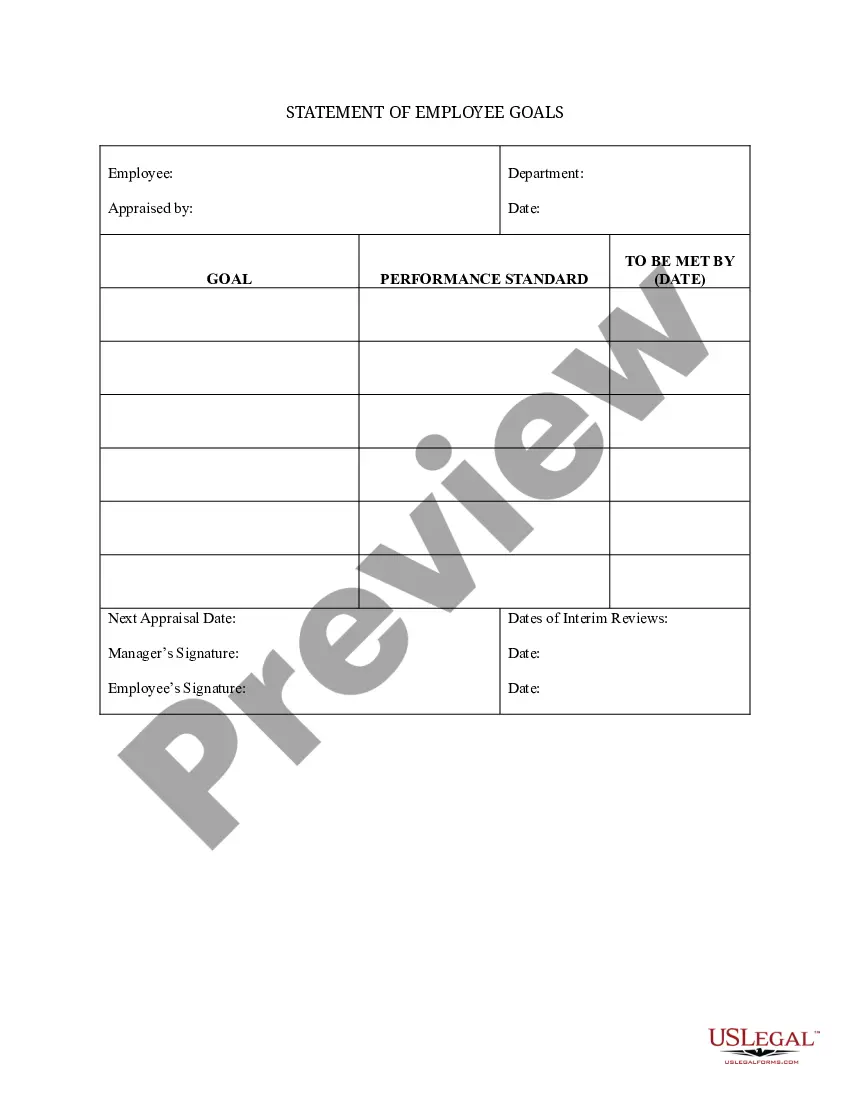
The Guidelines for Writing Effective Goals form provides a structured approach for managers and employees to collaboratively create clear and achievable performance goals. This form differs from other performance review documents by focusing specifically on the goal-setting process, ensuring both parties have input and clarity on expectations.
Key components of this form
- Joint discussion and agreement between employee and supervisor on goals.
- Negotiation of necessary resources for achieving goals.
- Regular monitoring of progress towards goals.
- Identification of goals based on routine job functions, problem-solving, and innovative ideas.
- Consideration of individual professional development and organizational objectives.
When to use this form
This form is useful when conducting performance reviews, particularly during the goal-setting phase. It is relevant in situations where an employee needs to align their work objectives with organizational goals, enhance their skills, or address specific challenges. This proactive approach fosters accountability and motivation for both employees and supervisors.
Who this form is for
- Managers and supervisors looking to set clear performance goals with their team members.
- Employees who want to participate in defining their performance objectives.
- Human resources professionals involved in the performance appraisal process.
How to prepare this document
- Start by initiating a discussion with the employee to establish mutual goals.
- Negotiate any required resources or support necessary to meet the goals.
- Document each agreed-upon goal clearly, ensuring it is specific and measurable.
- Set up a schedule for regular progress check-ins to monitor development.
- Encourage feedback from the employee to adjust goals or strategies as needed.
Notarization guidance
Notarization is not commonly needed for this form. However, certain documents or local rules may make it necessary. Our notarization service, powered by Notarize, allows you to finalize it securely online anytime, day or night.
Get your form ready online
Our built-in tools help you complete, sign, share, and store your documents in one place.
Make edits, fill in missing information, and update formatting in US Legal Forms—just like you would in MS Word.
Download a copy, print it, send it by email, or mail it via USPS—whatever works best for your next step.
Sign and collect signatures with our SignNow integration. Send to multiple recipients, set reminders, and more. Go Premium to unlock E-Sign.
If this form requires notarization, complete it online through a secure video call—no need to meet a notary in person or wait for an appointment.
We protect your documents and personal data by following strict security and privacy standards.

Make edits, fill in missing information, and update formatting in US Legal Forms—just like you would in MS Word.

Download a copy, print it, send it by email, or mail it via USPS—whatever works best for your next step.

Sign and collect signatures with our SignNow integration. Send to multiple recipients, set reminders, and more. Go Premium to unlock E-Sign.

If this form requires notarization, complete it online through a secure video call—no need to meet a notary in person or wait for an appointment.

We protect your documents and personal data by following strict security and privacy standards.
Mistakes to watch out for
- Setting vague or unclear goals that lack measurable outcomes.
- Failing to involve the employee in the goal-setting process.
- Neglecting to allocate adequate resources for achieving goals.
- Not establishing a timeline for goal assessment.
Why use this form online
- Convenient access to templates for immediate use.
- Editability allows for customization to specific performance needs.
- Reliable formats ensure consistency in goal documentation.
Legal use & context
- Helps provide a structured and documented approach to goal setting.
- Encourages accountability in the performance review process.
- Facilitates communication and understanding between employee and supervisor.
Key takeaways
- The form facilitates goal-setting through collaboration between employee and supervisor.
- Clear goals improve accountability and motivation in the workplace.
- Regular monitoring and adjustments can lead to better performance outcomes.
Looking for another form?


Form popularity
FAQ
S. Specific. M. Measurable. A. Achievable (attainable, action-oriented) R. Relevant (realistic, reasonable) T. Time-bound.
Objectives should be clear, well defined and unambiguous. Each objective should be focussed on one key outcome. Measurable: Objectives should be measurable so that you can demonstrate it has been achieved.
Objectives must be specific, measurable, and time-bound. For each goal, you should develop 3-5 objectives.
Step 1: Write down your academic interests. Step 2: Connect your major with a potential career. Step 3: Identify the skills/classes that you will need to take to accomplish your academic and career goals. Step 4: Set short-term goals that bring you closer to fulfilling your long-term goal.
Are stated clearly, define or describe an action, and. are measurable, in terms of time, space, amount, and/or frequency.
Believe in the process. The first step to goal setting is having absolute faith and belief in the process. Write it down. Set goals that are specific. Set goals that are measurable. Set goals that are attainable. Set goals that are realistic. Set goals that are timely. Remain accountable.
Specific. Instructional objectives should precisely describe what is expected of a learner. Measurable. A measurable instructional objective is one that can be observed or one that generates data points. Attainable. Relevant. Time-framed.
A well-constructed learning objective describes an intended learning outcome and contains three parts: 1) conditions under which the resulting behavior is to be performed, 2) an observable student behavior (such as a capability) that is attained, described in concrete terms, and 3) a criterion that shows how well the