Jury Instruction - Possession Of Unregistered Firearm
Overview of this form
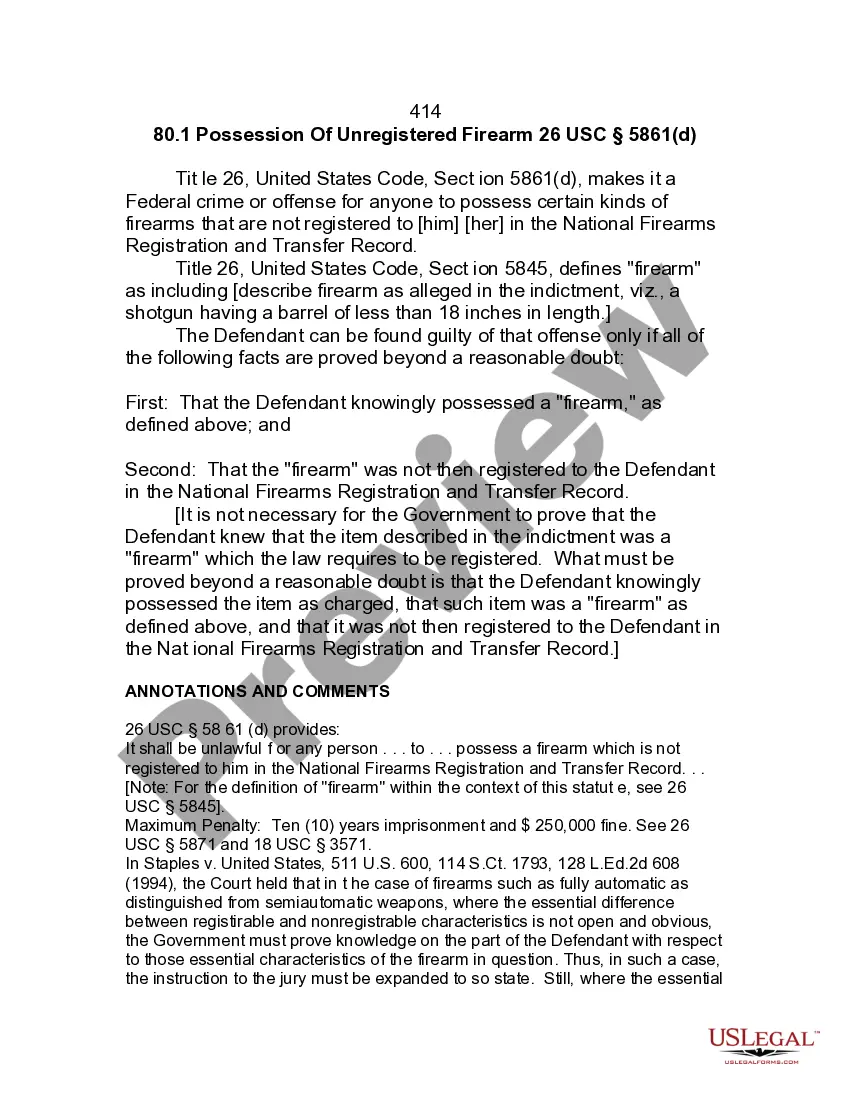
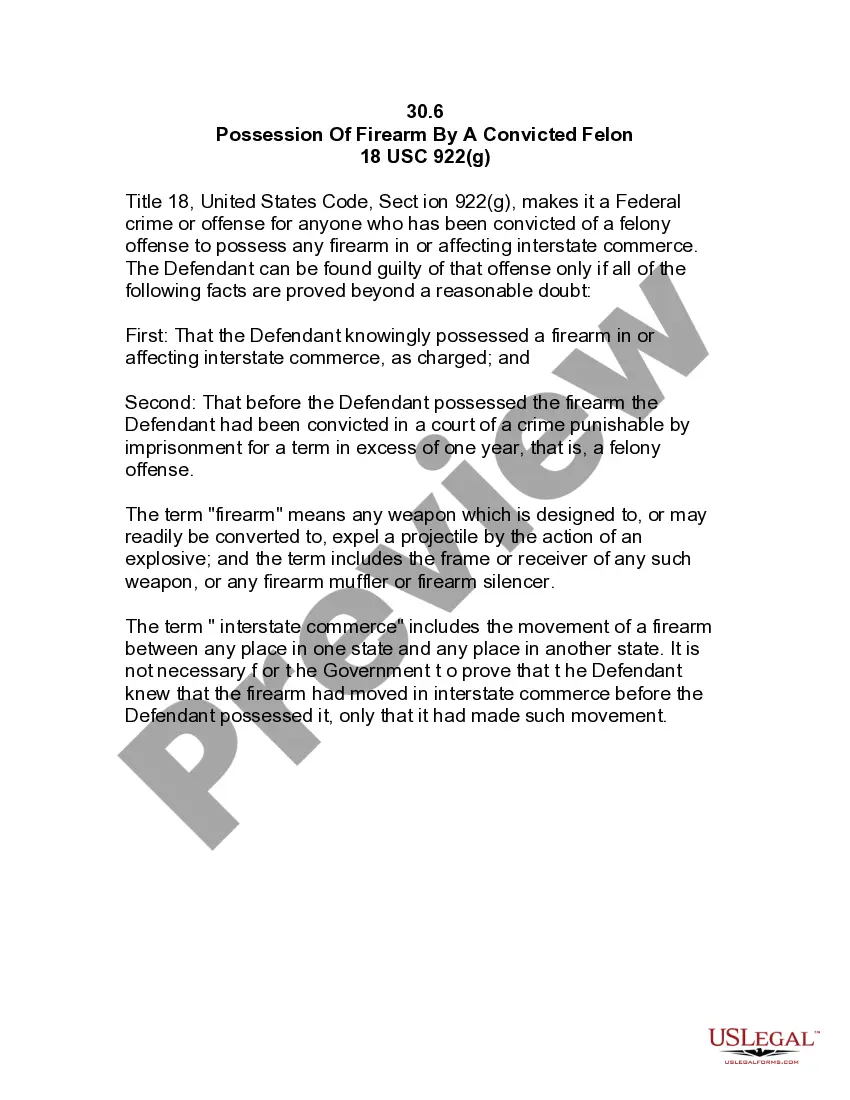
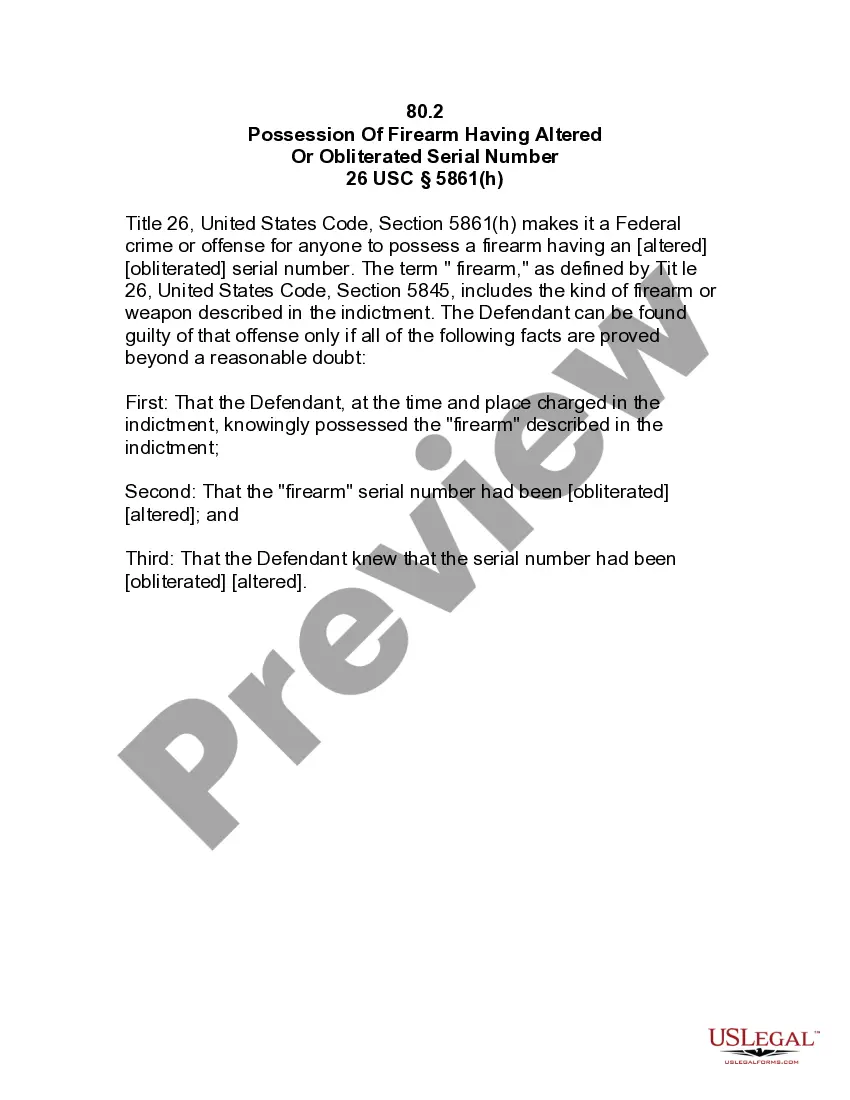
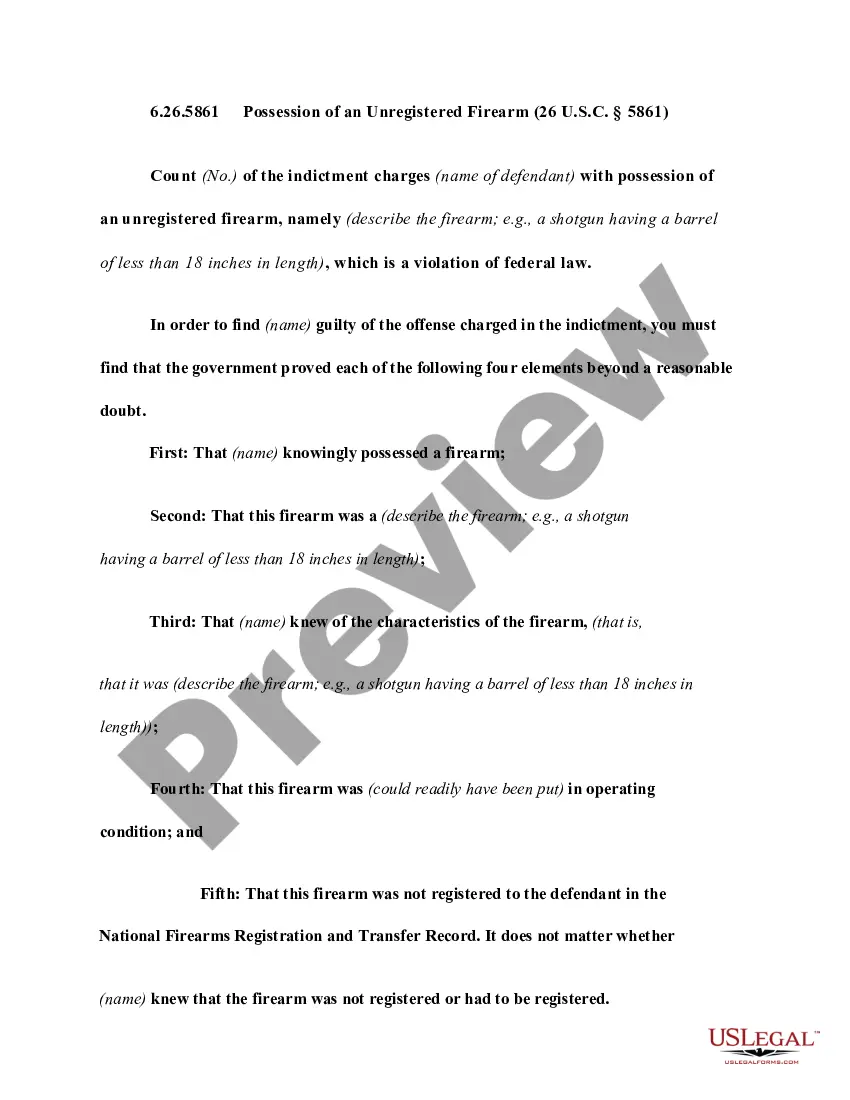
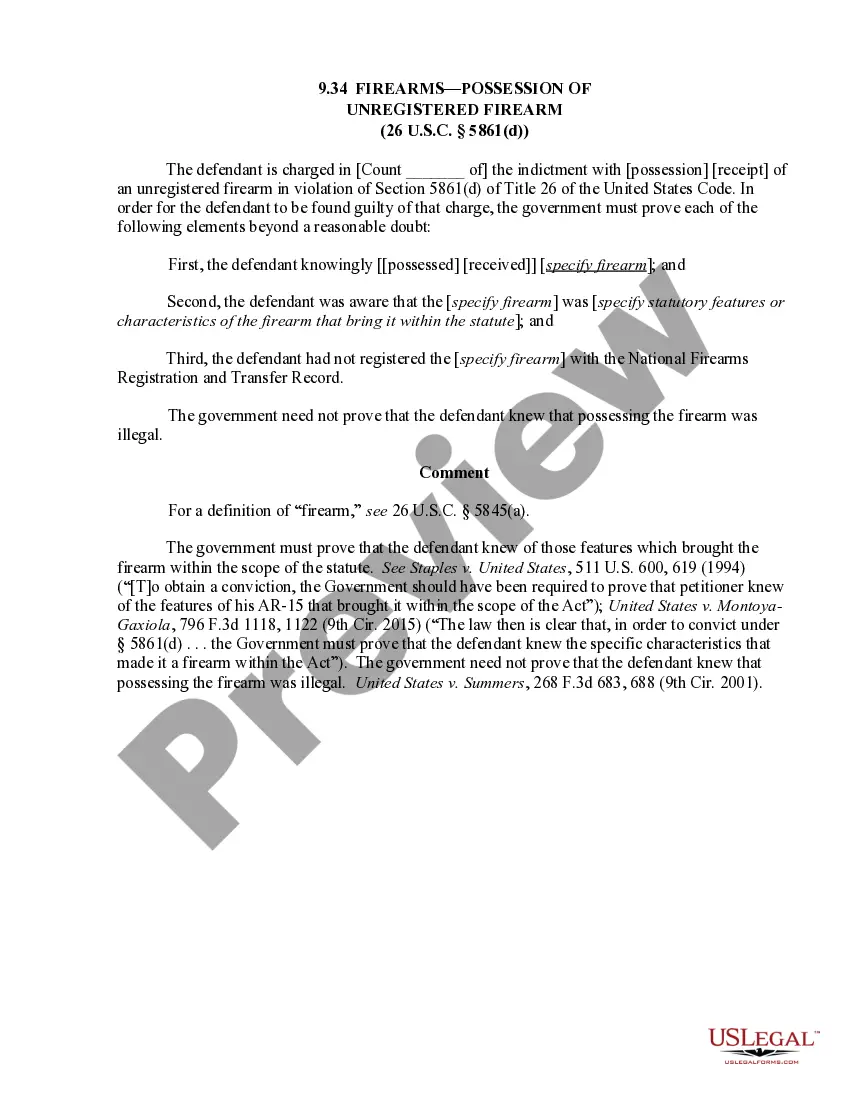
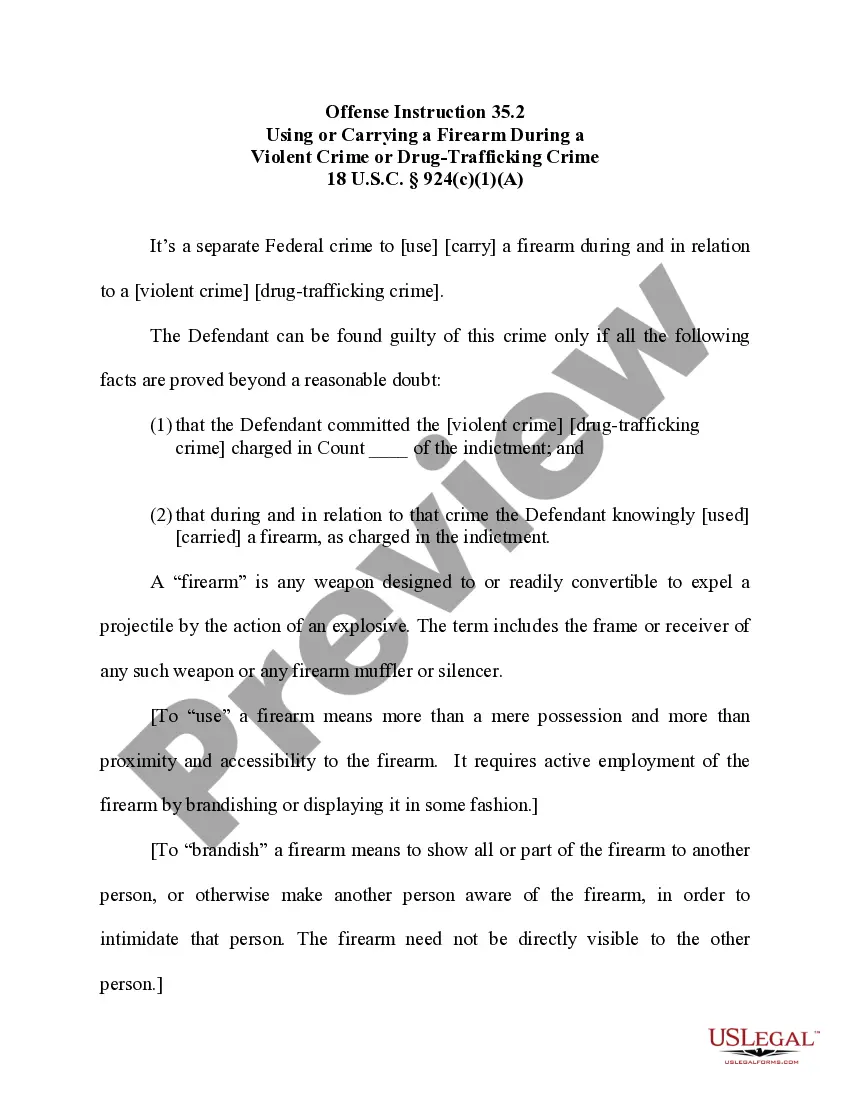
The Jury Instruction for Possession of Unregistered Firearm form provides essential guidelines for juries to consider when determining the guilt of a defendant accused of possessing an unregistered firearm. This form assists in clearly outlining the legal criteria set forth by the federal law under Title 26, United States Code, Section 5861(d). Unlike other jury instruction forms, this one focuses specifically on firearms that require registration within the National Firearms Registration and Transfer Record, making it vital for cases involving such offenses.
What’s included in this form
- Definition of possession and firearms under federal law.
- Criteria for establishing guilt beyond a reasonable doubt.
- Legal implications of not registering a firearm.
- Judicial annotations relevant to jury instruction procedures.
- Maximum penalty information, including imprisonment and fines.

When this form is needed
This form is used in trials where a defendant is charged with the possession of a firearm that is not registered as required by federal law. It is crucial in scenarios where the jury must assess evidence and determine if the defendant possessed a firearm that fits the specified legal definition and whether it was registered to them.
Who should use this form
Relevant participants in legal proceedings may include:
- Judges overseeing trials involving firearm possession charges.
- Prosecutors presenting cases related to unregistered firearm possession.
- Defense attorneys representing defendants accused of this offense.
- Jurors tasked with deciding the outcome of such cases.
Steps to complete this form
- Review the legal definitions of possession and firearms outlined in the form.
- Ensure that all jury members understand the criteria for establishing guilt.
- Instruct jurors on the relevant laws and legal precedents associated with unregistered firearms.
- Outline the maximum penalties for the offense to provide context to jurors.
- Address any questions or clarifications needed to ensure comprehension before deliberation.
Notarization guidance
This form does not typically require notarization to be legally valid. However, some jurisdictions or document types may still require it. US Legal Forms provides secure online notarization powered by Notarize, available 24/7 for added convenience.
Get your form ready online
Our built-in tools help you complete, sign, share, and store your documents in one place.
Make edits, fill in missing information, and update formatting in US Legal Forms—just like you would in MS Word.
Download a copy, print it, send it by email, or mail it via USPS—whatever works best for your next step.
Sign and collect signatures with our SignNow integration. Send to multiple recipients, set reminders, and more. Go Premium to unlock E-Sign.
If this form requires notarization, complete it online through a secure video call—no need to meet a notary in person or wait for an appointment.
We protect your documents and personal data by following strict security and privacy standards.

Make edits, fill in missing information, and update formatting in US Legal Forms—just like you would in MS Word.

Download a copy, print it, send it by email, or mail it via USPS—whatever works best for your next step.

Sign and collect signatures with our SignNow integration. Send to multiple recipients, set reminders, and more. Go Premium to unlock E-Sign.

If this form requires notarization, complete it online through a secure video call—no need to meet a notary in person or wait for an appointment.

We protect your documents and personal data by following strict security and privacy standards.
Common mistakes
- Failing to properly define what constitutes possession of a firearm.
- Overlooking the importance of proving registration status beyond a reasonable doubt.
- Neglecting to explain legal concepts clearly to jurors.
- Assuming jurors are familiar with the specific laws regarding firearms.
Benefits of completing this form online
- Convenience of having access to legally sound jury instructions at any time.
- Immediate download and customization to fit specific case needs.
- Drafted by licensed attorneys, ensuring legal reliability.
- Easy integration into case management systems for legal professionals.
Looking for another form?


Form popularity
FAQ
The judge instructs the jury about the relevant laws that should guide its deliberations. (In some jurisdictions, the court may instruct the jury at any time after the close of evidence.The judge reads the instructions to the jury. This is commonly referred to as the judge's charge to the jury.
Westlaw: Jury instructions can be found by going to Secondary Sources link, then selecting jury selections from the options listed on the left side of the page.
Jury Instructions. instructions that are given by the trial judge that specifically state what the defendant can be found guilty of and what the prosecution or plaintiff has to prove in order for a guilty verdict.
A jury instruction is a guideline given by the judge to the jury about the law they will have to apply to the facts they have found to be true. The purpose of the instructions is to help the jury arrive at a verdict that follows the law of that jurisdiction.
These are civil or criminal jury instructions approved by a state court, bench committee, or bar association. They are commonly used by courts in the relevant jurisdiction, as they ease the process of drafting fair jury instructions and theoretically do not have errors.