Jury Instruction - Aggravated Sexual Abuse - By Force Or Threat
About this form
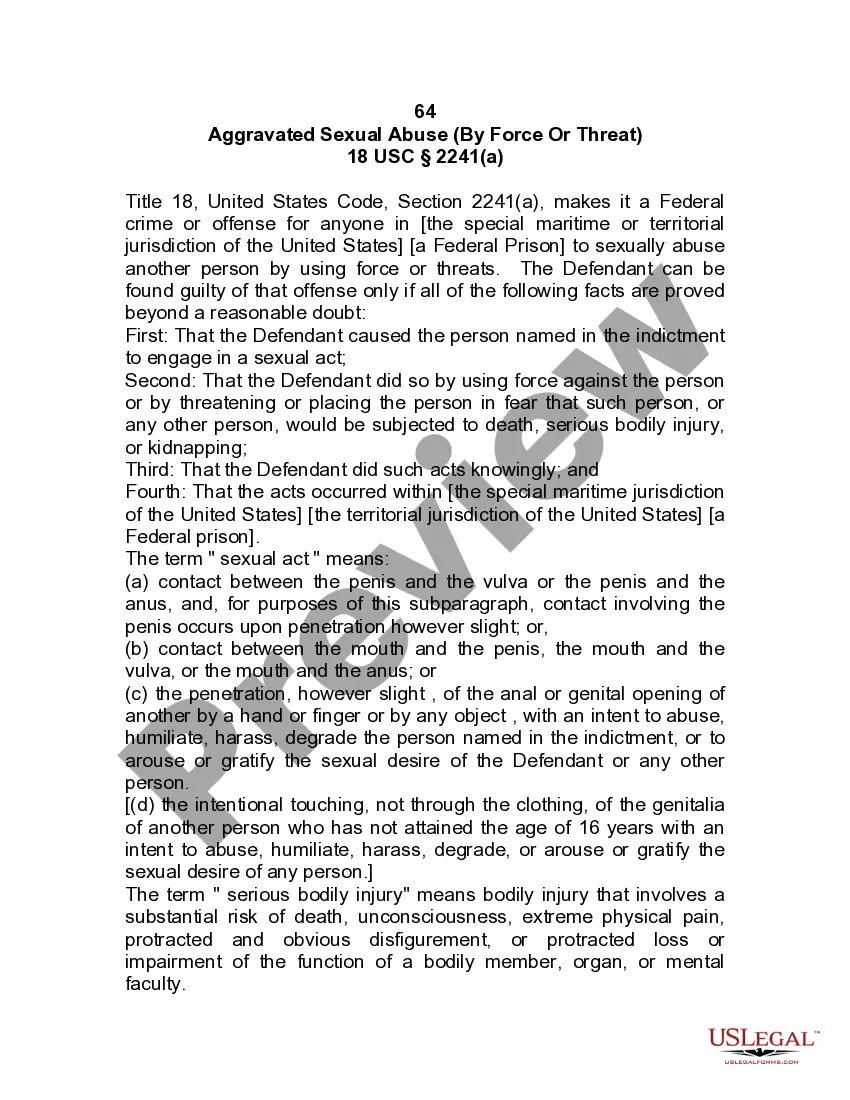
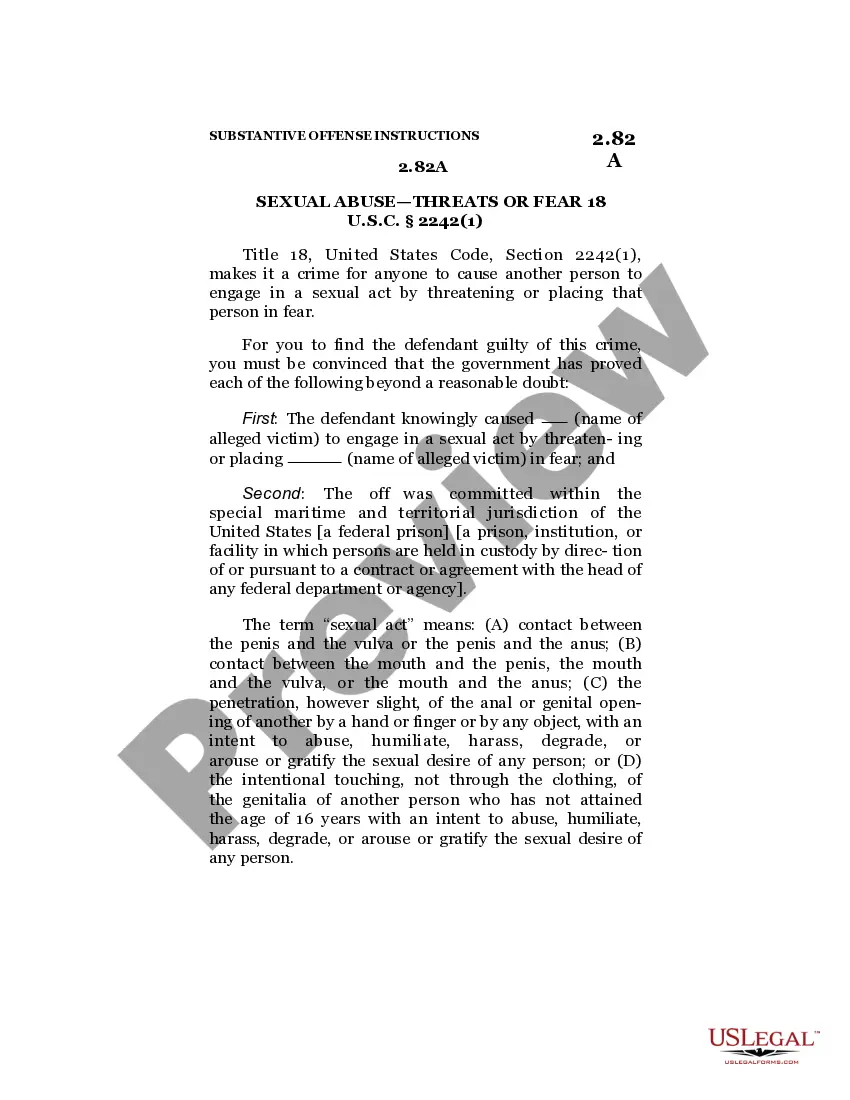
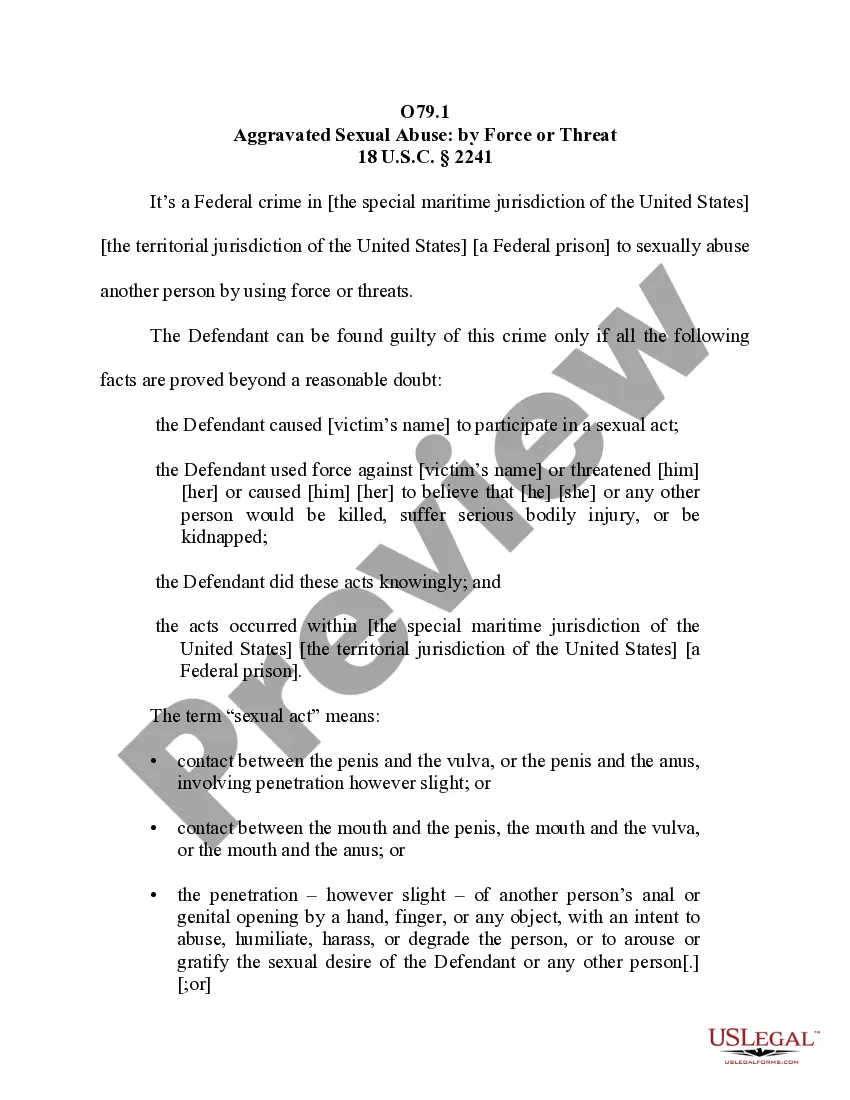
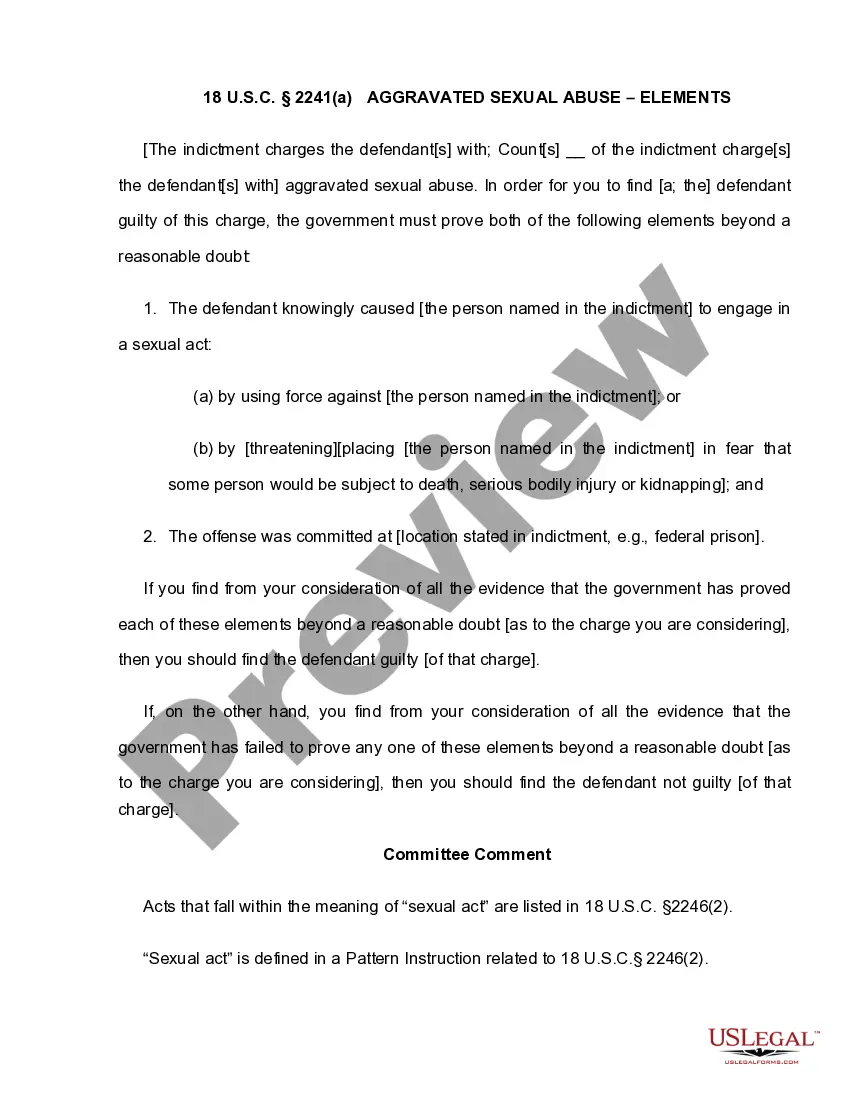
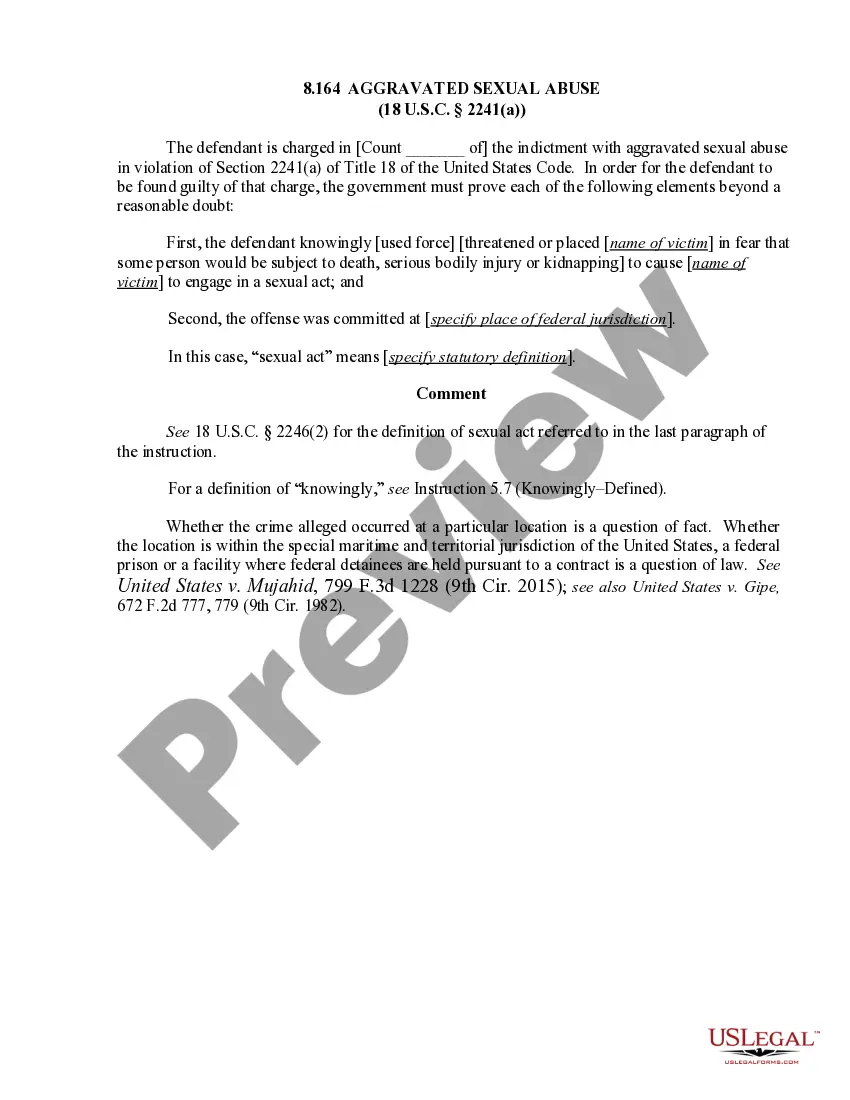
The Jury Instruction - Aggravated Sexual Abuse - By Force Or Threat is a legal document that provides sample jury instructions for cases involving aggravated sexual abuse. This form highlights the specific legal standards and definitions necessary for jurors to consider when determining guilt in cases of sexual abuse where force or threat is involved. It is designed to assist in clarifying the legal framework established by Title 18, United States Code, Section 2241(a), and differs from similar forms by focusing specifically on aggravated cases under federal jurisdiction.
Key parts of this document
- Definition of aggravated sexual abuse and relevant statutory language.
- Explanation of what constitutes a "sexual act" as required by law.
- Criteria for proving the defendant's guilt beyond a reasonable doubt.
- Clarification of terms such as "serious bodily injury" and "force or threats."
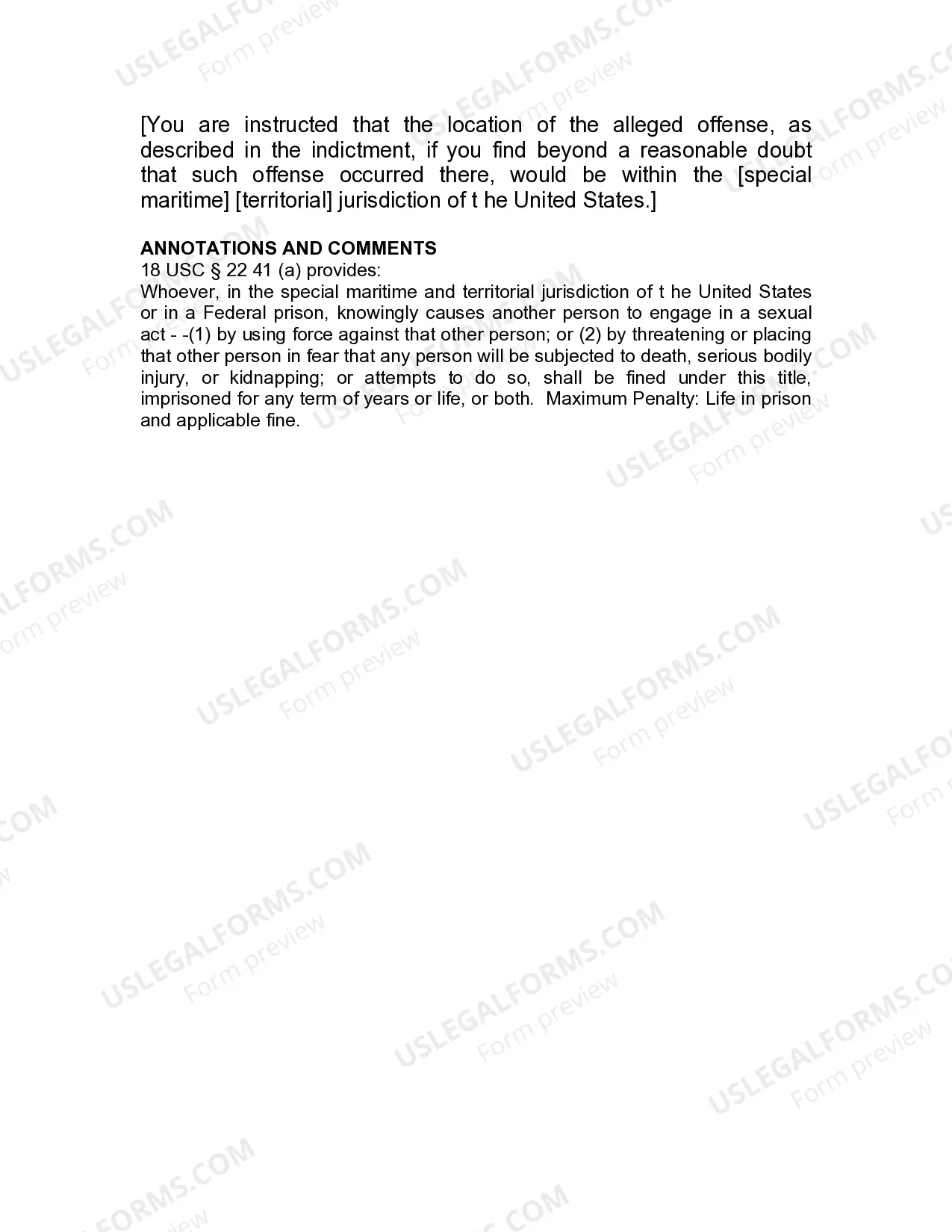
- Details on the jurisdictional requirements for federal cases.
When to use this document
This jury instruction form should be used in federal court cases where a charge of aggravated sexual abuse by force or threat is presented. It serves as a guideline to assist jurors in understanding the key elements of the offense, ensuring that they can make informed decisions based on the law and the evidence presented. Typical scenarios include cases where the defendant is accused of using physical force or threatening serious harm to coerce the victim into engaging in sexual acts.
Who can use this document
- Attorneys involved in federal criminal cases related to aggravated sexual abuse.
- Judges needing to provide jury instructions in relevant trials.
- Legal professionals seeking a thorough understanding of jury directives for such cases.
- Individuals involved in legal education to study jury instruction formats.
How to complete this form
- Review the specific legal definitions and criteria outlined in the form.
- Ensure that the jurors are familiar with the elements that must be proven beyond a reasonable doubt.
- Adapt the sample instructions as necessary to fit the facts of the specific case.
- Present the adapted jury instructions to the court for approval.
- Distribute copies of the approved jury instructions to all jurors before deliberations.
Is notarization required?
This form usually doesn’t need to be notarized. However, local laws or specific transactions may require it. Our online notarization service, powered by Notarize, lets you complete it remotely through a secure video session, available 24/7.
Get your form ready online
Our built-in tools help you complete, sign, share, and store your documents in one place.
Make edits, fill in missing information, and update formatting in US Legal Forms—just like you would in MS Word.
Download a copy, print it, send it by email, or mail it via USPS—whatever works best for your next step.
Sign and collect signatures with our SignNow integration. Send to multiple recipients, set reminders, and more. Go Premium to unlock E-Sign.
If this form requires notarization, complete it online through a secure video call—no need to meet a notary in person or wait for an appointment.
We protect your documents and personal data by following strict security and privacy standards.

Make edits, fill in missing information, and update formatting in US Legal Forms—just like you would in MS Word.

Download a copy, print it, send it by email, or mail it via USPS—whatever works best for your next step.

Sign and collect signatures with our SignNow integration. Send to multiple recipients, set reminders, and more. Go Premium to unlock E-Sign.

If this form requires notarization, complete it online through a secure video call—no need to meet a notary in person or wait for an appointment.

We protect your documents and personal data by following strict security and privacy standards.
Common mistakes to avoid
- Failing to adapt jury instructions to the specific facts of the case.
- Using outdated legal definitions that may no longer be applicable.
- Overcomplicating jury instructions with unnecessary legal jargon.
- Neglecting to clearly outline the criteria for proving guilt beyond a reasonable doubt.
Advantages of online completion
- Convenient access to pre-drafted legal language that can be tailored to your needs.
- Immediate downloads allow for quick use in time-sensitive situations.
- Reliability from templates drafted by licensed attorneys, ensuring compliance with legal standards.
- Ability to edit and customize instructions for different cases seamlessly.
Looking for another form?
Form popularity
FAQ
Emotional abuse is the most common form of abuse and yet least talked about.
Abuse can be physical, emotional, or sexual. Physical abuse means any form of violence, such as hitting, punching, pulling hair, and kicking. Abuse can happen in both dating relationships and friendships.
The four main types of domestic abuse are often listed as physical, sexual, emotional, and neglect.
Mental abuse means any willful action or inaction of mental or verbal abuse. Mental abuse includes, but is not limited to, coercion, harassment, inappropriately isolating a vulnerable adult from family, friends, or regular activity, and verbal assault that includes ridiculing, intimidating, yelling, or swearing.
The National Center on Elder Abuse distinguishes between seven different types of elder abuse. These include physical abuse, sexual abuse, emotional abuse, financial/material exploitation, neglect, abandonment, and self-neglect.
Emotional abuse is the most common form of abuse and yet least talked about.
Physical abuse. Domestic violence or abuse. Sexual abuse. Psychological or emotional abuse. Financial or material abuse. Modern slavery. Discriminatory abuse. Organisational or institutional abuse.
Abuse is defined as any action that intentionally harms or injures another person. In short, someone who purposefully harms another in any way is committing abuse.
Physical. This is the type of abuse that many people think of when they hear the word 'abuse. Sexual. Verbal/Emotional. Mental/Psychological. Financial/Economic. Cultural/Identity.
Verbal abuse is the use of words to cause harm to the person being spoken to. Verbal abuse may consist of shouting, insulting, intimidating, threatening, shaming, demeaning, or derogatory language, among other forms of communication.