Jury Instruction - Deprivation Of Civil Rights - Without Bodily Injury, Kidnapping Sexual Assault Or Death
What this document covers
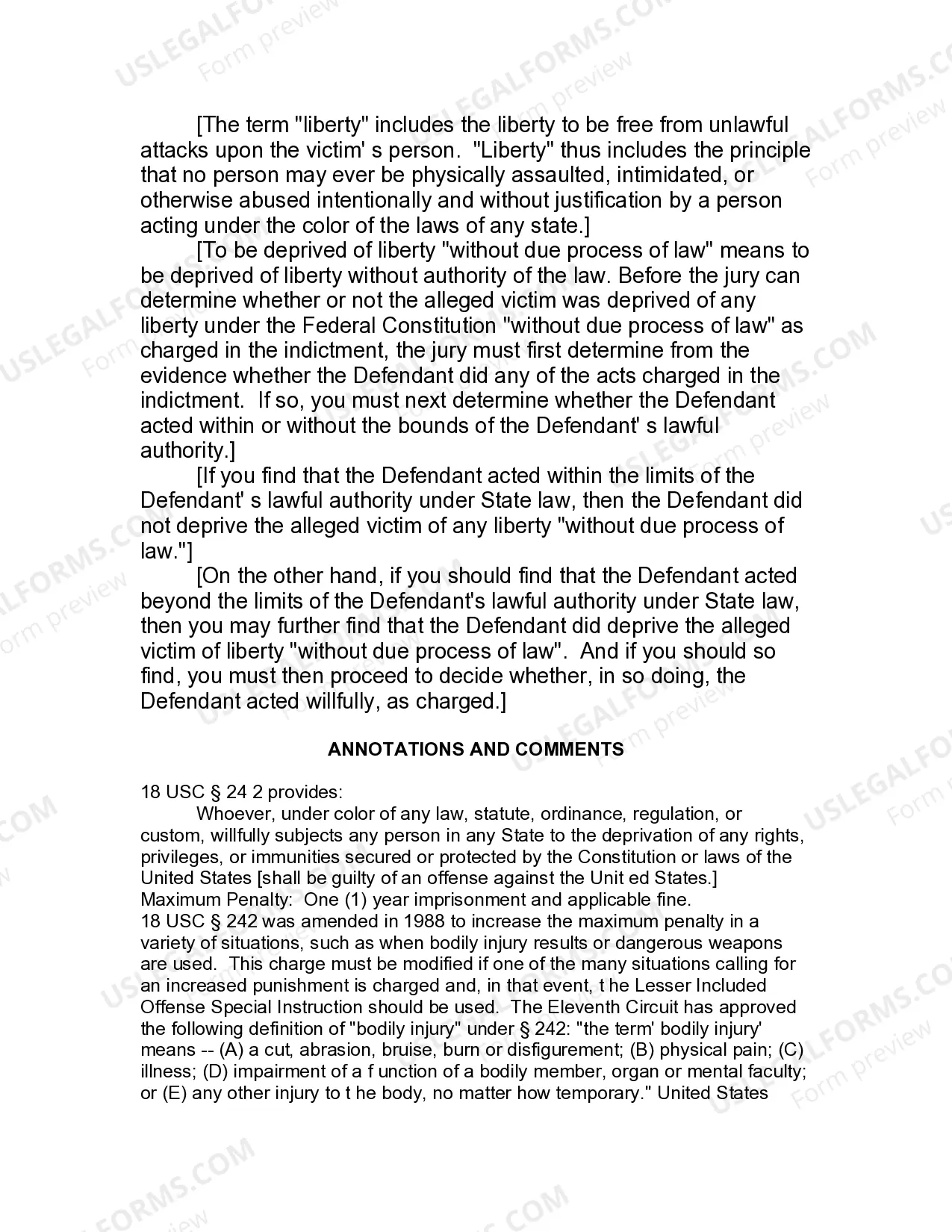
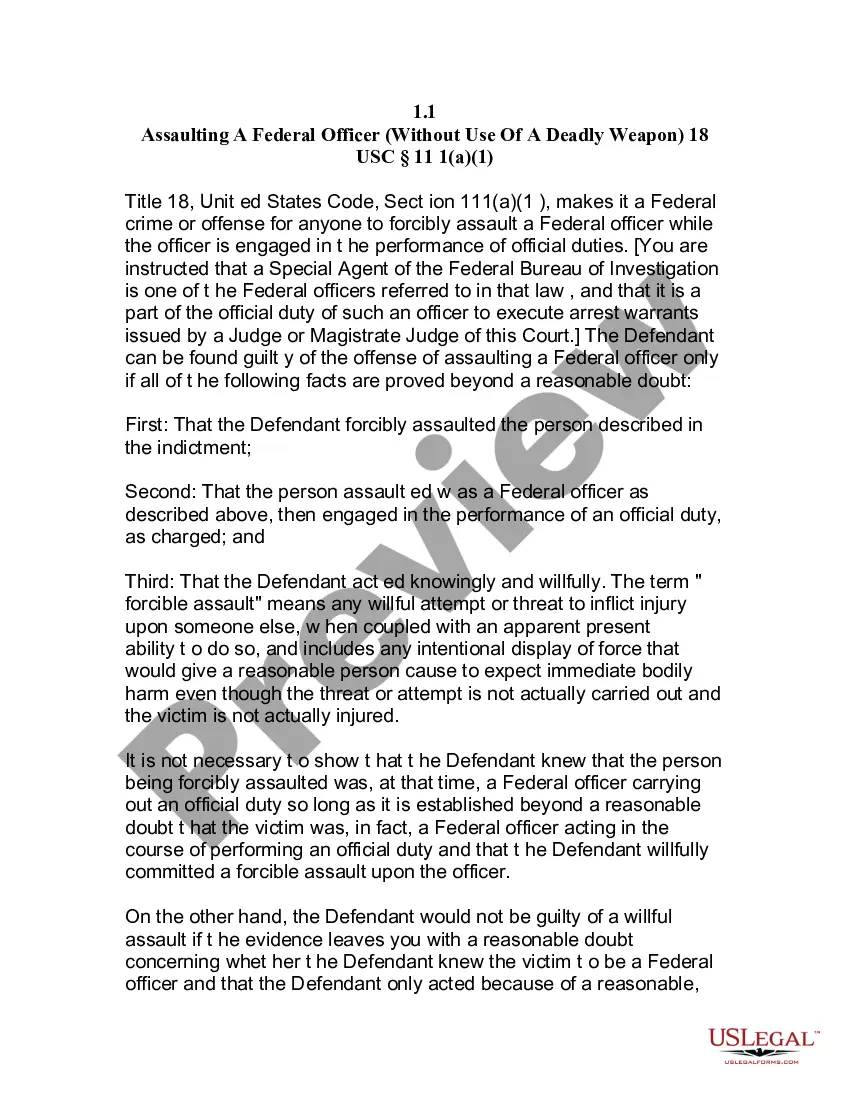
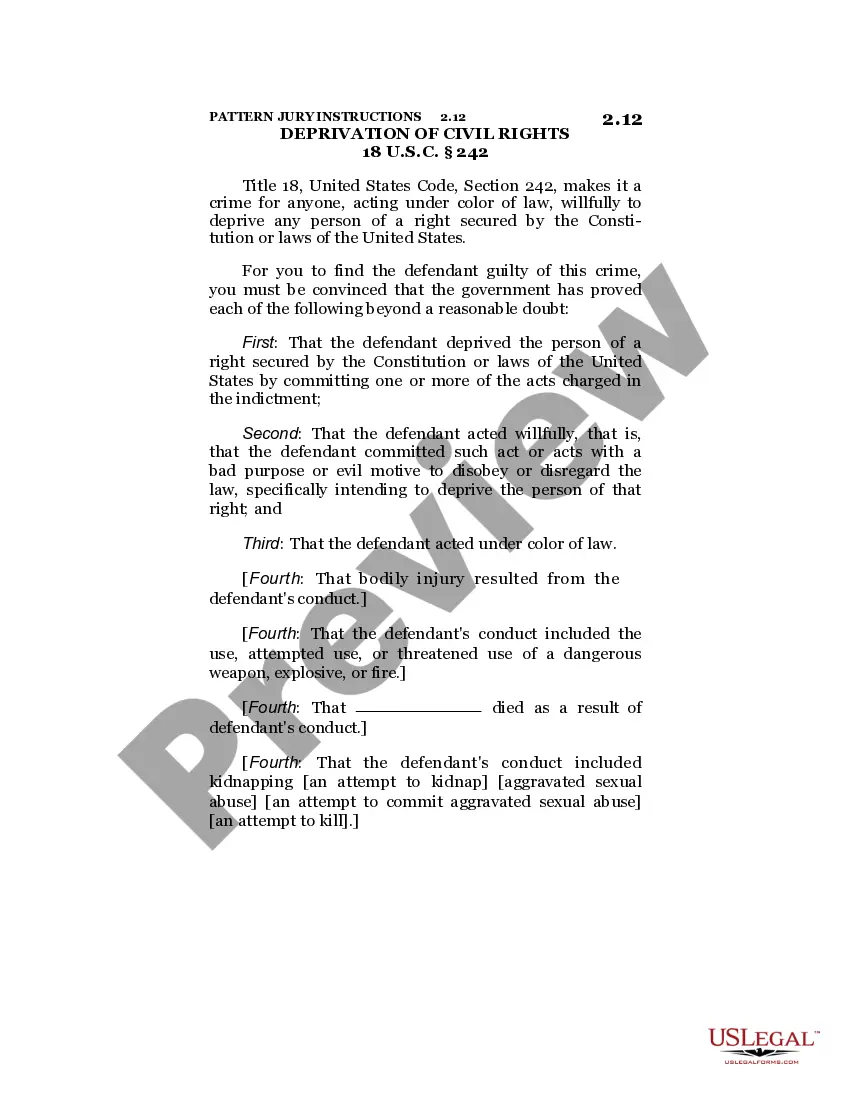
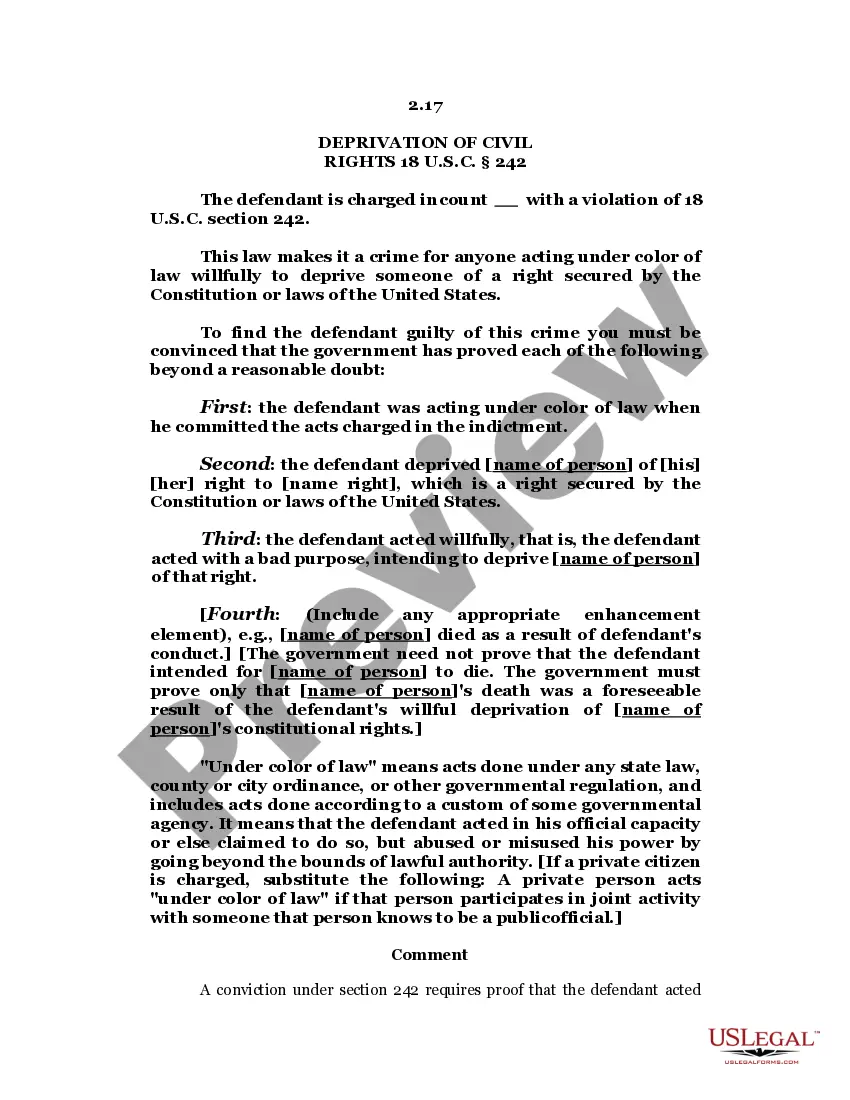
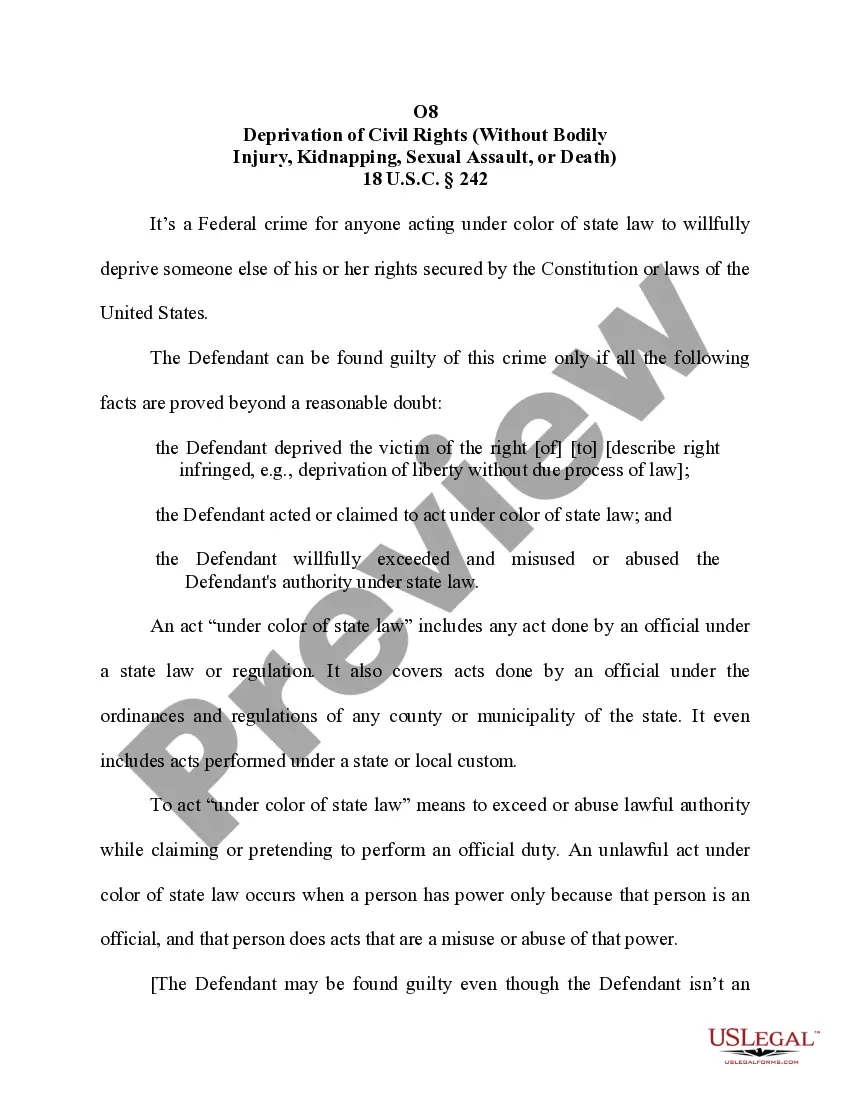
This form provides sample jury instructions related to the deprivation of civil rights without bodily injury. It is intended for use in federal cases where a violation of constitutional rights occurs under the guise of state law. The Jury Instruction - Deprivation of Civil Rights form is a critical tool for guiding jurors in understanding the elements of such offenses, differentiating it from other jury instructions that may focus on different types of crimes or civil rights violations.
Key components of this form
- Description of the defendant's actions that may constitute deprivation of civil rights.
- Clarification of acting under color of state law.
- Explanation of the concept of willful deprivation of liberty.
- Definition of terms such as liberty and due process.
- Guidance on juror's responsibilities in determining guilt beyond a reasonable doubt.


Common use cases
This form should be used in cases where the defendant is accused of violating a person's civil rights while acting in an official capacity, without causing bodily harm. Common scenarios include cases of wrongful arrest, unlawful detention, or other abuses of power by law enforcement or government officials.
Intended users of this form
This form is intended for the following individuals:
- Judges presiding over cases involving civil rights violations.
- Attorneys representing defendants or plaintiffs in such cases.
- Jurors who need clear guidance on legal definitions and offense criteria.
Steps to complete this form
- Review the indictment to understand the charges against the defendant.
- Identify the rights claimed to have been deprived and the context of those claims.
- Ensure jurors understand the concept of acting under color of state law.
- Discuss the evidence presented to determine if the defendant acted willfully.
- Guide jurors in reaching a unanimous conclusion based on the definitions provided.
Notarization requirements for this form
This form usually doesn’t need to be notarized. However, local laws or specific transactions may require it. Our online notarization service, powered by Notarize, lets you complete it remotely through a secure video session, available 24/7.
Get your form ready online
Our built-in tools help you complete, sign, share, and store your documents in one place.
Make edits, fill in missing information, and update formatting in US Legal Forms—just like you would in MS Word.
Download a copy, print it, send it by email, or mail it via USPS—whatever works best for your next step.
Sign and collect signatures with our SignNow integration. Send to multiple recipients, set reminders, and more. Go Premium to unlock E-Sign.
If this form requires notarization, complete it online through a secure video call—no need to meet a notary in person or wait for an appointment.
We protect your documents and personal data by following strict security and privacy standards.

Make edits, fill in missing information, and update formatting in US Legal Forms—just like you would in MS Word.

Download a copy, print it, send it by email, or mail it via USPS—whatever works best for your next step.

Sign and collect signatures with our SignNow integration. Send to multiple recipients, set reminders, and more. Go Premium to unlock E-Sign.

If this form requires notarization, complete it online through a secure video call—no need to meet a notary in person or wait for an appointment.

We protect your documents and personal data by following strict security and privacy standards.
Mistakes to watch out for
- Failing to clearly define what constitutes acting under color of state law.
- Overlooking the importance of demonstrating willfulness in the defendant's actions.
- Not considering evidence thoroughly before reaching a conclusion.
Benefits of completing this form online
- Convenient access to well-drafted jury instructions at any time.
- Editability allows for tailoring the instructions to fit specific cases.
- Reliability of content created by licensed attorneys familiar with federal standards.
Looking for another form?

Form popularity
FAQ
1a : of or relating to citizens civil duties. b : of or relating to the state or its citizenry civil strife. 2a : civilized civil society. b : adequate in courtesy and politeness : mannerly a civil question It was hard to be civil when I felt so angry.
Civil rights are an expansive and significant set of rights that are designed to protect individuals from unfair treatment; they are the rights of individuals to receive equal treatment (and to be free from unfair treatment or discrimination) in a number of settings -- including education, employment, housing, public
Though the scope of the term differs between countries, civil liberties may include the freedom of conscience, freedom of press, freedom of religion, freedom of expression, freedom of assembly, the right to security and liberty, freedom of speech, the right to privacy, the right to equal treatment under the law and due
Civil rights are an expansive and significant set of rights that are designed to protect individuals from unfair treatment; they are the rights of individuals to receive equal treatment (and to be free from unfair treatment or discrimination) in a number of settings -- including education, employment, housing, public
The definition of civil rights are the rights guaranteed to the individual by amendments to the Constitution and other laws passed by Congress that give people the right to vote, equal treatment and freedom from slavery.Of or relating to such rights or privileges.
1955 Montgomery Bus Boycott. 1961 Albany Movement. 1963 Birmingham Campaign. 1963 March on Washington. 1965 Bloody Sunday. 1965 Chicago Freedom Movement. 1967 Vietnam War Opposition. 1968 Poor People's Campaign.
Examples of civil rights include the right to vote, the right to a fair trial, the right to government services, the right to a public education, and the right to use public facilities.
Through nonviolent protest, the civil rights movement of the 1950s and '60s broke the pattern of public facilities' being segregated by race in the South and achieved the most important breakthrough in equal-rights legislation for African Americans since the Reconstruction period (186577).
Freedom of speech. Freedom of the press. Freedom of religion. Freedom to vote. Freedom against unwarranted searches of your home or property. Freedom to have a fair court trial. Freedom to remain silent in a police interrogation.