Jury Instruction - Manslaughter - Involuntary
Understanding this form
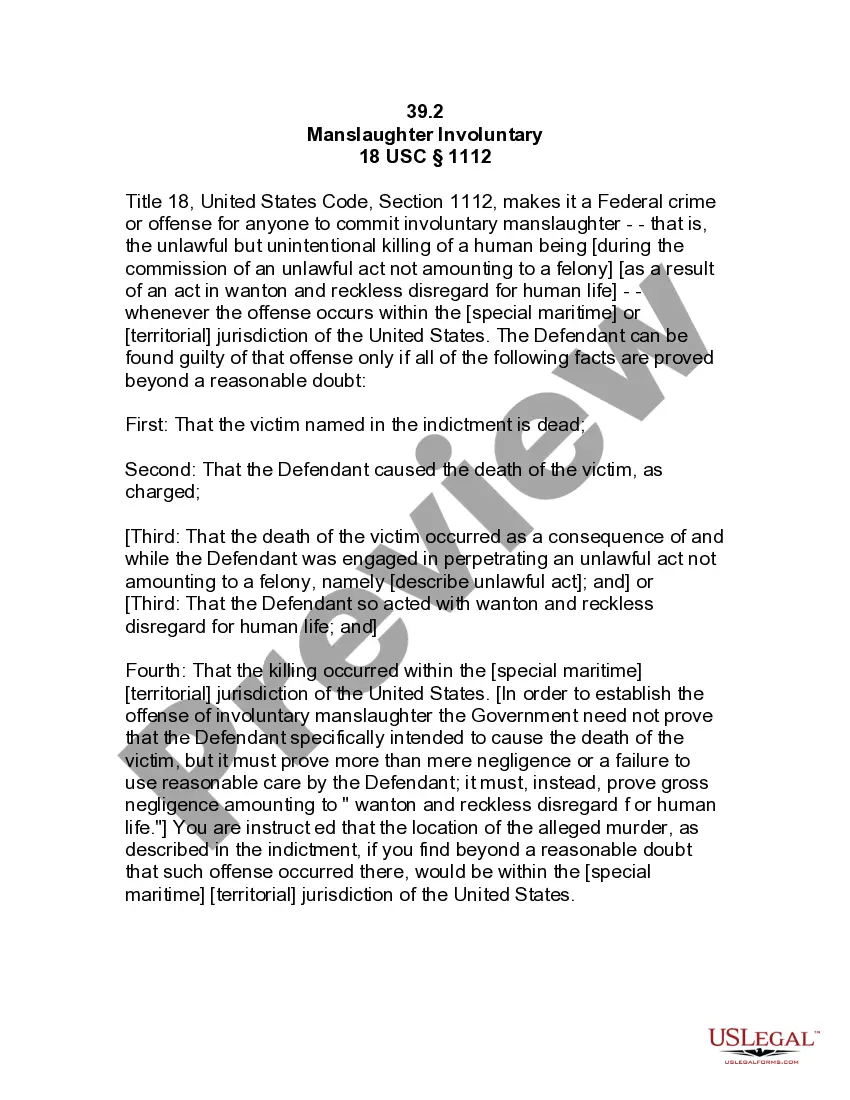
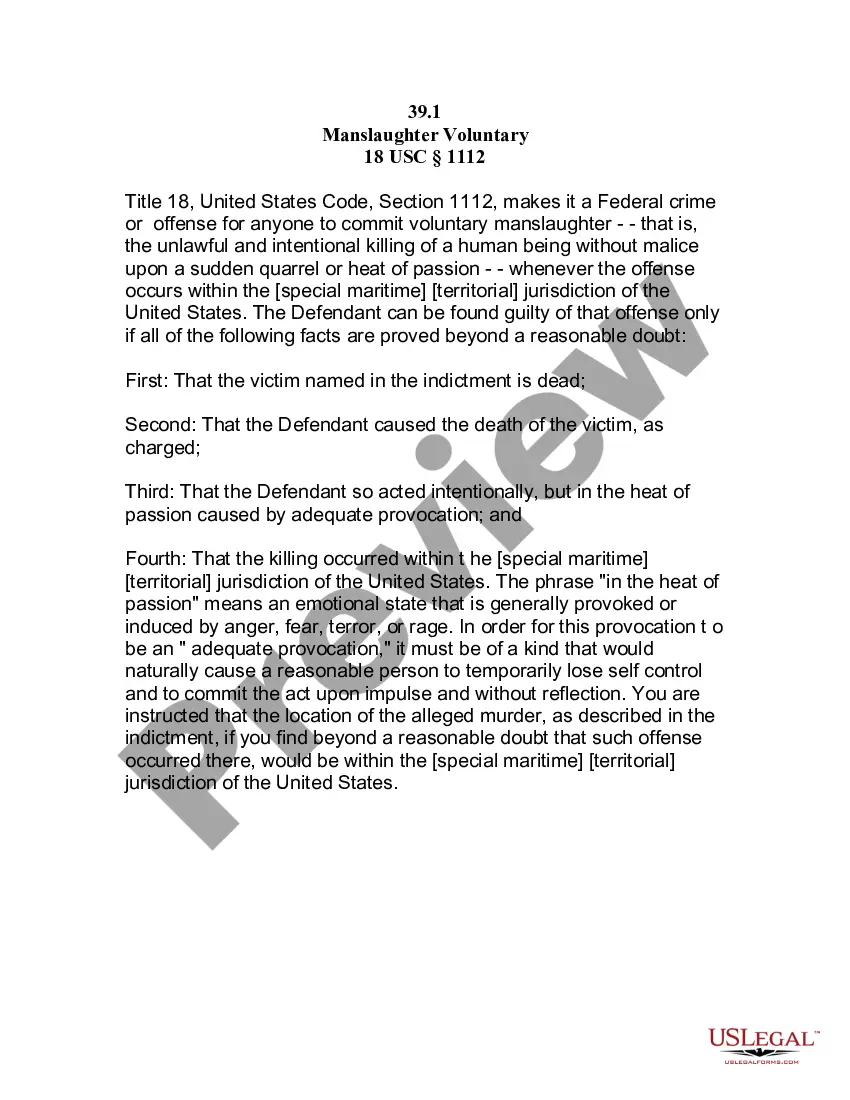
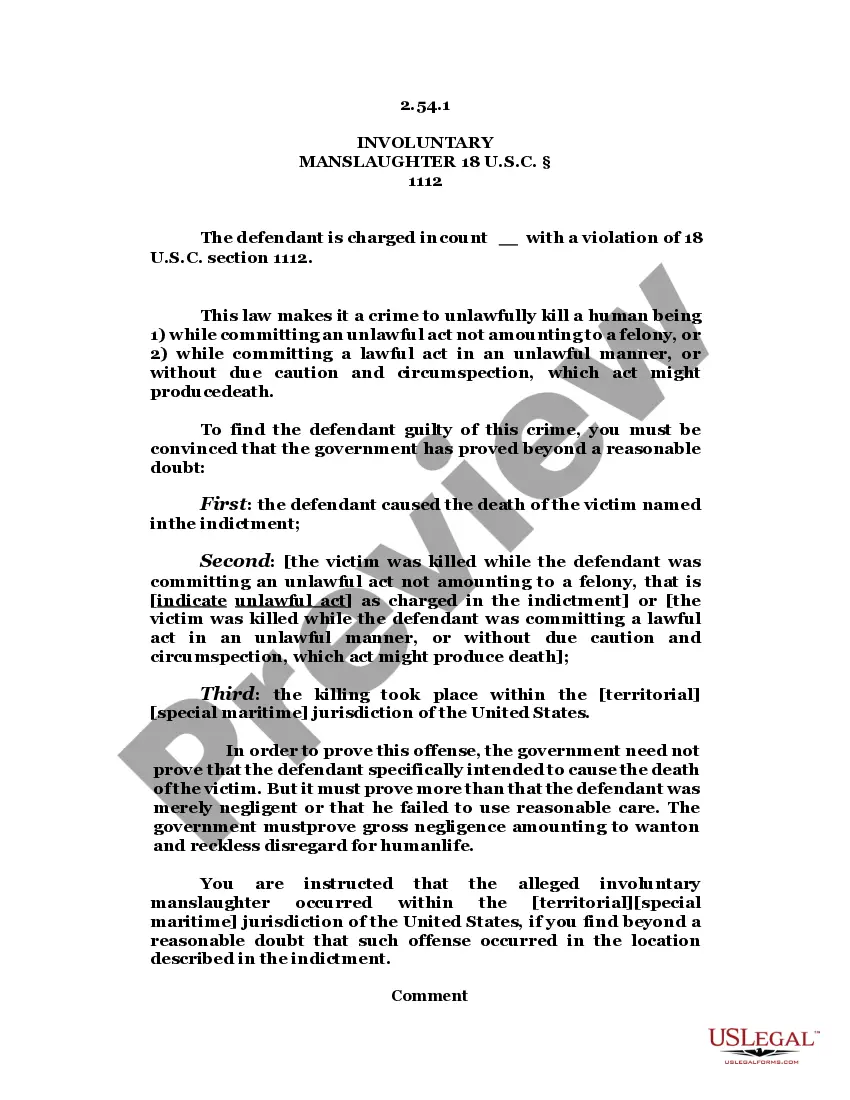
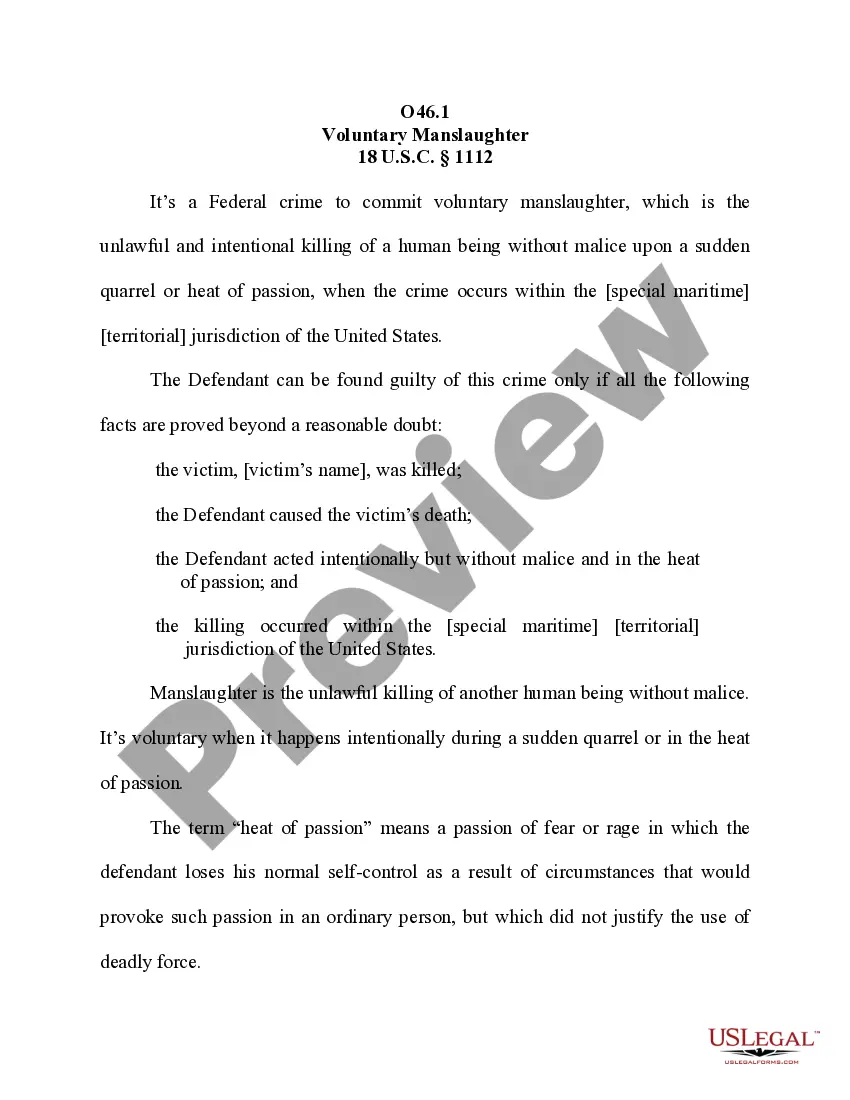
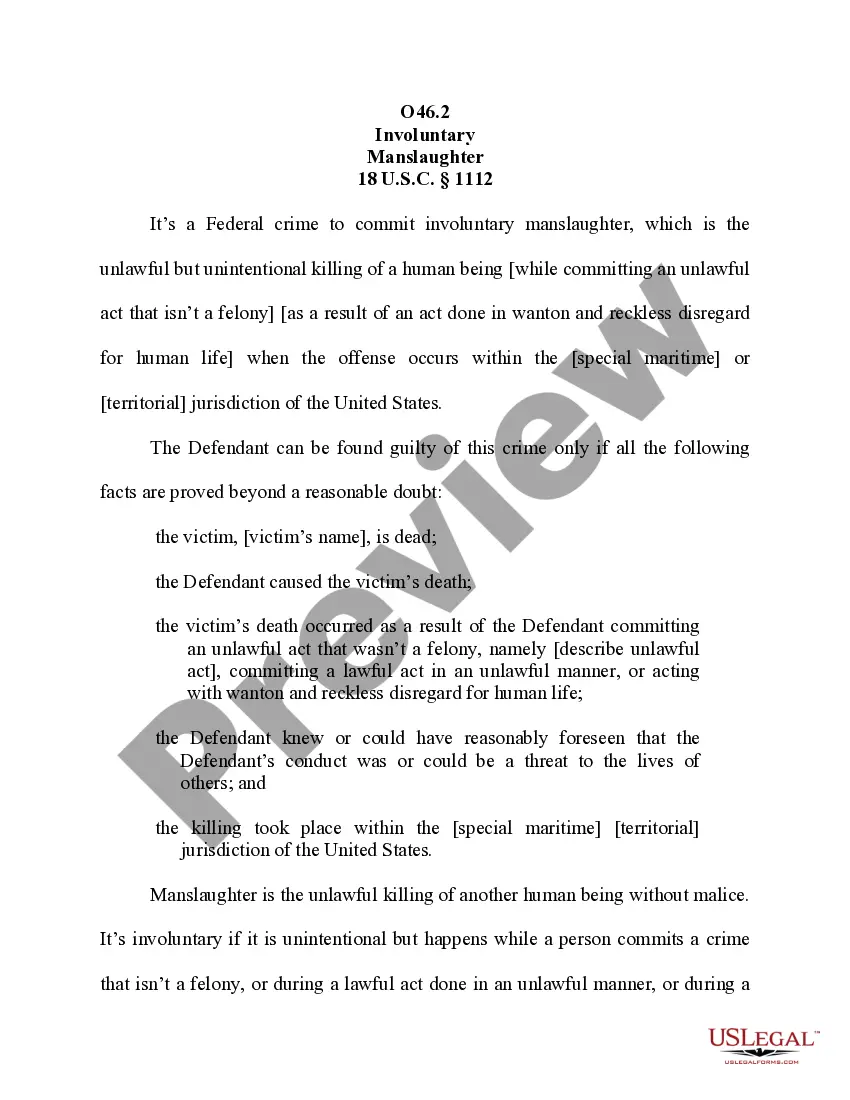
The Jury Instruction - Manslaughter - Involuntary form provides sample jury instructions that clarify the legal standards for involuntary manslaughter cases. This form is essential for legal practitioners to accurately convey the elements of the crime to jurors. Unlike other jury instructions, this form specifically focuses on involuntary manslaughter under 18 USC 1112, addressing the criteria that must be met for a guilty verdict without proving malice or intent to kill.
What’s included in this form
- Description of involuntary manslaughter under 18 USC 1112.
- Criteria for establishing guilt, including gross negligence and recklessness.
- Explanation of the unlawful act not amounting to a felony.
- Jury considerations regarding jurisdiction and location of the offense.
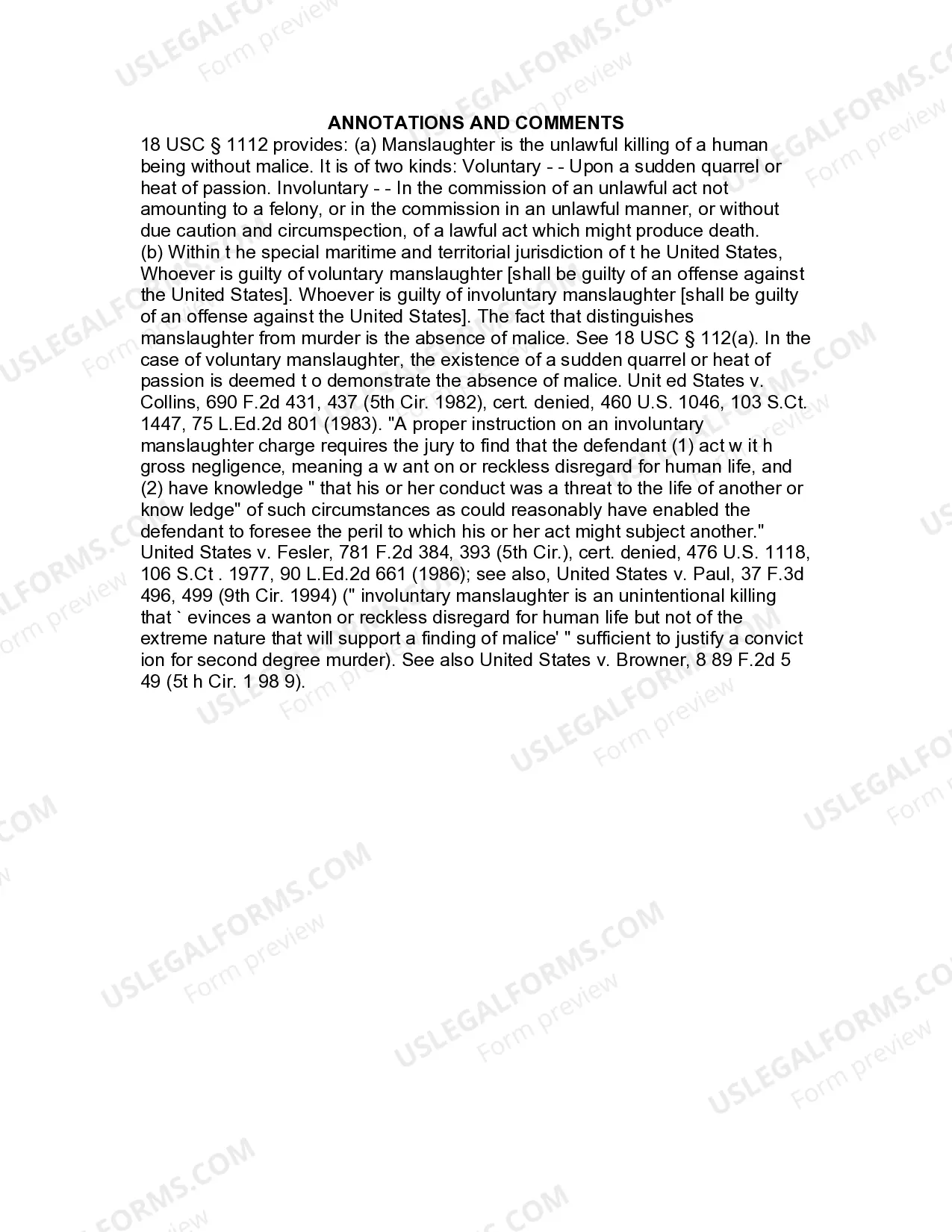
- Clarification on the absence of malice in involuntary manslaughter cases.
Common use cases
This form is used in legal contexts when jurors need guidance on the laws surrounding involuntary manslaughter. It applies in cases where a defendant is charged with unintentionally causing a death through actions that demonstrated gross negligence or a reckless disregard for human life. The form helps ensure jurors understand the specific legal thresholds that must be satisfied for a guilty verdict.
Who this form is for
This form is intended for:
- Legal professionals preparing jury instructions for trials.
- Attorneys representing defendants in involuntary manslaughter cases.
- Judges overseeing cases involving charges of involuntary manslaughter.
How to prepare this document
- Identify the key facts of the case, including the defendant's actions and the circumstances surrounding the death.
- Clearly state the unlawful act that led to the victim's death.
- Outline the necessary criteria such as gross negligence or reckless behavior.
- Specify the jurisdiction where the alleged offense occurred.
- Review the language for clarity and ensure it aligns with the unique aspects of the case at hand.
Is notarization required?
This form usually doesn’t need to be notarized. However, local laws or specific transactions may require it. Our online notarization service, powered by Notarize, lets you complete it remotely through a secure video session, available 24/7.
Get your form ready online
Our built-in tools help you complete, sign, share, and store your documents in one place.
Make edits, fill in missing information, and update formatting in US Legal Forms—just like you would in MS Word.
Download a copy, print it, send it by email, or mail it via USPS—whatever works best for your next step.
Sign and collect signatures with our SignNow integration. Send to multiple recipients, set reminders, and more. Go Premium to unlock E-Sign.
If this form requires notarization, complete it online through a secure video call—no need to meet a notary in person or wait for an appointment.
We protect your documents and personal data by following strict security and privacy standards.

Make edits, fill in missing information, and update formatting in US Legal Forms—just like you would in MS Word.

Download a copy, print it, send it by email, or mail it via USPS—whatever works best for your next step.

Sign and collect signatures with our SignNow integration. Send to multiple recipients, set reminders, and more. Go Premium to unlock E-Sign.

If this form requires notarization, complete it online through a secure video call—no need to meet a notary in person or wait for an appointment.

We protect your documents and personal data by following strict security and privacy standards.
Mistakes to watch out for
- Failing to accurately define the unlawful act involved.
- Neglecting to specify the gross negligence required for a guilty verdict.
- Not verifying jurisdictional elements specific to the case.
Benefits of completing this form online
- Accessible for instant download, allowing for immediate use in legal proceedings.
- Customizable templates ensure compliance with local legal standards.
- Streamlined process for submitting necessary jury instructions.
Looking for another form?



Form popularity
FAQ
The maximum sentence a judge can impose for manslaughter is imprisonment for life. The judge may impose other sentences, including a prison sentence to be served immediately, suspended imprisonment or a community sentence.
There are two types of involuntary manslaughter, that caused by the defendant's gross negligence and that caused by his unlawful or dangerous act. Cases of gross negligence manslaughter should be referred to the Special Crime and Counter Terrorism Division.
Involuntary manslaughter usually refers to an unintentional killing that results from criminal negligence or recklessness, or from committing an offense such as a DUI.
Voluntary Manslaughter. Voluntary manslaughter involves an intentional killing but without malice aforethought. Involuntary Manslaughter. Vehicular Manslaughter.
Voluntary manslaughter sentencing will vary by case and jurisdiction, but most convictions result in prison time. According to federal sentencing guidelines, the penalty for voluntary manslaughter consists of fines, 10 years or less in prison, or both.
Putting aside felony murder, the real difference between first and second-degree murder is the intent or mindset the defendant had when they took the action they did. Third-degree murder (also called manslaughter) is an unplanned, unintentional killing that is not part of another felony.
Involuntary manslaughter occurs when the agent has no intention (mens rea) of committing murder, but caused the death of another through recklessness or criminal negligence. The crime of involuntary manslaughter can be subdivided into two main categories: constructive manslaughter and gross negligence manslaughter.
The base sentence for involuntary manslaughter under federal sentencing guidelines is a 10 to 16 month prison sentence, which increases if the crime was committed through an act of reckless conduct.