Jury Instruction - False Statement To A Federally Insured Institution
Overview of this form
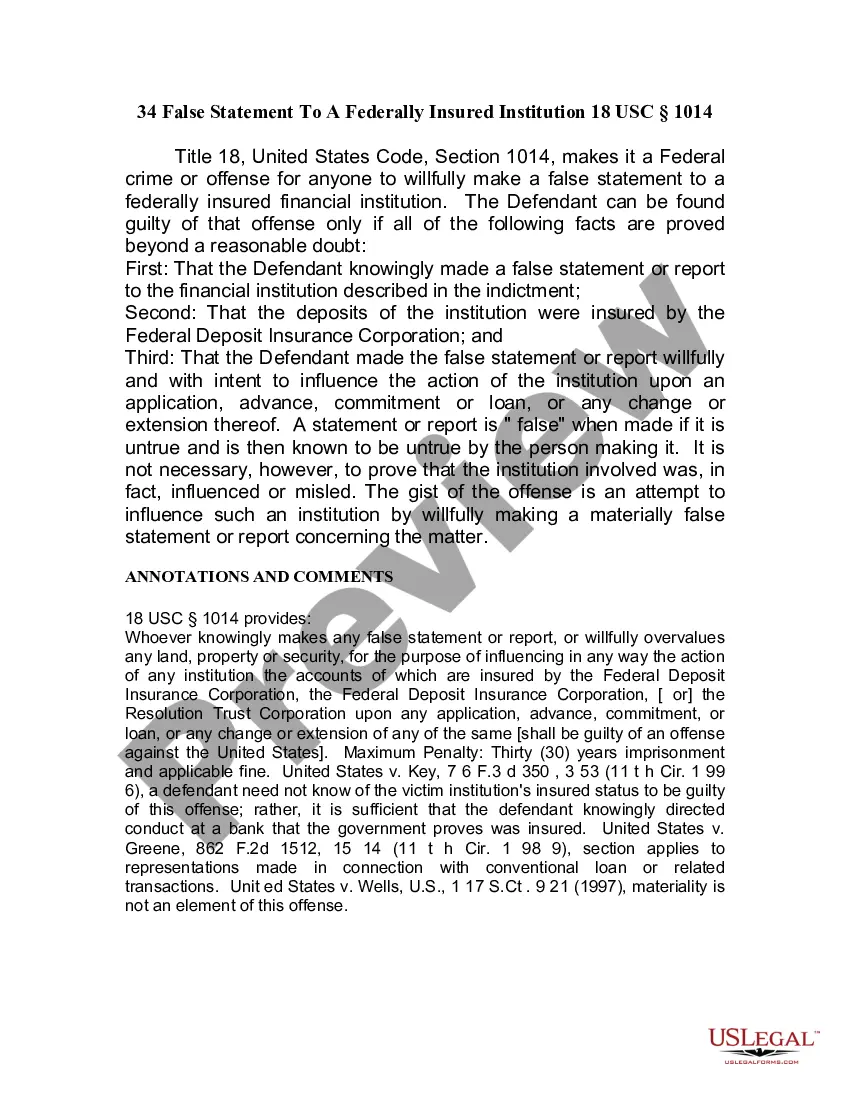
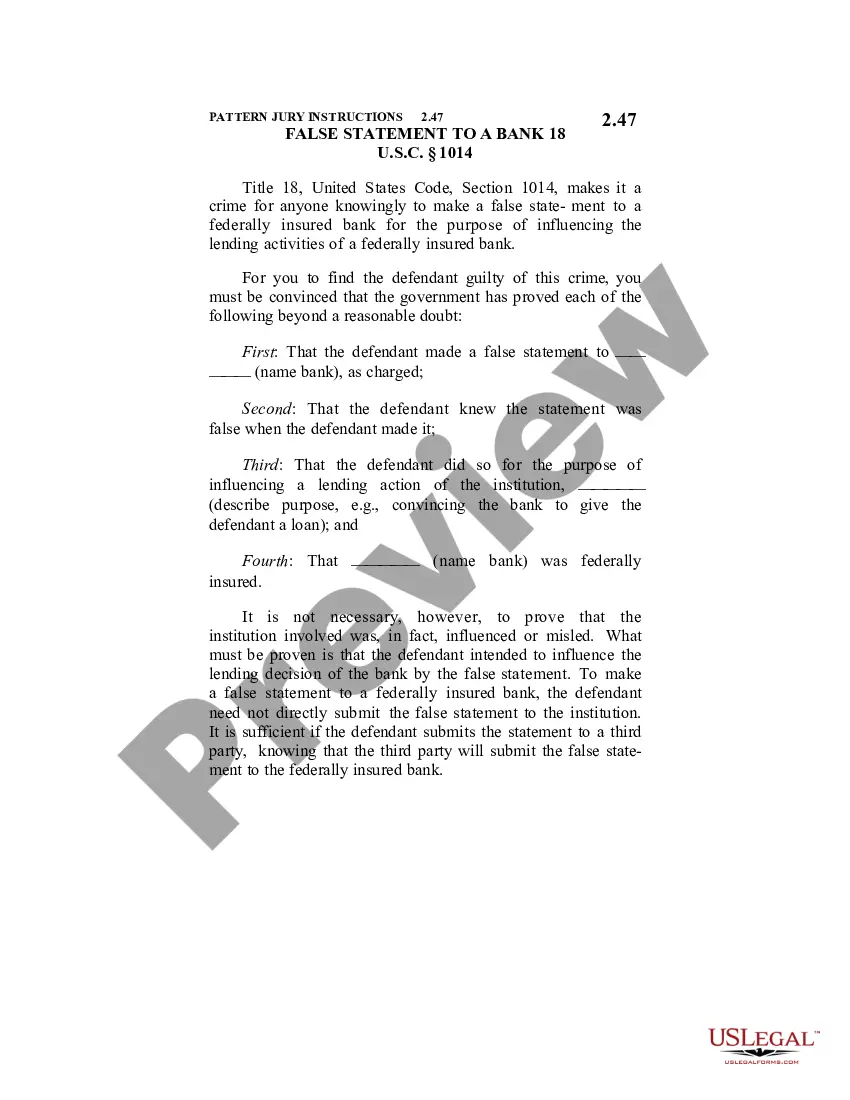
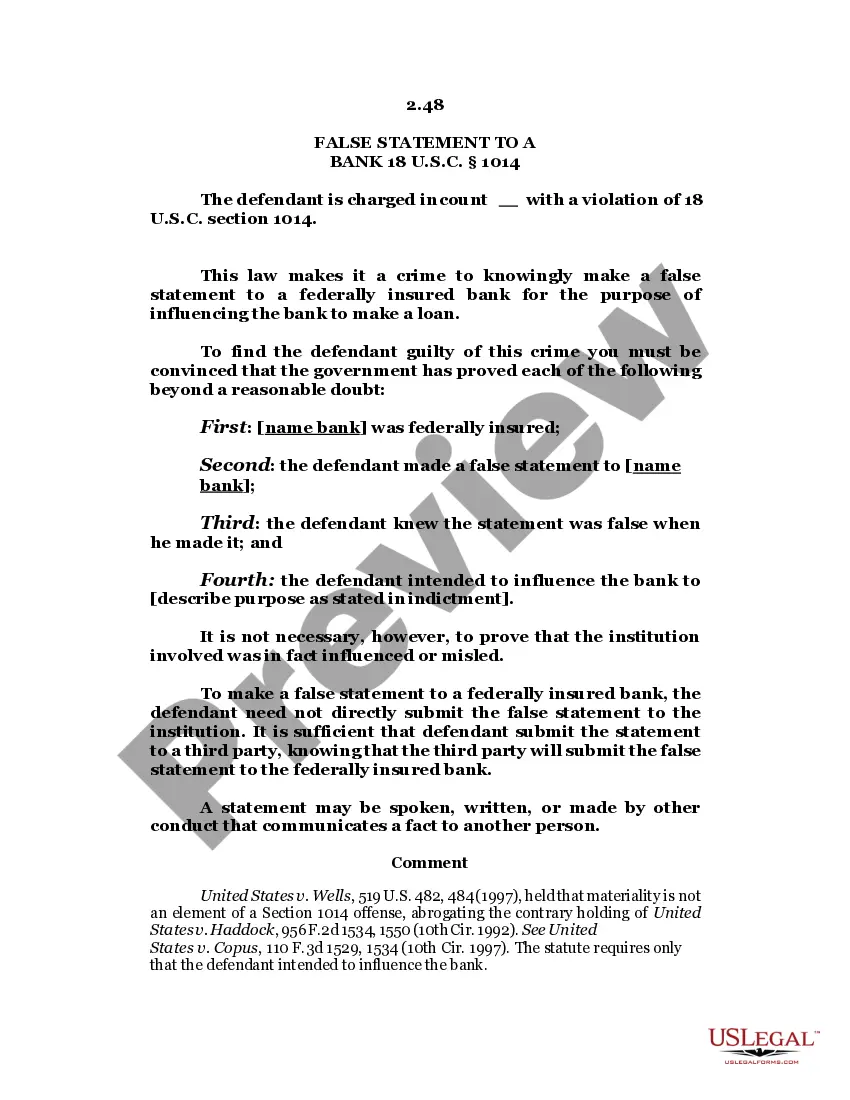
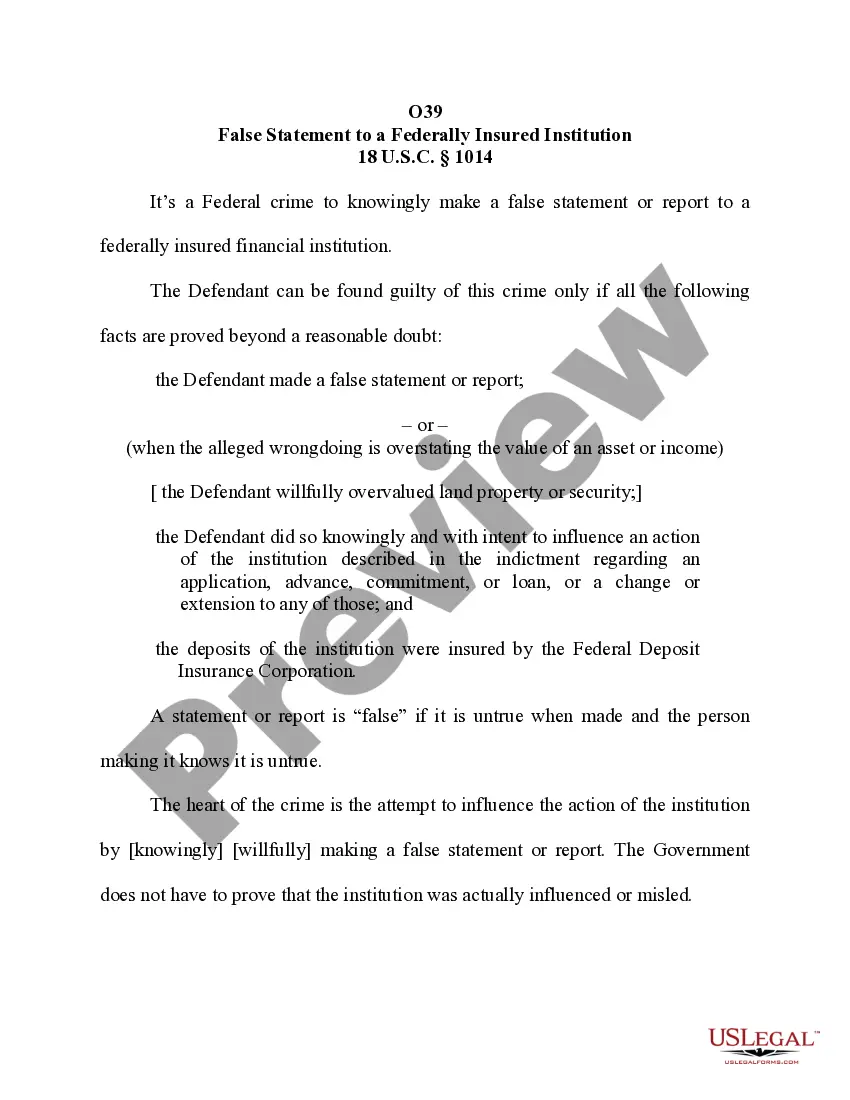
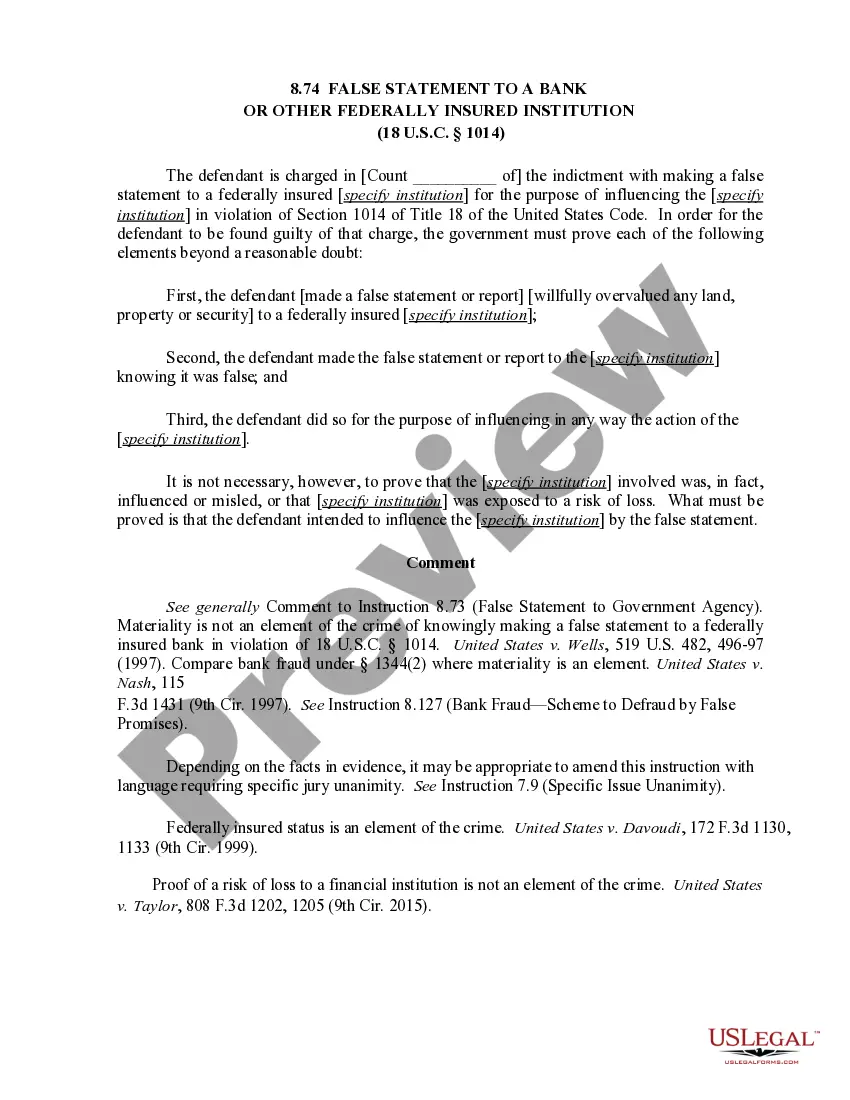
The Jury Instruction - False Statement To A Federally Insured Institution form provides sample jury instructions that outline the legal standards for determining guilt in cases where a false statement is made to a federally insured financial institution. This form is crucial for illustrating the elements required for prosecution under Title 18, United States Code, Section 1014, and serves as a guide for presenting jury instructions in such cases.
Form components explained
- Definition of a false statement as it pertains to the indictment.
- Explanation of the intent required for the defendant's actions.
- Emphasis on the necessity for the statement to be known as false by the defendant.
- Clarification that actual influence or misleading of the bank is not required for a guilty verdict.
- Outlining the maximum penalties associated with the offense.
When to use this document
This form is typically used in federal court cases where a defendant is accused of making false statements to a bank or other financial institution insured by the Federal Deposit Insurance Corporation (FDIC). It provides necessary guidance for legal practitioners to instruct juries on the elements of the crime they must consider.
Who this form is for
- Attorneys preparing for a federal criminal trial involving false statements to financial institutions.
- Judges who are delivering jury instructions in such cases.
- Legal scholars and students studying federal criminal law related to banking offenses.
- Litigants in federal cases requiring a clear understanding of jury instructions.
How to prepare this document
- Review the elements of the offense as outlined in the form.
- Adjust the sample jury instructions to accurately reflect the specific details of your case.
- Include necessary citations, including Title 18, United States Code, Section 1014.
- Ensure the language is clear and understandable for jurors.
- Consult with legal colleagues for feedback on the instructions before presenting them in court.
Notarization guidance
This form does not typically require notarization unless specified by local law. Always check jurisdiction-specific regulations to ensure compliance.
Get your form ready online
Our built-in tools help you complete, sign, share, and store your documents in one place.
Make edits, fill in missing information, and update formatting in US Legal Forms—just like you would in MS Word.
Download a copy, print it, send it by email, or mail it via USPS—whatever works best for your next step.
Sign and collect signatures with our SignNow integration. Send to multiple recipients, set reminders, and more. Go Premium to unlock E-Sign.
If this form requires notarization, complete it online through a secure video call—no need to meet a notary in person or wait for an appointment.
We protect your documents and personal data by following strict security and privacy standards.

Make edits, fill in missing information, and update formatting in US Legal Forms—just like you would in MS Word.

Download a copy, print it, send it by email, or mail it via USPS—whatever works best for your next step.

Sign and collect signatures with our SignNow integration. Send to multiple recipients, set reminders, and more. Go Premium to unlock E-Sign.

If this form requires notarization, complete it online through a secure video call—no need to meet a notary in person or wait for an appointment.

We protect your documents and personal data by following strict security and privacy standards.
Common mistakes
- Failing to clearly define what constitutes a false statement.
- Overlooking the requirement of the defendant's knowledge of the falsehood.
- Not tailoring the jury instructions to the specifics of the case.
- Neglecting the importance of the financial institutionâs FDIC insurance status.
Benefits of using this form online
- Access to professionally drafted templates ensures legal accuracy.
- Convenience of downloading and customizing legally binding jury instructions.
- Immediate availability allows for timely preparation ahead of trial dates.
- Easy adaptability to fit specific case requirements with minimal effort.
Legal use & context
- This form is legally enforceable as it adheres to federal law regarding jury instructions.
- The usage of this instruction helps ensure that jurors comprehend the legal definitions necessary for their deliberations.
- The form reflects a standard that can mitigate misunderstanding during trials involving white-collar crimes.
What to keep in mind
- The Jury Instruction - False Statement To A Federally Insured Institution provides critical legal guidelines for jury trials involving financial fraud.
- Understanding the key components of this form is essential for legal professionals handling related cases.
- This form is applicable nationwide but may require adjustments based on local rules or practices.
- Proper utilization can prevent common mistakes and enhance the effectiveness of legal arguments presented in court.