Jury Instruction - Credibility of Witnesses
About this form
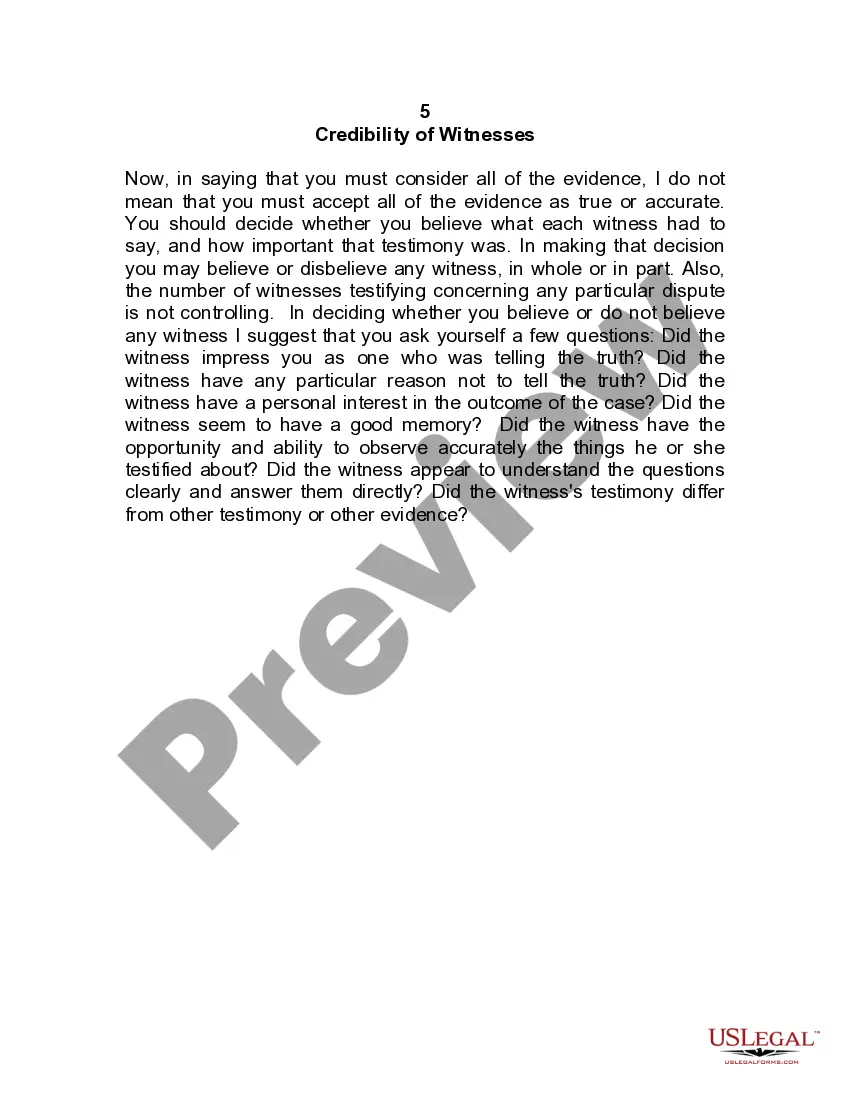
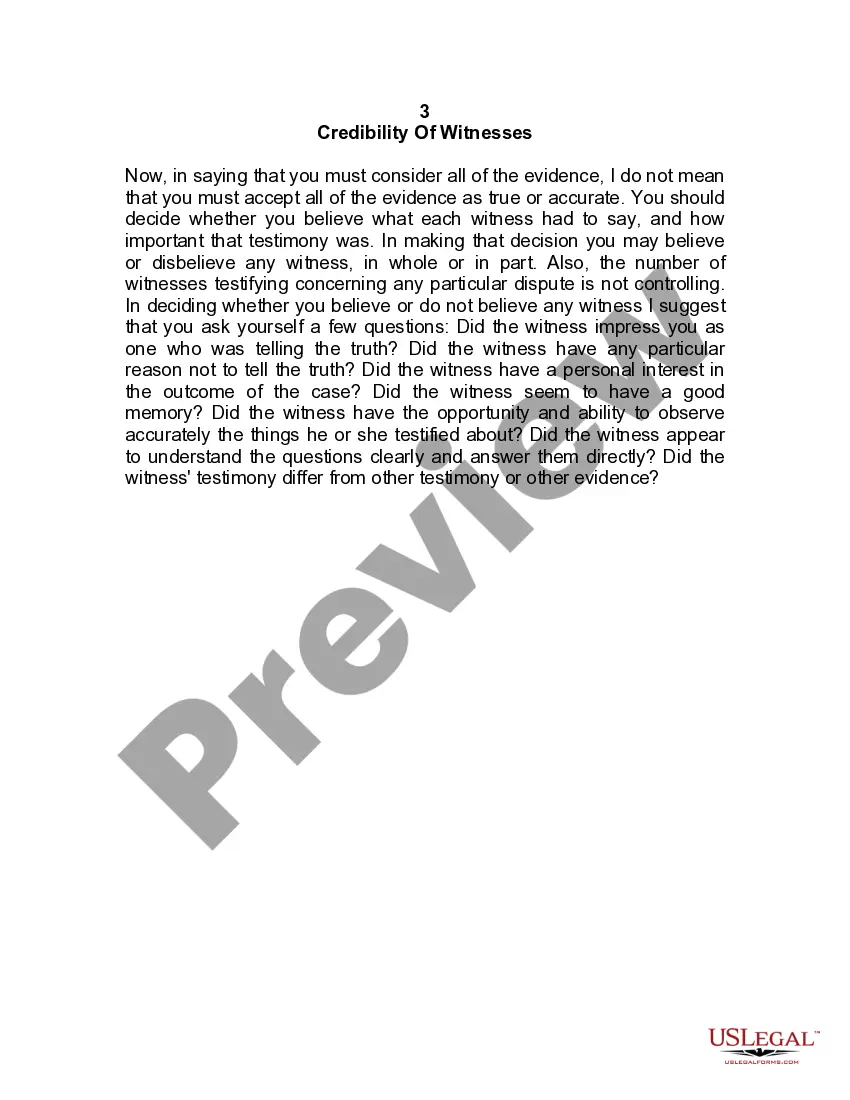
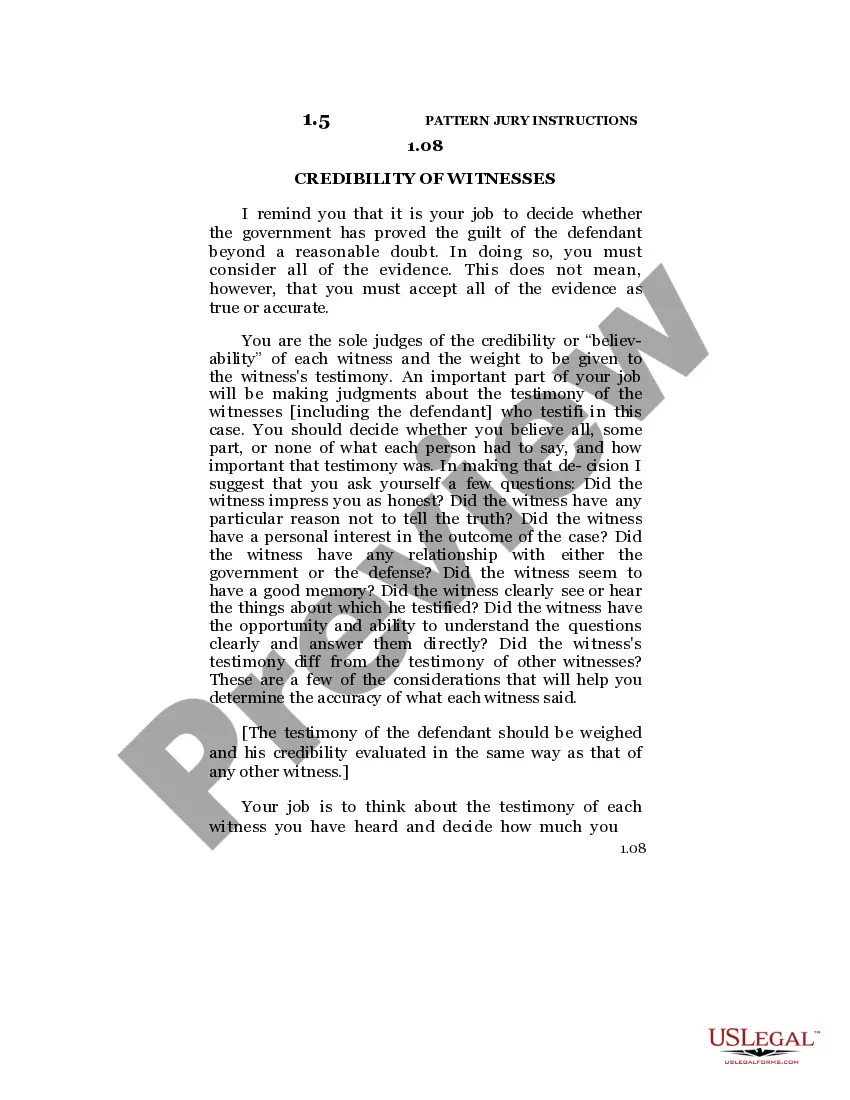
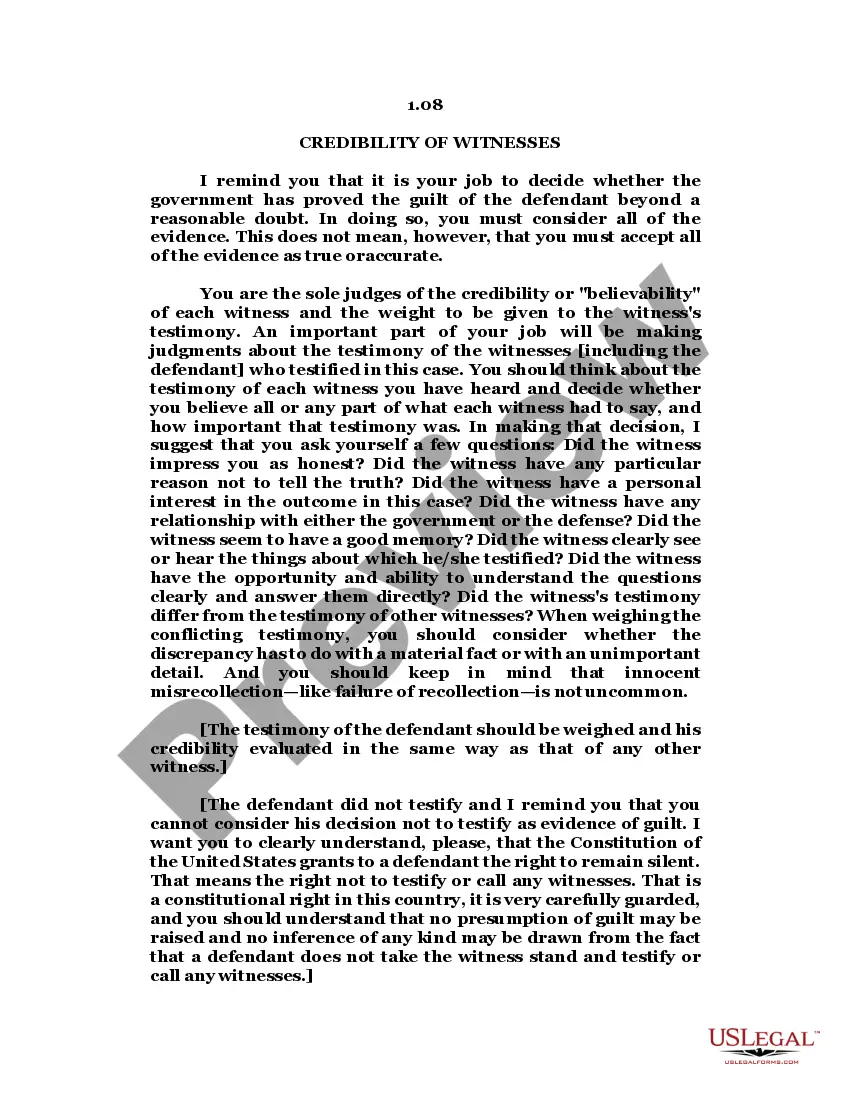
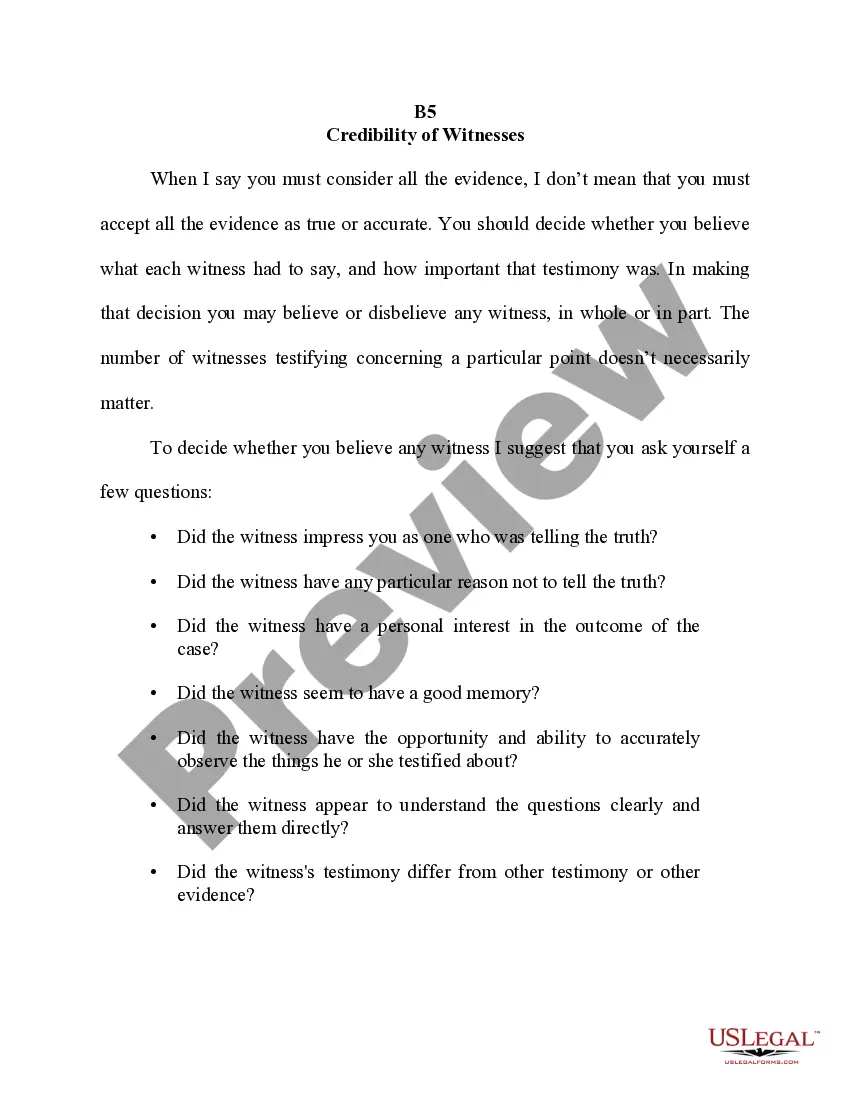
The Jury Instruction - Credibility of Witnesses form provides sample instructions intended for jurors regarding how to assess the credibility of witnesses during a trial. This form is crucial for guiding jurors in evaluating the truthfulness and reliability of witness testimony, which is essential in making informed verdicts. Unlike other jury instructions, this specific form focuses exclusively on the factors that influence the credibility of witnesses, making it a valuable resource for both legal practitioners and jurors alike.
What’s included in this form
- Introduction to witness credibility considerations.
- Questions to assess the truthfulness of each witness.
- Factors to weigh the importance of witness testimony.
- Guidance on how to handle conflicting testimonies.
- Instructions on evaluating witnesses' opportunities to observe relevant events.
Situations where this form applies
This form is used during court proceedings when jurors are instructed on how to evaluate the credibility of witnesses. It can be particularly useful in cases where witness testimony is central to the argument or when reputations, accuracy, or motives of witnesses may influence the case outcome. Legal practitioners can utilize these sample instructions to ensure that jurors clearly understand how to assess the evidence presented.
Who should use this form
- Judges overseeing trials in need of clear jury instructions.
- Attorneys preparing cases for trial.
- Legal educators teaching jury instruction principles.
- Jurors seeking a better understanding of their responsibilities.
Steps to complete this form
- Review the provided sample jury instruction carefully.
- Edit the questions and considerations to fit the specifics of your case.
- Ensure all jurors receive this instruction as part of trial proceedings.
- Discuss the importance of credibility with the jury during the trial.
- Incorporate any state-specific legal requirements if applicable.
Does this document require notarization?
In most cases, this form does not require notarization. However, some jurisdictions or signing circumstances might. US Legal Forms offers online notarization powered by Notarize, accessible 24/7 for a quick, remote process.
Get your form ready online
Our built-in tools help you complete, sign, share, and store your documents in one place.
Make edits, fill in missing information, and update formatting in US Legal Forms—just like you would in MS Word.
Download a copy, print it, send it by email, or mail it via USPS—whatever works best for your next step.
Sign and collect signatures with our SignNow integration. Send to multiple recipients, set reminders, and more. Go Premium to unlock E-Sign.
If this form requires notarization, complete it online through a secure video call—no need to meet a notary in person or wait for an appointment.
We protect your documents and personal data by following strict security and privacy standards.

Make edits, fill in missing information, and update formatting in US Legal Forms—just like you would in MS Word.

Download a copy, print it, send it by email, or mail it via USPS—whatever works best for your next step.

Sign and collect signatures with our SignNow integration. Send to multiple recipients, set reminders, and more. Go Premium to unlock E-Sign.

If this form requires notarization, complete it online through a secure video call—no need to meet a notary in person or wait for an appointment.

We protect your documents and personal data by following strict security and privacy standards.
Typical mistakes to avoid
- Failing to adapt the instructions to the specific details of the case.
- Overloading jurors with too many factors without prioritizing them.
- Neglecting to explain inconsistencies in witness testimonies.
Benefits of completing this form online
- Convenience of instant access to legal templates.
- Editability to customize instructions for specific trials.
- Reliability since forms are drafted by licensed attorneys.
Looking for another form?



Form popularity
FAQ
A credible source of information makes for quicker and firmer decisions. A credible person is expert (experienced, qualified, intelligent, skilled) and trustworthy (honest, fair, unselfish, caring). Charisma can increase credibility. Charismatic people, in addition to credible, are extroverted, composed and sociable.
So, again, the way to discredit a witness is to bring up prior inconsistent statements that they made. The way to discredit a witness is to call other witness or cross-examine other witnesses and bring up key points about your main witness's testimony and impeach them through over witness statements.
The witnesses' credibility or worthiness of belief is an important factor in most criminal trials. In some trials, it is the only issue; once the jury has decided which witnesses are credible and which are not, the question of guilt or innocence is easily reached.
So, again, the way to discredit a witness is to bring up prior inconsistent statements that they made. The way to discredit a witness is to call other witness or cross-examine other witnesses and bring up key points about your main witness's testimony and impeach them through over witness statements.
A credible witness is "competent to give evidence, and is worthy of belief." Generally, a witness is deemed to be credible if they are recognized (or can be recognized) as a source of reliable information about someone, an event, or a phenomenon.
In the United States, such a witness is "more than likely to be true based on his/her experience, knowledge, training and appearance of honesty and forthrightness...." Some factors for determining the credibility of testimony in U.S. courts include: (1) the witness had personal knowledge, (2) he or she was actually
The Witness Credibility Model is an empirically-developed framework that conceptualizes witness credibility as a composite of four elements: witness likeability, knowledge, confidence, and trustworthiness (Brodsky, Griffin, Cramer, 2010 & Brodsky, 2015).
The credibility rule now provides simply that Credibility evidence about a witness is not admissible. It is no longer restricted to evidence relevant only to a witness's credibility, and now includes evidence relevant to the assessment of a fact in issue where it is not admissible as proof of that fact in issue.