Jury Instruction - Duty To Deliberate
About this form
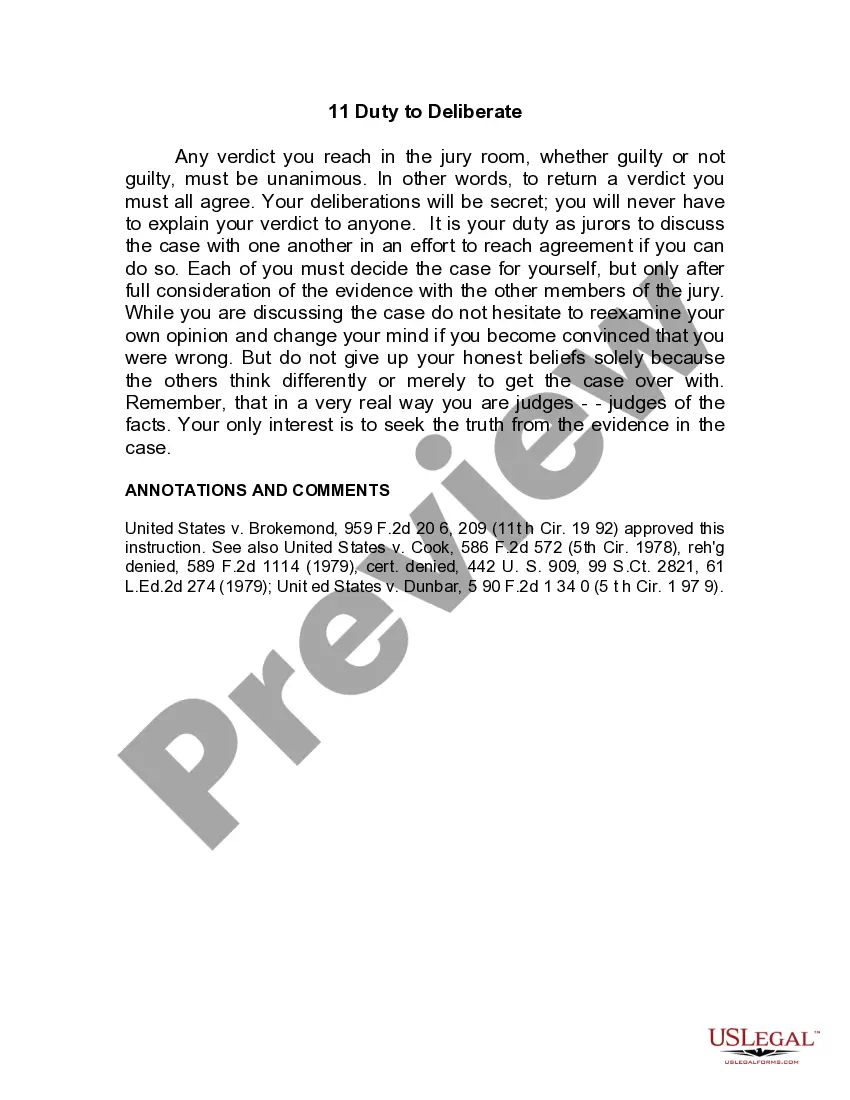
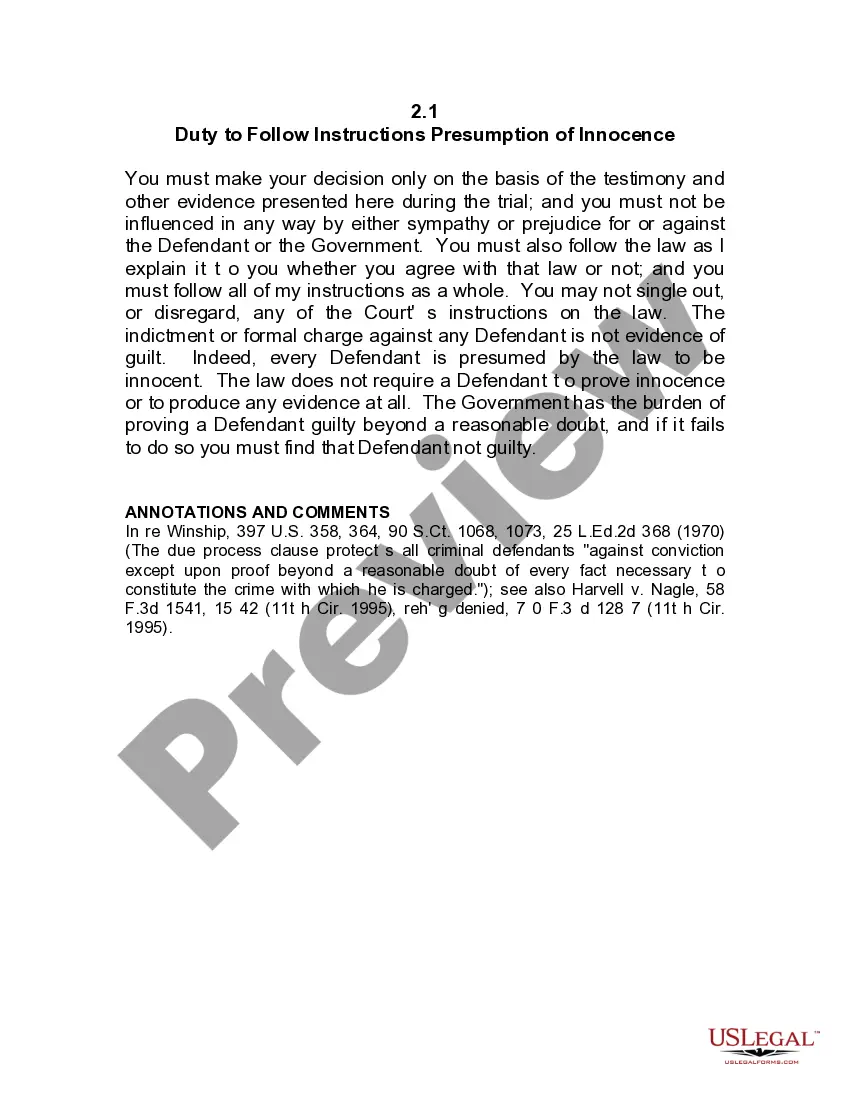
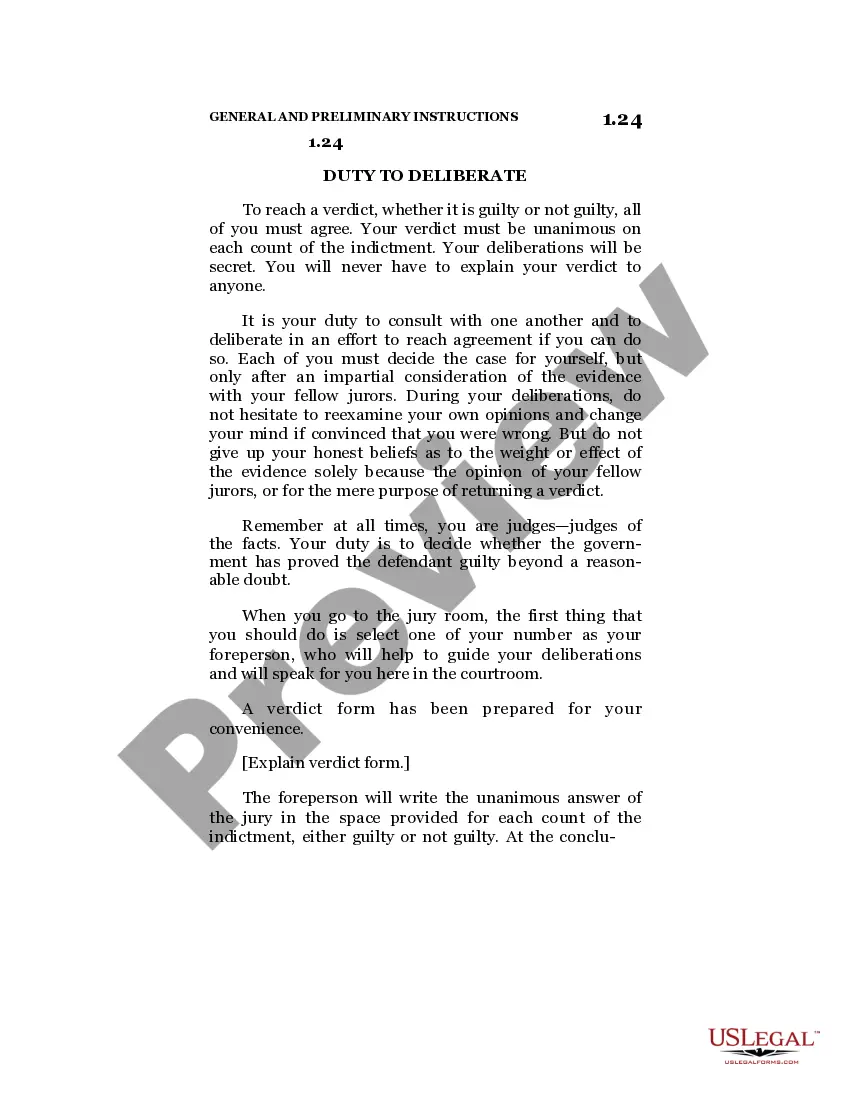
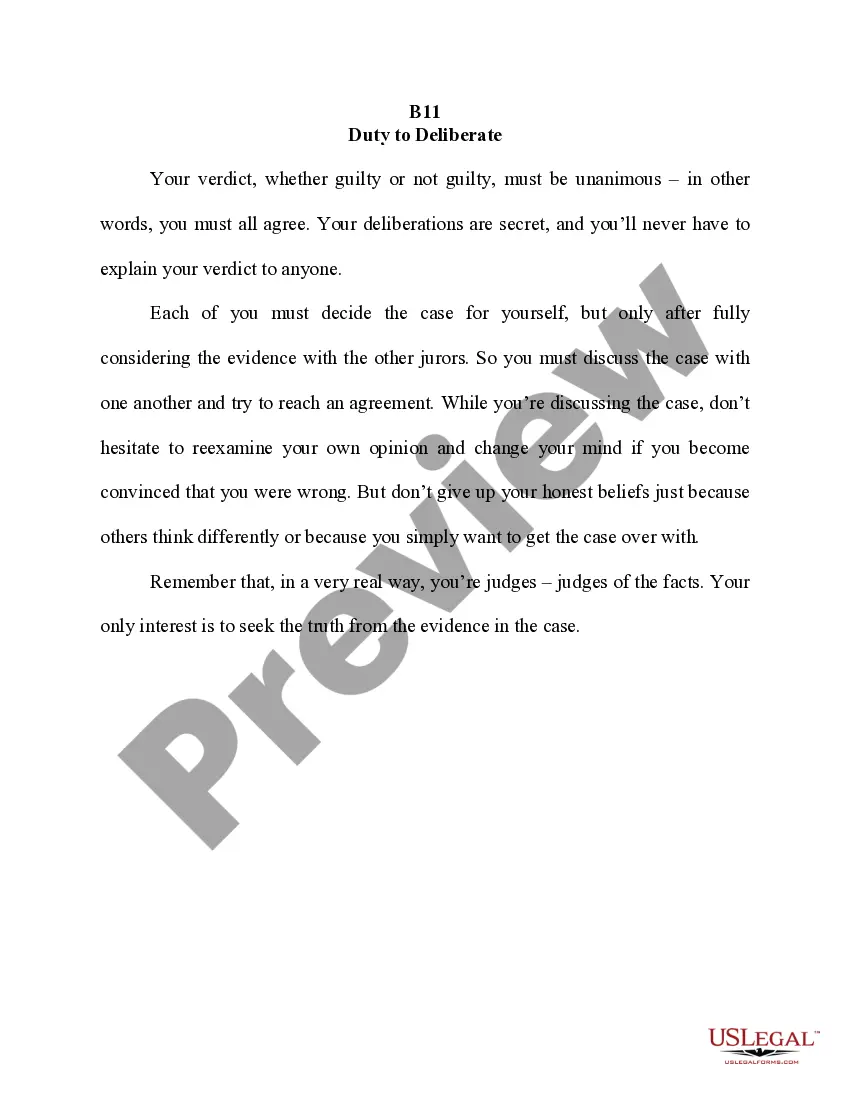
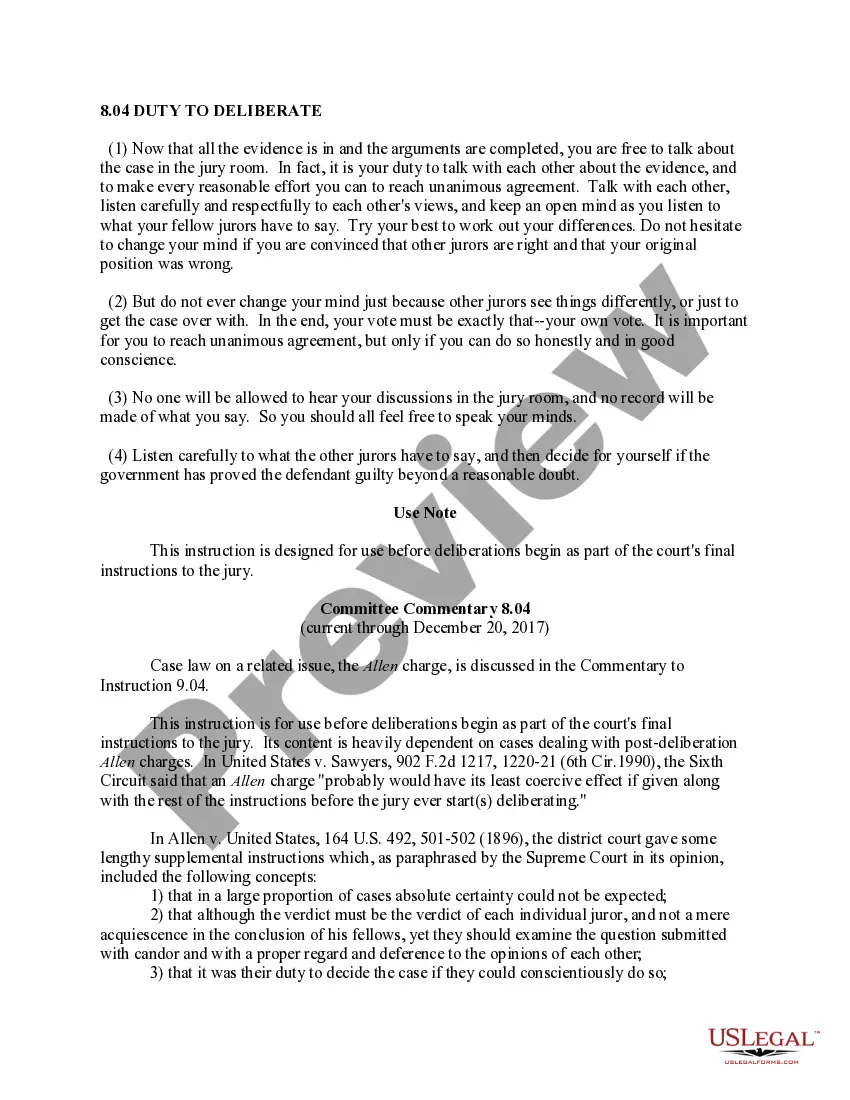
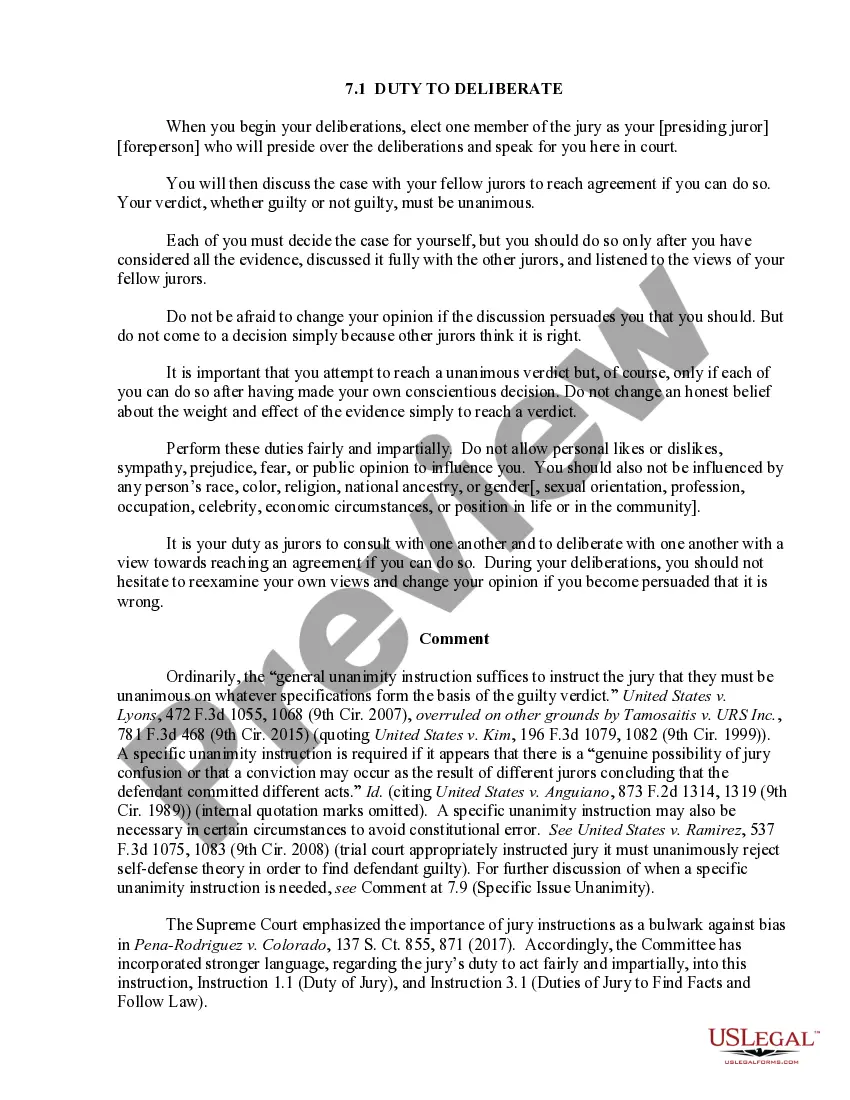
The Jury Instruction - Duty To Deliberate is a legal document that provides sample instructions for juries in court cases throughout the United States. Its primary purpose is to guide jurors in their deliberations, ensuring all verdicts are reached unanimously. This form is different from other jury instructions as it focuses specifically on the jurors' responsibilities and the importance of collaboration and discussion in the jury room before reaching a final decision.
What’s included in this form
- Unanimous verdict requirement: All jurors must agree on the verdict, whether guilty or not guilty.
- Confidential deliberation: Jurors can discuss the case without fear of public scrutiny.
- Encouragement for discussion: Jurors are prompted to engage in conversations to reassess their own views.
- Judicial role of jurors: Jurors are reminded that their primary function is to seek the truth based on the evidence presented.
When this form is needed
This form is used in legal settings when a jury is empaneled for a trial. It is essential during the jury's deliberation phase, where jurors must come together to discuss the evidence and reach a verdict. The instructions help ensure that jurors understand their duties and the significance of unanimity in their decision-making process.
Who should use this form
- Judges presiding over trials who need to provide jurors with clear instructions.
- Attorneys representing either side of a trial who require a standard format for jury instructions.
- Legal professionals involved in jury selection and trial procedures.
Steps to complete this form
- Review the sample instructions provided for clarity on jurors' duties.
- Modify any sections to better fit the specifics of the case being tried.
- Ensure all instructions emphasize the requirement of a unanimous verdict.
- Customize language as needed to suit the jurisdiction's legal standards.
- Present the finalized instructions to the jury at the start of deliberations.
Notarization guidance
Notarization is generally not required for this form. However, certain states or situations might demand it. You can complete notarization online through US Legal Forms, powered by Notarize, using a verified video call available anytime.
Get your form ready online
Our built-in tools help you complete, sign, share, and store your documents in one place.
Make edits, fill in missing information, and update formatting in US Legal Forms—just like you would in MS Word.
Download a copy, print it, send it by email, or mail it via USPS—whatever works best for your next step.
Sign and collect signatures with our SignNow integration. Send to multiple recipients, set reminders, and more. Go Premium to unlock E-Sign.
If this form requires notarization, complete it online through a secure video call—no need to meet a notary in person or wait for an appointment.
We protect your documents and personal data by following strict security and privacy standards.

Make edits, fill in missing information, and update formatting in US Legal Forms—just like you would in MS Word.

Download a copy, print it, send it by email, or mail it via USPS—whatever works best for your next step.

Sign and collect signatures with our SignNow integration. Send to multiple recipients, set reminders, and more. Go Premium to unlock E-Sign.

If this form requires notarization, complete it online through a secure video call—no need to meet a notary in person or wait for an appointment.

We protect your documents and personal data by following strict security and privacy standards.
Mistakes to watch out for
- Failing to emphasize the requirement of a unanimous verdict can lead to confusion among jurors.
- Not adapting the instructions to reflect specific case details may result in misunderstandings.
- Overly complex language might hinder jurors' comprehension of their duties.
Why complete this form online
- Convenience of immediate access to standardized jury instructions.
- Editability to tailor the instructions for particular court cases.
- Reliability of using professionally drafted content prepared by licensed attorneys.
Legal use & context
- The instructions provided are standard but should be tailored to conform with specific jurisdictional requirements.
- Ensuring clear and precise guidelines can bolster the integrity of the trial process.
- These instructions help uphold the legal principle of a fair and collaborative jury system.
Quick recap
- The Jury Instruction - Duty To Deliberate ensures jurors understand their role in reaching a unanimous verdict.
- It is crucial for maintaining the integrity of the jury's participation in the legal process.
- Customizing the instructions for each case helps ensure clarity and adherence to legal standards.
Looking for another form?
Form popularity
FAQ
A jury instruction is a guideline given by the judge to the jury about the law they will have to apply to the facts they have found to be true. The purpose of the instructions is to help the jury arrive at a verdict that follows the law of that jurisdiction.
Nothing in the Constitution prohibits the recording or publication of jury deliberations. As with any other judicial function in our democratic society, the public relies on the work and product of the jury to ensure that justice is done.
Follow Follow the judge's instructions about the law. Respect each other's opinions and value the different viewpoints you each bring to the case. It is okay to change your mind. Show respect to the other jurors by looking at the person speaking, Do not be afraid to speak up and express your views.
The Minnesota sentencing guidelines recommend 12.5 years in prison for either murder charge and four years in prison for the manslaughter charge. Deliberation refers to the period of time the jurors discuss the evidence presented during the trial to decide upon a verdict.
Deliberation and sequestering - At the end of a trial, the jury will be directed to the jury room to begin their deliberations. From this point, the jury is sequestered.The jury will be redirected to the courtroom and the judge will answer the jury's questions.
Jury deliberation is the process by which a jury in a trial in court discusses in private the findings of the court and decides with which argument to agree upon. After receiving the jury instructions and hearing the final arguments, the jury retires to the jury room to begin deliberating.
Basically, it's up to the jury how long you deliberate, how long you need to come to a unanimous decision on any count. So far, the 12 jurors six white, four Black and two who identify as multiracial have deliberated for four hours. A verdict could come as soon as Tuesday or stretch into next week or beyond.
1a : the act of thinking about or discussing something and deciding carefully : the act of deliberating After careful deliberation, he decided to study medicine rather than law.
Jurors were allowed to take notes during the trial and may use those during deliberations to refresh their memories. They will not be provided a trial transcript and are told to rely on their collective memory. WHAT IF CHAUVIN JURORS HAVE QUESTIONS? They can send a question to the judge in writing.