Jury Instruction - 4.4.2 Rule 10(b) - 5(b) Misrepresentations - Omissions Of Material Facts
Understanding this form
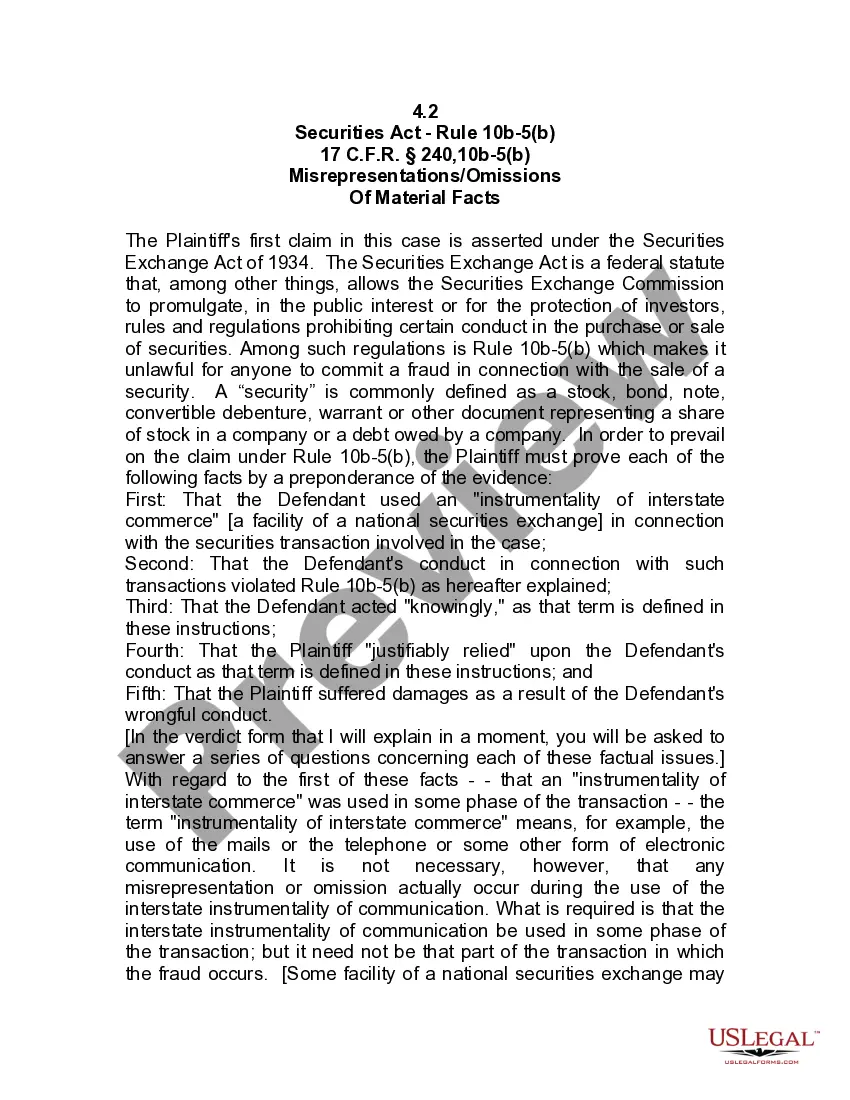
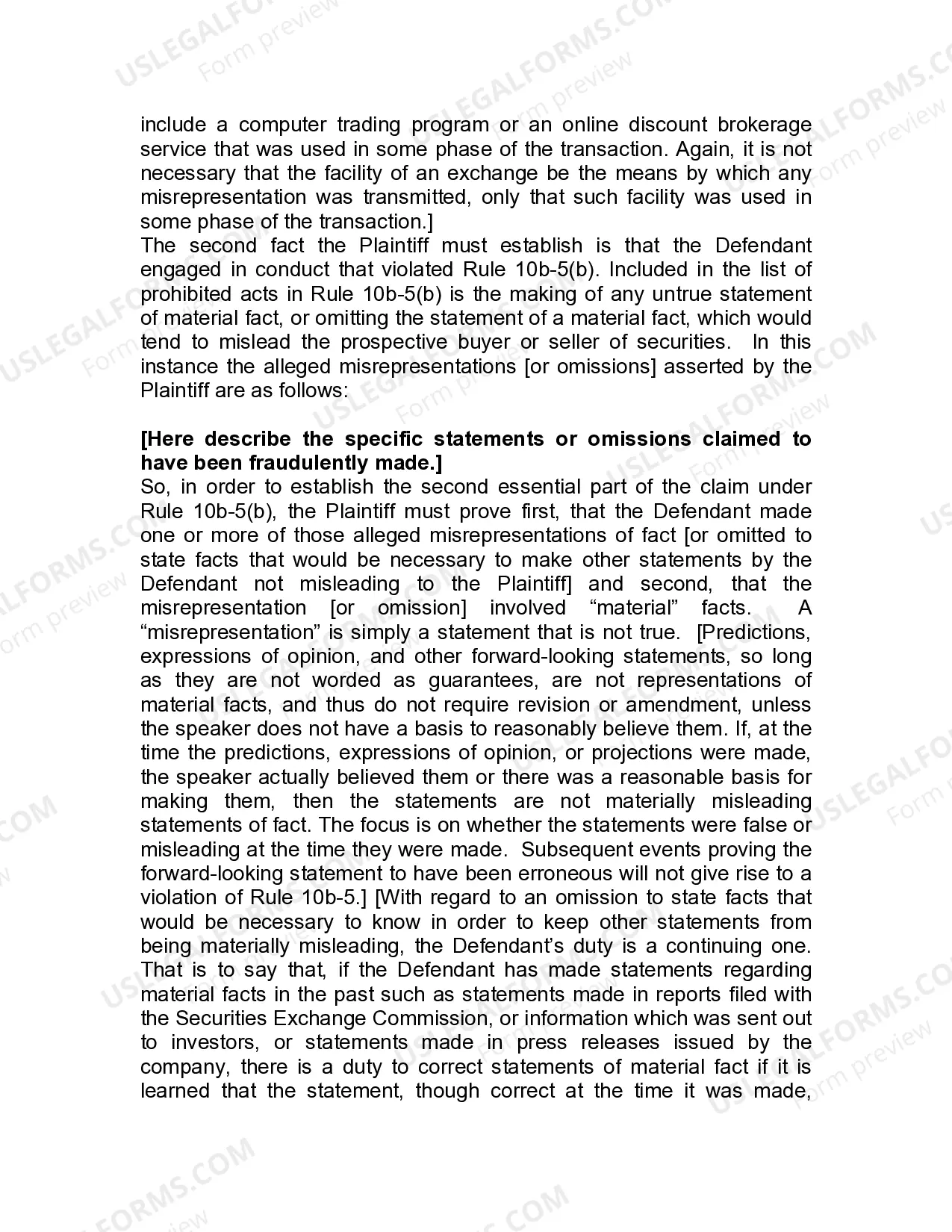
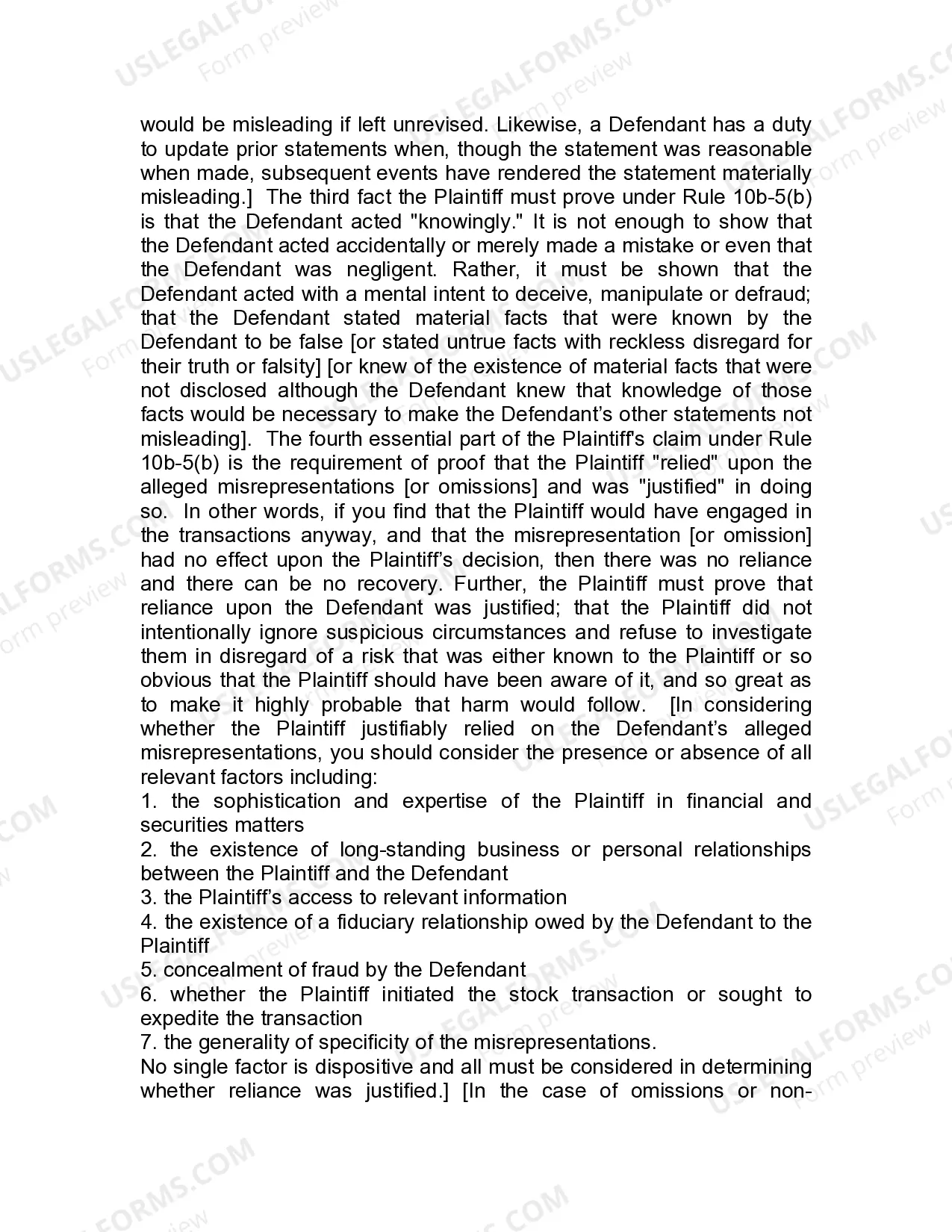
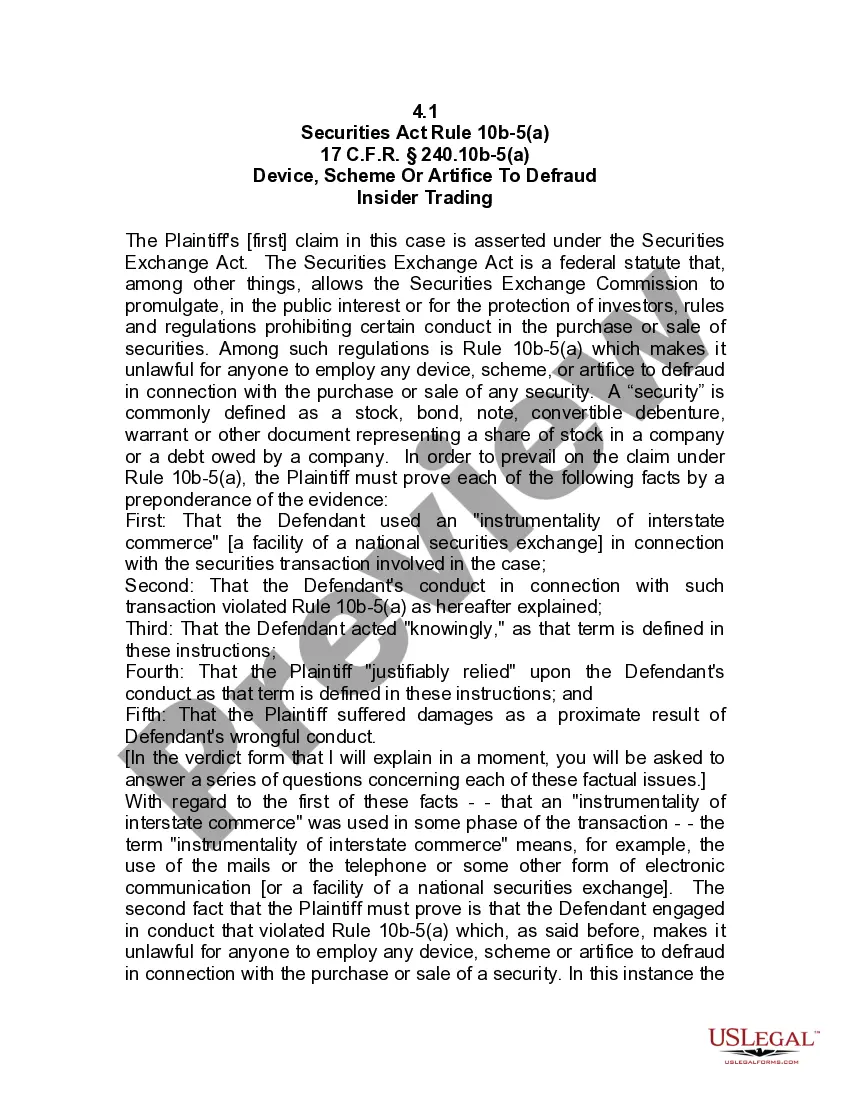
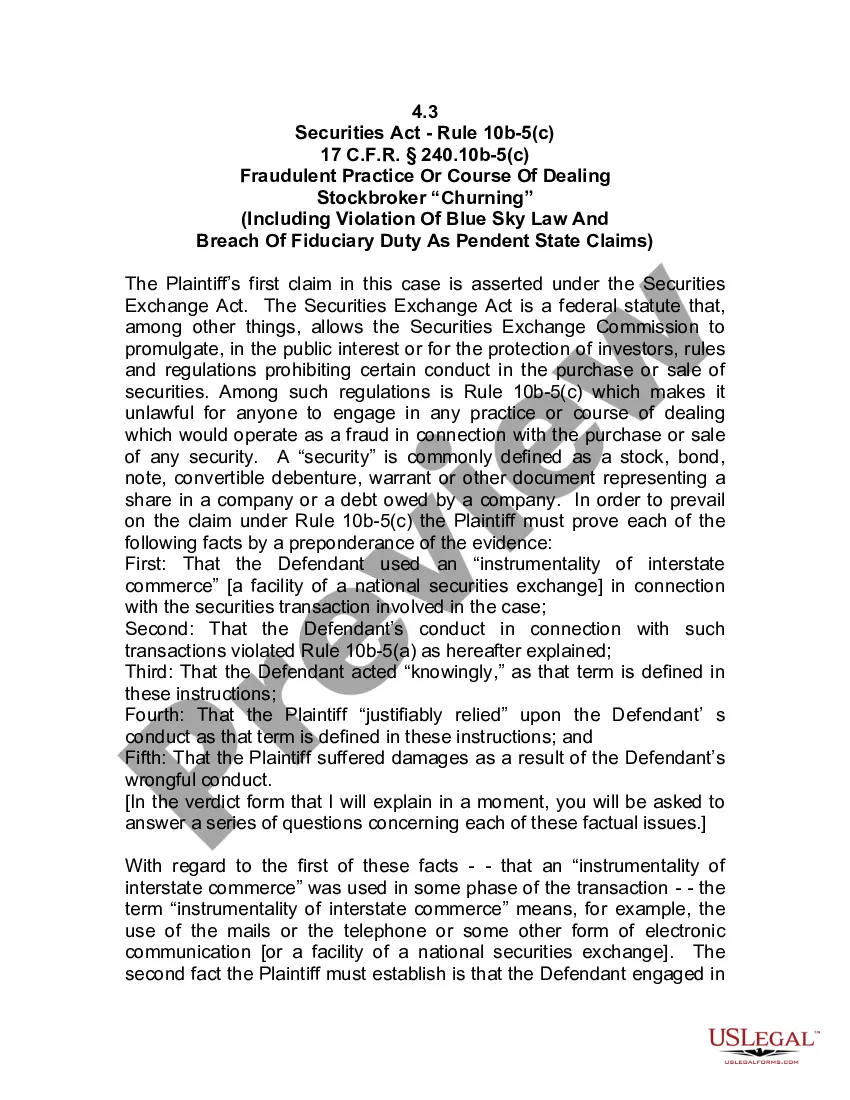
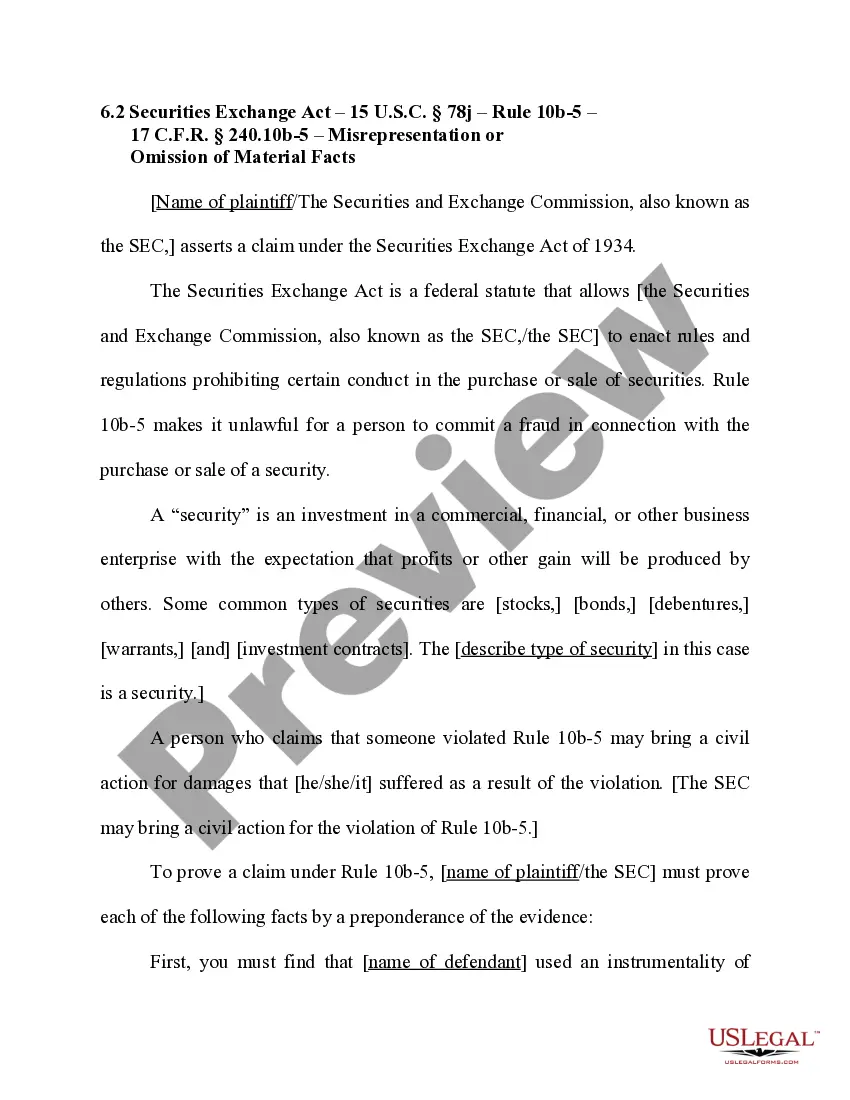
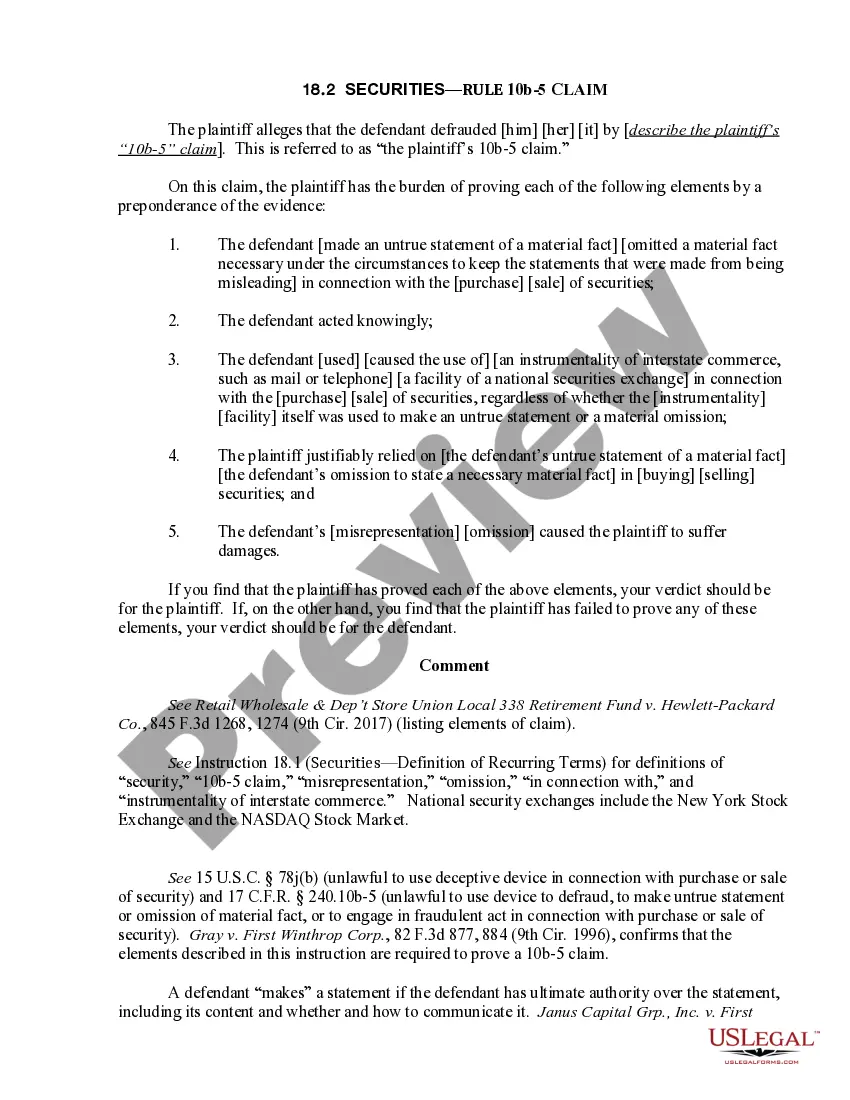
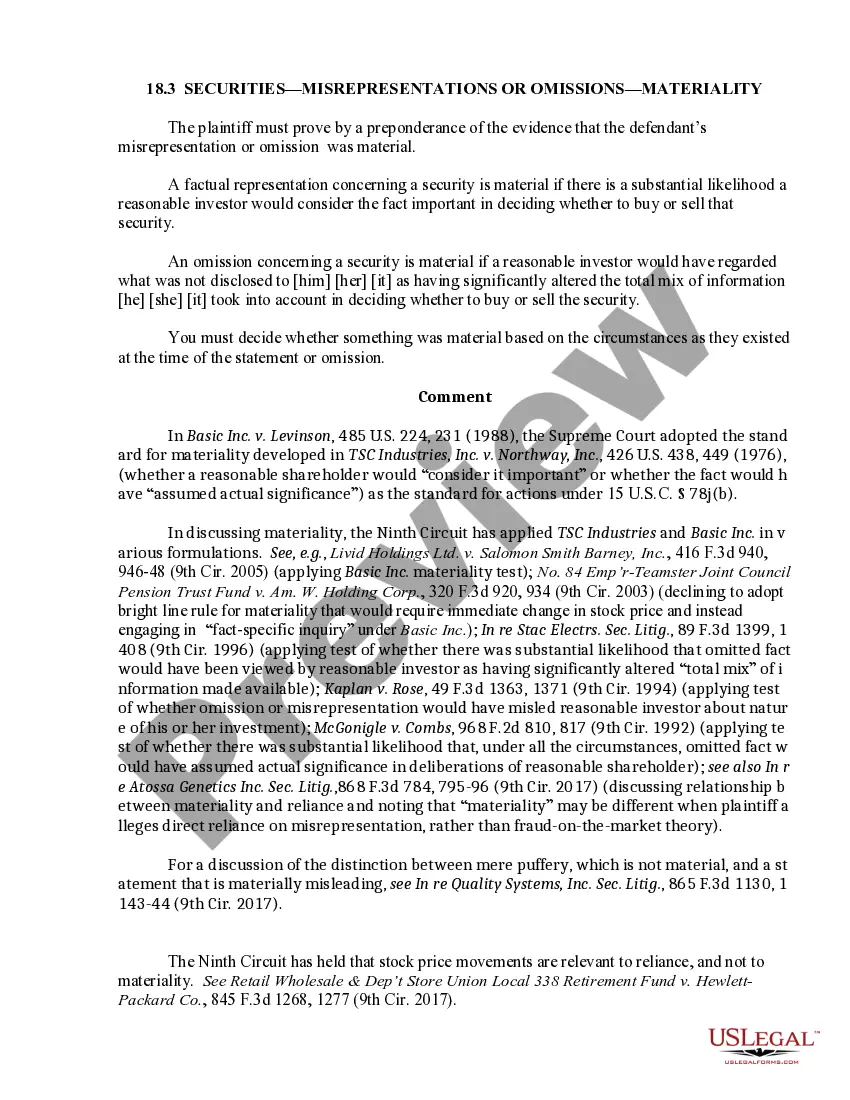
The Jury Instruction for Rule 10(b) - 5(b) Misrepresentations and Omissions of Material Facts serves as a legal guide for jurors involved in cases concerning securities fraud under the Securities Exchange Act of 1934. This form outlines essential instructions and definitions needed to assess claims of misrepresentations or omissions related to the sale of securities, differentiating it from other jury instruction forms by its specific focus on securities fraud.
Form components explained
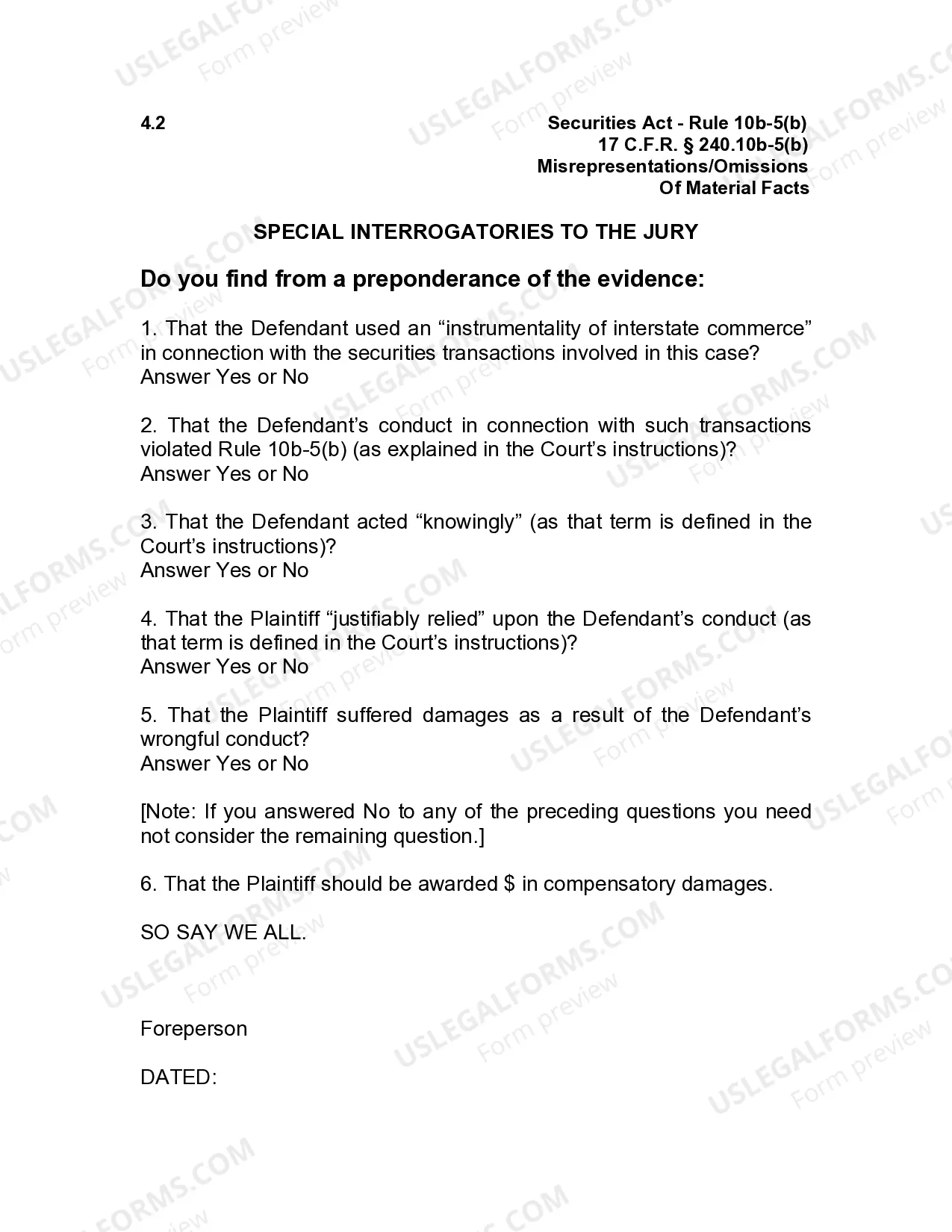
- Instructions regarding the use of interstate commerce in securities transactions.
- Definition and examples of conduct that violates Rule 10b-5(b).
- Criteria for establishing knowledge and intent in fraudulent actions.
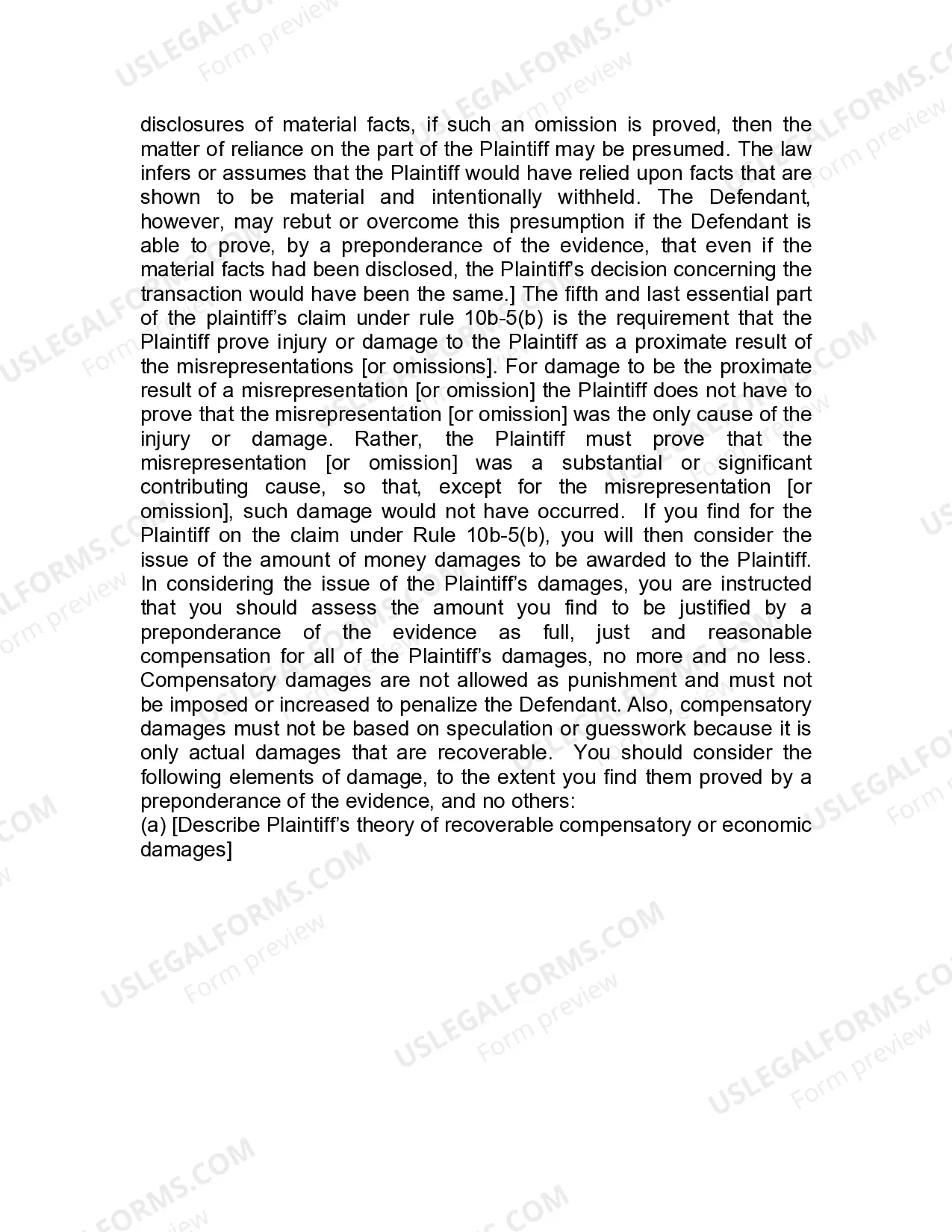
- Clarification of the plaintiff's reliance on misrepresentations.
- Guidance on assessing damages caused by misrepresentations or omissions.
When to use this form
This form is used during trials to provide jurors with specific instructions on how to evaluate evidence and determine whether a defendant engaged in fraudulent practices related to the sale of securities. It is applicable in cases where plaintiffs claim that defendants made untrue statements or failed to disclose material facts, affecting the plaintiffs' investment decisions.
Who this form is for
- Judges presiding over securities fraud trials.
- Jury members tasked with deliberating on securities-related fraud cases.
- Legal professionals preparing cases involving claims under Rule 10b-5(b).
Instructions for completing this form
- Identify the relevant parties involved in the securities transaction.
- Review the allegations to determine specific misrepresentations or omissions claimed by the plaintiff.
- Assess whether the alleged statements were made using an instrumentality of interstate commerce.
- Evaluate whether the defendant's actions meet the criteria for knowledge and intent under Rule 10b-5(b).
- Determine the extent of reliance by the plaintiff on the misrepresentations and the resulting damages.
Is notarization required?
Notarization is not commonly needed for this form. However, certain documents or local rules may make it necessary. Our notarization service, powered by Notarize, allows you to finalize it securely online anytime, day or night.
Get your form ready online
Our built-in tools help you complete, sign, share, and store your documents in one place.
Make edits, fill in missing information, and update formatting in US Legal Forms—just like you would in MS Word.
Download a copy, print it, send it by email, or mail it via USPS—whatever works best for your next step.
Sign and collect signatures with our SignNow integration. Send to multiple recipients, set reminders, and more. Go Premium to unlock E-Sign.
If this form requires notarization, complete it online through a secure video call—no need to meet a notary in person or wait for an appointment.
We protect your documents and personal data by following strict security and privacy standards.

Make edits, fill in missing information, and update formatting in US Legal Forms—just like you would in MS Word.

Download a copy, print it, send it by email, or mail it via USPS—whatever works best for your next step.

Sign and collect signatures with our SignNow integration. Send to multiple recipients, set reminders, and more. Go Premium to unlock E-Sign.

If this form requires notarization, complete it online through a secure video call—no need to meet a notary in person or wait for an appointment.

We protect your documents and personal data by following strict security and privacy standards.
Common mistakes
- Failing to properly define or clarify the claims of misrepresentation.
- Omitting an assessment of the knowledge and intent of the defendant.
- Not considering all relevant factors that contribute to the plaintiff's reliance.
- Neglecting to explain what constitutes material facts in the context of the case.
Benefits of using this form online
- Immediate access to professionally drafted jury instructions tailored to securities fraud cases.
- Easy download and customization to suit specific trial needs.
- Reliability from using a standard form developed by legal experts.
Legal use & context
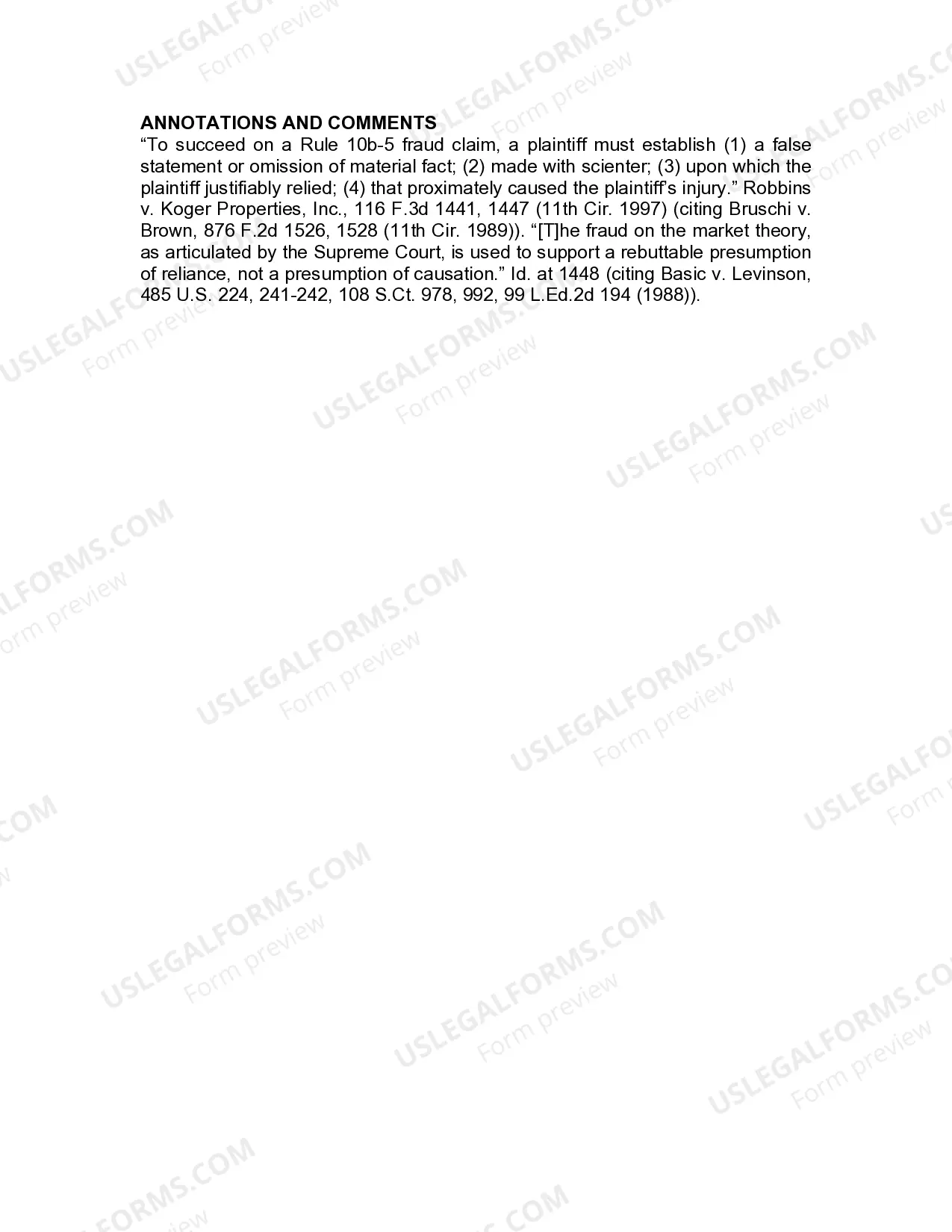
- This form is based on federal guidelines under the Securities Exchange Act, ensuring its applicability in securities litigation.
- It provides jurors with a clear framework for evaluating complex fraud claims.
- Understanding the legal context is crucial for accurate application during trials.
Looking for another form?

Form popularity
FAQ
(1) If the defendant was arrested without a warrant, the judicial officer at the first appearance shall determine whether the arrest was made with probable cause to believe that an offense had been committed and that the defendant had committed it.
A petition for a writ of certiorari is rarely granted when the asserted error consists of erroneous factual findings or the misapplication of a properly stated rule of law. Rule 10 underscores the importance of having a legitimate federal question. It also indicates that not all federal questions are created equal.
Unless service is waived, proof of service must be made to the court. Except for service by a United States marshal or deputy marshal, proof must be by the server's affidavit.
21 provides that misjoinder of parties is not ground for dismissal of an action, and that parties may be dropped or added by court order on motion of any party or of the court's own initiative at any stage in the action and on such terms as are just.
The corporation can properly effectuate service under Rule 4(e)(2) by: 1) delivering a copy of the summons and of the complaint to the individual personally; 2) leaving a copy of each at the individual's dwelling or usual place of abode with someone of suitable age and discretion who resides there; or 3) delivering a
Federal Rule of Civil Procedure 5(b)(2)(D) states, in relevant part, that a party may serve pleadings or discovery on an adverse party by, delivering a copy by any other means, including electronic means, consented to in writing by the person served.
(m) Time Limit for Service. If a defendant is not served within 90 days after the complaint is filed, the courton motion or on its own after notice to the plaintiffmust dismiss the action without prejudice against that defendant or order that service be made within a specified time.
Initial Appearance. (a) In General. (1) Appearance Upon an Arrest. (A) A person making an arrest within the United States must take the defendant without unnecessary delay before a magistrate judge, or before a state or local judicial officer as Rule 5(c) provides, unless a statute provides otherwise.