Jury Instruction - 8 Election Of Foreperson Explanation Of Verdict Forms
Understanding this form
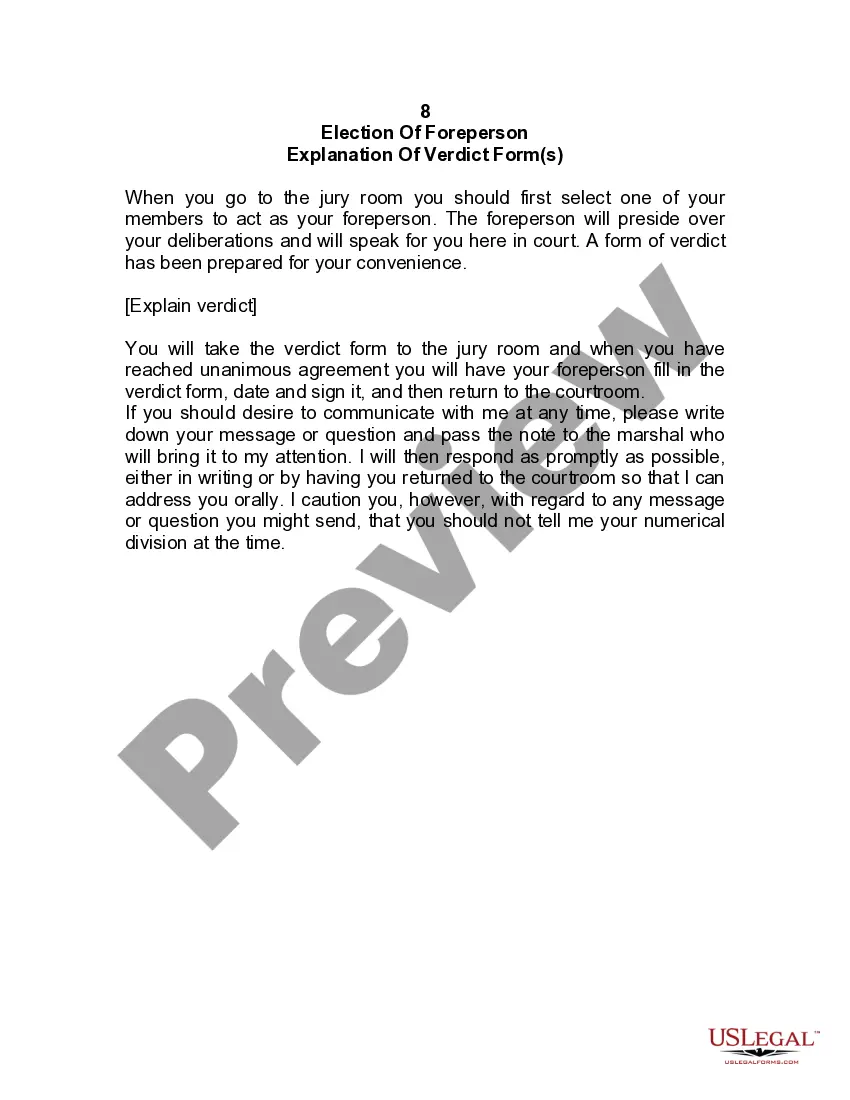
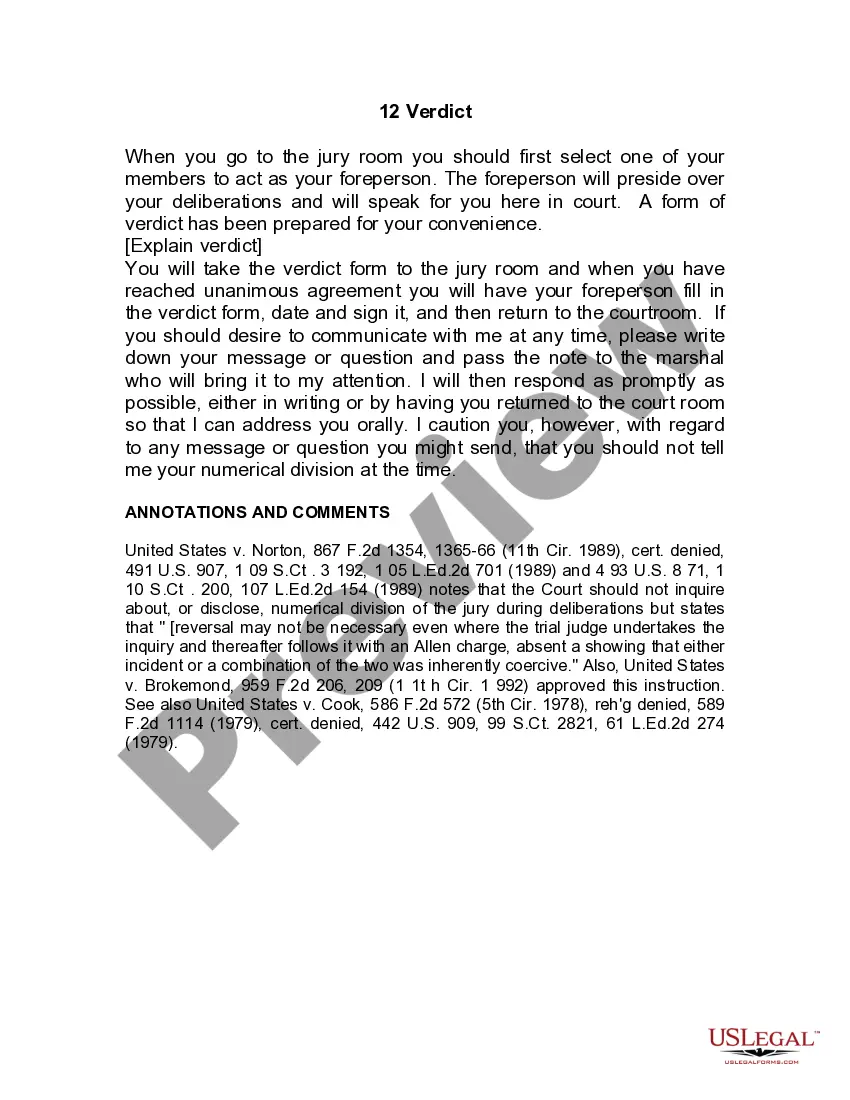
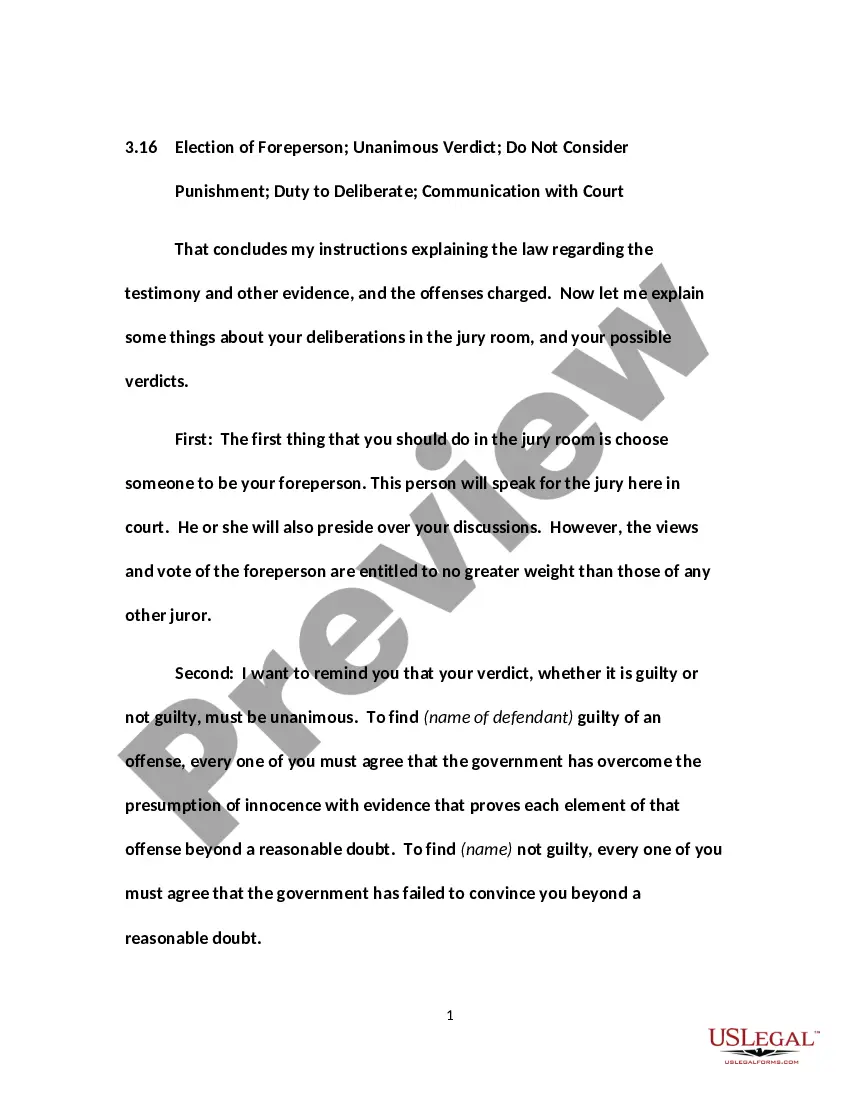
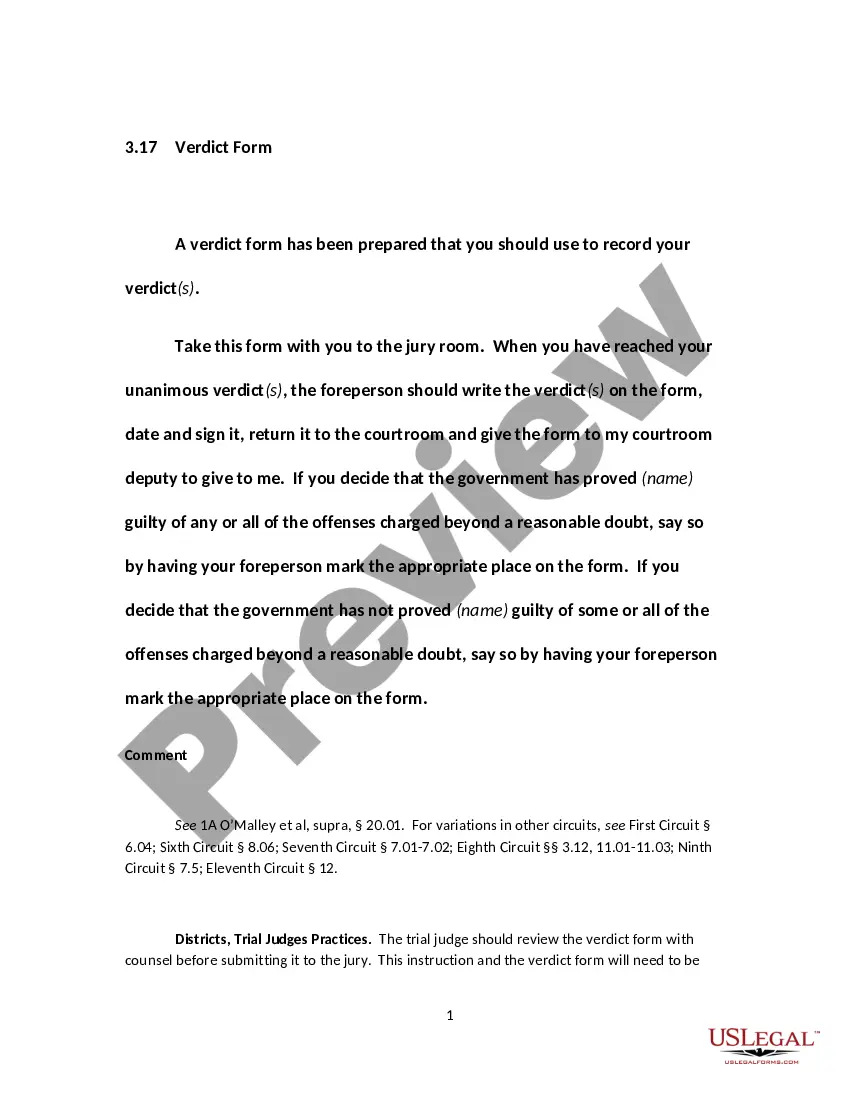
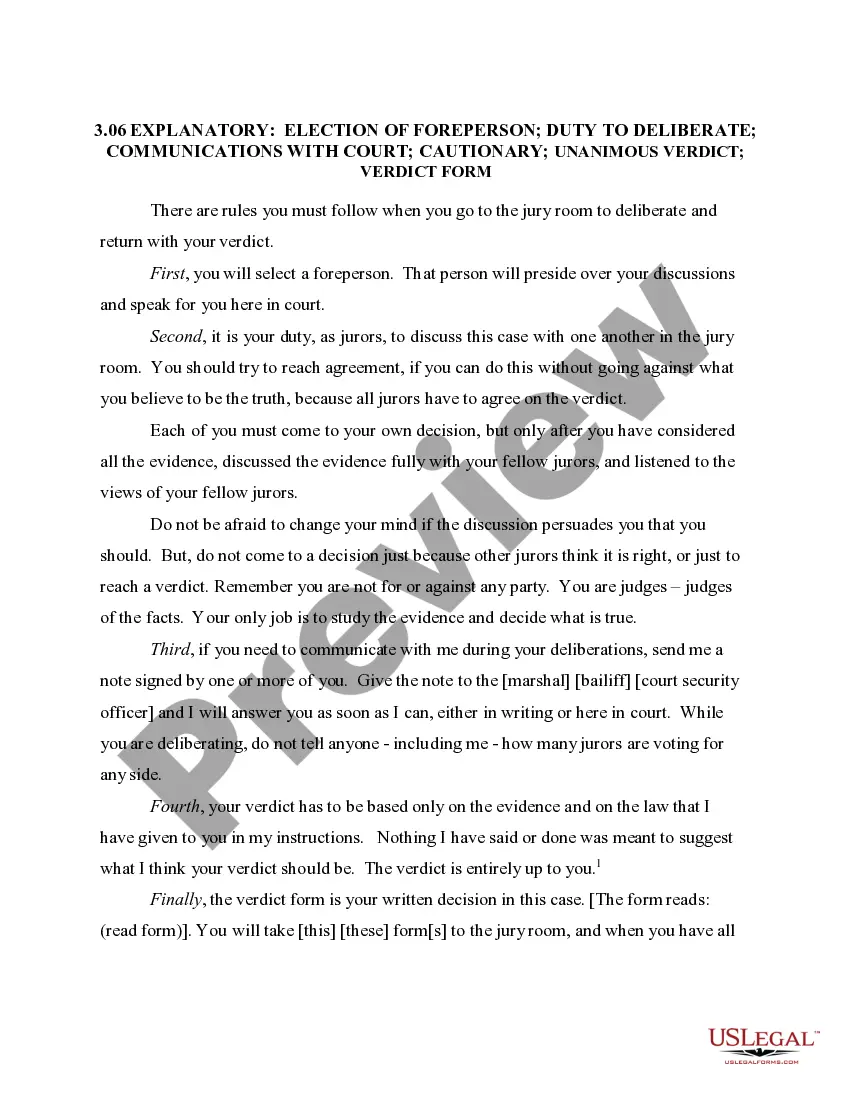
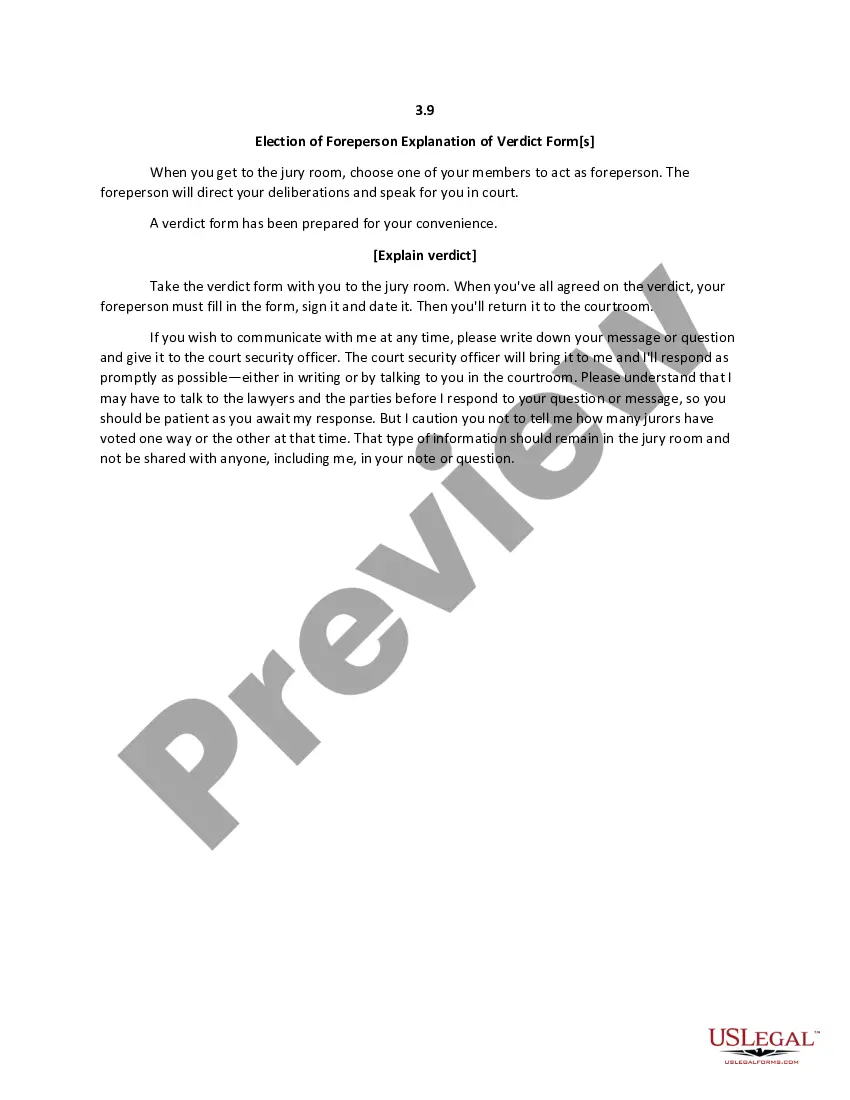
The Jury Instruction - Election Of Foreperson Explanation Of Verdict Forms provide essential guidance for jury deliberations. This form includes sample instructions that outline the process of electing a foreperson and explaining the verdict in an understandable manner. It serves as a model to help jurors fulfill their duties while ensuring clear communication in court. Unlike other legal forms, this document specifically focuses on jury roles and the verdict process, making it tailored for use during jury trials.
Key parts of this document
- Election of foreperson: Instructions for selecting a juror as the foreperson.
- Verdict form: A template for recording the jury's unanimous decision.
- Communication with the court: Guidance on how to send messages or questions to the judge.
- Presiding responsibilities: Clarification of the forepersonâs role during deliberations.
When to use this form
This form is useful in jury trials when jurors are ready to begin deliberations. It provides the necessary instructions for appointing a foreperson and helps jurors understand their responsibilities, including how to communicate with the court and how to reach agreement on a verdict. This ensures that the process runs smoothly and efficiently.
Who needs this form
This form is intended for:
- Jury members participating in a trial.
- Judges who wish to provide jurors with clear instructions.
- Attorneys who may need to reference or prepare for jury deliberations.
Steps to complete this form
- Select a foreperson among the jurors for presiding over deliberations.
- Review the prepared verdict form provided in the instructions.
- Reach a unanimous agreement on the verdict during deliberations.
- Have the foreperson fill out, date, and sign the verdict form.
- Return to the courtroom with the completed verdict form.
Is notarization required?
This form does not typically require notarization unless specified by local law. It is primarily a procedural document intended for use during jury deliberations.
Get your form ready online
Our built-in tools help you complete, sign, share, and store your documents in one place.
Make edits, fill in missing information, and update formatting in US Legal Forms—just like you would in MS Word.
Download a copy, print it, send it by email, or mail it via USPS—whatever works best for your next step.
Sign and collect signatures with our SignNow integration. Send to multiple recipients, set reminders, and more. Go Premium to unlock E-Sign.
If this form requires notarization, complete it online through a secure video call—no need to meet a notary in person or wait for an appointment.
We protect your documents and personal data by following strict security and privacy standards.

Make edits, fill in missing information, and update formatting in US Legal Forms—just like you would in MS Word.

Download a copy, print it, send it by email, or mail it via USPS—whatever works best for your next step.

Sign and collect signatures with our SignNow integration. Send to multiple recipients, set reminders, and more. Go Premium to unlock E-Sign.

If this form requires notarization, complete it online through a secure video call—no need to meet a notary in person or wait for an appointment.

We protect your documents and personal data by following strict security and privacy standards.
Common mistakes to avoid
- Failing to select a foreperson, which can disrupt the deliberation process.
- Not understanding the importance of unanimous agreement before filling out the verdict form.
- Neglecting to communicate effectively with the court when questions arise.
Benefits of using this form online
- Convenience: Download and access the form at any time from anywhere.
- Editability: Customize the form to suit the specific needs of your trial.
- Reliability: Use professionally drafted templates that adhere to legal standards.
Legal use & context
- This form is legally binding once completed by the jury.
- Accurate completion ensures the proper submission of the verdict to the court.
- This form aids in maintaining a structured and fair deliberation process.
Key takeaways
- The form assists jurors in understanding their roles during deliberations.
- It is essential for ensuring a smooth verdict process in jury trials.
- The form is adaptable for various jurisdictions throughout the United States.
Looking for another form?

Form popularity
FAQ
A jury instruction is given by the judge to the jury to explain what is happening in the court, to explain the points of law relevant to the case, to explain certain aspects of the evidence presented and to assist the jurors in understanding their duties in reaching a verdict.
In federal criminal trials, the jury must reach a unanimous decision in order to convict the defendant. After they reach an agreement on a verdict, they notify the judge, the lawyers, and the defendant in open court. Everyone is present in court for the reading of the verdict.
A verdict of guilty in a criminal case is generally followed by a judgment of conviction rendered by judge, which in turn be followed by sentencing. In U.S. legal nomenclature, the verdict is the finding of the jury on the questions of fact submitted to it.The judgment of the court is the final order in the case.
Their names come from the list of people who can vote in elections. A jury must listen to all the evidence before they choose their verdict (say if the defendant is guilty or not). This means that all 12 jury members agree with the decision.
Following the instructions from the judge, the jury will be taken to a private room to discuss the verdict.All jurors must reach a unanimous verdict of either guilty or not guilty. If the jury deadlocks and cannot reach a unanimous decision, this results in a hung jury and a mistrial.
A jury instruction is a guideline given by the judge to the jury about the law they will have to apply to the facts they have found to be true. The purpose of the instructions is to help the jury arrive at a verdict that follows the law of that jurisdiction.In giving these instructions, the judge binds the jury.
Jury retire to consider their verdict After receiving their final directions from the judge, the jury will be invited to retire to consider their verdict, to decide if the defendant is Guilty or Not Guilty.Juries will be free to leave court at the end of the day to continue their deliberations the following day.
A hung jury, also called a deadlocked jury, is a judicial jury that cannot agree upon a verdict after extended deliberation and is unable to reach the required unanimity or supermajority.