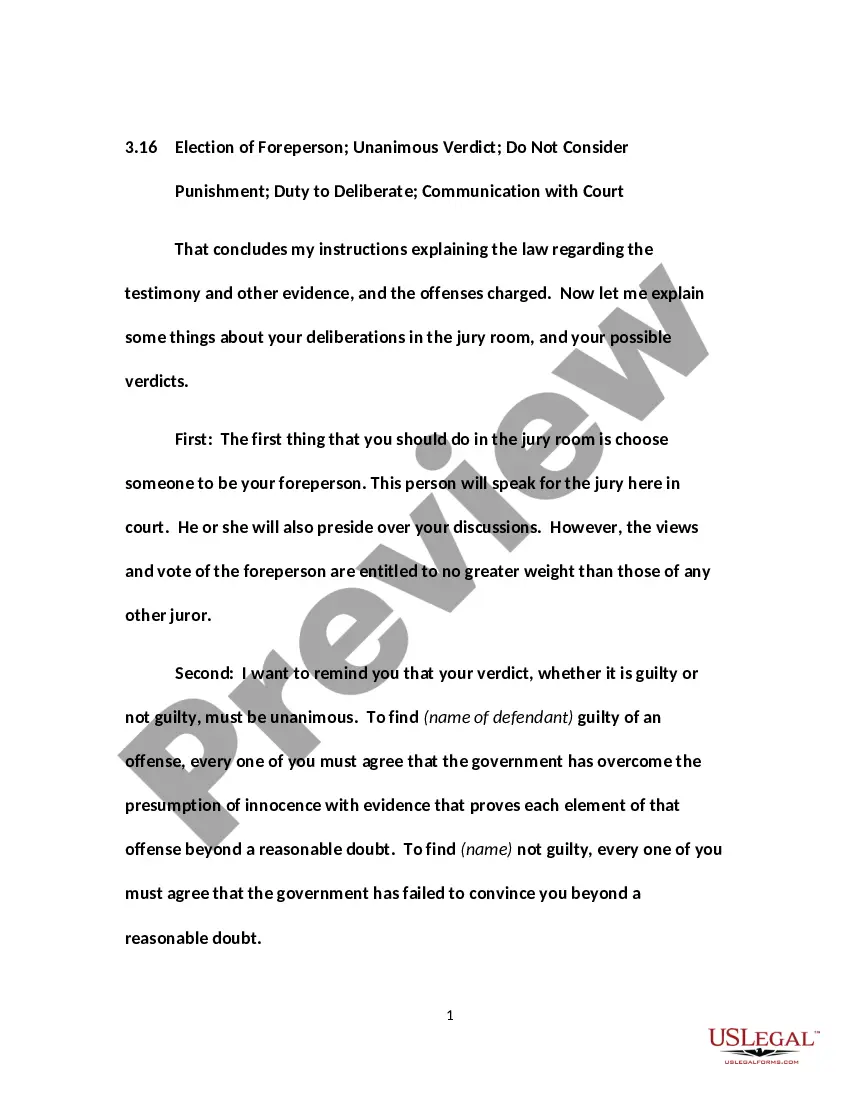
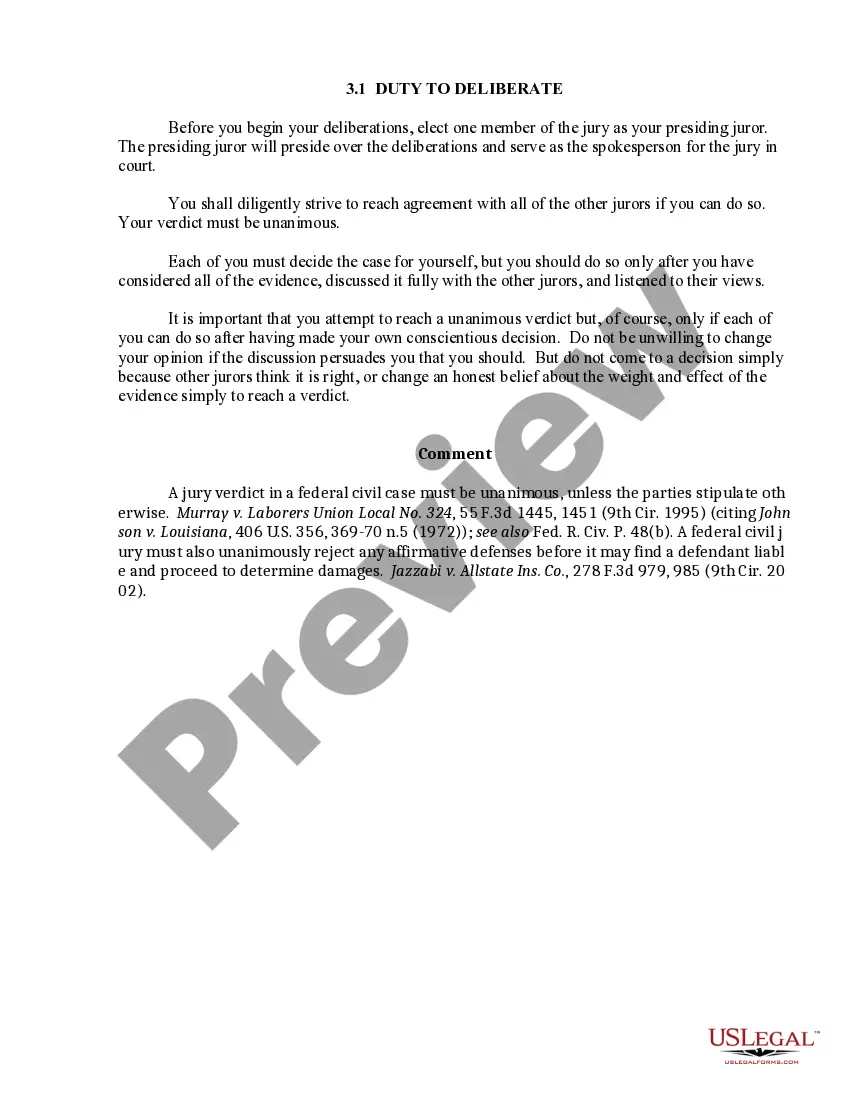
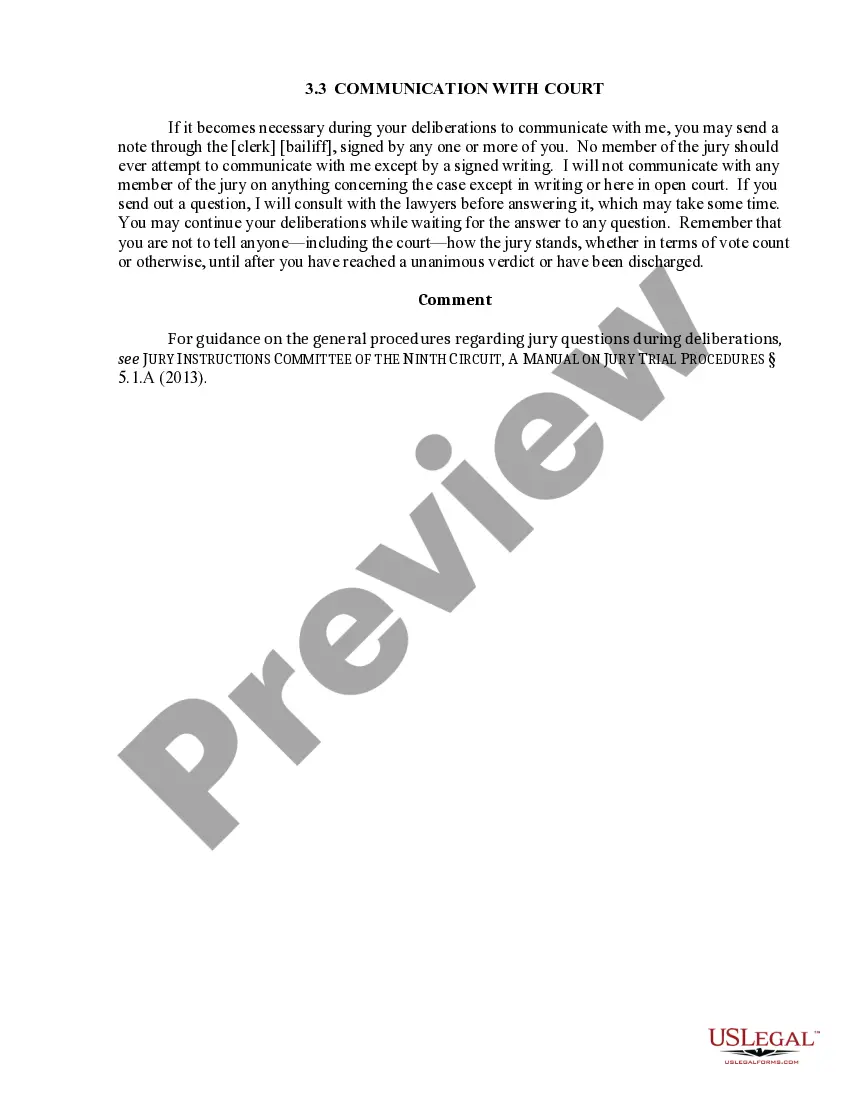
3.06 Explanatory: Election of Foreperson; Duty to Deliberate; Communications with Court; Cautionary is a set of instructions for jurors in criminal trials. The foreperson is responsible for ensuring that all jurors understand their duty to deliberate, communicate with the court, and follow cautionary instructions. The instructions include instructions for the election of the foreperson, the duty of the jurors to engage in deliberation, the communication between the court and the jurors, and cautionary instructions. The election of the foreperson involves the selection of a juror who will be responsible for leading the deliberation process. The duty of the jurors to deliberate requires them to carefully consider the evidence presented by the prosecution and defense and to reach a unanimous verdict. Communication with the court involves any requests or instructions from the court that the jury will need to consider. The cautionary instructions involve instructions from the court that are intended to guide the jurors in their decision-making processes. These instructions are designed to ensure that jurors are able to carry out their duties in a fair and impartial manner.
3.06 EXPLANATORY: ELECTION OF FOREPERSON; DUTY TO DELIBERATE; COMMUNICATIONS WITH COURT; CAUTIONARY
Description





How to fill out 3.06 EXPLANATORY: ELECTION OF FOREPERSON; DUTY TO DELIBERATE; COMMUNICATIONS WITH COURT; CAUTIONARY?
US Legal Forms is the most simple and profitable way to find appropriate formal templates. It’s the most extensive online library of business and individual legal paperwork drafted and verified by lawyers. Here, you can find printable and fillable blanks that comply with national and local regulations - just like your 3.06 EXPLANATORY: ELECTION OF FOREPERSON; DUTY TO DELIBERATE; COMMUNICATIONS WITH COURT; CAUTIONARY.
Obtaining your template requires just a few simple steps. Users that already have an account with a valid subscription only need to log in to the web service and download the document on their device. Afterwards, they can find it in their profile in the My Forms tab.
And here’s how you can obtain a professionally drafted 3.06 EXPLANATORY: ELECTION OF FOREPERSON; DUTY TO DELIBERATE; COMMUNICATIONS WITH COURT; CAUTIONARY if you are using US Legal Forms for the first time:
- Look at the form description or preview the document to make certain you’ve found the one meeting your requirements, or find another one using the search tab above.
- Click Buy now when you’re sure of its compatibility with all the requirements, and select the subscription plan you prefer most.
- Create an account with our service, sign in, and pay for your subscription using PayPal or you credit card.
- Choose the preferred file format for your 3.06 EXPLANATORY: ELECTION OF FOREPERSON; DUTY TO DELIBERATE; COMMUNICATIONS WITH COURT; CAUTIONARY and download it on your device with the appropriate button.
After you save a template, you can reaccess it whenever you want - just find it in your profile, re-download it for printing and manual fill-out or import it to an online editor to fill it out and sign more efficiently.
Take full advantage of US Legal Forms, your reputable assistant in obtaining the required official paperwork. Try it out!
Form popularity
FAQ
If you are selected to serve as a Grand Juror, your service will begin that day. A foreperson is appointed by the Judge. The same procedure is followed for electing or appointing an assisted foreperson and a clerk.
Impartial: Without bias, prejudice, or other pre- conception. The members of a jury should have no opinion about or vested interest in a case at the start of the trial and should base the verdict only on competent legal evidence presented during the trial and on the judges' instructions about the law.
Foreperson: The juror charged with overseeing jury deliberations. (See deliberations above.) Often called the presiding juror.
Why is it Important to Get an Impartial Jury? A jury that's impartial provides a speedy and fair trial. The jury helps trial court judges decide the defendant's verdict. Unlike a biased jury, an impartial jury maximizes the chances of a court decision being unmarred by personal bias.
The first person selected as a juror acts as the foreperson of the jury. Their role is to write the jury's decision (guilty or not guilty) against the charges on the Issue Paper (a form that the charges against the defendants are listed on) and announce the verdict in open court.
The jury consists of 12 members of the public who sit in a box to one side of the judge. One of the jurors is selected as a foreman of the jury by the members of the jury before the case starts. He or she acts as an informal chairperson and spokesperson for the jury.
The Jury's Verdict In both civil and criminal cases, it is the jury's duty to decide the facts in ance with the principles of law laid down in the judge's charge to the jury. The decision is made on the evidence introduced, and the jury's decision on the facts is usually final.