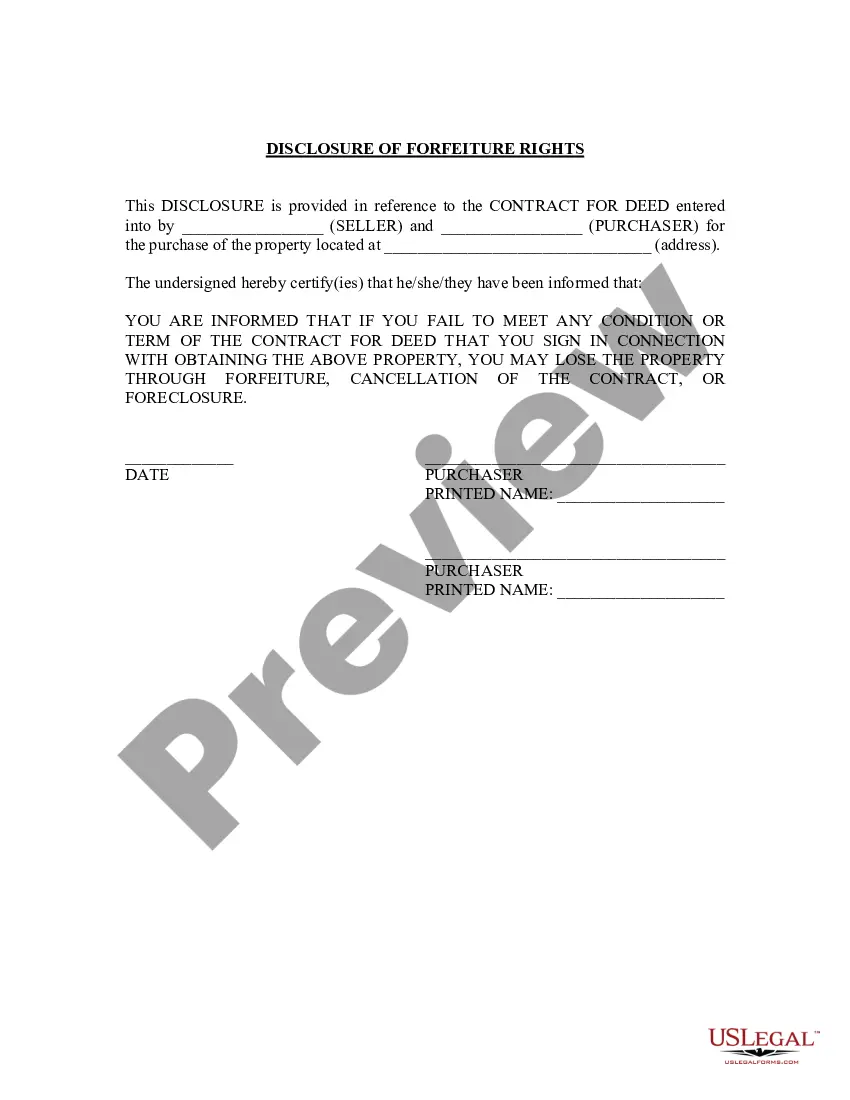
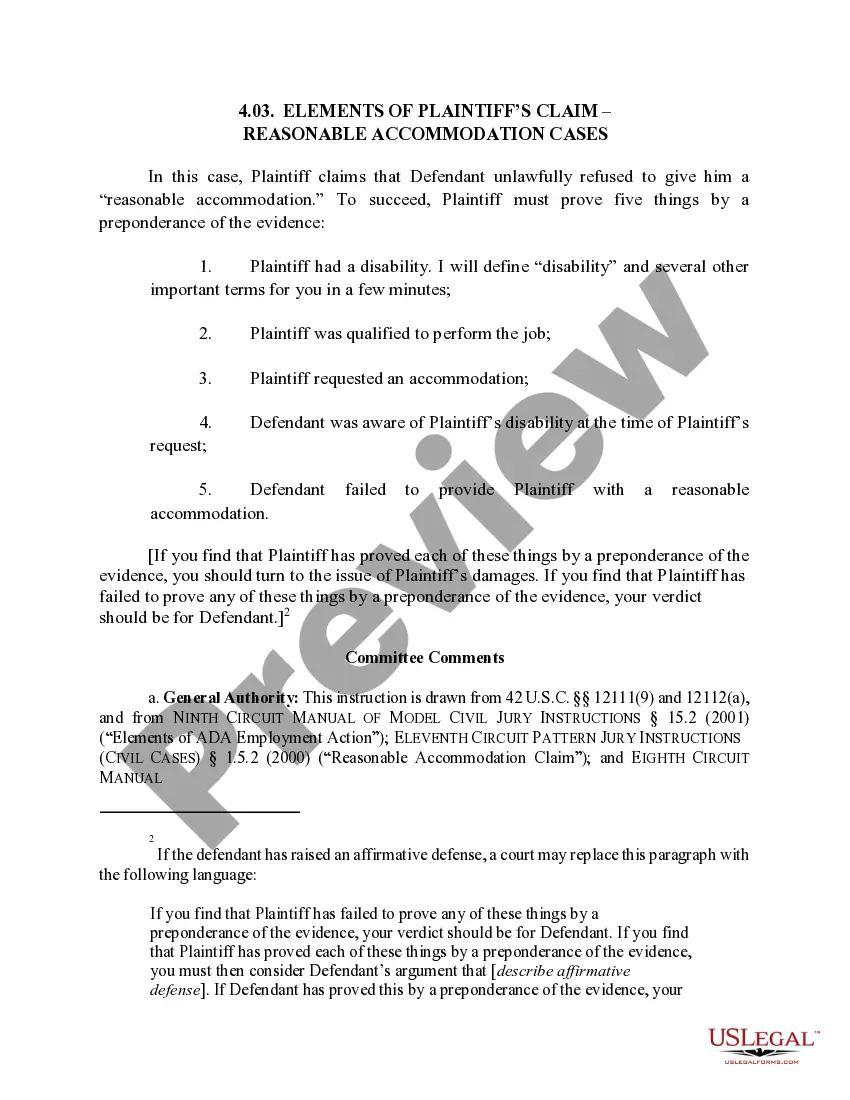
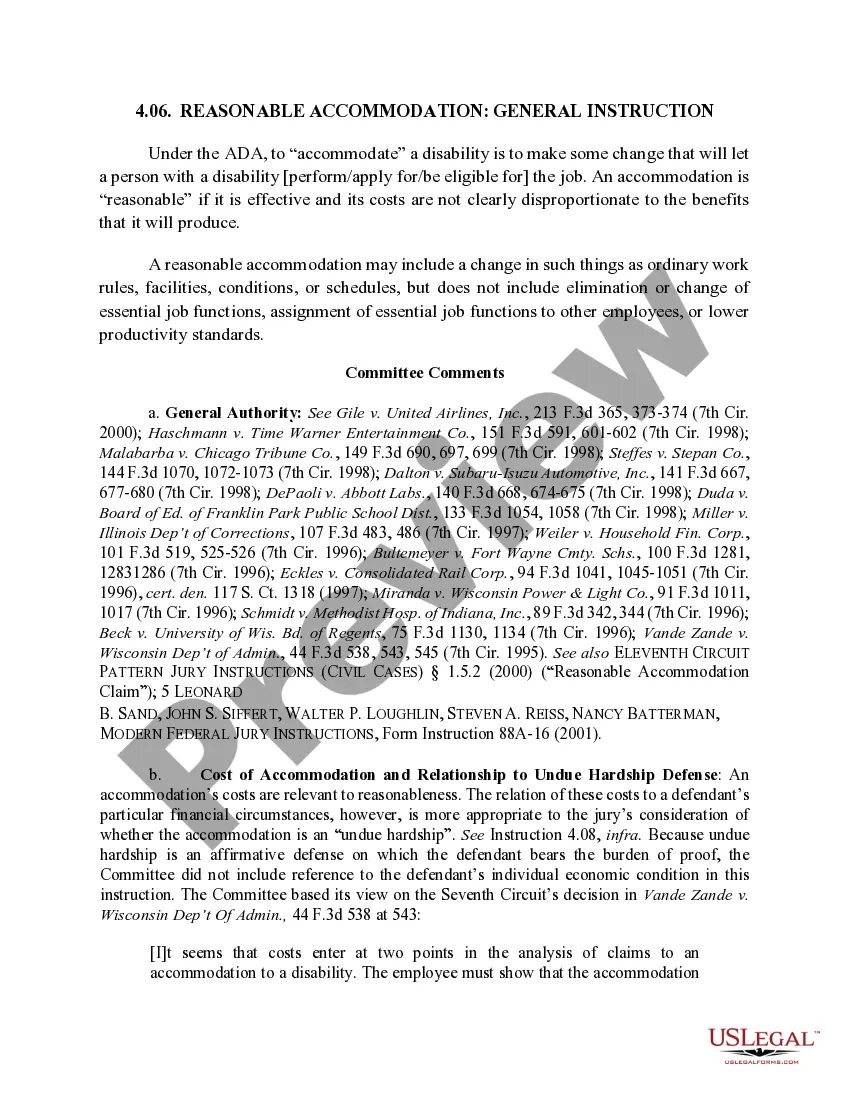
9.42 ELEMENTS OF CLAIM: REASONABLE ACCOMMODATION (Specific Accommodation Identified)
Understanding this form
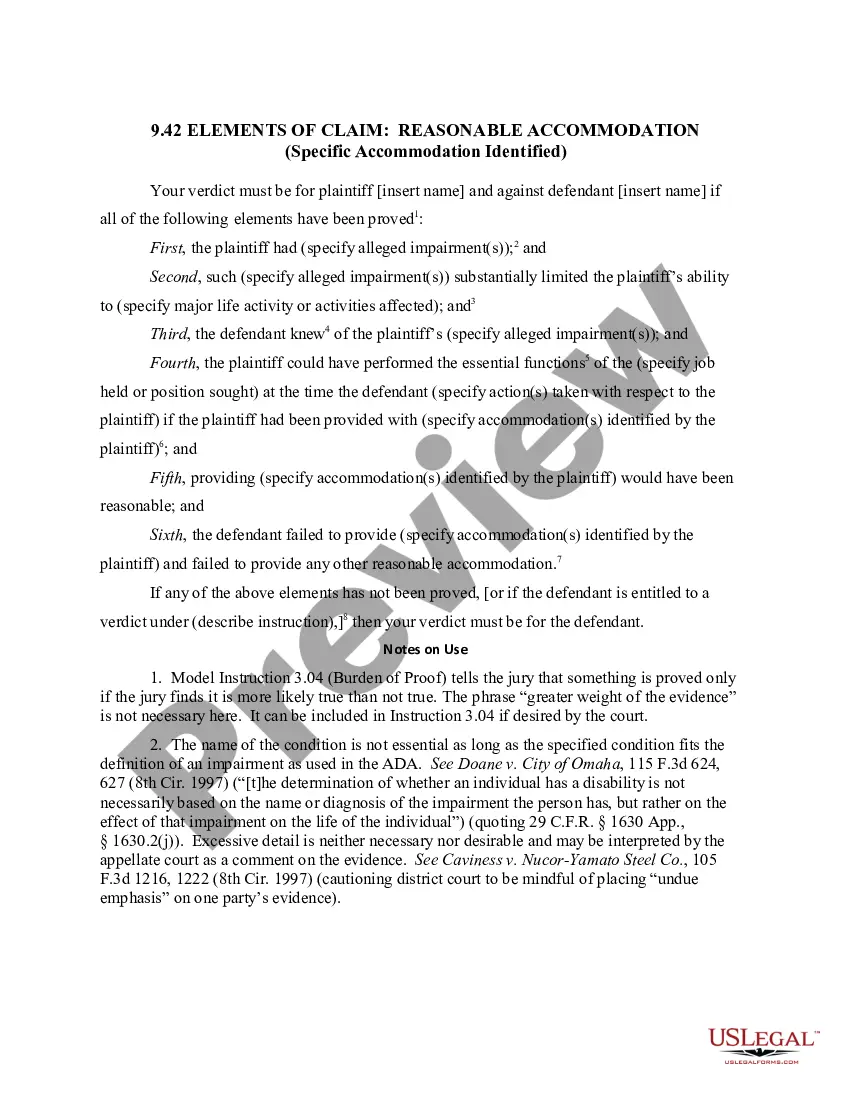
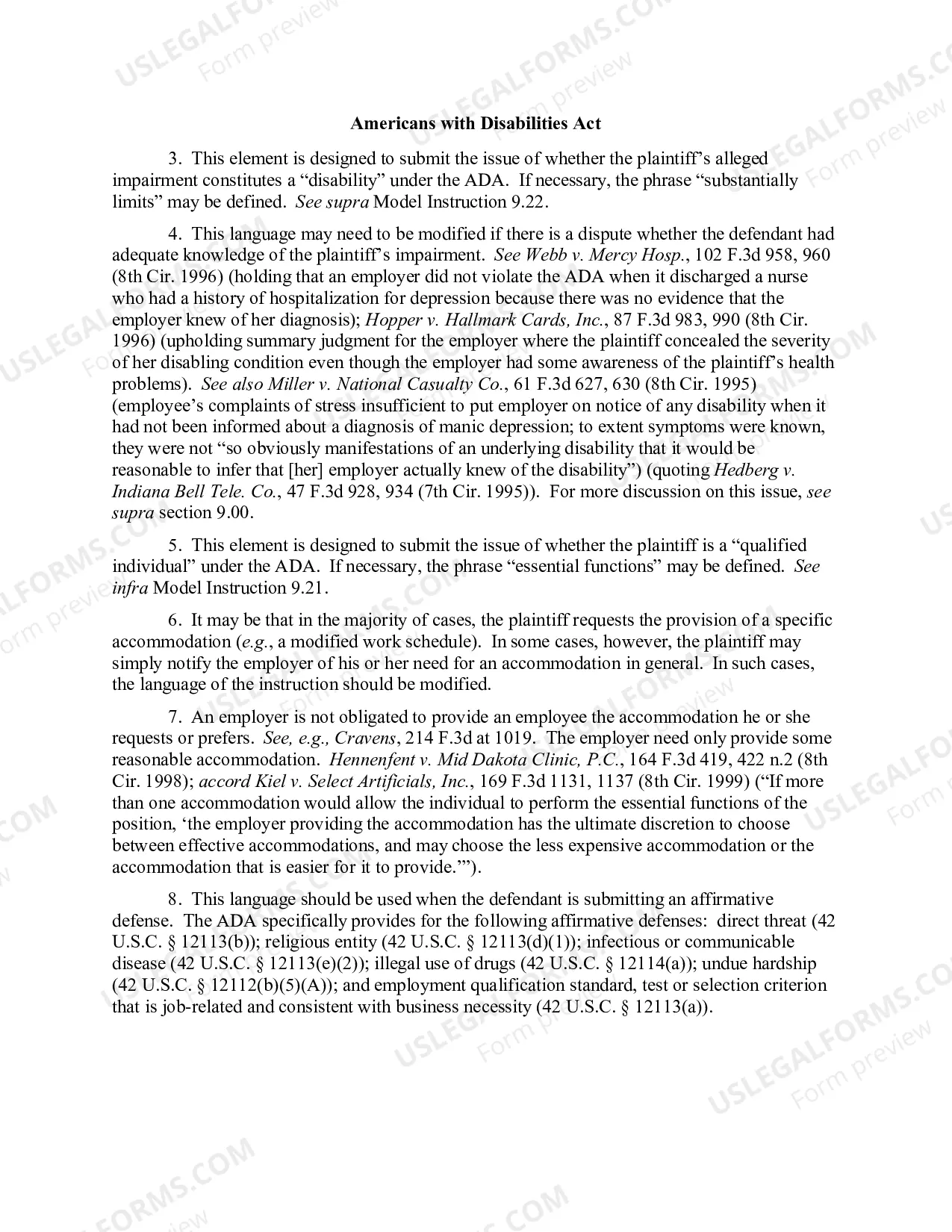
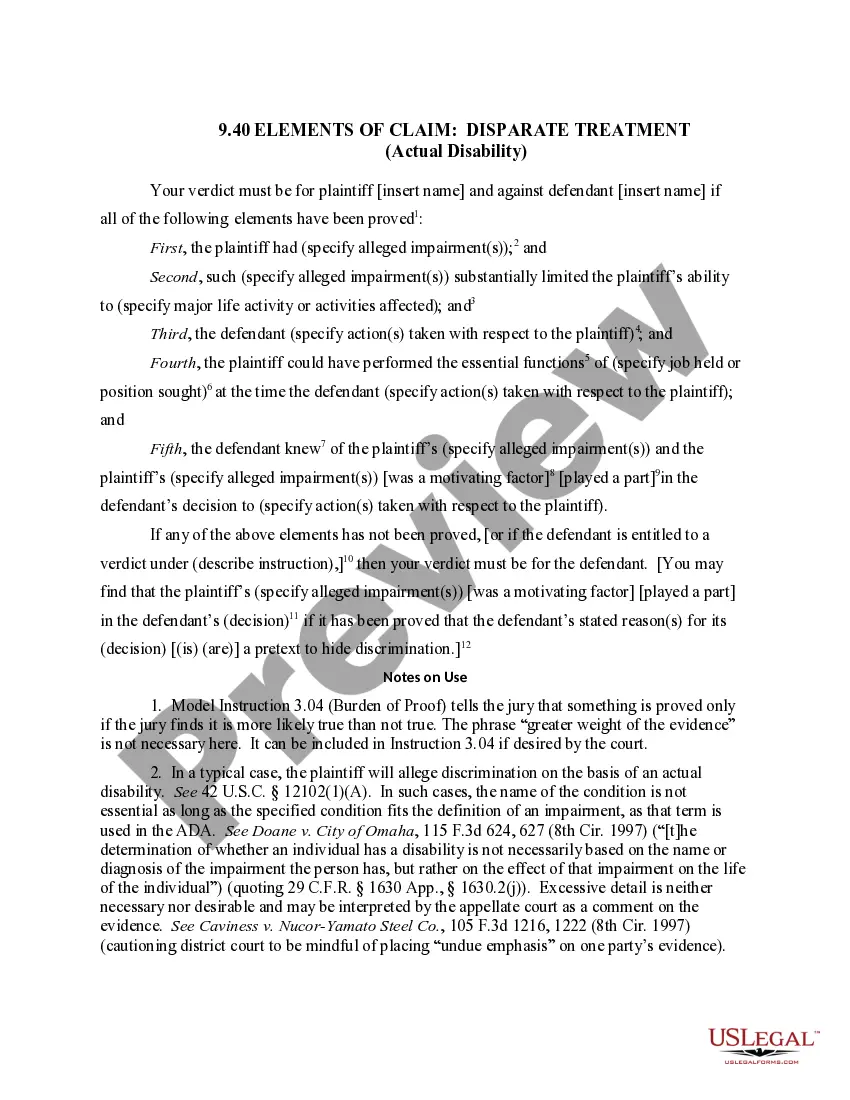
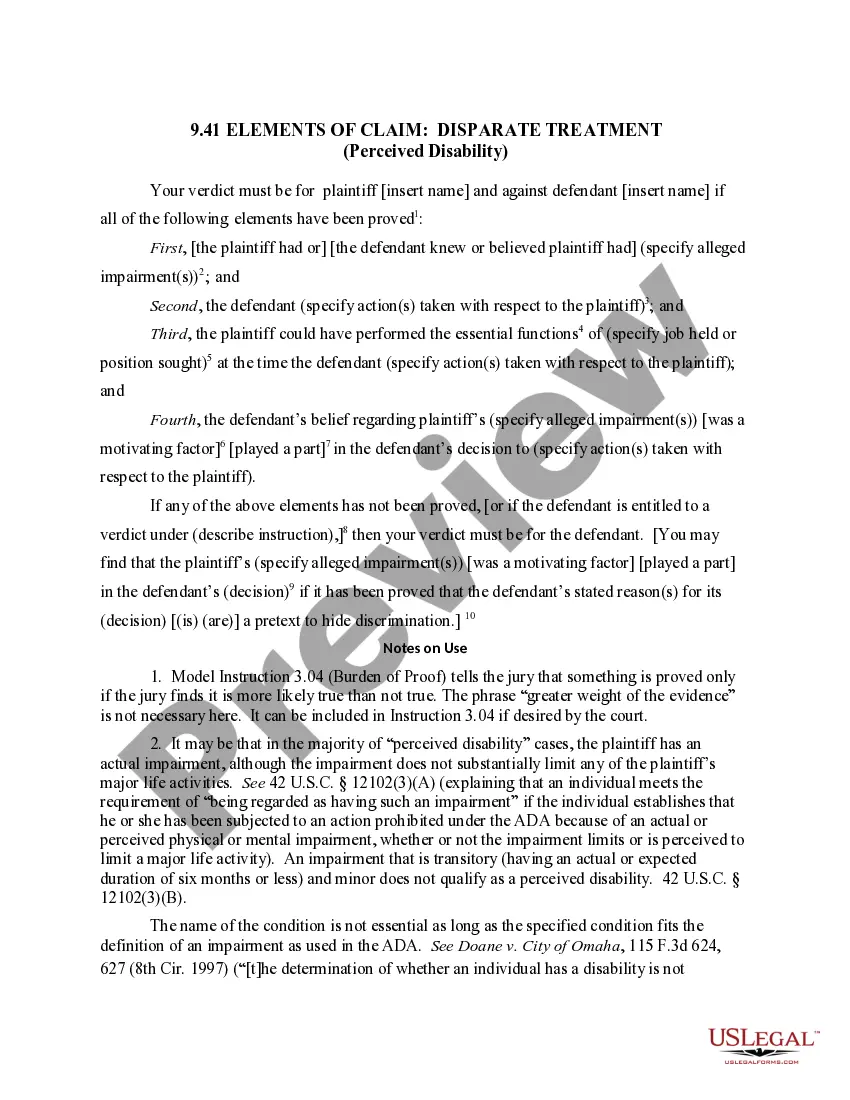
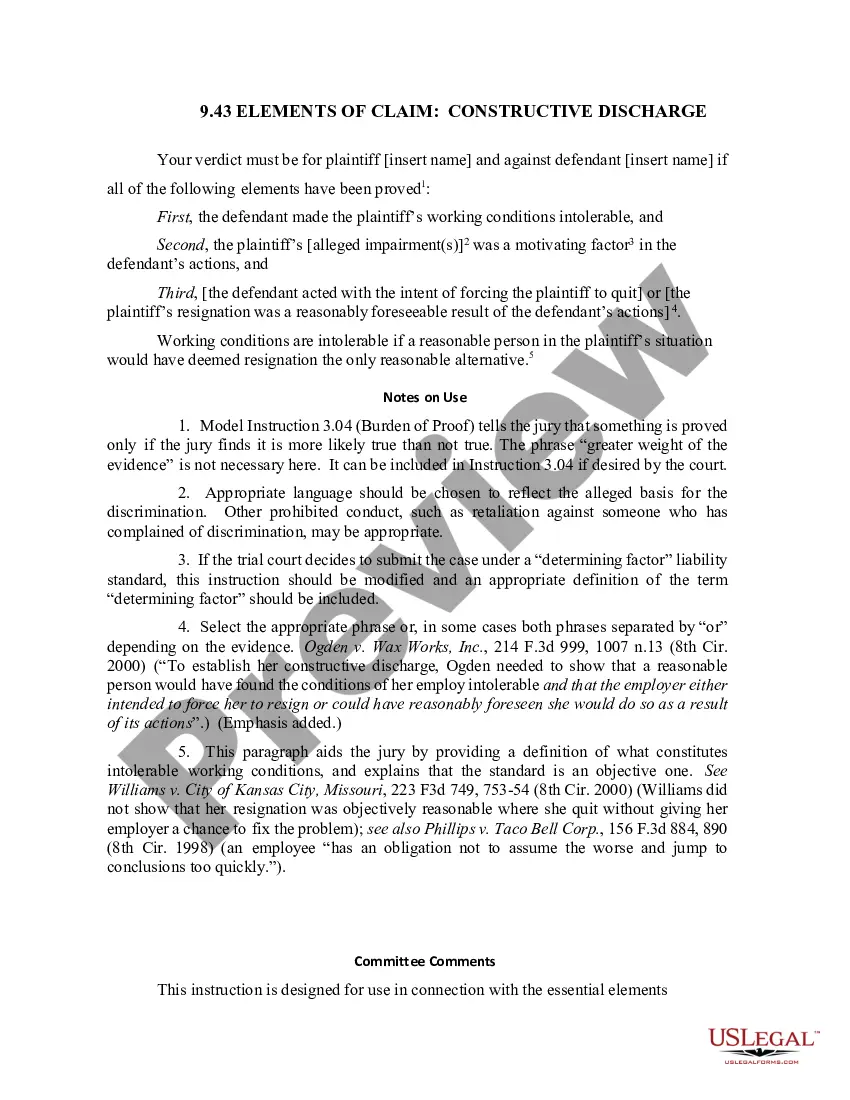
The 9.42 Elements of Claim: Reasonable Accommodation form is a legal document used to establish a plaintiff's claim for reasonable accommodation due to a disability. This form outlines the necessary elements that must be proven for a verdict in favor of the plaintiff, including the existence of a substantial impairment, the employer's knowledge of that impairment, and the failure to provide reasonable accommodations. It differs from other employment-related forms by specifically focusing on disability claims under the Americans with Disabilities Act (ADA) and the obligations of employers regarding accommodations.
What’s included in this form
- Identification of the plaintiff's impairment(s)
- Definition of major life activity affected by the impairment(s)
- Details of the defendant's knowledge about the plaintiff's condition
- Explanation of essential job functions
- Specifications of the accommodations requested by the plaintiff
- Assessment of the reasonableness of the requested accommodations
- Failure of the defendant to provide accommodations

When to use this form
This form should be used when an employee with a disability believes their employer failed to provide reasonable accommodations that would have allowed them to perform essential job functions. Typical scenarios include cases where an employee requests specific modifications to their work environment or schedule due to their disability, but the employer does not comply with those requests.
Who should use this form
- Employees who have disabilities and require accommodations to perform their job duties
- Legal representatives assisting clients with disability claims
- Employers seeking to understand their obligations under the ADA regarding reasonable accommodations
Steps to complete this form
- Identify the plaintiff by inserting their name in the designated field.
- Specify the alleged impairment(s) that affect the plaintiff's ability to perform major life activities.
- Detail the essential functions of the job held or sought by the plaintiff.
- Describe the specific accommodations requested by the plaintiff.
- Confirm whether the requested accommodations would be reasonable under the circumstances.
- Provide the necessary signatures and dates to complete the filing process.
Is notarization required?
In most cases, this form does not require notarization. However, some jurisdictions or signing circumstances might. US Legal Forms offers online notarization powered by Notarize, accessible 24/7 for a quick, remote process.
Get your form ready online
Our built-in tools help you complete, sign, share, and store your documents in one place.
Make edits, fill in missing information, and update formatting in US Legal Forms—just like you would in MS Word.
Download a copy, print it, send it by email, or mail it via USPS—whatever works best for your next step.
Sign and collect signatures with our SignNow integration. Send to multiple recipients, set reminders, and more. Go Premium to unlock E-Sign.
If this form requires notarization, complete it online through a secure video call—no need to meet a notary in person or wait for an appointment.
We protect your documents and personal data by following strict security and privacy standards.

Make edits, fill in missing information, and update formatting in US Legal Forms—just like you would in MS Word.

Download a copy, print it, send it by email, or mail it via USPS—whatever works best for your next step.

Sign and collect signatures with our SignNow integration. Send to multiple recipients, set reminders, and more. Go Premium to unlock E-Sign.

If this form requires notarization, complete it online through a secure video call—no need to meet a notary in person or wait for an appointment.

We protect your documents and personal data by following strict security and privacy standards.
Avoid these common issues
- Failing to specify the impairment clearly, which can weaken the claim.
- Not adequately demonstrating the employer's knowledge of the impairment.
- Overlooking the definition and scope of âreasonable accommodations.â
- Forgetting to include signatures or dates, which are essential for formal validity.
Why use this form online
- Immediate access to a professionally drafted legal document.
- Easy to download and complete at your convenience.
- Cost-effective compared to hiring a lawyer for simple forms.
- Editable format allows for customization specific to your circumstances.
Legal use & context
- This form is based on provisions of the Americans with Disabilities Act (ADA).
- It is applicable in employment disputes involving accommodation requests.
- Legal standards for proving a claim under the ADA require careful attention to detail.
Looking for another form?
Form popularity
FAQ
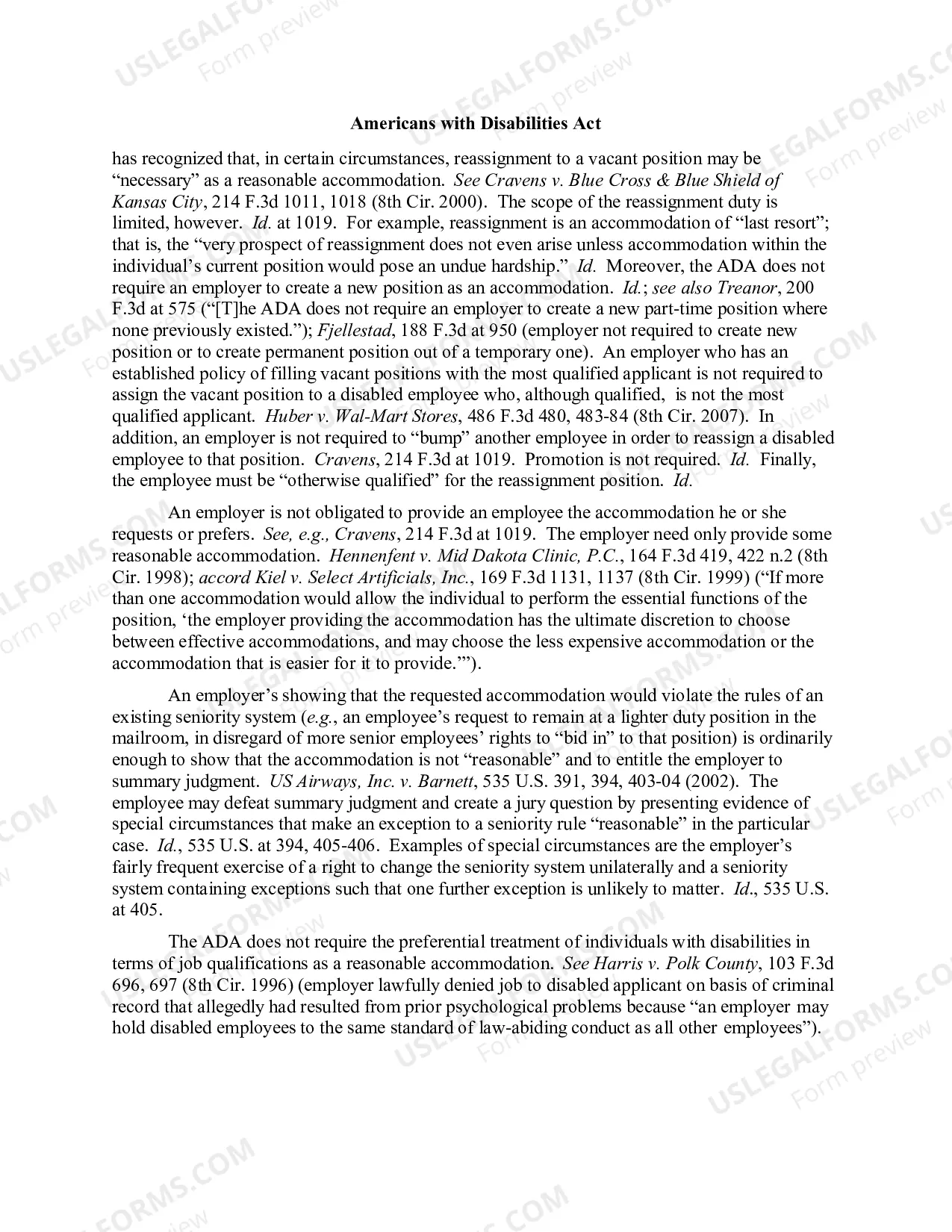
Providing an assistant as needed may be a reasonable accommodation for a person with a disability, if this does not impose an undue hardship. Examples include: An assistant may be needed to retrieve items on shelves, file, or selectively assist a person with quadriplegia with other clerical duties.
Examples of Reasonable Accommodations Job restructuring such as altering when and/or how an essential function of a job is performed or reallocating marginal job functions that an employee is unable to perform because of a disability.
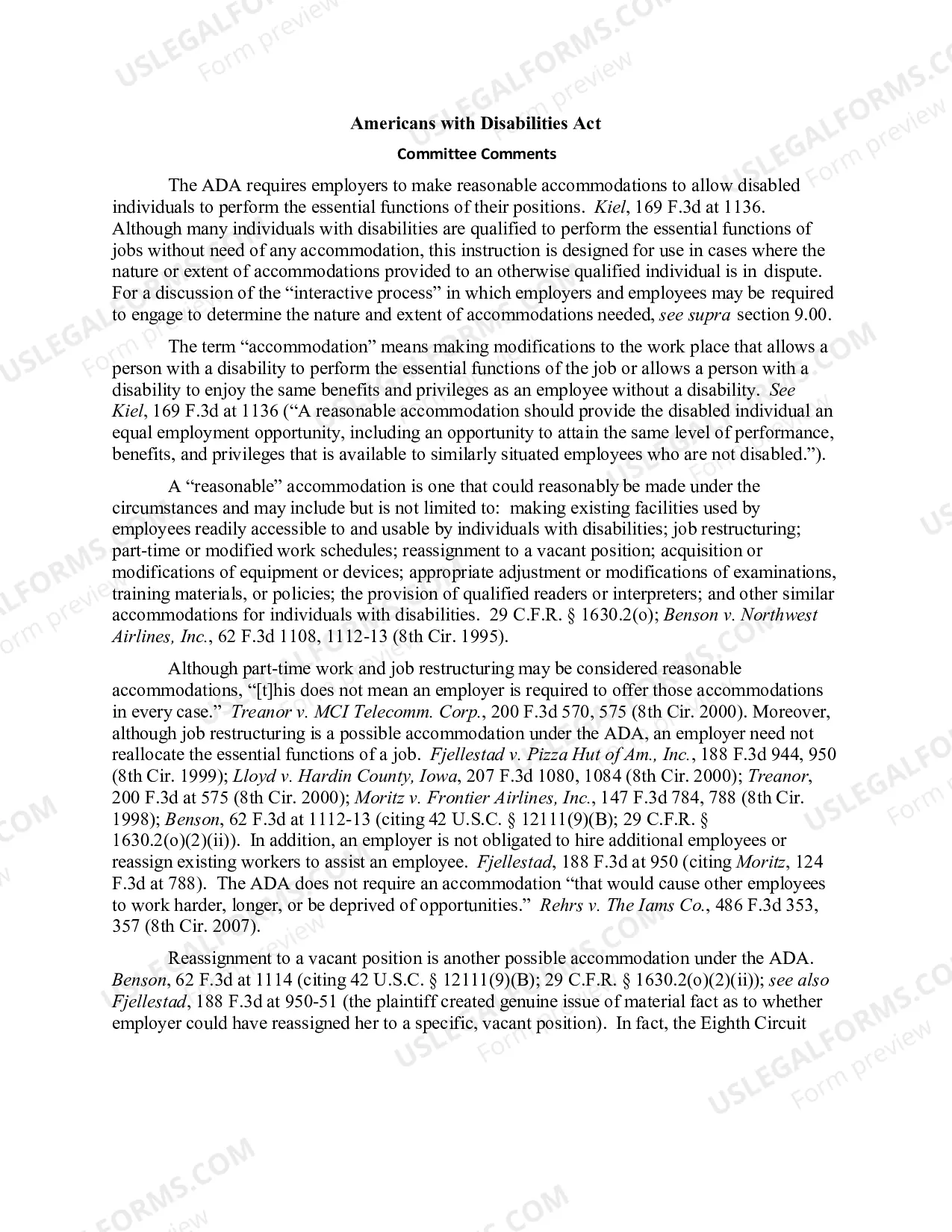
Examples of reasonable accommodation include making existing facilities used by employees readily accessible to and usable by an individual with a disability; restructuring a job; modifying work schedules; acquiring or modifying equipment; providing qualified readers or interpreters; or appropriately modifying
There are three categories of "reasonable accommodations": changes to a job application process. changes to the work environment, or to the way a job is usually done. changes that enable an employee with a disability to enjoy equal benefits and privileges of employment (such as access to training).
Reasonable accommodation does not include removing essential job functions, creating new jobs, and providing personal need items such as eye glasses and mobility aids. Nothing in the ADA prohibits employers from providing these types of accommodations; they simply are not required accommodations.
Reasonable accommodations are. modifications or adjustments made to a job or work environment that enable a qualified person who has a disability to perform the essential functions of that job.
Reasonable accommodation can include, but is not limited to, the following: Changing job duties. Providing leave for medical care. Changing work schedules. Relocating the work area. Providing mechanical or electrical aids.
Examples of reasonable accommodations include: making the workplace accessible to and usable by an employee with a disability, restructuring a job, modifying work schedules, providing qualified readers for individuals who are blind, providing sign language interpreters to people who are deaf, providing periods of leave