Massachusetts Salary Verification form for Potential Lease
Overview of this form
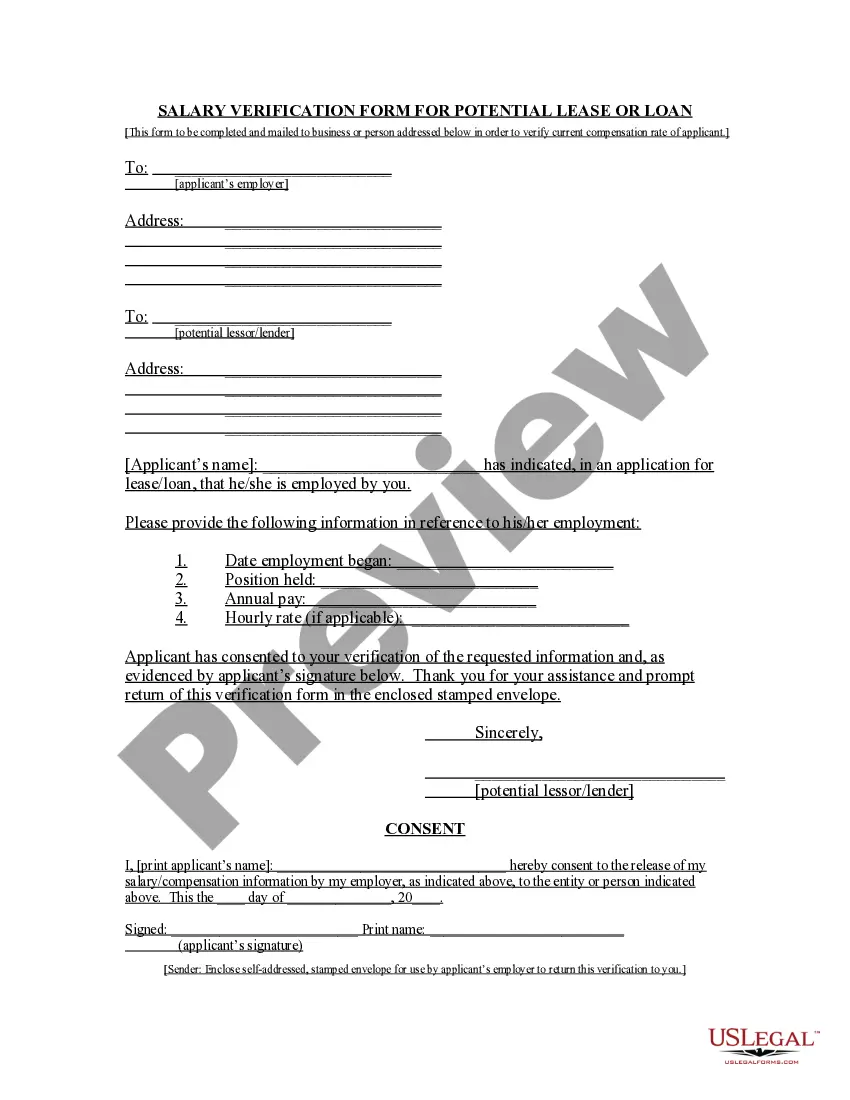
The Salary Verification form for Potential Lease is a document used by landlords to confirm a lease applicant's income. This form is sent to the applicant's employer, who must provide details about the applicant's salary. This ensures that the landlord can assess the applicant's ability to meet rental payments, helping to protect their investment. Unlike other rental forms, this verification focuses specifically on financial information necessary for lease approval.
Form components explained
- Applicant's employer information section
- Employment details including start date and position held
- Salary and hourly rate fields
- Consent section for the applicant to authorize the employer to release information
- Return instructions for the employer

When to use this form
This form is typically used during the rental application process when a landlord wants to verify an applicant's income. It is essential when an applicant declares income that must be substantiated for lease approval. Landlords may request this form to ensure that potential tenants can afford their rent based on their current compensation.
Who this form is for
- Landlords seeking to verify tenant income
- Property managers conducting application screenings
- Potential tenants who have been asked to provide proof of income
Steps to complete this form
- Enter the employer's name and contact information at the top of the form.
- Specify the applicantâs employment details, including their start date and position held.
- Provide information on the applicant's annual salary or hourly rate.
- Include the applicant's consent signature and date where indicated.
- Mail the completed form to the employer using the provided self-addressed envelope.
Does this document require notarization?
This form does not typically require notarization unless specified by local law. Make sure to check your local regulations to confirm any additional requirements.
Get your form ready online
Our built-in tools help you complete, sign, share, and store your documents in one place.
Make edits, fill in missing information, and update formatting in US Legal Forms—just like you would in MS Word.
Download a copy, print it, send it by email, or mail it via USPS—whatever works best for your next step.
Sign and collect signatures with our SignNow integration. Send to multiple recipients, set reminders, and more. Go Premium to unlock E-Sign.
If this form requires notarization, complete it online through a secure video call—no need to meet a notary in person or wait for an appointment.
We protect your documents and personal data by following strict security and privacy standards.

Make edits, fill in missing information, and update formatting in US Legal Forms—just like you would in MS Word.

Download a copy, print it, send it by email, or mail it via USPS—whatever works best for your next step.

Sign and collect signatures with our SignNow integration. Send to multiple recipients, set reminders, and more. Go Premium to unlock E-Sign.

If this form requires notarization, complete it online through a secure video call—no need to meet a notary in person or wait for an appointment.

We protect your documents and personal data by following strict security and privacy standards.
Common mistakes
- Failing to include the applicant's consent signature.
- Leaving out critical employment details such as start date or position.
- Not providing a self-addressed stamped envelope for return.
Benefits of using this form online
- Quick and easy access to a professionally prepared document.
- Editable format allows users to customize the form to meet their specific needs.
- Reliable source drafted by licensed attorneys ensures validity.
Legal use & context
- Verification of income is often a standard procedure in rental applications.
- This form serves as a formal request for income information, which may be used in legal disputes if the lease is contested.
- Providing inaccurate information could lead to lease denial or future legal challenges.
Summary of main points
- The Salary Verification form helps landlords confirm a tenant's financial reliability.
- Ensure all sections are accurately filled to avoid delays in the rental process.
- Include the applicant's consent to facilitate the verification process.
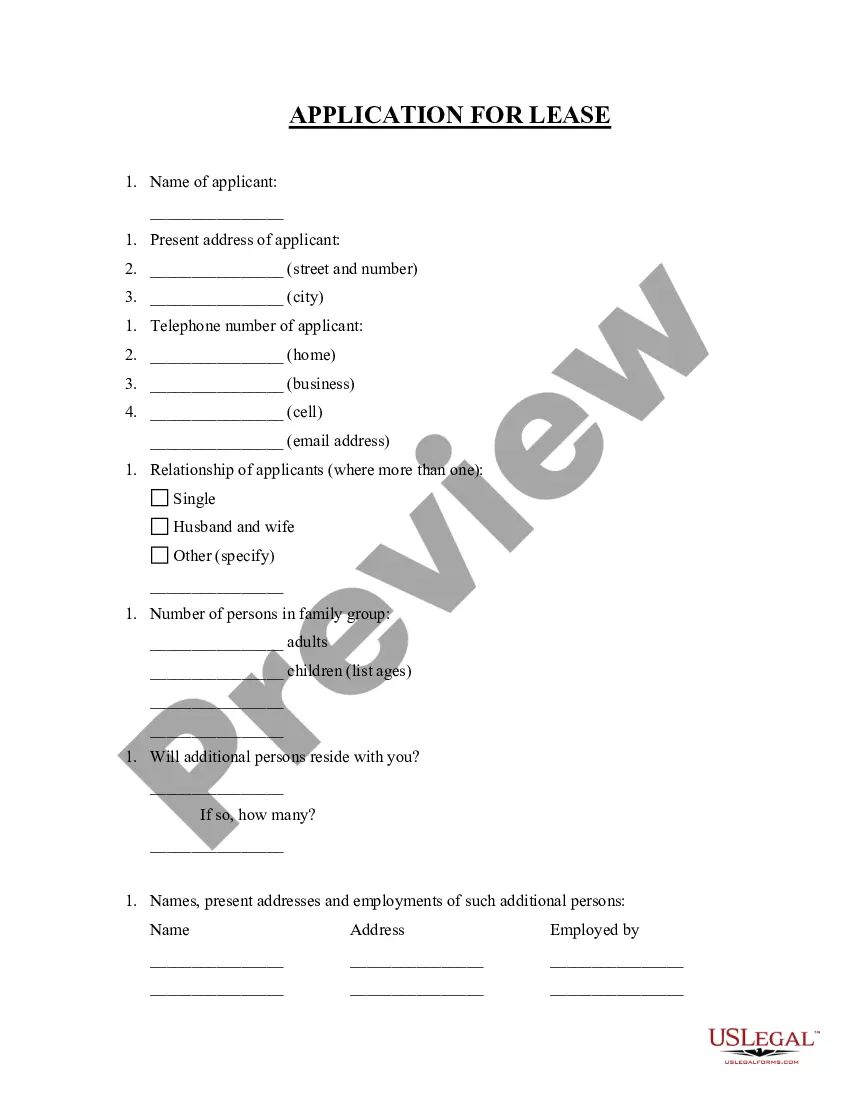
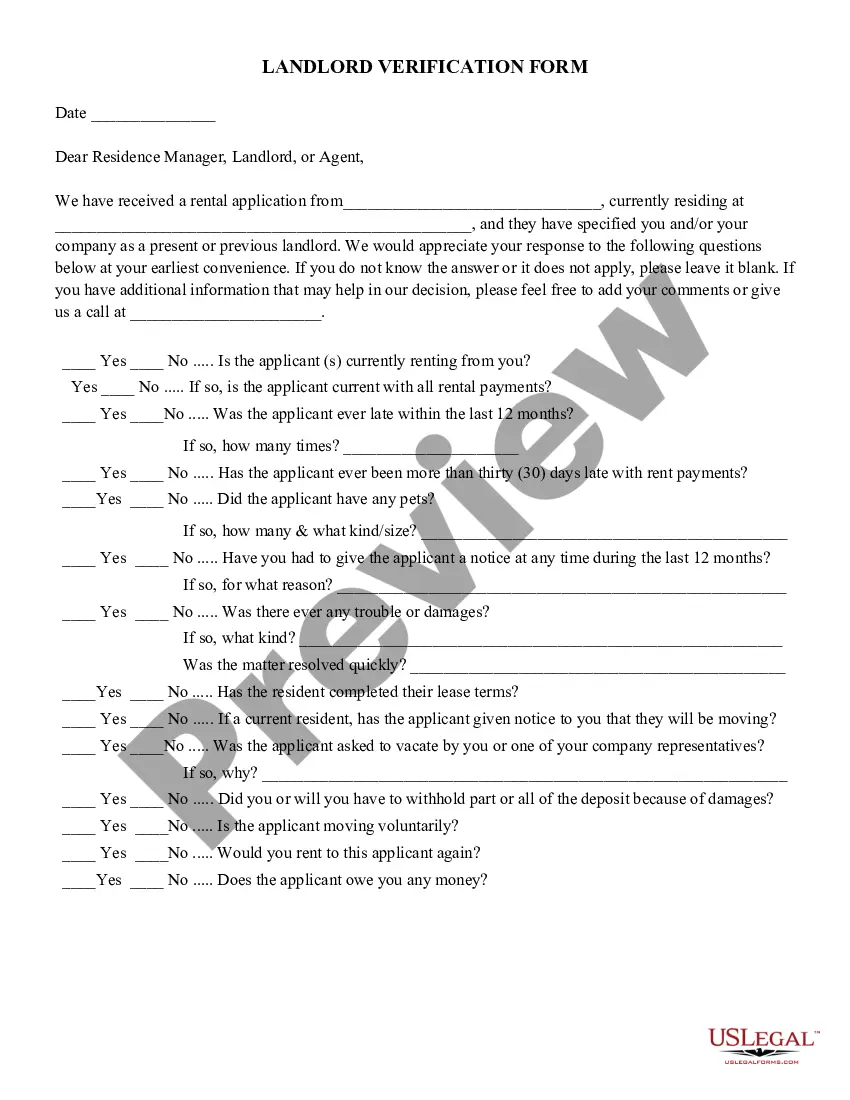
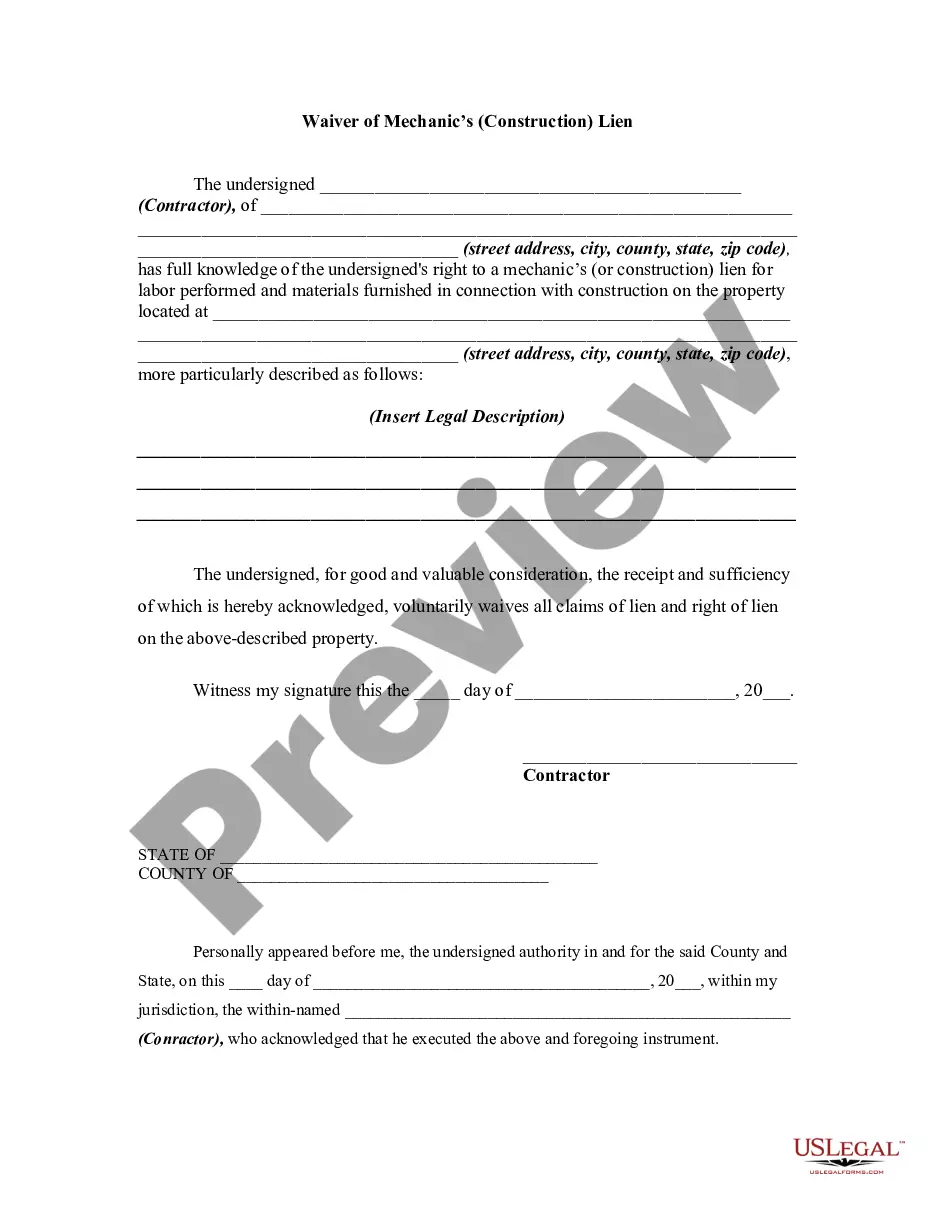
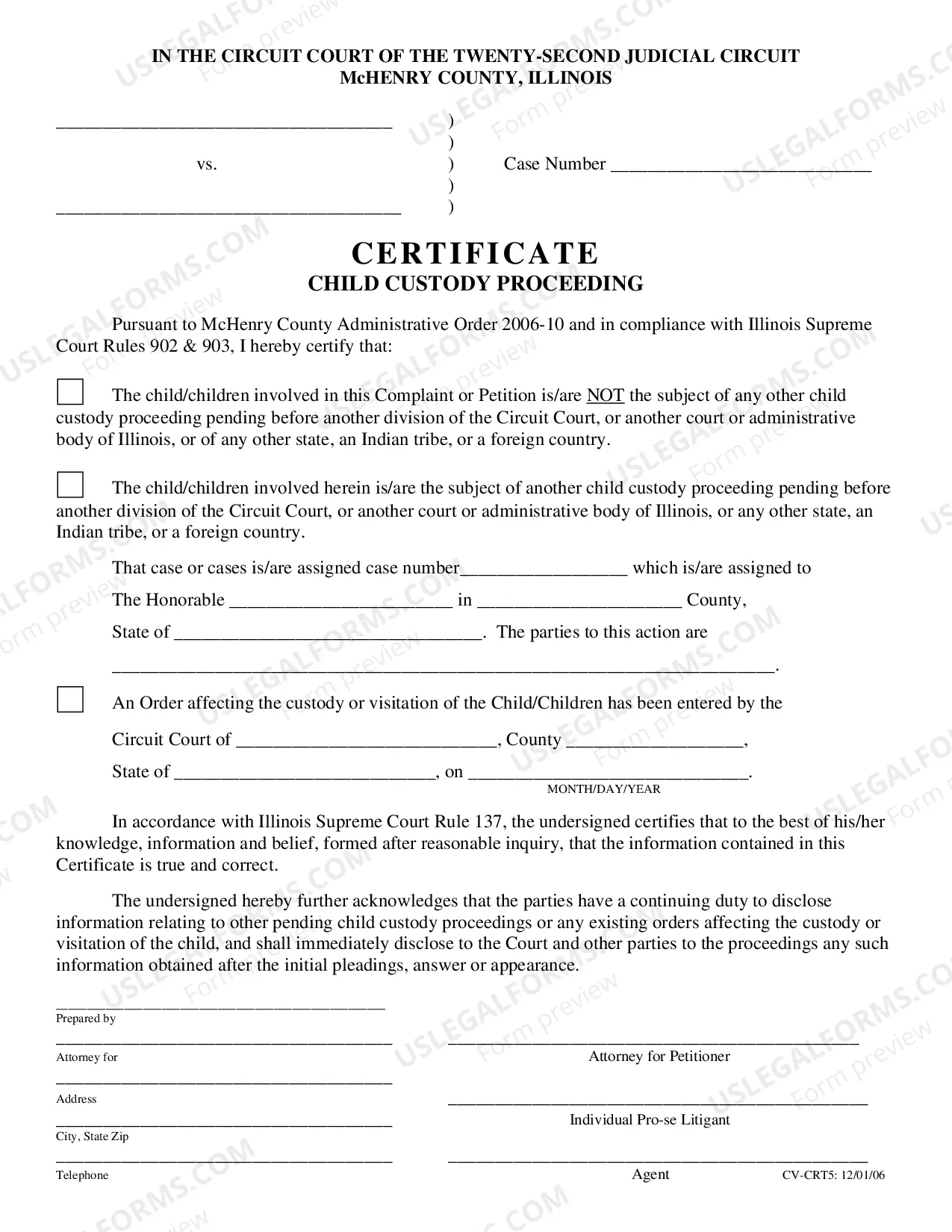
Looking for another form?

Form popularity
FAQ
To write a letter for proof of residence, provide your legal name, certify your address and the length of time you've lived there, note any other residents living at that address, and type a legally binding oath about the accuracy of the information provided; you should also be prepared to have a landlord and/or notary
Pay Stubs. Renters with a full-time or part-time job can obtain this document from their employer. W-2. Tax Returns. 1099 Form. Bank Statements. Letters from an Employer. Social Security Benefits Statement. Pension Distribution Statements.
The first sentence should explain who is writing the letter and why. It should also give the name of the tenant, so the purpose of the letter is clear. The writer may be a property manager or the owner of the property. The landlord can include, if applicable, a statement on the character of the tenant.
Keep it short and only reference information relevant for an apartment application. If you are a landlord or property manager, outline your rental history and your experience with the tenant. Know what you can or cannot say. Be honest and accountable. Never lie. Keep emotions at bay. Keep it structured.
The most common documentation for proof of income includes: Pay stub. Bank Statements (personal & business) Copy of last year's federal tax return. Wages and tax statement (W-2 and/ or 1099)
Pay stub. A good rule of thumb is to ask for pay dated stubs from the most recent three months. W2 tax form. A W2 will show an applicant's income from the previous tax year. Employer phone call.
The sad truth is that you probably can. Most landlords can only do so much due diligence on prospective residents, and they may not catch a fake pay stub. Most landlords are going to assume you're applying for the apartment in good faith.
The landlord verification form is a document used by a landlord when verifying the previous rental information of an applicant for tenancy. The requesting landlord must send the form to the applicant's current or past landlord in order to obtain all details related to the tenancy of the individual.