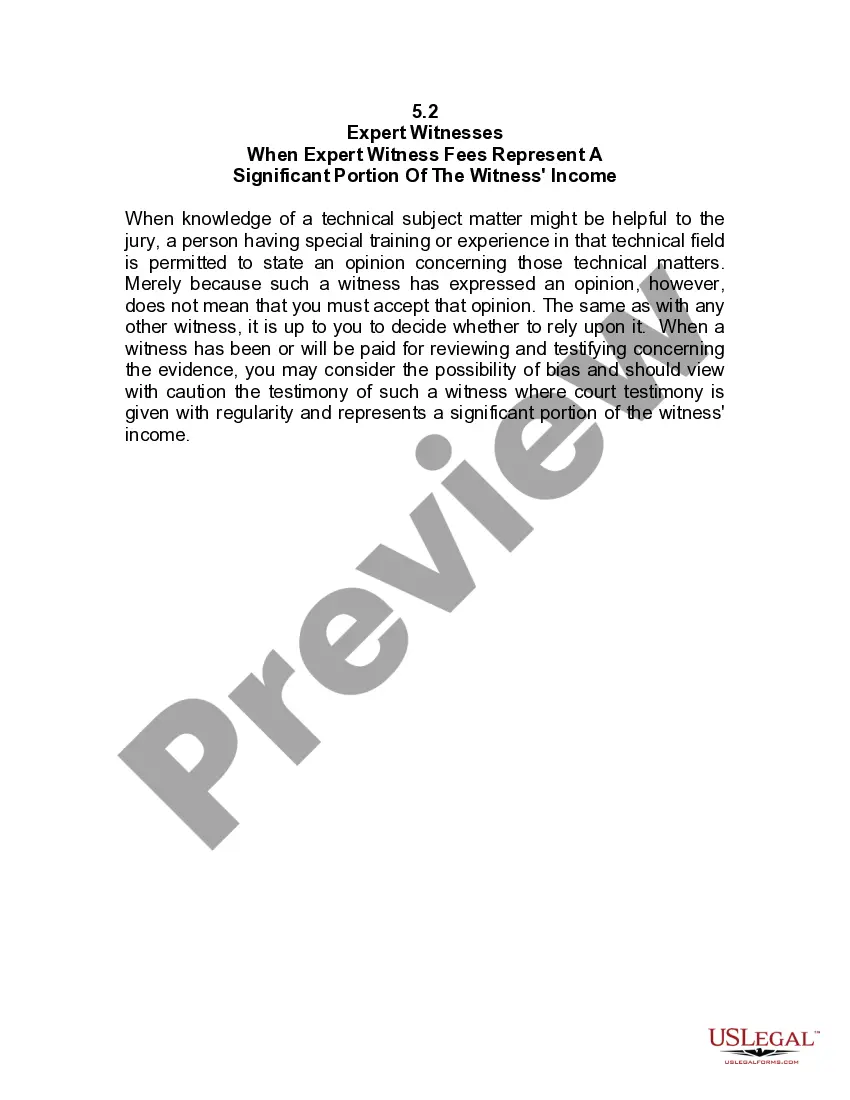
Jury Instruction - 5.2 Expert Witnesses When Expert Witness Fees Represent A Significant Portion Of The Witness' Income
About this form
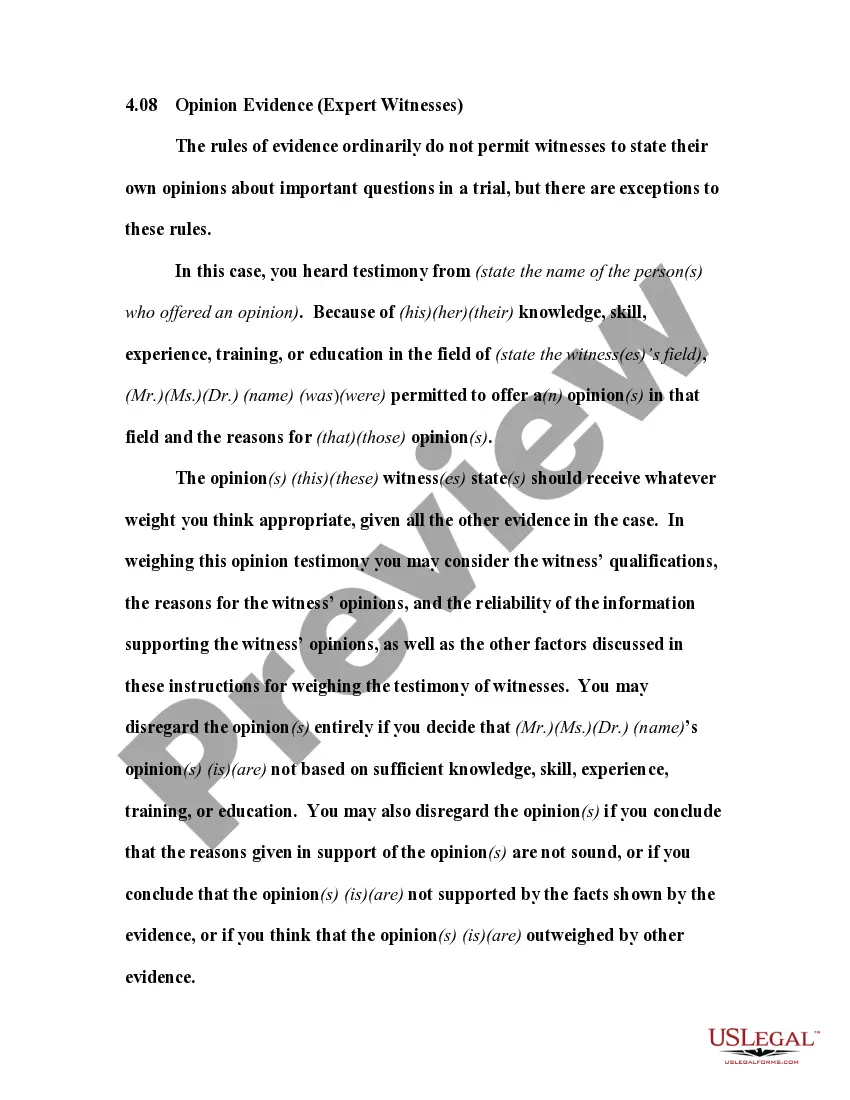
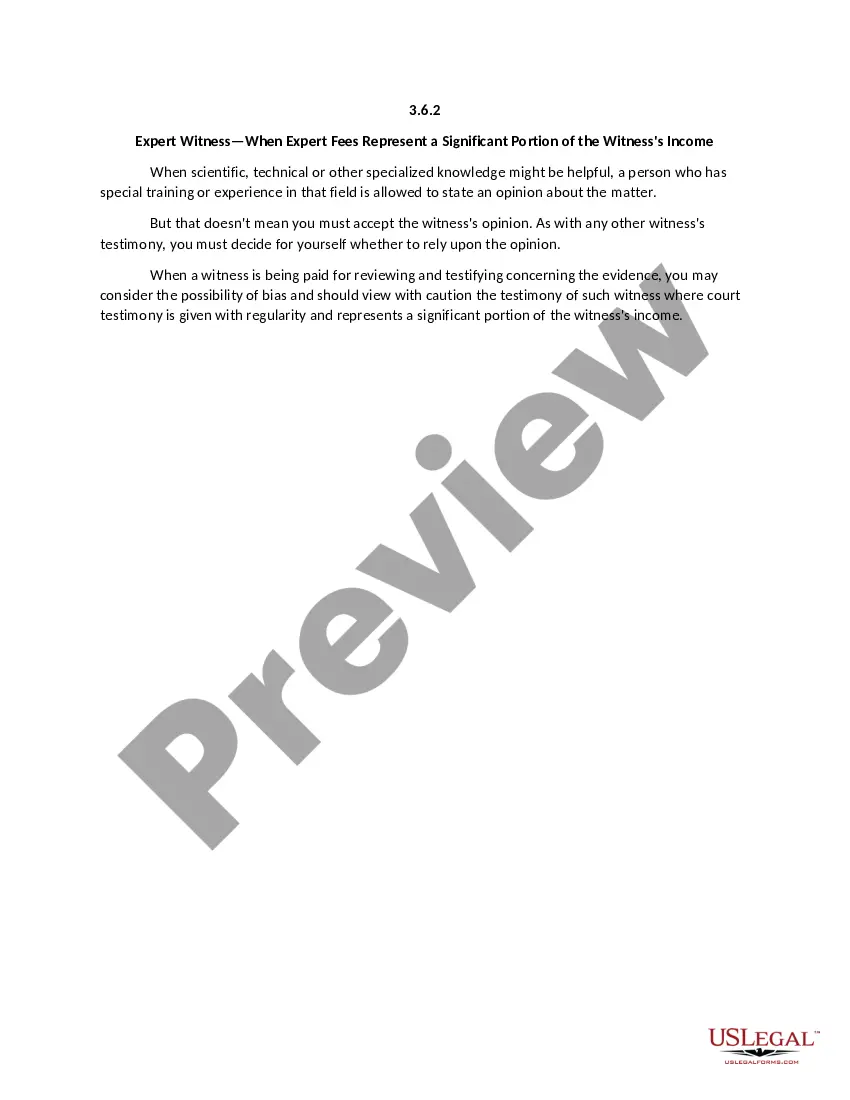
The Jury Instruction - Expert Witnesses form provides guidance on how to evaluate the testimony of expert witnesses, particularly when their fees constitute a significant portion of their income. This form includes model jury instructions that help jurors understand their responsibilities in assessing expert opinions. Unlike typical witness instructions, this form focuses specifically on the potential biases of expert witnesses due to their financial interests in the case.
Key parts of this document
- Definition of expert witness and criteria for their opinions.
- Guidance on evaluating the credibility of expert testimonies.
- Considerations regarding bias when payment for testimony is involved.
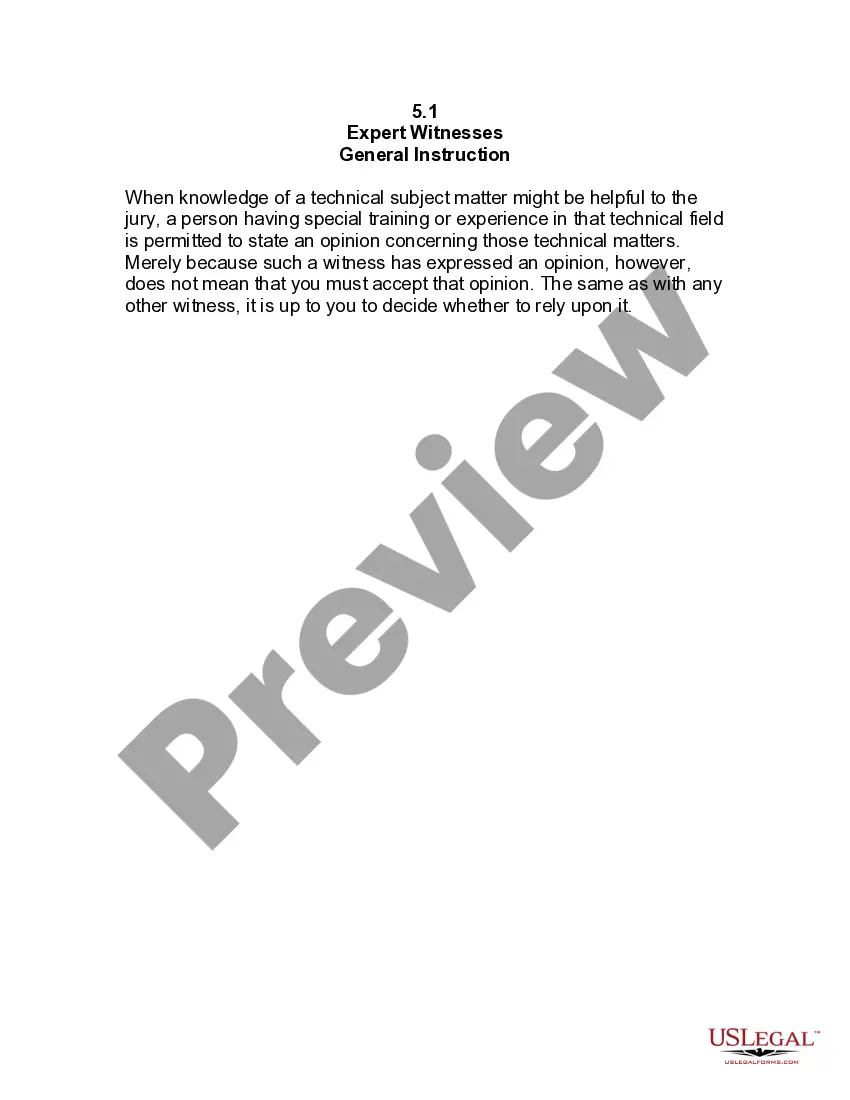
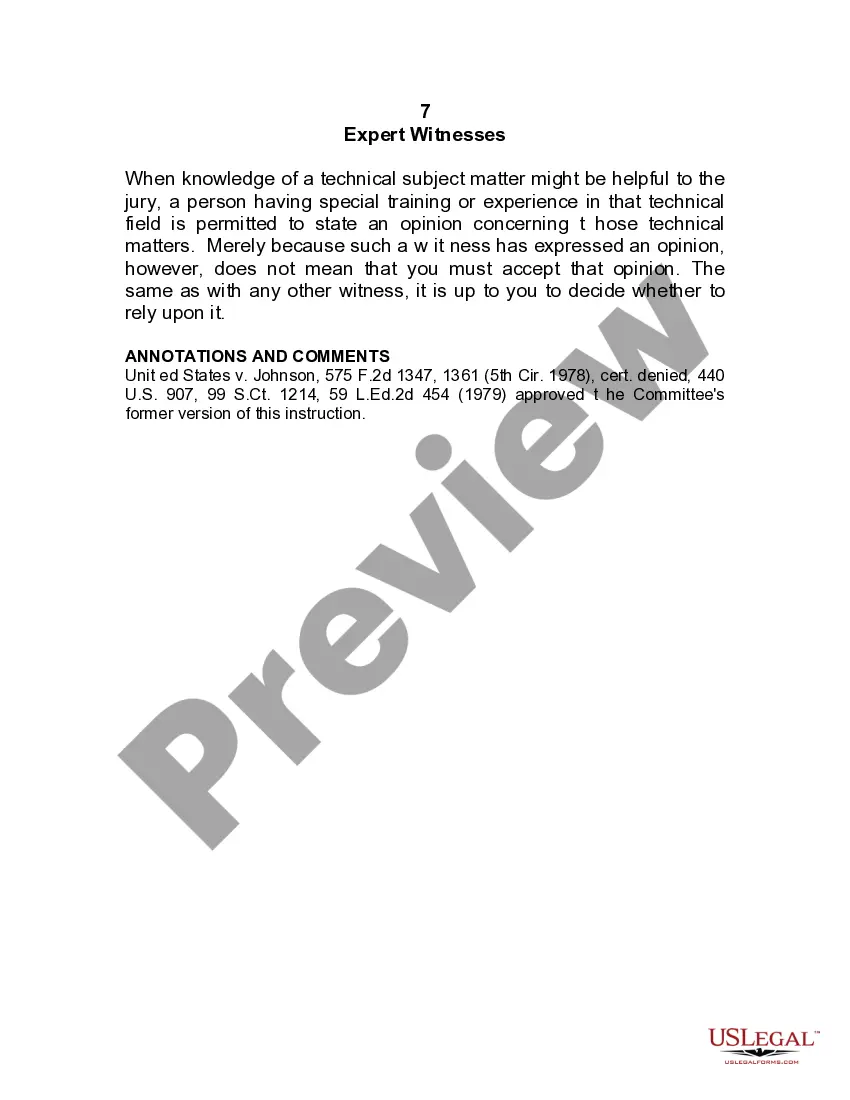
- Instructions on the juror's discretion to accept or reject expert opinions.
Situations where this form applies
This form is essential in legal cases where expert testimony is presented, such as in medical malpractice, engineering disputes, or technical evaluations. It should be used when the jury needs to assess how much weight to give an expert's opinion based on their compensation and potential biases.
Who should use this form
- Attorneys preparing jury instructions for cases involving expert witnesses.
- Judges providing jury guidance in trials where expert testimony is relevant.
- Jurors seeking clarification on evaluating expert evidence during jury deliberations.
Instructions for completing this form
- Review the definition of an expert witness relevant to your case.
- Assess whether the witness is compensated for their testimony.
- Evaluate potential biases based on the frequency of expert testimony in previous cases.
- Incorporate the applicable instructions into trial proceedings to guide jurors.
- Modify the template instructions as necessary to fit the specifics of your case.
Does this document require notarization?
In most cases, this form does not require notarization. However, some jurisdictions or signing circumstances might. US Legal Forms offers online notarization powered by Notarize, accessible 24/7 for a quick, remote process.
Get your form ready online
Our built-in tools help you complete, sign, share, and store your documents in one place.
Make edits, fill in missing information, and update formatting in US Legal Forms—just like you would in MS Word.
Download a copy, print it, send it by email, or mail it via USPS—whatever works best for your next step.
Sign and collect signatures with our SignNow integration. Send to multiple recipients, set reminders, and more. Go Premium to unlock E-Sign.
If this form requires notarization, complete it online through a secure video call—no need to meet a notary in person or wait for an appointment.
We protect your documents and personal data by following strict security and privacy standards.

Make edits, fill in missing information, and update formatting in US Legal Forms—just like you would in MS Word.

Download a copy, print it, send it by email, or mail it via USPS—whatever works best for your next step.

Sign and collect signatures with our SignNow integration. Send to multiple recipients, set reminders, and more. Go Premium to unlock E-Sign.

If this form requires notarization, complete it online through a secure video call—no need to meet a notary in person or wait for an appointment.

We protect your documents and personal data by following strict security and privacy standards.
Typical mistakes to avoid
- Failing to consider the financial impact on the expert's credibility.
- Using generic instructions without tailoring them to the specifics of the case.
- Neglecting to discuss the importance of jurors' discretion in weighing expert testimony.
Advantages of online completion
- Convenient access to legal templates drafted by licensed attorneys.
- Editable format allows for easy customization to meet specific case needs.
- Reliable guidance that helps ensure compliance with legal standards.
Looking for another form?


Form popularity
FAQ
In the United States, under the Federal Rule of Evidence 702 (FRE), an expert witness must be qualified on the topic of testimony. In determining the qualifications of the expert, the FRE requires the expert have had specialized education, training, or practical experience in the subject matter relating to the case.
An expert witness is someone with specialized skills, knowledge, or experience who testifies in court about what s/he believes has happened in a certain case based on those specialized skills, knowledge, or experience.
The definition of an expert witness, according to the Federal Rule of Evidence. An expert witness is a person with specialized skill sets whose opinion may help a jury make sense of the factual evidence of a case. Testimonies from expert witnesses can have a tremendous influence on the final decision of the judge.
Rule 702 Testimony By Expert Witnesses It states that an expert's opinion is admissible if: the expert's scientific, technical, or other specialized knowledge will help the trier of fact to understand the evidence or to determine a fact in issue. the testimony is based on sufficient facts or data.
You can force the opposing expert, on cross-examination, to disclose the bases of her opinion, and, if it is based on inaccurate or incomplete information, then the jury should discount her opinion.
In the federal courts, judges determine the credibility of expert witnesses in a pre-trial Daubert hearing. See Daubert v. Merrell Dow Pharmaceuticals, 509 U.S. 579 (1993). In considering witnesses' qualifications, judges may consider information that is not admissible as evidence.
When the expert witness does the same, he or she is considered biased. If the evidence or opinions are not helpful or persuasive to the judge or jury, they are given less weight than usual. However, when the expert has become swayed by evidence, injury or the defending party, he or she may be disqualified in the case.
The witness must be competent in the subject matter. They may be qualified through knowledge, skill, practical experience, train- ing, education, or a combination of these factors. Minimally, the expert witness must know underlying methodology and procedures employed and relied upon as a basis for the opinion.