Jury Instruction - 2.1 With Defenses Of Misuse And Assumption Of Risk
Overview of this form
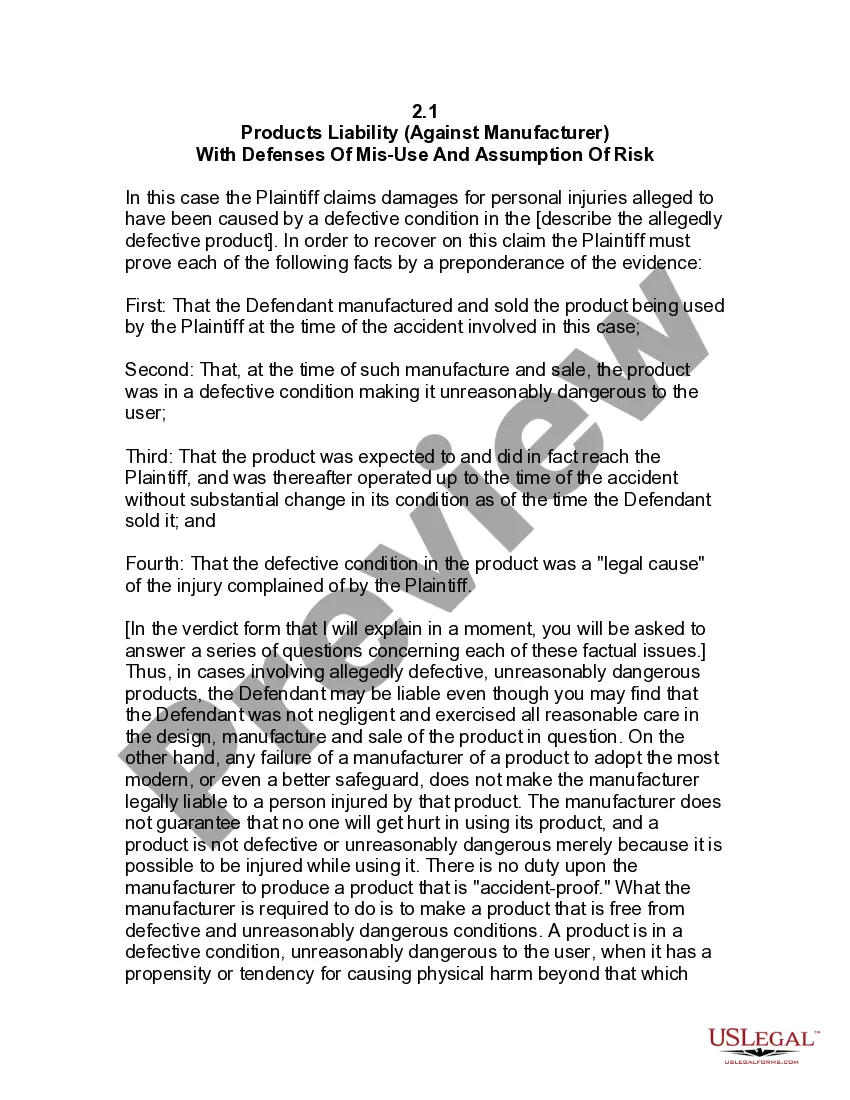
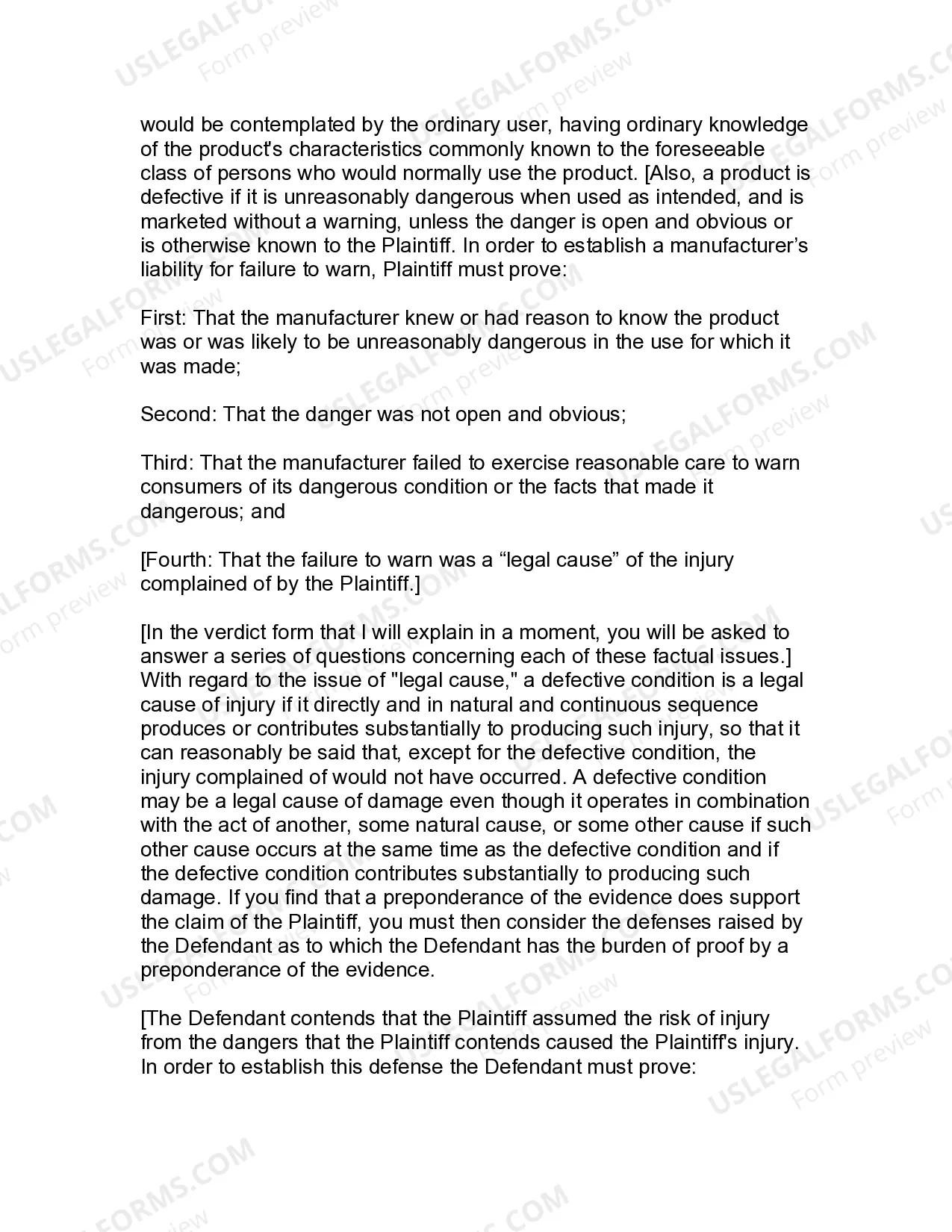
The Jury Instruction - 2.1 With Defenses Of Misuse And Assumption Of Risk form provides sample jury instructions for use in products liability cases involving claims against a manufacturer. This form emphasizes the legal standards necessary for a plaintiff to prove a claim and outlines potential defenses that a defendant may raise. It serves as a guideline for juries to evaluate whether the product was defective and if the plaintiff's actions contributed to their injuries, ensuring fair consideration of evidence and legal principles.
Form components explained
- Sample jury instructions outlining the burden of proof for the plaintiff in a products liability case.
- Detailed criteria for determining if a product is defective and unreasonably dangerous.
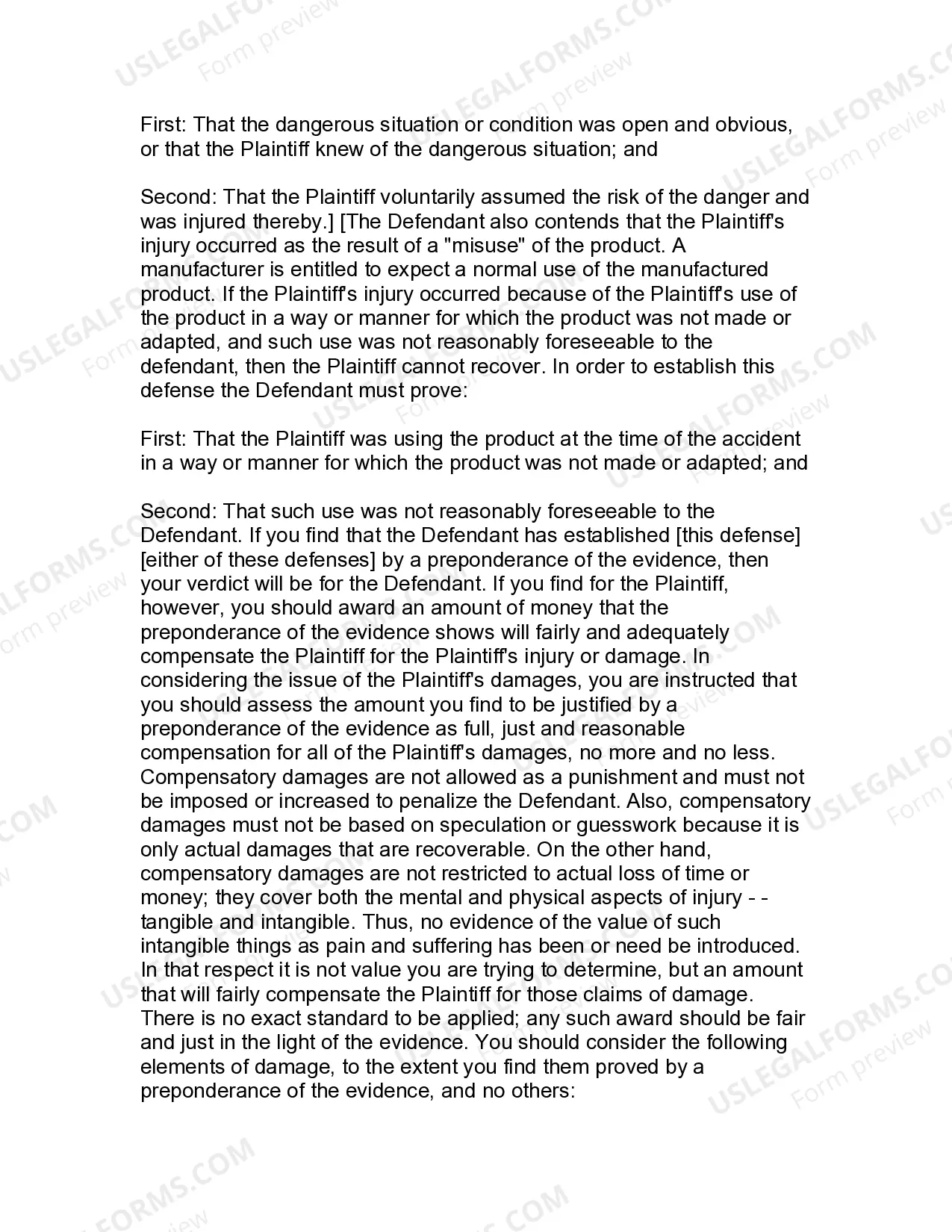
- Explanation of defenses such as assumption of risk and misuse of a product.
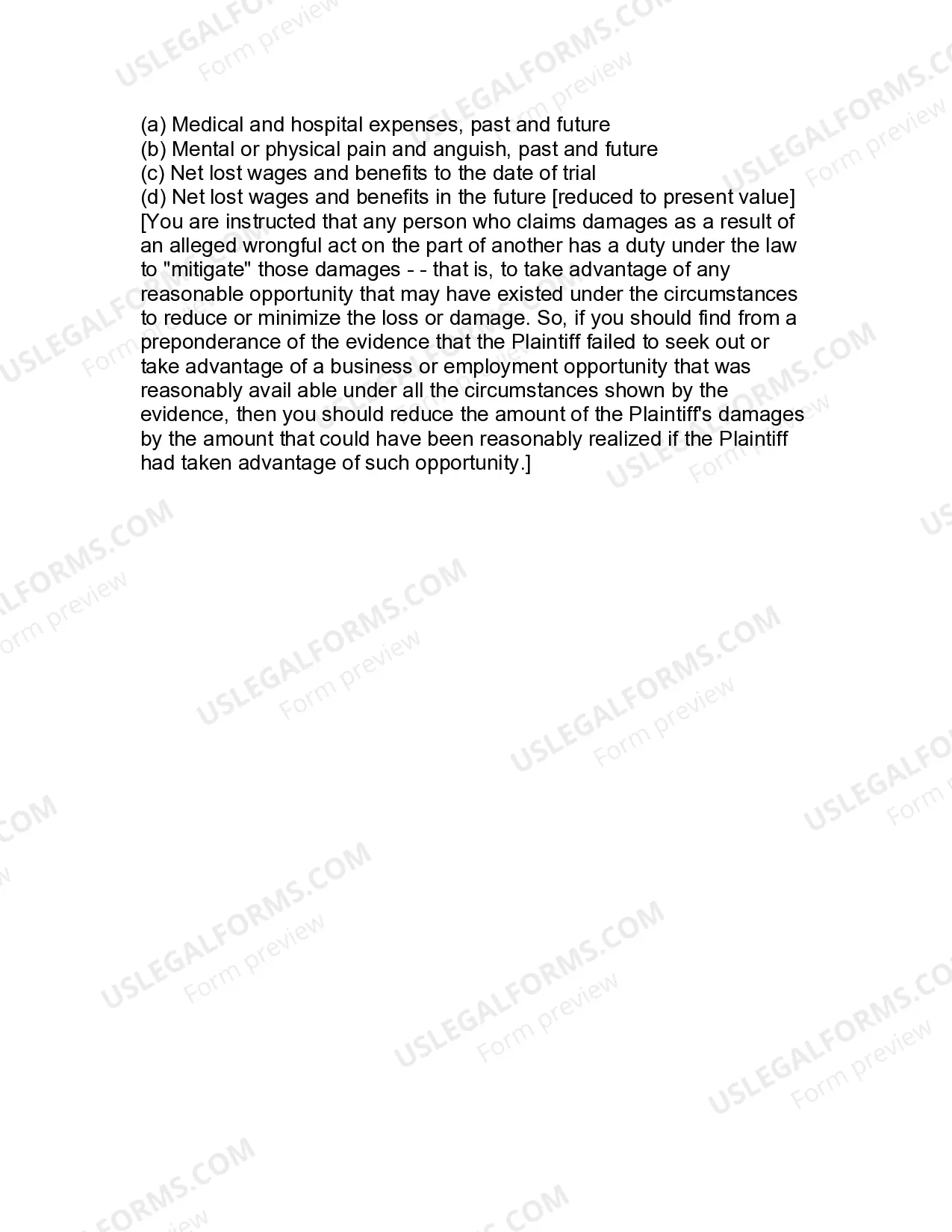
- Guidance on how to assess damages and define what constitutes compensable injury.
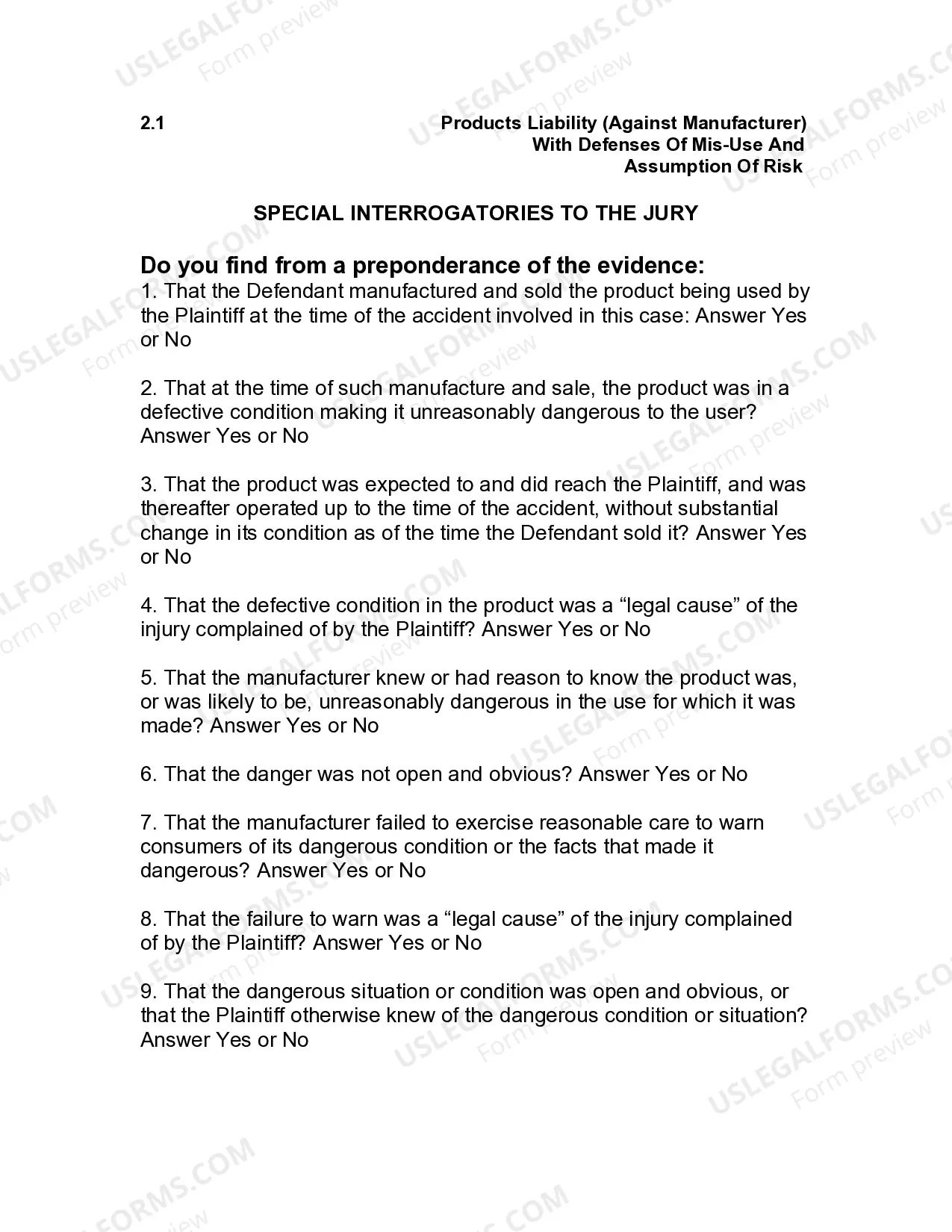
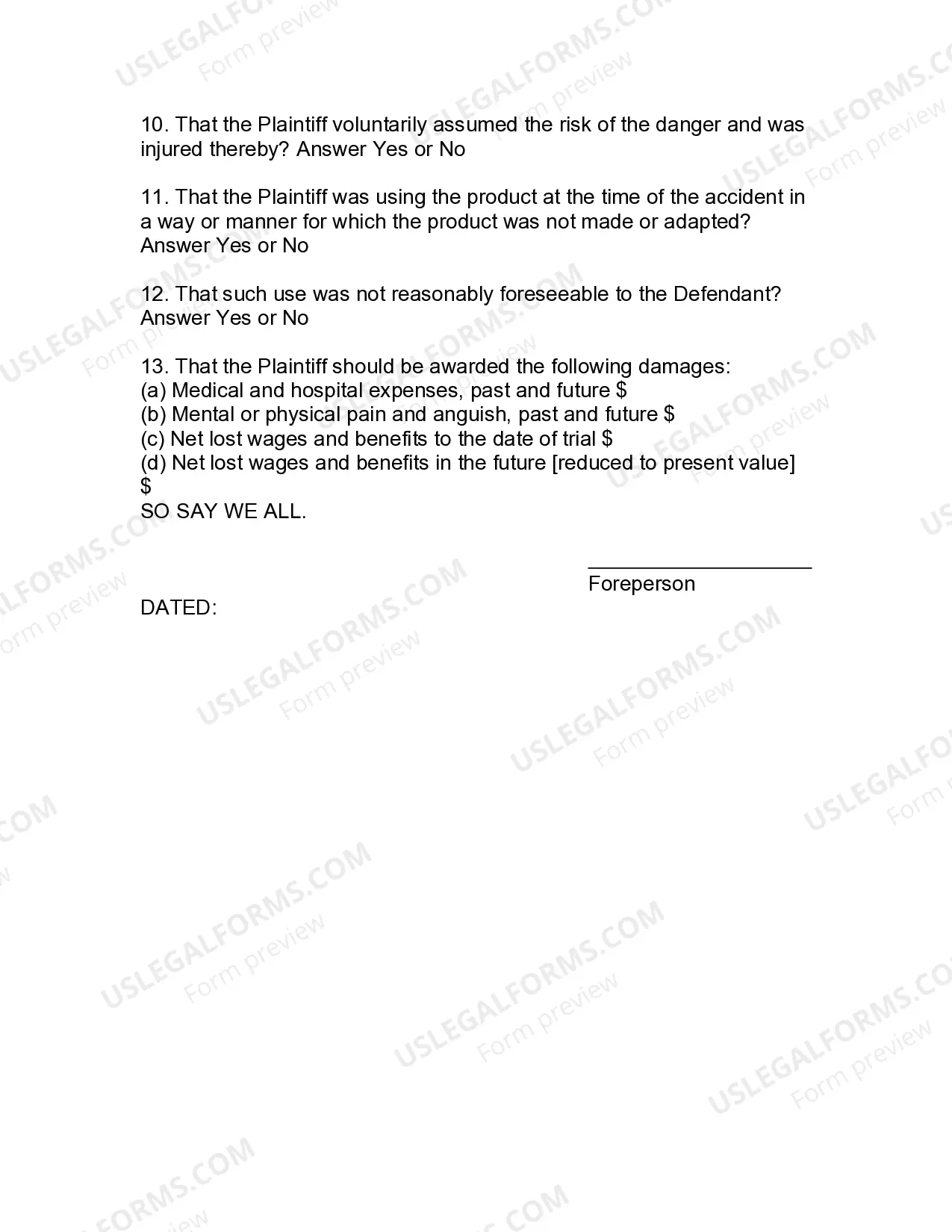
- Special interrogatories for the jury to answer regarding key factual determinations.
Situations where this form applies
This form is used in legal proceedings involving allegations of personal injury due to a defective product. It is applicable when a plaintiff seeks to prove that the manufacturer's negligence, due to a defective product, caused their injuries. Additionally, it is important when a defendant claims that the plaintiff either assumed the risk associated with the product or misused it in a way that led to the incident.
Intended users of this form
- Legal professionals representing either plaintiffs or defendants in products liability cases.
- Judges presiding over such cases to provide the jury with appropriate instructions.
- Jurors who are tasked with deliberating on liability and damages in products liability cases.
How to prepare this document
- Assess the product involved and confirm it was manufactured and sold by the defendant at the time of the accident.
- Evaluate whether the product was in a defective condition that made it unreasonably dangerous.
- Determine if the product was expected to and did reach the plaintiff without significant change in condition.
- Review the circumstances of the plaintiff's use of the product and any potential defenses raised by the defendant.
- Answer the special interrogatories posed to the jury based on the evidence presented during the trial.
Does this document require notarization?
Notarization is not commonly needed for this form. However, certain documents or local rules may make it necessary. Our notarization service, powered by Notarize, allows you to finalize it securely online anytime, day or night.
Get your form ready online
Our built-in tools help you complete, sign, share, and store your documents in one place.
Make edits, fill in missing information, and update formatting in US Legal Forms—just like you would in MS Word.
Download a copy, print it, send it by email, or mail it via USPS—whatever works best for your next step.
Sign and collect signatures with our SignNow integration. Send to multiple recipients, set reminders, and more. Go Premium to unlock E-Sign.
If this form requires notarization, complete it online through a secure video call—no need to meet a notary in person or wait for an appointment.
We protect your documents and personal data by following strict security and privacy standards.

Make edits, fill in missing information, and update formatting in US Legal Forms—just like you would in MS Word.

Download a copy, print it, send it by email, or mail it via USPS—whatever works best for your next step.

Sign and collect signatures with our SignNow integration. Send to multiple recipients, set reminders, and more. Go Premium to unlock E-Sign.

If this form requires notarization, complete it online through a secure video call—no need to meet a notary in person or wait for an appointment.

We protect your documents and personal data by following strict security and privacy standards.
Common mistakes to avoid
- Failing to accurately identify the product at issue.
- Not fully understanding the legal definitions of "defective" or "unreasonably dangerous."
- Overlooking important details about the plaintiff's potential misuse of the product.
- Confusing the burden of proof required for the plaintiff versus the defenses raised by the defendant.
Advantages of online completion
- Immediate access to expert-drafted jury instructions tailored for products liability claims.
- Convenience of downloading and customizing the form to fit specific case needs.
- Cost-effective solution to obtaining legal documentation without the need for an attorney's immediate involvement.
- Easy revision options ensure that the form can be updated as necessary before use in court.
Legal use & context
- This form provides a legally recognized framework for assessing product liability and defenses.
- It can aid in guiding the juryâs understanding of complex legal principles in product liability cases.
- The instructions outlined are based on widely accepted legal standards, making them applicable in many situations.
Summary of main points
- The form provides essential jury instructions relevant to products liability claims and defenses.
- Understanding the elements of proof for both the plaintiff's claim and the defendant's defenses is critical.
- Proper completion of this form can significantly influence the outcome of a products liability case.
Looking for another form?
Form popularity
FAQ
Contributory negligence is a defense based on the plaintiff's failure to take reasonable care. Assumption of risk is a defense based on the notion that the plaintiff consented to the defendant's conduct, which annuls the plaintiff's theory of negligence.
Three of the most common doctrines are contributory negligence, comparative fault, and assumption of risk.
A: In a jury trial, the jury is the trier of fact. The jury determines the facts, based upon testimony, and usually determines the amount of money that would fairly compensate the injured party.By statute, judges are required to review the amount of damages based upon the facts and circumstances presented to the jury.
Did the individual at fault owe a duty to the injured party? Was there a breach of said duty? Was the breach also the cause of the legal injury? What was the proximate cause? (could the harm caused be anticipated) What was the extent of the damage caused?
Under the Federal Rules of Civil Procedure, assumption of risk is an affirmative defense in the law of torts that a defendant can raise in a negligence action.Essentially, the defendant is claiming that the plaintiff knew the risk but took the chance of being injured anyway.
Three of the most common doctrines are contributory negligence, comparative fault, and assumption of risk.
The most common negligence defenses are contributory negligence, comparative negligence, and assumption of risk.
Contributory Negligence: Contributory negligence is one of the most commonly used negligence defenses. The defendant attempts to deny the plaintiff the right to action by claiming that the plaintiff's own negligence played a large role in his injuries.