Letter - To Tenant In Response To A Challenge To The Security Deposit Refund
What this document covers
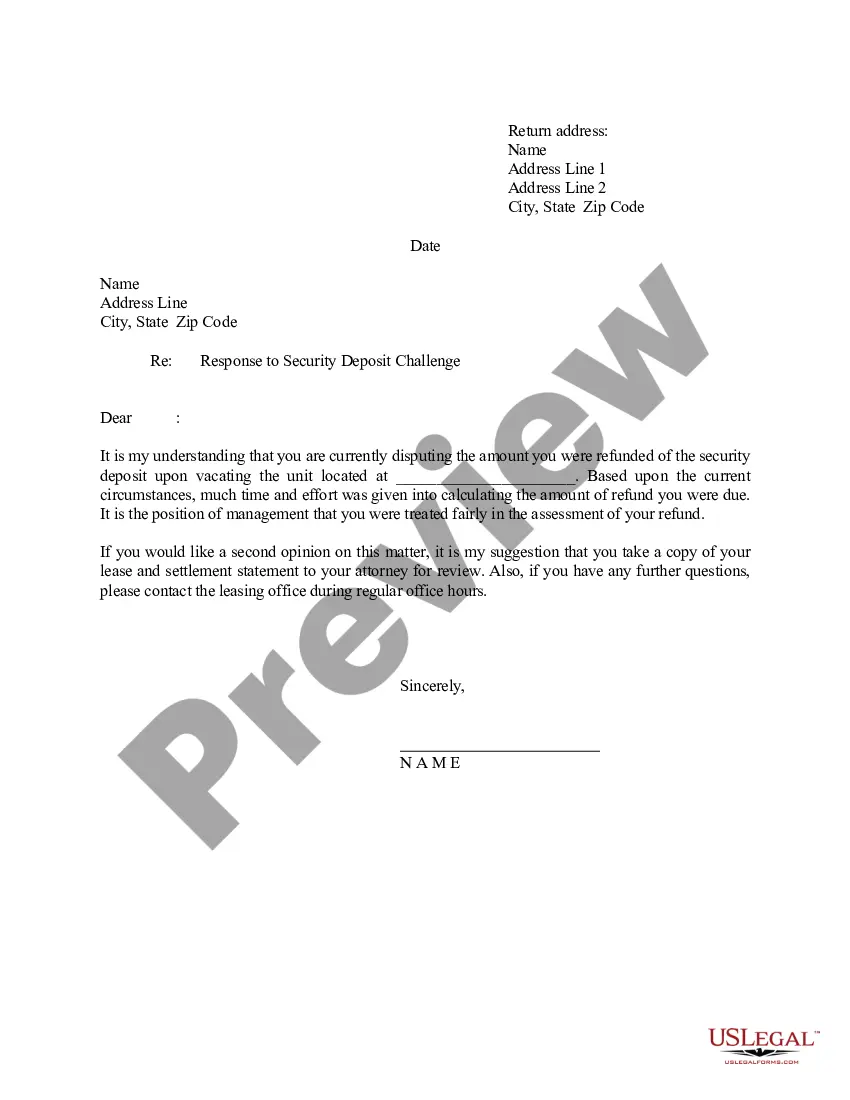
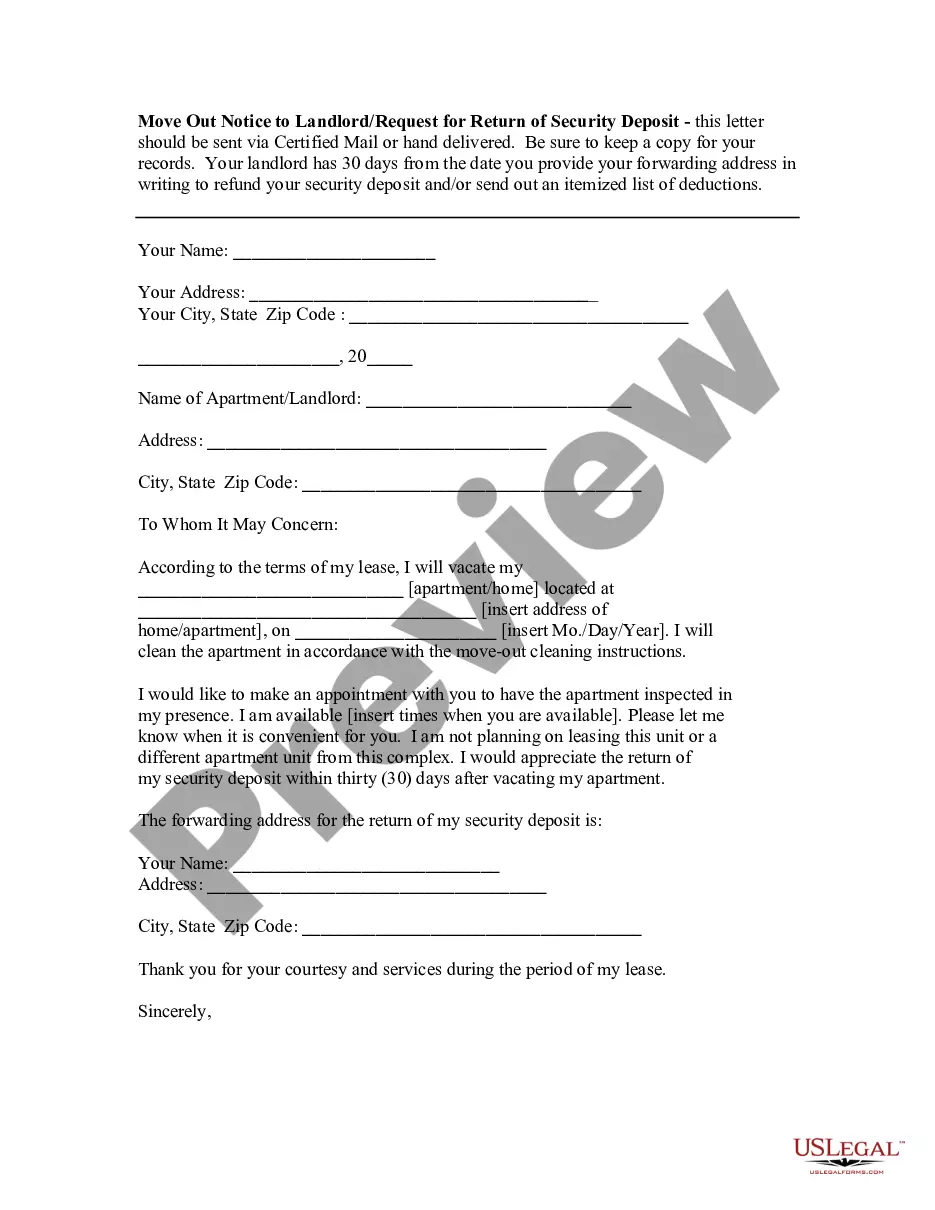
This form is a letter to a tenant responding to their challenge regarding the security deposit refund. It serves to clarify the landlord's position on the return of the security deposit and address any disputes raised by the tenant. Unlike standard notices or generic response letters, this form is tailored specifically for security deposit challenges, ensuring legal compliance and clarity in communication.
Key parts of this document
- Return address: Indicates the sender's address to maintain proper communication.
- Date: The date when the letter is drafted, marking the timeline of the communication.
- Recipient's address: Specifies the tenant's address.
- Subject line: Clearly states the purpose of the letter regarding the security deposit challenge.
- Advice for the tenant: Suggests consulting an attorney for further assistance and encourages contact with the leasing office.
- Signature: Includes the sender's name for authenticity.

When this form is needed
This letter should be used when a tenant has formally challenged the refund of their security deposit. It provides a clear and structured response to the tenant's concerns, outlining the landlord's position and offering guidance for further action. Use this form to ensure a professional and legally compliant response to the tenantâs challenge.
Who should use this form
- Landlords or property managers who receive a challenge to the security deposit refund from a tenant.
- Real estate professionals who need to address disputes regarding security deposits.
- Individuals entering into landlord-tenant relationships and seeking to establish clear communication procedures.
How to complete this form
- Identify the return address and ensure it is current.
- Insert the date of completion to document when the letter is sent.
- Fill in the tenantâs address accurately to ensure it reaches the intended recipient.
- Clearly state the subject to reflect the nature of the letter regarding the security deposit challenge.
- Provide factual advice that prompts the tenant to contact their attorney for a second opinion, if needed.
- Sign the letter with your name to validate the communication.
Notarization requirements for this form
This form does not typically require notarization unless specified by local law.
Get your form ready online
Our built-in tools help you complete, sign, share, and store your documents in one place.
Make edits, fill in missing information, and update formatting in US Legal Forms—just like you would in MS Word.
Download a copy, print it, send it by email, or mail it via USPS—whatever works best for your next step.
Sign and collect signatures with our SignNow integration. Send to multiple recipients, set reminders, and more. Go Premium to unlock E-Sign.
If this form requires notarization, complete it online through a secure video call—no need to meet a notary in person or wait for an appointment.
We protect your documents and personal data by following strict security and privacy standards.

Make edits, fill in missing information, and update formatting in US Legal Forms—just like you would in MS Word.

Download a copy, print it, send it by email, or mail it via USPS—whatever works best for your next step.

Sign and collect signatures with our SignNow integration. Send to multiple recipients, set reminders, and more. Go Premium to unlock E-Sign.

If this form requires notarization, complete it online through a secure video call—no need to meet a notary in person or wait for an appointment.

We protect your documents and personal data by following strict security and privacy standards.
Common mistakes to avoid
- Failing to include the date, which can create confusion about the timeline.
- Not addressing the letter to the correct tenant, leading to misunderstandings.
- Omitting important advice regarding legal considerations for the tenant.
- Using vague language that does not clearly express the landlord's position.
Why complete this form online
- Easy access: Download and complete the form from anywhere, at any time.
- Customizable: Fill in specific details relevant to your situation.
- Prompt communication: Quickly respond to tenant challenges to resolve disputes efficiently.
Legal use & context
- This letter serves as an official communication, which can be referred to later in case of ongoing disputes.
- It is crucial for landlords to document their communications regarding security deposits, as it may play a role in future legal proceedings.
What to keep in mind
- The letter is a response tool for security deposit challenges from tenants.
- It helps landlords provide clarity and document their responses to disputes.
- Ensure compliance with state-specific rules regarding security deposit communications.
Looking for another form?






Form popularity
FAQ
Concisely review the main facts and lay out the reasons your landlord owes you money. Include copies of relevant letters and agreements, such as your notice to move out. Ask for exactly what you want, such as the full amount of your deposit within ten days. Cite state security deposit law.
Date. Date format is month/day/year. Payee. Write the name of the person or company to whom you are paying money with the check. Amount in numbers. Write the amount in numbers e.g. $375.00. Amount in words. This will be the same amount that you wrote in the numbers area. Memo. Signature.
Contact your landlord or agent. Set out your evidence and the reasons you don't agree with deductions from your deposit in writing. Raise a dispute with your deposit scheme. Your deposit should be protected with a deposit protection scheme if you have an assured shorthold tenancy. Consider court action.
Tenant's name and new address, or address he gave for return of the security deposit. Commencement date of the lease and date it ended. Amount of the security deposit when the tenant moved in. Amount of interest accrued.
Let the tenant know that your property is still available and you'd like to rent it to them. Let the tenant know that the next step is signing a rental agreement. Confirm the move-in date. Discuss collecting the first month's rent and the security deposit (if applicable).
Your home or apartment name and address. The date for when you established your account. The amount of security deposit you paid. A statement indicating your payment record for the last year.
The Security Deposit Accounting Statement includes the necessary information to properly understand the form like the start and end dates, date notice was given, and date of the move out inspection.The landlord will use this form if there is still money owed after repairs, court costs, fees, or other charges.
Mail your landlord a letter requesting that she return your deposit. Be polite and simply inform the landlord that you have vacated the property and would appreciate the return of your deposit once she has had a chance to complete any checks and paperwork.