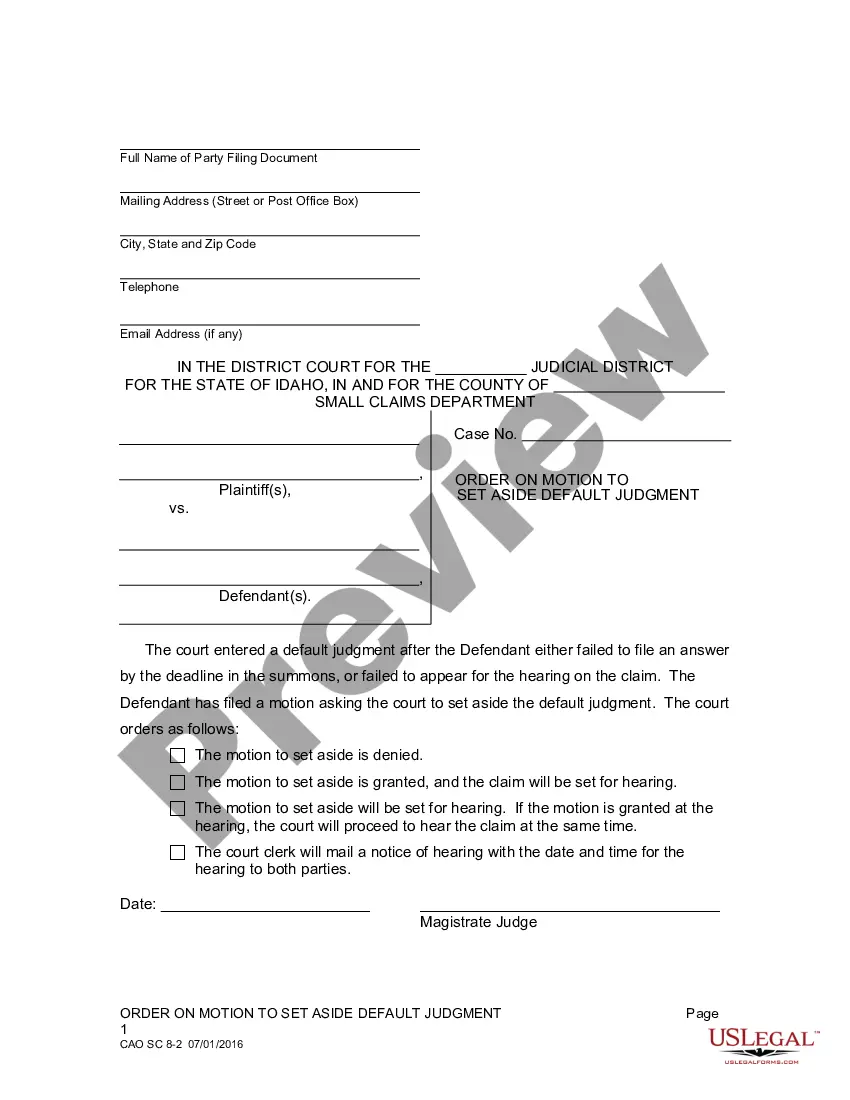
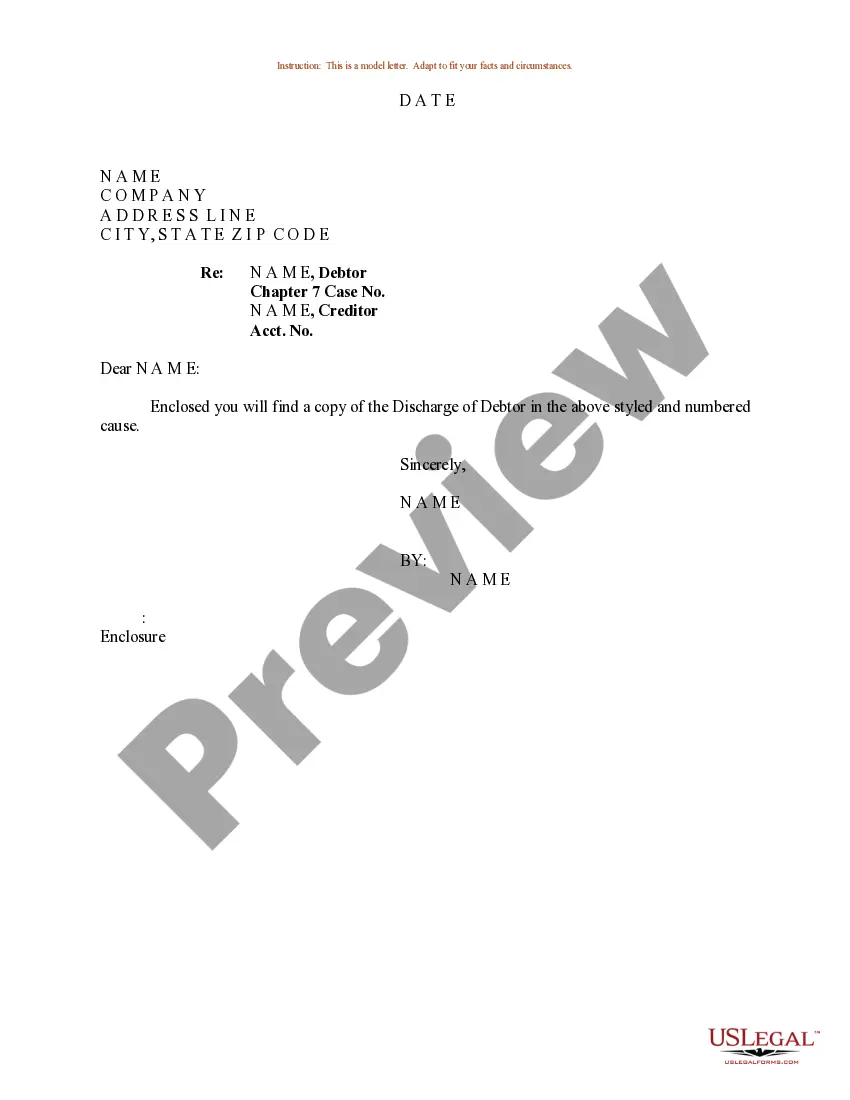
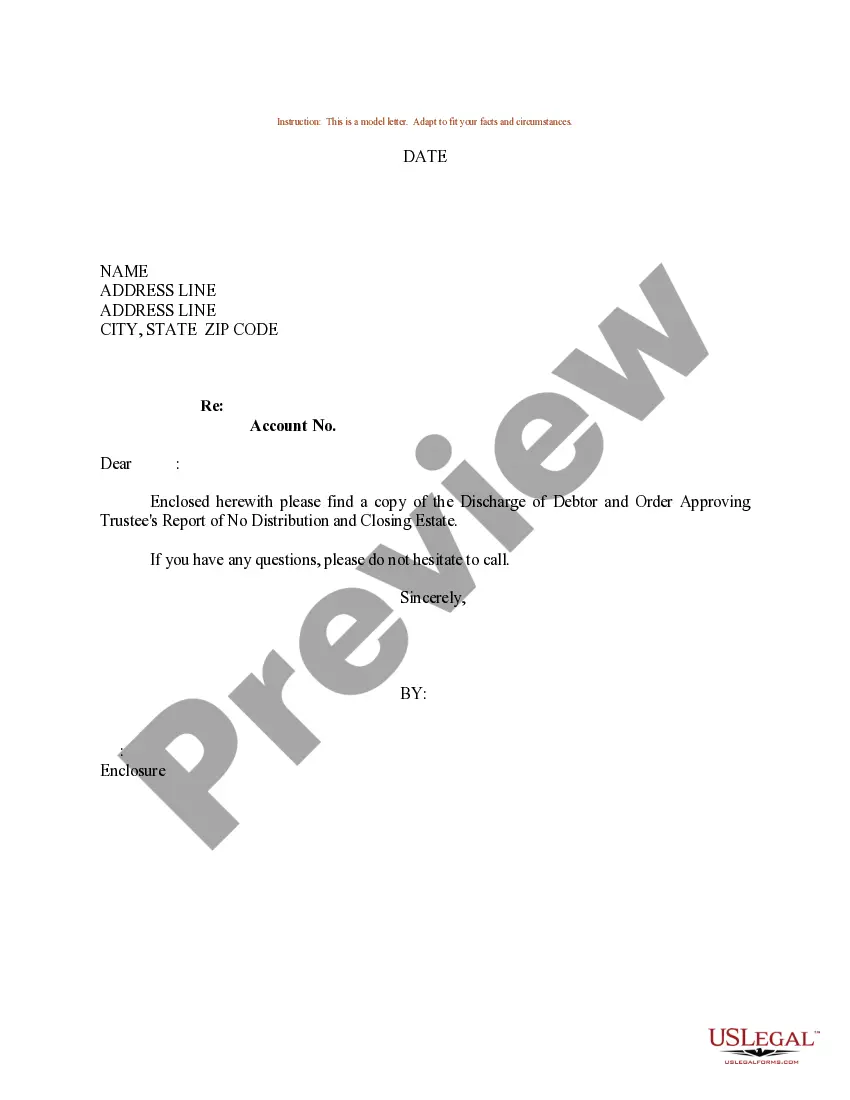
Sample Letter regarding Discharge of Debtor
About this form
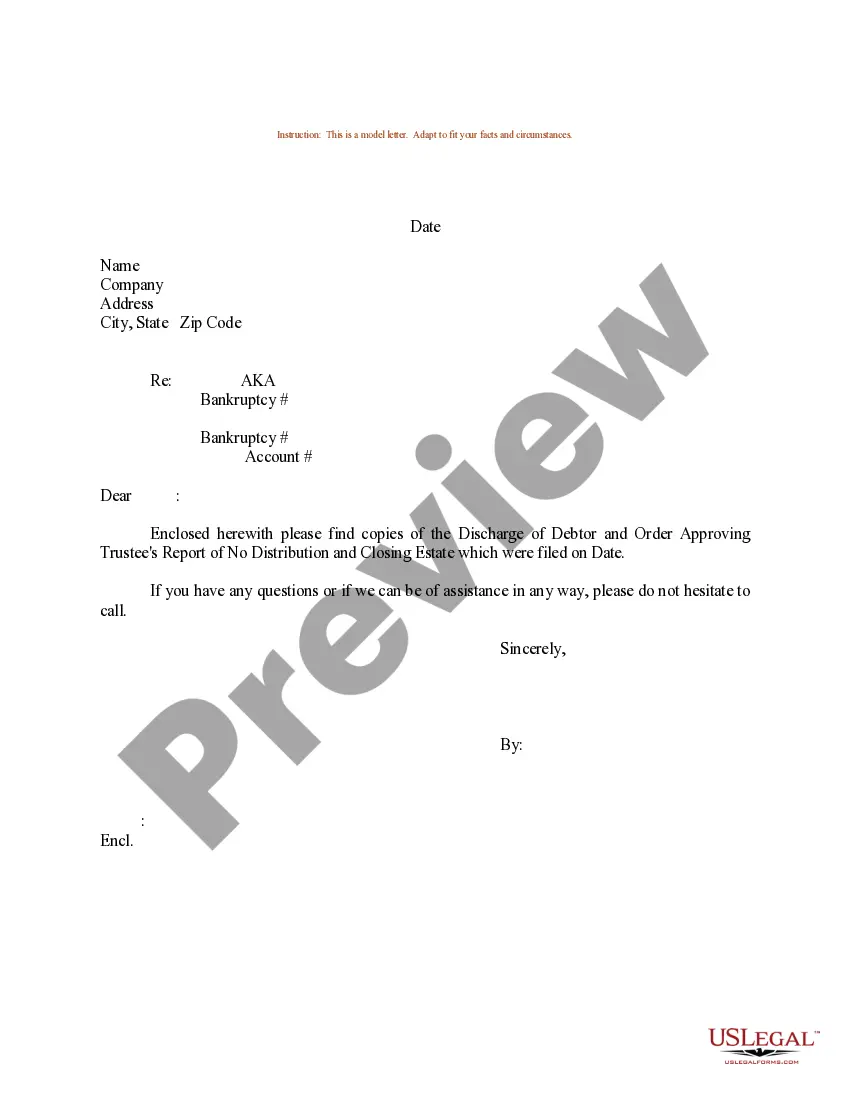
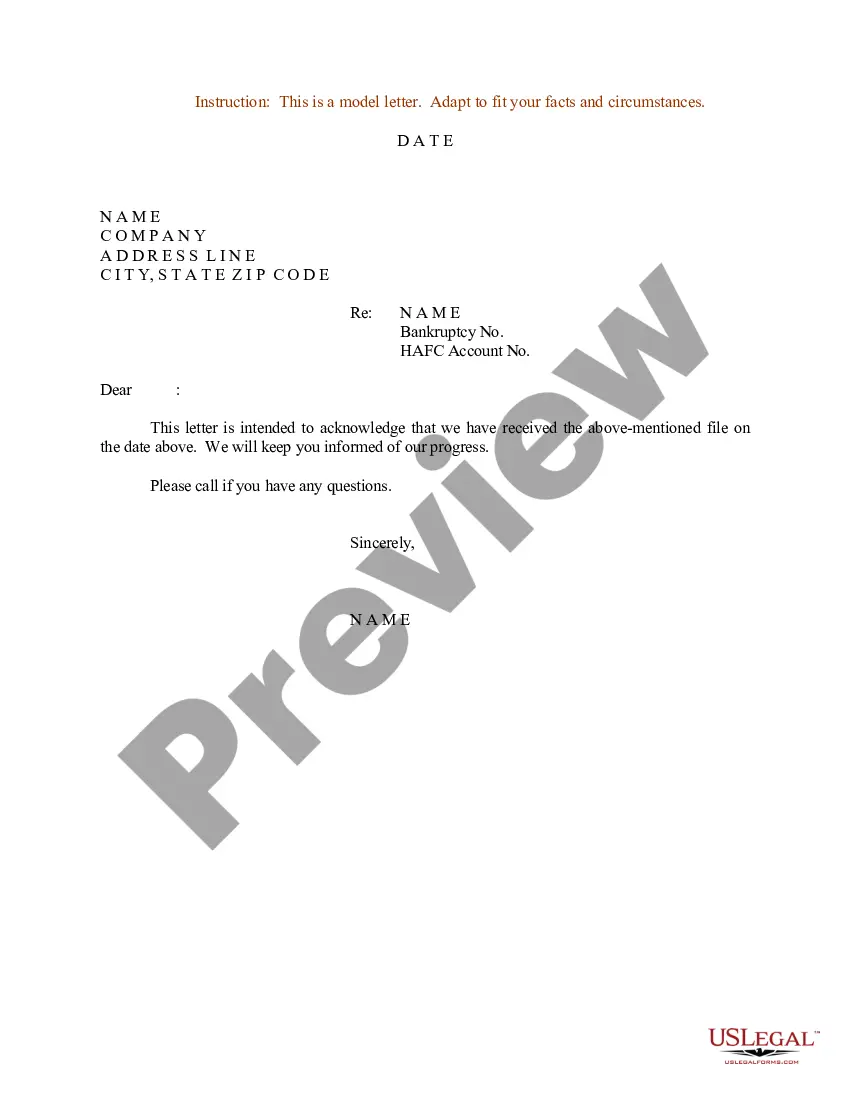
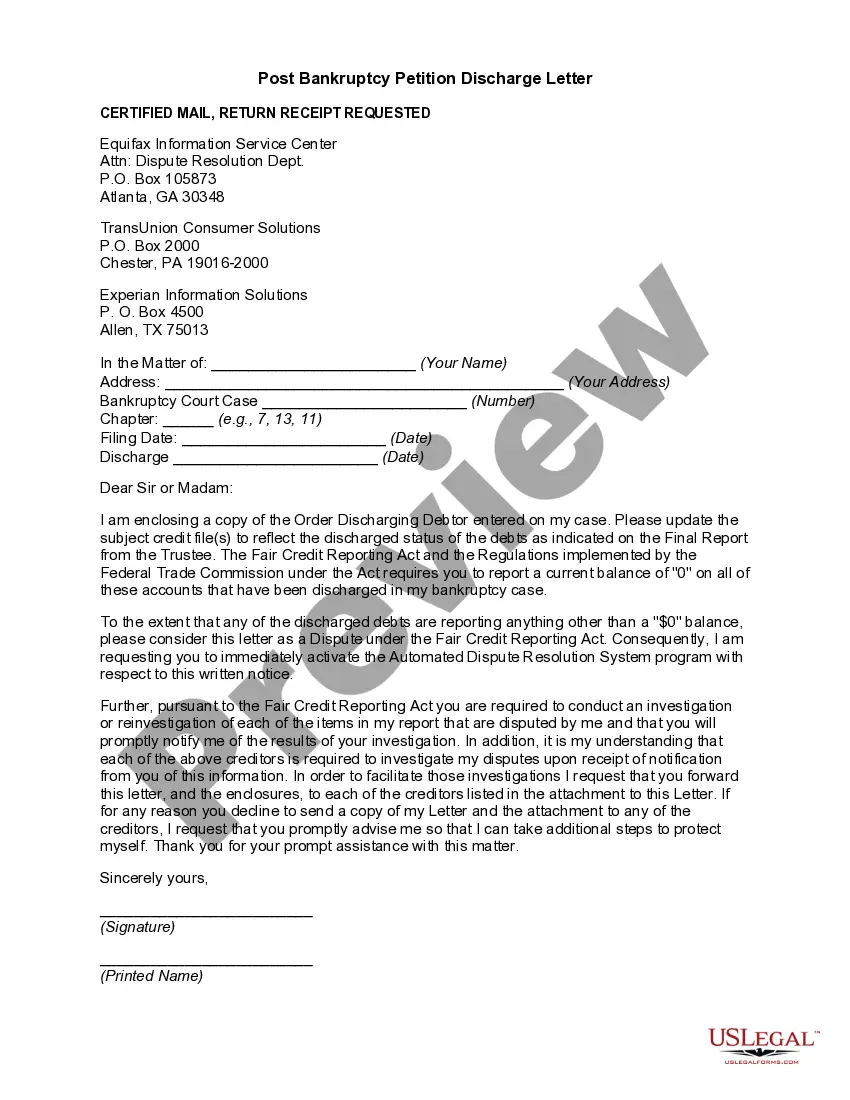
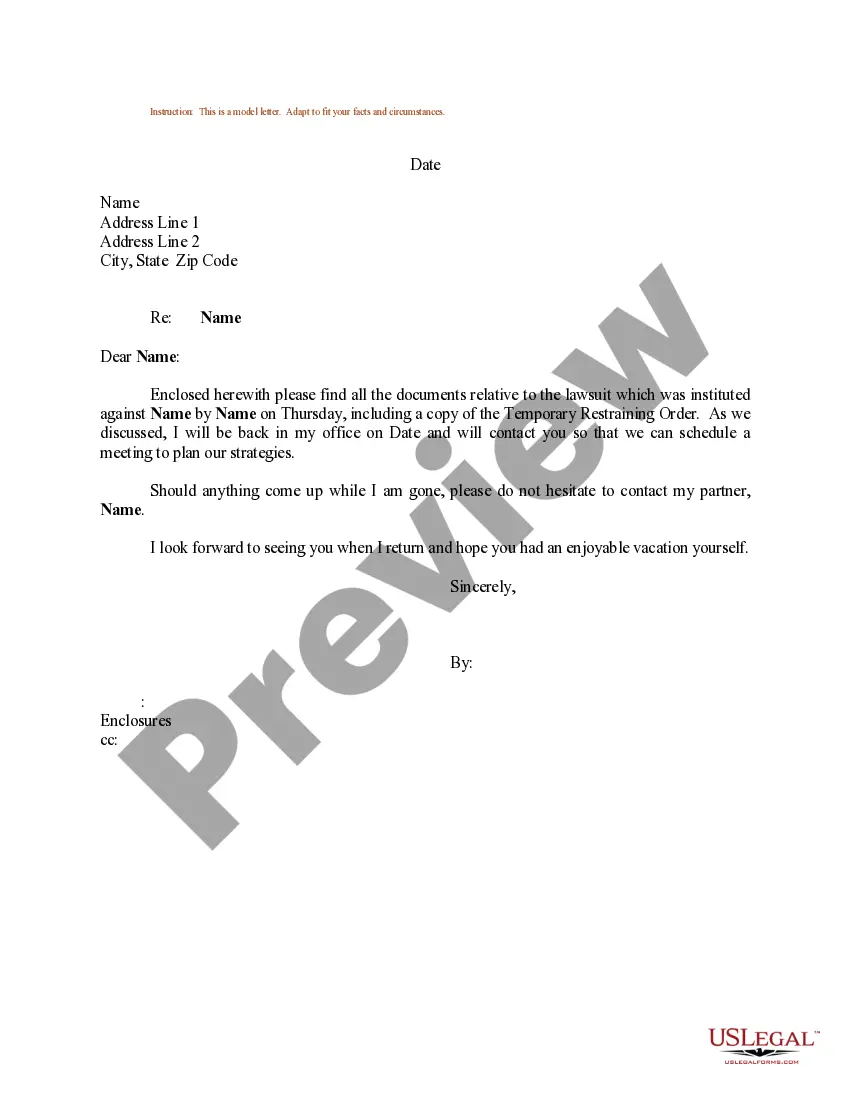
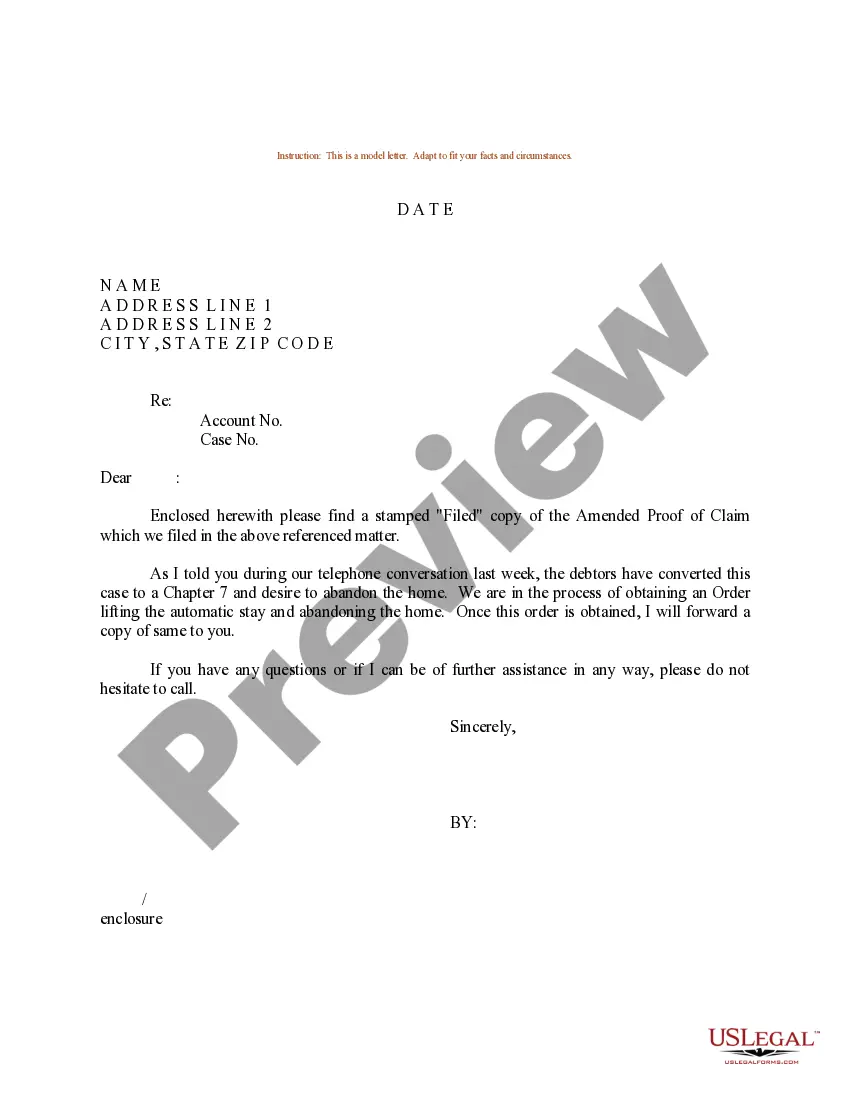
The Sample Letter regarding Discharge of Debtor is a template designed to provide a clear format for communicating with a debtor about their discharge of debts. This form can assist in formalizing discussions about eliminating or reducing a debtor's obligations, making it an essential document for creditors and debtors alike. It differs from other debt-related forms by focusing specifically on the discharge process, ensuring both parties understand their rights and responsibilities.
Main sections of this form
- Date: The date on which the letter is issued.
- Debtor's name: The full name of the debtor being addressed.
- Company name: The name of the company or individual sending the letter.
- Address details: The complete address information for both parties.
- Subject line: Clearly states the purpose of the letter regarding discharge of debts.
When to use this document
This form is commonly used when a creditor needs to formally notify a debtor about the discharge of their debts. It may be necessary to use this letter in situations such as the completion of bankruptcy proceedings, the arrangement of debt settlements, or any other circumstance where a debtor's responsibilities are being legally modified or reduced.
Who can use this document
- Creditors looking to communicate the discharge of a debtor's obligations.
- Debtors who want formal documentation of their debt discharge.
- Financial professionals managing debt settlements or bankruptcy cases.
Completing this form step by step
- Begin by entering the date of the letter at the top of the document.
- Fill in the full name of the debtor to whom the letter is addressed.
- Include the name and address of the creditor or company sending the letter.
- Clearly state the subject matter regarding the discharge of the debtor.
- Review the letter for accuracy before sending it to the debtor.
Does this document require notarization?
This form does not typically require notarization to be legally valid. However, some jurisdictions or document types may still require it. US Legal Forms provides secure online notarization powered by Notarize, available 24/7 for added convenience.
Get your form ready online
Our built-in tools help you complete, sign, share, and store your documents in one place.
Make edits, fill in missing information, and update formatting in US Legal Forms—just like you would in MS Word.
Download a copy, print it, send it by email, or mail it via USPS—whatever works best for your next step.
Sign and collect signatures with our SignNow integration. Send to multiple recipients, set reminders, and more. Go Premium to unlock E-Sign.
If this form requires notarization, complete it online through a secure video call—no need to meet a notary in person or wait for an appointment.
We protect your documents and personal data by following strict security and privacy standards.

Make edits, fill in missing information, and update formatting in US Legal Forms—just like you would in MS Word.

Download a copy, print it, send it by email, or mail it via USPS—whatever works best for your next step.

Sign and collect signatures with our SignNow integration. Send to multiple recipients, set reminders, and more. Go Premium to unlock E-Sign.

If this form requires notarization, complete it online through a secure video call—no need to meet a notary in person or wait for an appointment.

We protect your documents and personal data by following strict security and privacy standards.
Mistakes to watch out for
- Failing to include the correct debtor's name or details.
- Using unclear language regarding the terms of discharge.
- Not specifying the date clearly, leading to confusion.
- Neglecting to proofread the letter for grammatical errors.
Benefits of using this form online
- Convenience: Easily access and download the form at any time.
- Editability: Customize the letter to meet your specific needs.
- Reliability: Ensure that the form is drafted by licensed attorneys, providing peace of mind.
Key takeaways
- The Sample Letter regarding Discharge of Debtor is essential for formal debt communications.
- It is important to complete the form accurately to prevent misunderstandings.
- State-specific requirements should always be considered to ensure compliance.
Looking for another form?


Form popularity
FAQ
Within 30 days of receiving the written notice of debt, send a written dispute to the debt collection agency. You can use this sample dispute letter (PDF) as a model. Once you dispute the debt, the debt collector must stop all debt collection activities until it sends you verification of the debt.
Once filed, a Chapter 7 bankruptcy typically takes about 4 - 6 months to complete. The bankruptcy discharge is granted 3 - 4 months after filing in most cases. Written by Attorney Andrea Wimmer. Most Chapter 7 bankruptcy cases take between 4 - 6 months to complete after filing the case with the court.
The debt dispute letter should include your personal identifying information; verification of the amount of debt owed; the name of the creditor for the debt; and a request that the debt not be reported to credit reporting agencies until the matter is resolved or have it removed from the report, if it already has been
A discharge releases a debtor from personal liability of certain debts known as dischargeable debts, and prevents the creditors owed those debts from taking any action against the debtor or the debtor's property to collect the debts.
When writing the letter, it is crucial to use a simple and professional language. Do not be harsh or threat the debtor in your letter as it can turn the tables against you. The letter should be addressed to the debtor's home address or any other address that the debtor has provided before.
For most filers, a Chapter 7 case will end when you receive your dischargethe order that forgives qualified debtabout four to six months after filing the bankruptcy paperwork.Your case will close after the trustee sells the assets, pays out the funds, and files a report with the court.
A bankruptcy discharge, also known as a discharge in bankruptcy, refers to a permanent court order that releases a debtor from personal liability for certain types of debts. It is sometimes referred to simply as a discharge and comes at the end of a bankruptcy.
The Chapter 7 Discharge. A discharge releases individual debtors from personal liability for most debts and prevents the creditors owed those debts from taking any collection actions against the debtor.
The name 623 dispute method refers to section 623 of the Fair Credit Reporting Act (FCRA). The method allows you to dispute a debt directly with the creditor in question as long as you have already filed your complaint with the credit bureau and completed their process.