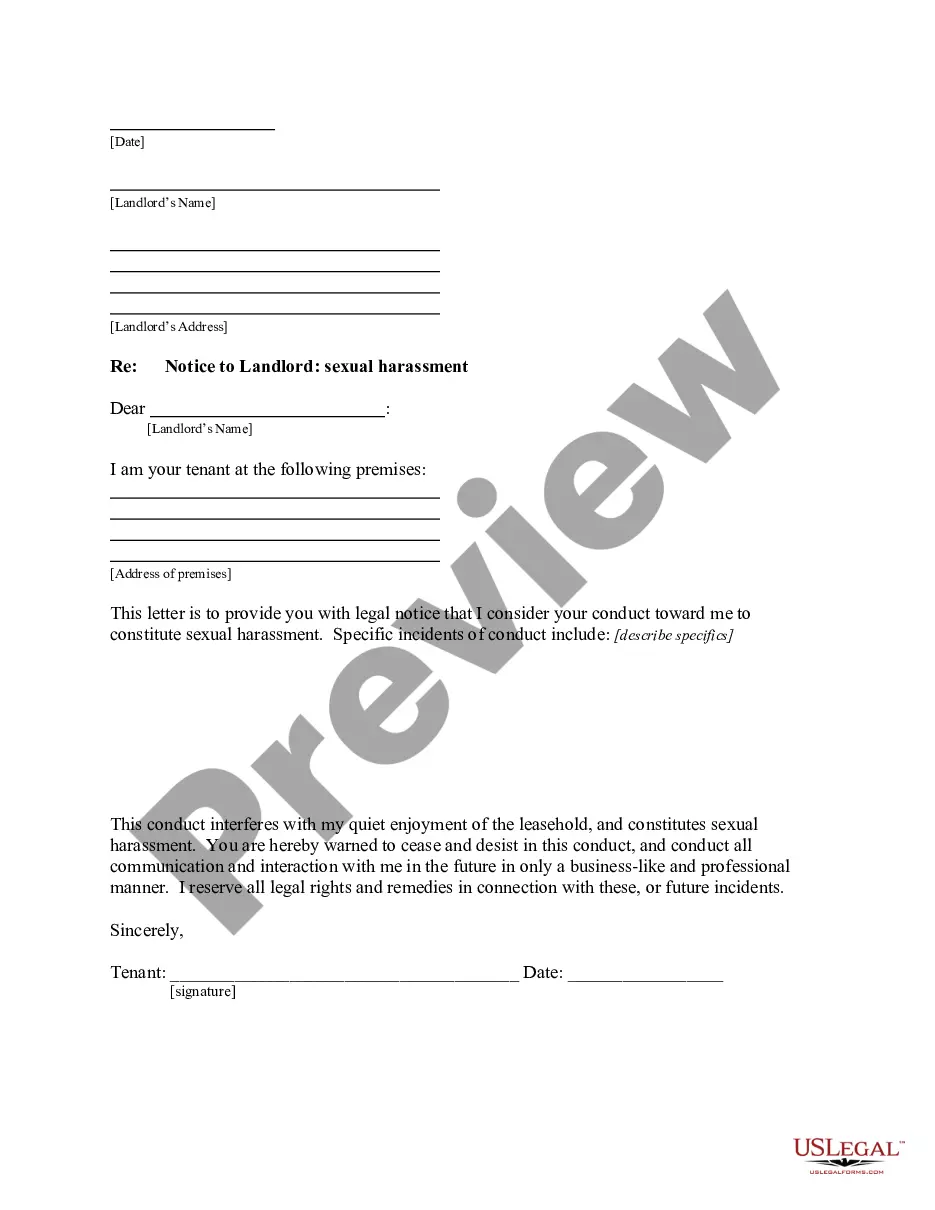
Sample Letter for Opposition to Reinstatement of Military Draft
What this document covers
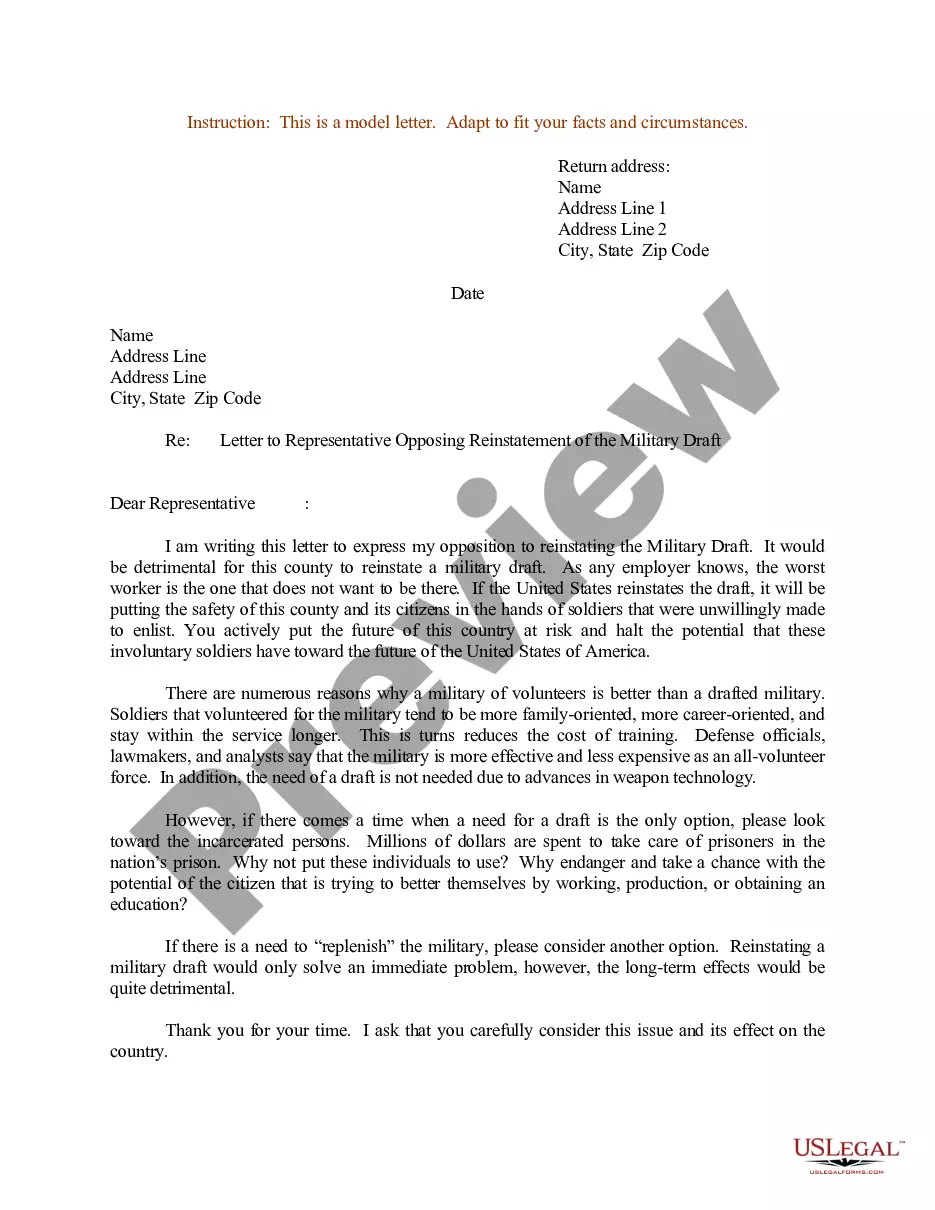
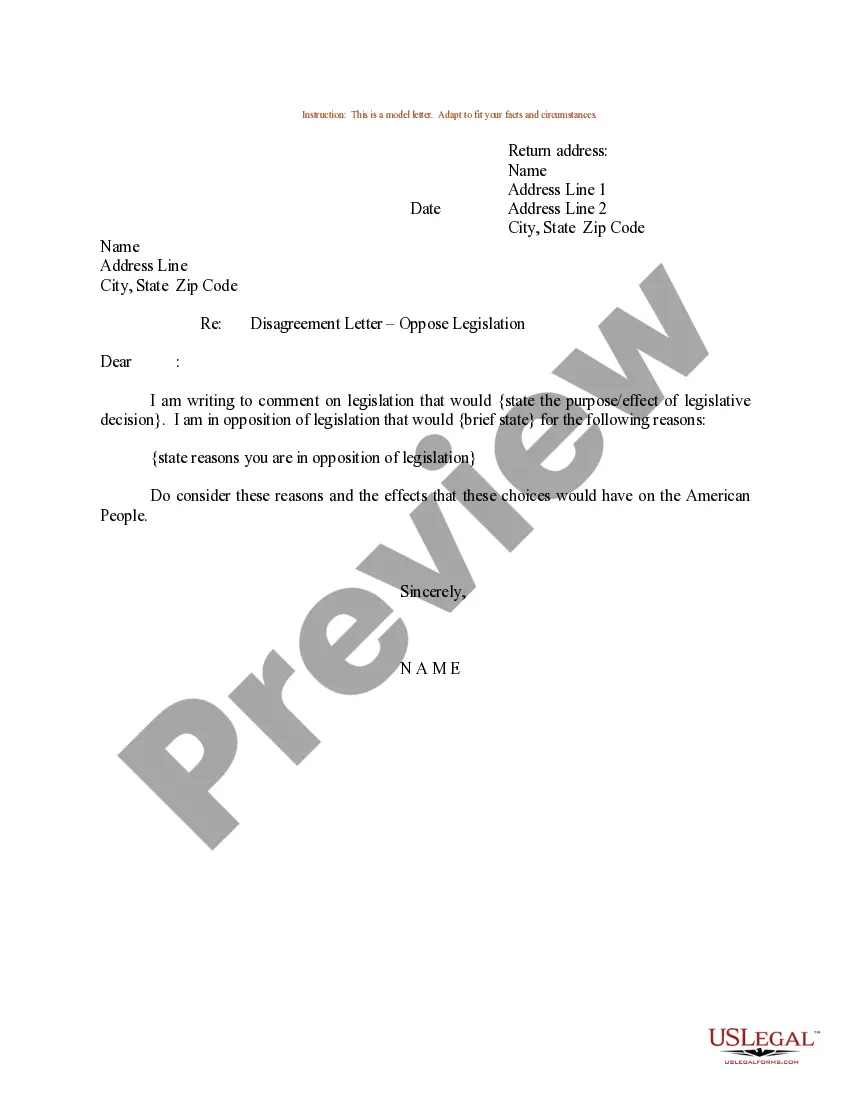
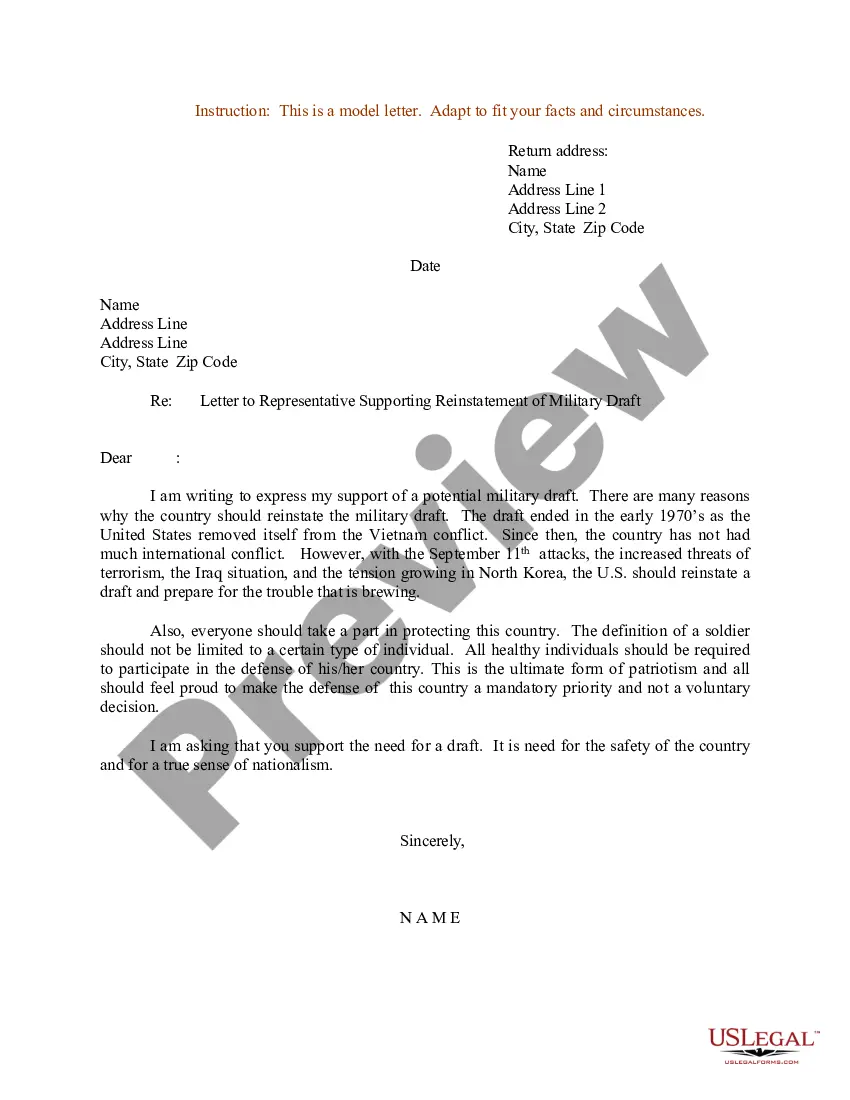
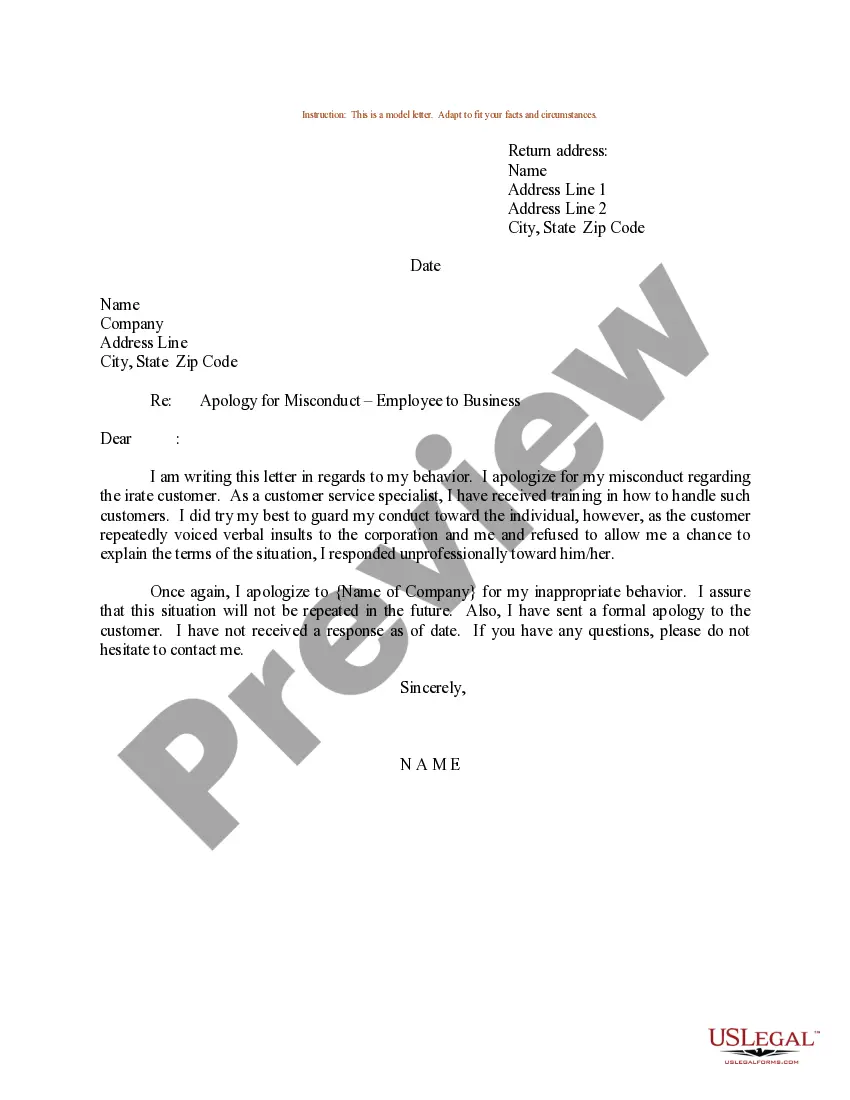
This Sample Letter for Opposition to Reinstatement of Military Draft is a template designed to help individuals express their opposition to the reinstatement of a military draft. This form differs from other legal letters as it specifically addresses concerns about the practicality and ethics of a draft in favor of an all-volunteer military force. It is a structured way to communicate views to representatives or lawmakers effectively.
Main sections of this form
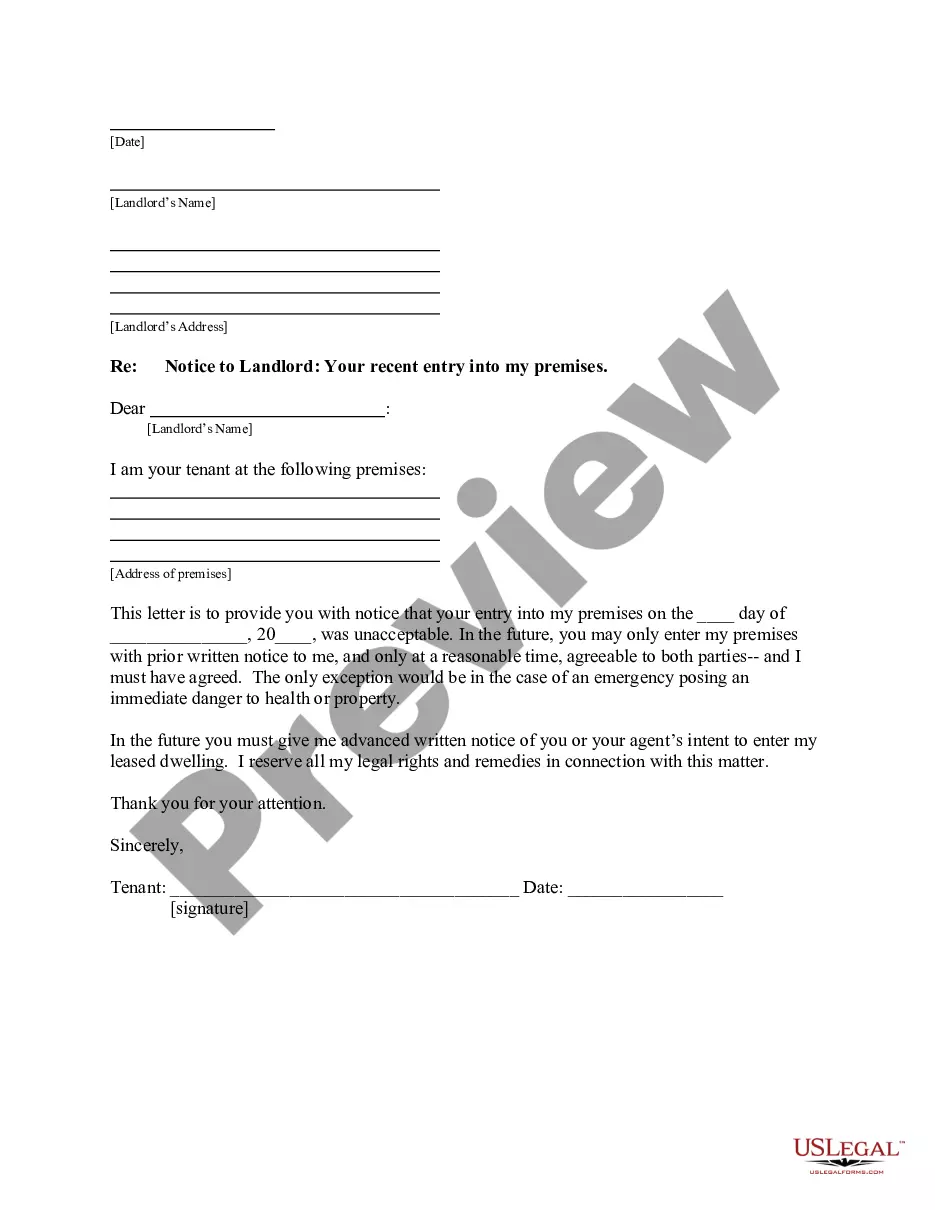
- Return address: Clearly states the sender's address.
- Date: Indicates when the letter is written.
- Recipient address: Includes the name and address of the person receiving the letter.
- Subject line: Outlines the purpose of the letter, opposing the military draft reinstatement.
- Body content: Provides arguments supporting the opposition to a draft and suggesting alternatives.
- Signature: Space for the sender to sign their name at the end of the letter.
When to use this document
This form is useful when individuals wish to formally object to the reinstatement of the military draft, especially during discussions in government or public forums. It can be used during legislative sessions, public hearings, or when advocating for the military to remain an all-volunteer service. This letter can also serve as a personalized communication channel to express concerns to elected representatives.
Who needs this form
- Civilians who want to express their opposition to a military draft.
- Veterans and active-duty military members preferring an all-volunteer military.
- Advocates for military reform or those involved in political activism.
- Anyone concerned about the implications of reinstating a draft on society.
Steps to complete this form
- Identify and enter your name and address in the return address section.
- Enter the current date to indicate when the letter is being sent.
- Fill in the recipient's name and address accurately.
- In the subject line, clearly state the purpose of your letter.
- Compose the body of the letter, articulating your concerns about the military draft.
- Sign your name at the bottom to authenticate your letter.
Notarization requirements for this form
In most cases, this form does not require notarization. However, some jurisdictions or signing circumstances might. US Legal Forms offers online notarization powered by Notarize, accessible 24/7 for a quick, remote process.
Get your form ready online
Our built-in tools help you complete, sign, share, and store your documents in one place.
Make edits, fill in missing information, and update formatting in US Legal Forms—just like you would in MS Word.
Download a copy, print it, send it by email, or mail it via USPS—whatever works best for your next step.
Sign and collect signatures with our SignNow integration. Send to multiple recipients, set reminders, and more. Go Premium to unlock E-Sign.
If this form requires notarization, complete it online through a secure video call—no need to meet a notary in person or wait for an appointment.
We protect your documents and personal data by following strict security and privacy standards.

Make edits, fill in missing information, and update formatting in US Legal Forms—just like you would in MS Word.

Download a copy, print it, send it by email, or mail it via USPS—whatever works best for your next step.

Sign and collect signatures with our SignNow integration. Send to multiple recipients, set reminders, and more. Go Premium to unlock E-Sign.

If this form requires notarization, complete it online through a secure video call—no need to meet a notary in person or wait for an appointment.

We protect your documents and personal data by following strict security and privacy standards.
Mistakes to watch out for
- Failing to include a return address can make it difficult for the recipient to respond.
- Not addressing the letter to a specific representative may reduce its impact.
- Forgetting to proofread can lead to typographical errors, undermining credibility.
- Making the letter overly emotional rather than presenting clear, logical arguments.
Why use this form online
- Convenience: Instant download allows for quick preparation of your opposition letter.
- Editability: Easily customize the template to reflect your personal views and style.
- Reliability: Templates are drafted by licensed attorneys, ensuring a professional standard.
Summary of main points
- This letter is a customizable template for expressing opposition to the military draft.
- It provides a structure to present compelling arguments against conscription.
- The form is suited for individuals and groups who wish to engage with lawmakers.
- Clear communication through this letter can influence public policy discussions.
Looking for another form?

Form popularity
FAQ
Tips for Writing a Character Reference Letter Keep the letter short (generally a page or less). Use specific examples to show your friend's character. Keep things positive. Focus on the positive aspects of your friend's character, and don't disparage them or anyone else in your letter.
Keep things light. Share things about yourself like hobbies or interests. Write about your life but keep it positive. Thank them for their service. If you have connections in the military, mention that. Be positive. Stay away from political or polarizing topics.
Introduction. Normally a single paragraph of a couple of sentences explaining who you are (rank, place of work, etc) and your relationship with the subject (co-worker, friend, supervisor, etc). Body. The body is the majority of the letter. Closing.
For a letter written to an anonymous soldier, though, try something like Dear Hero, or Dear Brave Patriot. This gives your letter an uplifting tone right from the start. In contrast, Dear Sir or Madam, is too formal, while Dear Soldier, is better but still a bit too generic.
Thank you for your sacrifices and hard work in service to our country. I appreciate how hard you worked to ensure that we could continue to enjoy our freedoms. Thank you for all your hard work, dedication and service to our country. You are my hero for your bravery and sacrifices to our nation.
Don't ask Why have not you responded? Don't say Why didn't you spend time with me on your leave? DO's. Do say encouraging words and appreciation. Do send them pictures!
Include three to four sentences and explain to the military the purpose of the letter. Here’s a sample sentence: “This letter of intent is to inform the military (include specific branch) that I am interested in joining upon graduation on…” Write the body. Use clear, understandable language.
Introduction. Normally a single paragraph of a couple of sentences explaining who you are (rank, place of work, etc) and your relationship with the subject (co-worker, friend, supervisor, etc). Body. The body is the majority of the letter. Closing.
Not more than two pages long. Use business or official letter writing format (have your address and employer's address at the head) Content should be divided into three (Introduction, Body and conclusion)