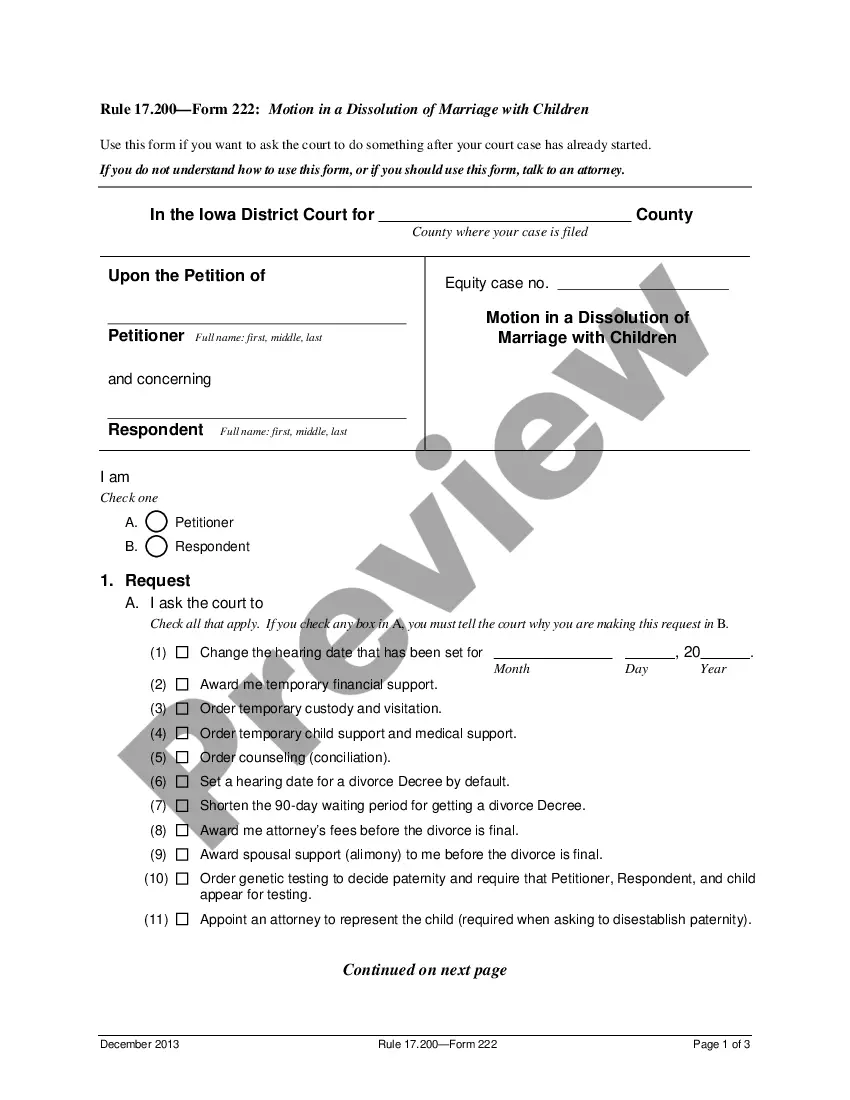
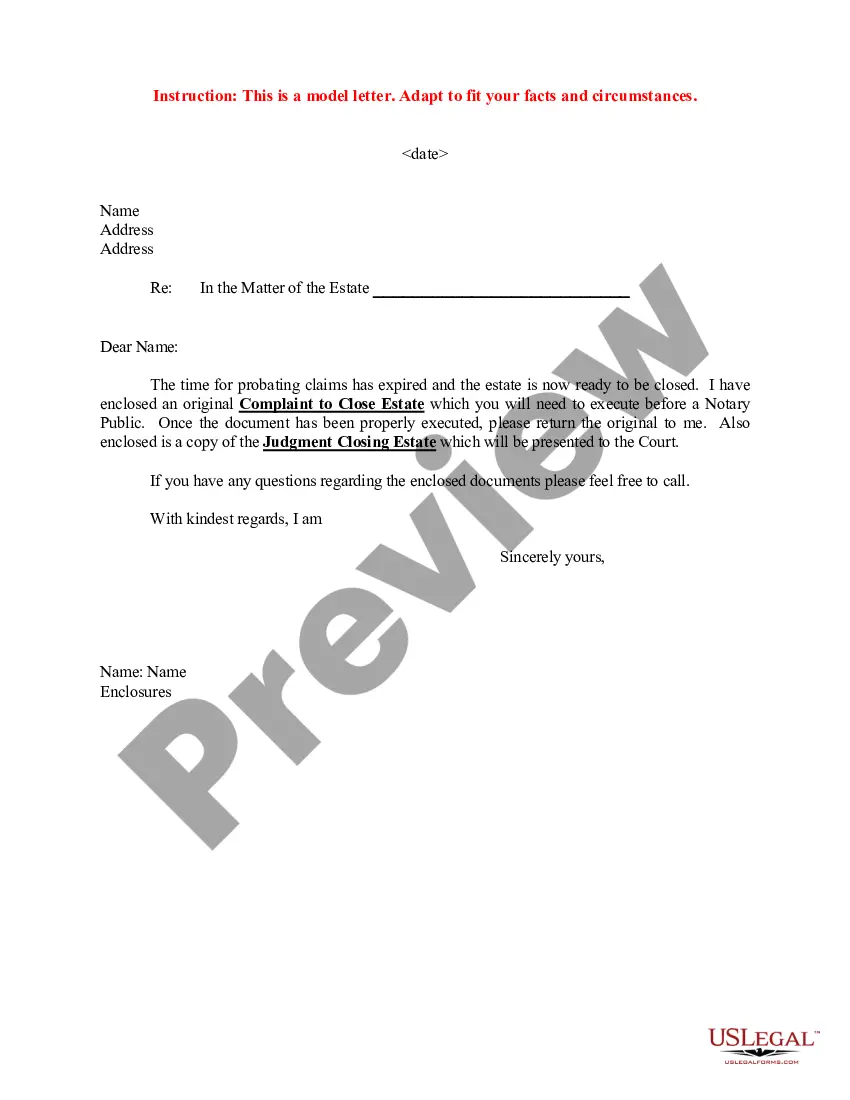
Sample Letter for Complaint to Close Estate and Judgment Closing Estate
Understanding this form
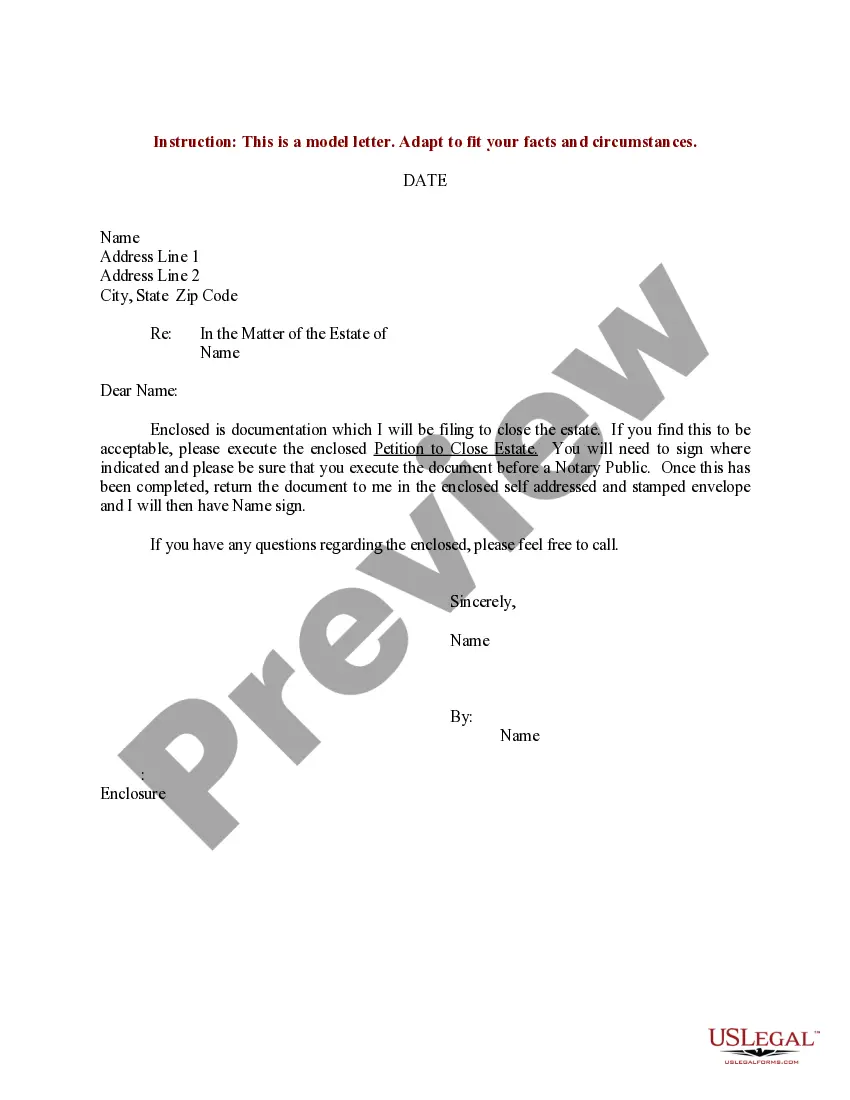
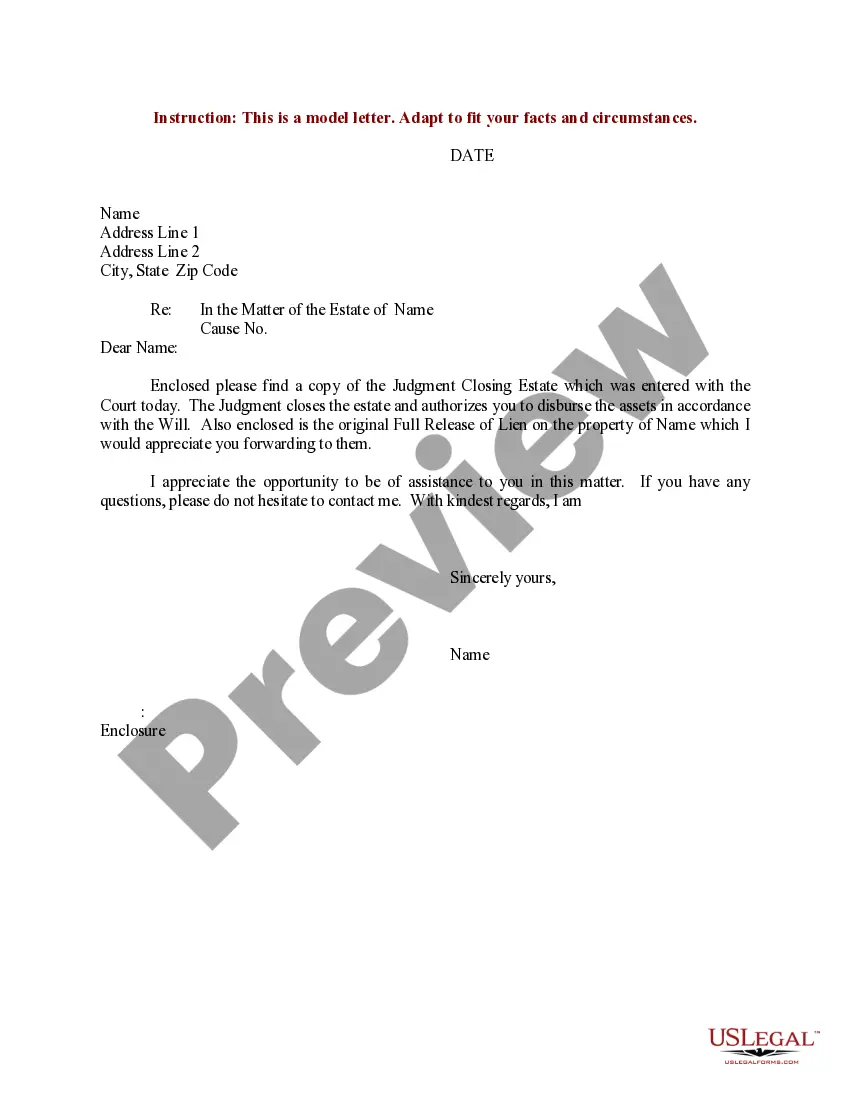
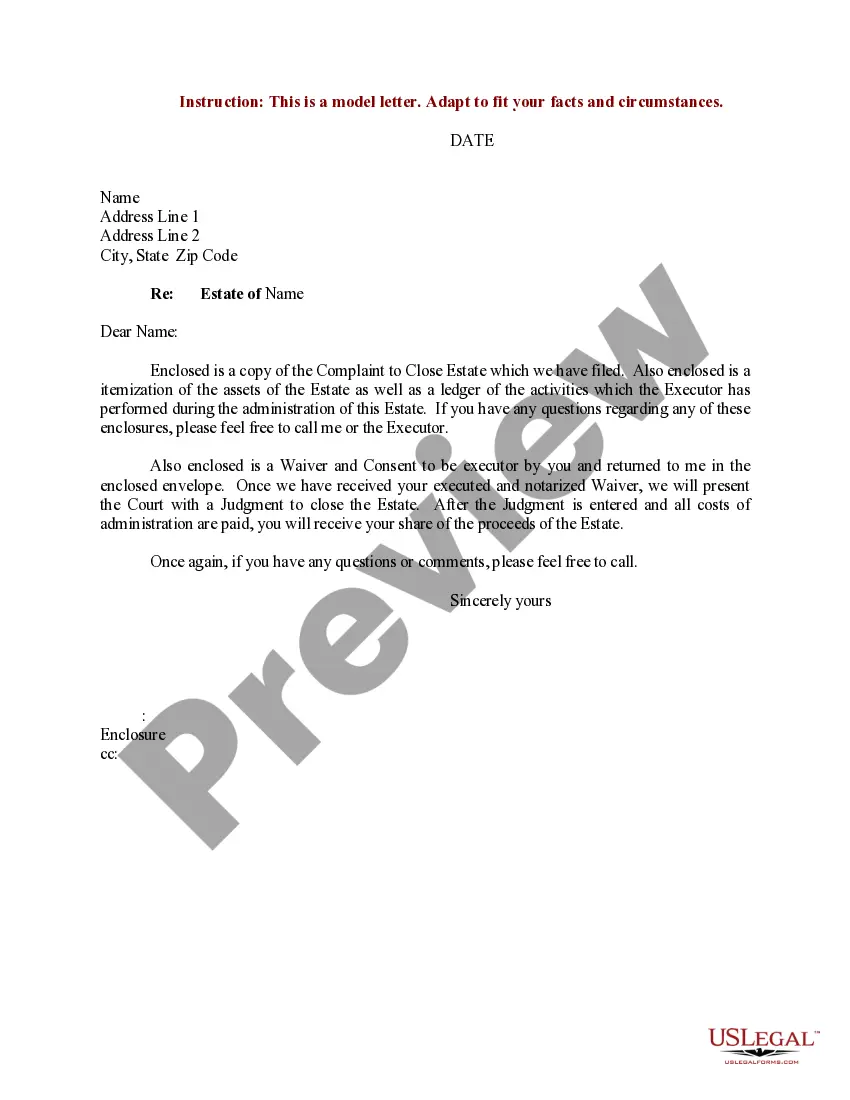
This Sample Letter for Complaint to Close Estate and Judgment Closing Estate is a template designed to initiate the process of closing an estate after the time for probating claims has expired. It outlines the necessary steps to formally close the estate and provides essential documents that need to be executed. This form differs from other estate-related forms by specifically focusing on the closure of an estate, ensuring that all legal requirements are met for a smooth conclusion.
Form components explained
- Date: Indicate the date of the letter.
- Recipient Information: Includes the name and address of the individual receiving the letter.
- Subject Line: Clearly states the matter concerning the estate.
- Enclosures: Lists the documents included, such as the Complaint to Close Estate and Judgment Closing Estate.
- Signature Line: Offers a space for the sender's signature and name.
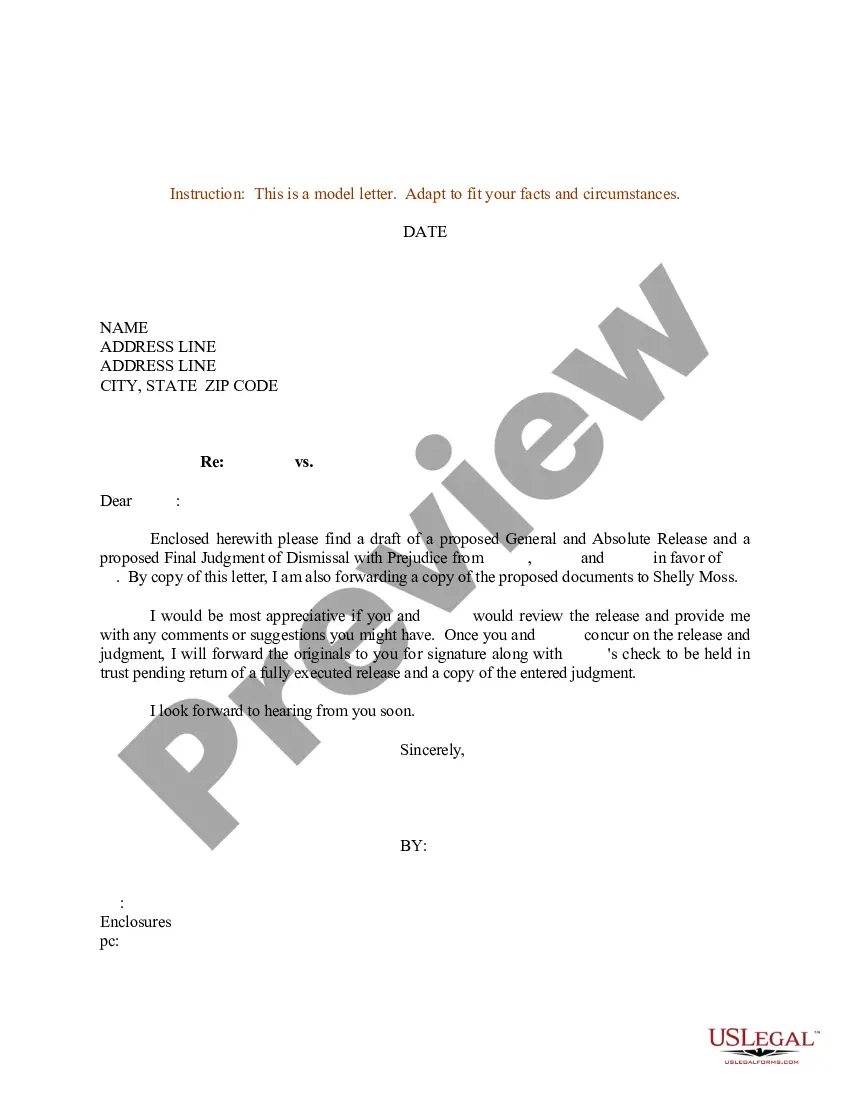
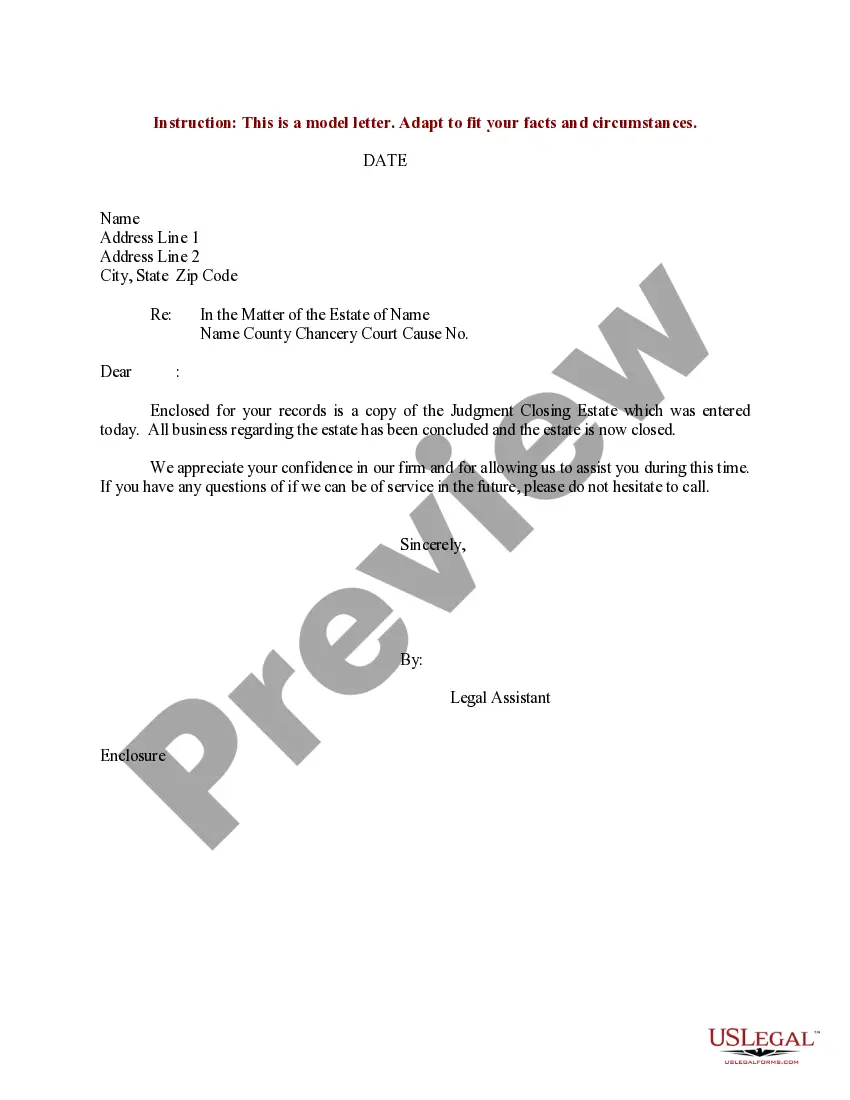
When to use this form
This form is used when the administrator or executor of an estate has determined that the time set for probating claims has ended. It serves to formally request the closure of the estate by providing the necessary documentation to the recipient, who must then execute the required complaint and judgment for submission to the court. This process is essential in ensuring that all debts and claims against the estate have been addressed before final closure.
Who should use this form
This form is intended for:
- Executors or administrators of estates.
- Individuals responsible for managing the estate of a deceased person.
- Legal representatives in charge of estate proceedings.
How to complete this form
- Fill in the date of the letter at the top.
- Insert the name and address of the recipient.
- Clearly state the subject regarding the estate in the designated section.
- Include the necessary enclosures as mentioned in the letter.
- Sign the letter and add your name below the signature line.
Is notarization required?
Notarization is required for this form to take effect. Our online notarization service, powered by Notarize, lets you verify and sign documents remotely through an encrypted video session, available 24/7.
Get your form ready online
Our built-in tools help you complete, sign, share, and store your documents in one place.
Make edits, fill in missing information, and update formatting in US Legal Forms—just like you would in MS Word.
Download a copy, print it, send it by email, or mail it via USPS—whatever works best for your next step.
Sign and collect signatures with our SignNow integration. Send to multiple recipients, set reminders, and more. Go Premium to unlock E-Sign.
If this form requires notarization, complete it online through a secure video call—no need to meet a notary in person or wait for an appointment.
We protect your documents and personal data by following strict security and privacy standards.

Make edits, fill in missing information, and update formatting in US Legal Forms—just like you would in MS Word.

Download a copy, print it, send it by email, or mail it via USPS—whatever works best for your next step.

Sign and collect signatures with our SignNow integration. Send to multiple recipients, set reminders, and more. Go Premium to unlock E-Sign.

If this form requires notarization, complete it online through a secure video call—no need to meet a notary in person or wait for an appointment.

We protect your documents and personal data by following strict security and privacy standards.
Avoid these common issues
- Failing to include all necessary enclosures.
- Not signing the letter before submission.
- Leaving out critical information, such as dates or recipient details.
- Not verifying local state requirements before submitting the complaint.
Why complete this form online
- Convenience of accessing the form from anywhere, anytime.
- Editable templates allowing personalization to fit specific circumstances.
- Reliability from using legally drafted templates by licensed attorneys.
- Quick and easy download for immediate use without delays.
Looking for another form?
Form popularity
FAQ
This form is a standard template used by executors or administrators to initiate the closing of an estate after the claims period has expired. It guides the user through preparing a formal request to close and lists the documents to be executed, including enclosures like the Complaint to Close Estate and Judgment Closing Estate. The template helps ensure a smooth, compliant conclusion.
Not necessarily. The Sample Letter for Complaint to Close Estate and Judgment Closing Estate is a fill-in template for executors or administrators to initiate estate closure after the claims period ends. It outlines required elements (date, recipient, subject line, enclosures, signature) and helps organize documents, but consult a licensed attorney for state-specific guidance or complex estates.
This form serves as a template for a closing communication after claims are resolved. It can function as the estate closing letter to beneficiaries by informing them of final closure and referencing the enclosed documents, such as the Complaint to Close Estate and Judgment Closing Estate. It supports formal notification during the closing process.
Required steps include preparing a formal letter with the date, recipient information, a clear subject line, and a signature. The enclosures should include documents such as the Complaint to Close Estate and Judgment Closing Estate. The process begins after the claims period ends, and the recipient submits the complaint and judgment to the court for final closure.
Using this form as a guide, executors or administrators initiate closure by sending the letter to the appropriate recipient after the claims period; ensure all debts and claims are resolved before finalizing. The form's enclosures document the closure; the recipient or court will process the complaint and judgment to close the estate.
This form is unique because it directly targets closing the estate after the claims period expires and includes explicit enclosures—the Complaint to Close Estate and Judgment Closing Estate—within a single letter template. It provides the essential fields (date, recipient, subject, signature) to trigger the closure and outline the needed filing steps.