Sample Letter for Initiate Probate Proceedings for Estate - Request to Execute Waiver and Consent
Understanding this form
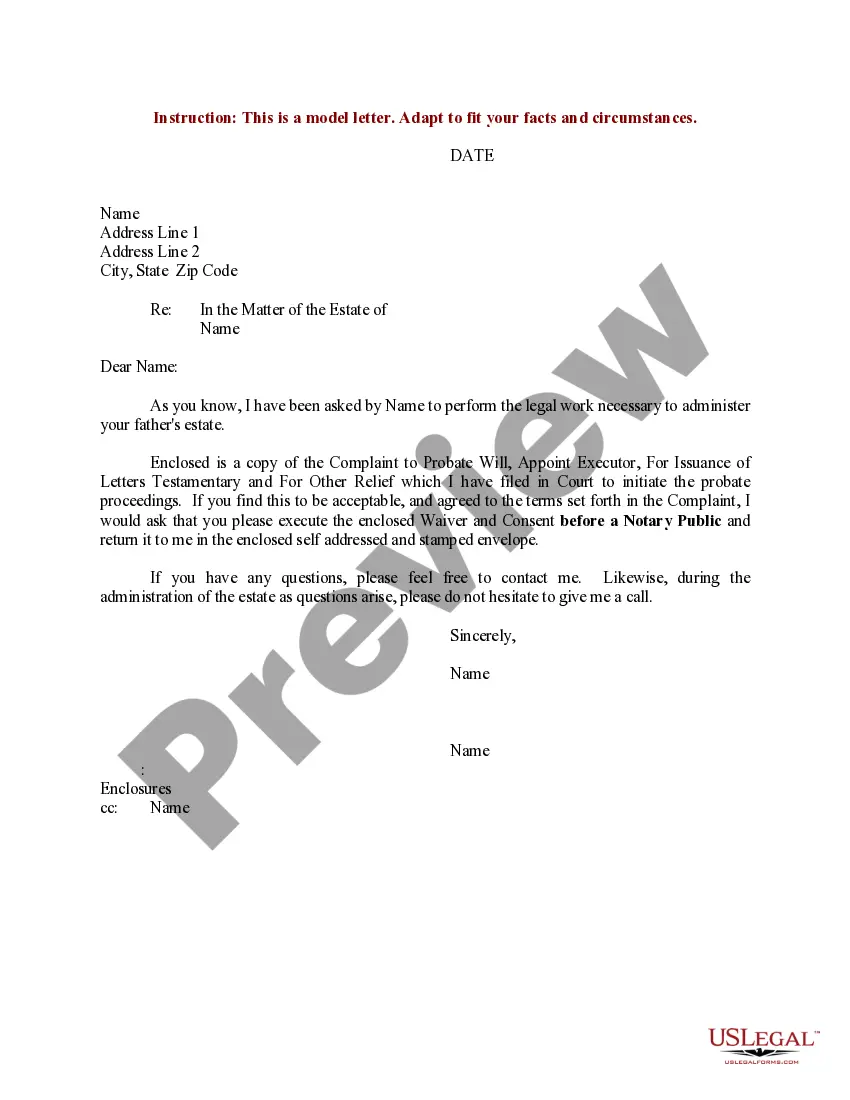
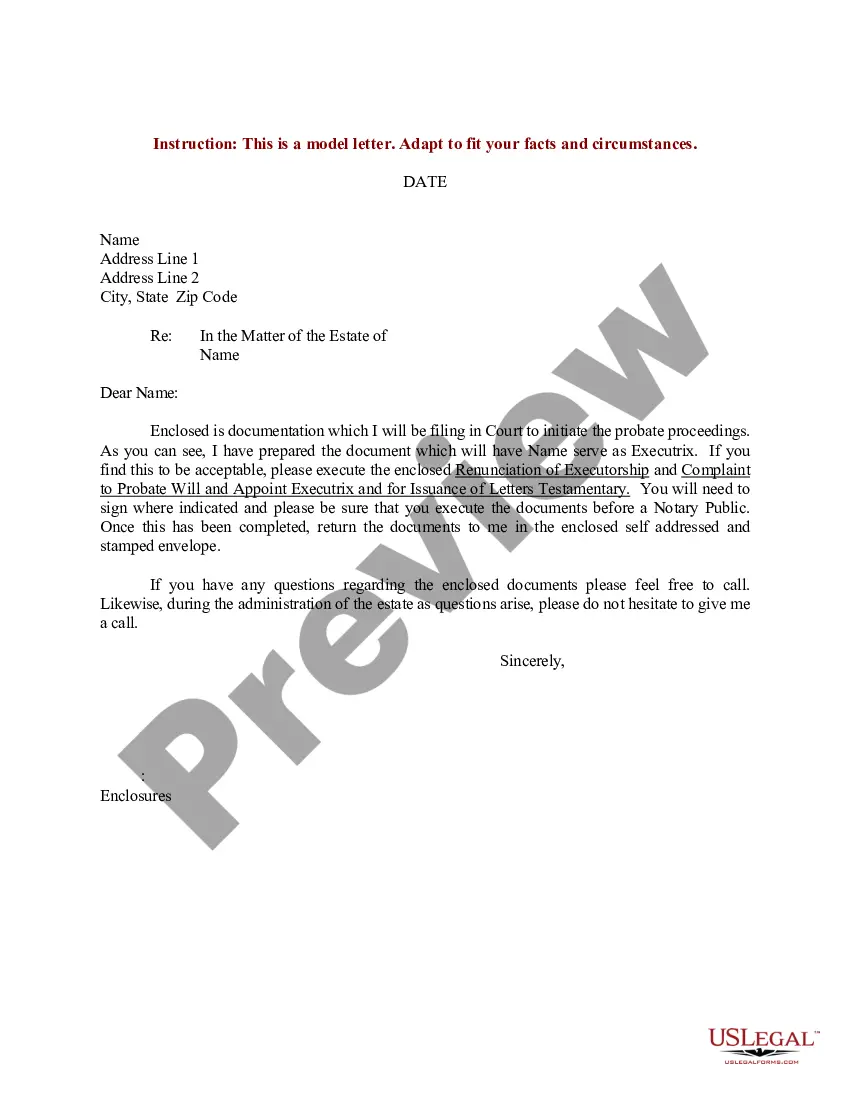
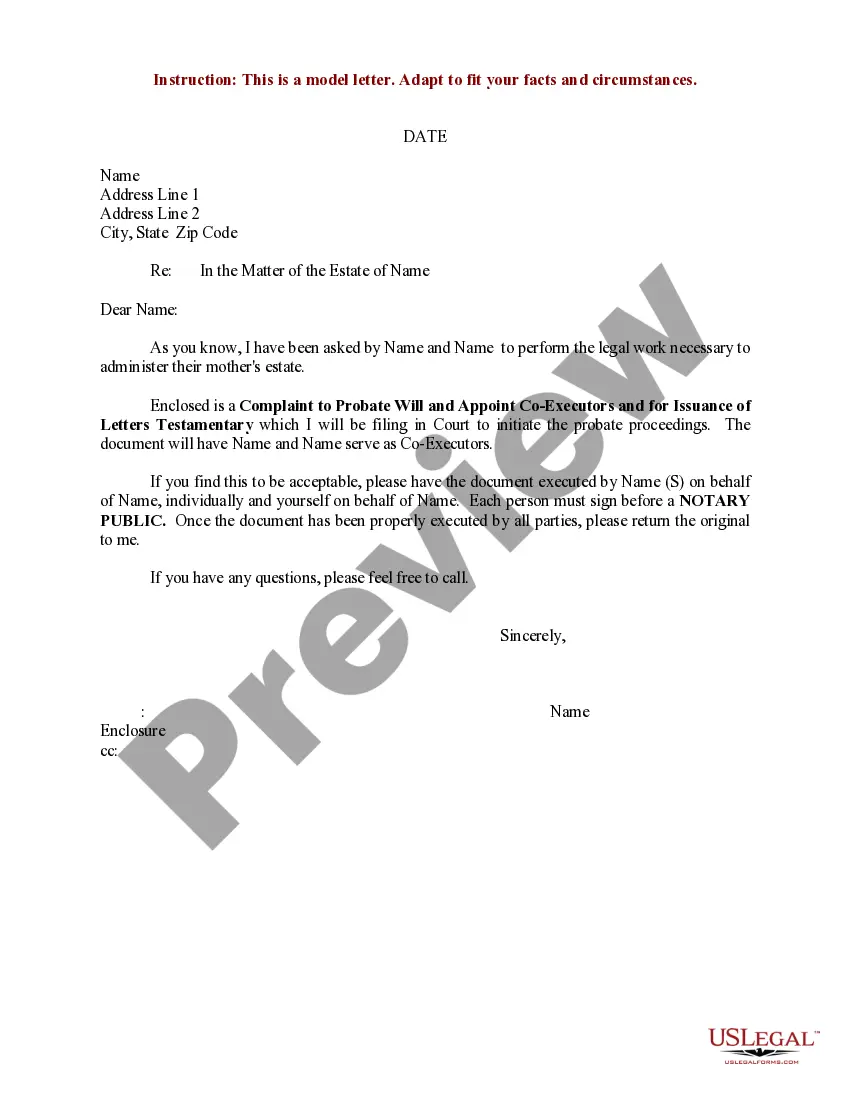
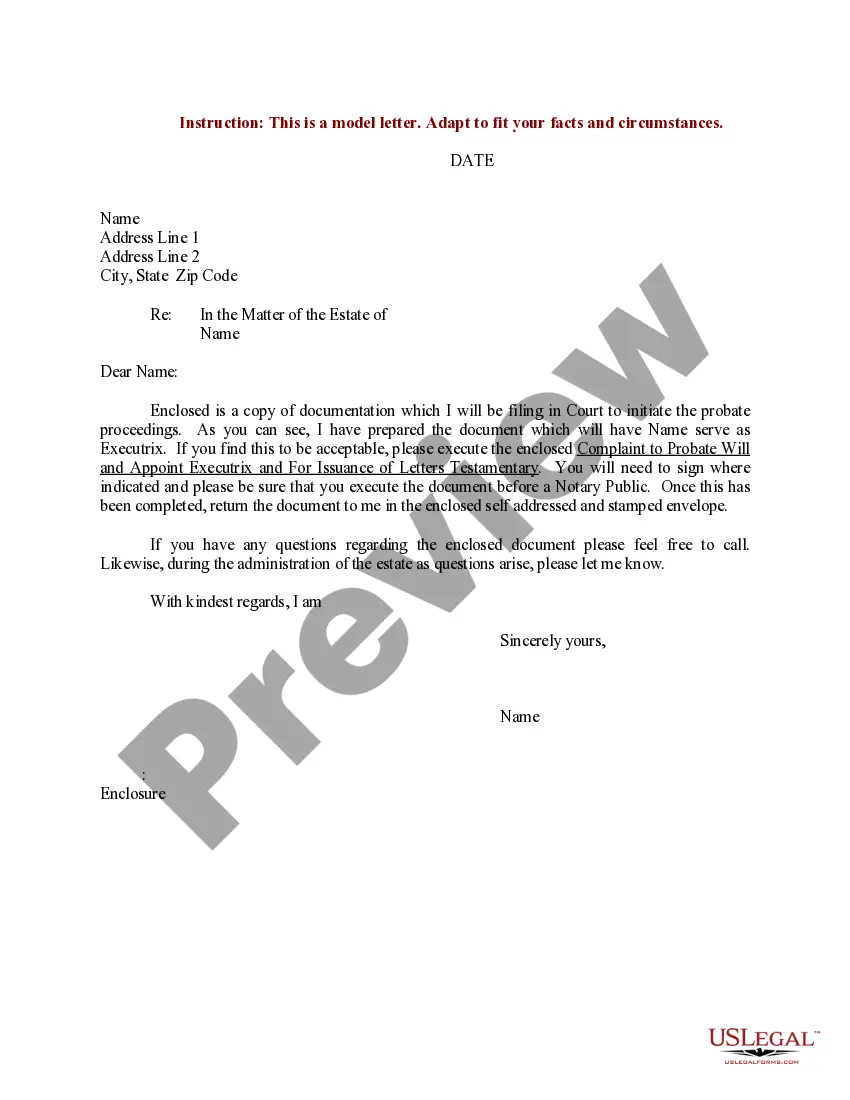
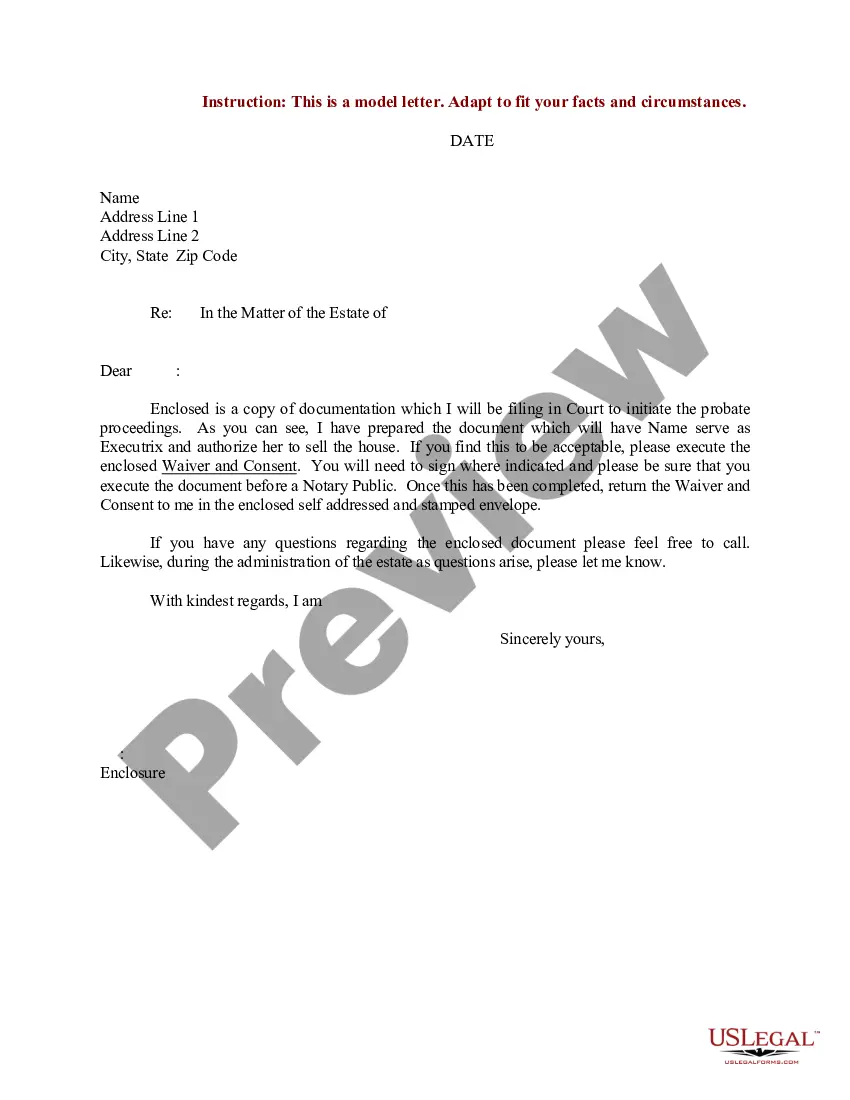
The Sample Letter for Initiate Probate Proceedings for Estate - Request to Execute Waiver and Consent is a formal letter template designed to help administrators of an estate communicate with heirs about the probate process. This form provides a clear structure for notifying family members about the necessary steps for commencing probate, particularly regarding the waiving of formal notice and consent to the executorâs appointment. Unlike standard letters, it addresses specific legal requirements essential for initiating probate proceedings effectively.
Key parts of this document
- Date of the letter.
- Your name and contact information.
- Recipient's name and address.
- Reference to the decedent's estate and the executor's appointment.
- Details about the attached complaint filed in court.
- Instructions for signing the Waiver and Consent.
When to use this document
This form is useful when an executor has been selected to manage the estate of a deceased individual, and formal probate proceedings need to be initiated. You would use this letter to inform heirs about the progress of estate administration and request their consent to proceed without formal notice, streamlining the probate process.
Who needs this form
- Executors or personal representatives of an estate.
- Heirs or beneficiaries involved in the probate process.
- Legal professionals assisting with estate administration.
How to prepare this document
- Enter the date at the top of the letter.
- Fill in your name and contact details.
- Add the recipient's name and address accurately.
- Specify the name of the decedent and your capacity as the executor.
- Include a statement about the filed complaint for probate.
- Attach the Waiver and Consent and provide instructions for notarization and return.
Does this form need to be notarized?
Yes, this form must be notarized to be legally valid. The attached Waiver and Consent requires notarization to ensure its authenticity and enforceability. US Legal Forms provides integrated online notarization services, making it convenient to complete this requirement with secure video calls, available 24/7. This eliminates the need for travel and ensures compliance with legal standards.
Get your form ready online
Our built-in tools help you complete, sign, share, and store your documents in one place.
Make edits, fill in missing information, and update formatting in US Legal Forms—just like you would in MS Word.
Download a copy, print it, send it by email, or mail it via USPS—whatever works best for your next step.
Sign and collect signatures with our SignNow integration. Send to multiple recipients, set reminders, and more. Go Premium to unlock E-Sign.
If this form requires notarization, complete it online through a secure video call—no need to meet a notary in person or wait for an appointment.
We protect your documents and personal data by following strict security and privacy standards.

Make edits, fill in missing information, and update formatting in US Legal Forms—just like you would in MS Word.

Download a copy, print it, send it by email, or mail it via USPS—whatever works best for your next step.

Sign and collect signatures with our SignNow integration. Send to multiple recipients, set reminders, and more. Go Premium to unlock E-Sign.

If this form requires notarization, complete it online through a secure video call—no need to meet a notary in person or wait for an appointment.

We protect your documents and personal data by following strict security and privacy standards.
Common mistakes
- Forgetting to include the date of the letter.
- Not providing complete contact information.
- Failing to notify all necessary heirs.
- Neglecting to attach the Waiver and Consent form.
- Omitting instructions for notarization of the consent.
Benefits of completing this form online
- Convenience of accessing and downloading the form instantly.
- Editability allows for customization to fit specific situations.
- Reliability of attorney-drafted content ensures legal soundness.
Quick recap
- This sample letter streamlines the probate process by obtaining necessary waivers from heirs.
- Clear instructions and legal requirements must be followed for effective completion.
- Employing this form online offers convenience and access to legally vetted templates.
Looking for another form?

Form popularity
FAQ
A waiver of informed consent completely waives the requirement to obtain informed consent. The IRB may approve a consent procedure which does not include some or all of the required elements of informed consent provided all of the following are true: The research involves no more than minimal risk.
If you're settling an estate by yourself for the first time, and there is no will, it can take as few as 12 but likely as many 36 months to settle the estate, depending on the size and complexity of the estate, its assets, creditors, etc. Smaller estates may be settled faster.
Determine Your Priority for Appointment. Receive Written Waivers From Other Candidates. Contact Court in the County Where Deceased Resided. File the Petition for Administration. Attend the Probate Hearing. Secure a Probate Bond.
Before distributing assets to beneficiaries, the executor must pay valid debts and expenses, subject to any exclusions provided under state probate laws.The executor must maintain receipts and related documents and provide a detailed accounting to estate beneficiaries.
Bottom Line. You can administer an estate even if the deceased died without a will or failed to specify an executor. If your relationship to the deceased doesn't make you the probate court's default choice for administrator, you'll need to get permission from the relatives ahead of you in the priority order.
A waiver of informed consent completely waives the requirement to obtain informed consent.It is not practicable to conduct the research without the waiver or alteration. Whenever appropriate, participants will be provided with additional pertinent information after their participation.
You can present this letter to the court, banks and other organizations as proof of your role. Only an executor can obtain the letter of testamentary. You need to take the deceased's Last Will and Testament as well as his or her death certificate to your local probate officer or court in order to obtain the document.
To apply for probate or letters of administration by post, you'll need to fill in a number of forms. You'll need PA1P if the person left a will and PA1A if they didn't. These forms ask for details about the person who died, their surviving relatives and, the personal representative.