Sample Letter to Seller regarding Sale of Business Assets - Outline Purchase Transaction
What this document covers
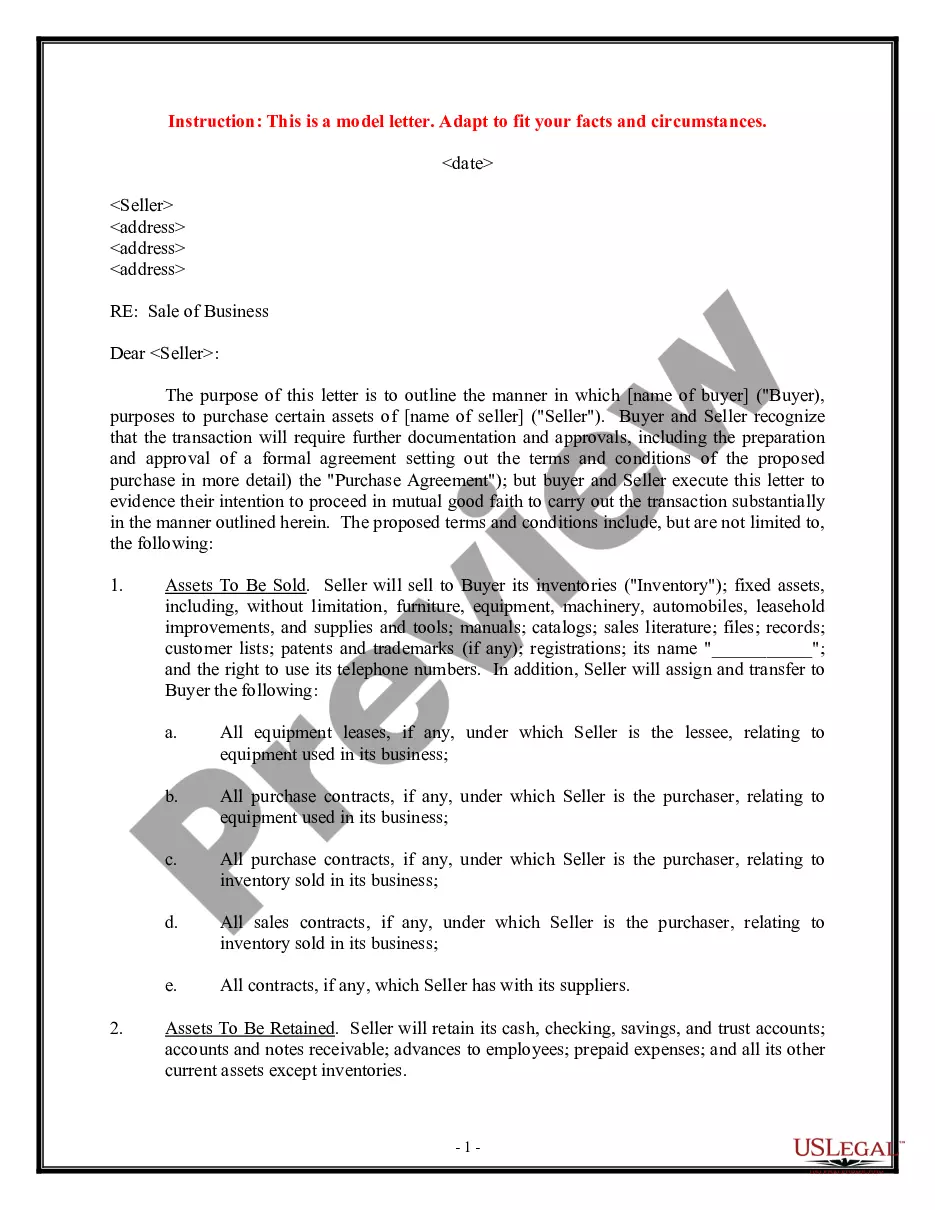
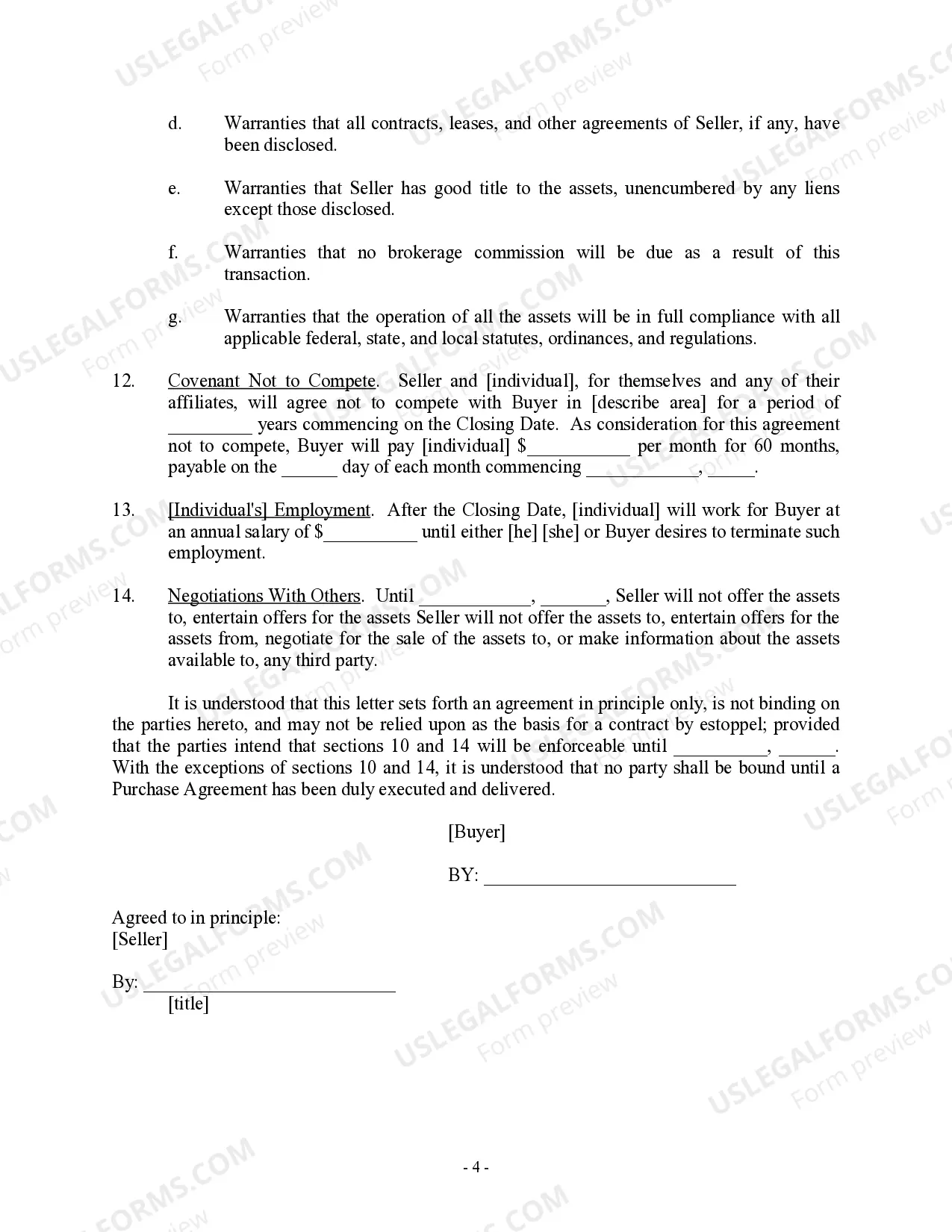
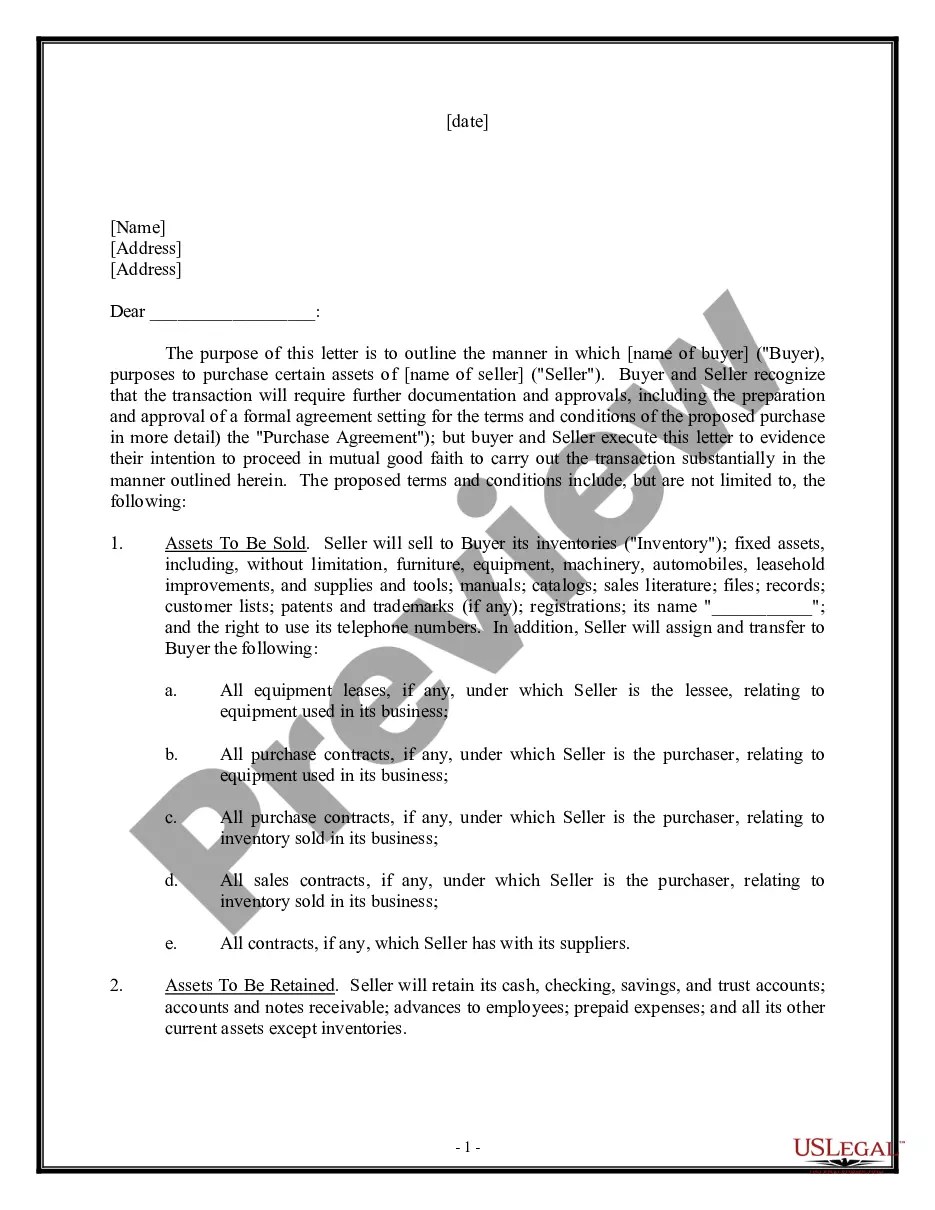
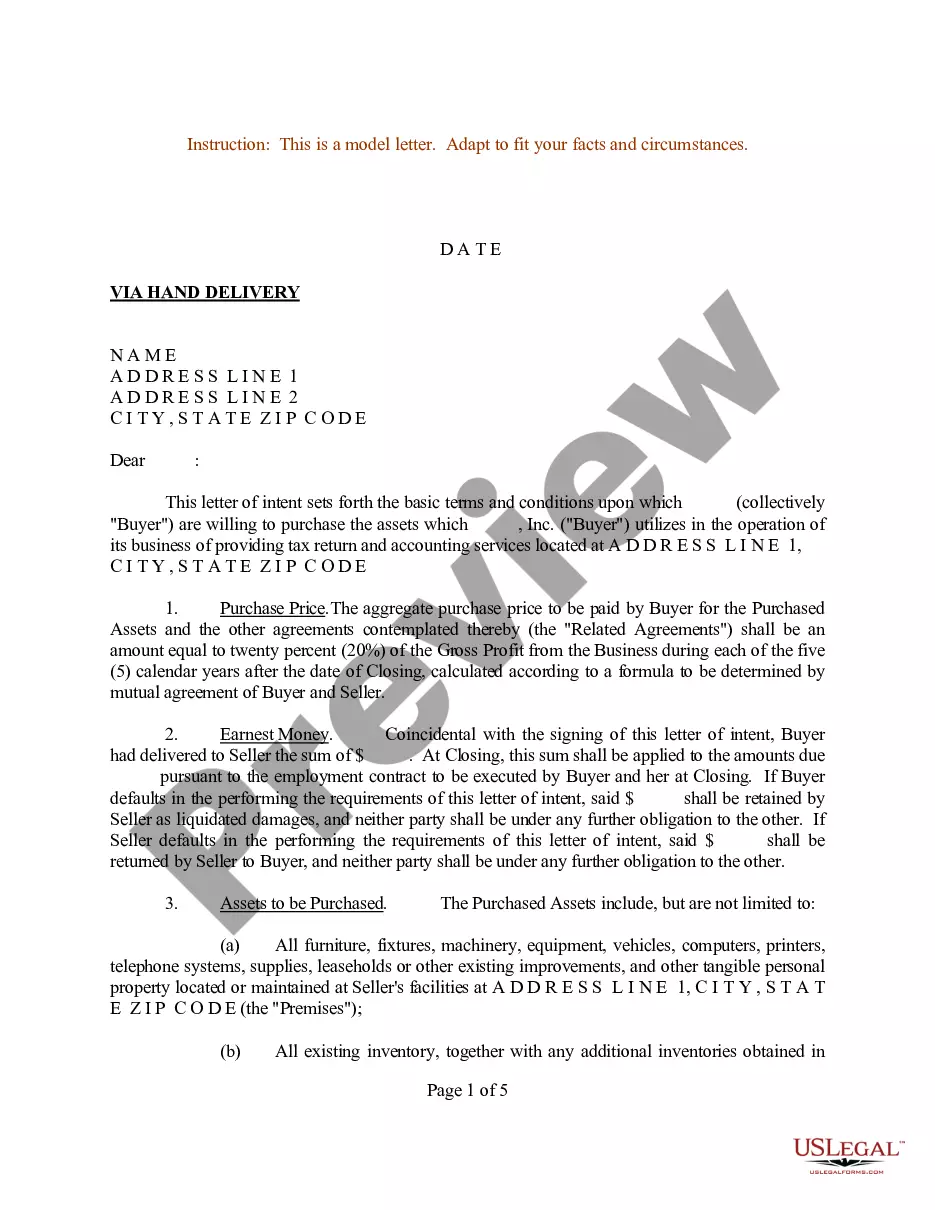
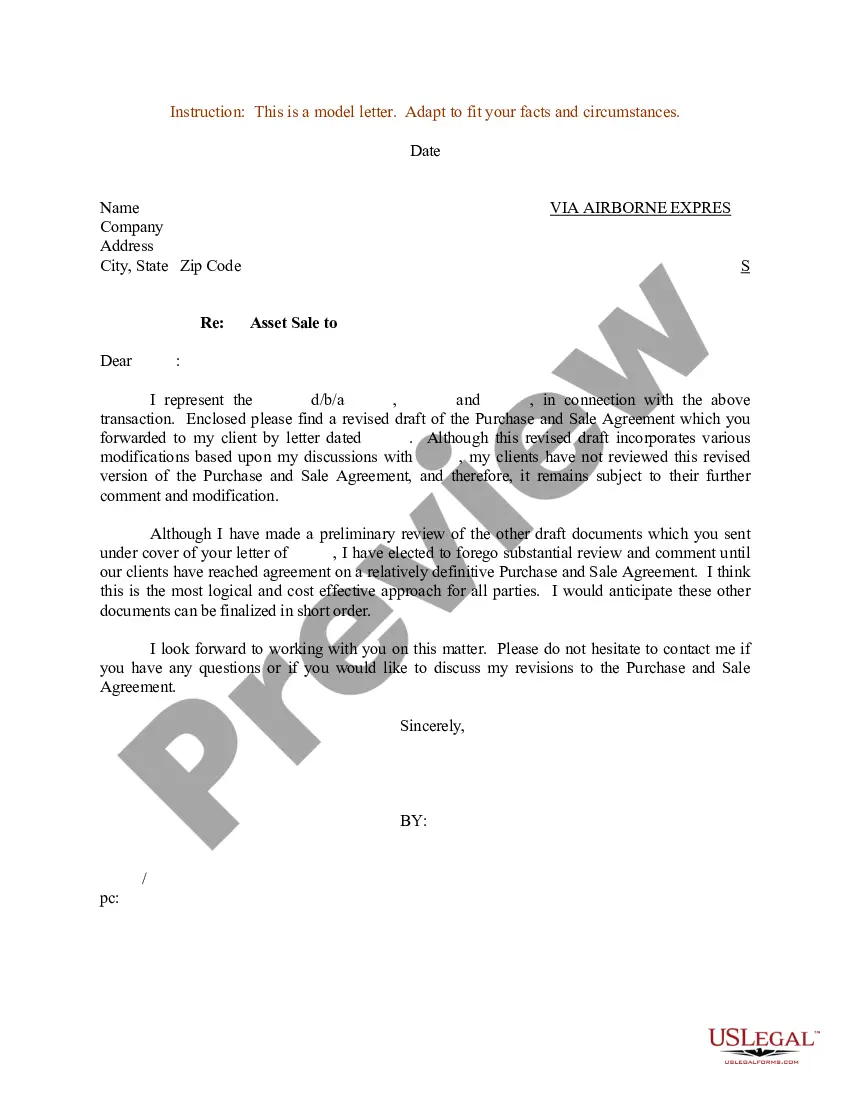
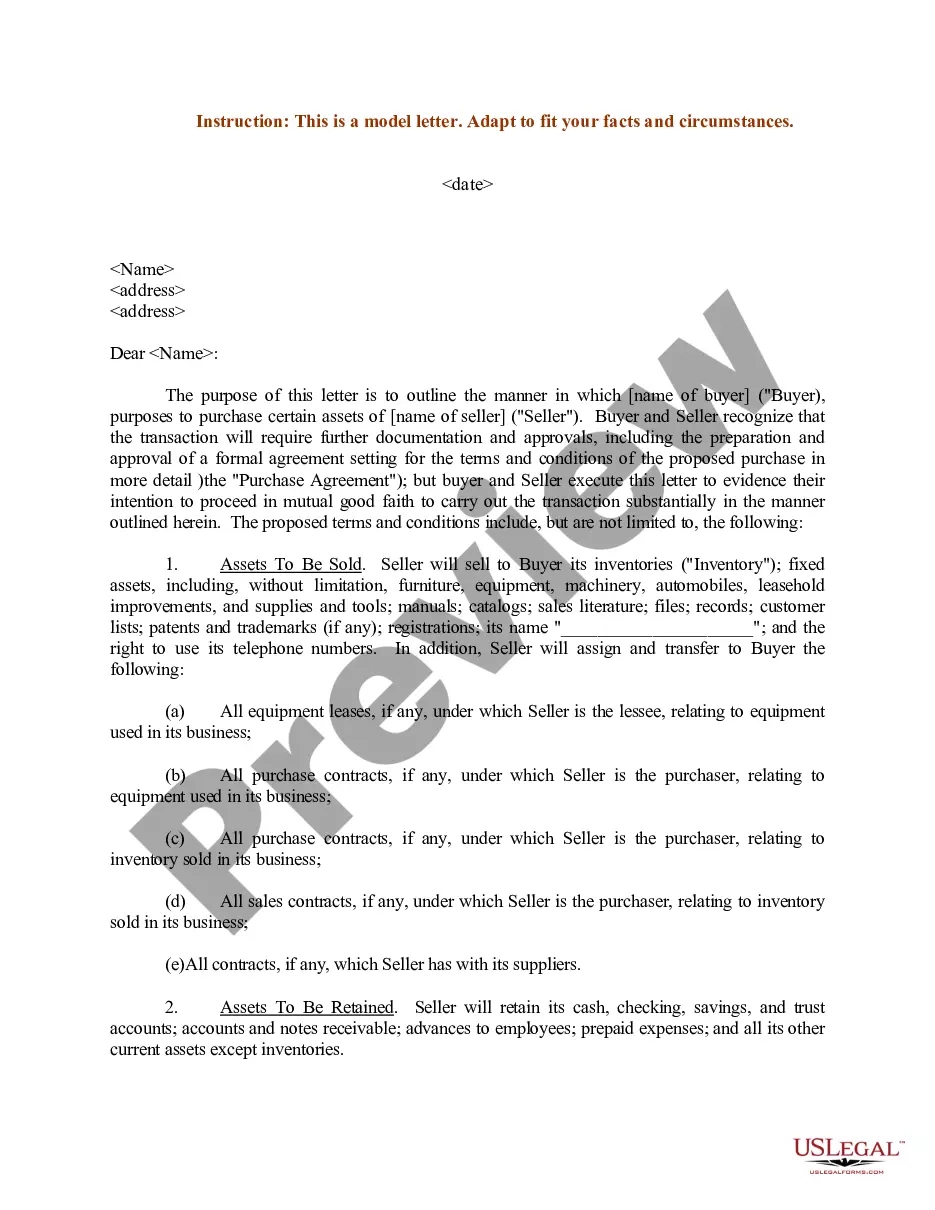
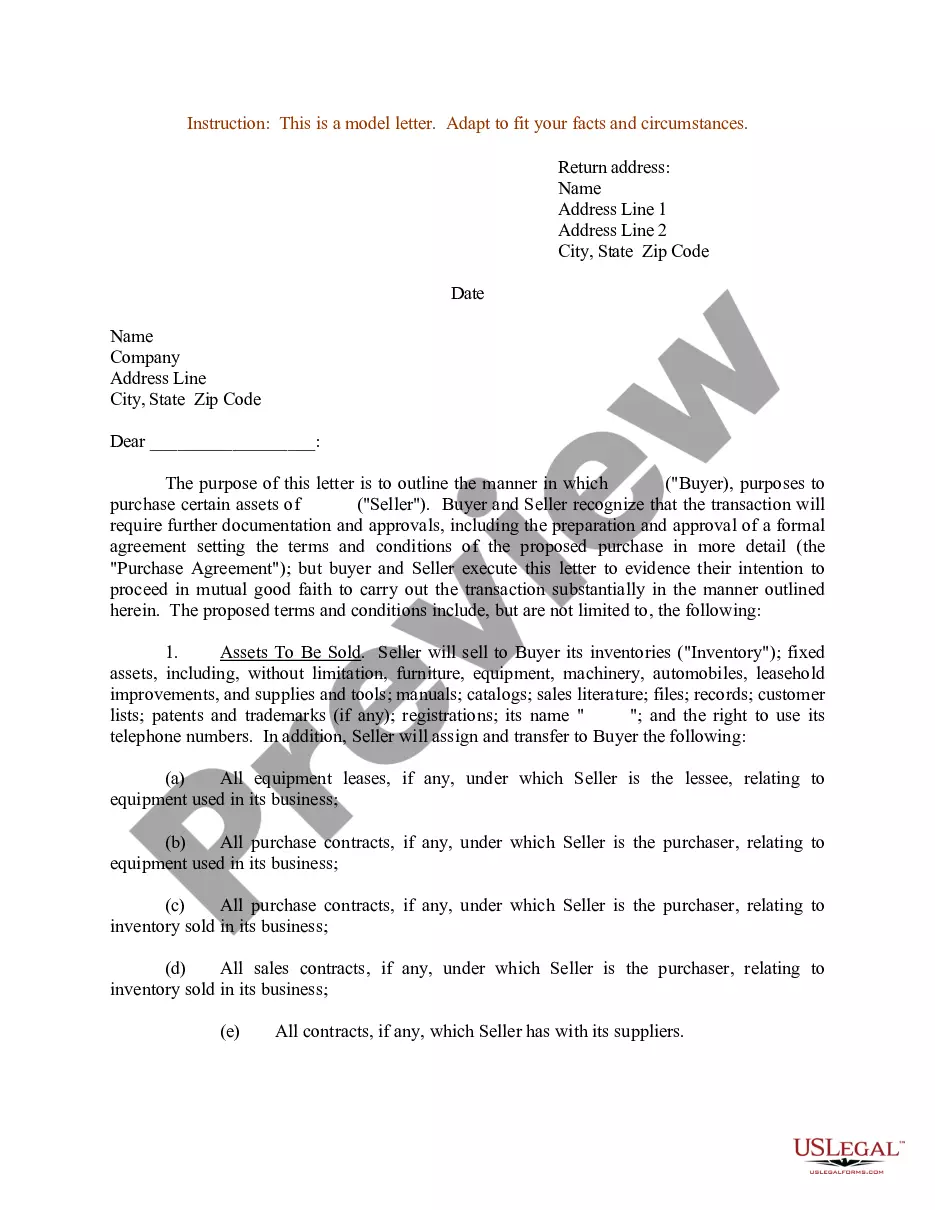
This form is a Sample Letter to Seller regarding the Sale of Business Assets, specifically outlining the terms of a purchase transaction. It serves the purpose of establishing a mutual understanding between the buyer and seller before the formal agreement. This letter distinguishes itself from other sales documents by providing a framework for negotiations and intentions to proceed with the transaction, rather than detailing the final agreement itself.
What’s included in this form
- Identification of the parties involved: Buyer and Seller details.
- Specification of assets to be sold and retained.
- Detailing the liabilities to be assumed by the Buyer.
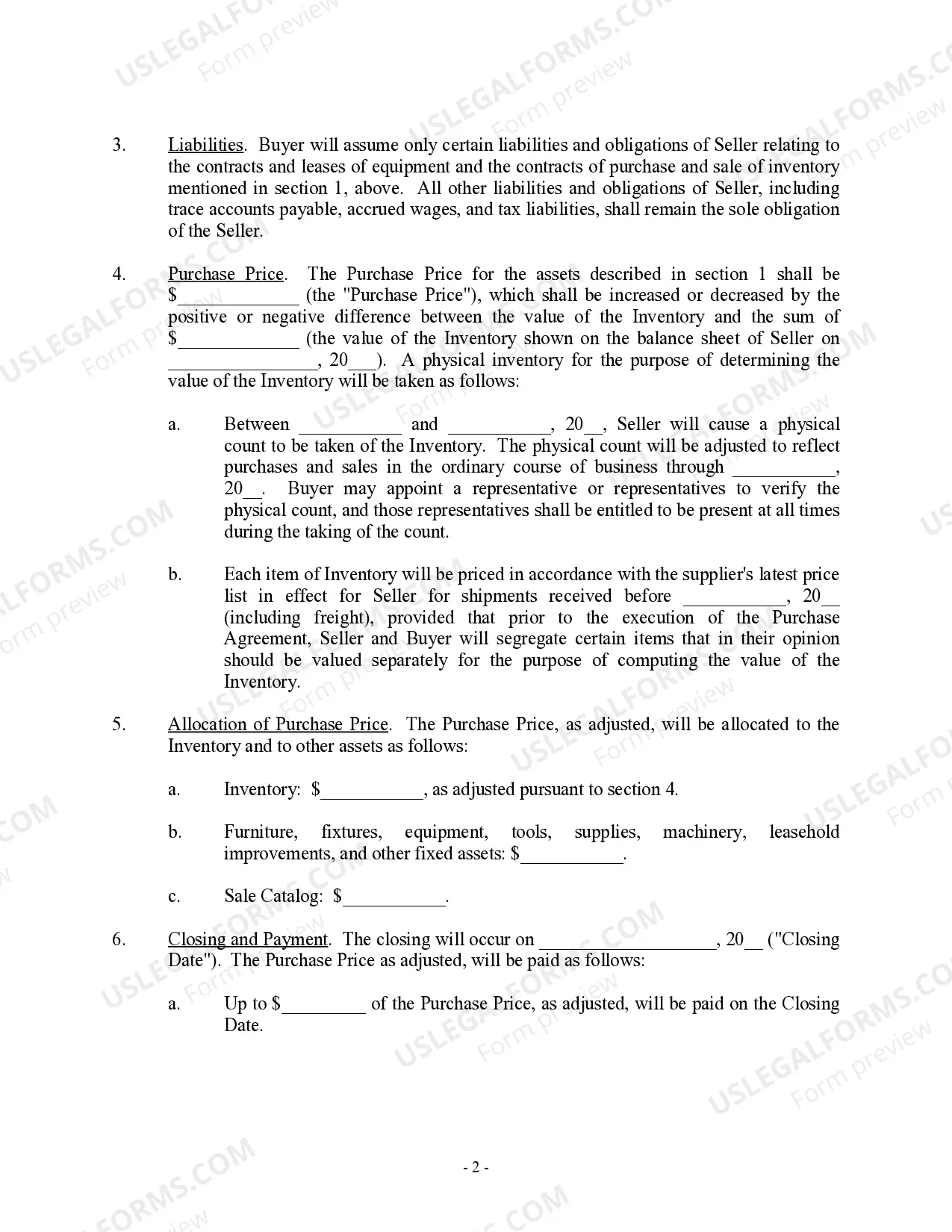
- Purchase price and its adjustments based on inventory valuation.
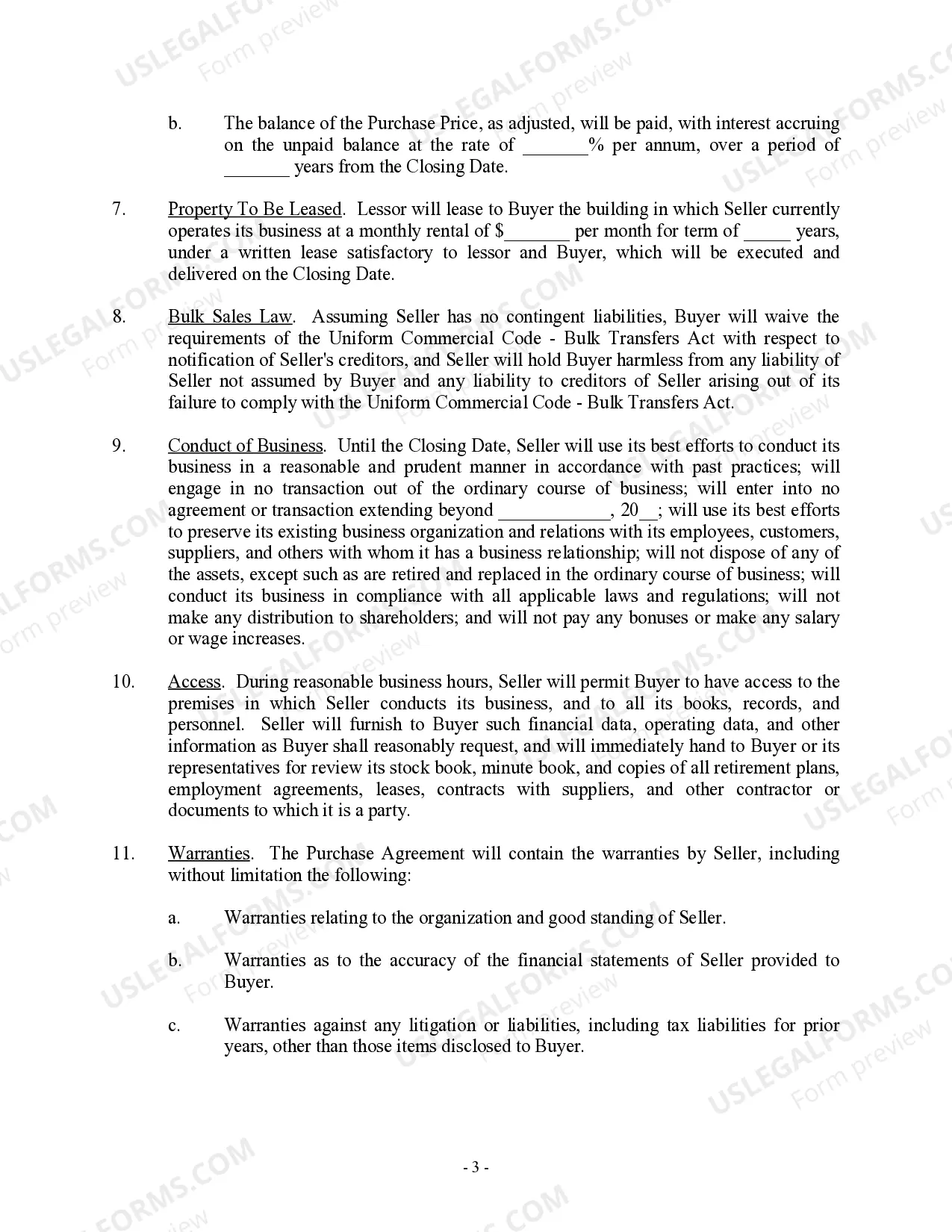
- Closing date and payment structure, including rental terms for property leasing.
- Warranties and covenants, including non-compete agreements.
When to use this form
Who this form is for
- Business owners looking to sell their business assets.
- Potential buyers interested in acquiring business assets.
- Attorneys assisting clients in business transactions.
- Accountants or financial advisors guiding their clients through asset sales.
Instructions for completing this form
- Identify the parties by entering the names and addresses of the Buyer and Seller at the top of the letter.
- Clearly outline the specific assets to be sold, including inventories and fixed assets.
- Detail the purchase price and the method for determining inventory valuation.
- Specify the liabilities that the Buyer will assume and those that will remain with the Seller.
- Enter the closing date and the payment structure for the purchase price.
- Include any additional terms, such as non-compete agreements or warranties, as needed.
Notarization requirements for this form
This form does not typically require notarization unless specified by local law. Always check with a legal professional to ensure compliance with jurisdiction-specific requirements.
Get your form ready online
Our built-in tools help you complete, sign, share, and store your documents in one place.
Make edits, fill in missing information, and update formatting in US Legal Forms—just like you would in MS Word.
Download a copy, print it, send it by email, or mail it via USPS—whatever works best for your next step.
Sign and collect signatures with our SignNow integration. Send to multiple recipients, set reminders, and more. Go Premium to unlock E-Sign.
If this form requires notarization, complete it online through a secure video call—no need to meet a notary in person or wait for an appointment.
We protect your documents and personal data by following strict security and privacy standards.

Make edits, fill in missing information, and update formatting in US Legal Forms—just like you would in MS Word.

Download a copy, print it, send it by email, or mail it via USPS—whatever works best for your next step.

Sign and collect signatures with our SignNow integration. Send to multiple recipients, set reminders, and more. Go Premium to unlock E-Sign.

If this form requires notarization, complete it online through a secure video call—no need to meet a notary in person or wait for an appointment.

We protect your documents and personal data by following strict security and privacy standards.
Common mistakes to avoid
- Failing to clearly specify the assets being sold or retained.
- Not including critical terms of sale such as purchase price adjustments or closing dates.
- Neglecting to detail liabilities leading to confusion about responsibilities post-sale.
- Overlooking the need for a formal Purchase Agreement after executing this letter.
Advantages of online completion
- Convenience of downloading and completing the form at your own pace.
- Standardized structure that simplifies the asset sale process.
- Reliability of being drafted with input from licensed attorneys.
- Easily editable to suit specific terms or conditions for the transaction.
- Understanding and adhering to local laws regarding asset transfers can impact enforceability.
- The document serves as an outline of intentions but may not be legally binding until a purchase agreement is executed.
- Ensuring clarity in the terms helps prevent disputes and misunderstandings later in the transaction process.
What to keep in mind
- The Sample Letter outlines purchase intentions without being a binding contract.
- Key components include asset descriptions, purchase price, and conditions of sale.
- It is essential for both buyers and sellers to establish clear expectations before formalizing the sale.
Looking for another form?


Form popularity
FAQ
The more common form of structuring payments in a business purchase is for you to make a down payment of perhaps 20% or 25% and then sign a promissory note agreeing to pay the balance to the seller over a number of years, in regular installments.
A Purchase Sale Agreement is the legal document that specifies all of the terms and conditions associated with the purchase and sale of a company or the assets. The document outlines the price, the payment method (For example, cash or debt), the representations and warranties, and any conditions.
A Letter of Intent is a legal document that is proposed by the business buyer and ultimately signed by the seller. The LOI is drafted in the form of a business letter which includes a space on the last page of the document where the business seller would acknowledge their acceptance.
A Business Purchase Agreement is a contract used to transfer the ownership of a business from a seller to a buyer. It includes the terms of the sale, what is or is not included in the sale price, and optional clauses and warranties to protect both the seller and the purchaser after the transaction has been completed.
Identity of the Parties/Date of Agreement. The first topic a sales contract should address is the identity of the parties. Description of Goods and/or Services. A sales contract should also address what is being bought or sold. Payment. Delivery. Miscellaneous Provisions. Samples.
List of all assets included in the sale including fixtures, furnishings, equipment, machinery, inventories, accounts receivable, business name, customer lists, goodwill, and other items; also includes assets to be excluded from the sale, such as cash and cash accounts, real estate, automobiles, etc.
The seller's agent is typically the person who draws up a real estate purchase agreement.
Write the introduction. Describe the transaction and timeframes. List contingencies. Go through due diligence. Include covenants and other binding agreements. State that the agreement is nonbinding. Include a closing date.
Buyer and seller information. Property details. Pricing and financing. Fixtures and appliances included/excluded in the sale. Closing and possession dates. Earnest money deposit amount. Closing costs and who is responsible for paying.