Discovery - Sample Letter to Attorney Opposite regarding His Client's overdue Interrogatories
Understanding this form
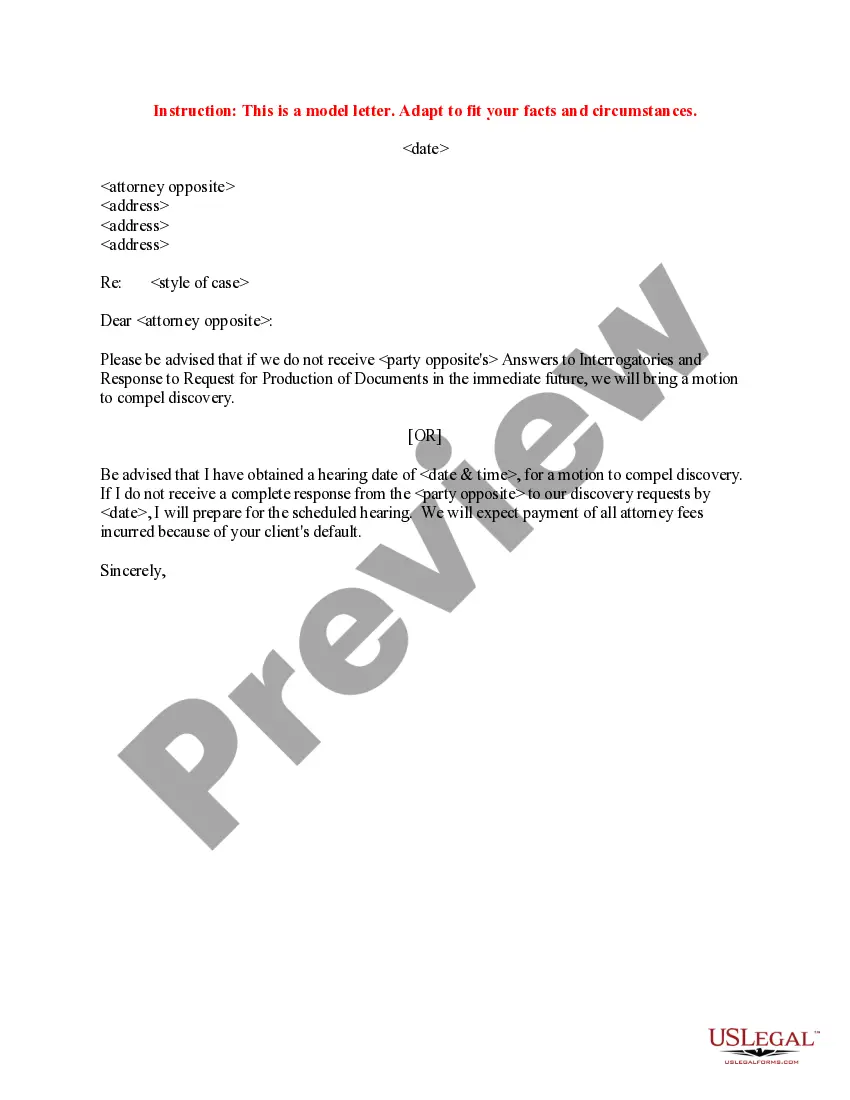
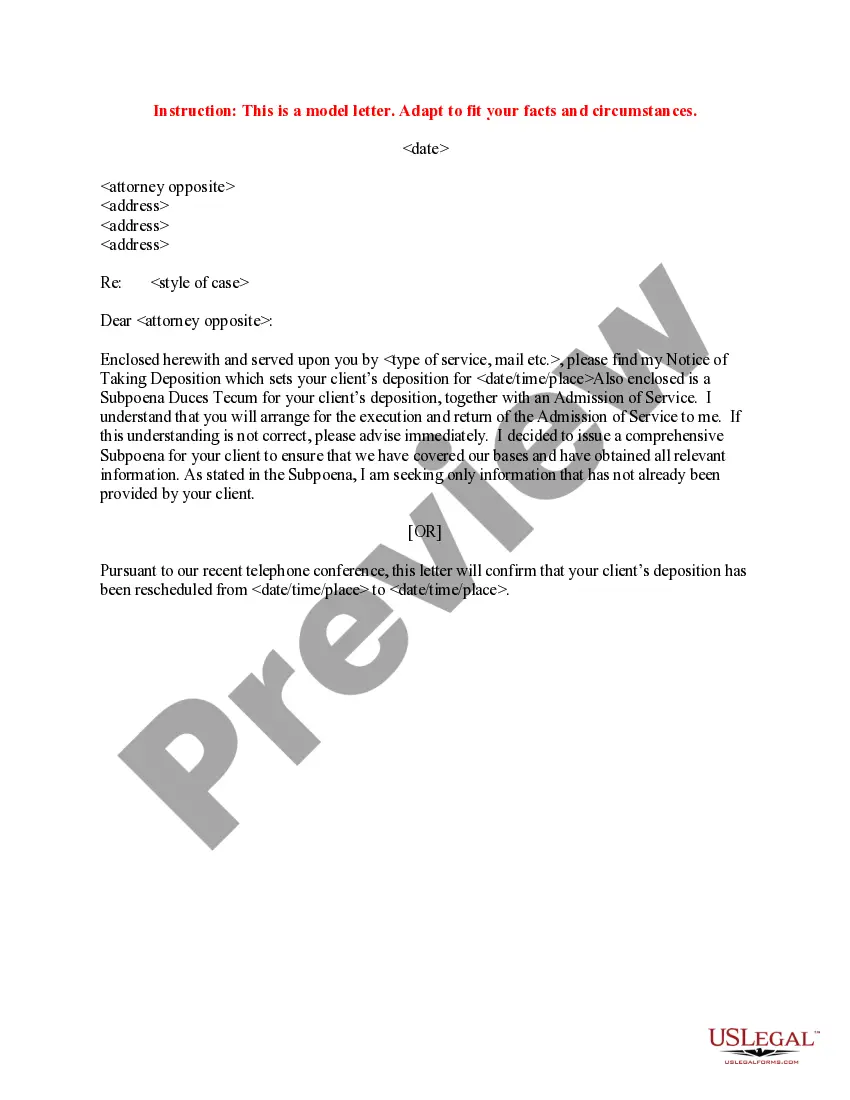
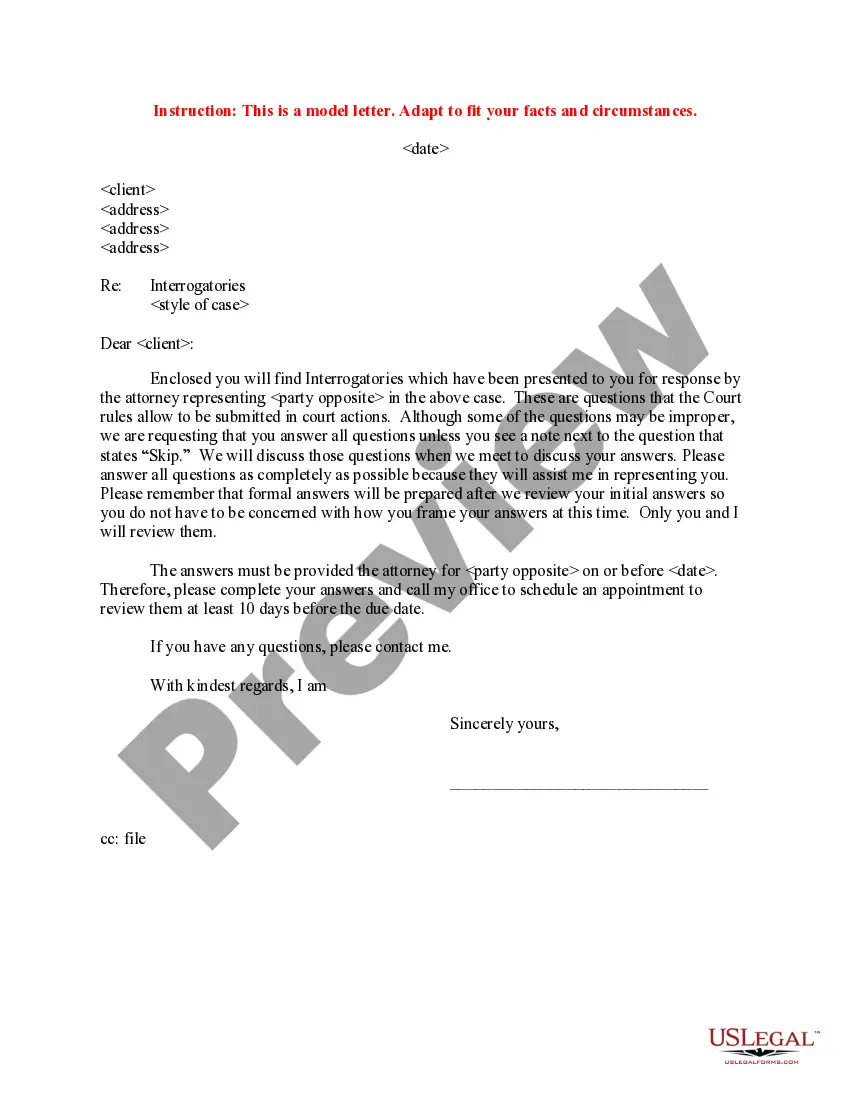
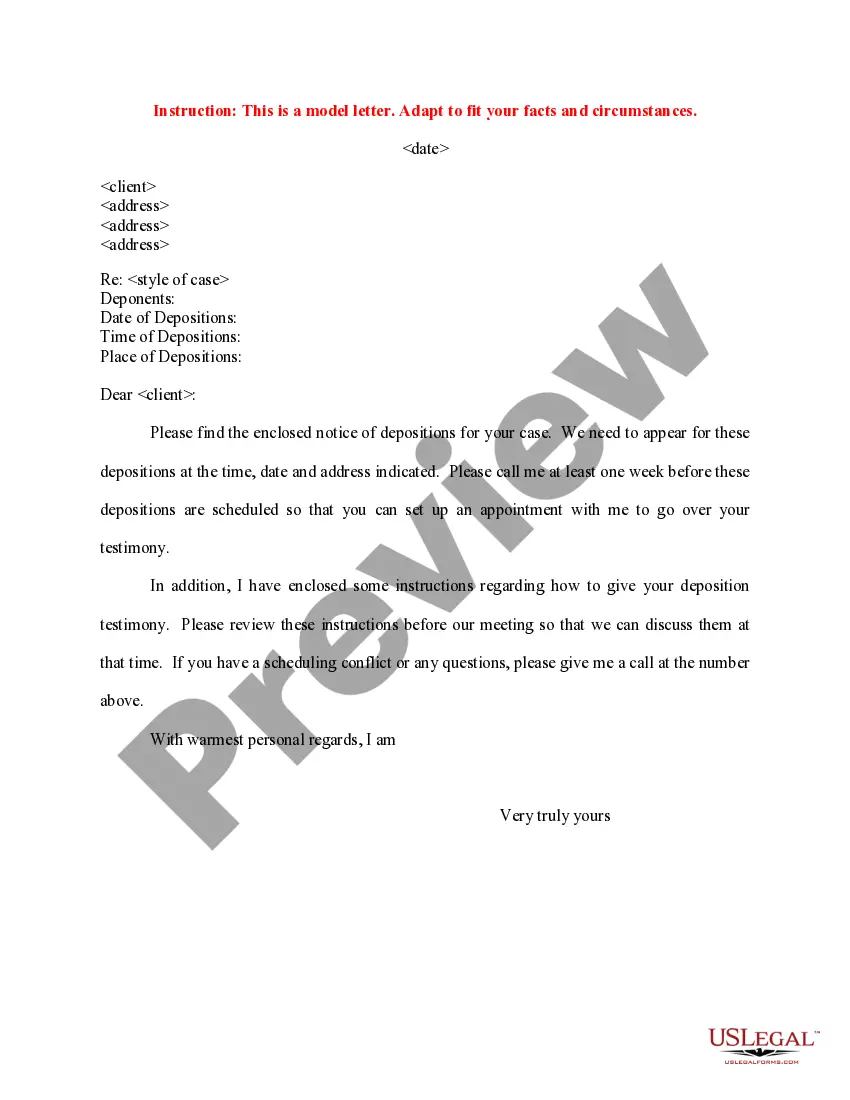
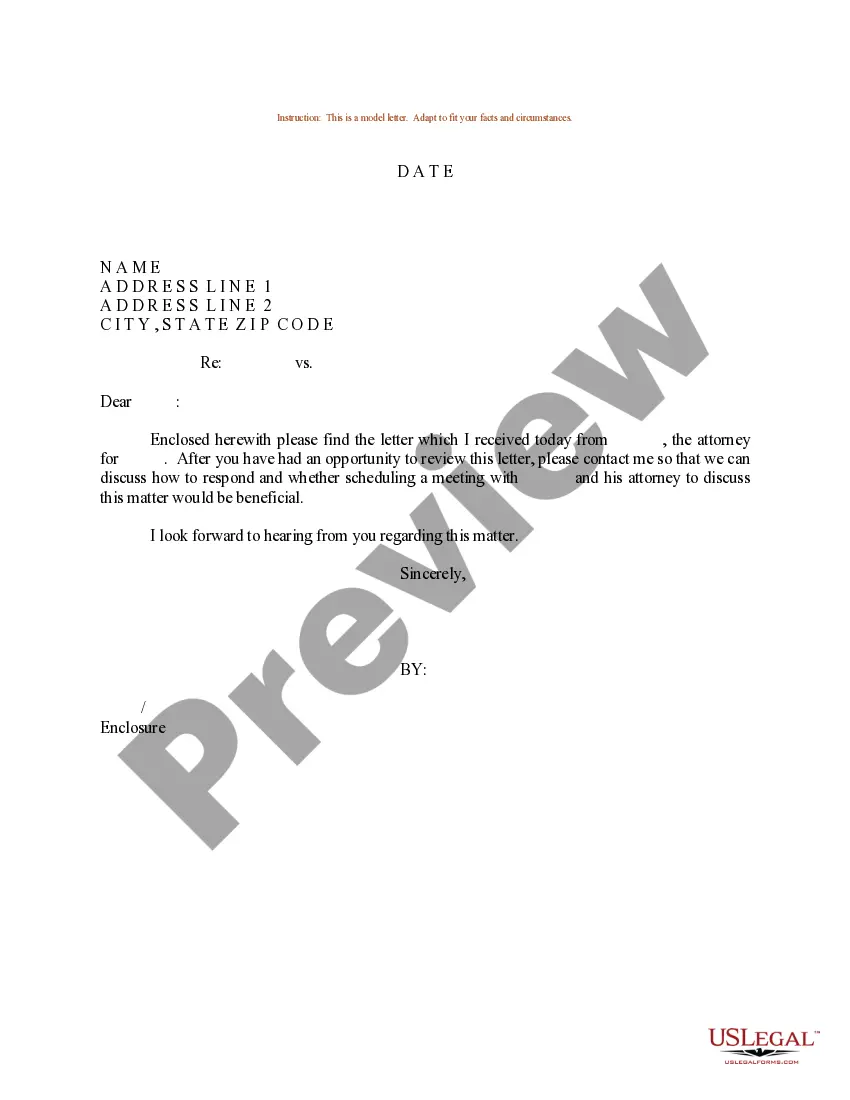
This form is a sample letter intended for use by attorneys to communicate with the opposing counsel regarding overdue interrogatories and requests for production of documents. It serves as a formal notice and a possible precursor to filing a motion to compel discovery if the requested responses are not provided in a timely manner. This letter is essential in urging compliance with discovery obligations in legal proceedings.
Key parts of this document
- Date of the letter
- Recipient's name and address
- Style of the case being referenced
- Body of the letter detailing overdue responses
- Provision for impending motion to compel, if necessary
- Signature line for the sender
Situations where this form applies
This form should be used when a party has not received timely responses to their requests for interrogatories and production of documents from an opposing party in a legal matter. It is appropriate after initial requests have been made without satisfactory response, signaling the intent to escalate the situation if necessary.
Intended users of this form
- Attorneys representing clients in litigation
- Legal professionals handling discovery disputes
- Individuals acting in a pro se capacity (without attorney representation) in certain legal matters
Steps to complete this form
- Enter the date at the top of the letter.
- Fill in the name and address of the opposing attorney.
- Specify the style of the case related to the discovery request.
- State the overdue requests clearly in the letter's body.
- Indicate a deadline for responses or advise of a scheduled hearing date if necessary.
- Sign the letter and provide your contact information as needed.
Notarization guidance
This form does not typically require notarization to be legally valid. However, some jurisdictions or document types may still require it. US Legal Forms provides secure online notarization powered by Notarize, available 24/7 for added convenience.
Get your form ready online
Our built-in tools help you complete, sign, share, and store your documents in one place.
Make edits, fill in missing information, and update formatting in US Legal Forms—just like you would in MS Word.
Download a copy, print it, send it by email, or mail it via USPS—whatever works best for your next step.
Sign and collect signatures with our SignNow integration. Send to multiple recipients, set reminders, and more. Go Premium to unlock E-Sign.
If this form requires notarization, complete it online through a secure video call—no need to meet a notary in person or wait for an appointment.
We protect your documents and personal data by following strict security and privacy standards.

Make edits, fill in missing information, and update formatting in US Legal Forms—just like you would in MS Word.

Download a copy, print it, send it by email, or mail it via USPS—whatever works best for your next step.

Sign and collect signatures with our SignNow integration. Send to multiple recipients, set reminders, and more. Go Premium to unlock E-Sign.

If this form requires notarization, complete it online through a secure video call—no need to meet a notary in person or wait for an appointment.

We protect your documents and personal data by following strict security and privacy standards.
Avoid these common issues
- Failing to specify the exact documents or interrogatories requested.
- Neglecting to set a clear deadline for responses.
- Omitting the case style, which can lead to confusion.
- Forgetting to proofread for clarity and professionalism before sending.
- Not including necessary contact information for follow-up.
Benefits of completing this form online
- Convenient access to a standardized letter format.
- Editable in Word format to suit specific cases.
- Quick and reliable download that can save time.
- No need for physical trips to obtain forms, allowing for immediate use.
- Confidence in using a professionally drafted template.
Legal use & context
- This form can be used to notify the opposing counsel of failure to comply with discovery requests, which is a legal requirement in litigation.
- By sending this letter, the party demonstrates good faith efforts to resolve the discovery dispute before resorting to court intervention.
Main things to remember
- The letter is crucial for legally managing overdue responses to interrogatories.
- Timely communication may prevent further legal actions.
- Customizable according to specific case requirements.
Looking for another form?
Form popularity
FAQ
A person served with interrogatories has thirty days after service to respond in writing. You must answer each interrogatory separately and fully in writing under oath, unless you object to it. You must explain why you object. You must sign your answers and objections.
You must answer each interrogatory separately and fully in writing under oath, unless you object to it. You must explain why you object. You must sign your answers and objections.
Obtain the answers. This should not be an excuse to not give thoughtful answers to interrogatory questions.It is very important that they are answered accurately because it can be used against you in a court of law if you are not truthful.
So, can you refuse to answer interrogatories? The answer is, no, you may not.That answer must either permit inspection of the requested information or object to the production of the information for a specific reason.
The most damaging thing that can happen if someone lies on interrogatories is that they can be punished by the judge at trial. When the truth is discovered, the judge may impose a fine, assign additional litigation costs, or dismiss the case entirely if it was brought by the party who provided false information.
The most damaging thing that can happen if someone lies on interrogatories is that they can be punished by the judge at trial. When the truth is discovered, the judge may impose a fine, assign additional litigation costs, or dismiss the case entirely if it was brought by the party who provided false information.
The plaintiff must respond by the deadline. There are different ways to make sure you get each kind of discovery if the plaintiff does not give it to you by the deadline. If the plaintiff does not respond to the court order, then you can file a Motion to Dismiss and you may win your case.
Motions to Compel If a party doesn't respond to interrogatories or requests for production, then the party seeking those answers must file a motion to compel with the court. If the court grants the motion to compel, then the party who objected or failed to answer must then do so.