Sample Letter for Collection Notice for Unpaid Bill
Understanding this form
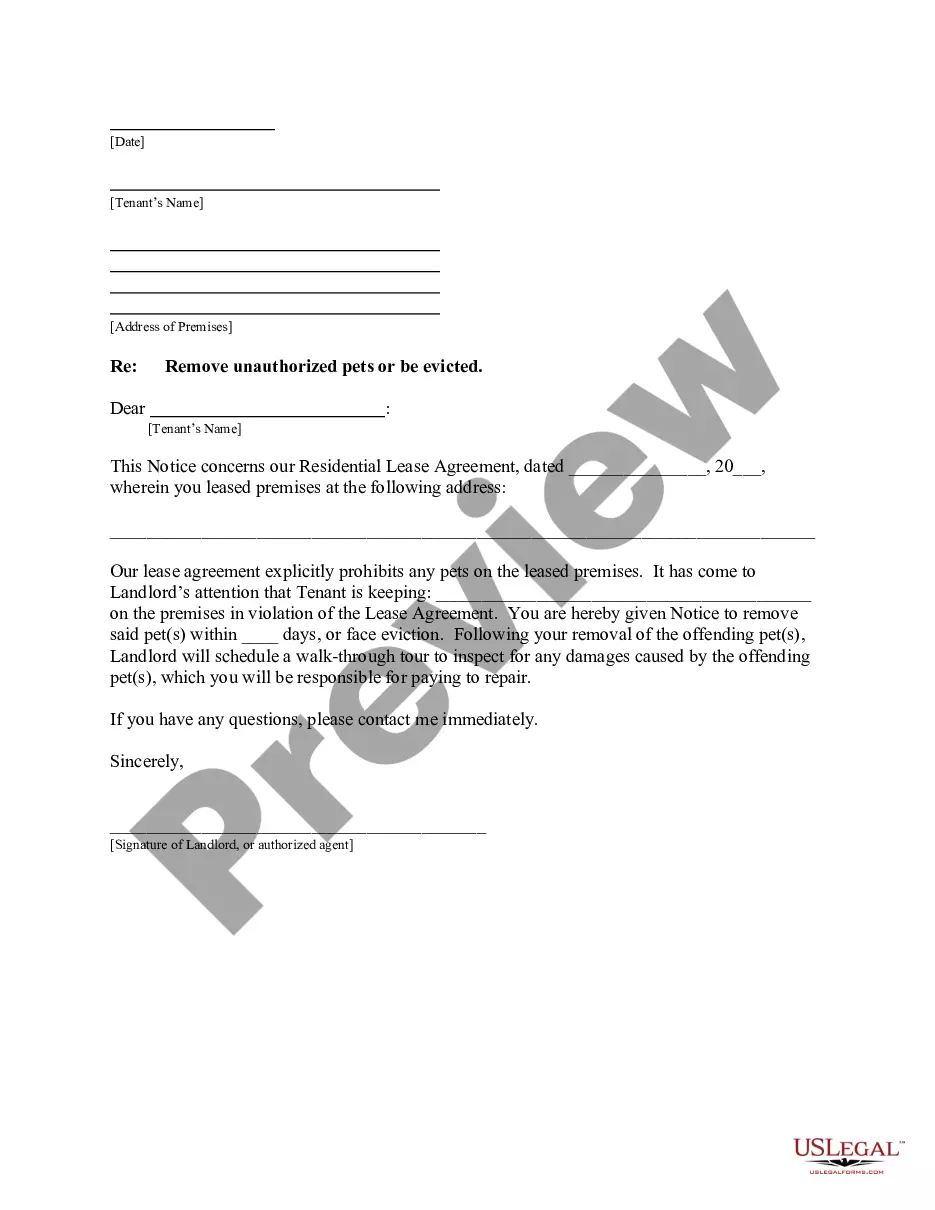
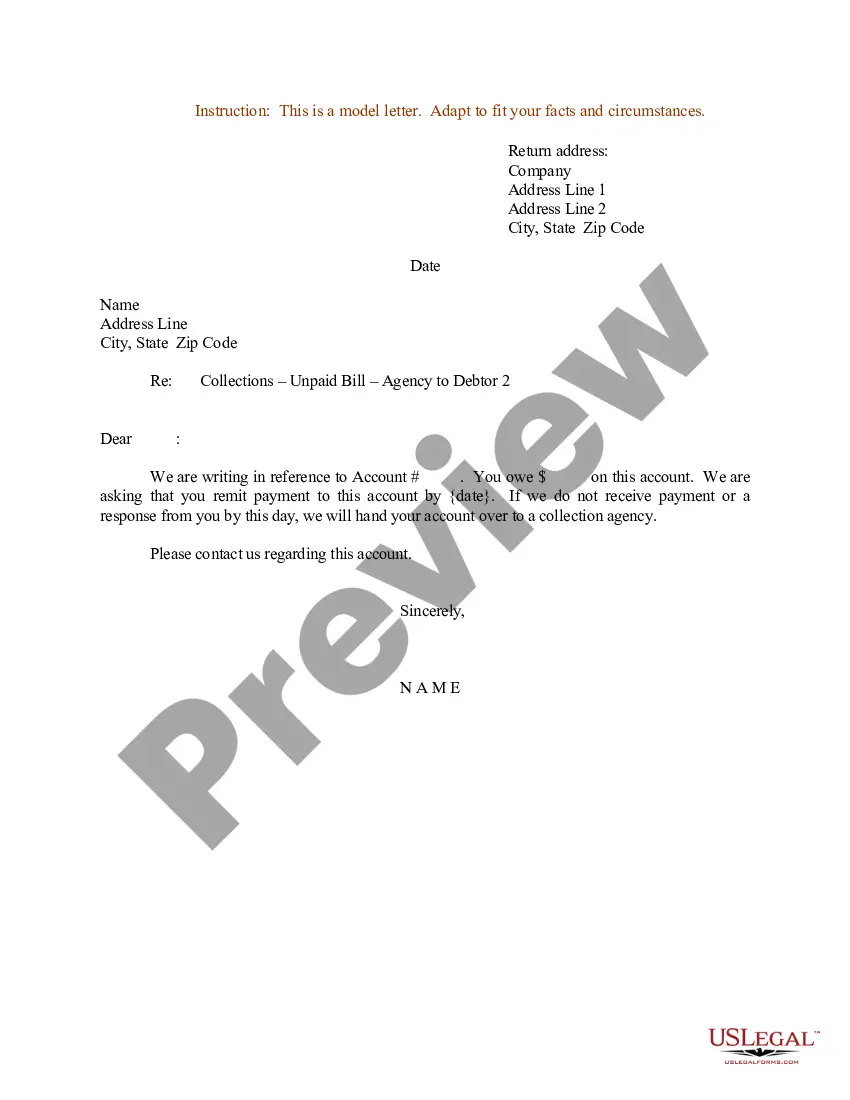
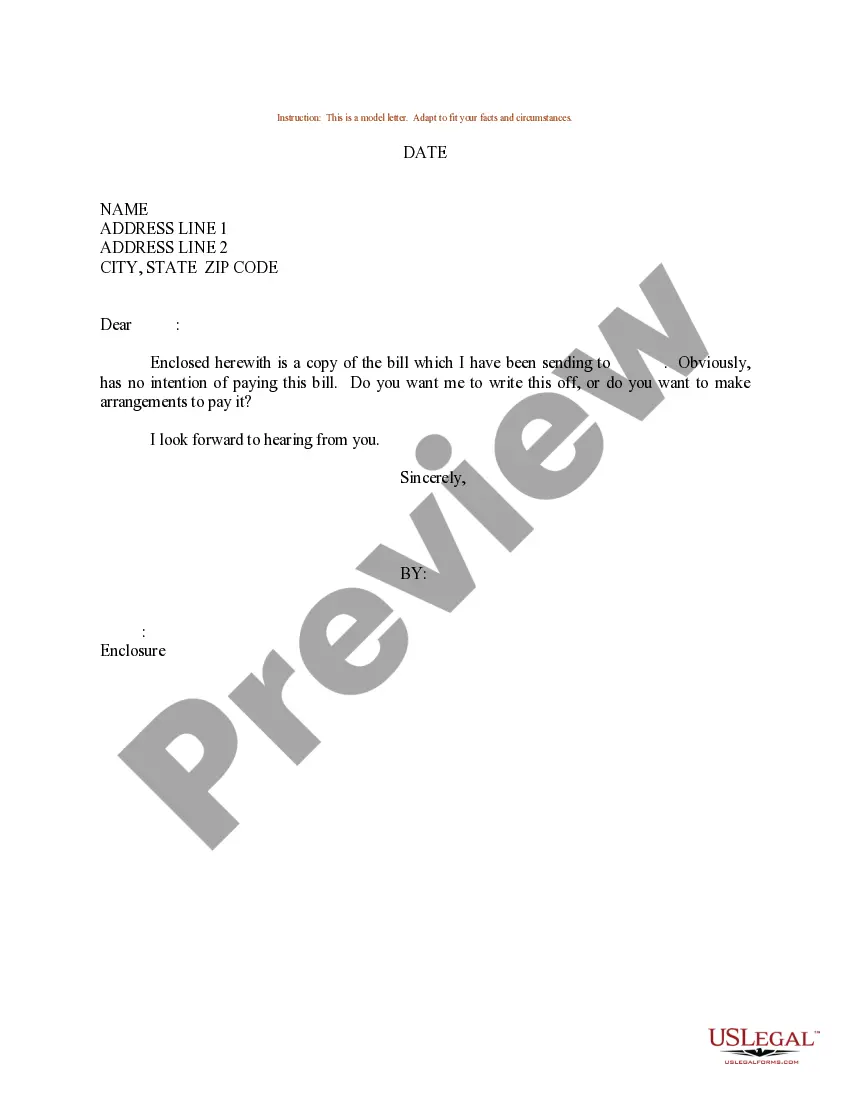
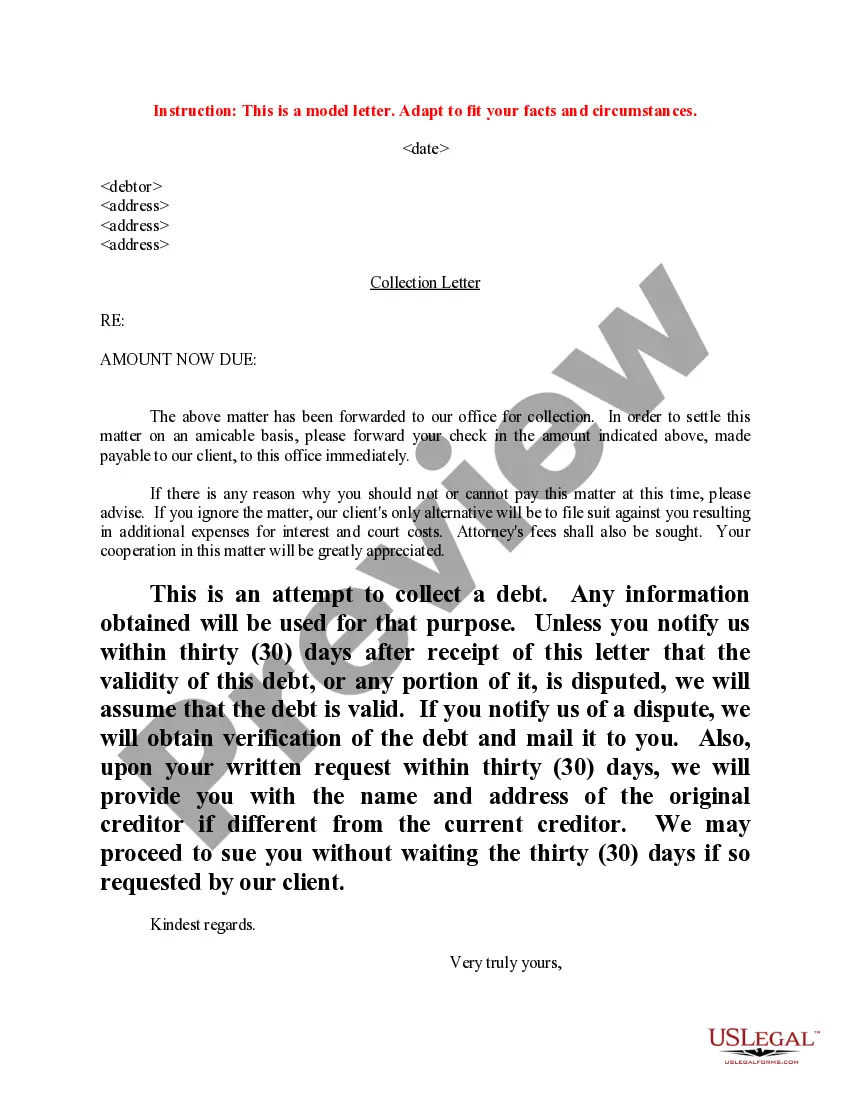
This Sample Letter for Collection Notice for Unpaid Bill is a legal document used to formally notify a debtor about an outstanding payment. It serves as a reminder and initiates the collection process. Unlike informal communication, this letter carries a formal tone and communicates the urgency of the situation, helping to set clear expectations for resolution.
Key parts of this document
- Return address: Includes the sender's company name and contact details.
- Date: The date on which the letter is issued.
- Recipient's information: Name and address of the debtor.
- Subject line: Clarifies the purpose of the letter, indicating it pertains to an unpaid bill.
- Body: Requests the debtor to contact the sender regarding the account.
- Signature: The name of the sender, representing the company.
Common use cases
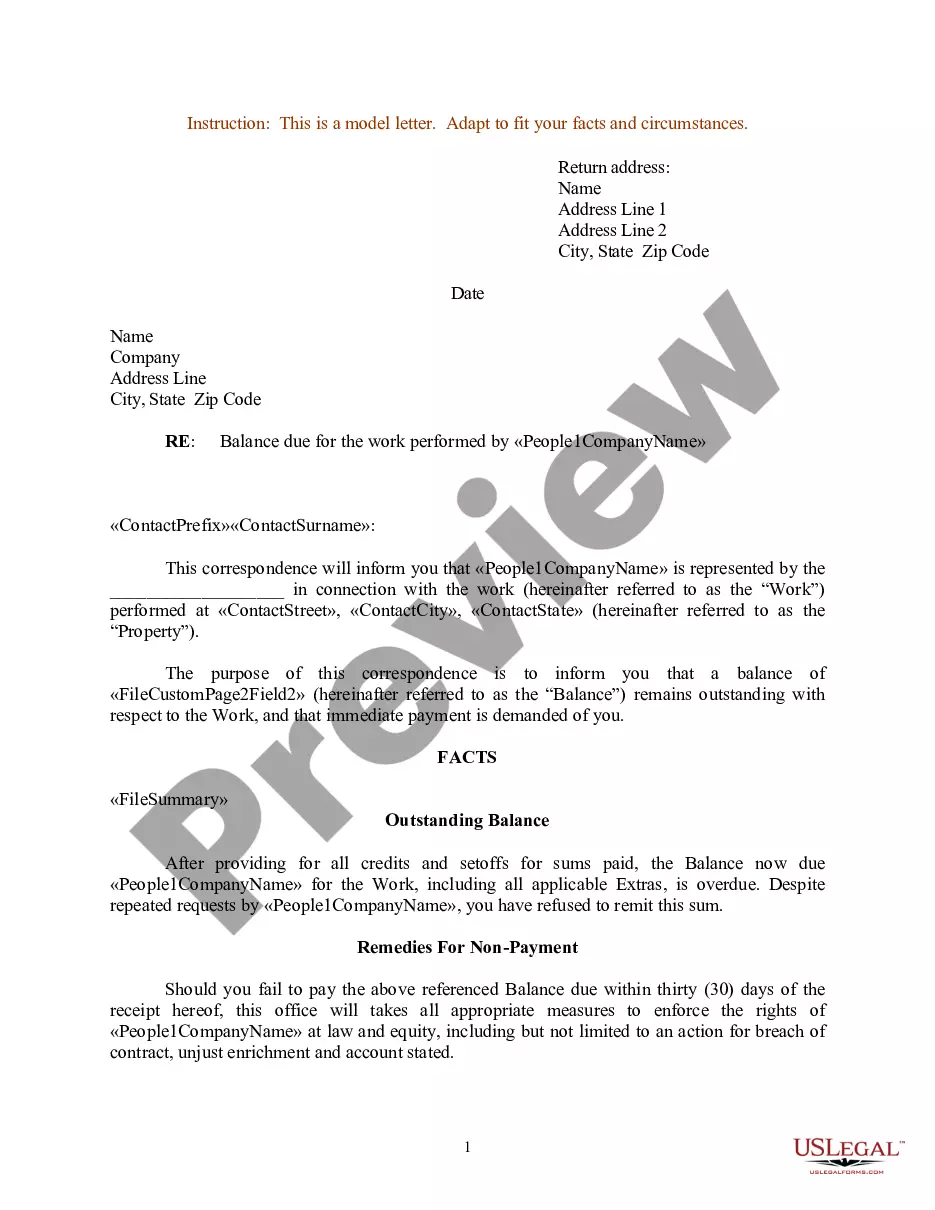
This form should be used when a business or individual has not received payment for goods or services rendered and needs to formally remind the debtor of their obligation. It can be utilized after initial reminders or communications have not resulted in payment, serving as a crucial step before escalating the situation.
Who this form is for
This form is suitable for:
- Businesses seeking to collect unpaid invoices from clients.
- Individuals who have provided services or goods and are yet to be compensated.
- Collections agencies acting on behalf of creditors.
How to prepare this document
- Identify the parties: Fill in your company or personal name and address in the return address section.
- Enter the date: Write the date on which you are sending the collection notice.
- Specify the debtor's information: Include the recipient's name and address clearly.
- State the subject: Mention that it is regarding an unpaid bill in the subject line.
- Compose the message: Clearly request the debtor to contact you about the outstanding account.
- Sign the letter: Include your name or that of the authorized representative.
Notarization requirements for this form
This form does not typically require notarization unless specified by local law. It is important to check your stateâs regulations to ensure compliance.
Get your form ready online
Our built-in tools help you complete, sign, share, and store your documents in one place.
Make edits, fill in missing information, and update formatting in US Legal Forms—just like you would in MS Word.
Download a copy, print it, send it by email, or mail it via USPS—whatever works best for your next step.
Sign and collect signatures with our SignNow integration. Send to multiple recipients, set reminders, and more. Go Premium to unlock E-Sign.
If this form requires notarization, complete it online through a secure video call—no need to meet a notary in person or wait for an appointment.
We protect your documents and personal data by following strict security and privacy standards.

Make edits, fill in missing information, and update formatting in US Legal Forms—just like you would in MS Word.

Download a copy, print it, send it by email, or mail it via USPS—whatever works best for your next step.

Sign and collect signatures with our SignNow integration. Send to multiple recipients, set reminders, and more. Go Premium to unlock E-Sign.

If this form requires notarization, complete it online through a secure video call—no need to meet a notary in person or wait for an appointment.

We protect your documents and personal data by following strict security and privacy standards.
Avoid these common issues
- Failing to include the recipient's complete address, which can delay communication.
- Not clearly stating the purpose of the letter, leading to confusion.
- Using informal language, which can undermine the letter's effectiveness.
- Neglecting to proofread for errors before sending.
Benefits of using this form online
- Convenience: Easily download and customize the letter from anywhere.
- Editability: Adjust the content to fit your specific needs and situation.
- Reliability: Form templates provided by licensed attorneys ensure legal soundness.
Legal use & context
This form can be used as evidence in court if the debt collection process escalates. It serves as documentation that the debt was acknowledged and that attempts were made to collect before pursuing further legal action.
Key takeaways
- The letter is essential for formal debt collection efforts.
- Clear communication and proper formatting are vital for effectiveness.
- Understanding state-specific rules can enhance the collection process.
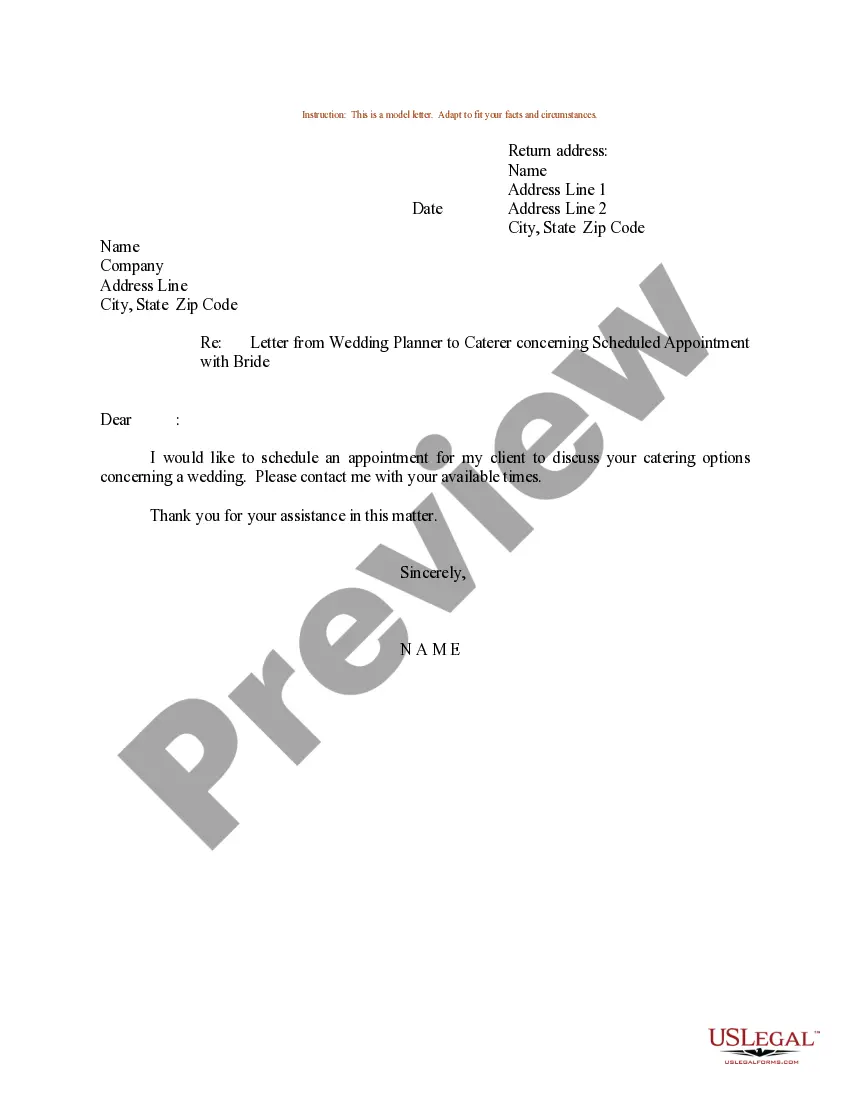
Looking for another form?






Form popularity
FAQ
Reference the products or services that were purchased. Make it very clear what you did for your client and how much it costs. Maintain a friendly but firm tone. Remind the payee of their contract or agreement with you. Offer multiple ways the payee can take action. Add a personal touch. Give them a new deadline.
LETTER OF DEMAND BACKGROUND A demand generally amounts to a request for payment or a request to perform in terms of a legal obligation. A letter of demand is generally an initial step in the litigation process. In certain instances, a letter of demand is necessary to place the debtor in mora.
Mention of all previous attempts to collect, including the first collection letter. Original invoice due date. Days past due. Invoice number and amount. Instruction- what should they do next? Offer help to work on the payment terms.
An attorney is usually not necessary at this point and you can write a demand letter on your own. To write one, gather necessary documents, draft your letter, and send the letter to your opposing party.
Know What to Include A demand letter should include the name of the creditor, the amount owed, action required, debt reference, deadline, and the consequences. Ensure you include all these details so your letter is not only compliant with the FDCPA, but also practical.
The letter should address the recipient by name; date should be mentioned on the letter, as it will be a proof of communication between the parties. The letter of collection should be having a reference of the products or the services in concern. The mode and time of payment should be mentioned in the letter.
When writing the letter, it is crucial to use a simple and professional language. Do not be harsh or threat the debtor in your letter as it can turn the tables against you. The letter should be addressed to the debtor's home address or any other address that the debtor has provided before.
Establish facts. Don't assume everyone knows the facts. Refer to evidence. If there's evidence (like a contract), you don't need to include it, but you should refer to it. Make a demand. Be specific as to what you want. Set a deadline and establish method of payment. Offer a consequence.
Use a letterhead. Outline the facts/story leading up to the demand letter in a chronological manner. State the legal basis for your claim. State how you will pursue legal action if your demand is not met, and include a timeline within which the demand is to be met.