Rental, Waiver and Release of Liability Agreement - Water Sports or Beach Rentals
Understanding this form
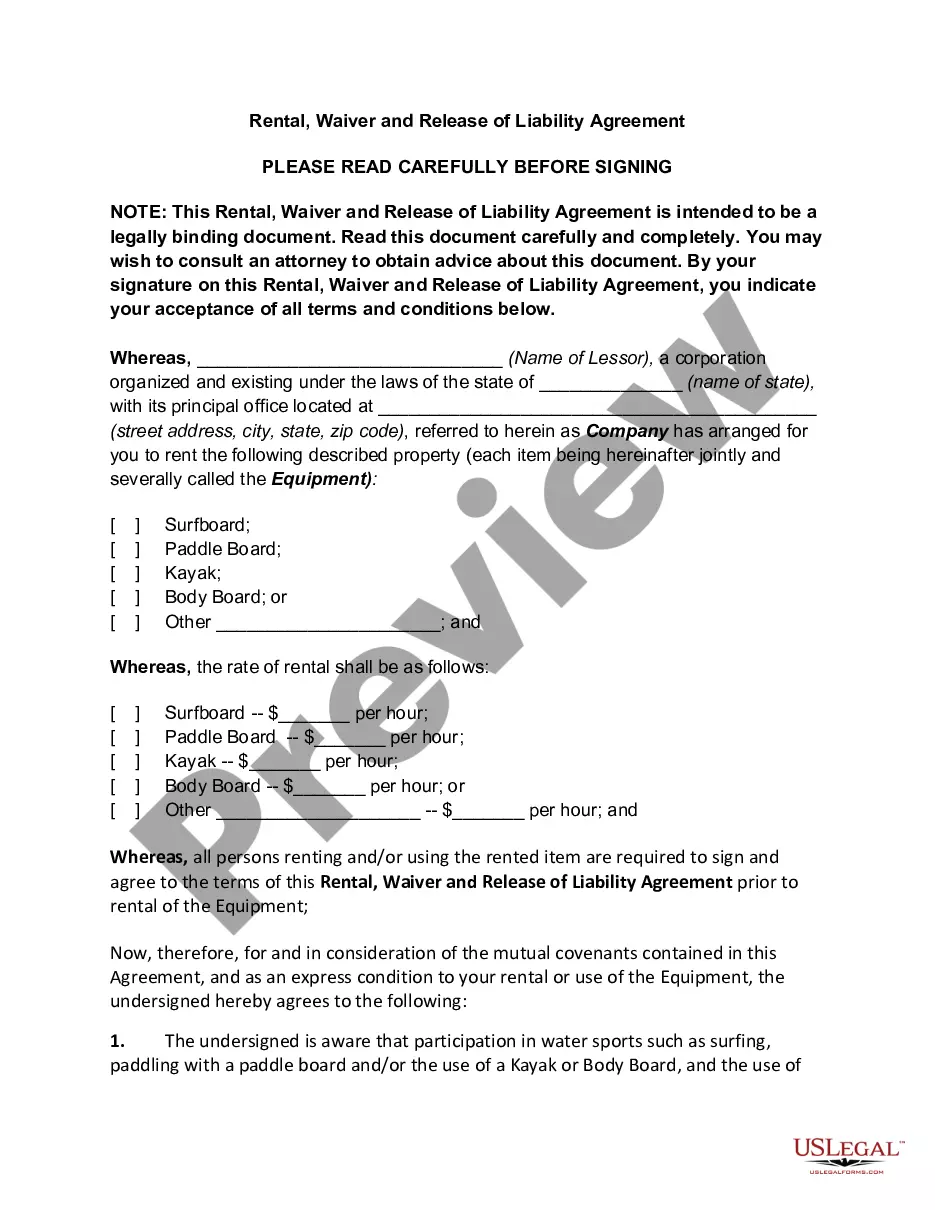
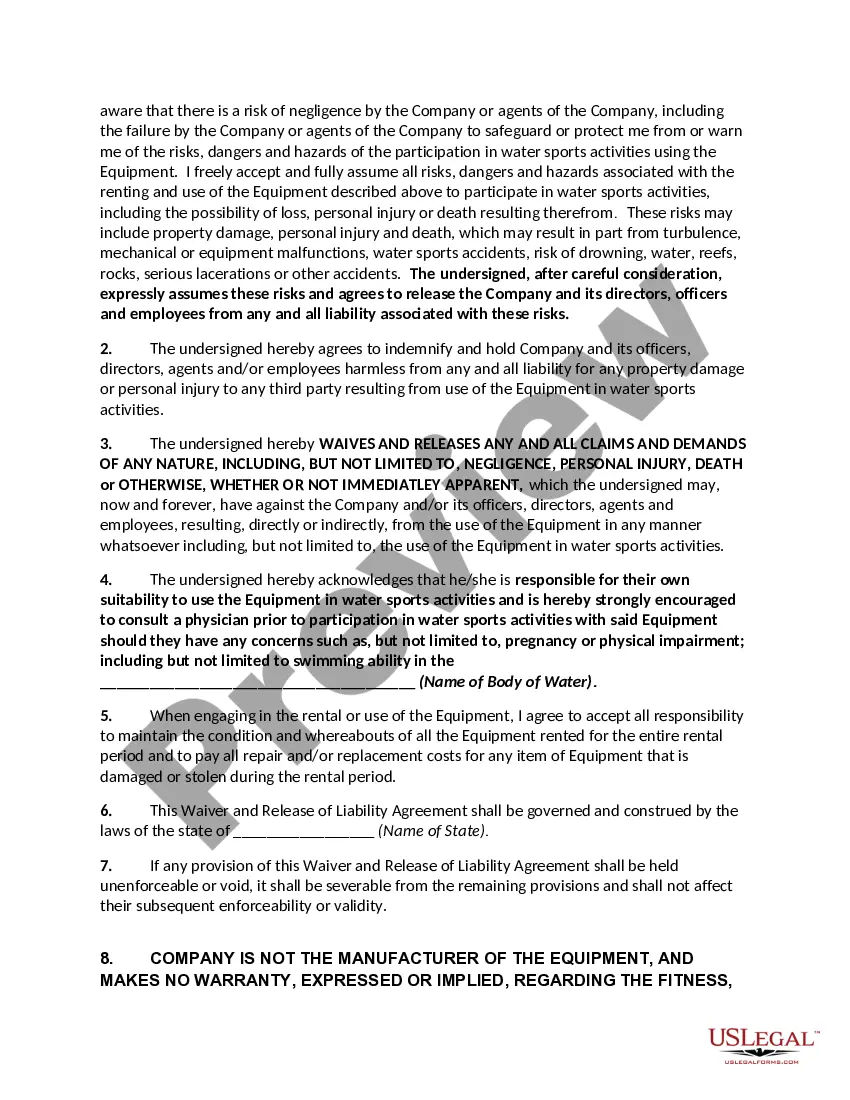
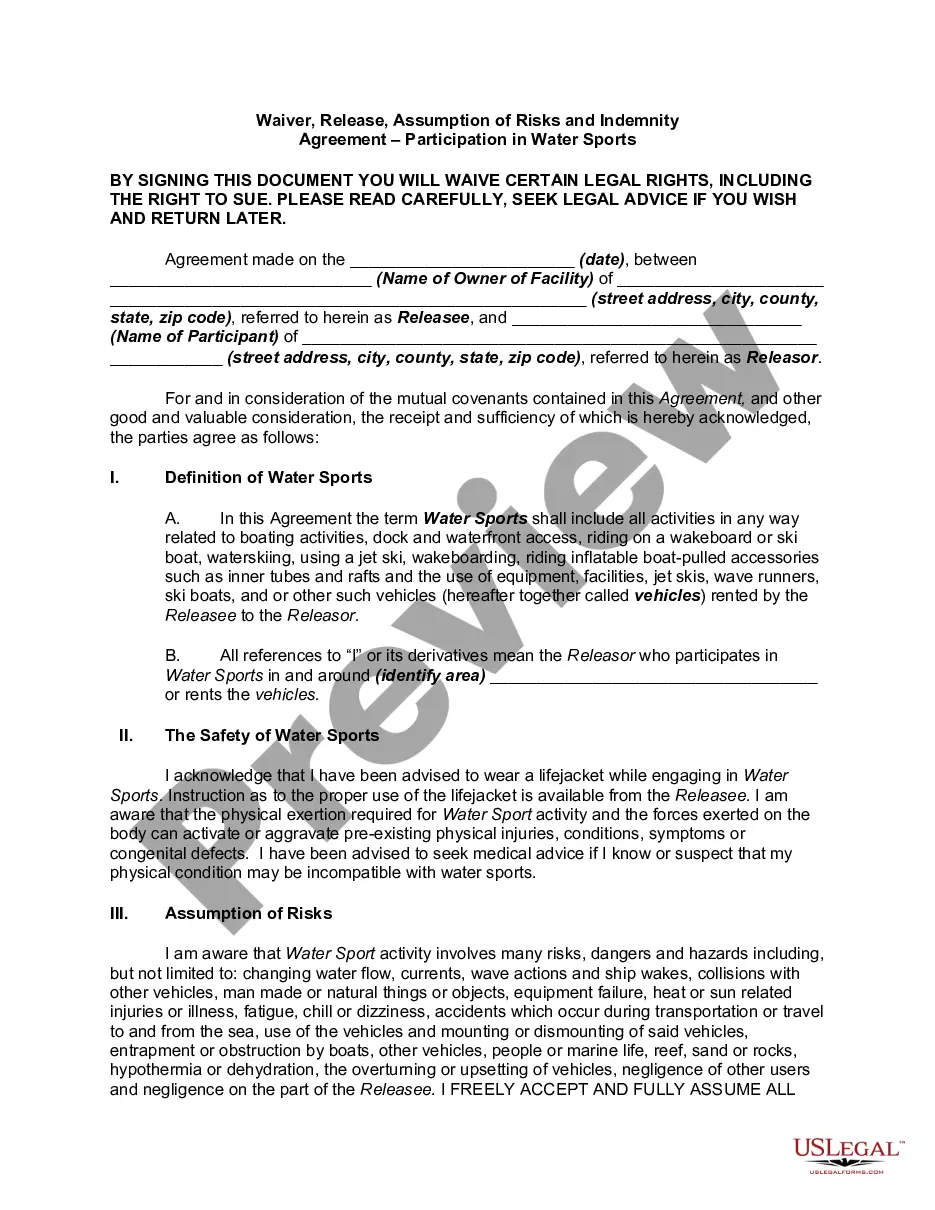
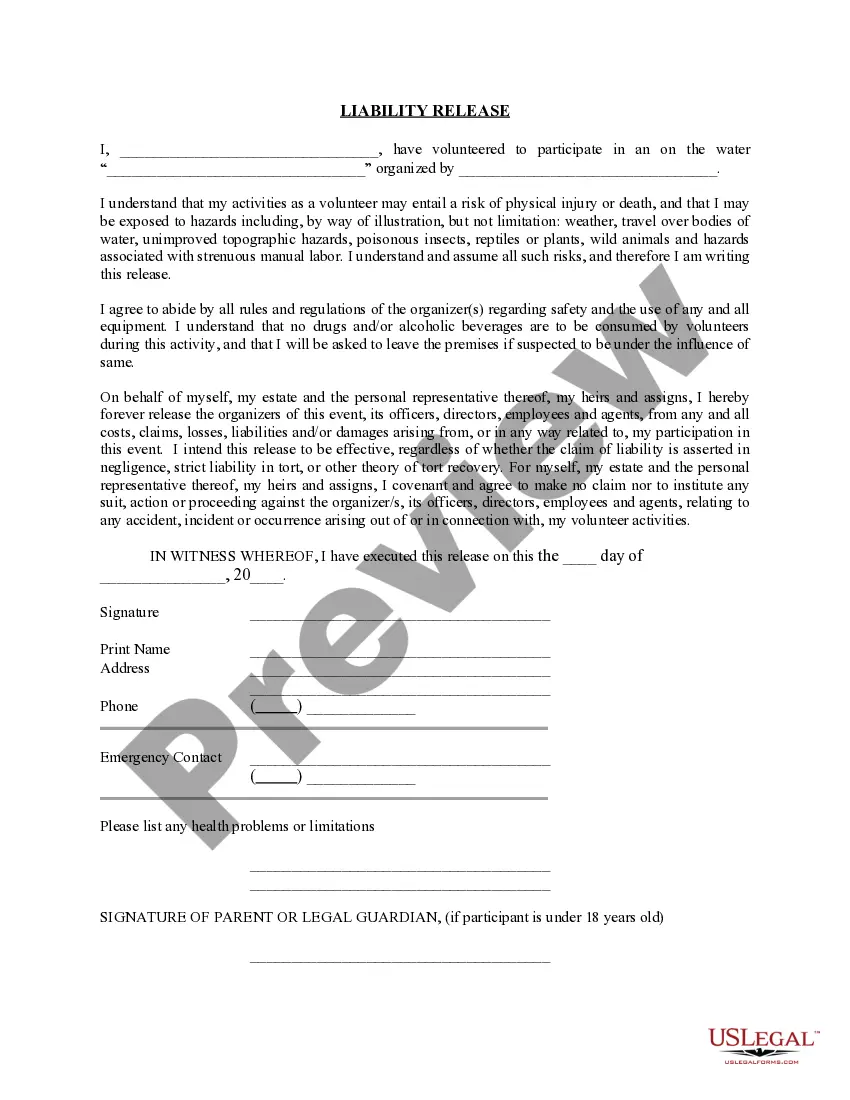
The Rental, Waiver and Release of Liability Agreement - Water Sports or Beach Rentals is a legal document designed to protect businesses and operators from liability when renting equipment used in water sports, such as surfboards and kayaks. Unlike other agreements, this document not only waives the right of the renter to sue for injuries that may occur during the activity but also outlines the terms of equipment rental and stipulates risks associated with water sports. It serves as a clear acknowledgment of these risks by the renter.
Key parts of this document
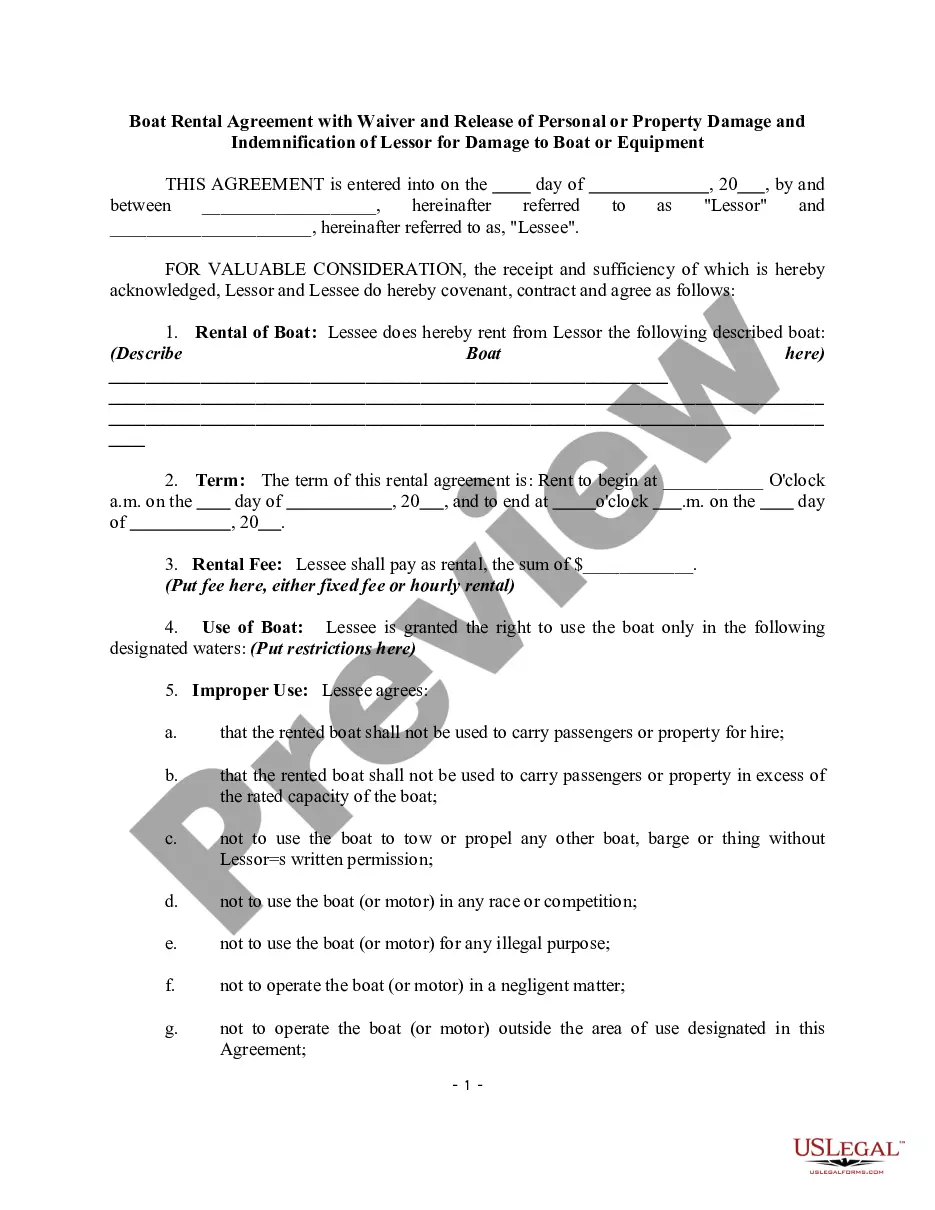
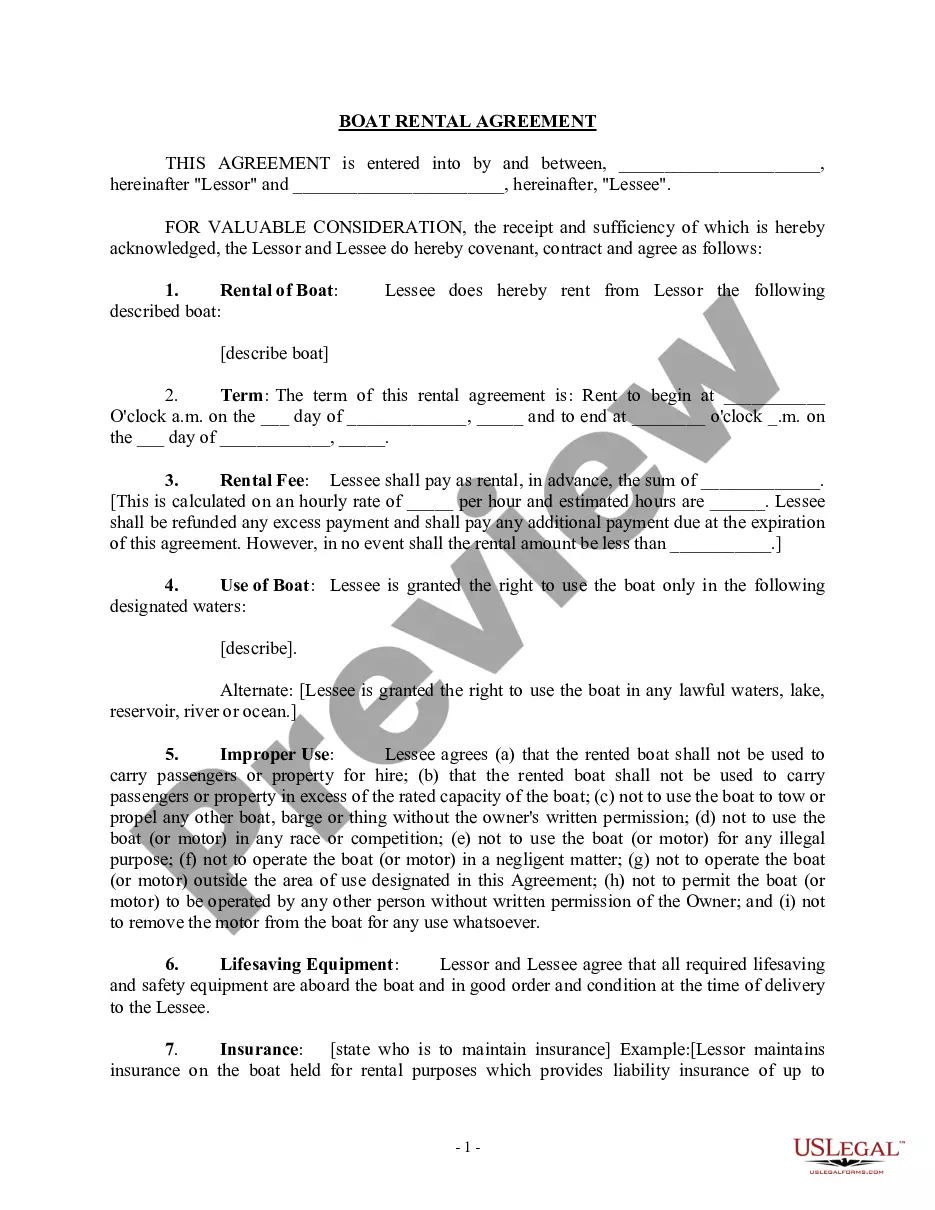
- Identification of the lessor and description of the rental equipment
- Rental rates for each type of water sports equipment
- Assumption of risk and waiver of liability by the renter
- Indemnification clause protecting the lessor from third-party claims
- Responsibilities regarding the condition and whereabouts of rented equipment
- Governing law information for enforcement of the agreement

When this form is needed
This form should be used when a business or individual wishes to rent water sports equipment while ensuring they are not held liable for any injuries or damages that renters may encounter. It is particularly relevant during recreational activities at beaches or water sports facilities, where risks of injury can be significant. The agreement helps ensure that renters are fully aware of these risks before engaging in water sports, thereby allowing the lessor to manage liability appropriately.
Who needs this form
- Businesses offering rentals of water sports equipment such as surfboards, kayaks, and paddle boards
- Individuals renting out water sports equipment for personal or recreational use
- Event organizers coordinating water sports activities
- Parents or guardians renting equipment for minors
Completing this form step by step
- Identify the parties involved, including the name of the lessor and the renter.
- Provide a detailed description of the rental equipment, including types and rates.
- Review and understand the risk assumptions and waiver clauses outlined in the document.
- Sign and date the agreement, ensuring appropriate signatures are obtained if the renter is a minor.
- Keep a copy of the signed agreement for your records.
Notarization guidance
In most cases, this form does not require notarization. However, some jurisdictions or signing circumstances might. US Legal Forms offers online notarization powered by Notarize, accessible 24/7 for a quick, remote process.
Get your form ready online
Our built-in tools help you complete, sign, share, and store your documents in one place.
Make edits, fill in missing information, and update formatting in US Legal Forms—just like you would in MS Word.
Download a copy, print it, send it by email, or mail it via USPS—whatever works best for your next step.
Sign and collect signatures with our SignNow integration. Send to multiple recipients, set reminders, and more. Go Premium to unlock E-Sign.
If this form requires notarization, complete it online through a secure video call—no need to meet a notary in person or wait for an appointment.
We protect your documents and personal data by following strict security and privacy standards.

Make edits, fill in missing information, and update formatting in US Legal Forms—just like you would in MS Word.

Download a copy, print it, send it by email, or mail it via USPS—whatever works best for your next step.

Sign and collect signatures with our SignNow integration. Send to multiple recipients, set reminders, and more. Go Premium to unlock E-Sign.

If this form requires notarization, complete it online through a secure video call—no need to meet a notary in person or wait for an appointment.

We protect your documents and personal data by following strict security and privacy standards.
Typical mistakes to avoid
- Failing to read the form in its entirety before signing.
- Not specifying all the equipment being rented.
- Overlooking the importance of minor signatures being provided by a guardian.
- Not clearly understanding the risks involved in water sports activities.
Benefits of completing this form online
- Immediate access to a legally sound document drafted by licensed attorneys.
- Ability to fill out and customize the form to fit specific rental needs.
- Convenient download and printing options for ease of use.
- Cost-efficient compared to hiring legal representation for drafting purposes.
Legal use & context
- This agreement is intended to be legally binding, provided it is properly completed and signed.
- It is essential that all parties understand the implications of waiving their rights to sue before engaging in water sports.
- Enforceability may depend on state law and specific circumstances surrounding signed agreements.
Main things to remember
- This form is crucial for anyone renting water sports equipment to safeguard against liability.
- Understanding the risks involved in water activities is essential before signing the waiver.
- Proper completion and signature, including for minors, will ensure the agreement's enforceability.
Looking for another form?


Form popularity
FAQ
The General Release is a broad release from all possible civil claims resulting from a dispute. Since the Releasing Party is giving up all known and unknown claims against the other party, care should be taken to ensure that the Releasor is fully aware of their rights.
3. How long do I keep signed waivers? The sponsoring unit is required to retain the waiver for six (6) years after the end of the event or activity for which the waiver was signed.
Step 1: Check local requirements. Step 2: Assess your liability. Step 3: Describe the property and amenities. Step 4: Write owner and guest information. Step 5: Outline rules and policies. Step 6: Explain check-in and check-out procedures.
Get help. Writing a waiver should not be complicated. Use the correct structure. Proper formatting. Include a subject line. Include a caution! Talk about the activity risks. Do not forget an assumption of risk. Hold harmless.
The court explained that, in Florida, most waivers of liability are enforceable; however, only to a certain extent. While a defendant can include terms limiting a person's ability to sue based on the defendant's negligence, a defendant is not able to include terms limiting claims based on its gross negligence.
In many cases, the waiver is not enforceable.If you've been injured due to negligent actions, you can sue even if you signed a waiver. Winning a lawsuit concerning negligence is not uncommon. Many celebrities have sued for negligence even though they signed documents stating they understood the risks.
In California, a liability waiver must be clear, unambiguous, and explicit. In other words, waivers cannot be printed in faded ink, in small font, on the back of a paper, or in an otherwise ambiguous form. If the waiver that you sign is not represented clearly, it may not hold up in the event of a lawsuit.
200bStart the letter off with a clear explanation regarding your request. For instance, explain that you're requesting certain fees or charges to be waived or to be released from a previous engagement. Communicate any supporting or relative dates, names of parties, monetary figures, or venues as facts.