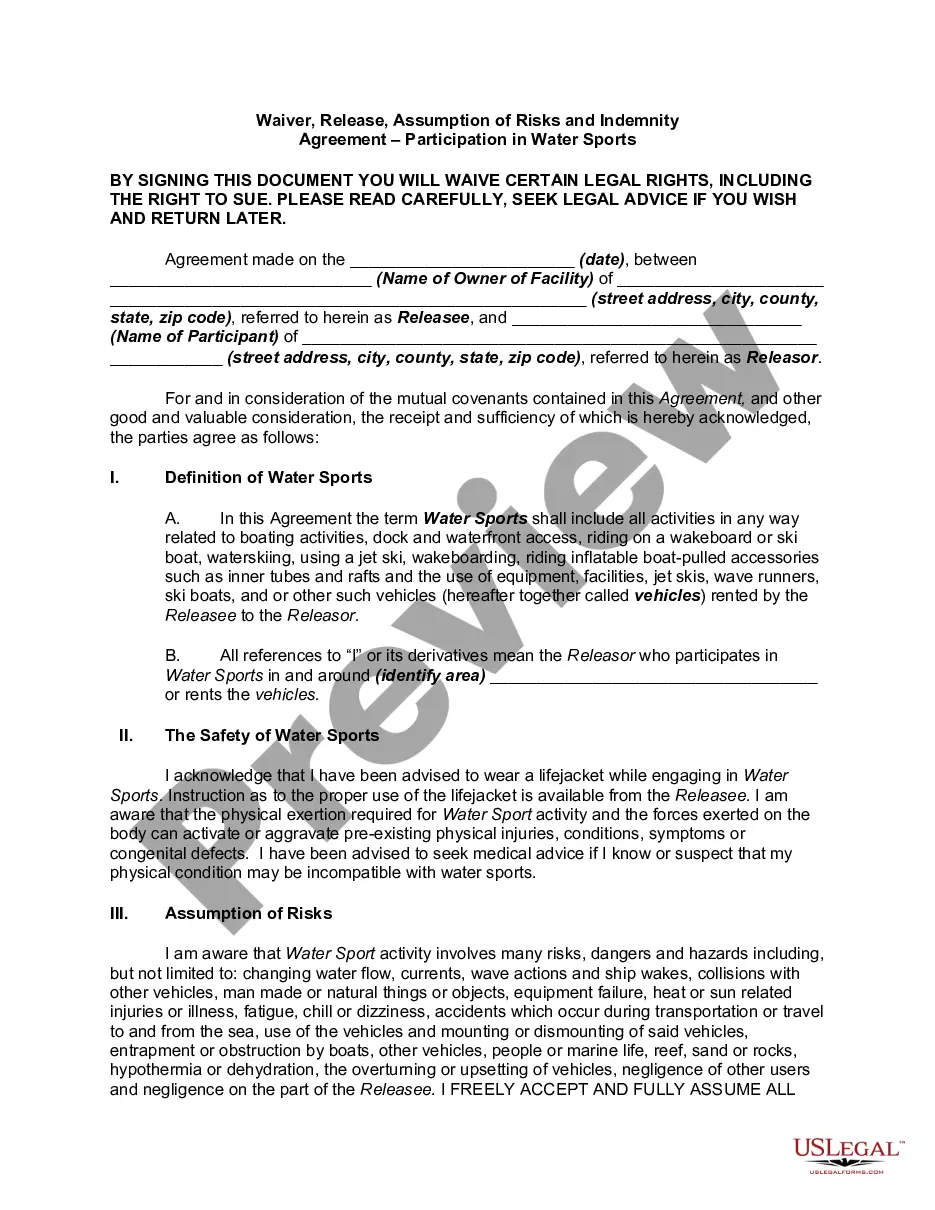
Waiver, Release, Assumption of Risks and Indemnity Agreement - Participation in Water Sports
About this form
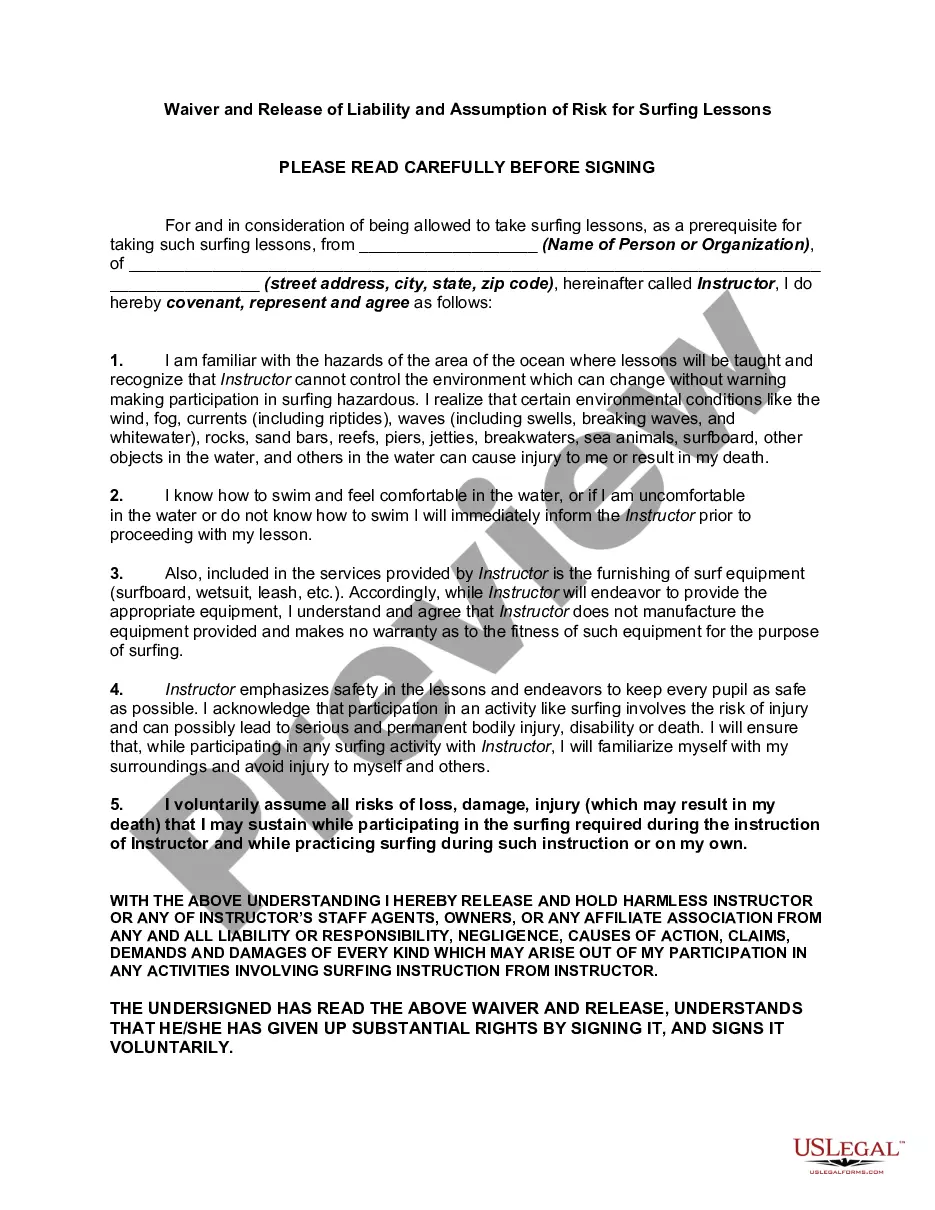
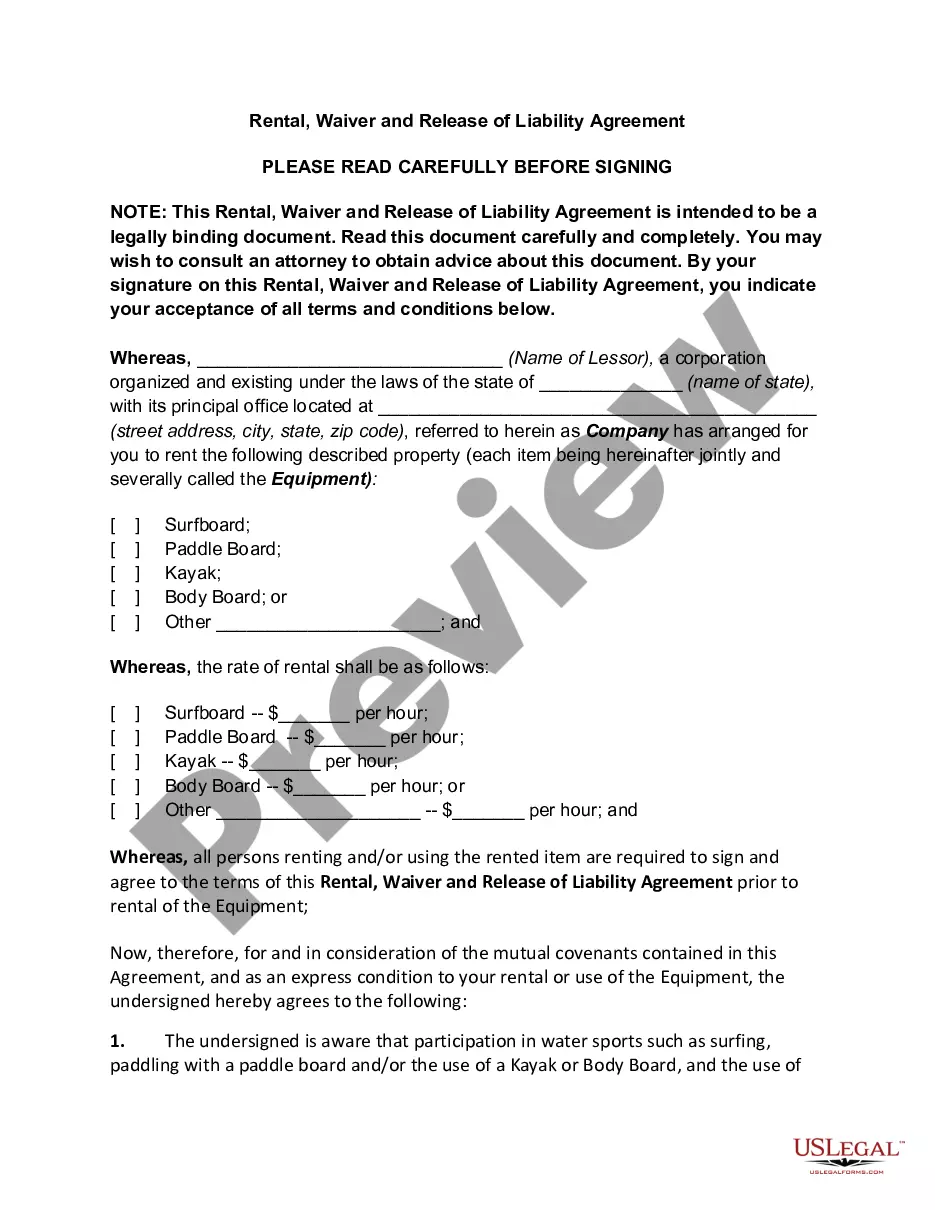
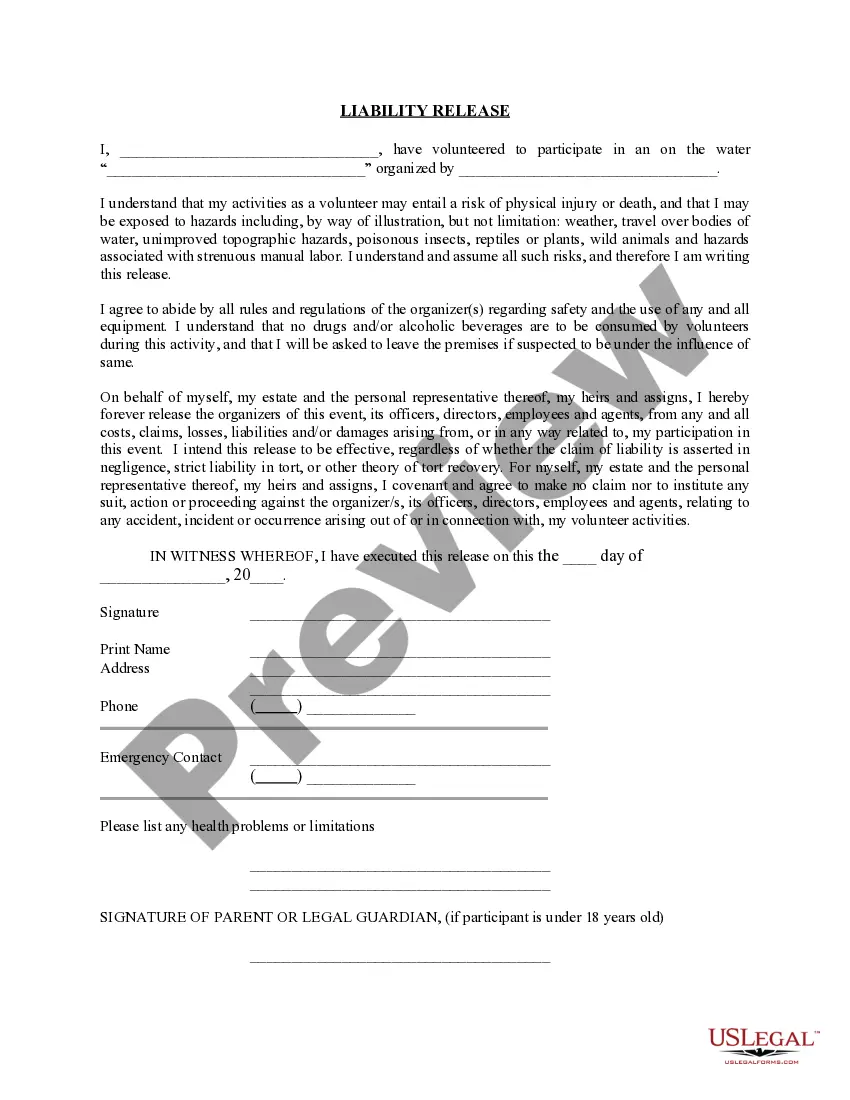
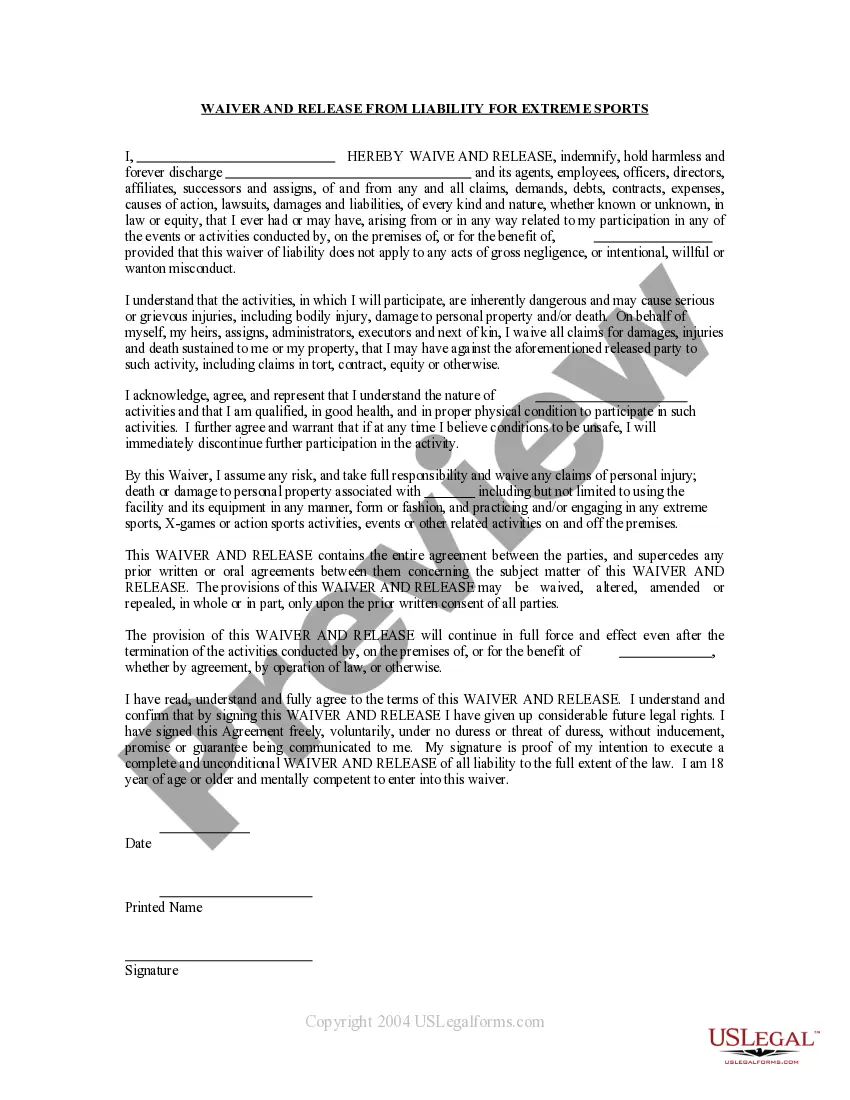
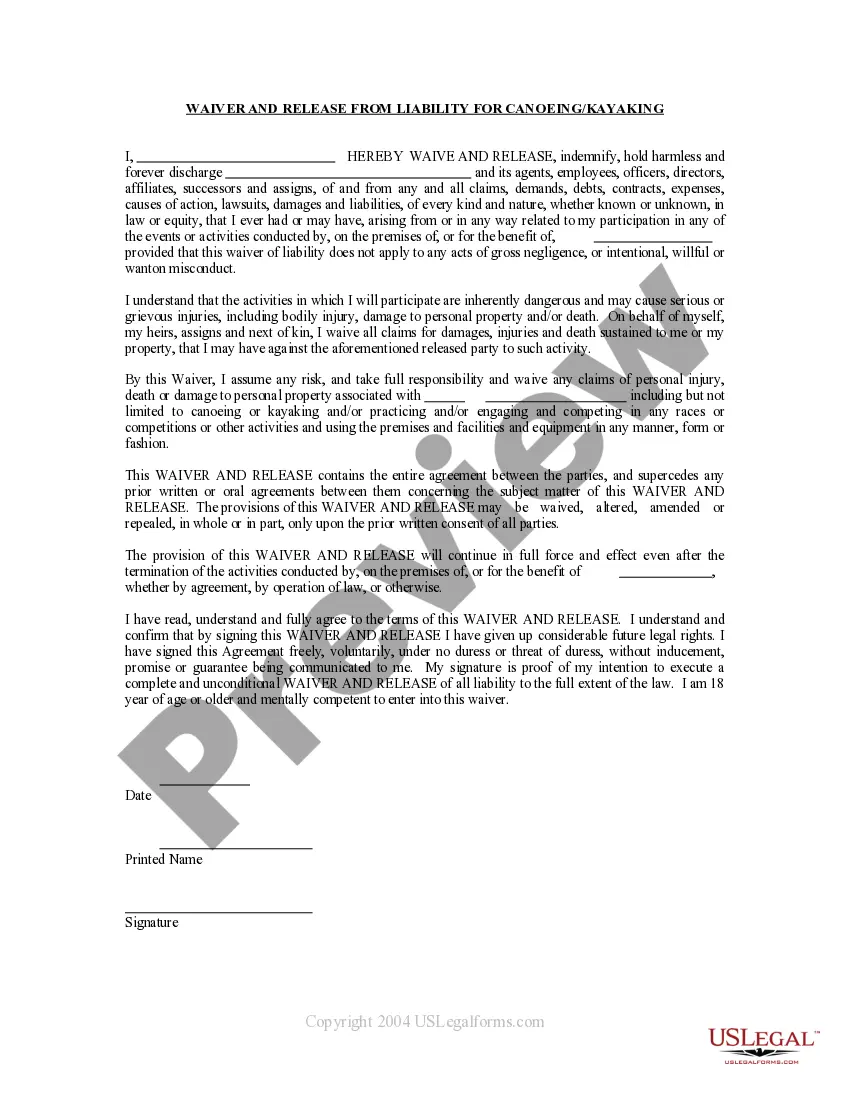
The Waiver, Release, Assumption of Risks and Indemnity Agreement for Participation in Water Sports is a legal document that participants in water sports must sign to acknowledge and accept the risks involved. By signing this waiver, participants agree to relinquish certain legal rights, including the right to sue for any injuries sustained during these activities. This form is essential for both the facility owners and participants, as it helps mitigate liability in case of accidents while enjoying water sports.
Key parts of this document
- Definition of Water Sports: Clarifies the activities covered under this agreement.
- Safety Acknowledgments: States the importance of wearing life jackets and seeking medical advice for pre-existing conditions.
- Assumption of Risks: Outlines the various risks associated with water sports, which participants acknowledge.
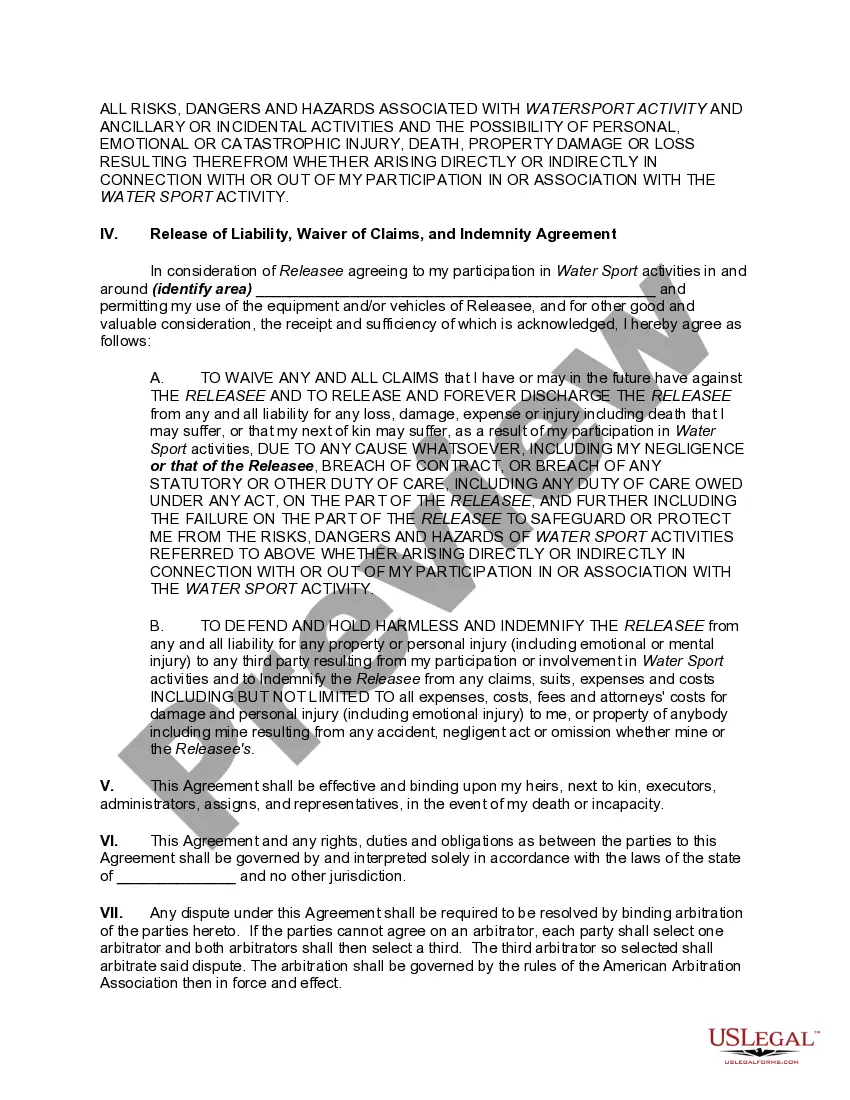
- Release of Liability: Participants waive any future claims against the facility owner for injuries sustained during water sports activities.
- Indemnity Agreement: Participants agree to hold the facility owner harmless for any claims arising from their participation.
- Governing Laws: Indicates that the agreement is governed by the laws of the specified state.
When this form is needed
This form should be used whenever an individual plans to participate in water sports, such as boating, waterskiing, or using personal watercraft. It is essential for facility owners to obtain this signed waiver to protect themselves from potential lawsuits related to injuries, accidents, or other incidents that may occur during these water activities.
Who can use this document
- Individuals participating in water sports activities.
- Owners or operators of facilities that provide water sports opportunities.
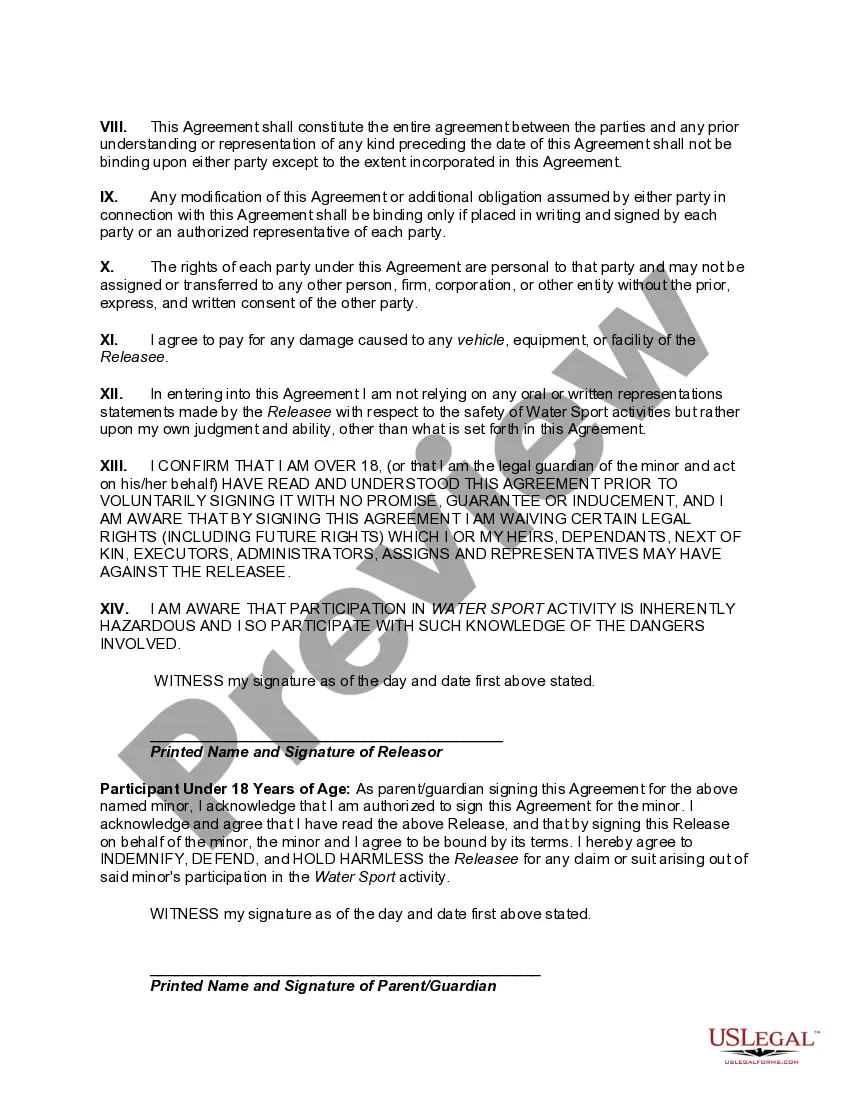
- Parents or guardians signing on behalf of minors participating in water sports.
How to prepare this document
- Enter the date of the agreement.
- Provide the name and address of the facility owner (Releasee).
- Fill in the participant's name and address (Releasor).
- Read through the sections on risks, liability, and safety before signing.
- Have a parent or guardian sign if the participant is under 18 years old, acknowledging their agreement to the terms.
Does this document require notarization?
Notarization is generally not required for this form. However, certain states or situations might demand it. You can complete notarization online through US Legal Forms, powered by Notarize, using a verified video call available anytime.
Get your form ready online
Our built-in tools help you complete, sign, share, and store your documents in one place.
Make edits, fill in missing information, and update formatting in US Legal Forms—just like you would in MS Word.
Download a copy, print it, send it by email, or mail it via USPS—whatever works best for your next step.
Sign and collect signatures with our SignNow integration. Send to multiple recipients, set reminders, and more. Go Premium to unlock E-Sign.
If this form requires notarization, complete it online through a secure video call—no need to meet a notary in person or wait for an appointment.
We protect your documents and personal data by following strict security and privacy standards.

Make edits, fill in missing information, and update formatting in US Legal Forms—just like you would in MS Word.

Download a copy, print it, send it by email, or mail it via USPS—whatever works best for your next step.

Sign and collect signatures with our SignNow integration. Send to multiple recipients, set reminders, and more. Go Premium to unlock E-Sign.

If this form requires notarization, complete it online through a secure video call—no need to meet a notary in person or wait for an appointment.

We protect your documents and personal data by following strict security and privacy standards.
Common mistakes to avoid
- Failing to read the entire document before signing.
- Not providing accurate information about the parties involved.
- Neglecting to have a parent or guardian sign for minors.
- Omitting the date of the agreement.
Advantages of online completion
- Convenience of filling out and downloading from anywhere.
- Editability allows for personalization to fit specific needs.
- Access to templates drafted by licensed attorneys ensures reliability.
Legal use & context
- This form is designed to protect facility owners from legal claims arising from participant injuries.
- It is enforceable in many jurisdictions, provided that it meets state-specific requirements.
- Participants should understand that signing this form waives their right to pursue legal action for injuries resulting from their participation in water sports.
What to keep in mind
- Participants should fully understand the risks associated with water sports.
- The waiver protects facility owners from liability in case of accidents.
- This form is essential for formalizing a participant's acknowledgment of risks and responsibilities.
Looking for another form?
Form popularity
FAQ
The first sentence should state In consideration of being allowed to participate . . . . A waiver/release is not a valid contract unless all parties receive consideration, which is a fancy way of saying something of value.
In California, a liability waiver must be clear, unambiguous, and explicit. In other words, waivers cannot be printed in faded ink, in small font, on the back of a paper, or in an otherwise ambiguous form. If the waiver that you sign is not represented clearly, it may not hold up in the event of a lawsuit.
In California, a liability waiver must be clear, unambiguous, and explicit. In other words, waivers cannot be printed in faded ink, in small font, on the back of a paper, or in an otherwise ambiguous form. If the waiver that you sign is not represented clearly, it may not hold up in the event of a lawsuit.
A waiver/release is an exculpatory contract that attempts to excuse or relieve a party, for injuries to a participant that arise out of the known and unknown risks in an activity.
A waiver is not complete until it includes the signatures of both the event host and business owner and that of the participant. The date should also be included alongside the signatures. You may also include a signature line for a witness if necessary.
A waiver is a legally binding provision where either party in a contract agrees to voluntarily forfeit a claim without the other party being liable.
The main difference between releases and waivers is the transferring of ownership. When rights are released, they are transferred to another party. When rights are waived, they are gone altogether. If intellectual property rights are waived, the IP can be used by any other party that has access to it.
Get help. Writing a waiver should not be complicated. Use the correct structure. Proper formatting. Include a subject line. Include a caution! Talk about the activity risks. Do not forget an assumption of risk. Hold harmless.
A release and waiver agreement is an enforceable promise not to pursue legal action in exchange for compensation. The releasee gives money or some other form of compensation to the releasor, who then agrees not to press charges, sue, or take any other legal action against the releasee.