Sample Letter for Apology for Hurt Feelings
About this form
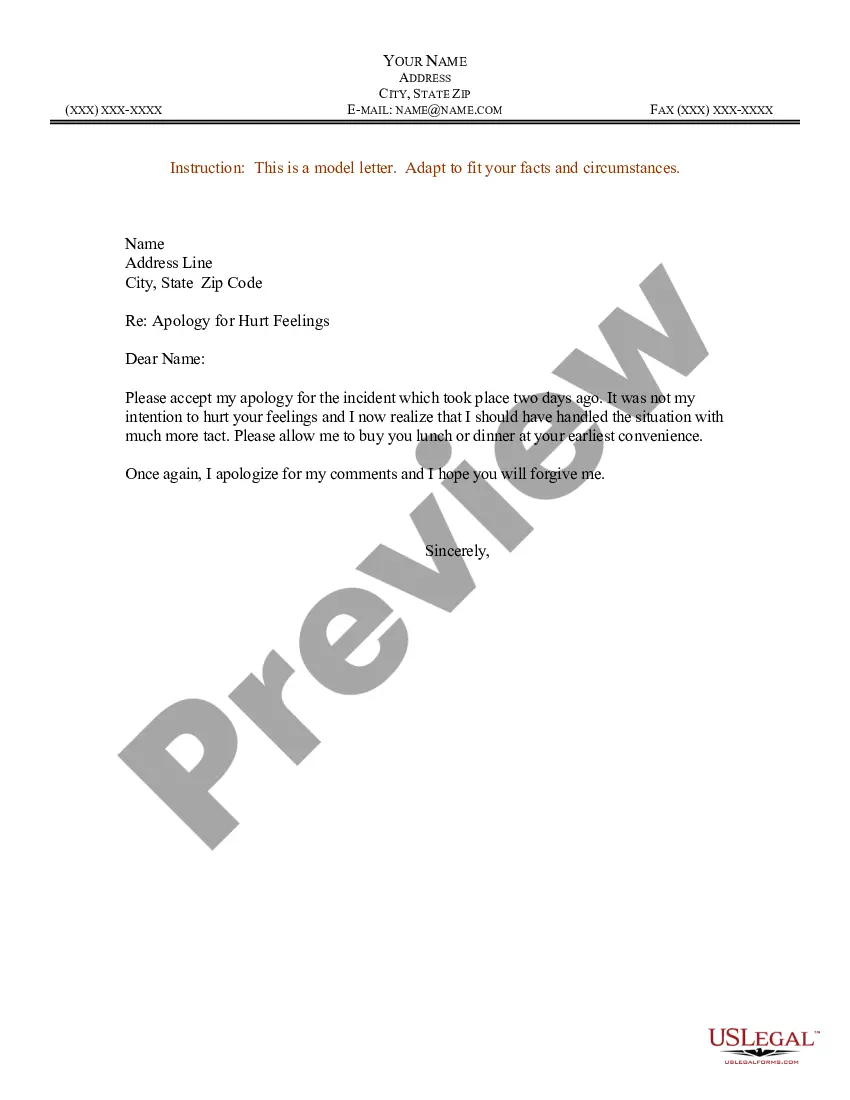
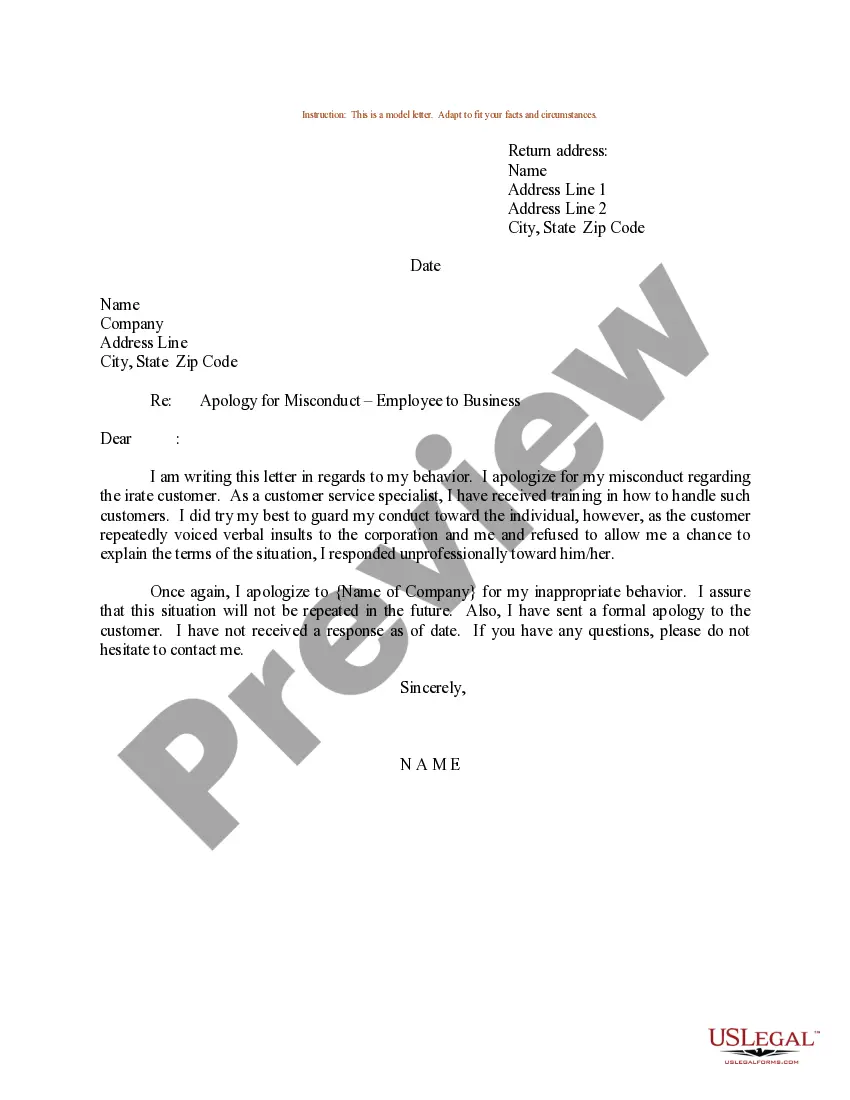
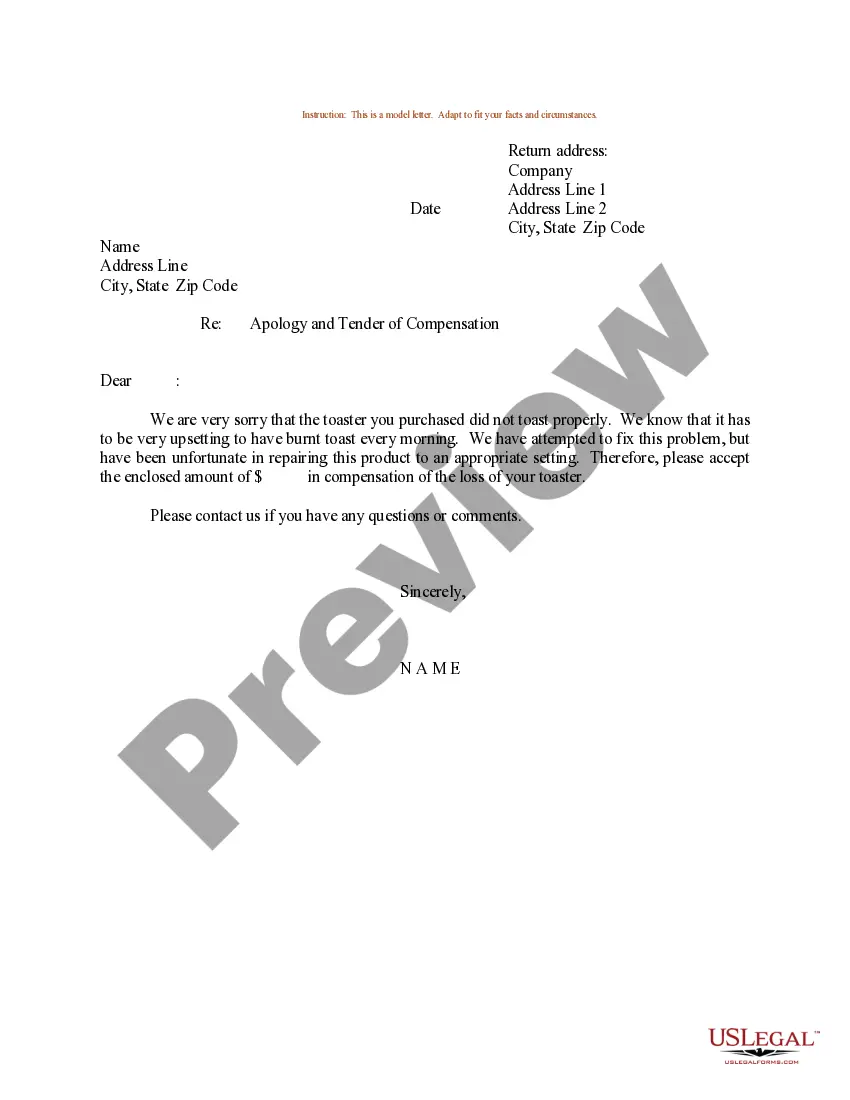
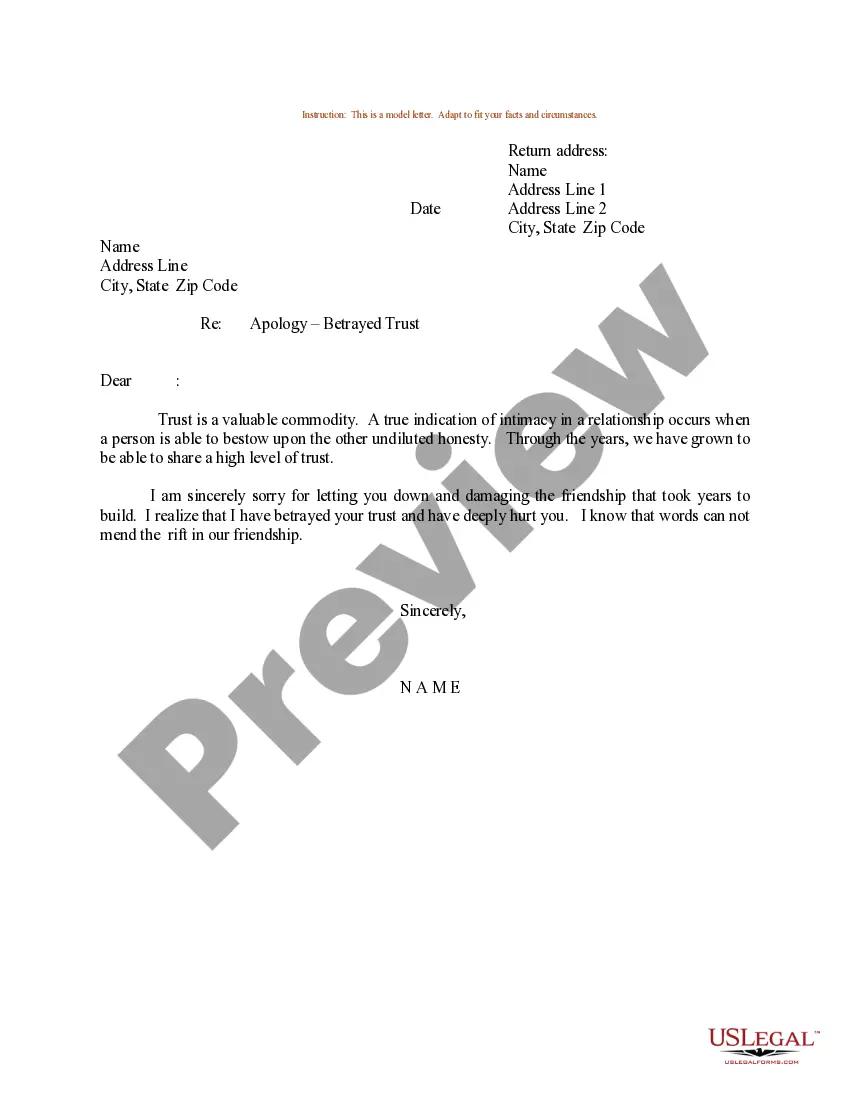
This Sample Letter for Apology for Hurt Feelings is a template designed to help individuals express remorse for an incident that may have caused emotional pain. This form stands out from other apology letters by providing a structured format that allows the user to customize their message based on specific circumstances. It serves as a clear and empathetic way to mend relationships affected by misunderstandings or unintentional slights.
Main sections of this form
- Sender's contact information: Name, address, phone number, and email.
- Recipient's contact information: Name and address.
- Subject line: Clearly identifies the purpose of the letter.
- Apology statement: Acknowledges the hurt caused and expresses genuine regret.
- Offer for reconciliation: Suggests meeting for lunch or dinner to discuss further.
- Closing statement: Reiterates the desire for forgiveness and a positive relationship.
When to use this form
This form is useful when you want to apologize to someone for a specific incident that caused hurt feelings. It can be employed in various scenarios, such as after a disagreement, a misunderstanding, or remarks made that were unintentionally offensive. It is particularly effective when you wish to express remorse and make amends personally or professionally.
Who can use this document
- Individuals who have had a falling out with friends or family members.
- Professionals looking to mend relationships with colleagues or clients.
- Anyone who wants to address issues caused by misunderstandings or conflicts.
Completing this form step by step
- Input your name and contact information at the top of the letter.
- Add the recipient's name and address.
- Include a subject line that clearly states the intent to apologize.
- Craft a heartfelt apology, acknowledging the specific incident that caused hurt feelings.
- Suggest a meeting time to discuss the situation further, like offering to buy a meal.
- Sign the letter at the end and include your contact information again.
Does this form need to be notarized?
Notarization is not commonly needed for this form. However, certain documents or local rules may make it necessary. Our notarization service, powered by Notarize, allows you to finalize it securely online anytime, day or night.
Get your form ready online
Our built-in tools help you complete, sign, share, and store your documents in one place.
Make edits, fill in missing information, and update formatting in US Legal Forms—just like you would in MS Word.
Download a copy, print it, send it by email, or mail it via USPS—whatever works best for your next step.
Sign and collect signatures with our SignNow integration. Send to multiple recipients, set reminders, and more. Go Premium to unlock E-Sign.
If this form requires notarization, complete it online through a secure video call—no need to meet a notary in person or wait for an appointment.
We protect your documents and personal data by following strict security and privacy standards.

Make edits, fill in missing information, and update formatting in US Legal Forms—just like you would in MS Word.

Download a copy, print it, send it by email, or mail it via USPS—whatever works best for your next step.

Sign and collect signatures with our SignNow integration. Send to multiple recipients, set reminders, and more. Go Premium to unlock E-Sign.

If this form requires notarization, complete it online through a secure video call—no need to meet a notary in person or wait for an appointment.

We protect your documents and personal data by following strict security and privacy standards.
Mistakes to watch out for
- Being vague about the incident that caused hurt feelings.
- Failing to take full responsibility for one's actions.
- Not offering a way to reconcile or meet up to discuss the issue.
- Using a passive tone instead of an empathetic and active tone.
Advantages of online completion
- Convenient access to a customizable template that saves time.
- Editability allows you to personalize the letter to fit your situation.
- Reliability of using a form crafted by licensed attorneys to ensure proper structure.
Legal use & context
- This form is intended for personal and professional use, particularly for non-legal disputes.
- While the letter may not have legal standing, it can help restore goodwill and facilitate discussions.
What to keep in mind
- The Sample Letter for Apology for Hurt Feelings is tailored for addressing emotional discomfort.
- It includes essential elements like personalization and an offer to make amends.
- This letter is useful in both personal and professional contexts.
- Ensure that your message is sincere, clear, and free from common mistakes.
Looking for another form?

Form popularity
FAQ
Acknowledge the Wrongful Act. Acknowledge That You Hurt her Feelings. Express Your Remorse. State Your Intention Not to Repeat It. Offer to Make Amends. Seek Forgiveness.
I am an imperfect being, but this does not justify the mistakes that I have made to you. I never meant to upset you because you are valuable to me. I always cause some mess. I'm sorry for making you sad and hurting you because of my crazy temper.
Say you are sorry. Make an inventory of how your behavior might have hurt or harmed someone. Say you are sorry again. Tell the other person exactly how you understand the costs of your behavior, and allow the other person to vent, elaborate, or reiterate as needed so that the other person really feels heard.
You need to apologize when you've done something wrong. That's it. Not when someone's mad at you for no reason, not when you want to take the blame just to diffuse a confrontation. When you've messed up and if you've hurt someone, that's when you should apologize.
"You should always apologize for hurtful behavior, even if you think that the person feeling that pain doesn't have a right to feel it, or that you wouldn't have been hurt by it." If you do or say something hurtful, you can help to make it better by showing empathy and genuinely apologizing to your partner.
If something you've done has caused pain for another person, it's a good idea to apologize, even if whatever you did was unintentional. This is because apologizing opens up the doors to communication, which allows you to reconnect with the person who was hurt.
Keep it brief. You don't have to tell the whole story of what went wrong. Don't exaggerate. Don't blame the other person. Keep it sincere and professional.
Dear Recipient Name, Please accept my apology for the misunderstanding with regards to the wrong shipment. I acknowledge that this error has resulted due to miscommunication from my end and I'm sorry for the trouble I may have caused you.
Say you're sorry. Not, I'm sorry, but . . . Just plain ol' I'm sorry. Own the mistake. It's important to show the wronged person that you're willing to take responsibility for your actions. Describe what happened. Have a plan. Admit you were wrong. Ask for forgiveness.