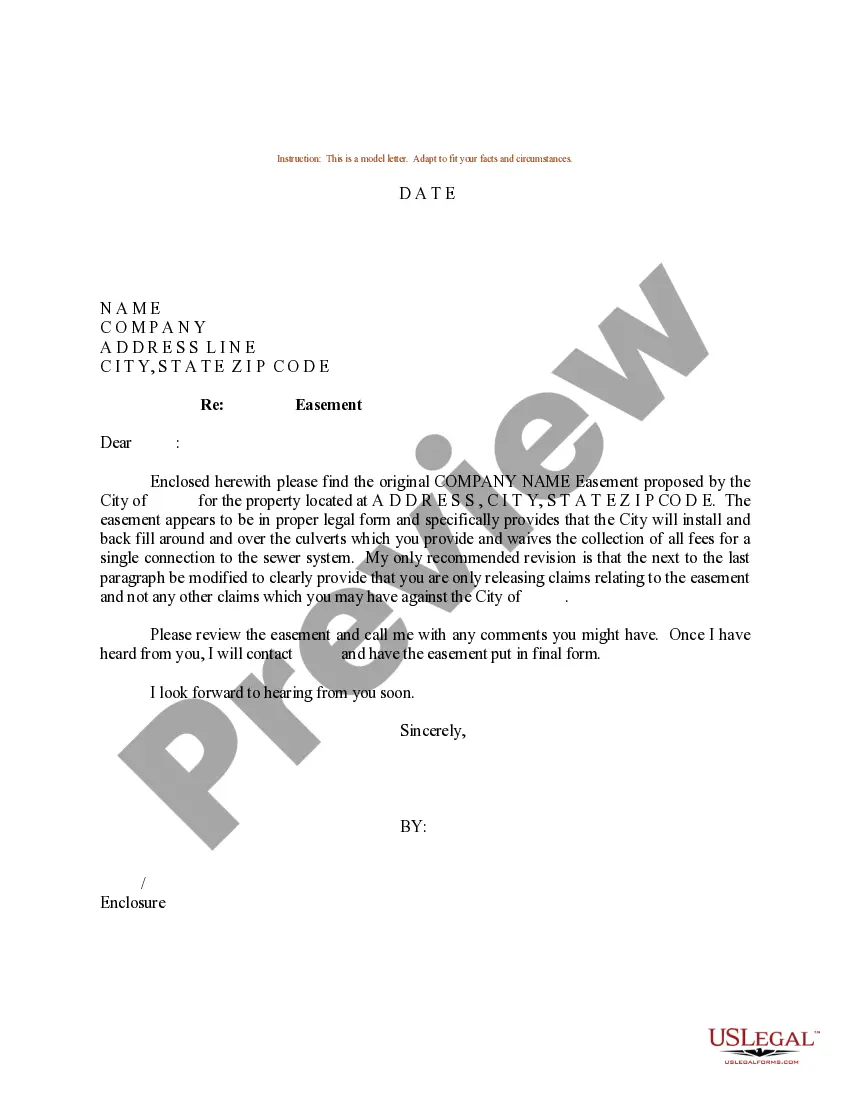
Sample Letter for Suggested Change in Legal Form Granting Easement
What is this form?
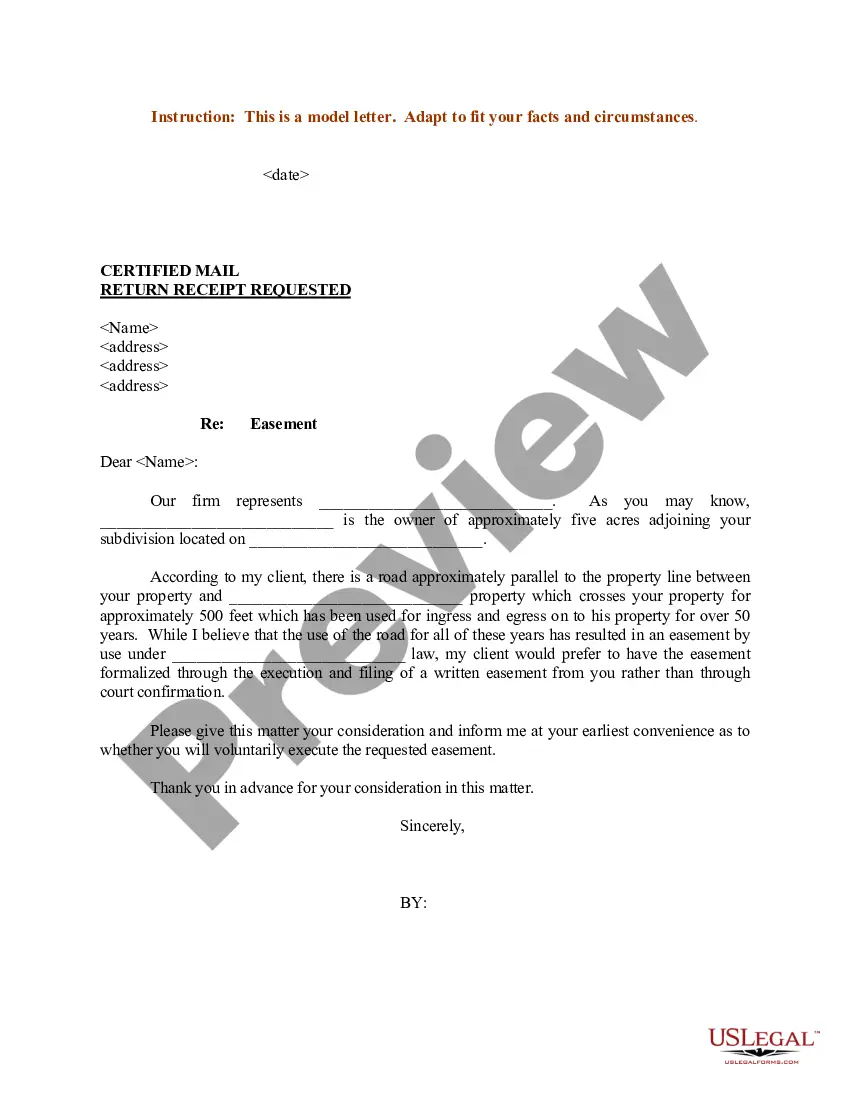
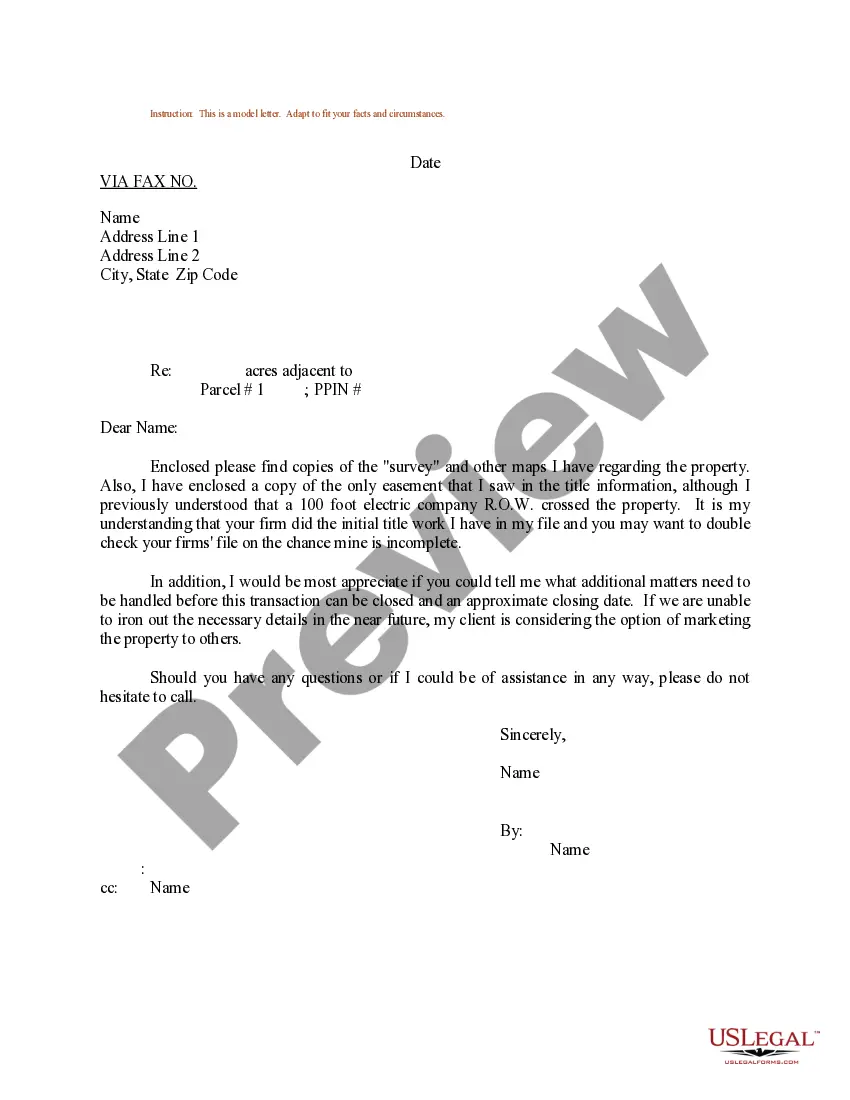
This form is a Sample Letter for Suggested Change in Legal Form Granting Easement. It serves as a template for conveying your request regarding modifications to an easement agreement. This form is useful in situations where the current easement does not meet your needs or when changes are required for legal or practical reasons. Unlike other legal documents, this letter is specific to suggesting changes rather than creating a new easement or addressing it legally.
Form components explained
- Date of the letter
- Private name and company information
- Address of the entity being contacted
- Description of the suggested change to the easement
- Your contact information for follow-up
When this form is needed
You should use this form when you need to formally suggest changes to an existing easement agreement. Situations may include needing to adjust the terms of access to your property, changes in your usage of the easement, or corrections to any errors in the original easement documentation. This letter helps initiate the conversation and provide a written record of your request.
Who should use this form
This form is intended for:
- Property owners seeking to modify existing easements
- Business entities that require alterations to utility easements
- Legal representatives assisting clients with property rights
- Individuals looking to clarify access rights over shared properties
Instructions for completing this form
- Enter the date at the top of the letter.
- Fill in your name and the name of the company (if applicable).
- Provide the recipient's address, including city, state, and ZIP code.
- Clearly describe the suggested changes to the easement.
- Include your contact information for any potential responses.
Is notarization required?
Notarization is not commonly needed for this form. However, certain documents or local rules may make it necessary. Our notarization service, powered by Notarize, allows you to finalize it securely online anytime, day or night.
Get your form ready online
Our built-in tools help you complete, sign, share, and store your documents in one place.
Make edits, fill in missing information, and update formatting in US Legal Forms—just like you would in MS Word.
Download a copy, print it, send it by email, or mail it via USPS—whatever works best for your next step.
Sign and collect signatures with our SignNow integration. Send to multiple recipients, set reminders, and more. Go Premium to unlock E-Sign.
If this form requires notarization, complete it online through a secure video call—no need to meet a notary in person or wait for an appointment.
We protect your documents and personal data by following strict security and privacy standards.

Make edits, fill in missing information, and update formatting in US Legal Forms—just like you would in MS Word.

Download a copy, print it, send it by email, or mail it via USPS—whatever works best for your next step.

Sign and collect signatures with our SignNow integration. Send to multiple recipients, set reminders, and more. Go Premium to unlock E-Sign.

If this form requires notarization, complete it online through a secure video call—no need to meet a notary in person or wait for an appointment.

We protect your documents and personal data by following strict security and privacy standards.
Common mistakes
- Failing to include complete contact information.
- Not specifying the exact changes being requested.
- Using vague language that can lead to misunderstandings.
- Omitting the date, which can affect the timeline of the request.
- Not keeping copies of the sent letter for personal records.
Advantages of online completion
- Convenience of downloading and editing the document from anywhere.
- Access to professionally drafted templates ensuring legal accuracy.
- Save time and reduce legal expenses compared to hiring an attorney for simple requests.
Looking for another form?









Form popularity
FAQ
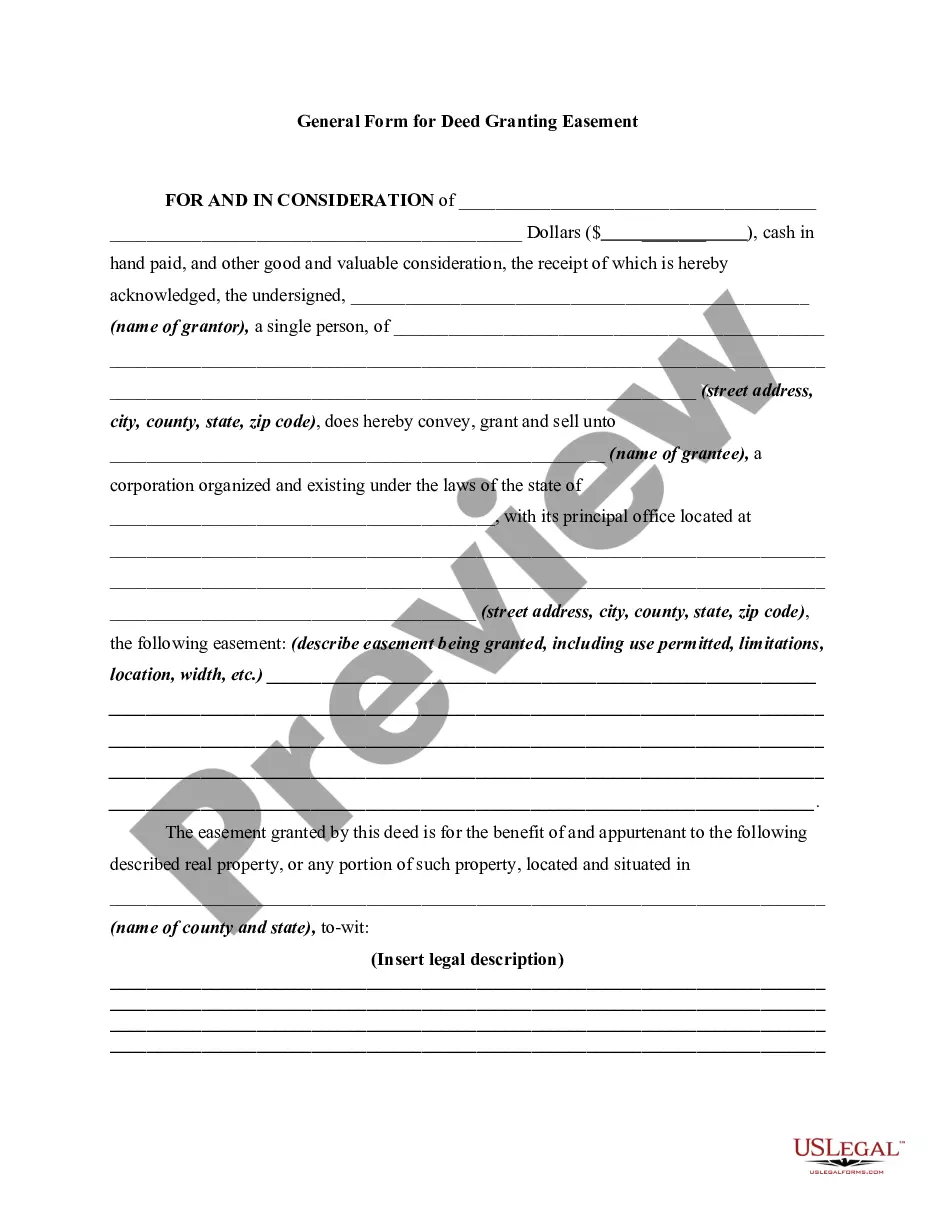
An easement deed allows a party that is not the owner to use a portion of the land. It is a written agreement between two parties that spells out what part of the property is available for access and how it may be used. Since you are granting an easement to your land, you can set any terms and conditions you like.
There must be a dominant and a servient tenement; The easement must accommodate the dominant tenement, that is, be connected with its enjoyment and for its benefit; The dominant and servient owners must be different persons; The right claimed must be capable of forming the subject-matter of a grant.
Generally speaking, an easement is a more serious property right; it is the legal right to use someone else's land for a particular purpose. Easements are often recorded at the county clerk's office and encumber your property's title.Here, however, you probably do not need to take the step of granting an easement.
Description Easement Request Sample Letter An easement gives one party the right to go onto another party's property. That property may be owned by a private person, a business entity, or a group of owners.The easement is a real property interest, but separate from the legal title of the owner of the underlying land.
An easement is a nonpossessory right to use and/or enter onto the real property of another without possessing it. It is "best typified in the right of way which one landowner, A, may enjoy over the land of another, B".
Nine Essential Property Easement Agreement Considerations. Legal Description of Properties. Depiction of the Easement Area. Covenant Not to Disturb the Use of the Easement. Determination of Maintenance Obligations. Payment of Property Taxes.
Give the document a simple title: Grant of Easement is sufficient. Identify the parties. You need to explain who the parties are to the agreement. The person granting the easement to his property is the Grantor and the person gaining access to the property is the Grantee.
An easement is a limited right to use another person's land for a stated purpose. Examples of easements include the use of private roads and paths, or the use of a landowner's property to lay railroad tracks or electrical wires.