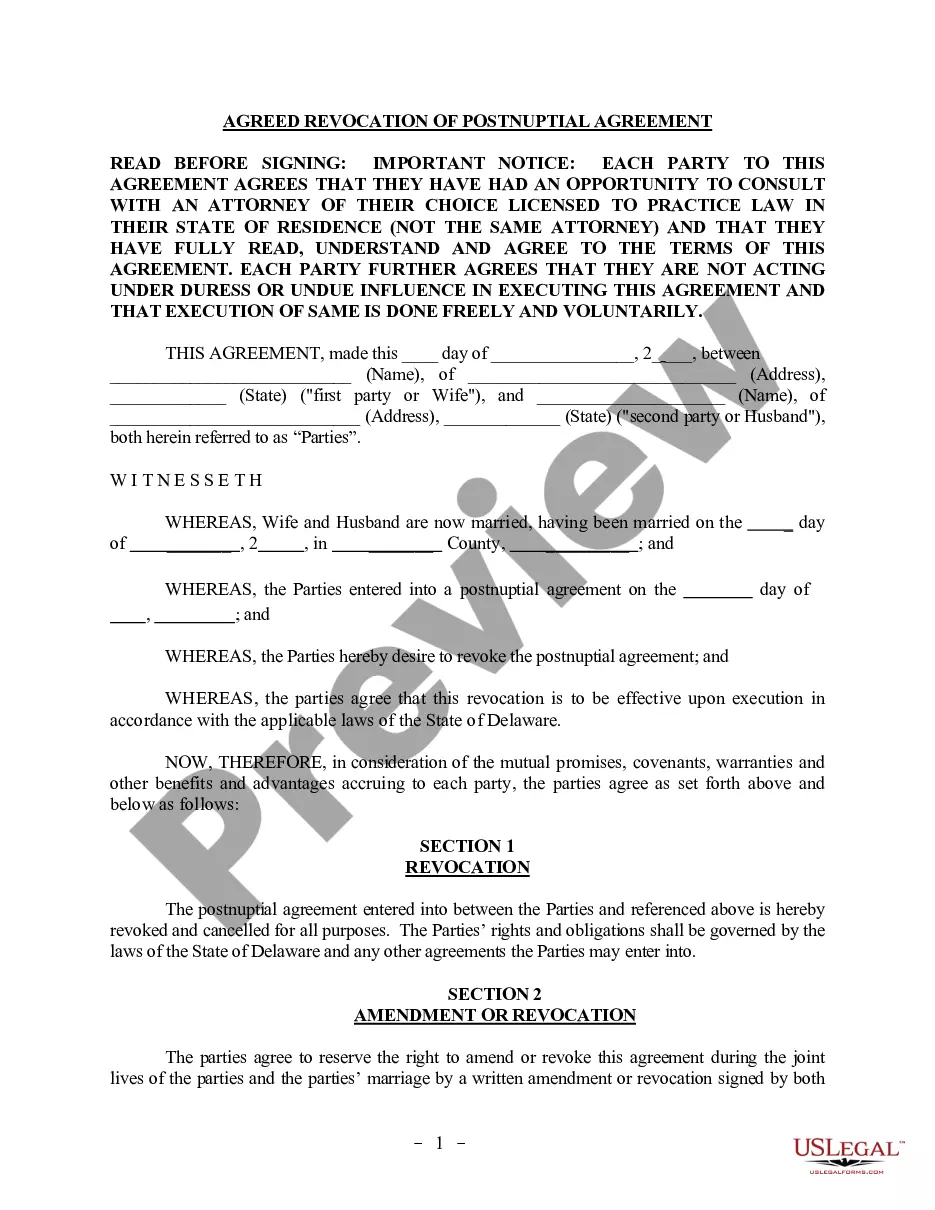
Assignment of Wages Due or to Become Due
Understanding this form
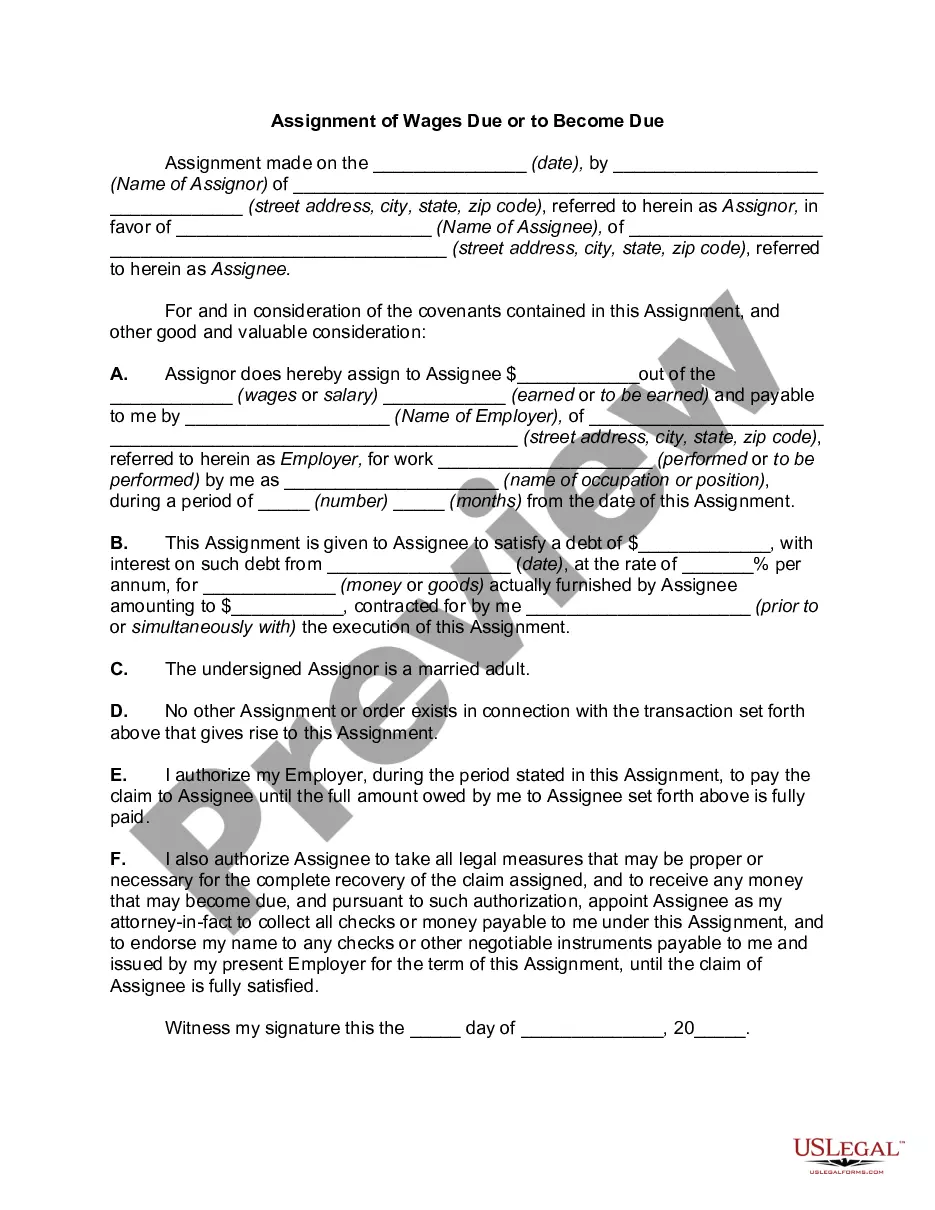
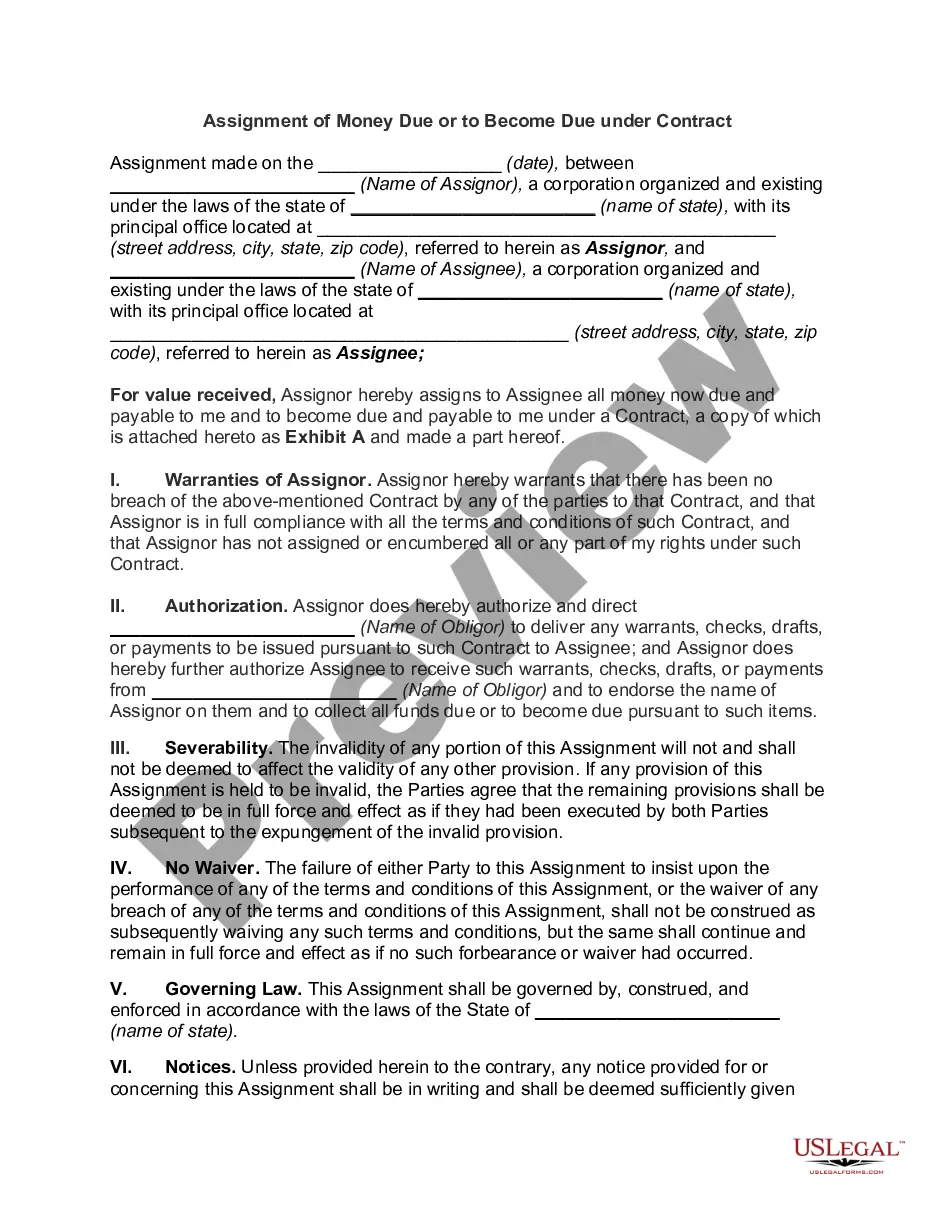
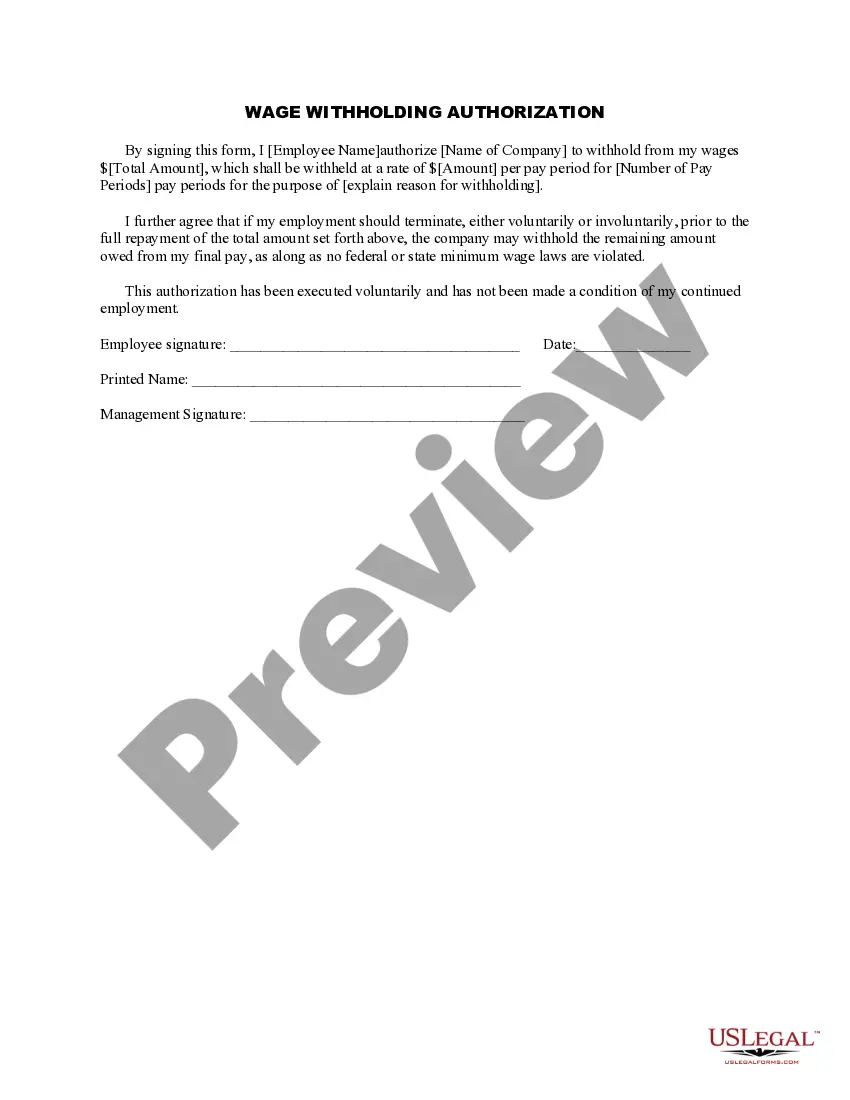
The Assignment of Wages Due or to Become Due is a legal document that allows a wage earner to transfer the right to collect their future wages to a creditor. This form facilitates the payment of a debt by having the employer deduct specified amounts from the employee's earnings, ensuring creditors receive payment directly from the employer. Unlike similar forms, the Assignment of Wages is required to be executed with specific language and conditions to comply with state laws, making it essential to use a properly drafted version.
What’s included in this form
- Date of assignment and names of the assignor and assignee.
- Identification of the employer and the wages being assigned.
- Amount of the debt being satisfied through wage assignment.
- Authorization for the employer to pay the assignee directly.
- Signature of the assignor and witness details, if applicable.


When to use this document
This form is commonly used when an employee has accrued debts and agrees to assign a portion of their wages to a creditor. Scenarios include consolidating debts, repaying loans, or settling personal financial obligations. The Assignment of Wages can help creditors ensure they receive payments directly from an employee's salary, offering a legal remedy for both parties involved.
Who this form is for
- Employees with debts who seek to authorize creditors to collect directly from their wages.
- Creditors wanting to secure repayment for loans or services rendered.
- Employers who need a clear understanding of their obligations regarding wage assignments.
Instructions for completing this form
- Identify the date of the assignment and enter the names and addresses of both the assignor and assignee.
- Specify the wages or salary being assigned, including details about the employer and the employee's position.
- Outline the debt amount involved and any relevant interest rates.
- Include a statement confirming that no other wage assignment exists related to the same debt.
- Have the assignor sign the form, providing their printed name and date of signature.
Notarization guidance
Notarization is not commonly needed for this form. However, certain documents or local rules may make it necessary. Our notarization service, powered by Notarize, allows you to finalize it securely online anytime, day or night.
Get your form ready online
Our built-in tools help you complete, sign, share, and store your documents in one place.
Make edits, fill in missing information, and update formatting in US Legal Forms—just like you would in MS Word.
Download a copy, print it, send it by email, or mail it via USPS—whatever works best for your next step.
Sign and collect signatures with our SignNow integration. Send to multiple recipients, set reminders, and more. Go Premium to unlock E-Sign.
If this form requires notarization, complete it online through a secure video call—no need to meet a notary in person or wait for an appointment.
We protect your documents and personal data by following strict security and privacy standards.

Make edits, fill in missing information, and update formatting in US Legal Forms—just like you would in MS Word.

Download a copy, print it, send it by email, or mail it via USPS—whatever works best for your next step.

Sign and collect signatures with our SignNow integration. Send to multiple recipients, set reminders, and more. Go Premium to unlock E-Sign.

If this form requires notarization, complete it online through a secure video call—no need to meet a notary in person or wait for an appointment.

We protect your documents and personal data by following strict security and privacy standards.
Mistakes to watch out for
- Failing to specify the full names and addresses of all parties involved.
- Not accurately detailing the amount of wages being assigned.
- Missing or incorrect signatures, which can invalidate the assignment.
- Neglecting to comply with state-specific legal requirements.
Benefits of completing this form online
- Convenience of completing the form from home without the need for in-person visits.
- Editability allows users to customize the form accurately based on their specific needs.
- Access to professionally drafted legal language ensures compliance with state regulations.
Legal use & context
- Wage assignments are commonly used as a method of debt collection, providing a clear and legal means for creditors to recover amounts owed.
- Non-compliance with state statutes can render the assignment ineffective, potentially leaving both parties unprotected.
Summary of main points
- The Assignment of Wages is a critical legal tool for employees and creditors involving wage deductions.
- Proper completion and compliance with local laws are essential for enforceability.
- Understanding the rights and obligations of each party is key to a successful wage assignment.
Looking for another form?





Form popularity
FAQ
The journal entry will be Debit Gross Wages, and Credit "Child Support Liability account." When you write the check to pay the garnishment, on the Expenses tab, you list the Child Support Liability account.
Court orders, such as an order to garnish your wages, will show up as part of a background check, since court records are public records.
25aa A wage assignment is an order that the paying party's employer send money from the paying party's. paycheck to the receiving party. 25aa If there is only a support order and no wage assignment then the paying party is to pay support directly to. the receiving party.
Wage Assignment: Voluntary In a voluntary wage assignment, a worker asks their employer to withhold a portion of their paycheck and send it to a creditor to pay off a debt.Payday lenders often include voluntary wage assignments into their loan agreements to better their chances of being repaid.
You can stop the wage assignment by filling out the enclosed Revocation Notice Form, or by writing a letter stating that you are revoking the wage assignment.It is highly recommended that you give a copy of the Revocation Notice Form or letter to your employer so your employer can stop any pending payments.
Yes, you can stop a wage assignment. You would need to give written notice to the creditor and the employer.
A wage assignment is a voluntary agreement between the employee and creditor where an amount is withheld from the employee's paycheck to satisfy a debt owed to a third-party recipient, whereas under a wage garnishment, the amount withheld from the employee's check is typically obtained through a court order initiated
Employees cannot be fired because their wages are garnished. Federal law protects you from being fired simply because your wages are being garnished for a single debt. However, if your wages are being garnished for two or more debts, your employer can fire you if it decides to do so.