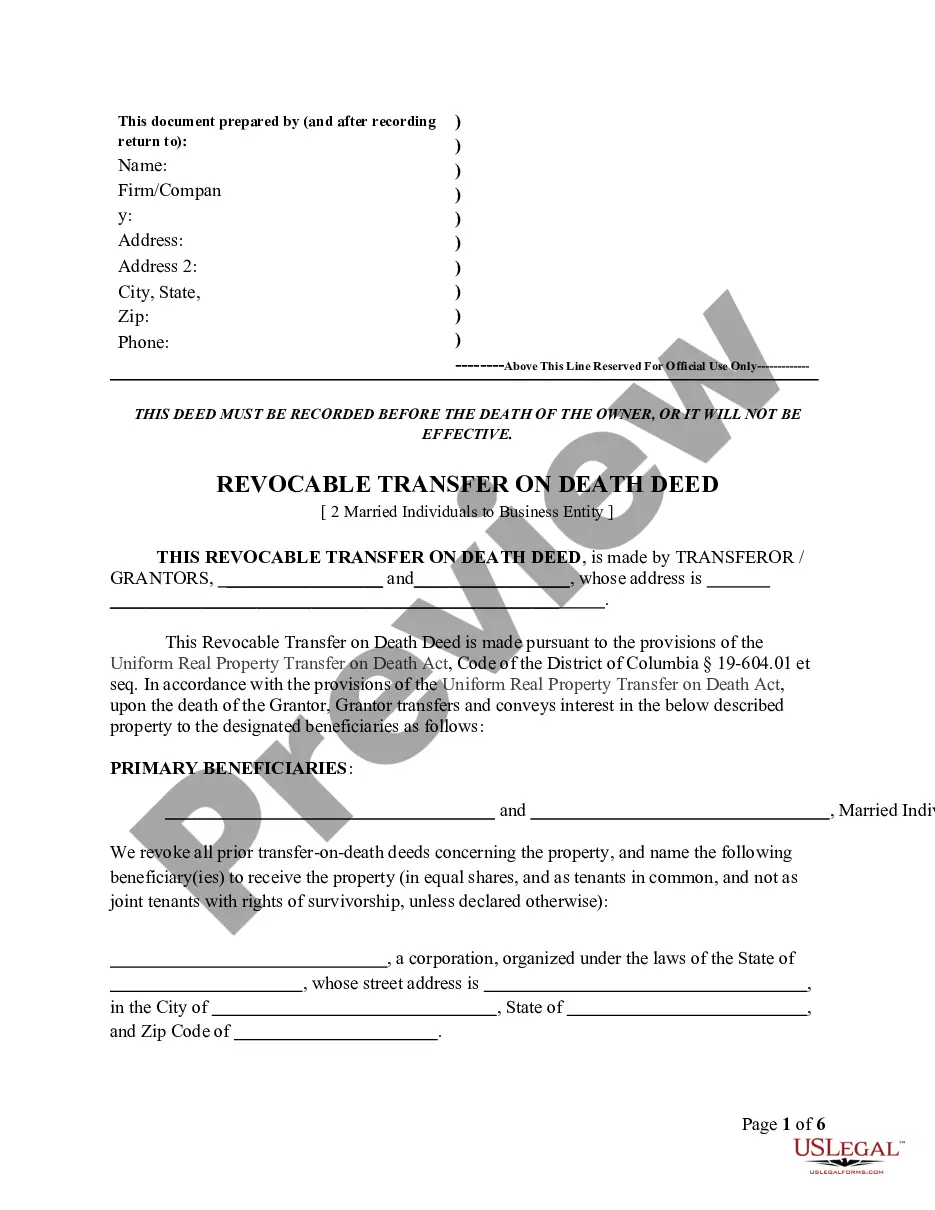
Sample Letter for Motion for Extension of Time
About this form
The Sample Letter for Motion for Extension of Time is a formal document used to request additional time to fulfill a legal obligation or procedure, such as submitting court documents or responding to motions. This form serves as a template that helps individuals communicate their request effectively to the court or other legal entities while ensuring compliance with procedural requirements.
What’s included in this form
- Date: The specific date on which the letter is written.
- Recipient's name and address: Details of the individual or court to whom the letter is addressed.
- Subject matter: A brief statement indicating the purpose of the letter.
- Request: The main body of the letter articulating the need for additional time.
- Closing: A polite conclusion thanking the recipient for their consideration.
- Signature: Space for the sender's signature and printed name.



When to use this document
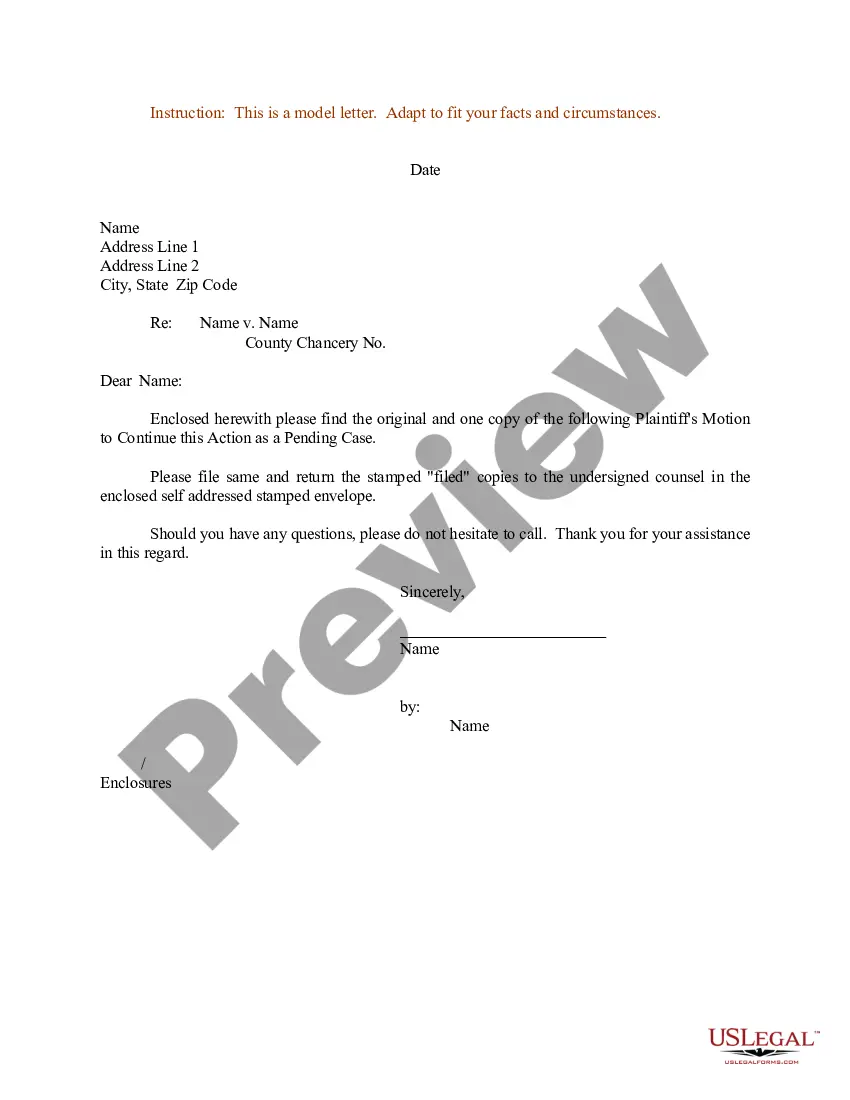
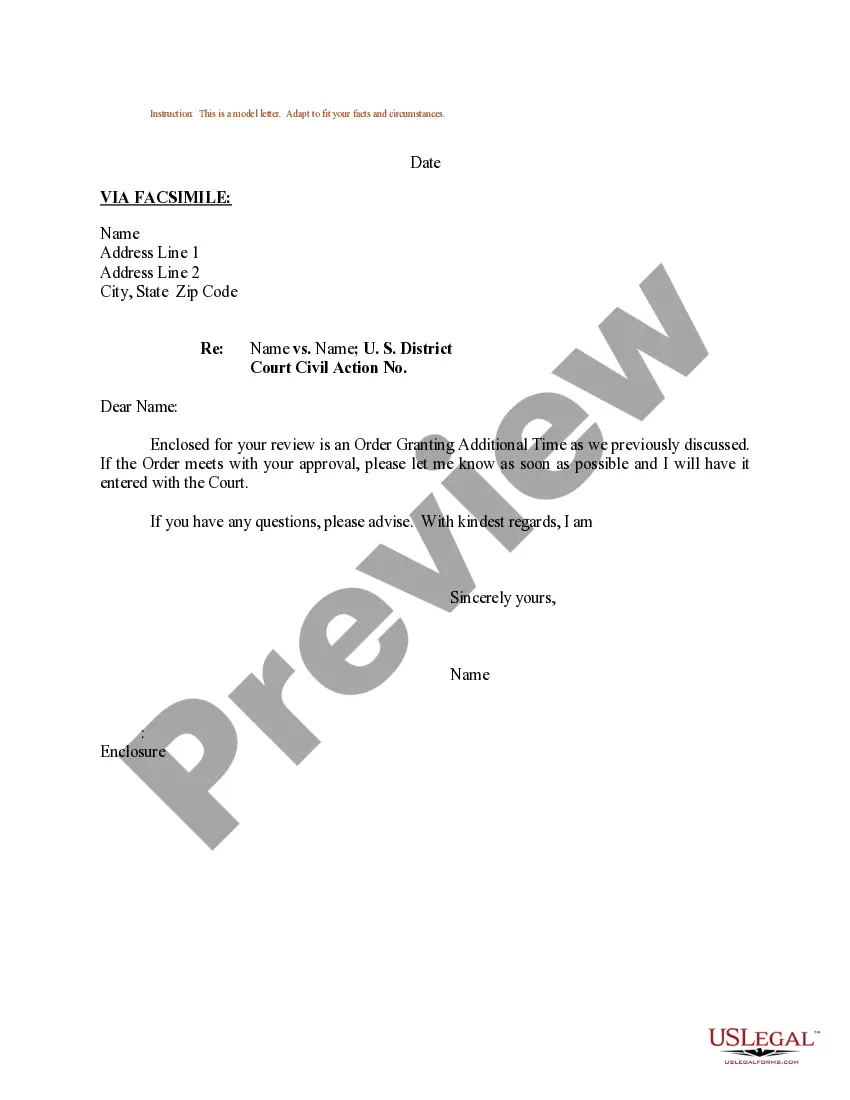
This form should be used when an individual or entity requires more time to meet a deadline set by a court or legal authority. Common situations include needing extra time to prepare a defense, gather evidence, or respond to a legal complaint. It is essential to submit the request promptly to avoid potential penalties or dismissals related to missed deadlines.
Who can use this document
- Individuals involved in legal proceedings who need more time for compliance.
- Attorneys representing clients requiring an extension.
- Parties in a lawsuit who anticipate delays in meeting court-imposed timelines.
How to prepare this document
- Identify the parties involved: Enter your name and address, along with the recipient's name and address.
- Enter the date: Ensure the date is current and reflects when you are sending the letter.
- Specify the subject: Clearly state that the letter is regarding a motion for an extension of time.
- Detail the request: Clearly explain why you need additional time and outline the new proposed deadline.
- Sign the letter: Add your signature at the end of the letter to formalize the request.
Is notarization required?
Notarization is generally not required for this form. However, certain states or situations might demand it. You can complete notarization online through US Legal Forms, powered by Notarize, using a verified video call available anytime.
Get your form ready online
Our built-in tools help you complete, sign, share, and store your documents in one place.
Make edits, fill in missing information, and update formatting in US Legal Forms—just like you would in MS Word.
Download a copy, print it, send it by email, or mail it via USPS—whatever works best for your next step.
Sign and collect signatures with our SignNow integration. Send to multiple recipients, set reminders, and more. Go Premium to unlock E-Sign.
If this form requires notarization, complete it online through a secure video call—no need to meet a notary in person or wait for an appointment.
We protect your documents and personal data by following strict security and privacy standards.

Make edits, fill in missing information, and update formatting in US Legal Forms—just like you would in MS Word.

Download a copy, print it, send it by email, or mail it via USPS—whatever works best for your next step.

Sign and collect signatures with our SignNow integration. Send to multiple recipients, set reminders, and more. Go Premium to unlock E-Sign.

If this form requires notarization, complete it online through a secure video call—no need to meet a notary in person or wait for an appointment.

We protect your documents and personal data by following strict security and privacy standards.
Common mistakes
- Failing to provide a clear reason for the extension request.
- Not addressing the letter to the correct recipient.
- Omitting a new deadline or specific time frame for when the obligations will be met.
- Neglecting to proofread for spelling or grammatical errors.
Advantages of online completion
- Convenience of immediate access to a professionally drafted template.
- Editability allows for customization to fit your specific situation.
- Reassurance of compliance with legal standards.
Legal use & context
- The letter can be submitted to a court to formally request an extension of time, which is a common legal practice.
- Courts generally require good cause for an extension; therefore, providing clear reasoning in the letter is essential for acceptance.
What to keep in mind
- The Sample Letter for Motion for Extension of Time is a valuable tool for requesting additional time in legal matters.
- Completing the form accurately can help ensure that your request is considered by the court.
- Always check specific local rules regarding the use and submission of this form.
Looking for another form?

Form popularity
FAQ
It is a formal template you use to request more time to meet a court deadline or other legal requirement. The form provides fields for the date, recipient’s name and address, a brief subject, the request itself, a courteous closing, and a signature line. It’s intended to be directed to the court or another legal decision-maker, not filed as a motion.
This template guides you to include key pieces: date, recipient’s name and address, a clear subject indicating the extension request, a concise explanation of why more time is needed, a courteous closing, and your signature. Use a respectful tone and present facts succinctly; file or submit it to the court or relevant entity according to local rules.
Common valid reasons include needing time to prepare a defense, gather essential documents, or respond to a motion, or to coordinate discovery. The when_to_use guidance notes that extensions are appropriate when deadlines set by a court or legal authority require more time. The letter should briefly state the reason and the specific amount of additional time requested.
Using this template helps ensure the extension request is formal, polite, and clearly presented. It provides spaces for date, recipient, subject, the extension request, closing, and signature, and is intended to communicate with the court or other decision-maker. Note that an extension is not guaranteed and may depend on the recipient’s review.
A motion to extend time is a formal filing asking a court for more time to act in a case. The Sample Letter for Motion for Extension of Time is a letter template you can use to request that extension from the court or other authority, not a complete motion form.
This form is a letter template, not a filed motion. It guides you to include a date, recipient’s name and address, a clear subject, the extension request, a courteous closing, and a signature line. It’s designed for communication with the court or another legal decision-maker and can accompany or precede a formal motion.