District of Columbia Transfer on Death Deed or TOD - Beneficiary Deed for One Individual to Multiple Individuals
What is this form?
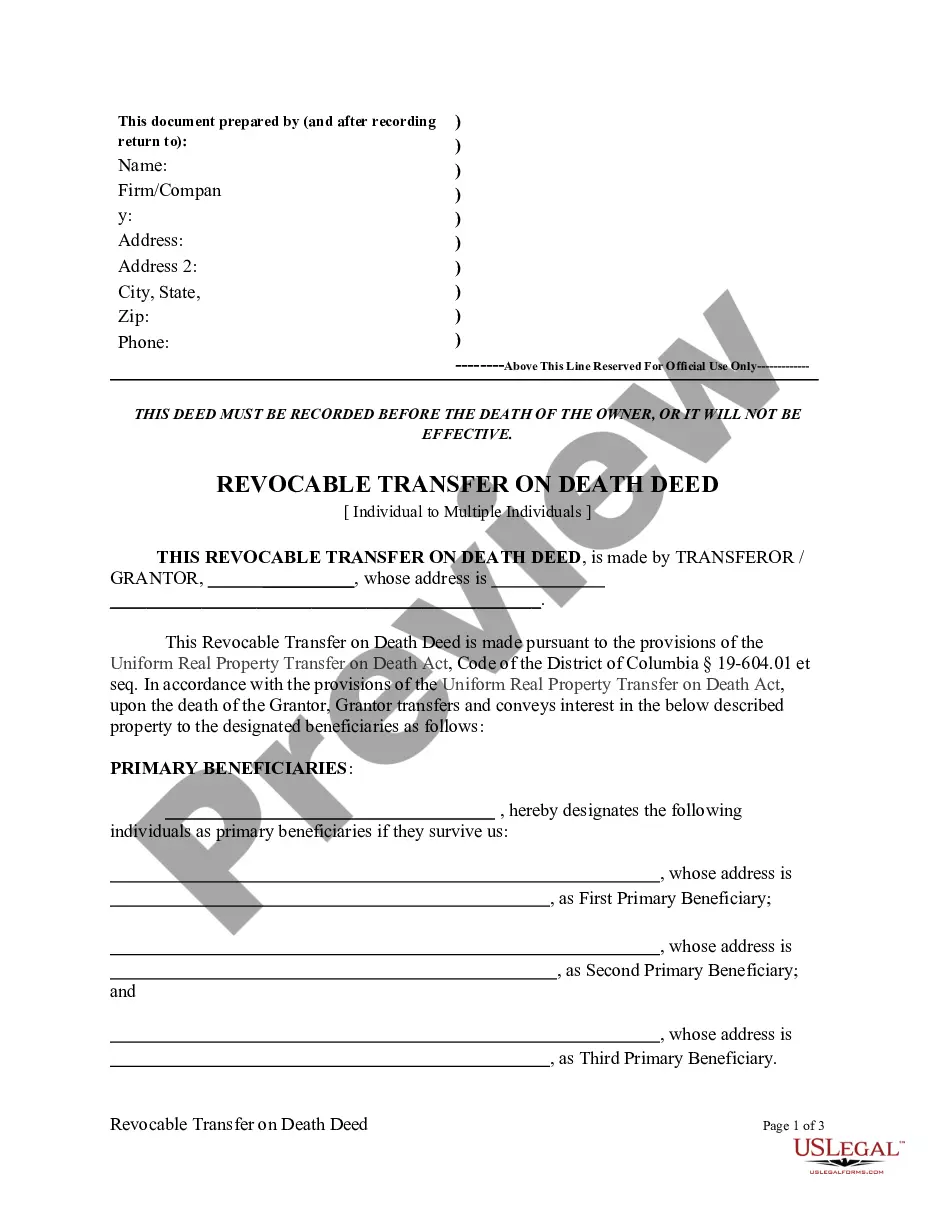
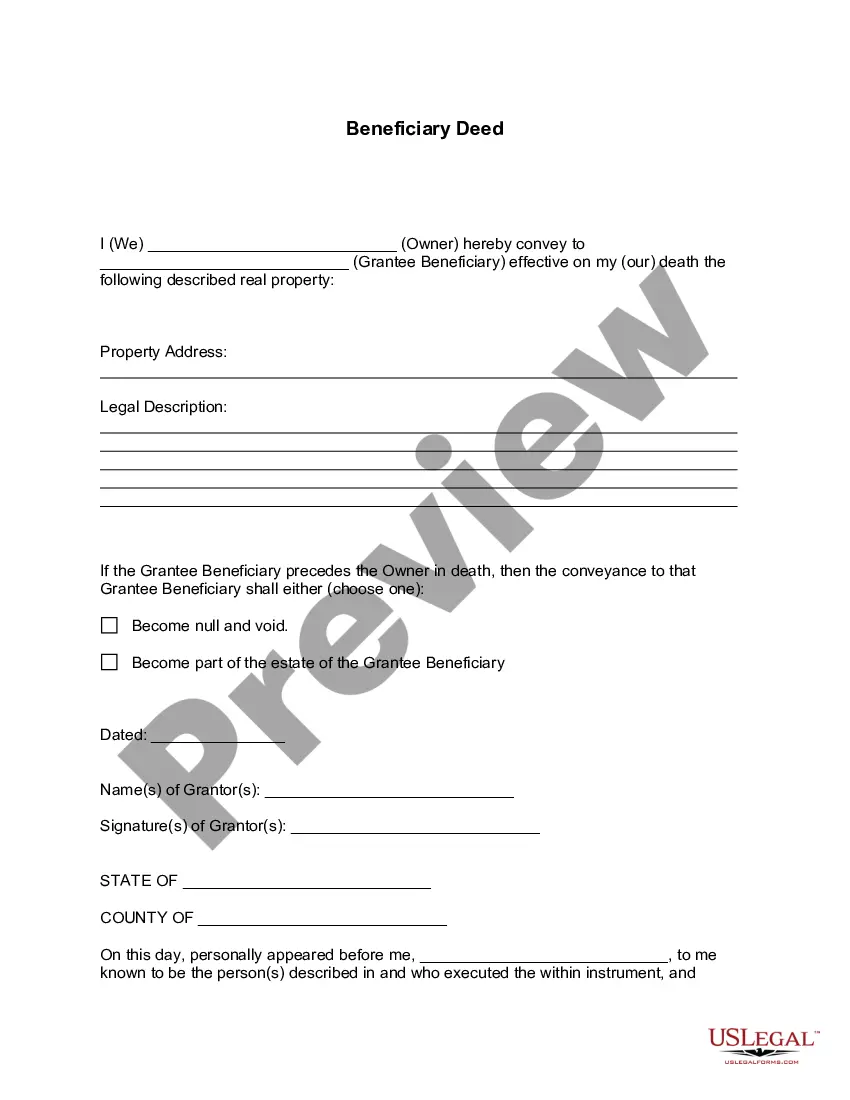
The Transfer on Death Deed (TOD) allows property owners to designate beneficiaries who will receive ownership of a parcel of land upon the owner's death. This form is distinct because it does not convey any present interest in the property and remains revocable at any time before the owner's death. In contrast to wills, the TOD deed helps transfer ownership without the need for probate, making it a convenient option for those planning their estate transfer efficiently.
Form components explained
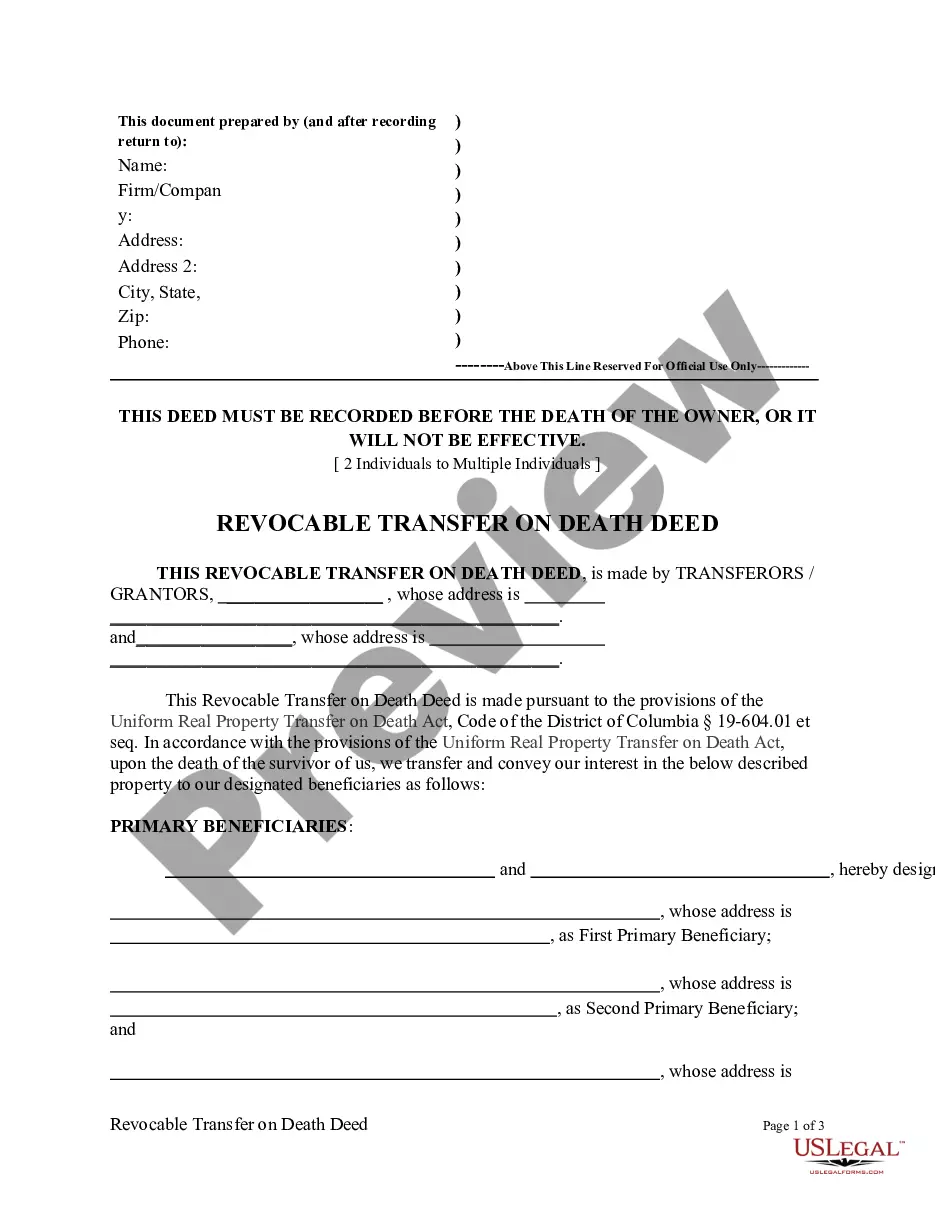
- Name and address of the Grantor (property owner).
- Identification of primary beneficiaries who will inherit the property.
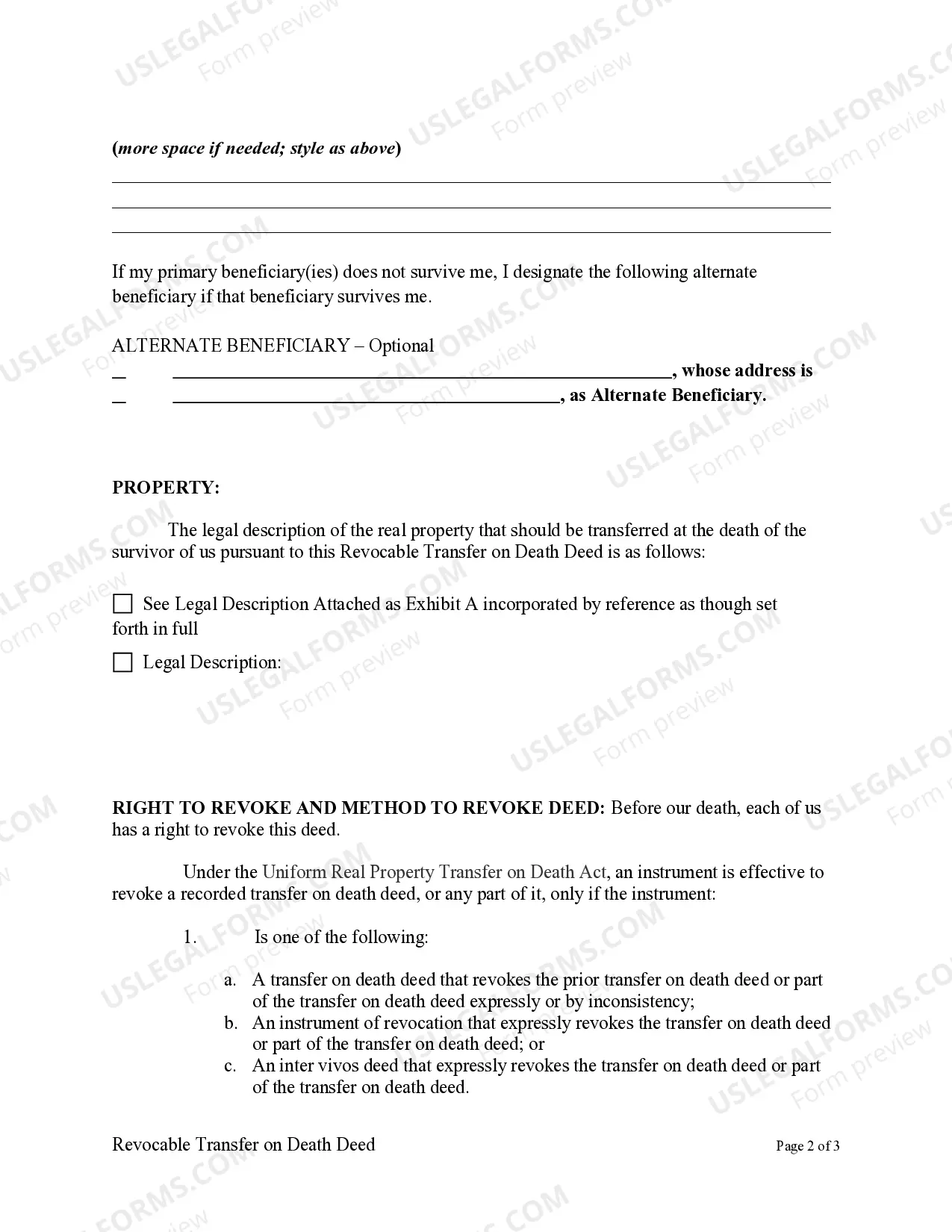
- Information about alternate beneficiaries, if applicable.
- Legal description of the property being transferred.
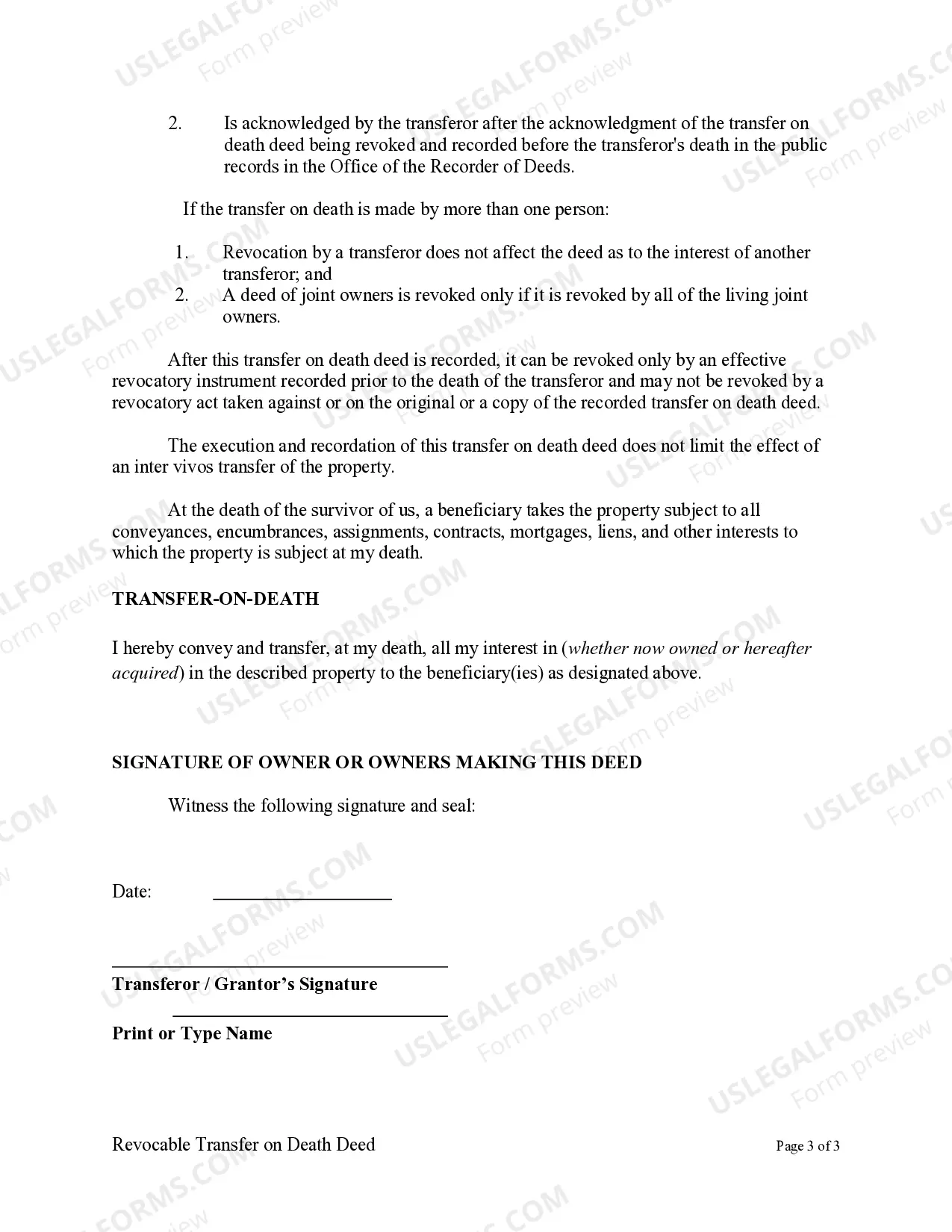
- Provisions for revoking the deed before the grantor's death.
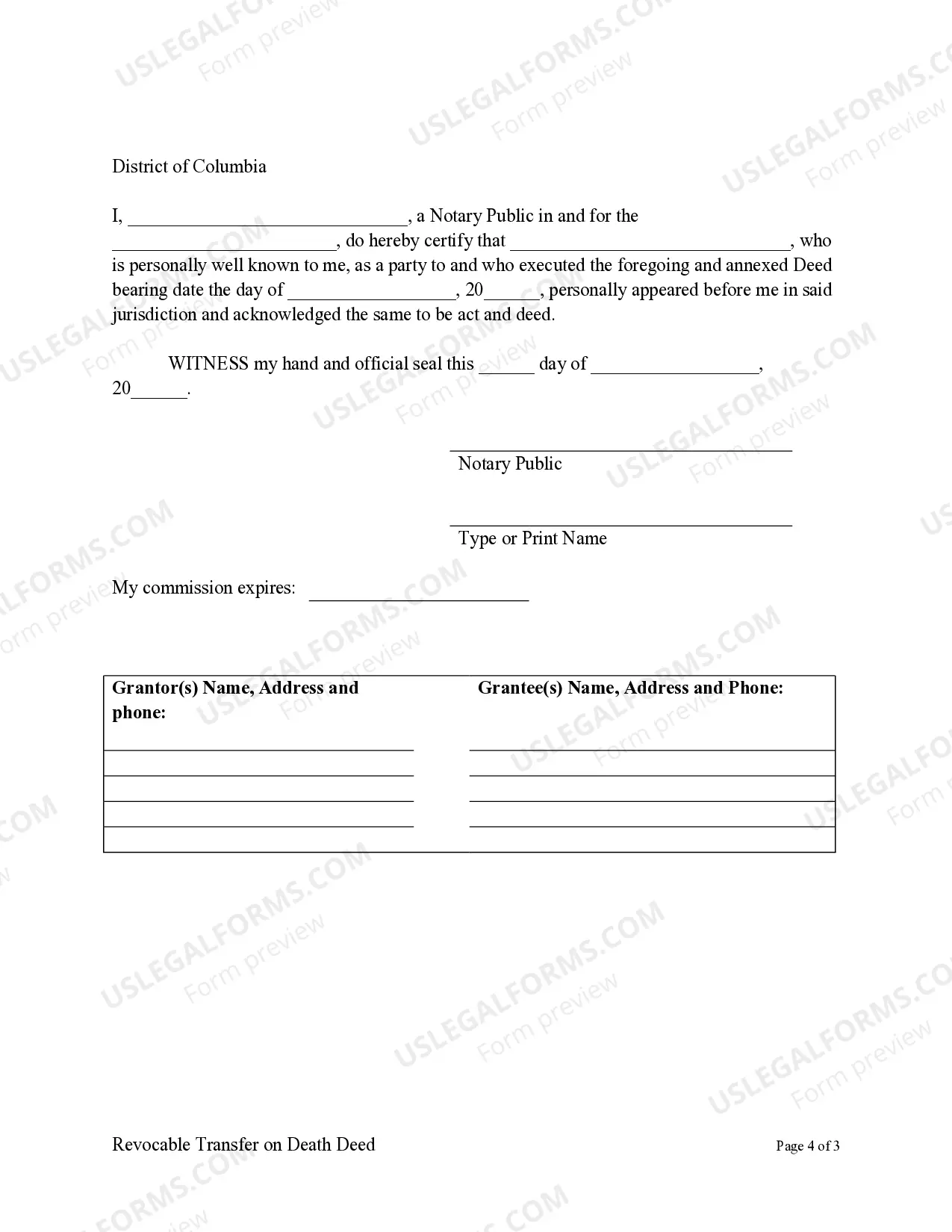
- Space for signatures and notarization of the deed.




Situations where this form applies
This form is ideal when a property owner wishes to designate one or more beneficiaries to inherit real estate after their death, while retaining full control and ownership during their lifetime. It is particularly useful for individuals looking to simplify the transfer of property and avoid the probate process, ensuring a straightforward process for their heirs.
Intended users of this form
- Property owners wishing to plan for the transfer of real estate after their death.
- Individuals wanting to avoid the probate process for their beneficiaries.
- Homeowners who may want to change beneficiaries over time while retaining ownership.
- Those seeking to simplify their estate planning without complex legal arrangements.
Steps to complete this form
- Identify the parties involved by entering the name and address of the Grantor.
- List the names and addresses of all primary beneficiaries.
- Include any alternate beneficiaries, if necessary.
- Provide a legal description of the property intended for transfer.
- Sign and date the deed, ensuring that it is notarized as required.
Does this document require notarization?
Yes, this form must be notarized to be legally valid. Notarization ensures that the identity of the Grantor is verified and that the document is recognized in a legal context. US Legal Forms offers integrated online notarization services for secure and convenient notarization through video calls, ensuring documents are legally binding without the need for travel.
Get your form ready online
Our built-in tools help you complete, sign, share, and store your documents in one place.
Make edits, fill in missing information, and update formatting in US Legal Forms—just like you would in MS Word.
Download a copy, print it, send it by email, or mail it via USPS—whatever works best for your next step.
Sign and collect signatures with our SignNow integration. Send to multiple recipients, set reminders, and more. Go Premium to unlock E-Sign.
If this form requires notarization, complete it online through a secure video call—no need to meet a notary in person or wait for an appointment.
We protect your documents and personal data by following strict security and privacy standards.

Make edits, fill in missing information, and update formatting in US Legal Forms—just like you would in MS Word.

Download a copy, print it, send it by email, or mail it via USPS—whatever works best for your next step.

Sign and collect signatures with our SignNow integration. Send to multiple recipients, set reminders, and more. Go Premium to unlock E-Sign.

If this form requires notarization, complete it online through a secure video call—no need to meet a notary in person or wait for an appointment.

We protect your documents and personal data by following strict security and privacy standards.
Avoid these common issues
- Failing to record the deed before the Grantor's death.
- Not including the complete legal description of the property.
- Forgetting to update beneficiaries if circumstances change.
- Neglecting to have the deed notarized when required.
- Using this form without understanding local laws that may vary.
Advantages of online completion
- Convenient access to legally vetted templates prepared by licensed attorneys.
- Editability to customize the form according to specific needs.
- Efficient completion without the need for scheduled appointments with a lawyer.
- Immediate availability for download and use, reducing time in managing estate planning.
Looking for another form?


Form popularity
FAQ
Yes, the District of Columbia Transfer on Death Deed or TOD - Beneficiary Deed for One Individual to Multiple Individuals allows property to pass directly to beneficiaries upon death, thereby avoiding the probate process. This means your loved ones can inherit your property without the delays and costs associated with probate. Utilizing a TOD deed simplifies the transfer of ownership and streamlines estate planning. At US Legal Forms, we provide resources and forms to help you create a TOD deed, ensuring that your wishes are honored efficiently and effectively.
Yes, you can transfer a deed without an attorney, especially when using the District of Columbia Transfer on Death Deed or TOD - Beneficiary Deed for One Individual to Multiple Individuals. Many people handle this process independently using tools available online. Uslegalforms simplifies this process by offering easy-to-use resources that guide you through every step of the deed transfer.
You do not necessarily need an attorney to create a District of Columbia Transfer on Death Deed or TOD - Beneficiary Deed for One Individual to Multiple Individuals. Many individuals successfully prepare these deeds themselves using reliable templates. However, if your situation involves complexity, seeking legal advice can provide peace of mind and ensure compliance with all legal nuances.
You can obtain a District of Columbia Transfer on Death Deed or TOD - Beneficiary Deed for One Individual to Multiple Individuals from various sources including legal websites, local government offices, or law firms. Platforms like uslegalforms provide user-friendly templates and guidance to assist you in preparing a TOD deed. This ensures you have a valid document that meets all necessary requirements.
While the District of Columbia Transfer on Death Deed or TOD - Beneficiary Deed for One Individual to Multiple Individuals offers benefits, it also has disadvantages. One key concern is that it does not provide protection from creditors, as those debts can still affect the property. Additionally, if the beneficiaries do not coordinate effectively, disputes may arise among them after your passing. Overall, you should consider all implications before deciding.
To fill out an affidavit of death and heirship in the District of Columbia, start by collecting necessary information about the deceased and their heirs. Clearly outline the family relationships and provide required documentation to support your claims, such as death certificates or wills. Make sure to follow the applicable legal guidelines to avoid rejection or complications. If you need help, USLegalForms offers templates that streamline this task.
Some disadvantages of a District of Columbia Transfer on Death Deed include potential disputes among heirs or complications if the property owner has outstanding debts. Additionally, beneficiaries may face tax implications upon inheriting property, which can add to the overall burden. It's important to weigh these factors when considering estate plans. Opting for professional assistance can help clarify potential challenges.
Yes, the District of Columbia does allow for transfer on death deeds. This legal mechanism enables property owners to designate beneficiaries who inherit real estate directly upon the owner's death, avoiding probate. Utilizing the TOD deed can significantly streamline the property transfer process, providing significant benefits for estate planning. Always ensure you follow specific local procedures when executing this deed.
Filling out a transfer on death designation affidavit for the District of Columbia is straightforward. Begin by gathering essential information about your property and the beneficiaries' details. After that, follow the provided guidelines that accompany the form, and ensure all information is accurate and complete. If you find the process confusing, consider using resources from platforms like USLegalForms, which offer templates and step-by-step assistance.
While it is not mandatory to have an attorney for a transfer on death deed in the District of Columbia, legal advice can be beneficial. A qualified attorney can help you navigate the intricacies of estate planning and ensure the transfer deed aligns with your wishes. Additionally, they can assist with any legal complications that may arise during the process. This support can provide you with peace of mind.