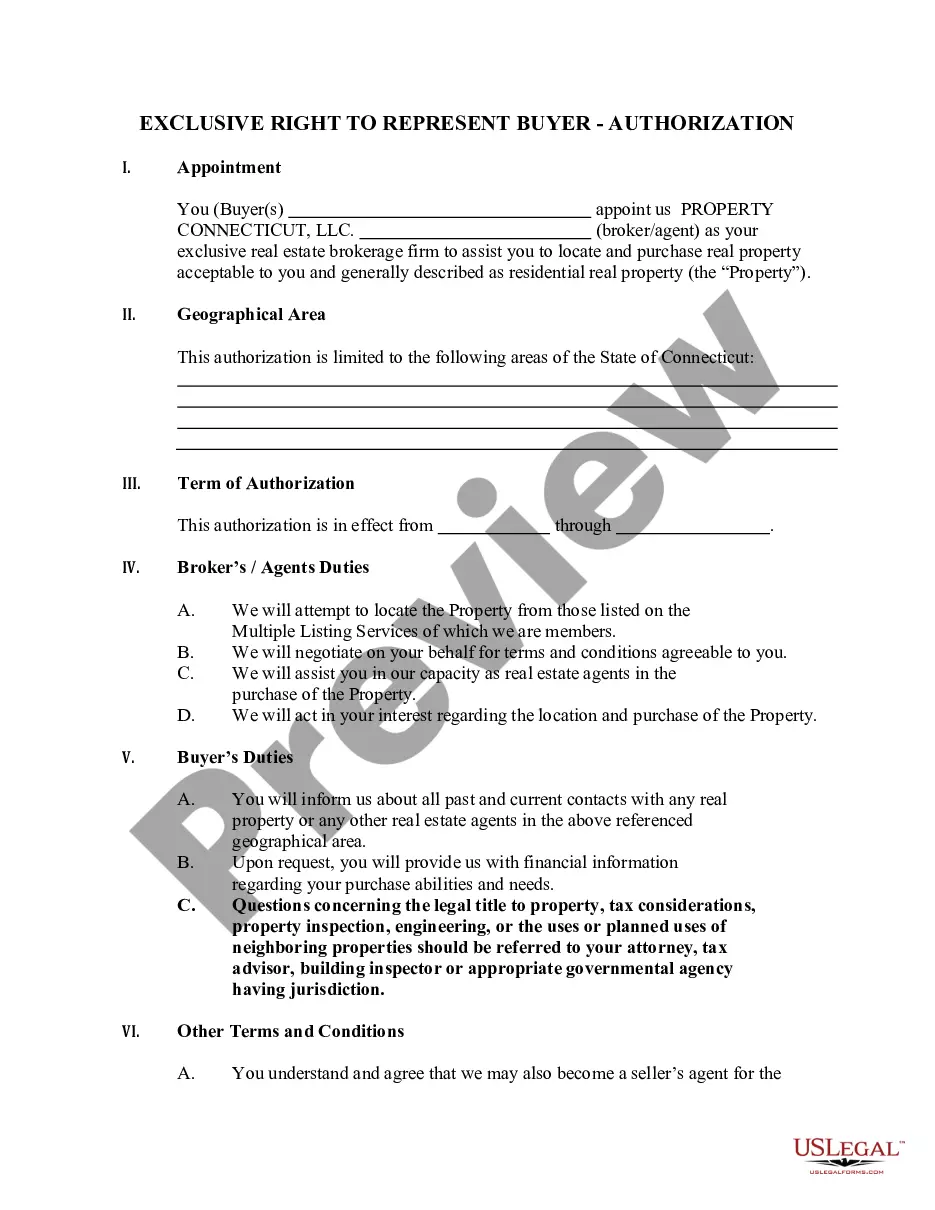
General Form of Complaint for Quantum Meruit - For Services Rendered
What is this form?
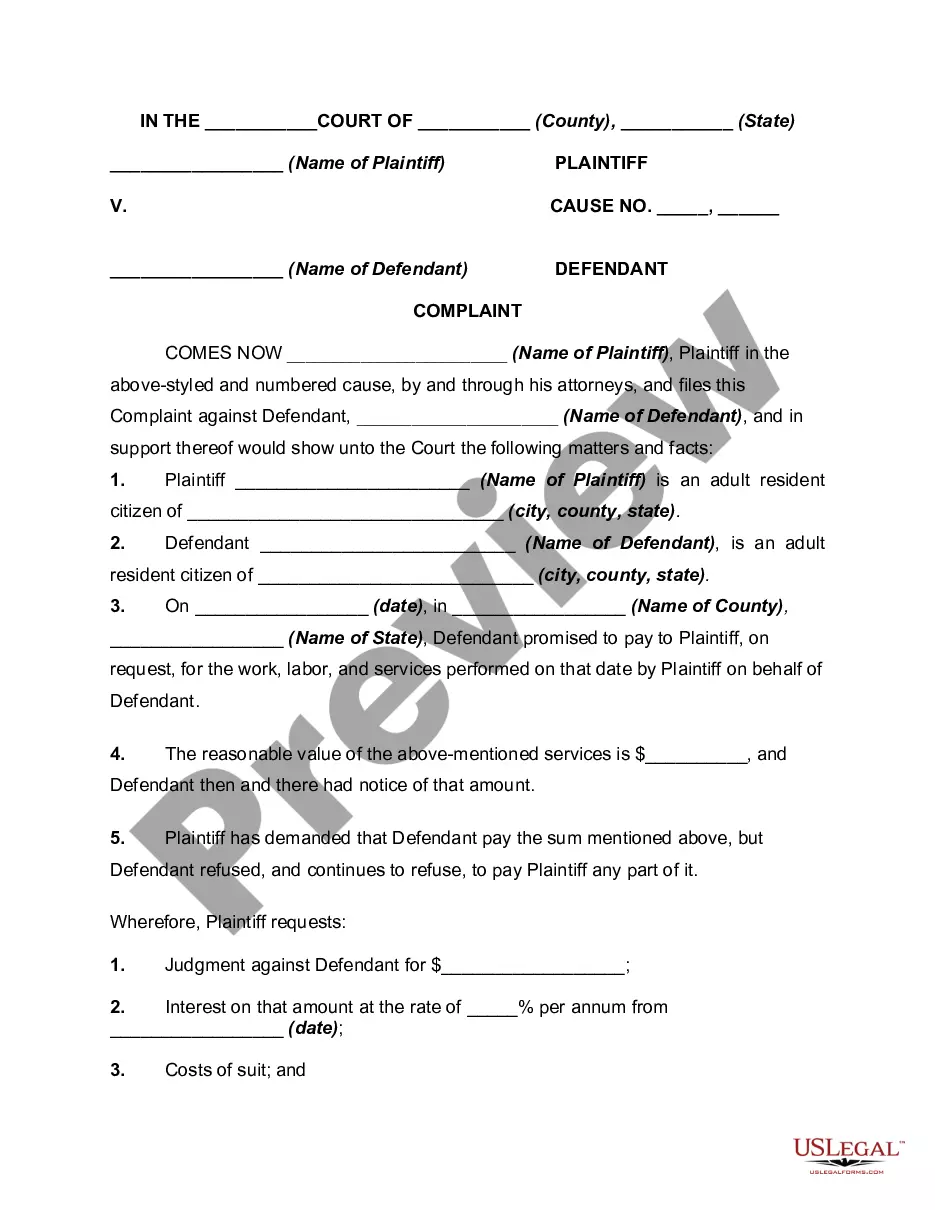
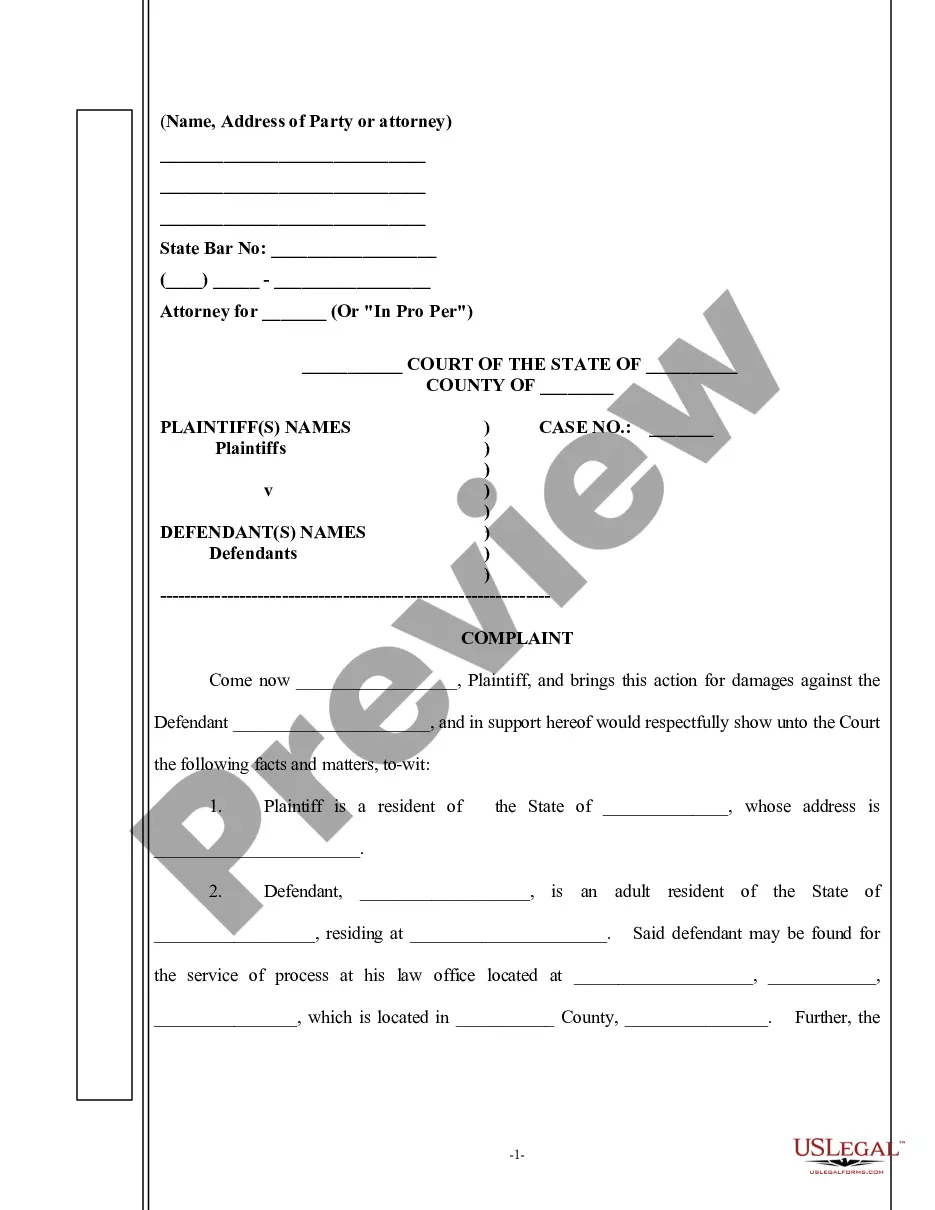
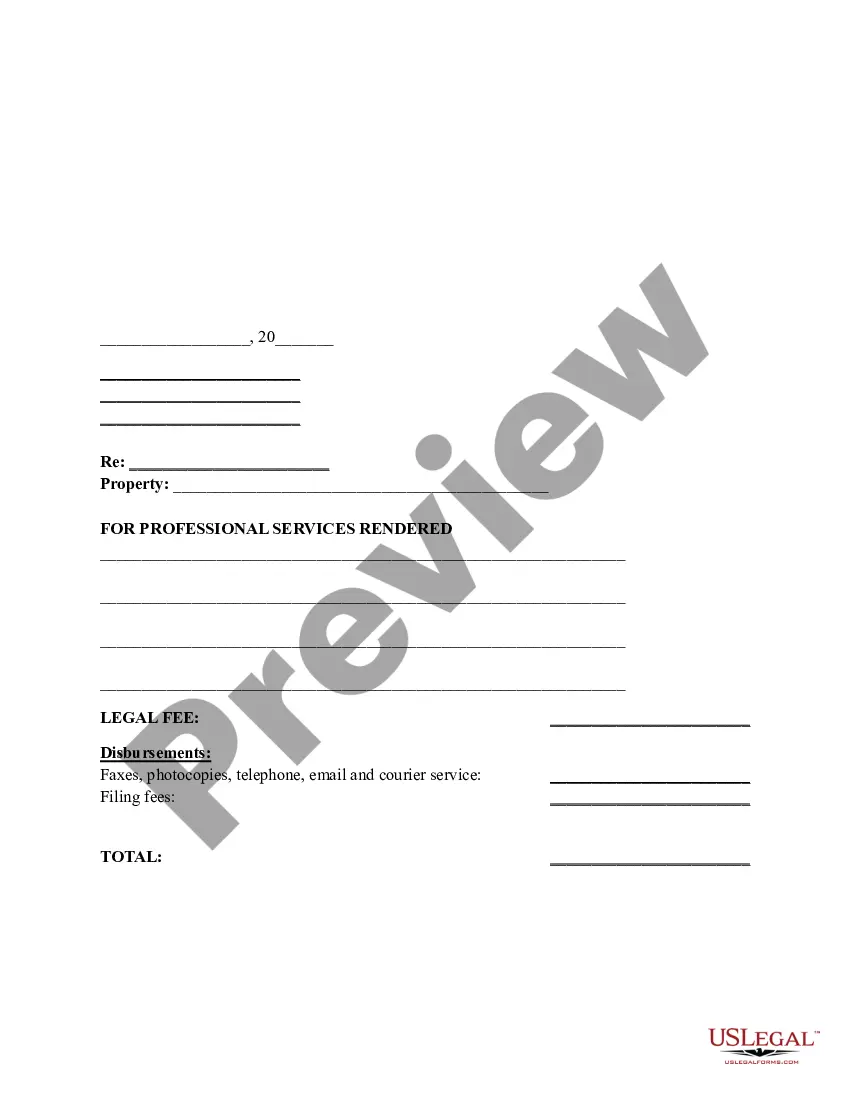
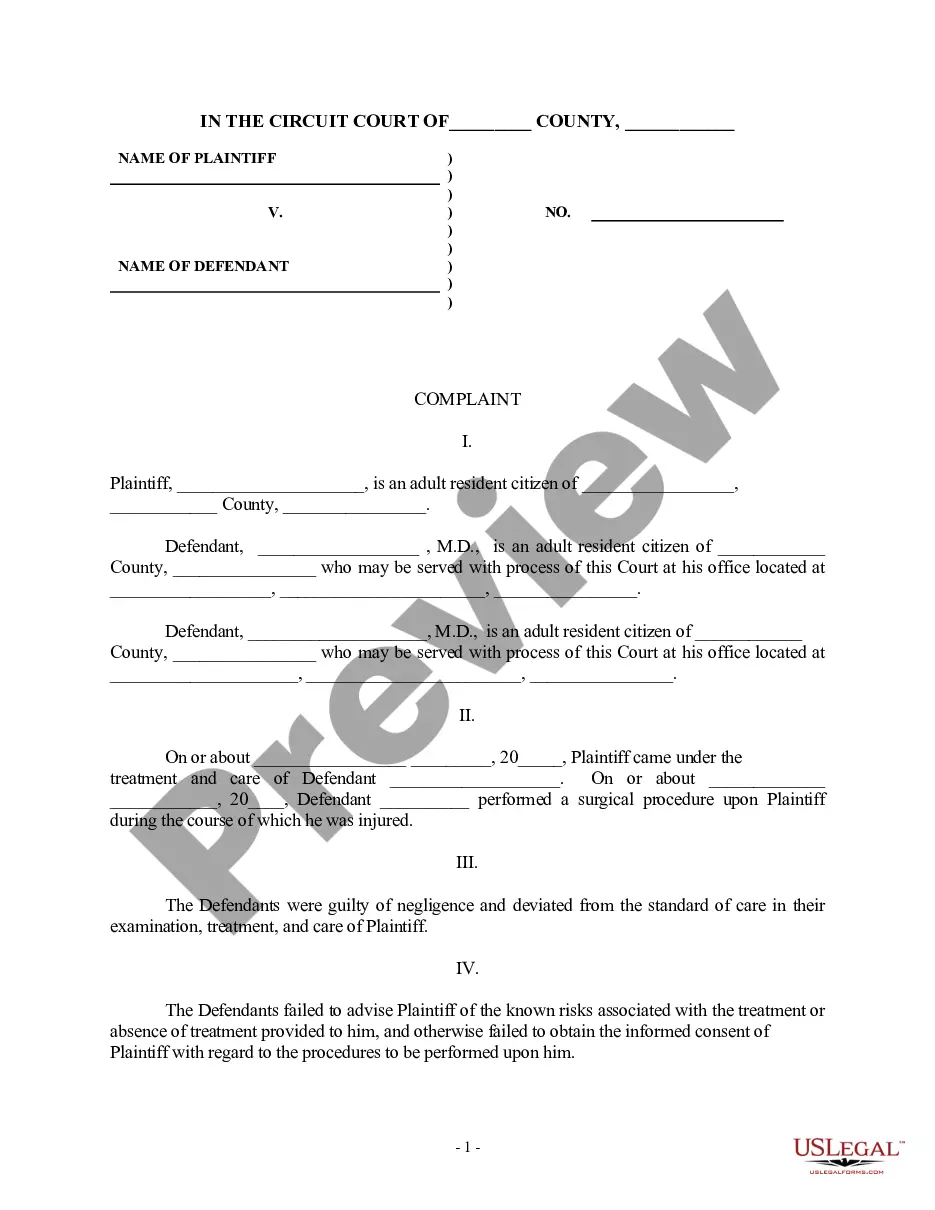
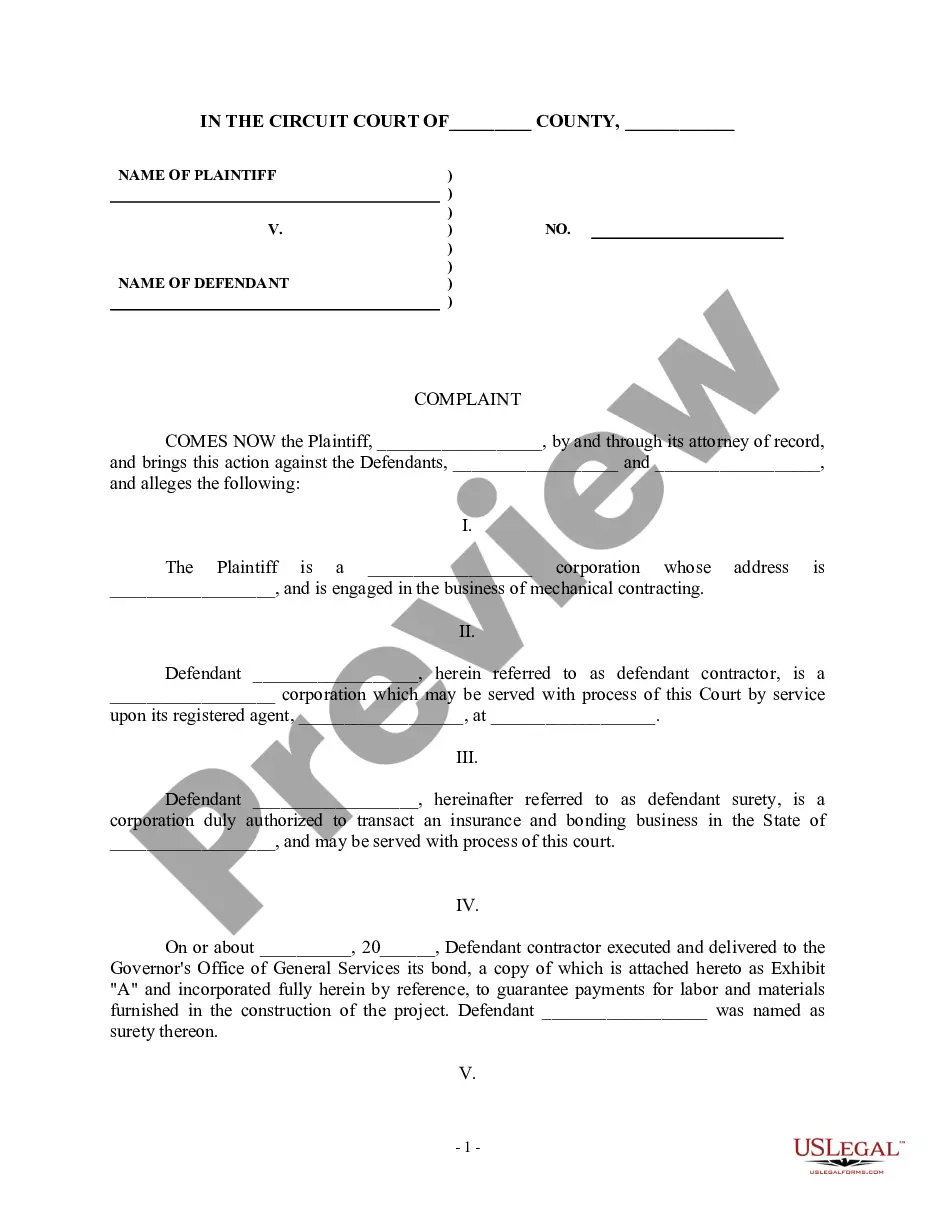
The General Form of Complaint for Quantum Meruit - For Services Rendered is a legal document used when a party has provided services to another party without a formal agreement on compensation. Quantum meruit means "as much as he has deserved," implying that the employer must compensate the worker fairly for services rendered. This form allows the plaintiff to file a complaint, stating that the defendant failed to pay for these services, emphasizing the right to receive payment when no specific agreement exists. This form is essential for those seeking compensation for services where payment was not previously negotiated or agreed upon.
What’s included in this form
- Names and addresses of the plaintiff and defendant.
- Date and location of the services provided.
- Description of the services rendered.
- The reasonable value of the services that the plaintiff deserves.
- Details of the demand for payment made to the defendant.
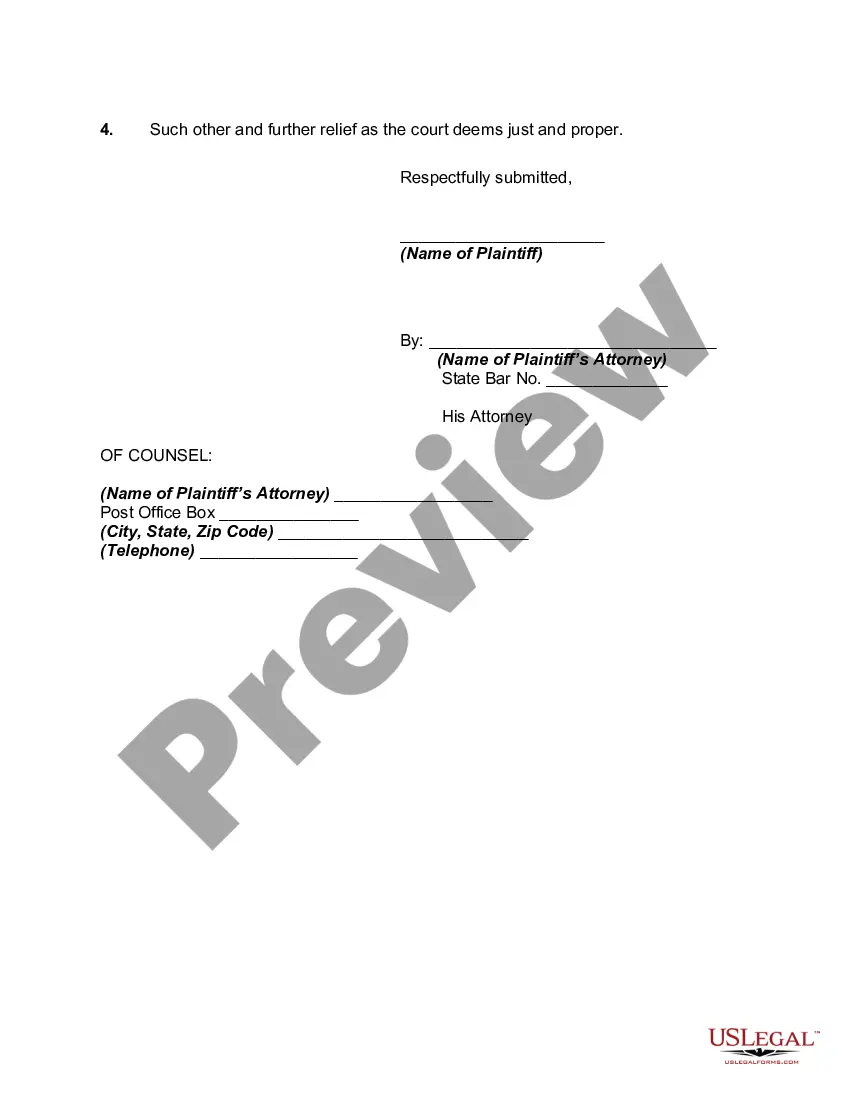
- Request for judgment, interest, costs, and further relief.
When to use this document
This form is useful when you have provided services to someone who agreed to pay you for those services but has not compensated you. Typical scenarios include freelance work, consulting, or any situation where you've delivered services without a formalized contract or agreement on payment terms. It allows you to seek legal recourse and claim compensation that you rightfully earned.
Who should use this form
- Individuals who provided services without a written contract.
- Freelancers or contractors seeking payment for work done.
- Businesses wanting to claim unpaid labor from clients.
- Any party requiring a legal mechanism to recover owed payment for services rendered.
Completing this form step by step
- Identify the parties involved by entering the names of the plaintiff and defendant.
- Provide the date and location where the services were performed.
- Describe the services rendered and their reasonable value.
- Detail any demand for payment that was made to the defendant.
- Complete the request for judgment, including the amount sought and any additional relief needed.
Notarization guidance
This form does not typically require notarization unless specified by local law. Always check your jurisdiction's requirements to ensure compliance with legal standards.
Get your form ready online
Our built-in tools help you complete, sign, share, and store your documents in one place.
Make edits, fill in missing information, and update formatting in US Legal Forms—just like you would in MS Word.
Download a copy, print it, send it by email, or mail it via USPS—whatever works best for your next step.
Sign and collect signatures with our SignNow integration. Send to multiple recipients, set reminders, and more. Go Premium to unlock E-Sign.
If this form requires notarization, complete it online through a secure video call—no need to meet a notary in person or wait for an appointment.
We protect your documents and personal data by following strict security and privacy standards.

Make edits, fill in missing information, and update formatting in US Legal Forms—just like you would in MS Word.

Download a copy, print it, send it by email, or mail it via USPS—whatever works best for your next step.

Sign and collect signatures with our SignNow integration. Send to multiple recipients, set reminders, and more. Go Premium to unlock E-Sign.

If this form requires notarization, complete it online through a secure video call—no need to meet a notary in person or wait for an appointment.

We protect your documents and personal data by following strict security and privacy standards.
Typical mistakes to avoid
- Failing to accurately specify the services rendered or their value.
- Not providing sufficient details about the demand for payment.
- Inaccurate identification of parties involved.
- Leaving out dates or locations, which can lead to confusion or misinterpretation.
Benefits of completing this form online
- Convenient downloading and printing from your home or office.
- Editability allows users to customize the form to suit their specific case.
- Access to accurately drafted templates created by licensed attorneys.
- Time-efficient process, saving users from lengthy legal procedures.
- This form is enforceable in court as it follows the established standards for quantum meruit claims.
- Limitation may apply based on local statutes of limitations for filing such claims.
Quick recap
- The General Form of Complaint for Quantum Meruit allows individuals to seek payment for services rendered without a contract.
- Proper completion of the form is crucial to effectively present a case in court.
- Understanding the applicable legal context can significantly influence the outcome of the complaint.
Looking for another form?



Form popularity
FAQ
Definition. Latin for "as much as he has deserved." An equitable remedy that provides restitution for unjust enrichment. Damages awarded in an amount considered reasonable to compensate a person who has provided services in a quasi-contractual relationship.
In order be able to prevail on a claim of unjust enrichment, a plaintiff must prove each of the following five elements: (1) an enrichment, (2) an impoverishment, (3) a connection between the enrichment and the impoverishment, (4) the absence of justification for the enrichment and impoverishment, and (5) the absence
Courts have crafted four basic elements that the plaintiff must prove before she may recover under the doctrine of quantum meruit: (1) that valuable services were rendered; (2) that the services were rendered to the defendant; (3) that the services were accepted, used, and enjoyed by the defendant; and (4) that the
Question 11 (1 point) What is the policy rationale for contractual quantum meruit? It is not the intention of the parties that goods or services are provided for free. Parties who fail to document their contracts should nonetheless be bound by their promises. The parties' intention to impose a penalty should be upheld.
This is a common law method of assessing damages. For example, where a contractor terminates a contract based on repudiation by the principal, the contractor may claim: For any stage of work completed under the contract by the time of termination, the amount due under the contract plus any damages for breach.
Quantum meruit (Latin for as much as he has deserved) is an equitable remedy that provides restitution for unjust enrichment.Quantum meruit is ordered at the conclusion of litigation or pursuant to an agreement.
Procedurally, quantum meruit is the name of a legal action brought to recover compensation for work done and labour performed "where no price has been agreed."1 The term literally means "as much as is deserved"2 and often can be seen as the legal form of equitable compensation or restitution.
Quantum meruit is a Latin phrase and is related to the Indian Contract Act, 1872. It means what one has earned or as much as he has earned. In simpler terms, it refers to the actual value of the services rendered or performed.The Black Law Dictionary states that quantum meruit means as much as one deserves.