Sample Letter for From Doctor to Patient
Understanding this form
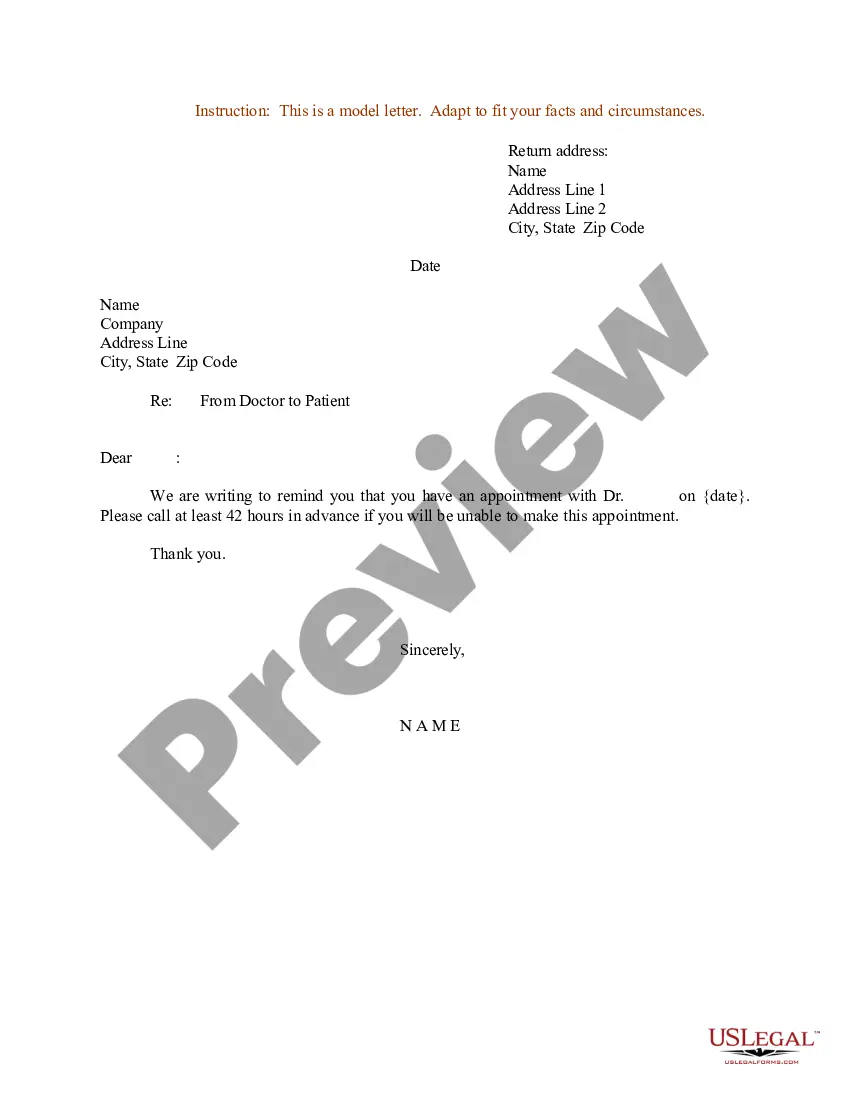
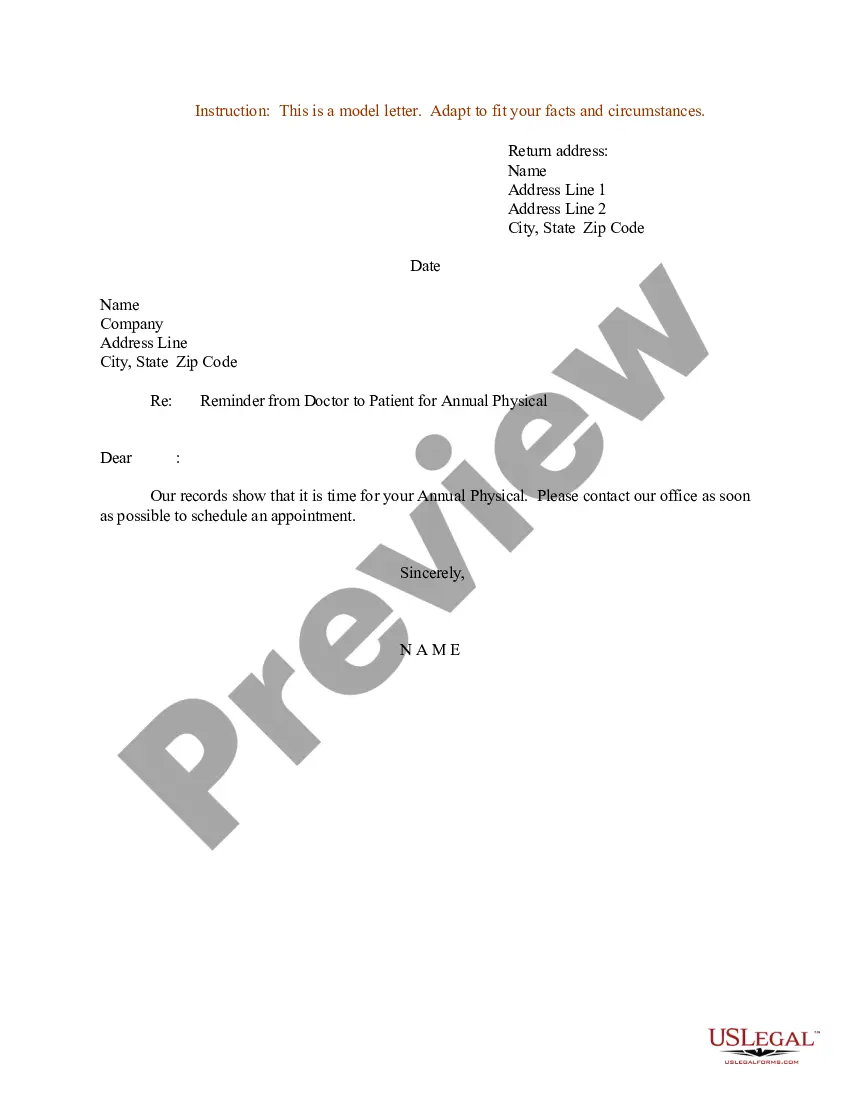
The Sample Letter from Doctor to Patient is a formal correspondence used by healthcare providers to address specific issues or information directly to a patient. This letter can serve various purposes, such as confirming an appointment, communicating medical advice, or outlining a treatment plan. It is distinct from other medical documents because it is specifically tailored as a personal communication between a doctor and a patient.
Key parts of this document
- Return address of the medical provider.
- Date of the letter.
- Name and address of the patient.
- Subject line indicating the purpose (From Doctor to Patient).
- Salutation addressing the patient.
- Body of the letter with the necessary information or instructions.

Common use cases
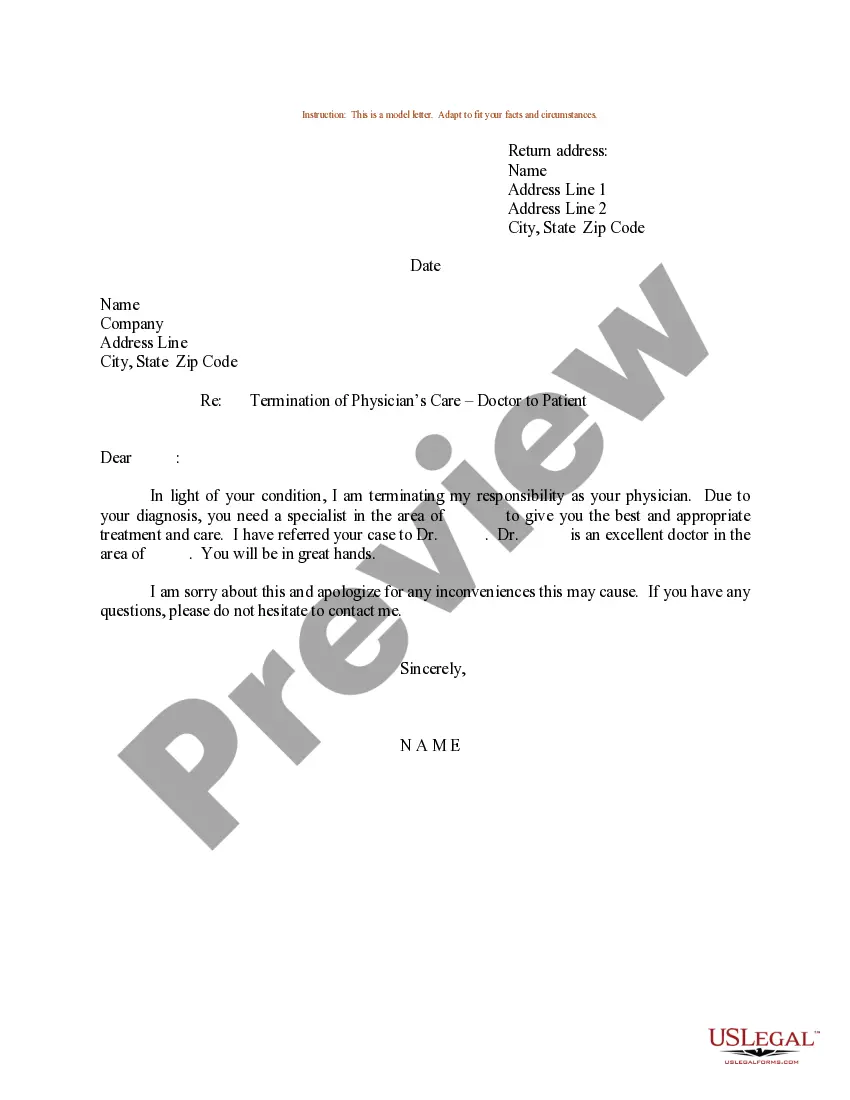
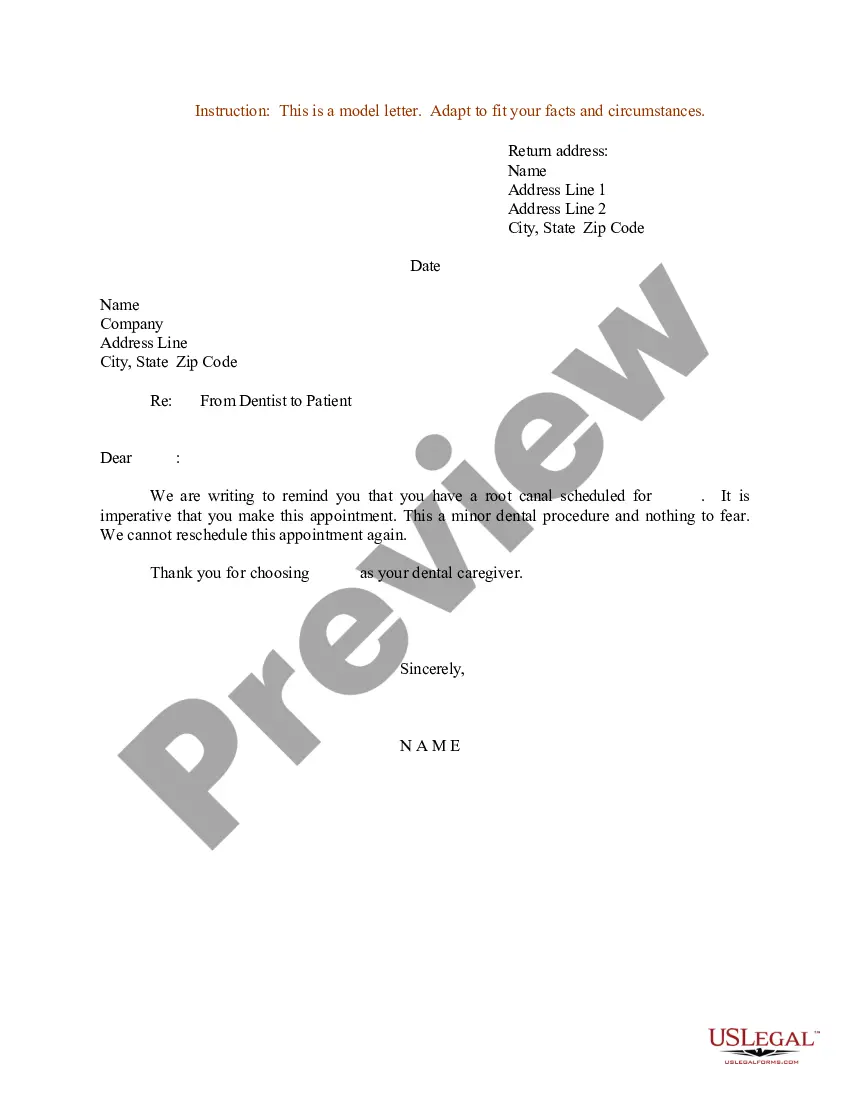
This letter should be used when a doctor needs to formally communicate with a patient about important medical information. Scenarios include following up on medical tests, providing treatment instructions, confirming appointments, or sending reminders for scheduled visits.
Who can use this document
- Healthcare providers looking to communicate effectively with their patients.
- Doctors who need to convey treatment plans or follow-up instructions.
- Medical offices or clinics that want to maintain professional correspondence with patients.
Instructions for completing this form
- Enter the return address of the doctor or medical practice at the top of the letter.
- Fill in the date when the letter is being drafted.
- Specify the patientâs name and their address in the appropriate sections.
- Clearly state the purpose of the letter in the subject line.
- Draft the body of the letter, making sure it includes all necessary information or instructions pertinent to the patient.
Notarization requirements for this form
This form does not typically require notarization unless specified by local law. It is advisable to check specific regulations that might apply to your jurisdiction.
Get your form ready online
Our built-in tools help you complete, sign, share, and store your documents in one place.
Make edits, fill in missing information, and update formatting in US Legal Forms—just like you would in MS Word.
Download a copy, print it, send it by email, or mail it via USPS—whatever works best for your next step.
Sign and collect signatures with our SignNow integration. Send to multiple recipients, set reminders, and more. Go Premium to unlock E-Sign.
If this form requires notarization, complete it online through a secure video call—no need to meet a notary in person or wait for an appointment.
We protect your documents and personal data by following strict security and privacy standards.

Make edits, fill in missing information, and update formatting in US Legal Forms—just like you would in MS Word.

Download a copy, print it, send it by email, or mail it via USPS—whatever works best for your next step.

Sign and collect signatures with our SignNow integration. Send to multiple recipients, set reminders, and more. Go Premium to unlock E-Sign.

If this form requires notarization, complete it online through a secure video call—no need to meet a notary in person or wait for an appointment.

We protect your documents and personal data by following strict security and privacy standards.
Common mistakes to avoid
- Failing to include the correct patient information.
- Neglecting to proofread for spelling or grammatical errors.
- Not clearly stating the purpose of the letter.
- Using templates without personalizing them for the specific patient.
Why complete this form online
- Convenient access to templates anytime, allowing for quick communication.
- Editable formats that allow healthcare providers to customize the letter as needed.
- Reliability of professionally drafted content ensures the information is accurate and clear.
Main things to remember
- The Sample Letter from Doctor to Patient is essential for clear doctor-patient communication.
- Properly filling out the letter enhances professionalism and clarity.
- Understanding when and how to use this form can improve patient care and satisfaction.
Looking for another form?
Form popularity
FAQ
Address the letter to the intended person to whom it is submitted. It should have a formal and polite approach. Have a point or purpose when writing the letter. Explain briefly but thoroughly the details for such a medical letter. Close the letter in a courteous manner.
#1: Explains Why You're Qualified to Recommend the Candidate. #2: Customized to the New Position. #3: Uses Specific Examples and Anecdotes. Use an Official Format. Start with a Strong Opener. Include Two to Three Specific Examples.
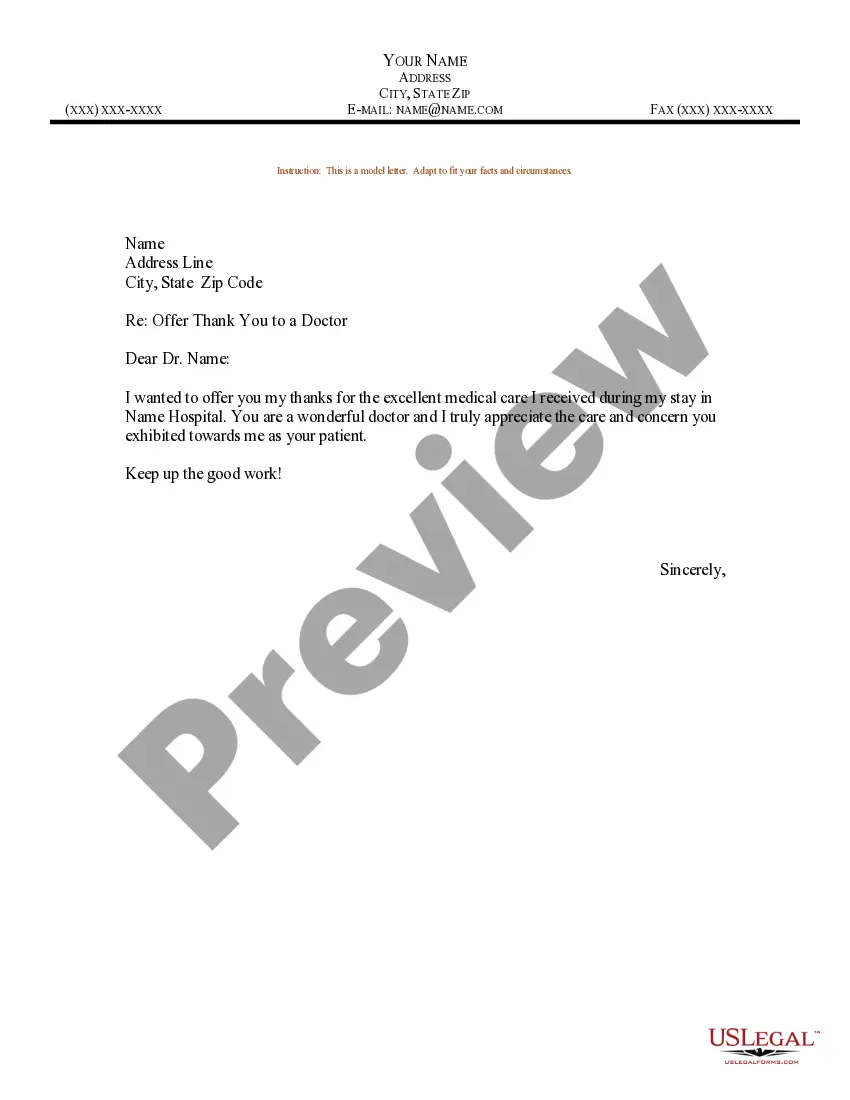
Write "Dear Dr." and the doctor's last name on the top line of the letter itself. For example, begin your message with, "Dear Dr. Williams." Use this prefix for those with doctorates, too, unless the person has specifically told you to avoid doing so.
Potential (such as leadership potential) Skills/Abilities/Strengths. Dependability. Consistence. Persistence. Motivation. Character. Contributions (to class or community)
Always start with the date. State who you are recommending and what you are recommending them for. Describe how long you know the person and in what capacity. State their best qualities. Give details about the person's character, morals, and values.
If you are asked to respond to a medical doctor, address the letter and envelope to Edward Smith M.D., but the salutation should read, "Dear Dr. Smith". Always make sure you have spelled the recipient's name properly. Check to see if the name is spelled "Smith" or "Smyth," "Louis" or "Lewis".
Decide whether you can write a good letter for the applicant. It is OK to say no. Request as much information as possible before you begin writing. Do some research. Set aside ample time. Be specific. Avoid cliche descriptors and platitudes. Organize the letter chronologically or thematically.
After a standard formal greeting, introduce yourself. Introduce your patient, his or her case, and why you are referring him or her to the doctor. Ask for his or her consideration. End the letter respectfully.
Title: The document should have a title that looks official. Doctor/Medical Facility Information: Include the name, address, and contact information of the doctor and/or facility. Date of Document: Fill in the date and time (if known) of the doctor appointment.