State Court Summons or Service of Process
What this document covers
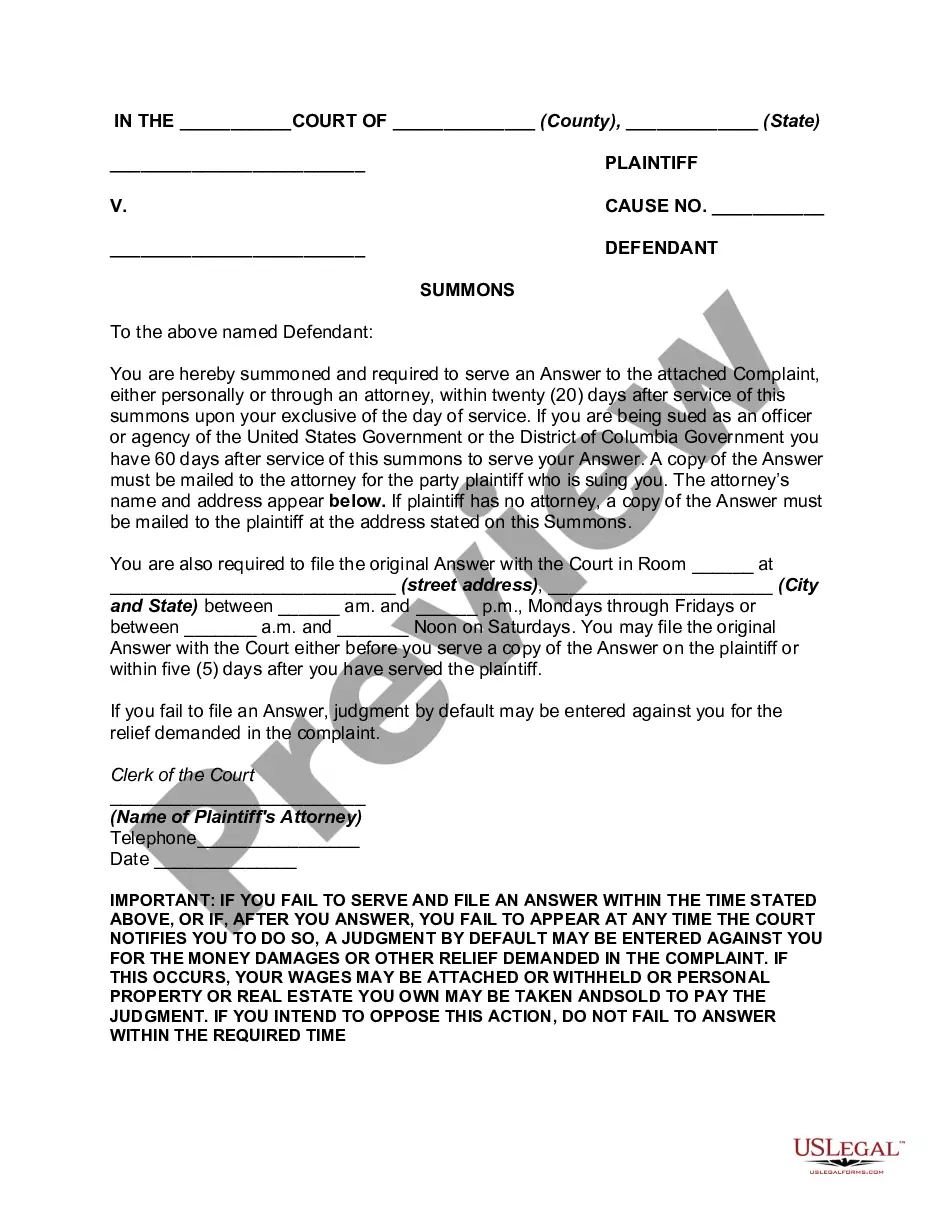
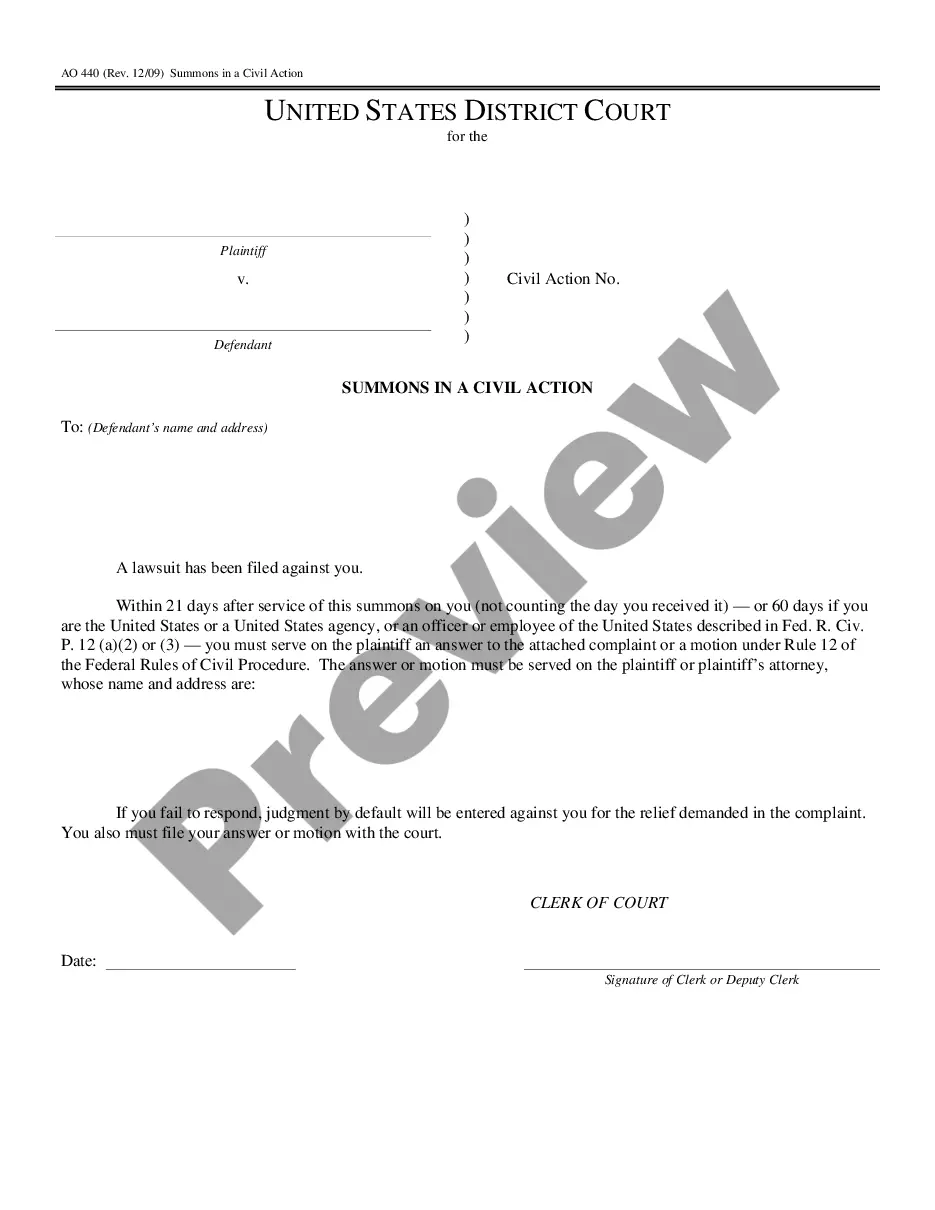
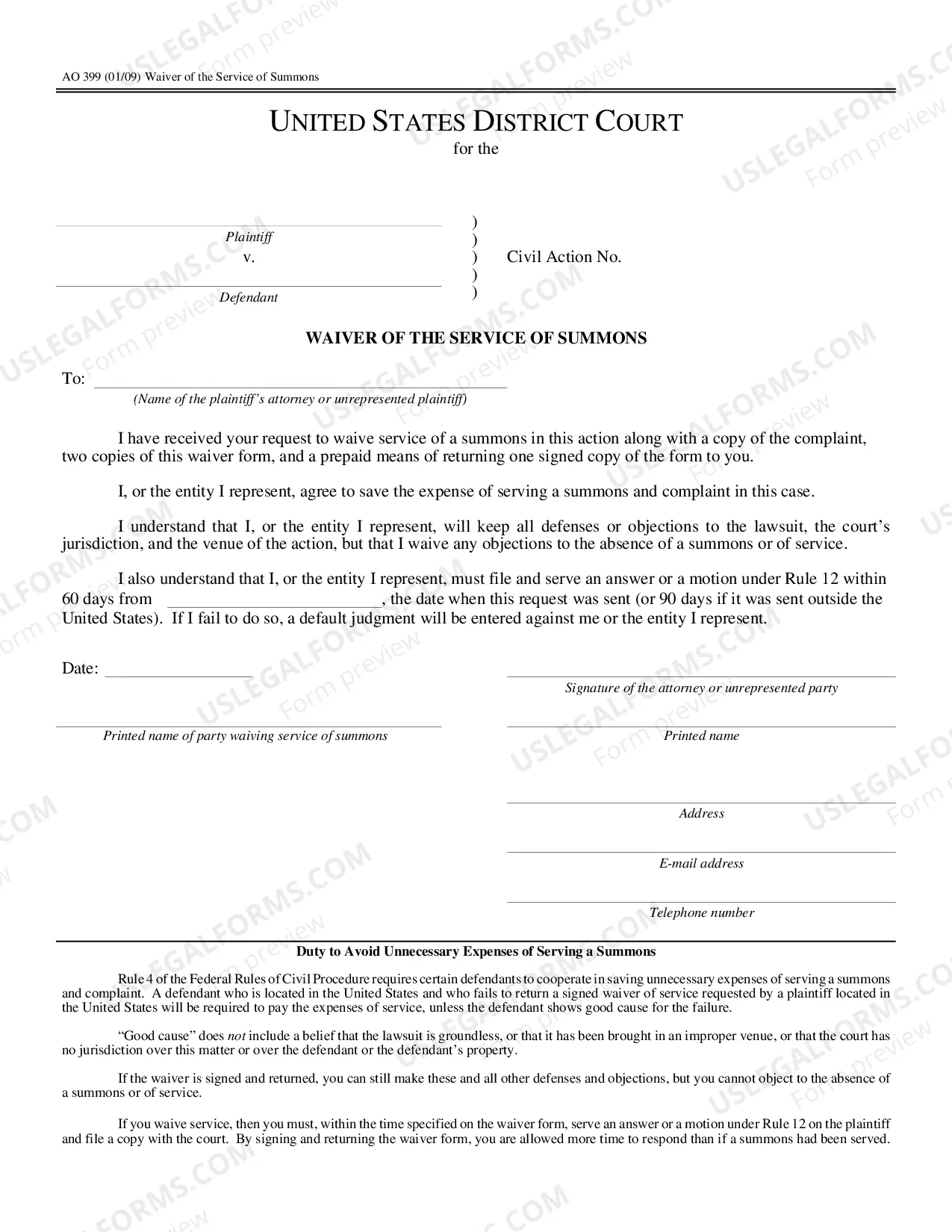
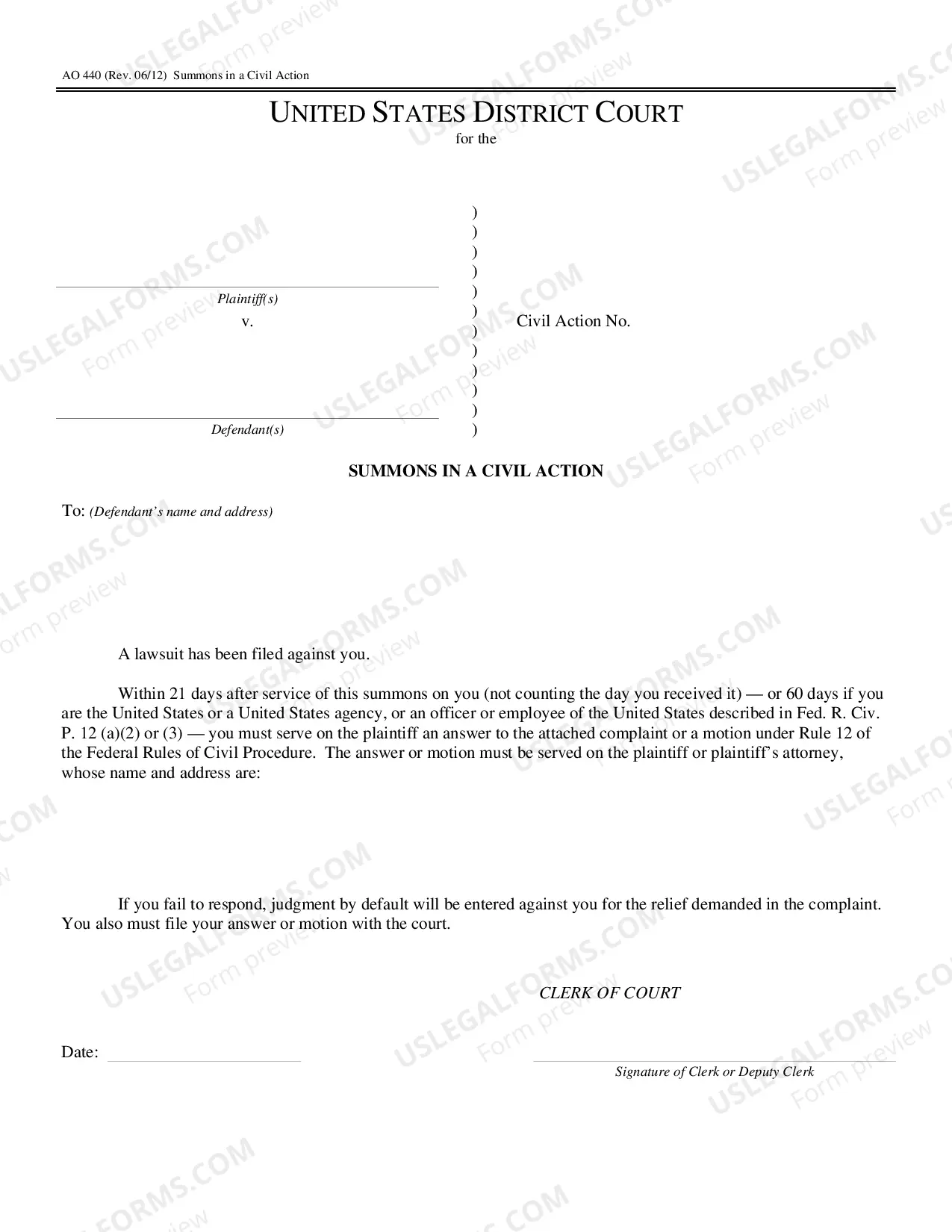
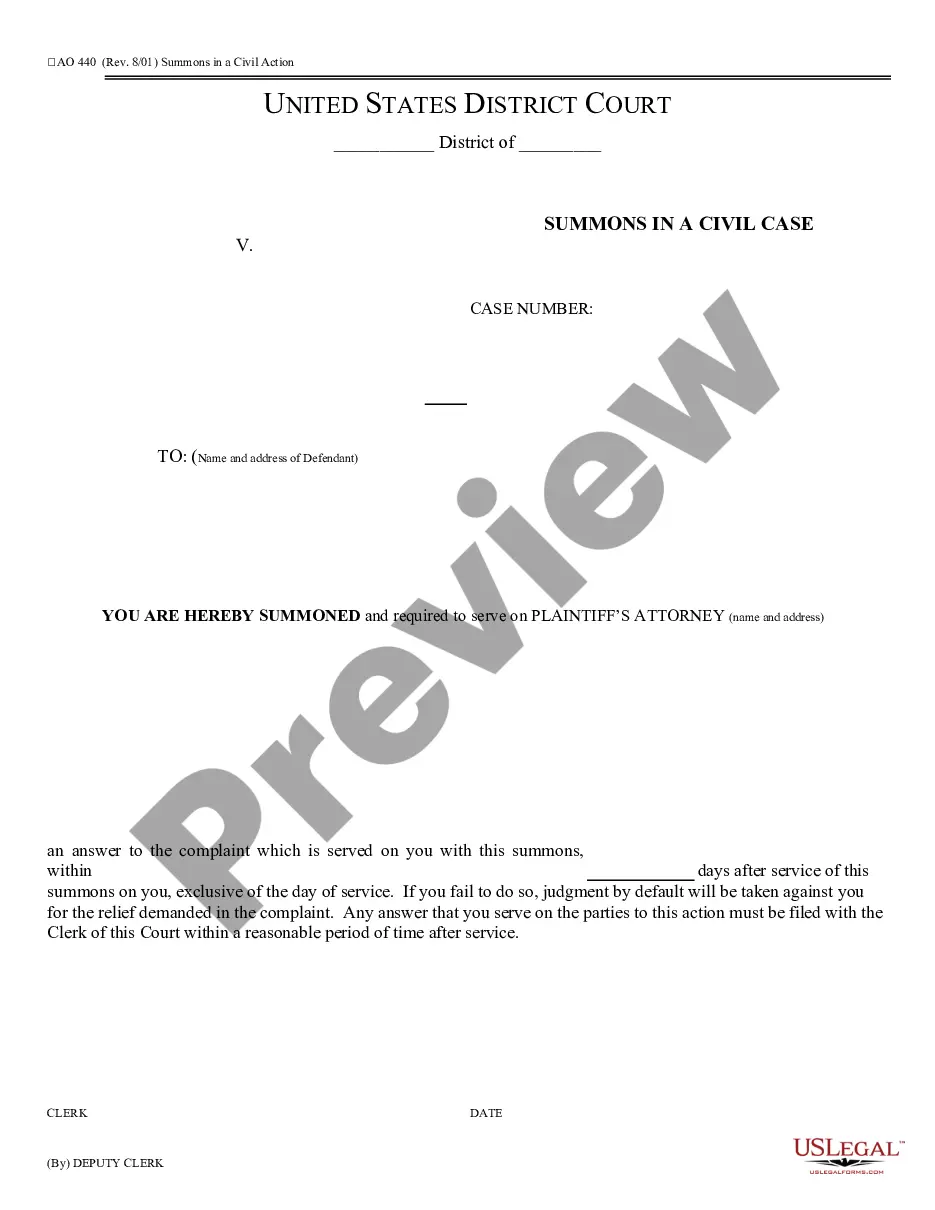
The State Court Summons, also known as the service of process, is a legal document that notifies a defendant that they are being sued. It outlines key information such as the plaintiff's identity, the court where the case is filed, and the defendant's obligation to respond. This summons serves as a formal invitation to address the complaint and differs from similar forms in that it also includes deadlines and the consequences for failing to respond.
Main sections of this form
- The names of the plaintiff and defendant.
- The court where the case is filed.
- The deadline for the defendant to file an answer.
- Information about the consequences of not responding, such as default judgment.
- The requirement to file the original answer with the court.

Common use cases
This form should be used when initiating a lawsuit in state court. It is essential for the plaintiff to notify the defendant properly and comply with legal requirements. Use this summons when you have filed a complaint against an individual or a corporation and need to serve it to ensure that the defendant is aware of the legal action taken against them.
Who can use this document
- Individuals filing a lawsuit against another party.
- Corporations or entities needing to initiate legal proceedings.
- Legal representatives acting on behalf of plaintiffs in civil cases.
How to prepare this document
- Identify the parties: Fill in the names of the plaintiff and defendant.
- Specify the court: Enter the name of the court where the case is filed.
- Set the deadline: Indicate when the defendant must file their answer.
- Provide contact information: Enter the name and address of the plaintiff's attorney (if applicable).
- Include any specific instructions: Ensure clarity on the consequences of failing to respond.
Notarization requirements for this form
This form does not typically require notarization unless specified by local law. However, it is important to check any specific rules in your jurisdiction to confirm the requirements.
Get your form ready online
Our built-in tools help you complete, sign, share, and store your documents in one place.
Make edits, fill in missing information, and update formatting in US Legal Forms—just like you would in MS Word.
Download a copy, print it, send it by email, or mail it via USPS—whatever works best for your next step.
Sign and collect signatures with our SignNow integration. Send to multiple recipients, set reminders, and more. Go Premium to unlock E-Sign.
If this form requires notarization, complete it online through a secure video call—no need to meet a notary in person or wait for an appointment.
We protect your documents and personal data by following strict security and privacy standards.

Make edits, fill in missing information, and update formatting in US Legal Forms—just like you would in MS Word.

Download a copy, print it, send it by email, or mail it via USPS—whatever works best for your next step.

Sign and collect signatures with our SignNow integration. Send to multiple recipients, set reminders, and more. Go Premium to unlock E-Sign.

If this form requires notarization, complete it online through a secure video call—no need to meet a notary in person or wait for an appointment.

We protect your documents and personal data by following strict security and privacy standards.
Typical mistakes to avoid
- Failing to include the correct court information.
- Not specifying the response deadline clearly.
- Omitting the contact details of the attorney or plaintiff.
- Not serving the summons properly in accordance with local laws.
Why complete this form online
- Convenience of downloading and filling out the form at your own pace.
- Editability allows you to customize the form to your specific case.
- Access to reliable and up-to-date templates drafted by licensed attorneys.
Legal use & context
- This form serves to ensure compliance with legal notification requirements.
- It establishes the timeline and process for responding to a lawsuit.
- Failure to respond can lead to a default judgment, affecting the defendantâs rights.
Quick recap
- The State Court Summons is essential for notifying a defendant of legal action.
- Proper completion and service of this form are crucial for the lawsuit process.
- Always follow state-specific rules to ensure compliance and avoid delays.
Looking for another form?

Form popularity
FAQ
Tell the server to: Give the papers to a responsible adult where the Defendant lives, or to someone in charge where the Defendant works. Say, These are court papers. Then, mail (first-class) a copy of the papers to the Defendant at the same address where s/he left the papers.
Service of process is the formal name for giving a defendant a Summons to come to court. Each defendant must get individual service. You cannot serve the defendant yourself. You must serve a Summons in one of three ways: Service by the Sheriff.
As already indicated, the general answer is no, they don't have to say anything. In the US, you can be sued under state or federal law, so you should check the rules of civil procedure in your state. The Federal Rules do not require the service agent to say anything.
When the party that has to be served lives out of state, papers can usually be served by sending a copy of the paperwork to be served to that party by first-class mail, postage prepaid, and return receipt requested. The person who mails the papers must be at least 18 and NOT a party to the case.
In the majority of states, you can serve papers by sending them to the defendant via certified mail with a return receipt requested. In some states, service by certified (or registered) mail is one among several ways you may serve papers.
Review the Paperwork. The first thing you need to do when you are served is find out why. Check for a Deadline and Court Date. Typically, you will have a certain amount of time to reply after you have been served. Figure Out What Kind of Notice You've Been Give. Obey the Order. Call an Attorney.
Talking to their family members and friends. contacting former employers. contacting sport or hobby groups. searching Canada 411.
Serving process across state lines can be tricky. Some states recognize the Uniform Interstate Deposition and Discovery Act, which makes the process easy. Others do not, and there are more steps that must be taken before a subpoena or other legal document can be served upon its recipient.
What is a process server? A process server's principal job is to deliver or serve legal documents to a defendant or person involved in a court case, but they also provide a variety of other services such as filing court papers and document retrieval.