Certificate of Authorship - Writing for a Motion Picture
Overview of this form
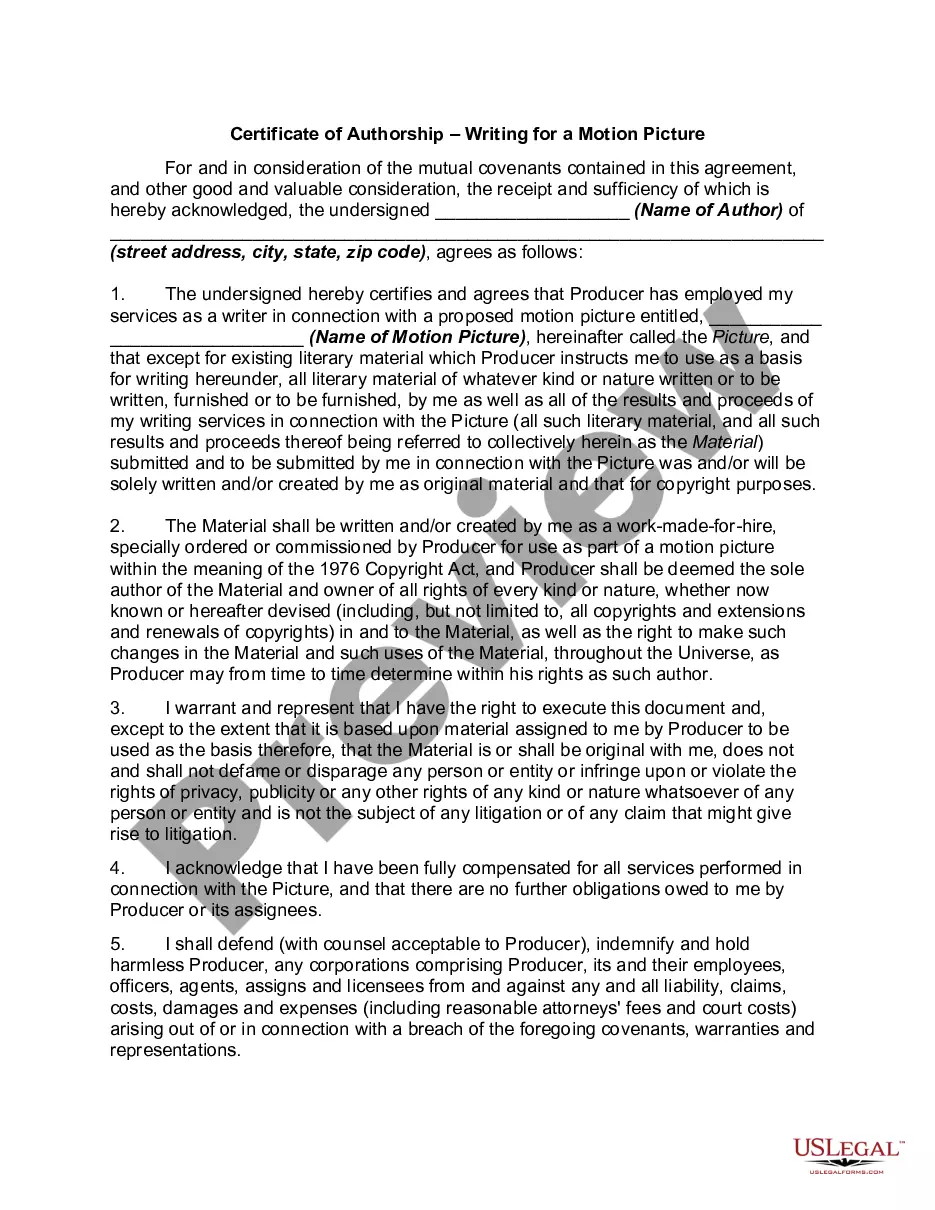
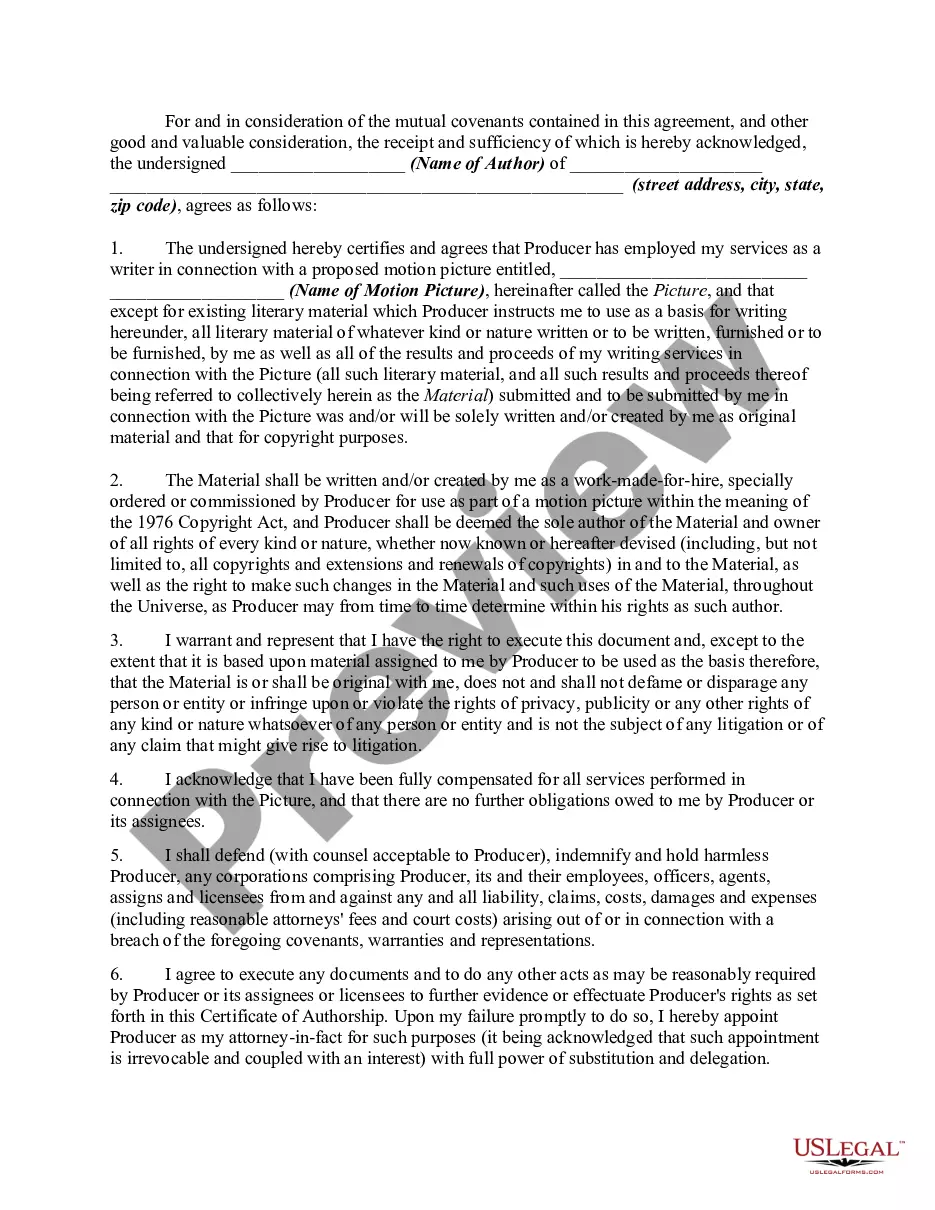
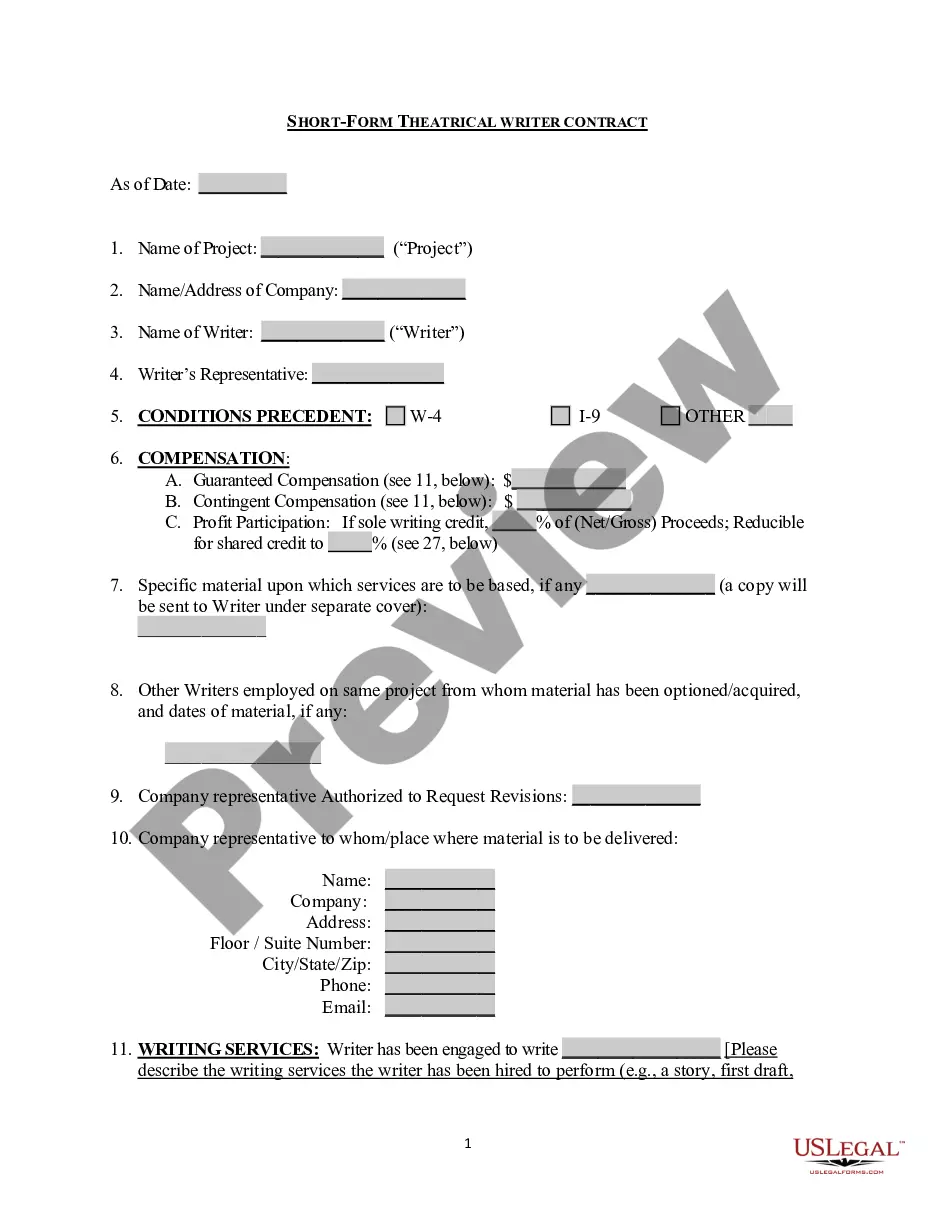
The Certificate of Authorship - Writing for a Motion Picture is a legal document in which a writer certifies their authorship of material created for a motion picture. This form establishes the writer as the original creator of the material and defines copyright ownership, ensuring that the producer holds all rights to the literary work produced. Unlike similar forms, this certificate specifically addresses contributions to motion picture projects, making it essential for writers involved in film production.
What’s included in this form
- Name and address of the author.
- Title of the motion picture.
- Certification of original authorship and copyright ownership.
- Warranties regarding originality and rights infringement.
- Indemnification clause to protect the producer.
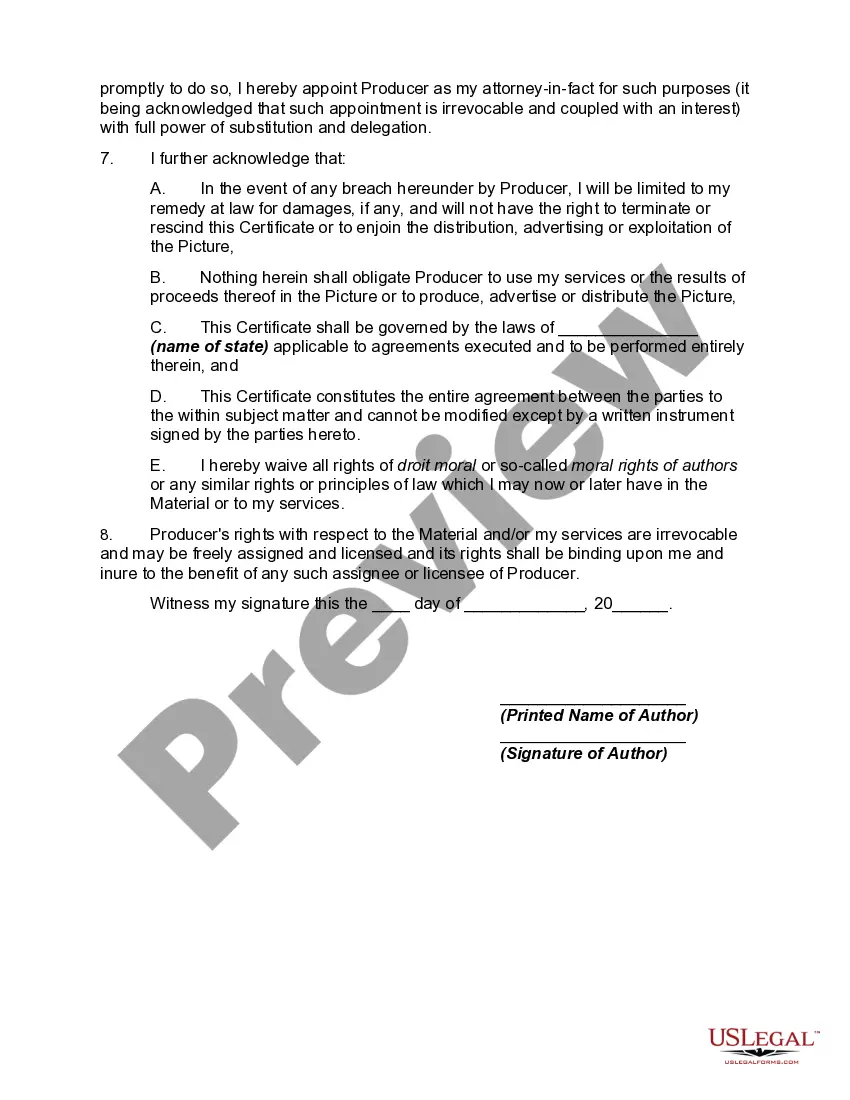
- Governing law and waiver of moral rights.
When to use this document
This form should be used when a writer is contracted to create original material for a motion picture. It is important when establishing clear copyright ownership and protecting against potential infringement claims. Writers must use this certificate to confirm their authorship and to signify that they understand the rights granted to the producer in relation to the produced material.
Who can use this document
- Writers or authors engaged in creating material for motion pictures.
- Producers or production companies seeking to formalize writer contracts.
- Legal representatives of writers and producers involved in film projects.
How to complete this form
- Identify the author by entering their name and contact details.
- Specify the title of the motion picture you are writing for.
- Certify that the material is original and created solely by you.
- Include any additional warranties regarding the material.
- Sign and date the certificate to finalize the agreement.
Is notarization required?
Notarization is not commonly needed for this form. However, certain documents or local rules may make it necessary. Our notarization service, powered by Notarize, allows you to finalize it securely online anytime, day or night.
Get your form ready online
Our built-in tools help you complete, sign, share, and store your documents in one place.
Make edits, fill in missing information, and update formatting in US Legal Forms—just like you would in MS Word.
Download a copy, print it, send it by email, or mail it via USPS—whatever works best for your next step.
Sign and collect signatures with our SignNow integration. Send to multiple recipients, set reminders, and more. Go Premium to unlock E-Sign.
If this form requires notarization, complete it online through a secure video call—no need to meet a notary in person or wait for an appointment.
We protect your documents and personal data by following strict security and privacy standards.

Make edits, fill in missing information, and update formatting in US Legal Forms—just like you would in MS Word.

Download a copy, print it, send it by email, or mail it via USPS—whatever works best for your next step.

Sign and collect signatures with our SignNow integration. Send to multiple recipients, set reminders, and more. Go Premium to unlock E-Sign.

If this form requires notarization, complete it online through a secure video call—no need to meet a notary in person or wait for an appointment.

We protect your documents and personal data by following strict security and privacy standards.
Avoid these common issues
- Failing to clearly specify the title of the motion picture.
- Not confirming that the material is original and free from infringement.
- Leaving the document unsigned or undated.
- Ignoring local legal requirements that may affect the form's validity.
Advantages of online completion
- Immediate access to professionally drafted legal templates.
- Editable format to customize the form to your specific needs.
- Ensures compliance with relevant copyright laws and agreements.
- Save time and avoid confusion by using clear, concise language.
Legal use & context
- Establishes clear copyright ownership for motion picture producers.
- Helps mitigate risks of legal disputes over authorship and rights.
- Can be used as evidence in case of any copyright infringement claims.
Quick recap
- The Certificate of Authorship confirms a writer's original creation for motion pictures.
- This form solidifies copyright ownership and protects both writers and producers.
- It is essential for writers involved in film production to use this certificate for clarity and legal protection.
Looking for another form?
Form popularity
FAQ
The motion must include a separate "Notice of Motion" which includes a brief summary of the nature of the motion, the deadline for filing a response, and if there is a hearing, the date, time, and location of the hearing.
A motion is a written request or proposal to the court to obtain an asked-for order, ruling, or direction.For example, in the state of California, the defendant in a defamation lawsuit will usually file an anti-SLAPP motion to dismiss.
When you file your motion, the court clerk will insert the date, time, and place of the hearing on your motion. You must then serve (mail) a copy of your filed motion (including all exhibits and the date, time, and place of hearing) to all other parties in the case.
What it means to file a motion: A motion, in its simplest form is a list of requests that you are asking the Court grant on your behalf.If the circumstances require, your attorney may submit a brief on your behalf providing the Court with the law supporting your positions.
Motion to dismiss. Discovery motions. Motion to compel. Motion to strike. Motion for summary judgment. Motion for a directed verdict. Motion for nolle prosequi. Motion in Limine.
A "motion" is simply a formal request to a court that it do something or decide an issue in favor of the party that asks for it. "Granted" means the court agreed with the request, and did or decided in favor of the requester.
During a meeting, a motion is made via three simple words: I move that. Any member with a proposal for the group to consider whether substantive or procedural should simply seek recognition by the chairperson and when recognized, say, I move that . . . . Again, there are subcategories.
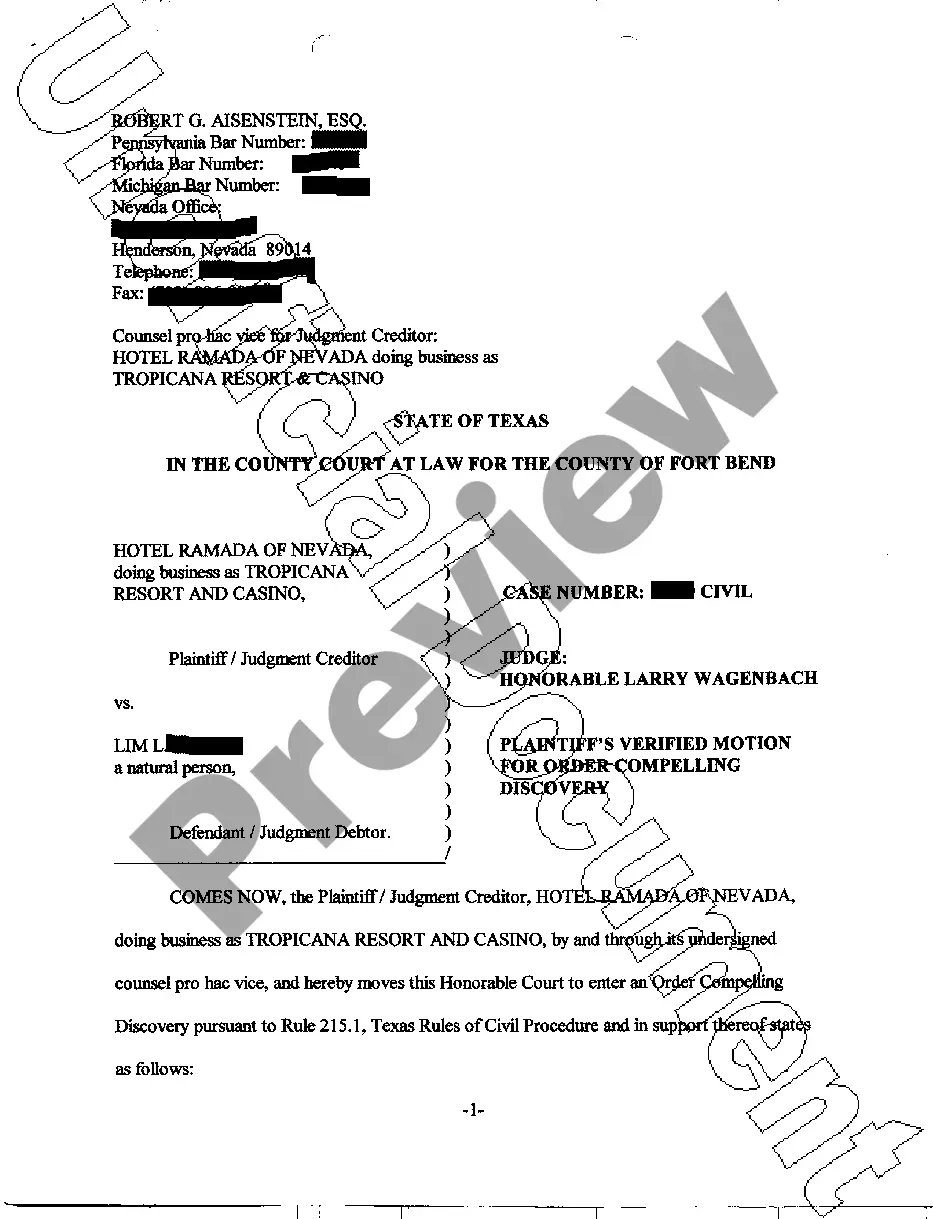
Motions are not pleadings but are requests for the judge to make a legal ruling. Some of the most common pre-trial motions include: Motion to Discover. A motion by which one party seeks to gain information from the adverse party.