Agreement to Assign by Lessee
Understanding this form
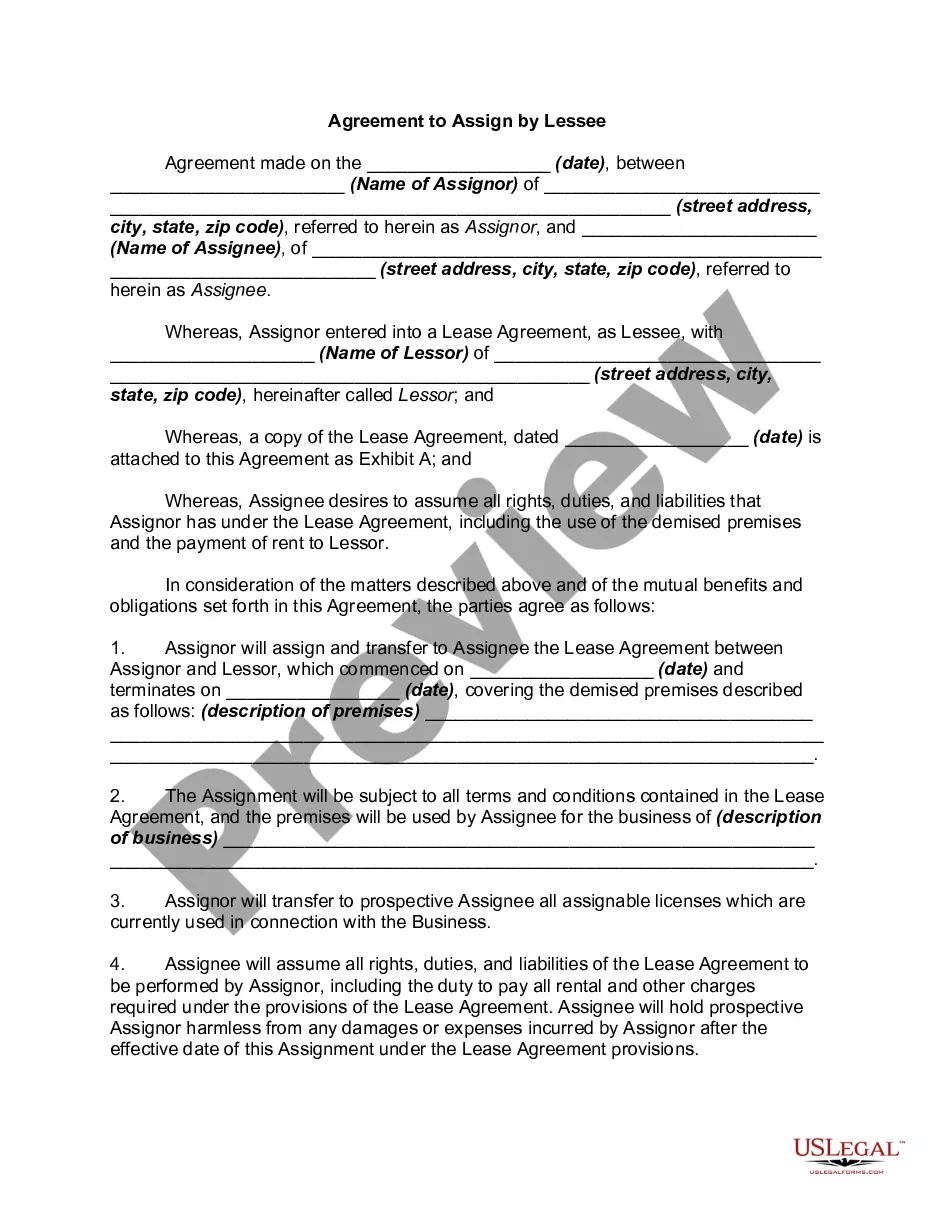
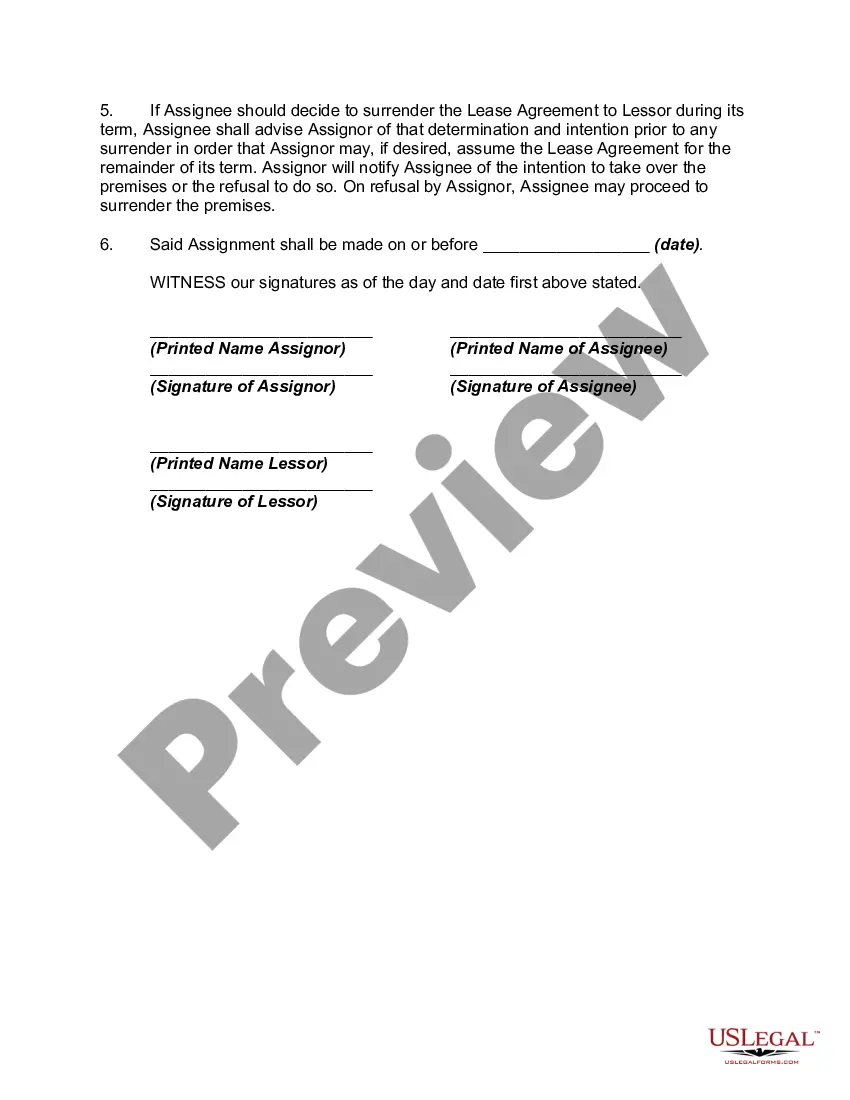
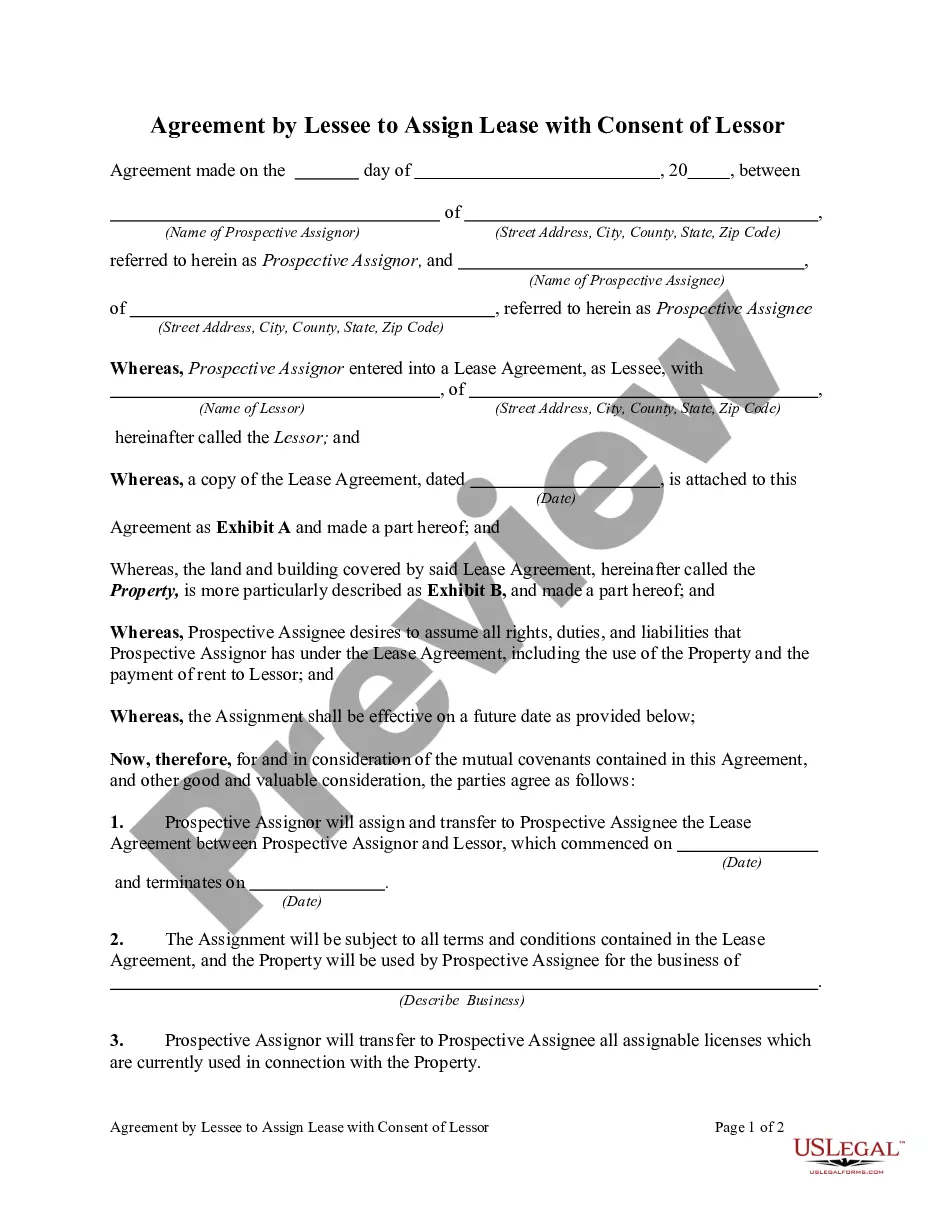
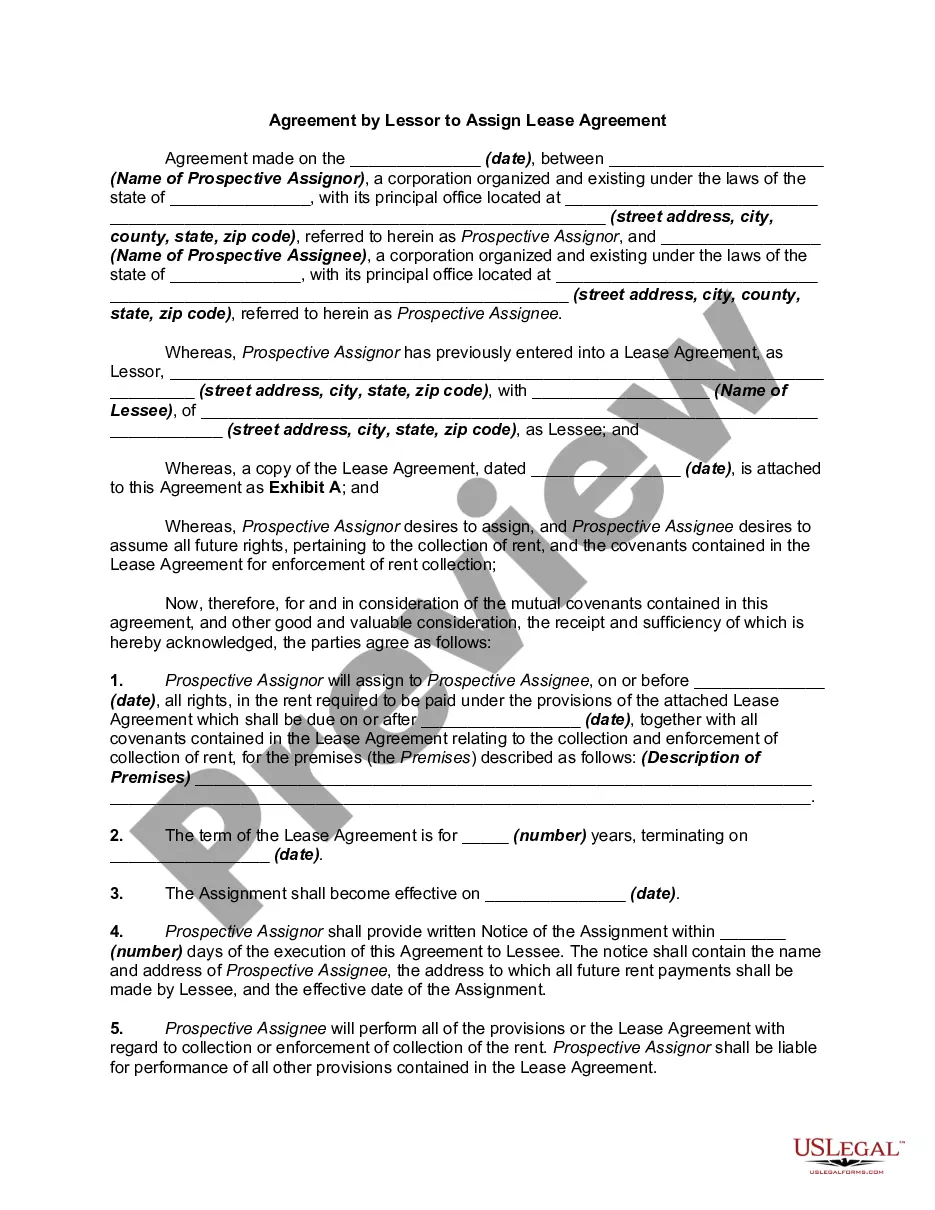
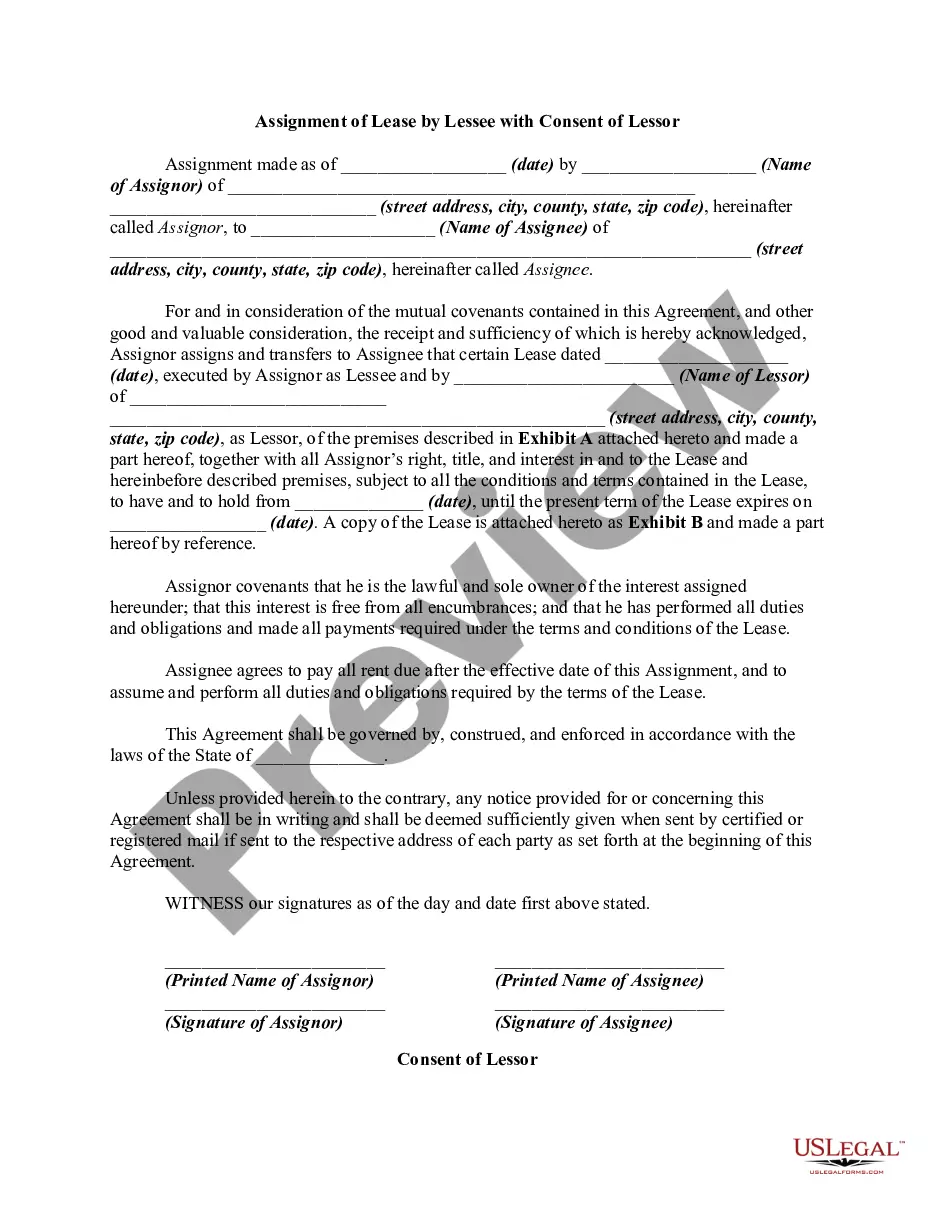
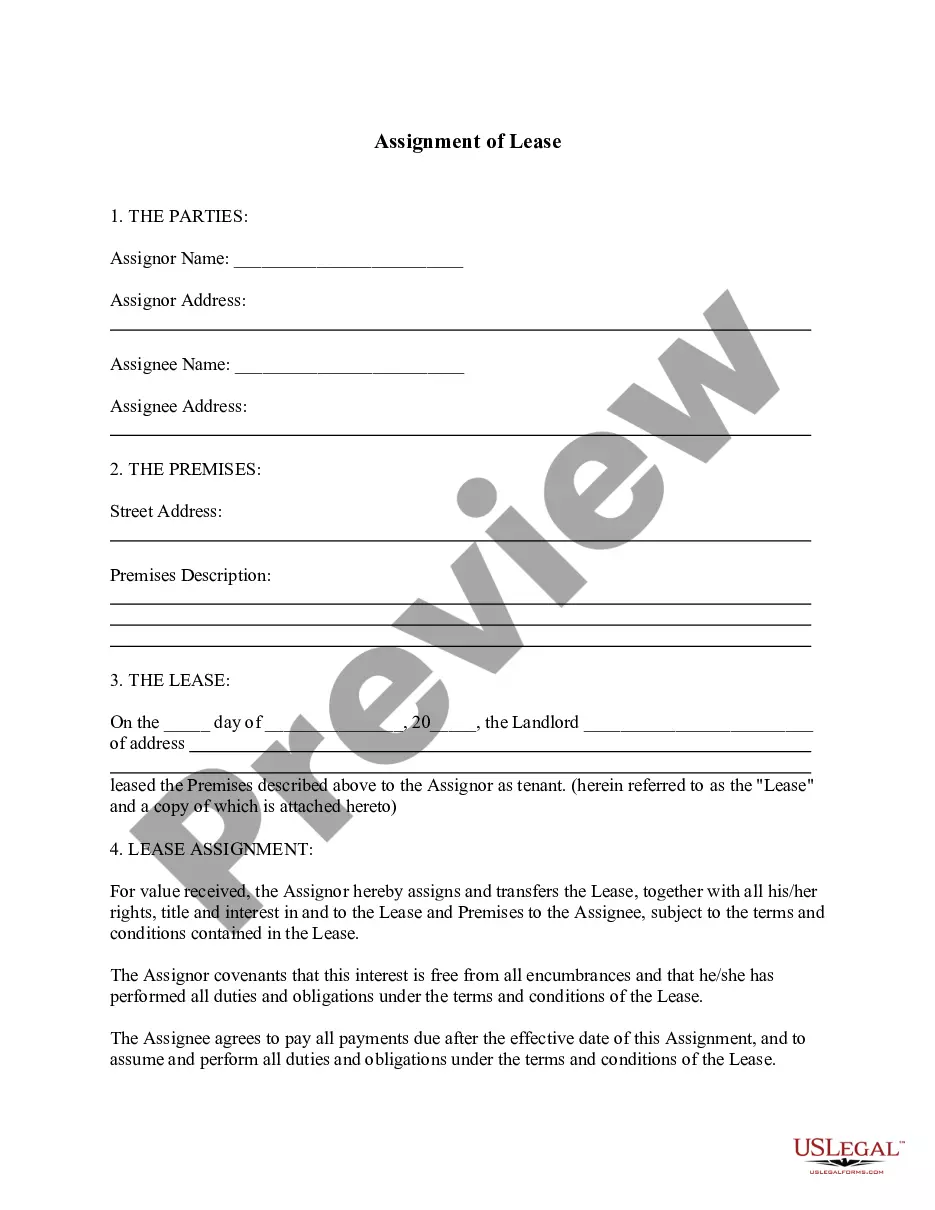
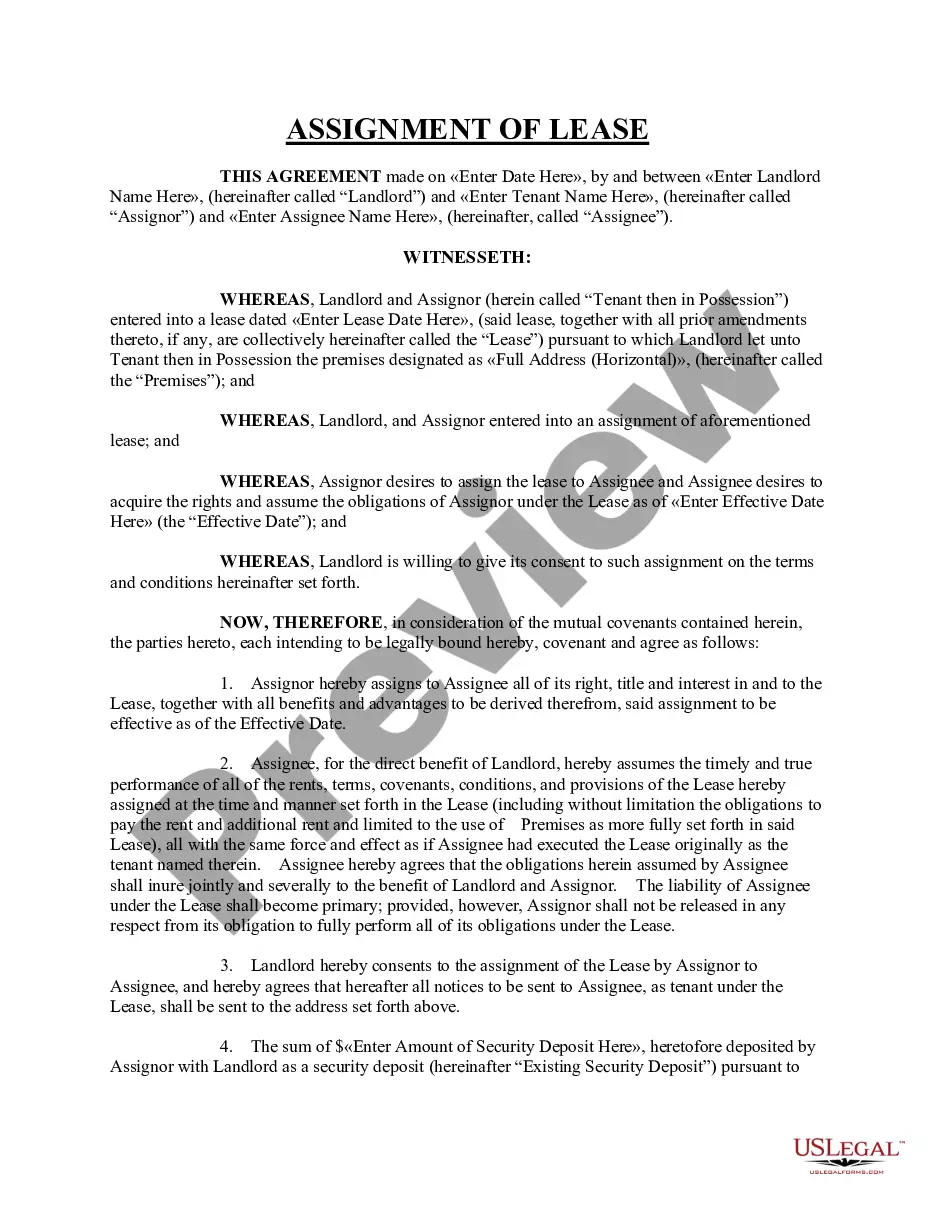
The Agreement to Assign by Lessee is a legal document used to transfer a lease from one tenant (the Assignor) to another (the Assignee). This form serves to reassign the rights and responsibilities outlined in an existing lease agreement, allowing the Assignee to assume the duties of the Assignor. It is particularly important as it formalizes the transfer of an entire lease and ensures that all parties are aware of their obligations under the agreement.
Key parts of this document
- Names and addresses of the Assignor and Assignee.
- Date of the original Lease Agreement and its attachment as an exhibit.
- Description of the property being leased.
- Terms of the assignment, including how the Assignee will use the property.
- Indemnification clause protecting the Assignor from future liabilities related to the lease.
- Signatures of all parties involved, including the Lessor.
When to use this form
This form is necessary when a tenant wishes to transfer their lease to another individual or party. Common scenarios include when a tenant needs to relocate, wants to assign their commercial lease to another business, or cannot fulfill the lease terms due to personal circumstances. It ensures legal compliance and protects all involved parties by clearly outlining the obligations of the new lessee.
Intended users of this form
- Tenants (Lessees) who wish to transfer their lease obligations.
- Individuals or businesses looking to assume a lease from another party.
- Landlords who need to have a legal record of the assignment of lease rights.
Steps to complete this form
- Identify and enter the names and addresses of the Assignor and Assignee.
- Specify the date of the original Lease Agreement and attach it as Exhibit A.
- Clearly describe the leased property and its intended use by the Assignee.
- Ensure the indemnification clause is included to protect the Assignor after the transfer.
- Gather necessary signatures from all parties, including the Lessor.
Notarization requirements for this form
In most cases, this form does not require notarization. However, some jurisdictions or signing circumstances might. US Legal Forms offers online notarization powered by Notarize, accessible 24/7 for a quick, remote process.
Get your form ready online
Our built-in tools help you complete, sign, share, and store your documents in one place.
Make edits, fill in missing information, and update formatting in US Legal Forms—just like you would in MS Word.
Download a copy, print it, send it by email, or mail it via USPS—whatever works best for your next step.
Sign and collect signatures with our SignNow integration. Send to multiple recipients, set reminders, and more. Go Premium to unlock E-Sign.
If this form requires notarization, complete it online through a secure video call—no need to meet a notary in person or wait for an appointment.
We protect your documents and personal data by following strict security and privacy standards.

Make edits, fill in missing information, and update formatting in US Legal Forms—just like you would in MS Word.

Download a copy, print it, send it by email, or mail it via USPS—whatever works best for your next step.

Sign and collect signatures with our SignNow integration. Send to multiple recipients, set reminders, and more. Go Premium to unlock E-Sign.

If this form requires notarization, complete it online through a secure video call—no need to meet a notary in person or wait for an appointment.

We protect your documents and personal data by following strict security and privacy standards.
Common mistakes to avoid
- Failing to attach the original Lease Agreement as an exhibit.
- Not including complete contact information for all parties involved.
- Omitting signatures from the Lessor.
- Neglecting to specify the intended use of the property by the Assignee.
Why use this form online
- Convenience of accessing and downloading the form from any location.
- Templates are prepared by licensed attorneys, ensuring legal compliance.
- Editable format allows customization to fit specific lease agreements.
Legal use & context
- This form legally transfers the lease obligations from the Assignor to the Assignee.
- It is important to comply with any local statutes to ensure enforceability.
- A well-prepared Assignment Agreement helps prevent future disputes over lease terms.
Looking for another form?

Form popularity
FAQ
An assignment is when the tenant transfers their lease interest to a new tenant using a Lease Assignment. The assignee takes the assignor's place in the landlord-tenant relationship, although the assignor may remain liable for damages, missed rent payments, and other lease violations.
The difference between assignment and transfer is that assign means it's legal to transfer property or a legal right from one person to another, while transfer means it's legal to arrange for something to be controlled by or officially belong to another person.
The Lease Must be in Writing It does not matter if the lease is handwritten or typed.
The landlord's lawyer usually prepares the agreement. However, the outgoing tenant or the incoming tenant pays these costs, not the landlord.
An assignment of a lease is a complete transfer of the right to be the tenant under the lease. The third-party assignee becomes the "tenant" under the lease, taking over all of the leased premises, substituting for the old tenant.
Collect each party's information. Include specifics about your property. Consider all of the property's utilities and services. Know the terms of your lease. Set the monthly rent amount and due date. Calculate any additional fees. Determine a payment method. Consider your rights and obligations.
Names of all tenants. Limits on occupancy. Term of the tenancy. Rent. Deposits and fees. Repairs and maintenance. Entry to rental property. Restrictions on tenant illegal activity.
There is an agreement about who is liable for the costs of the deed of assignment. The landlord's lawyer usually prepares the agreement. However, the outgoing tenant or the incoming tenant pays these costs, not the landlord.