Complaint for Unlawful Detainer by Commercial Tenants to Recover Possession, Past-Due Rent, Rental Value of Premises, and Attorney's Fees and Costs -
Understanding this form
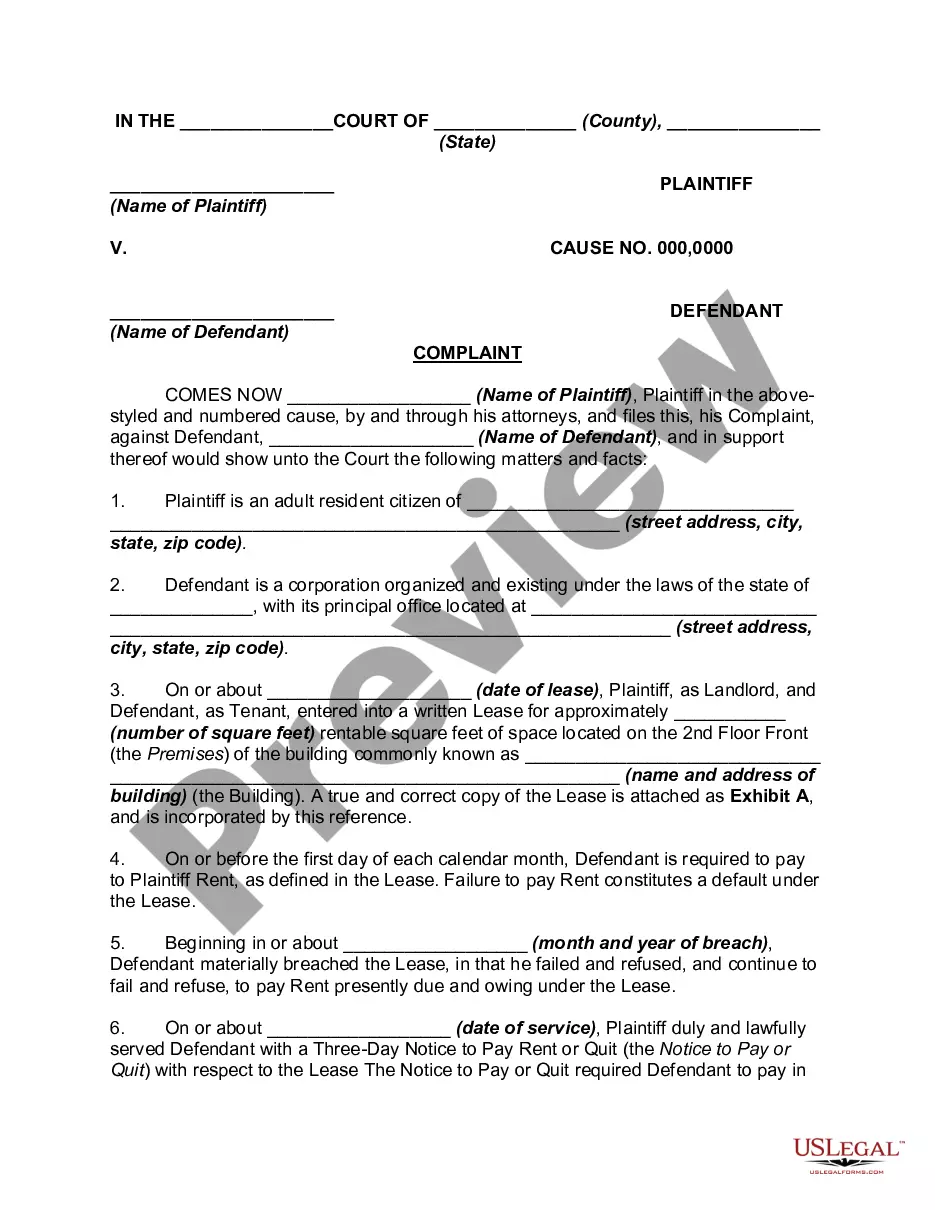
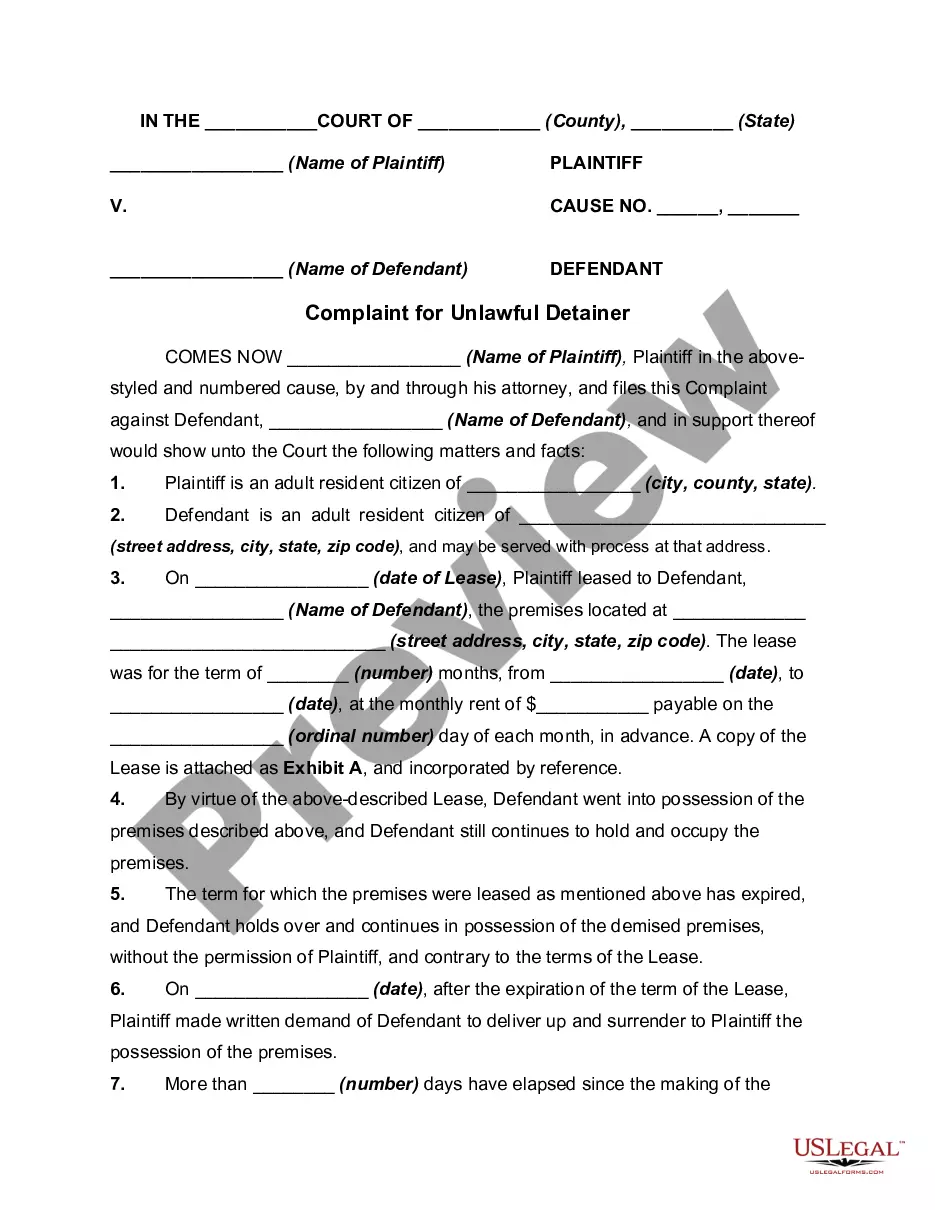
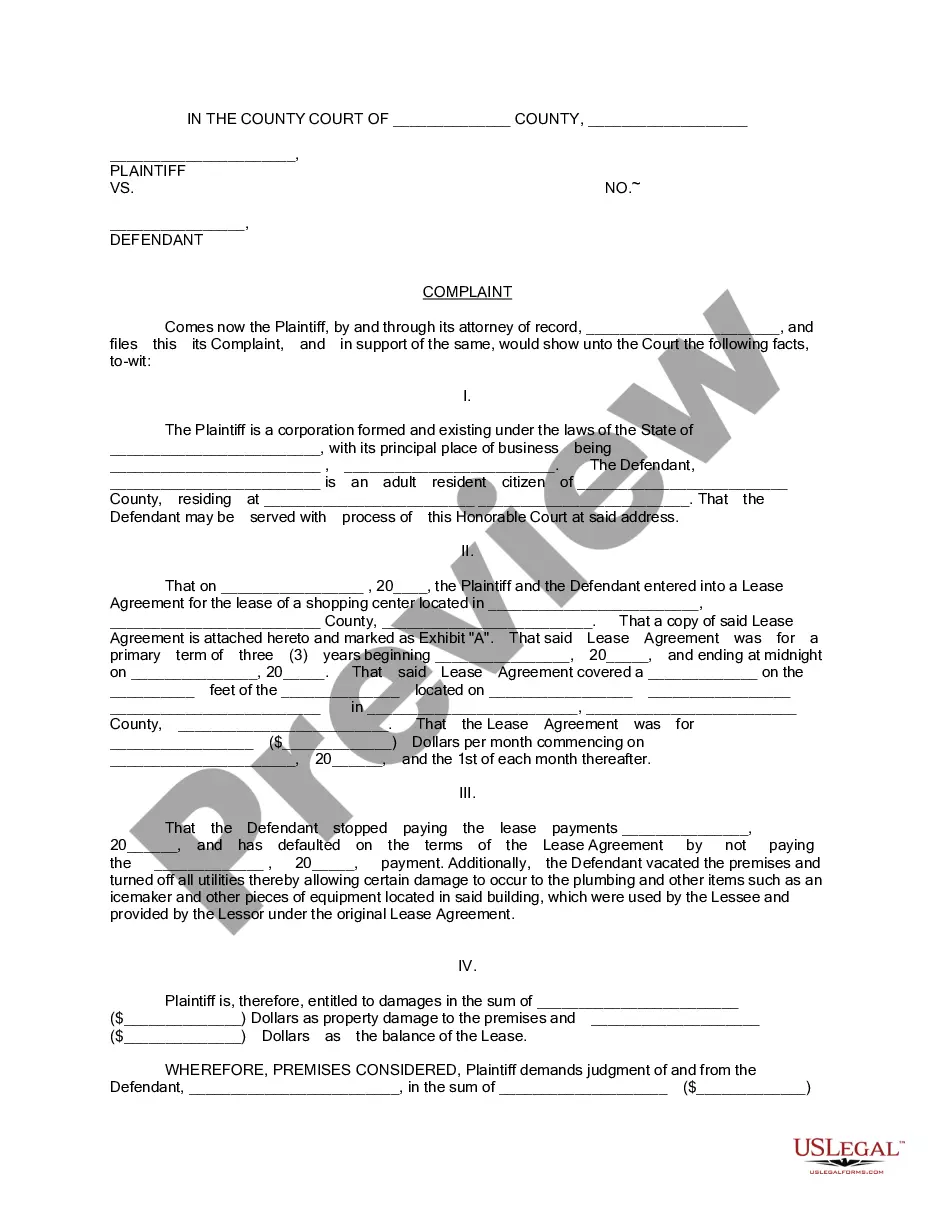
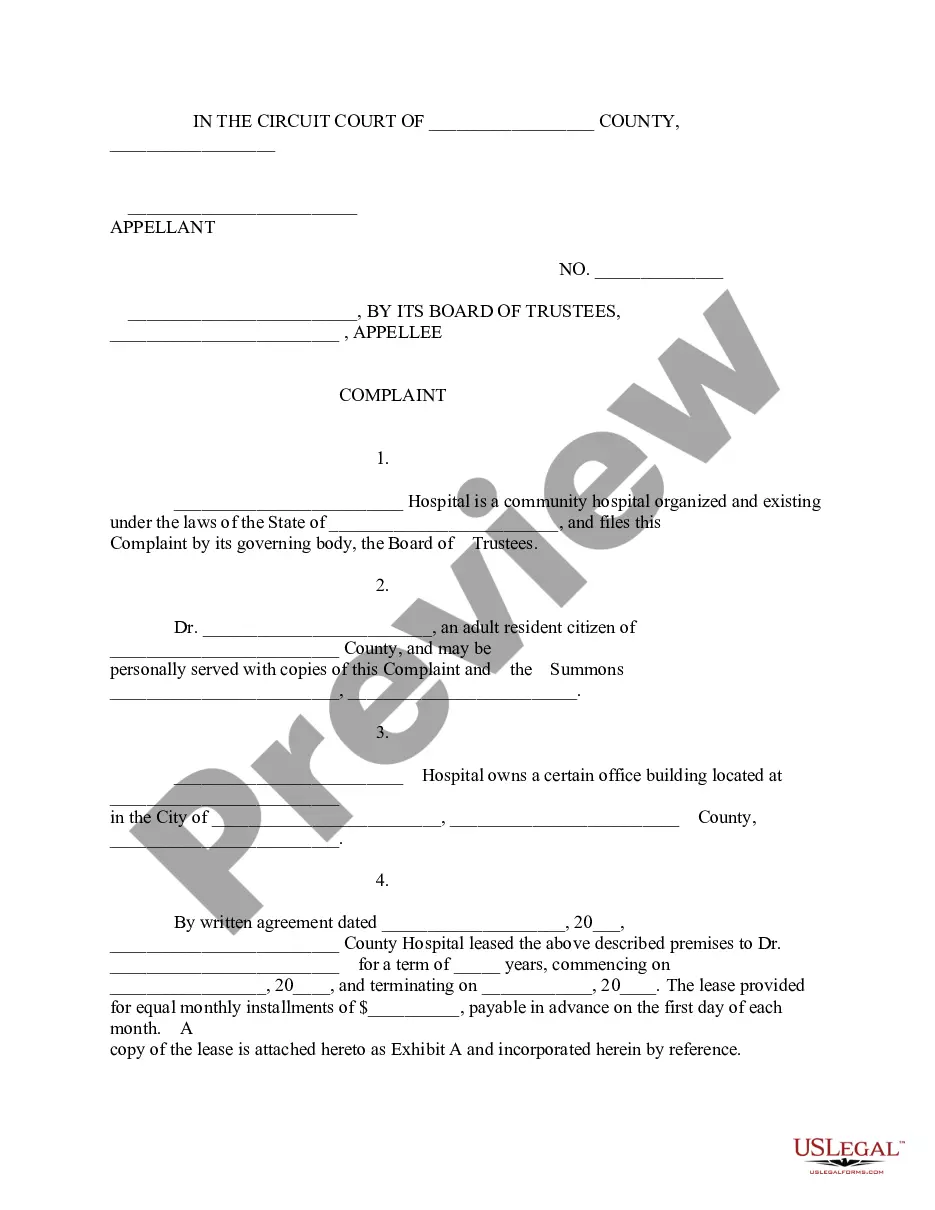
This form is a Complaint for Unlawful Detainer by Commercial Tenants to Recover Possession, Past-Due Rent, Rental Value of Premises, and Attorney's Fees and Costs. It serves as a legal document that helps commercial landlords formally address a tenant's failure to pay rent and regain possession of their property. By following a notice pleadings format common to many states, this complaint ensures compliance with local legal standards.
Main sections of this form
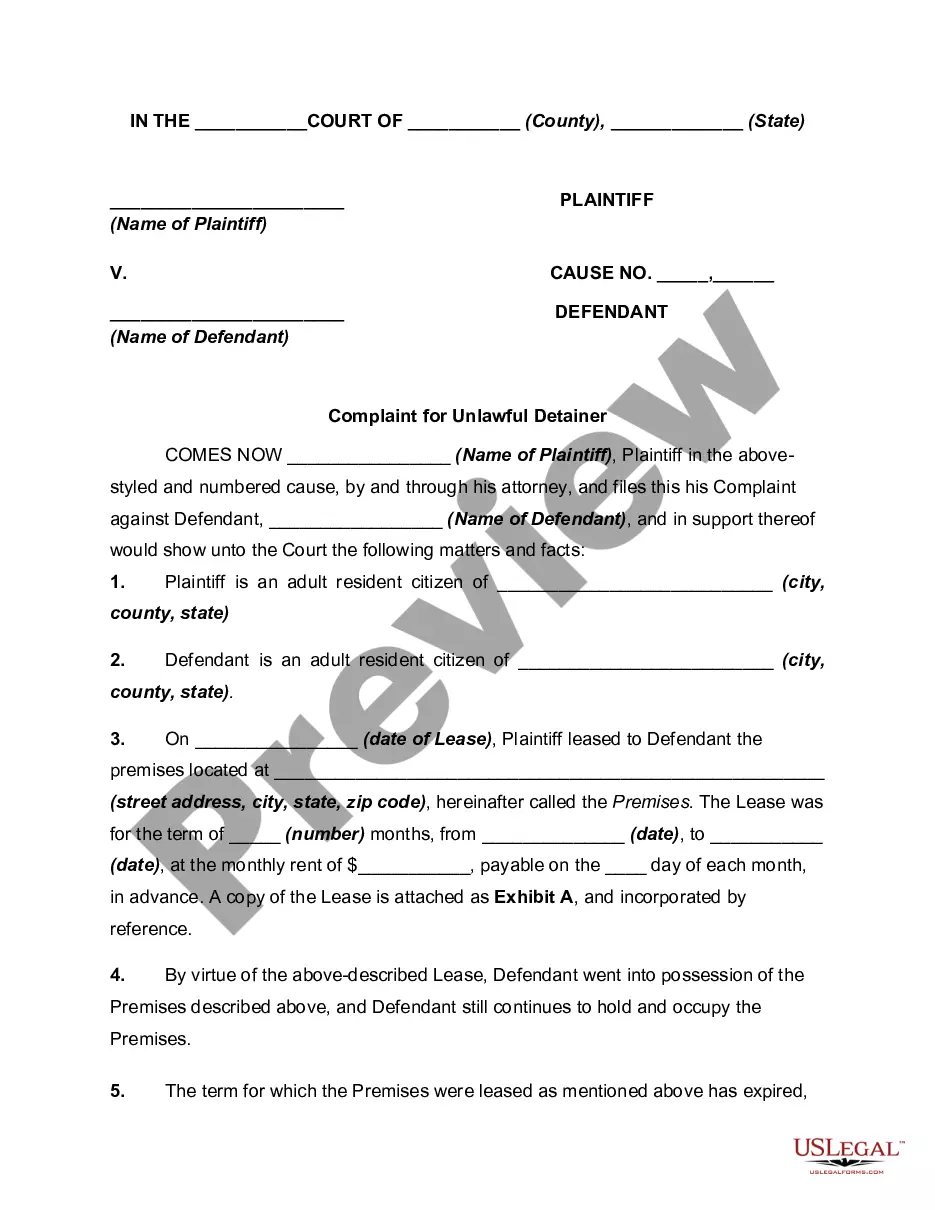
- The names of the plaintiff (landlord) and defendant (tenant).
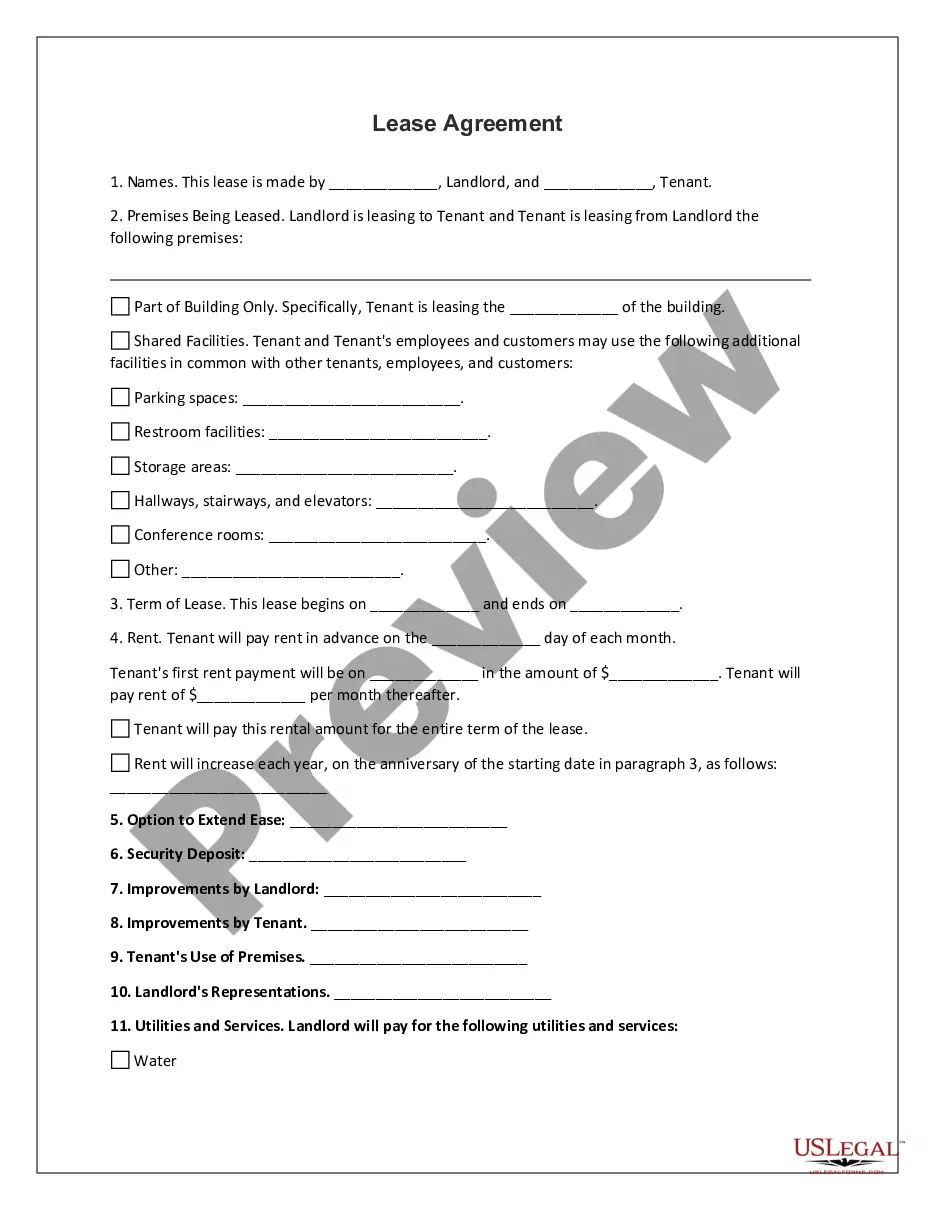
- Details of the lease agreement, including property location and size.
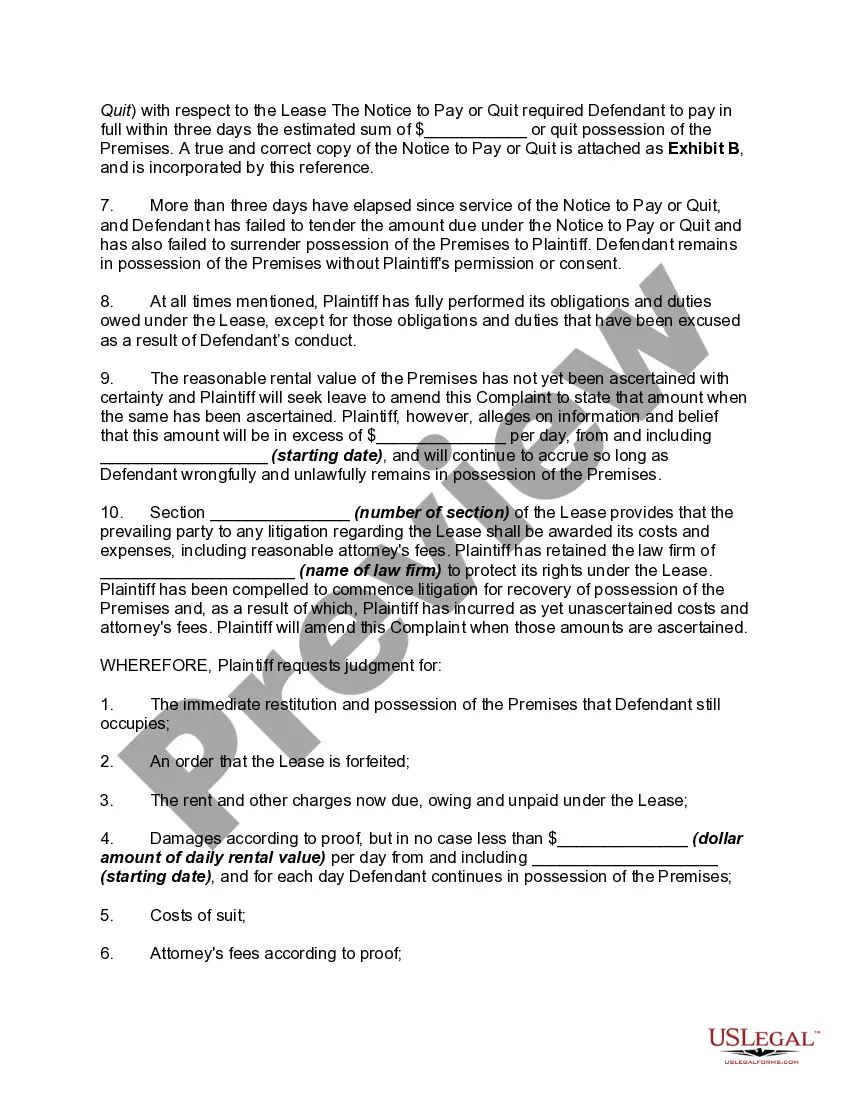
- Information on lease breaches and the payment history of the rent.
- A record of service of the Three-Day Notice to Pay Rent or Quit.
- Claims for rental value, attorney's fees, and possession of the premises.
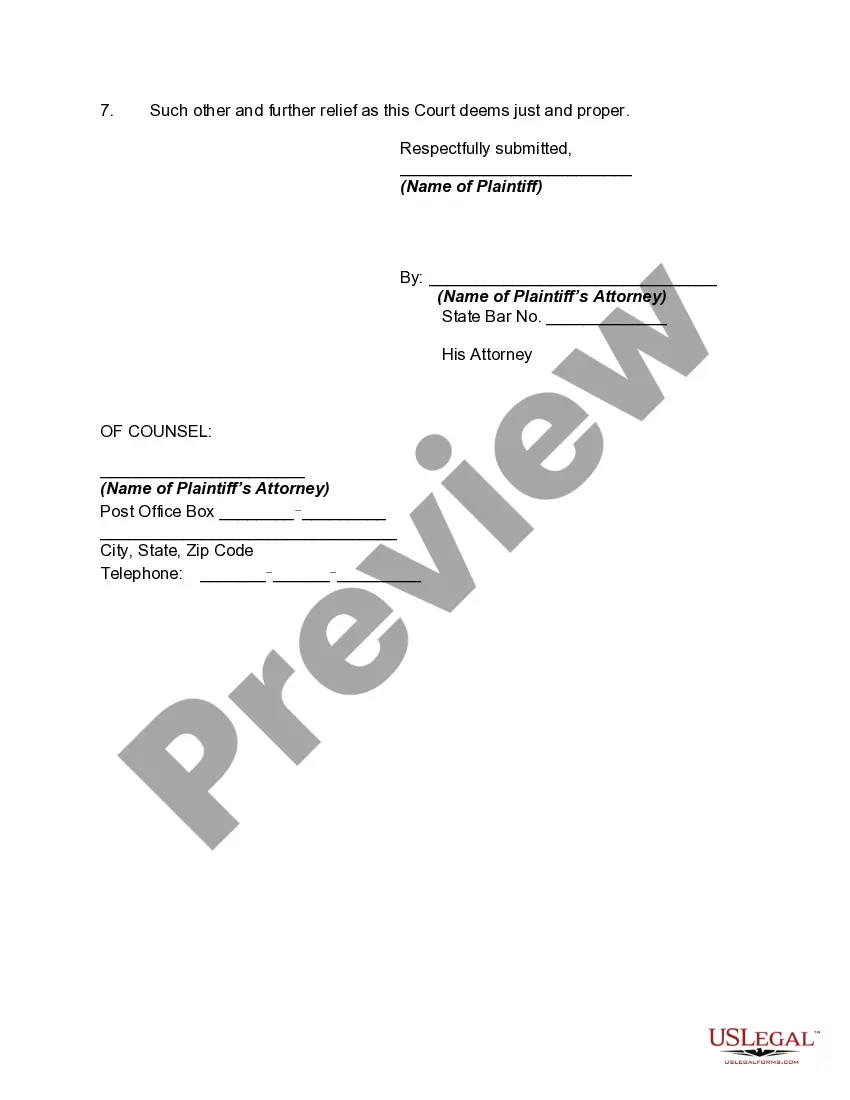
- Signature of the plaintiff and their attorney.
When to use this document
This form is essential when a commercial tenant has failed to pay rent as stipulated in the lease agreement. It should be utilized when a landlord has served a notice to the tenant to pay the overdue rent or vacate the property, and the tenant has not complied within the specified timeframe. This form initiates the formal eviction process through the court system, seeking both possession of the property and recovery of unpaid rent.
Who can use this document
This form is intended for:
- Landlords of commercial properties seeking to recover possession and unpaid rent from their tenants.
- Property managers acting on behalf of landlords in similar disputes.
- Attorneys representing landlords in eviction proceedings.
How to complete this form
- Identify and fill in the names and addresses of both the plaintiff (landlord) and defendant (tenant).
- Enter details about the lease, including the date of the lease and the property description.
- Document the dates and amounts related to missed rent payments.
- Attach any relevant notices served to the tenant, such as the Three-Day Notice to Pay Rent or Quit.
- Complete the request for judgment, outlining specific amounts and desired outcomes.
- Sign and date the form, ensuring it is reviewed by an attorney if necessary.
Does this document require notarization?
This form does not typically require notarization to be legally valid. However, some jurisdictions or document types may still require it. US Legal Forms provides secure online notarization powered by Notarize, available 24/7 for added convenience.
Get your form ready online
Our built-in tools help you complete, sign, share, and store your documents in one place.
Make edits, fill in missing information, and update formatting in US Legal Forms—just like you would in MS Word.
Download a copy, print it, send it by email, or mail it via USPS—whatever works best for your next step.
Sign and collect signatures with our SignNow integration. Send to multiple recipients, set reminders, and more. Go Premium to unlock E-Sign.
If this form requires notarization, complete it online through a secure video call—no need to meet a notary in person or wait for an appointment.
We protect your documents and personal data by following strict security and privacy standards.

Make edits, fill in missing information, and update formatting in US Legal Forms—just like you would in MS Word.

Download a copy, print it, send it by email, or mail it via USPS—whatever works best for your next step.

Sign and collect signatures with our SignNow integration. Send to multiple recipients, set reminders, and more. Go Premium to unlock E-Sign.

If this form requires notarization, complete it online through a secure video call—no need to meet a notary in person or wait for an appointment.

We protect your documents and personal data by following strict security and privacy standards.
Common mistakes
- Failing to accurately fill in the defendant's name or contact details.
- Not providing a complete copy of the lease agreement as an exhibit.
- Missing signatures or not dating the form properly.
- Neglecting to attach proof of service of the Three-Day Notice.
- Overlooking state-specific legal requirements for eviction processes.
Advantages of online completion
- Convenience of completing the form at your own pace from anywhere.
- Editable fields to tailor the form to your specific situation.
- Access to templates created by licensed attorneys, ensuring legal compliance.
- Immediate download for quick submission to the court.
Looking for another form?
Form popularity
FAQ
Commercial tenants may have the protection of the Landlord and Tenant Act 1954. The Act grants Security of Tenure to tenants who occupy premises for business purposes. The tenancy will continue after the contractual termination date until it is ended in one of the ways specified by the Act.
A breach of lease occurs when one of the party breaks one of the agreements in the lease document. A breach of lease does not mean that the tenant and landlord waive their respective rights. Tenants enjoy the rights of safety, privacy, binding terms, and in some cases the right to withhold rent.
The Governor's orders imposing the moratorium on initiation of commercial eviction proceedings rest on the authority given him, under Section 29-a of Article 2-B of the Executive Law to temporarily suspend any statute, local law, ordinance, or orders, rules or regulations, or parts thereof, such as Article 7 of the
Sue the landlord and whoever for up to $10,000 in small claims court for trespassing, breach of contract, invasion of privacy, and breach of quiet enjoyment; if you are two or more tenants, each can separately sue them for up to $10,000, and a joint action is not required.
Anyone renting a building, whether for commercial or personal use, has the right to privacy. You are entitled to do anything on the property that you wish, so long as whatever you are doing is legal. The landlord cannot prevent you from operating your business nor from allowing guests or patrons on the property.
Trespassing or harassment from your landlord or property manager is considered a legal reason to break your lease. Read more about these common ways to legally break a lease to see if any of the circumstances above are applicable to your situation.
If a tenant breaches a tenancy agreement it is possible that their landlord will try and evict them from the property. The sort of breaches of tenancy which result in a landlord seeking a court order for possession include:Damage to the property (eg broken windows)
If a tenant breaches a tenancy agreement it is possible that their landlord will try and evict them from the property. The sort of breaches of tenancy which result in a landlord seeking a court order for possession include:Damage to the property (eg broken windows)
So a tenant is likely to have to give between 3 and 4 months notice if rent is paid monthly, and 3 and 6 months notice if rent is paid quarterly.