Release, Waiver of Liability and Indemnity Agreement in Favor of Company Furnishing Bartenders to a Party or Other Event
Understanding this form
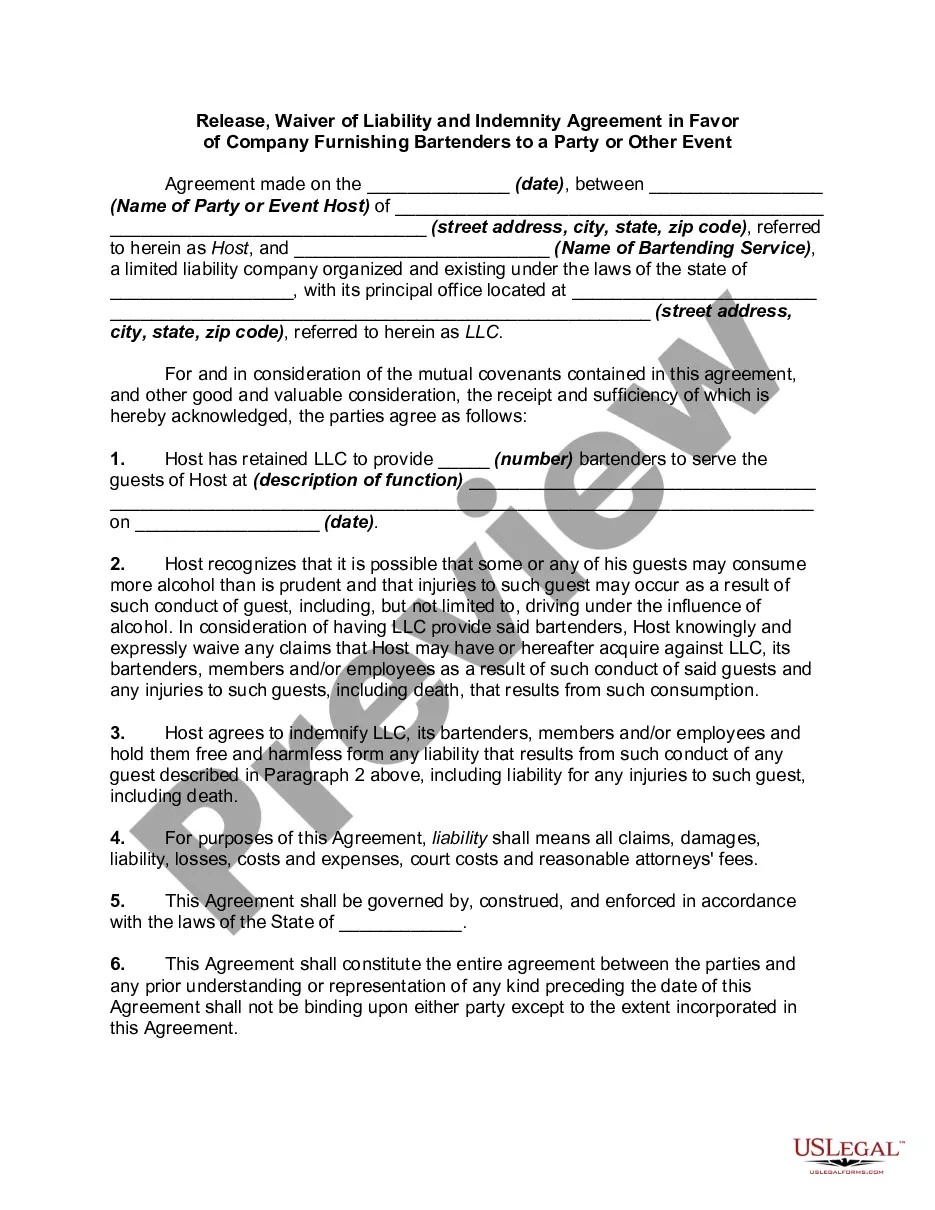
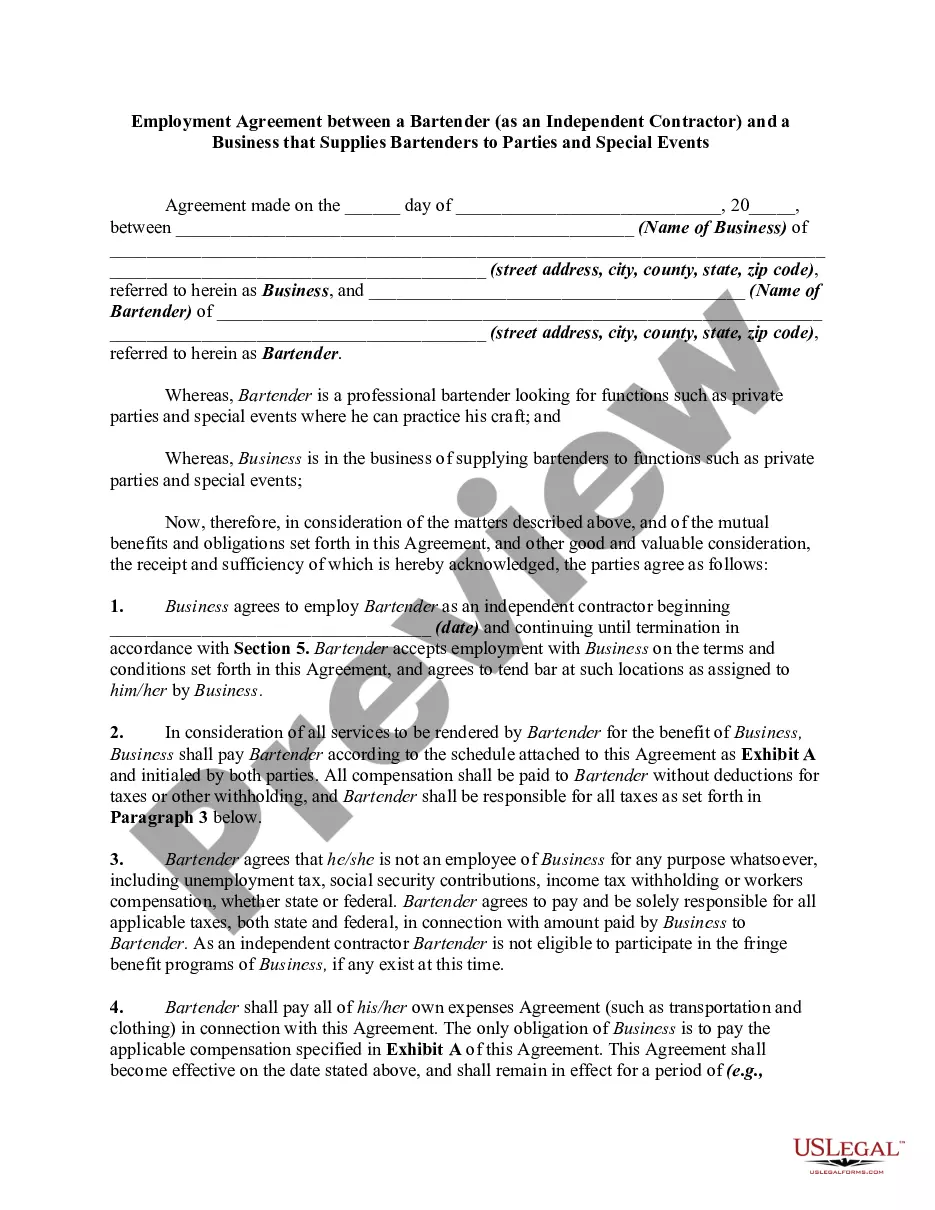
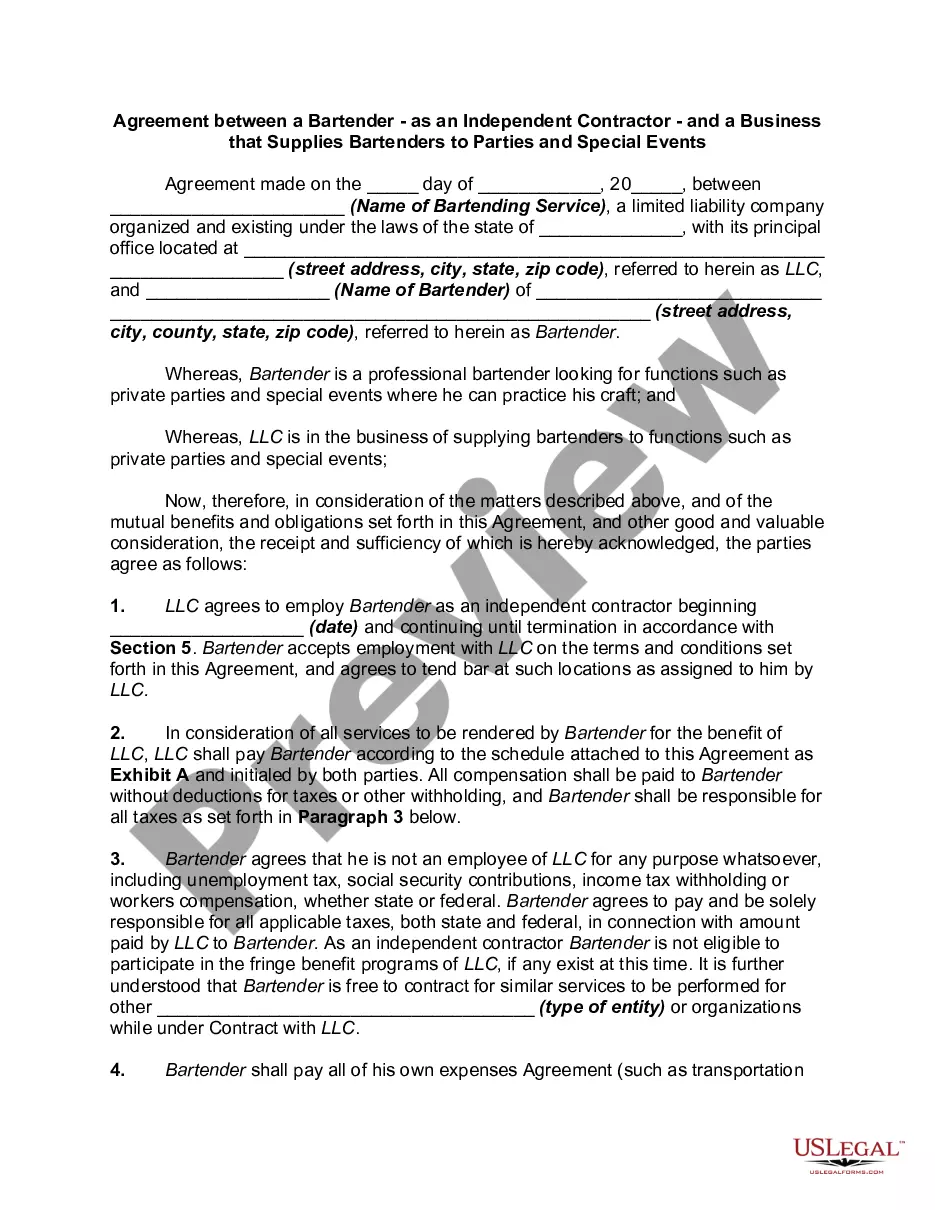
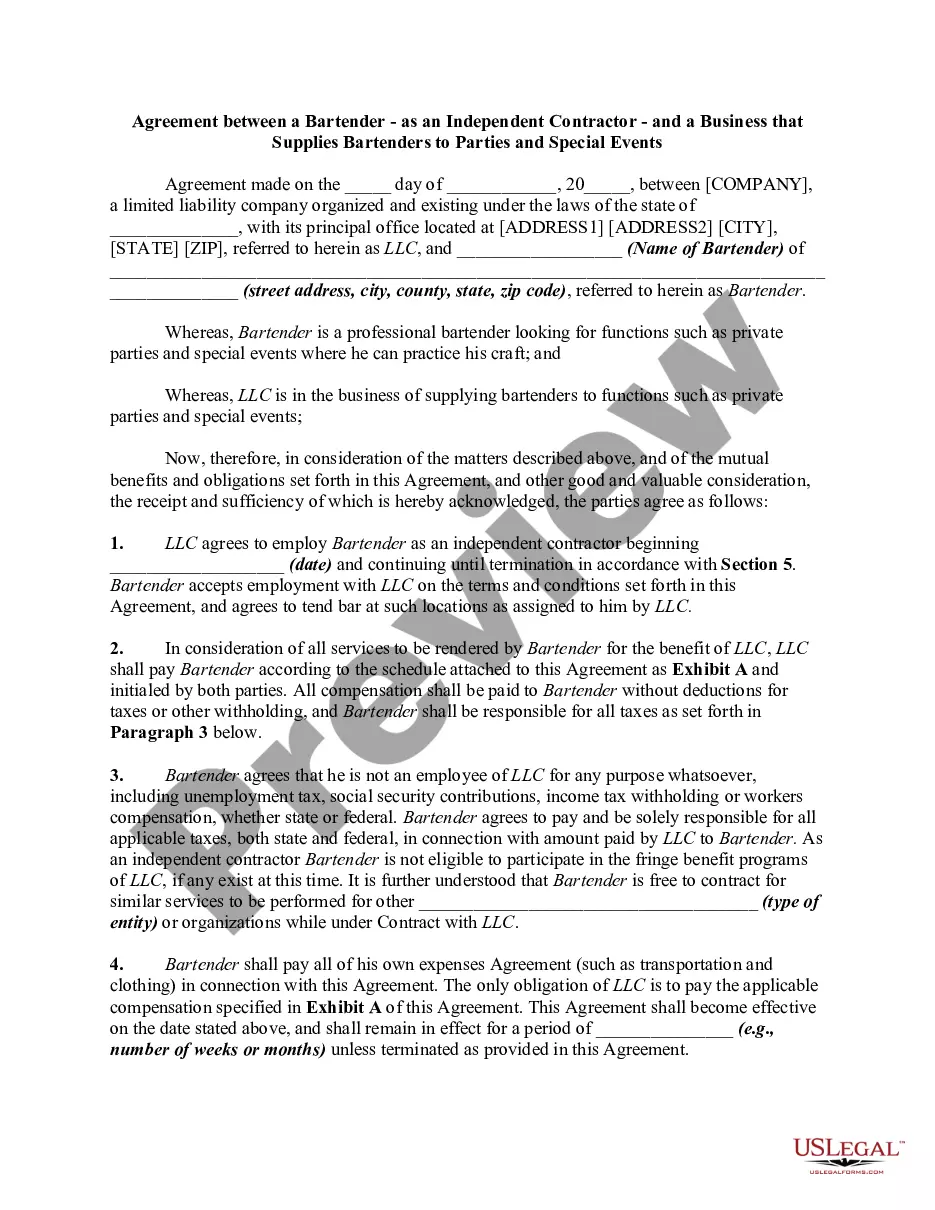
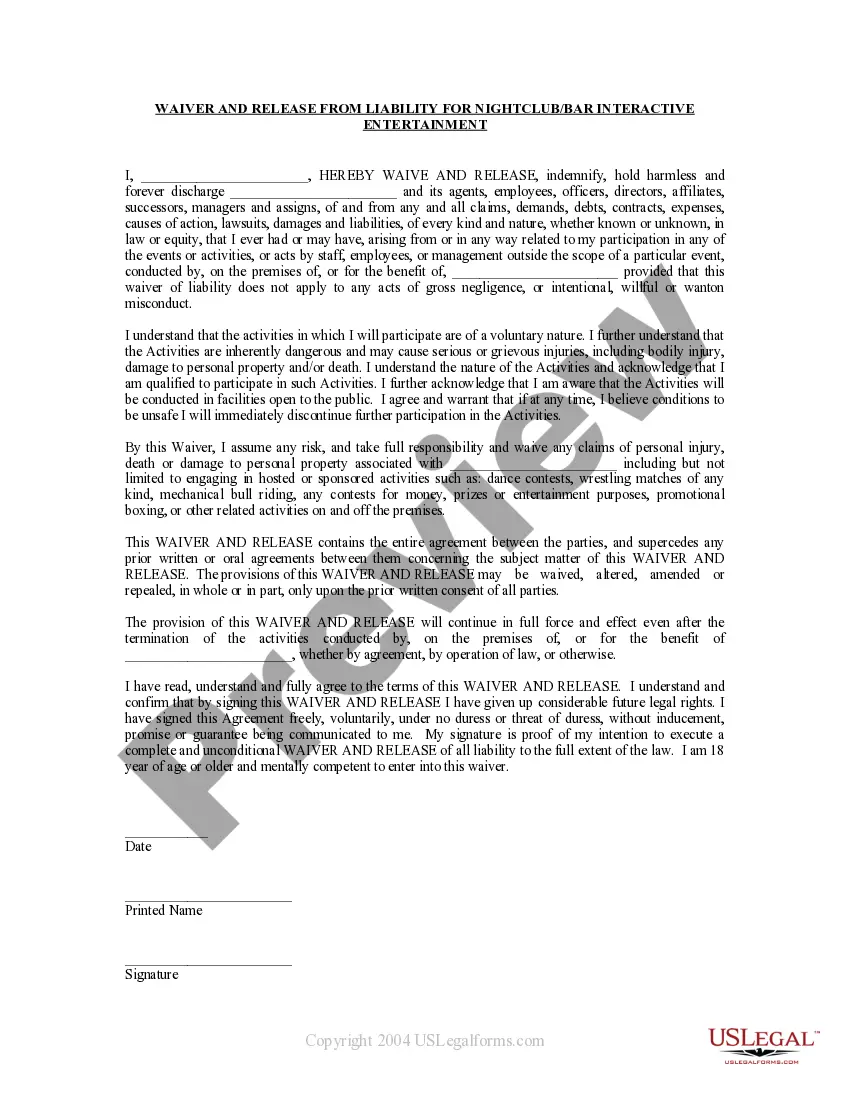
The Release, Waiver of Liability and Indemnity Agreement in Favor of Company Furnishing Bartenders to a Party or Other Event is a legal document designed to protect a bartending service (LLC) from liability related to alcohol consumption at events. By signing this agreement, the event host (Host) voluntarily relinquishes their right to sue the bartending company for any injuries or damages that may occur as a result of guests consuming alcohol. This form is crucial for mitigating risks associated with alcohol service at events, distinguishing it from other liability waivers that may not be specifically tailored for events involving bartenders.
Key components of this form
- Parties involved: Identifies the event host and the bartending service.
- Event details: Specifies the date and description of the event where bartenders will be present.
- Waiver of liability: States that the Host waives claims against the bartending service related to guest misconduct, including excessive alcohol consumption.
- Indemnity clause: Requires the Host to indemnify the bartending service against any claims resulting from guest behavior.
- Governing law: Indicates which state's laws will govern the agreement.
- Complete agreement: Confirms that this document represents the entire agreement between the parties.
When to use this form
This form should be used whenever an individual or organization hires a bartending service for an event, such as private parties, weddings, or corporate events. It helps protect the bartending company from potential legal claims resulting from guest behavior related to alcohol consumption. This is especially important in environments where guests may engage in risky drinking behaviors, potentially leading to injuries or accidents.
Intended users of this form
The following individuals or entities should consider using this form:
- Event hosts planning to serve alcohol at gatherings.
- Businesses hiring bartending services for events they organize.
- Individuals responsible for ensuring guest safety at events involving alcohol consumption.
- Nonprofits or organizations hosting events where bartending services are offered.
Instructions for completing this form
- Identify the date of the agreement at the top of the document.
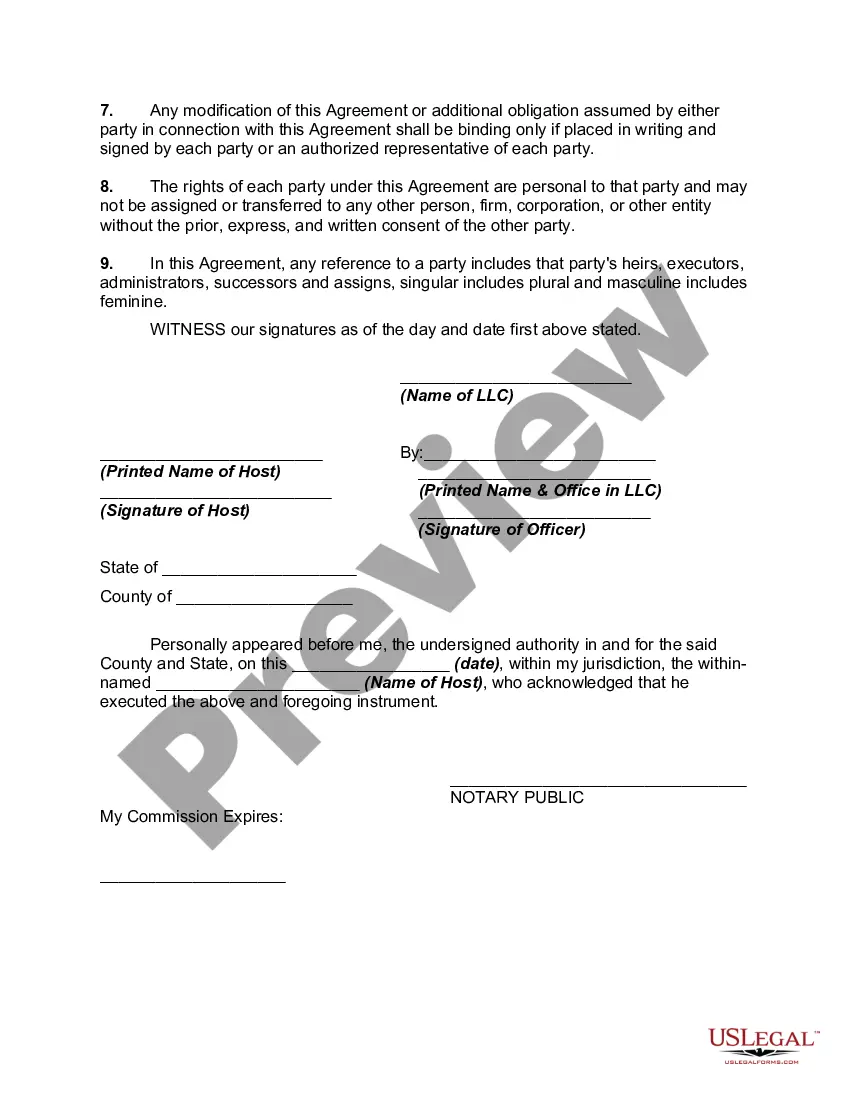
- Fill in the names and addresses of the Host and the bartending service (LLC).
- Specify the number of bartenders and a brief description of the event.
- Clearly outline any potential risks associated with alcohol consumption during the event.
- Both parties should review the agreement before signing and obtaining a notarization if necessary.
Does this document require notarization?
To make this form legally binding, it must be notarized. Our online notarization service, powered by Notarize, lets you verify and sign documents remotely through an encrypted video session.
Get your form ready online
Our built-in tools help you complete, sign, share, and store your documents in one place.
Make edits, fill in missing information, and update formatting in US Legal Forms—just like you would in MS Word.
Download a copy, print it, send it by email, or mail it via USPS—whatever works best for your next step.
Sign and collect signatures with our SignNow integration. Send to multiple recipients, set reminders, and more. Go Premium to unlock E-Sign.
If this form requires notarization, complete it online through a secure video call—no need to meet a notary in person or wait for an appointment.
We protect your documents and personal data by following strict security and privacy standards.

Make edits, fill in missing information, and update formatting in US Legal Forms—just like you would in MS Word.

Download a copy, print it, send it by email, or mail it via USPS—whatever works best for your next step.

Sign and collect signatures with our SignNow integration. Send to multiple recipients, set reminders, and more. Go Premium to unlock E-Sign.

If this form requires notarization, complete it online through a secure video call—no need to meet a notary in person or wait for an appointment.

We protect your documents and personal data by following strict security and privacy standards.
Mistakes to watch out for
- Failing to include all necessary details about the event, such as date and location.
- Not having all parties sign the document before the event begins.
- Overlooking the need for notarization if required by state law.
- Not thoroughly explaining potential risks associated with alcohol consumption to guests.
- Ignoring local regulations regarding serving alcohol."
Benefits of completing this form online
- Convenient access to a professionally drafted legal form.
- Editable fields allow for customization to fit specific event needs.
- Reliable and secure format ensuring compliance with legal standards.
- Quick download for immediate use without delays.
Legal use & context
- Waivers of liability like this one are generally enforceable, provided they are clearly written and the risks are disclosed.
- Courts may invalidate waivers signed on behalf of minors or those that attempt to waive gross negligence or willful misconduct.
- Each jurisdiction may have different standards regarding the enforcement of these agreements, reinforcing the importance of compliance with local laws.
What to keep in mind
- This form is designed to release bartending services from liability relating to alcohol consumption at events.
- It is essential for the Host to understand potential risks and communicate them effectively to guests.
- Completing and signing this form helps protect the hosting party and the bartending service legally.
Looking for another form?
Form popularity
FAQ
There are three parties to a contract (A, B, and C) with separate obligations.
Full legal name. Registration number. Registered office address. Country of incorporation.
A joinder is intended to be a simple document whose sole effect is to add an additional person or entity as a party to the original agreement and bind them to the terms of that agreement in their entirety.
Accord, concurrence, concurrency, consensus, unanimity, unison.
A legal contract is a legally enforceable agreement between two or more parties.Typically, a party promises to do something for the other in exchange for a benefit. A legal contract must have a lawful purpose, mutual agreement, consideration, competent parties, and genuine assent to be enforceable.
Fundamentally, two or more parties enter into a contract. A "party" may be anindividual, a group of people, or even an "artificial person" such as a corporation. The parties to a contract must have the legal capacity to enter intothat contract.
To refer to a contract party in the agreement, either use the functional reference (e.g. Seller, Licencee, Service Provider, Lender) or the short name of the party (e.g. Weagree, Shell, Philips, Sony). It is appropriate to refer to your own party by its short name and to the other by a functional reference.
A contract of sale is a contract or agreement wherein one party (seller/vendor) obligates himself to deliver and transfer something to the other party (buyer/vendee/purchaser), who, on his part, obligates himself to pay the price.
There are at least two parties involved in a contract: the promisor, promisee and, sometimes, a third party beneficiary may be named. Each party has a different obligation to the contract terms.