Sworn Statement of Beneficiary of Estate and Consent to Close Estate - Uniform Probate Code
Understanding this form
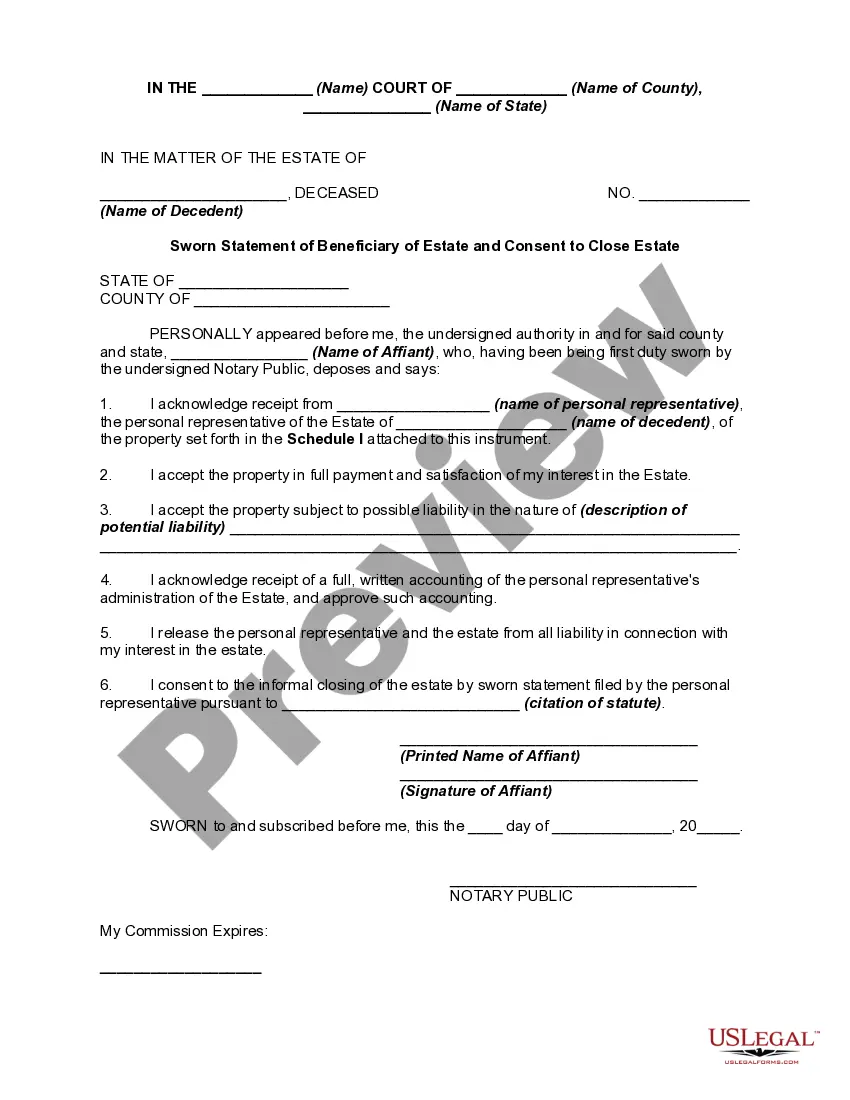
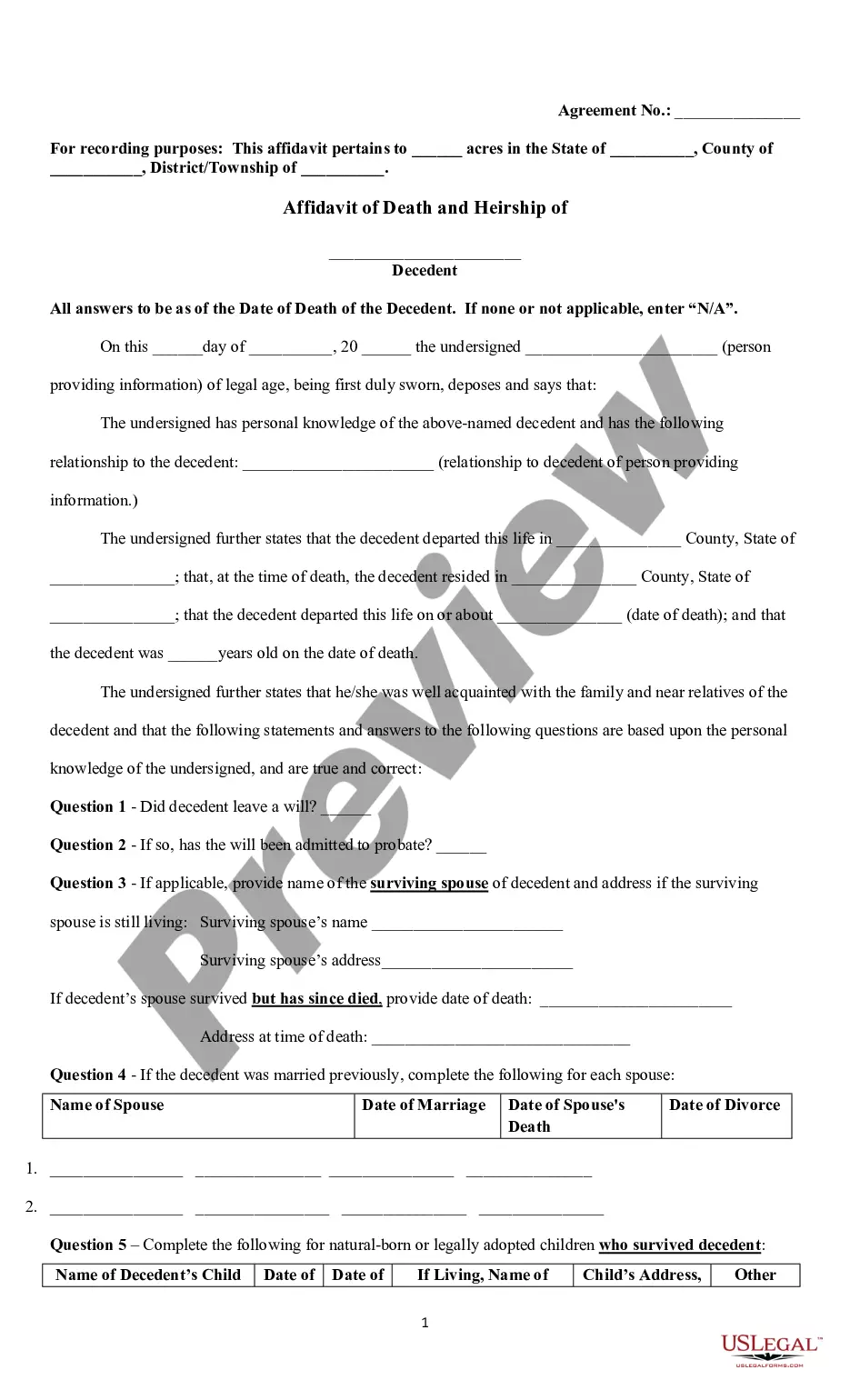
The Sworn Statement of Beneficiary of Estate and Consent to Close Estate serves as a legal declaration from beneficiaries to confirm receipt of their share of an estate and to consent to its closure. Unlike other probate forms, this document specifically addresses the beneficiaries' acknowledgment of property and their approval of the estate's administration, complying with the Uniform Probate Code where applicable. It helps streamline the process of closing an estate, ensuring beneficiaries are satisfied with their distributions and releases the personal representative from further liability.
What’s included in this form
- Name of the decedent and case number.
- Identification of the affiant (beneficiary) and personal representative.
- Acknowledgment of property received by the beneficiary.
- Acceptance of property and any potential liabilities.
- Approval of the personal representative's accounting.
- Consent to the informal closing of the estate.
When to use this document
This form is necessary when a beneficiary of an estate wishes to formally acknowledge receipt of their share and agrees to close the estate. It is used in situations where the personal representative has settled the estate, and beneficiaries need to confirm their acceptance of assets and liabilities before the estate is officially closed. This often occurs after the completion of probate proceedings and when all debts and claims have been satisfied.
Who this form is for
- Beneficiaries of a deceased personâs estate.
- Personal representatives of an estate seeking to close the estate.
- Individuals involved in the probate process under the Uniform Probate Code.
How to complete this form
- Identify the estate by entering the name of the decedent and the case number.
- Specify the name of the personal representative and the property being received.
- Indicate any potential liabilities associated with the property.
- Review and approve the personal representativeâs accounting.
- Affix signatures of all necessary parties and include the date for notarization.
Does this document require notarization?
Yes, this form must be notarized to be legally valid. It requires a notary public to witness the signing of the document by the affiant, ensuring that the signature is genuine and that the affiant is willingly providing their statement. US Legal Forms offers integrated online notarization for your convenience, allowing you to complete the process via a secure video call at any time.
Get your form ready online
Our built-in tools help you complete, sign, share, and store your documents in one place.
Make edits, fill in missing information, and update formatting in US Legal Forms—just like you would in MS Word.
Download a copy, print it, send it by email, or mail it via USPS—whatever works best for your next step.
Sign and collect signatures with our SignNow integration. Send to multiple recipients, set reminders, and more. Go Premium to unlock E-Sign.
If this form requires notarization, complete it online through a secure video call—no need to meet a notary in person or wait for an appointment.
We protect your documents and personal data by following strict security and privacy standards.

Make edits, fill in missing information, and update formatting in US Legal Forms—just like you would in MS Word.

Download a copy, print it, send it by email, or mail it via USPS—whatever works best for your next step.

Sign and collect signatures with our SignNow integration. Send to multiple recipients, set reminders, and more. Go Premium to unlock E-Sign.

If this form requires notarization, complete it online through a secure video call—no need to meet a notary in person or wait for an appointment.

We protect your documents and personal data by following strict security and privacy standards.
Mistakes to watch out for
- Failing to accurately identify the name of the decedent and case number.
- Not specifying potential liabilities on the property being accepted.
- Overlooking the requirement for a notary, if applicable, for legal validity.
- Not reviewing the personal representative's accounting prior to approval.
Benefits of using this form online
- Convenience of downloading and filling out the form from home.
- Editability allows for easy adjustments before finalization.
- Reliability from templates drafted by licensed attorneys.
- Access to legal forms 24/7, ensuring you have the right documents when needed.
Quick recap
- This form is essential for beneficiaries confirming acceptance of estate property.
- It serves to release the personal representative from further liability.
- Always review state requirements, as they may influence how this form is completed.
- Notarization is typically required for the form to be valid.
Looking for another form?



Form popularity
FAQ
Before distributing assets to beneficiaries, the executor must pay valid debts and expenses, subject to any exclusions provided under state probate laws.The executor must maintain receipts and related documents and provide a detailed accounting to estate beneficiaries.
The length of time an executor has to distribute assets from a will varies by state, but generally falls between one and three years.
By Stephanie Kurose, J.D. Closing a person's estate after they die can often be a long, detailed process. This includes paying off debts, filing final tax returns, and, finally, distributing the estate's assets according to the wishes of the deceased.
The Executor's Final Act, Closing an Estate The personal representative, now without any estate funds to pay his lawyer, must respond. Even if the charges are baseless, the executor is stuck paying the legal bill. Instead, before making any distribution, the administrator should insist on receiving a release.
A simple estate with just a few, easy-to-find assets may be all wrapped up in six to eight months. A more complicated affair may take three years or more to fully settle.
Under the Administration and Probate Act there is a period of 6 months once Probate (or Letters of Administration, if there was no Will) is granted in which claims can be made on an Estate.
Notify all creditors. File tax returns and pay final taxes. File the final accounting with the probate court. Distribute remaining assets to beneficiaries. File a closing statement with the court.
1Complete a final Inventory of Assets.2Using the Inventory of Assets in the final accounting, complete the final accounting.Closing an Estate in a Formal Probate Process\nwww.thecommonexecutor.com > closing-an-estate-in-a-formal-probate-pro...