Employment Verification Letter
What is this form?
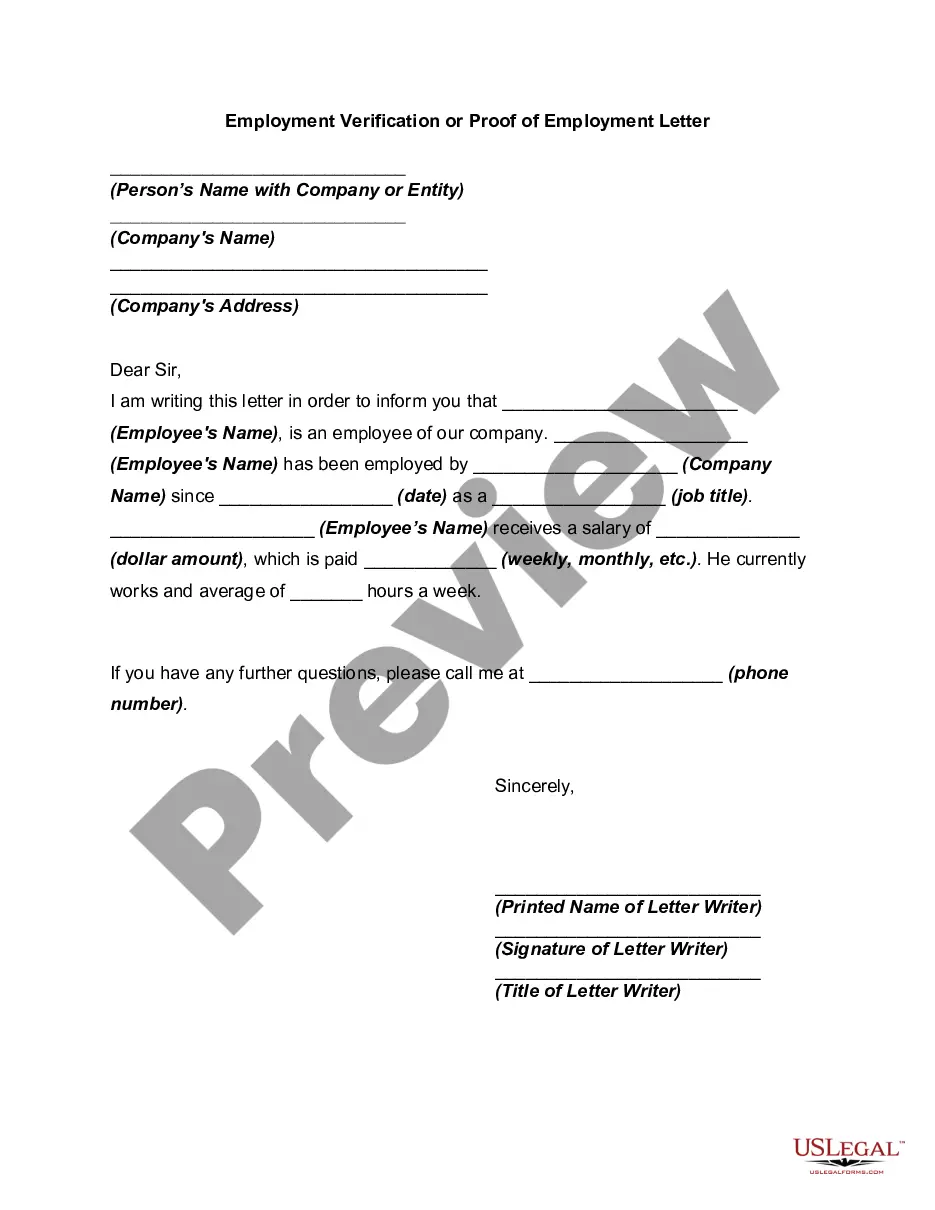
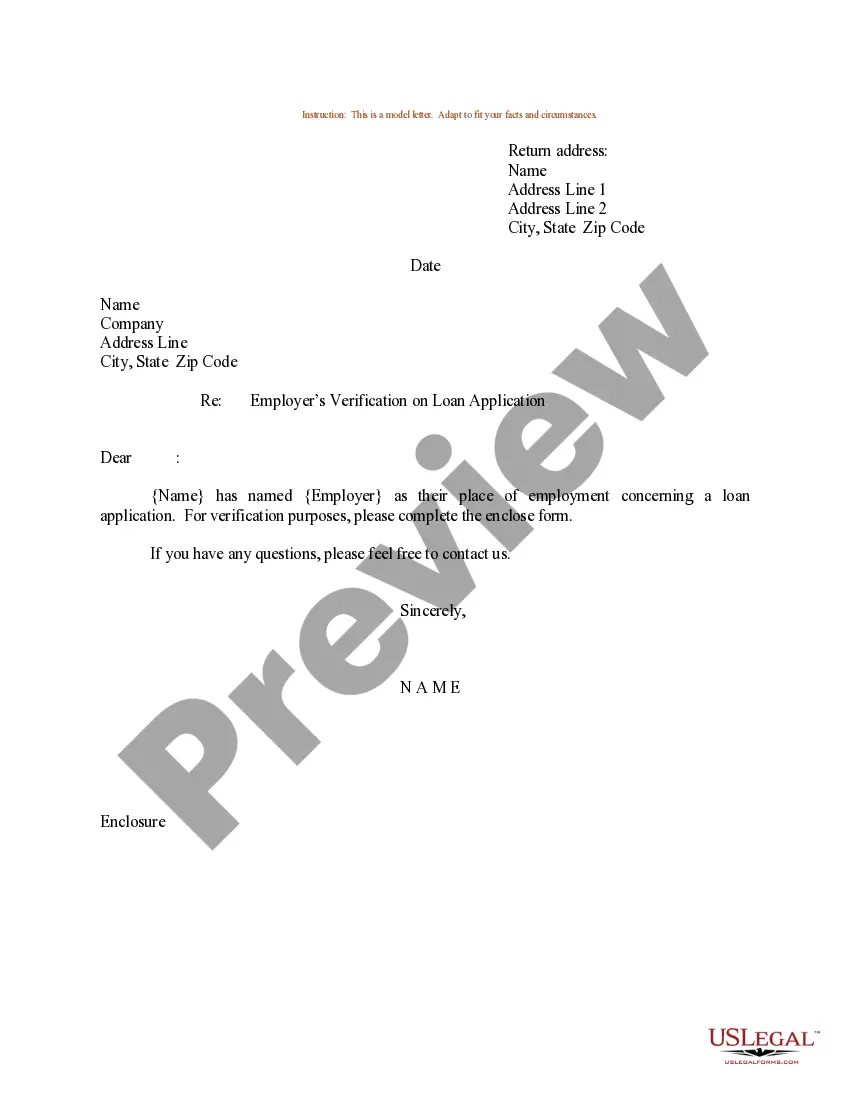
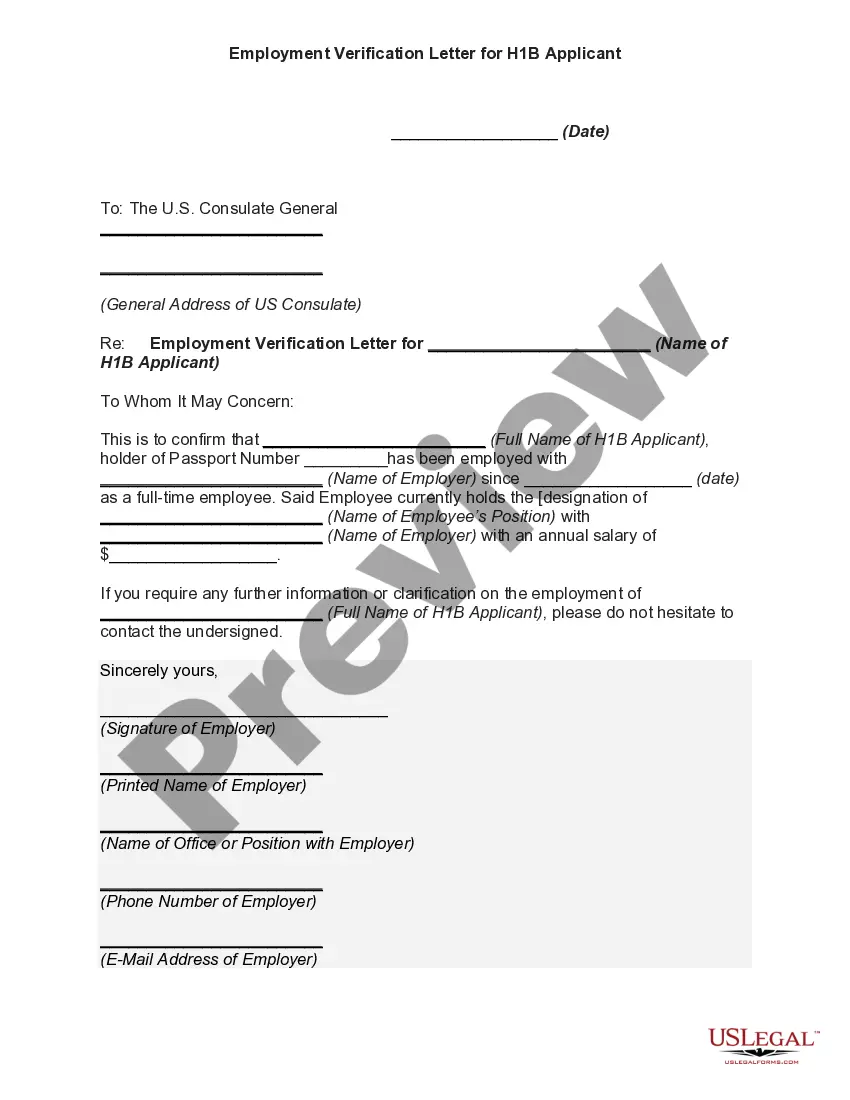
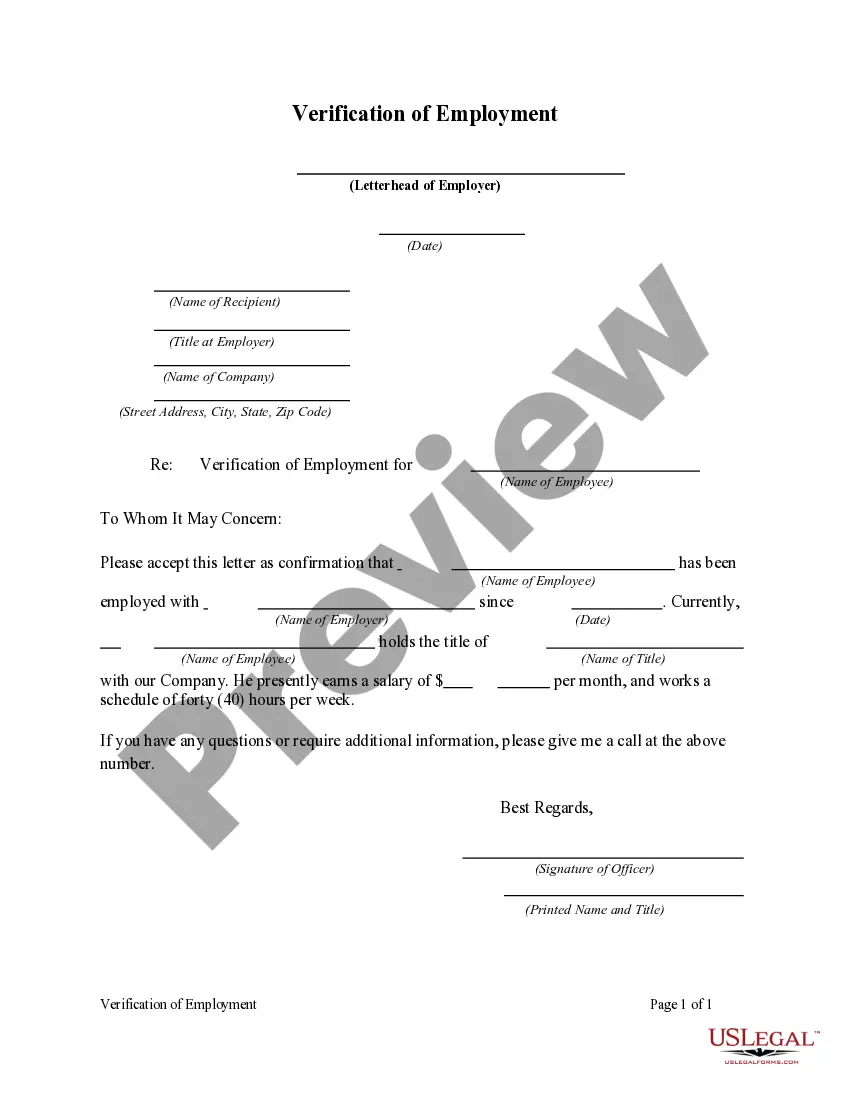
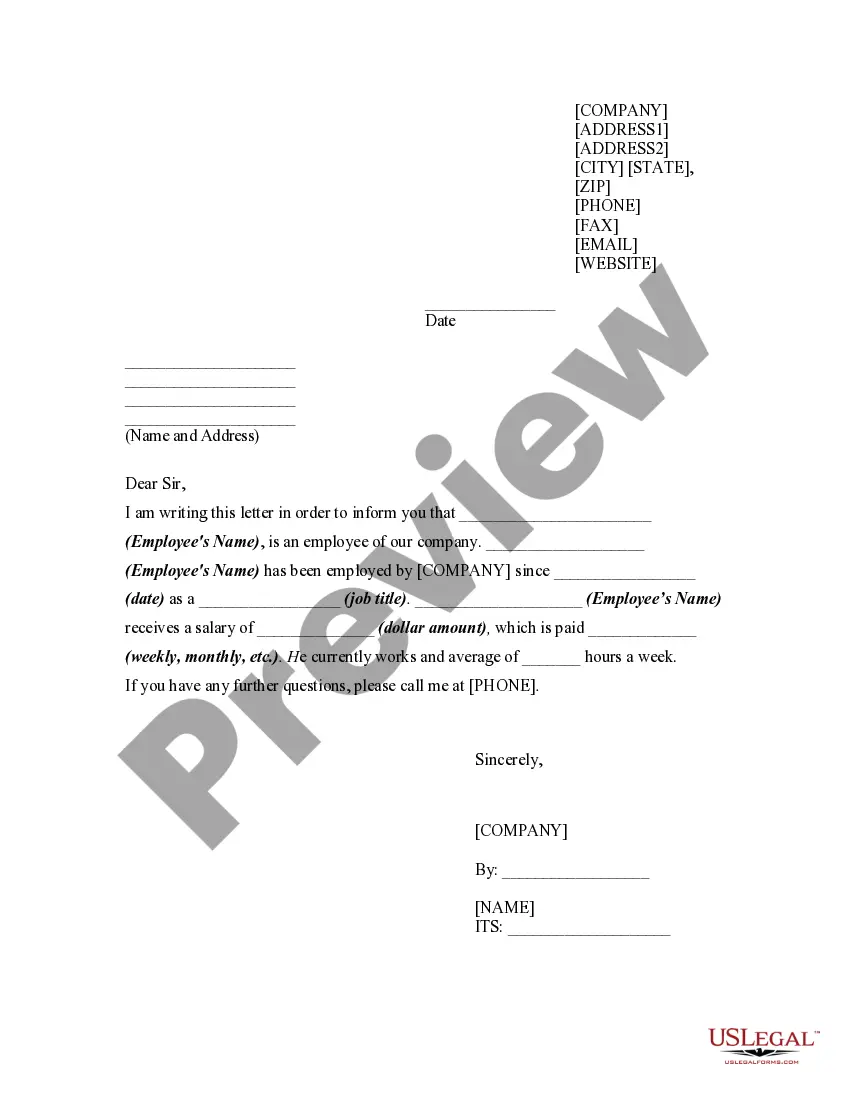
An Employment Verification Letter is a formal document that confirms an employee's position, salary, and duration of employment with a company. This letter is often requested by third parties, such as banks or landlords, to validate employment status. Unlike other employment letters, this document is specifically structured to provide essential details regarding employment verification for various purposes.
What’s included in this form
- Employee's name and job title
- Company's name and address
- Date of employment commencement
- Employee's salary and payment frequency
- Average hours worked per week
- Contact information for verification inquiries
When to use this form
This form is typically used when an employee needs to provide proof of employment for various reasons. Common situations include applying for loans, renting a home, or any occasion where a prospective landlord or creditor requires assurance of income and job stability.
Who this form is for
This Employment Verification Letter is suitable for:
- Employers who need to confirm an employee's work status
- Employees who are required to provide verification for personal or financial reasons
- Third-party organizations looking to validate employment for loans or housing applications
Completing this form step by step
- Identify the employee by filling in their name and position.
- Provide the company's name and address where the employee is employed.
- Enter the date the employee began working at the company.
- Specify the employee's job title and salary, including how frequently they are paid.
- Indicate the average number of hours the employee works per week.
- Complete the letter with the sender's printed name, signature, and title.
Is notarization required?
Notarization is not commonly needed for this form. However, certain documents or local rules may make it necessary. Our notarization service, powered by Notarize, allows you to finalize it securely online anytime, day or night.
Get your form ready online
Our built-in tools help you complete, sign, share, and store your documents in one place.
Make edits, fill in missing information, and update formatting in US Legal Forms—just like you would in MS Word.
Download a copy, print it, send it by email, or mail it via USPS—whatever works best for your next step.
Sign and collect signatures with our SignNow integration. Send to multiple recipients, set reminders, and more. Go Premium to unlock E-Sign.
If this form requires notarization, complete it online through a secure video call—no need to meet a notary in person or wait for an appointment.
We protect your documents and personal data by following strict security and privacy standards.

Make edits, fill in missing information, and update formatting in US Legal Forms—just like you would in MS Word.

Download a copy, print it, send it by email, or mail it via USPS—whatever works best for your next step.

Sign and collect signatures with our SignNow integration. Send to multiple recipients, set reminders, and more. Go Premium to unlock E-Sign.

If this form requires notarization, complete it online through a secure video call—no need to meet a notary in person or wait for an appointment.

We protect your documents and personal data by following strict security and privacy standards.
Typical mistakes to avoid
- Failing to update the employment date if the employee has changed jobs.
- Omitting key information such as salary or job title.
- Not including contact information for follow-up queries.
- Using non-standard formats that may not be accepted by third-party organizations.
Advantages of online completion
- Convenience of instant download and accessibility.
- Editability to fit specific employee and company details easily.
- Reliability of professionally drafted content ensuring legal accuracy.
Summary of main points
- An Employment Verification Letter confirms an employee's job status and salary.
- It is commonly requested by lenders, landlords, and other organizations.
- The form can be customized for use in various states.
- Completing the letter accurately is crucial to avoid common mistakes.
Looking for another form?


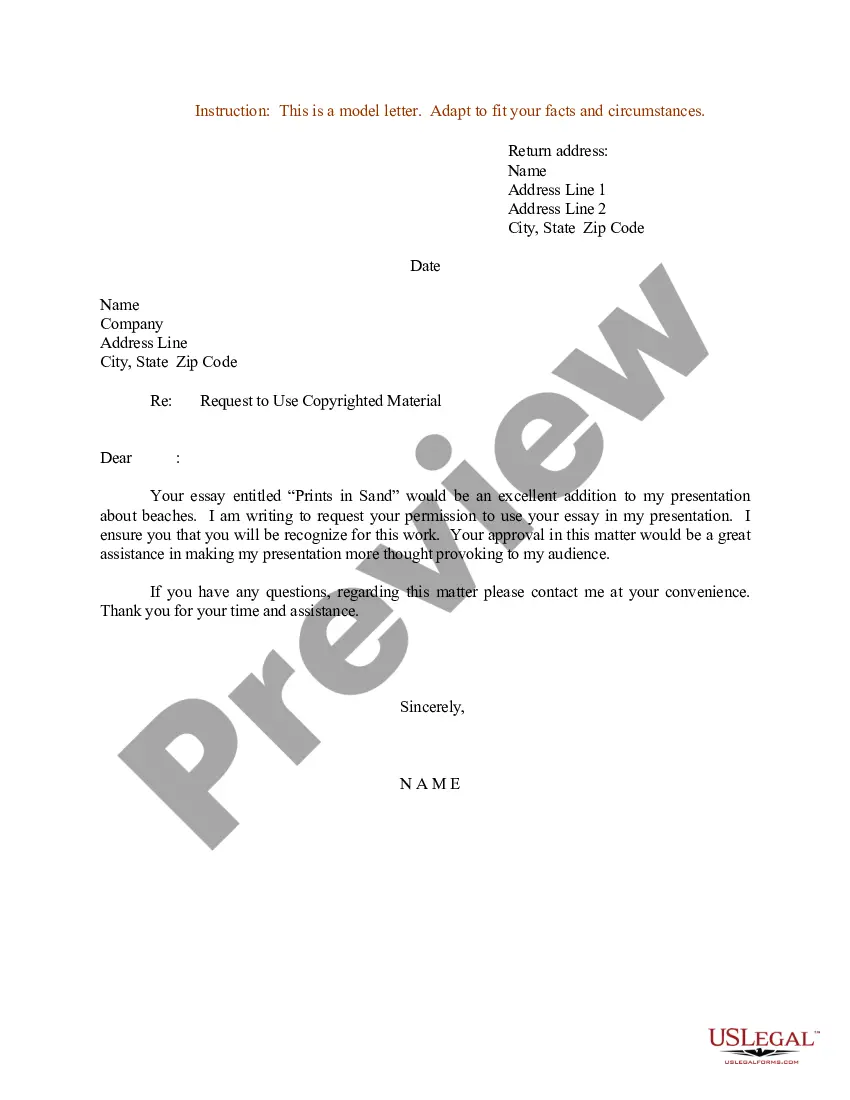
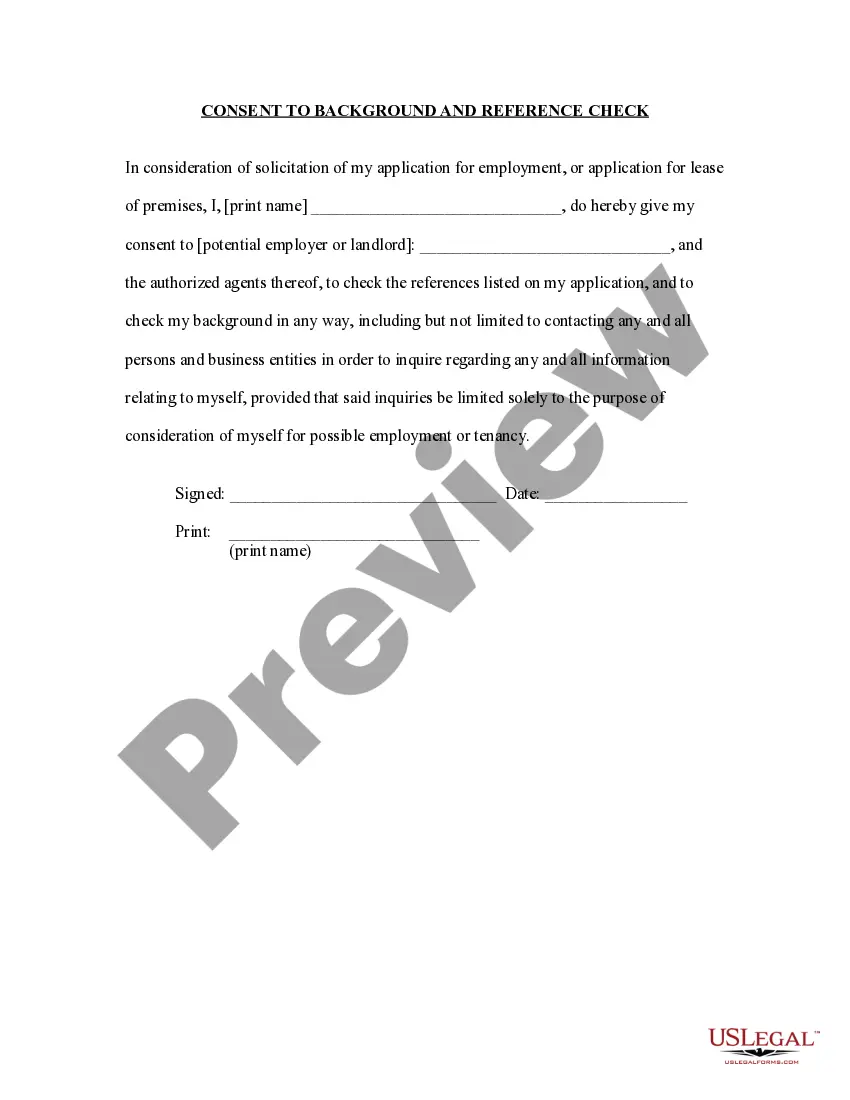
Form popularity
FAQ
Follow business letter format. Use standard business letter format when writing your letter. Keep it concise. Include all requested information. Provide your contact information. Edit and proofread before you send.
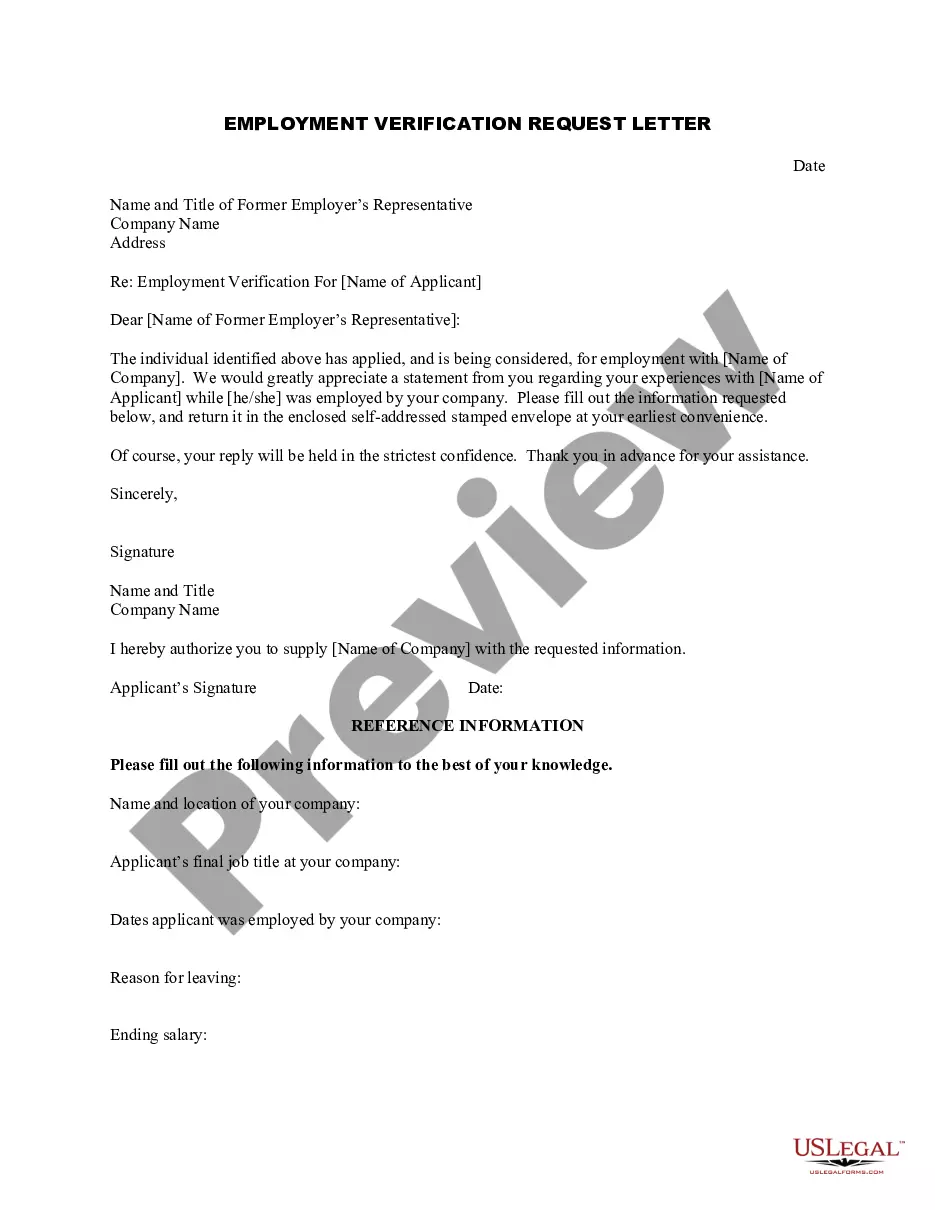
An employment verification letter confirms the current or former employee's employment status. The employment verification letter is a response to a request for information from a potential employer, government agency, or bank, for example.The potential employer may verify dates of employment and salary.
First, fill out an employment verification form. Second, draft a short letter of consent, if necessary. Next, provide a list of all required details. Last, include your contact information and complete your request.
Employer address. Name and address of the company requesting verification. Employee name. Employment dates. Employee job title. Employee job description. Employee current salary. Reason for termination.
Verify the Company and Their Contact Information. Call the Company and Ask for the Human Resources Department. Questions to Ask by Phone. Submitting a Written Request. Sample Employment Verification Form.
Employer address. Name and address of the company requesting verification. Employee name. Employment dates. Employee job title. Employee job description. Employee current salary. Reason for termination.
An employment verification letter generally includes your employer's address, the name, and address of the organization requesting the document, your name, your employment dates, your job title and salary. The document may also include your date of birth and social security number for identification purposes.
Employment verification confirms a person's past or current job status. Employers often need to request verification for job candidates or reply to requests from employers, lenders, landlords, the federal government, and others.