Assignment of Judgment to Attorney for Collection
Understanding this form
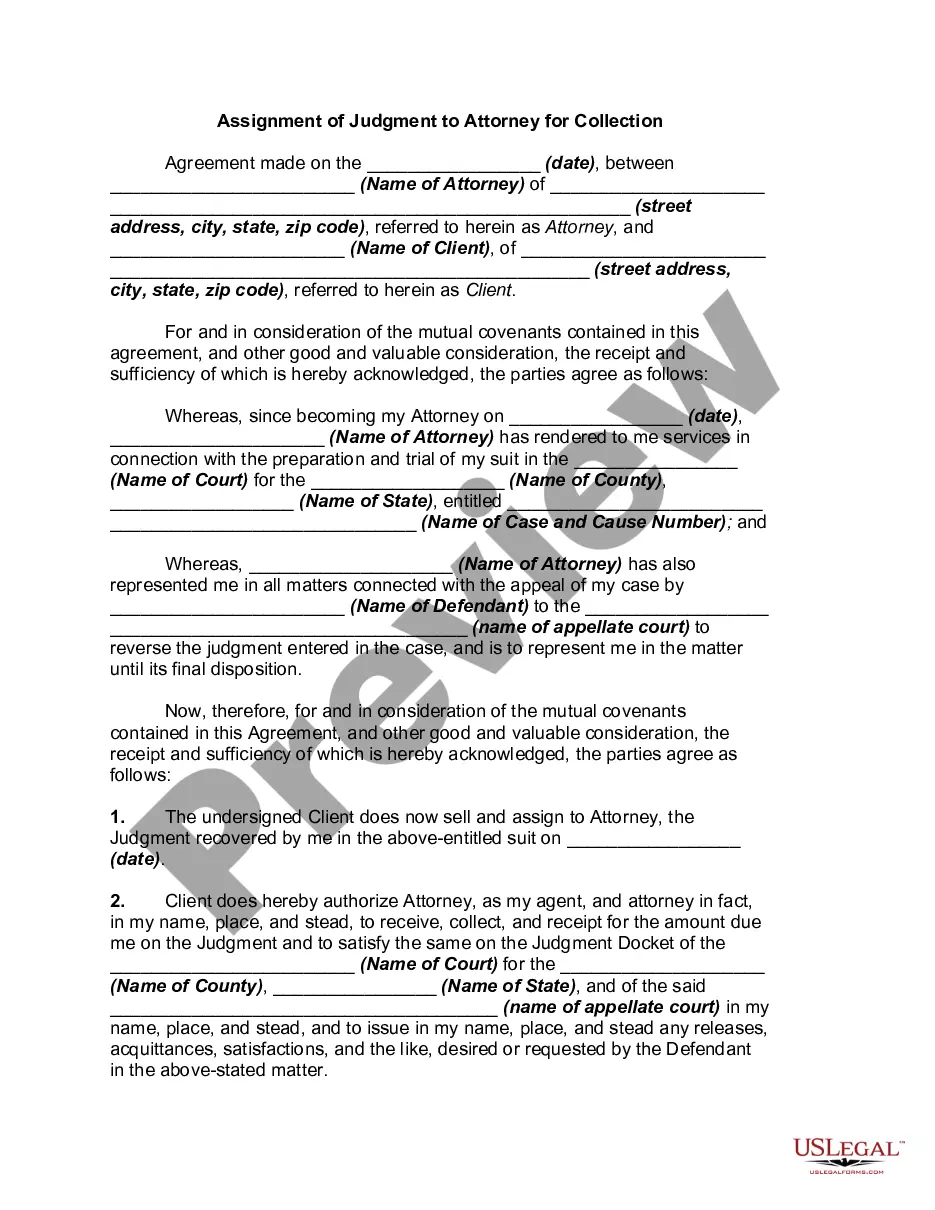
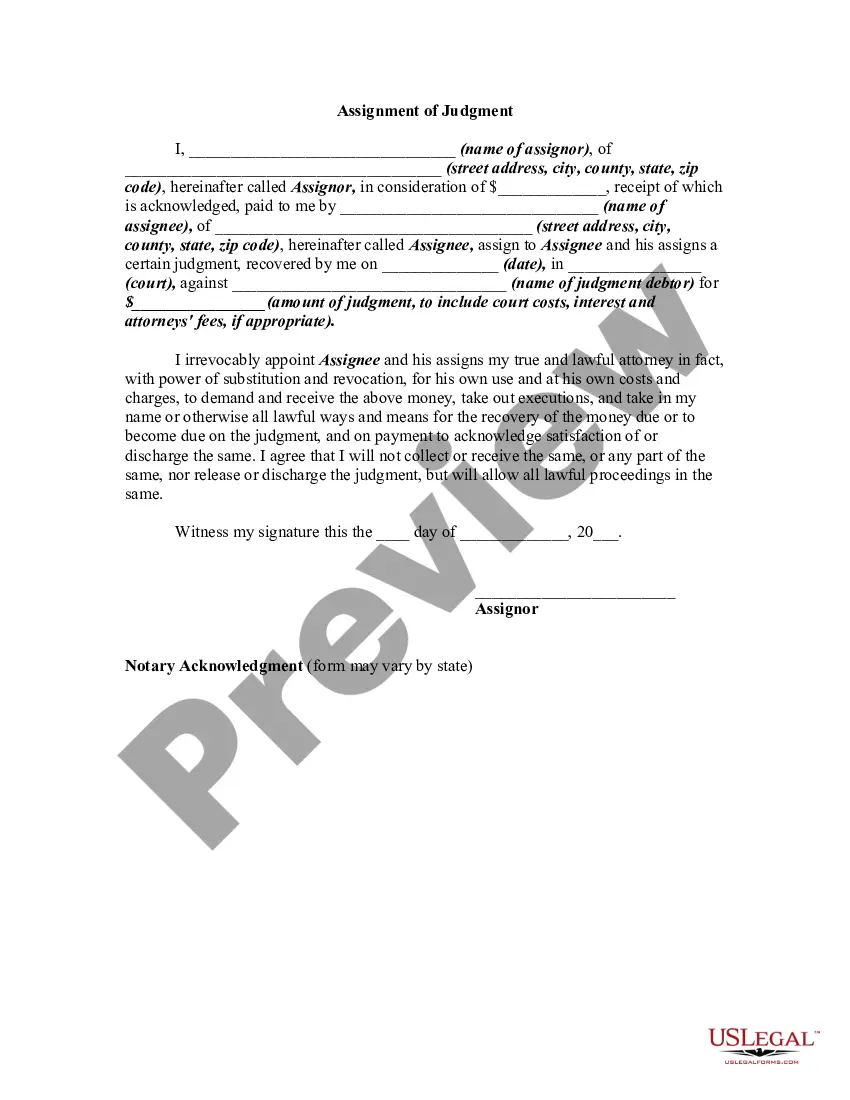
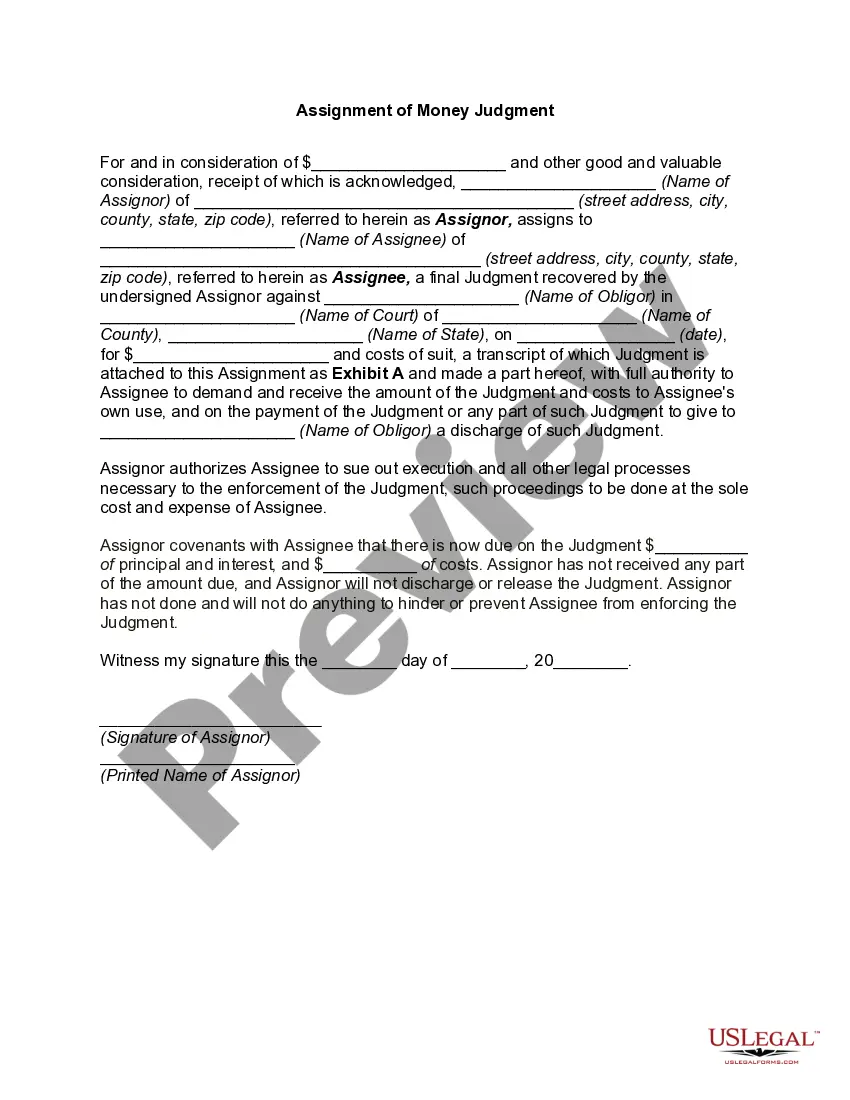
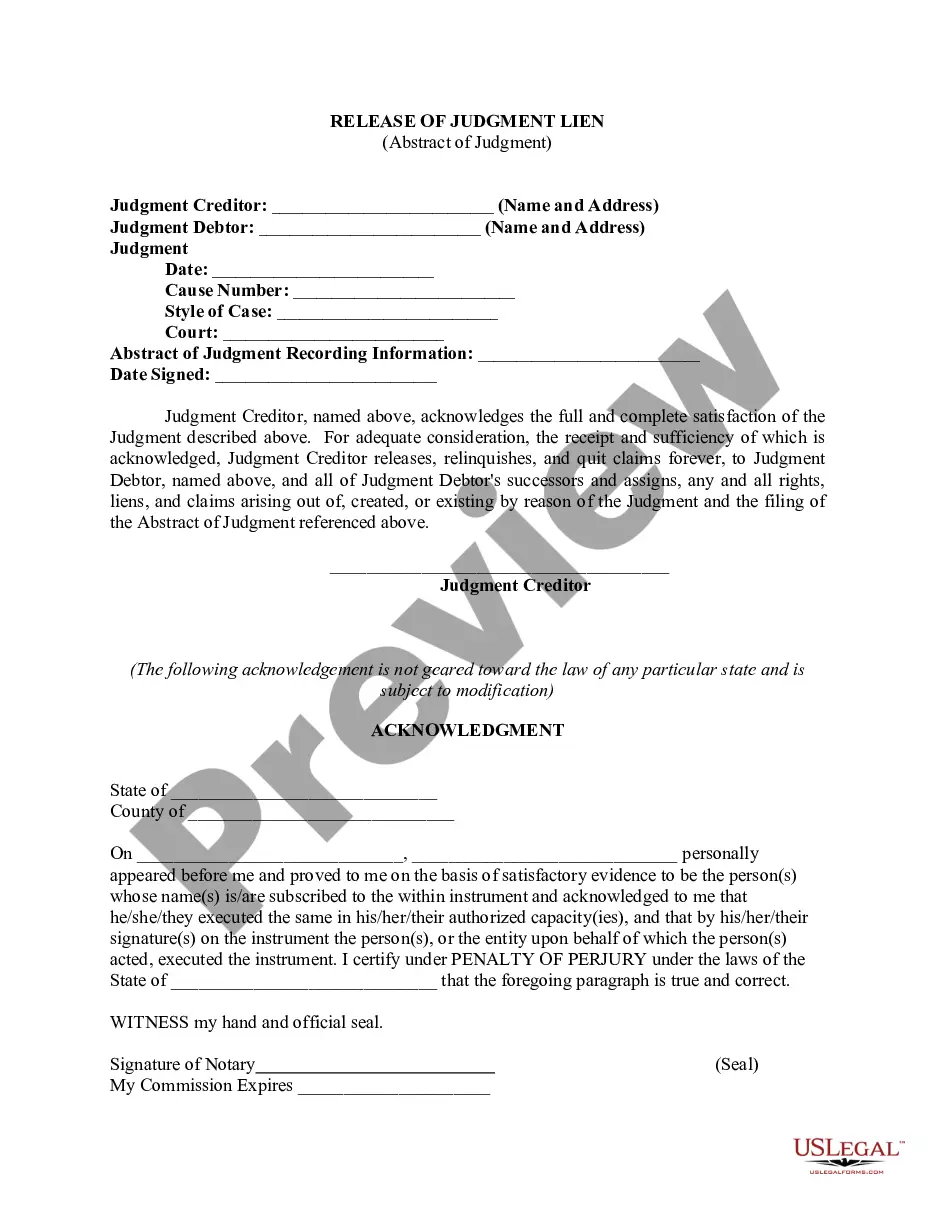
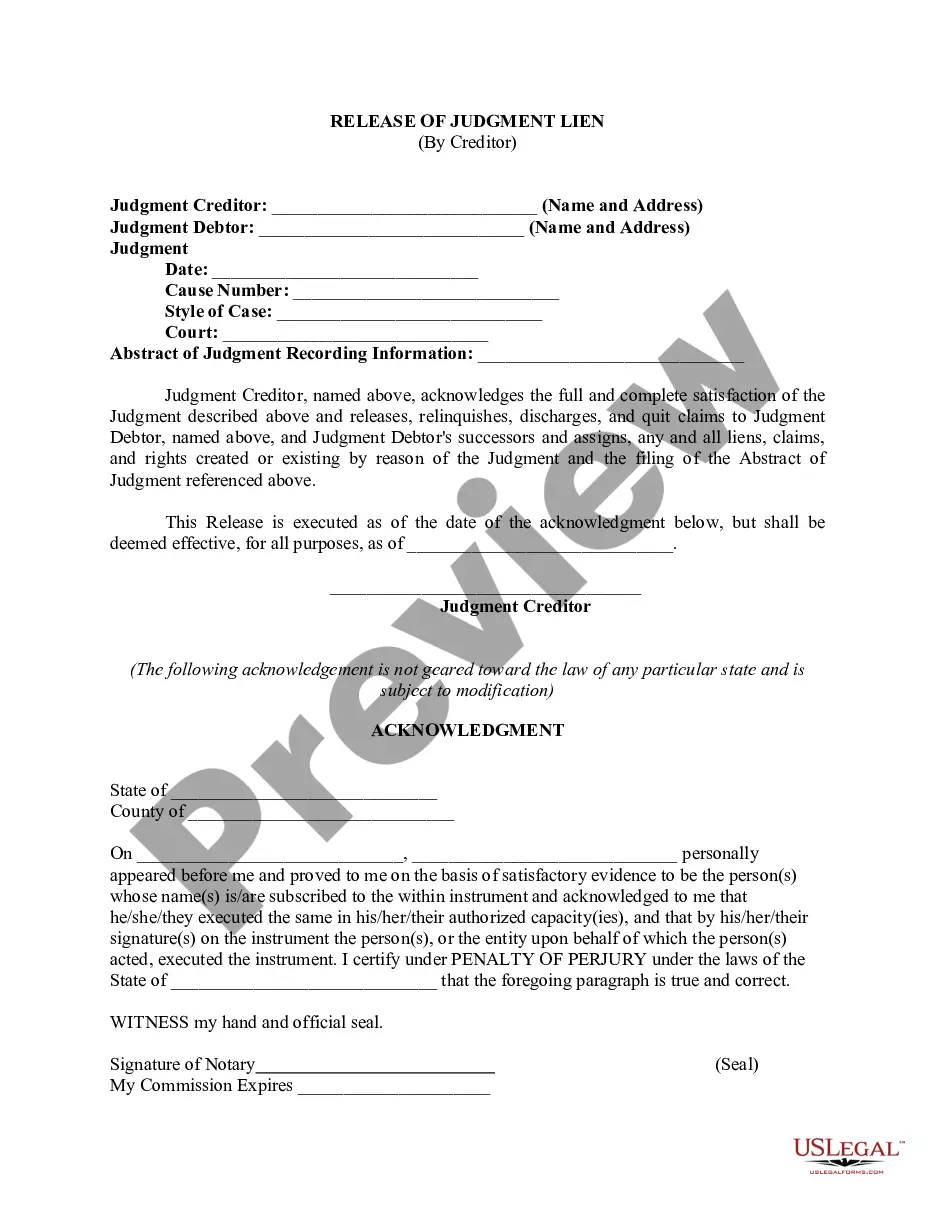
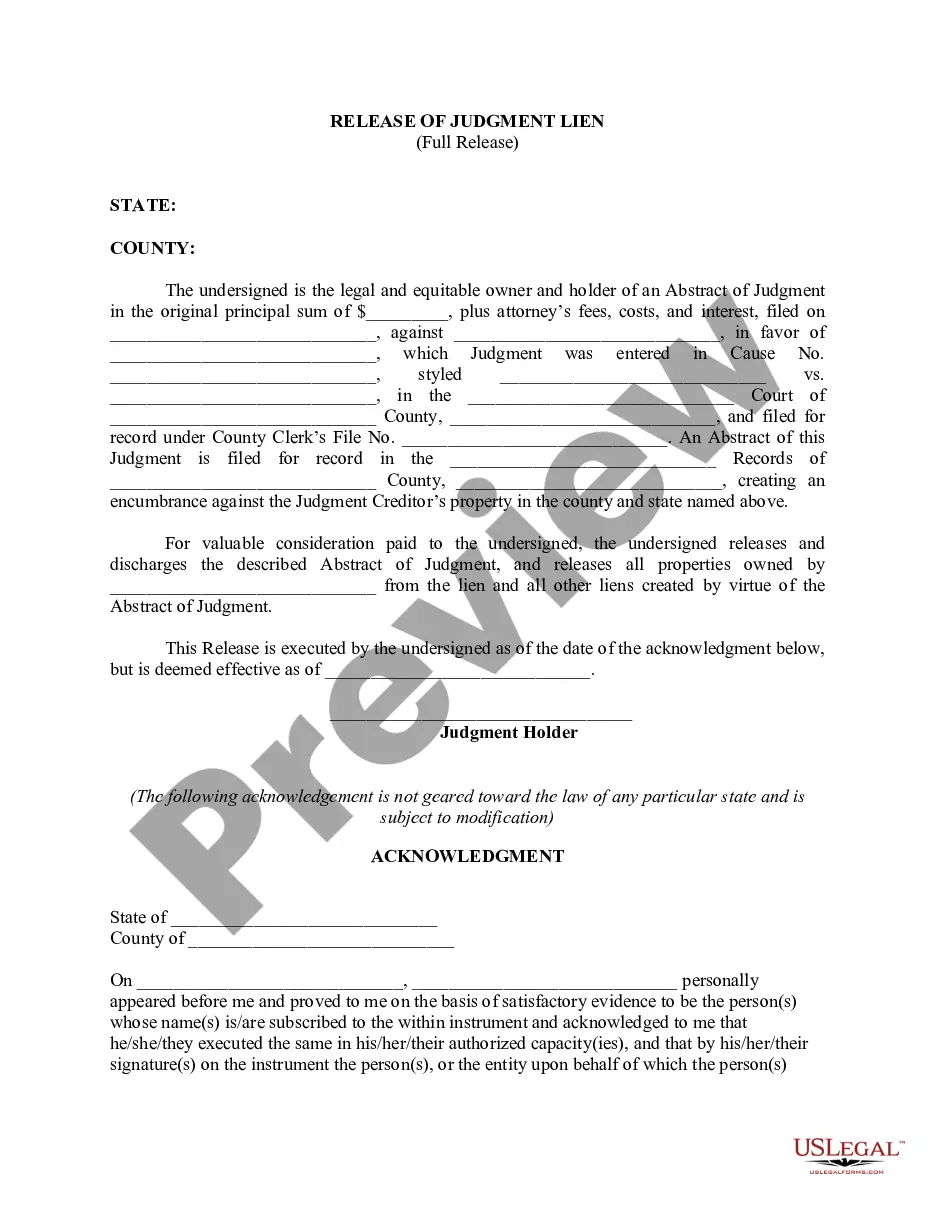
The Assignment of Judgment to Attorney for Collection is a legal document that allows a client to transfer their judgment rights to an attorney. This form clarifies the attorney's authority to collect the amount due on the client's judgment and to act on their behalf in court. It differs from other legal forms by specifically addressing the assignment of judgment, emphasizing the attorney's role in the collection process.
Form components explained
- Date of agreement between the attorney and client.
- Names and addresses of both parties involved.
- Description of the attorney's prior services related to the case.
- Details on the judgment being assigned, including the date and court information.
- Client's authority granted to the attorney to collect the judgment.
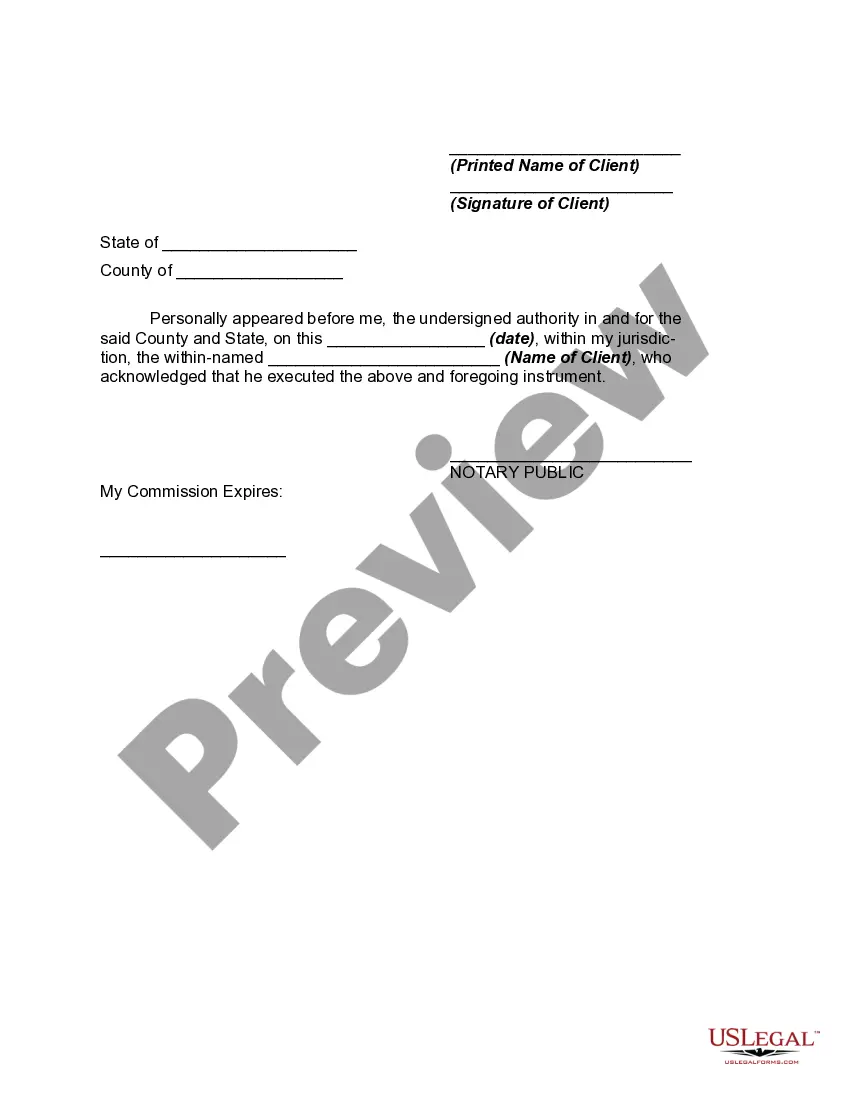
- Space for client signature and notarization details.
Situations where this form applies
This form should be used when a client wishes to assign their rights from a judgment to an attorney, allowing the attorney to collect the funds owed. Scenarios may include situations where the client is unable to collect the judgment themselves or when they seek professional assistance to expedite the collection process.
Who this form is for
- Clients who have obtained a judgment in their favor.
- Attorneys who require formal authorization to collect on a judgment.
- Individuals who want to simplify the collection process by designating an attorney as the agent for their judgment.
Completing this form step by step
- Identify the date of the agreement and enter it at the top of the form.
- Fill in the names and addresses of both the attorney and the client.
- Describe the judgment, including the date, court name, and case number.
- Sign and date the form where indicated, verifying that all information is accurate.
- Have the form notarized by a notary public to ensure its legal validity.
Notarization requirements for this form
This form needs to be notarized to ensure legal validity. US Legal Forms provides secure online notarization powered by Notarize, allowing you to complete the process through a verified video call, available anytime.
Get your form ready online
Our built-in tools help you complete, sign, share, and store your documents in one place.
Make edits, fill in missing information, and update formatting in US Legal Forms—just like you would in MS Word.
Download a copy, print it, send it by email, or mail it via USPS—whatever works best for your next step.
Sign and collect signatures with our SignNow integration. Send to multiple recipients, set reminders, and more. Go Premium to unlock E-Sign.
If this form requires notarization, complete it online through a secure video call—no need to meet a notary in person or wait for an appointment.
We protect your documents and personal data by following strict security and privacy standards.

Make edits, fill in missing information, and update formatting in US Legal Forms—just like you would in MS Word.

Download a copy, print it, send it by email, or mail it via USPS—whatever works best for your next step.

Sign and collect signatures with our SignNow integration. Send to multiple recipients, set reminders, and more. Go Premium to unlock E-Sign.

If this form requires notarization, complete it online through a secure video call—no need to meet a notary in person or wait for an appointment.

We protect your documents and personal data by following strict security and privacy standards.
Common mistakes to avoid
- Failing to fill in all required fields, such as the date or case information.
- Not having the form notarized when required by local law.
- Submitting the form without verifying the validity of the judgment assigned.
Why complete this form online
- Convenience of filling out and downloading the form from home.
- Editability allows for easy corrections before finalizing.
- Access to attorney-drafted templates ensures reliability and accuracy.
What to keep in mind
- The Assignment of Judgment to Attorney for Collection allows an attorney to collect on the client's behalf.
- Proper completion and notarization of the form are essential for legal validity.
- Consultation with legal counsel may be necessary to ensure compliance with state laws.
Looking for another form?



Form popularity
FAQ
A simple way to collect a judgment is by deducting money out of the debtor's paycheck using a wage garnishment. The debtor must have a decent income because both the federal government and states cap the amount you can take, and certain types of income, like Social Security, are off-limits.
Assignee of Record means an Assignee whose beneficial interest in the Partnership has been recorded on the books of the Partnership and is the subject of a written assignment, the effective date of which has passed.
It is divided into five types unlike judgement which is final in itself. A decree may be final or preliminary. It is a formal declaration or adjudication and is conclusive in nature. A decree is of three kinds namely, preliminary decree, final decree and partly preliminary & partly final.
A court order (made after a motion) that says a judgment debtor must assign certain rights to the judgment creditor.
Assigning your judgment means that you forfeit ownership of your judgment permanently. It is a one-way sale that cannot be reversed except by finding and obtaining the cooperation of the person you assigned it to; or working and paying for a court order voiding the judgment assignment to them.