Agreement with Writer to Write for Television Series
What this document covers
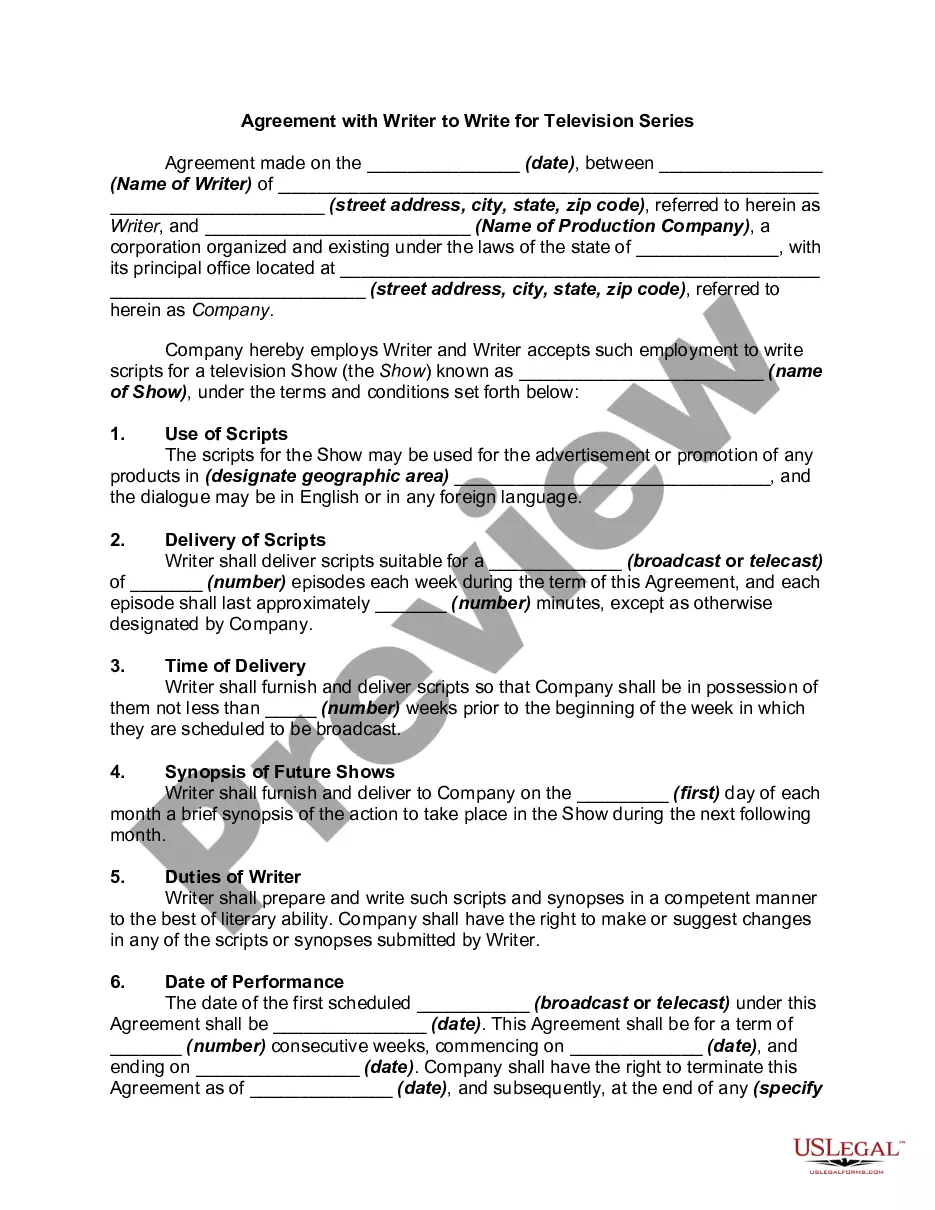
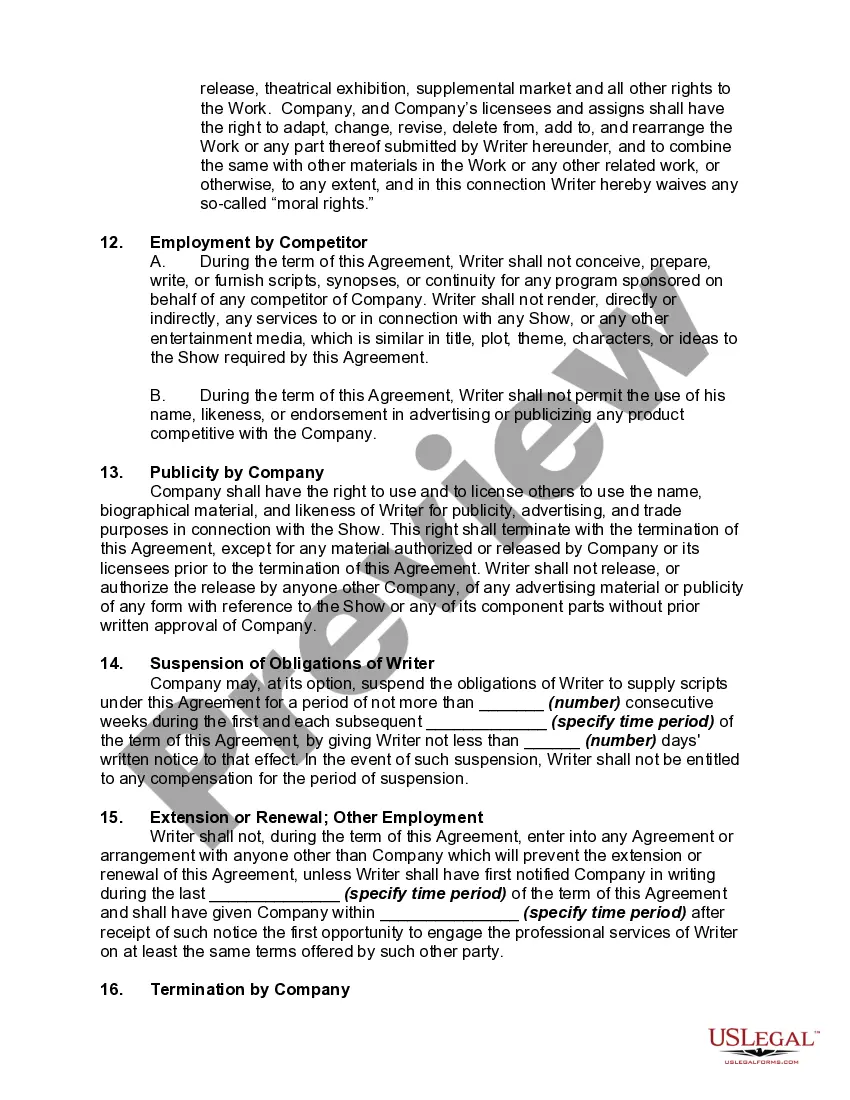
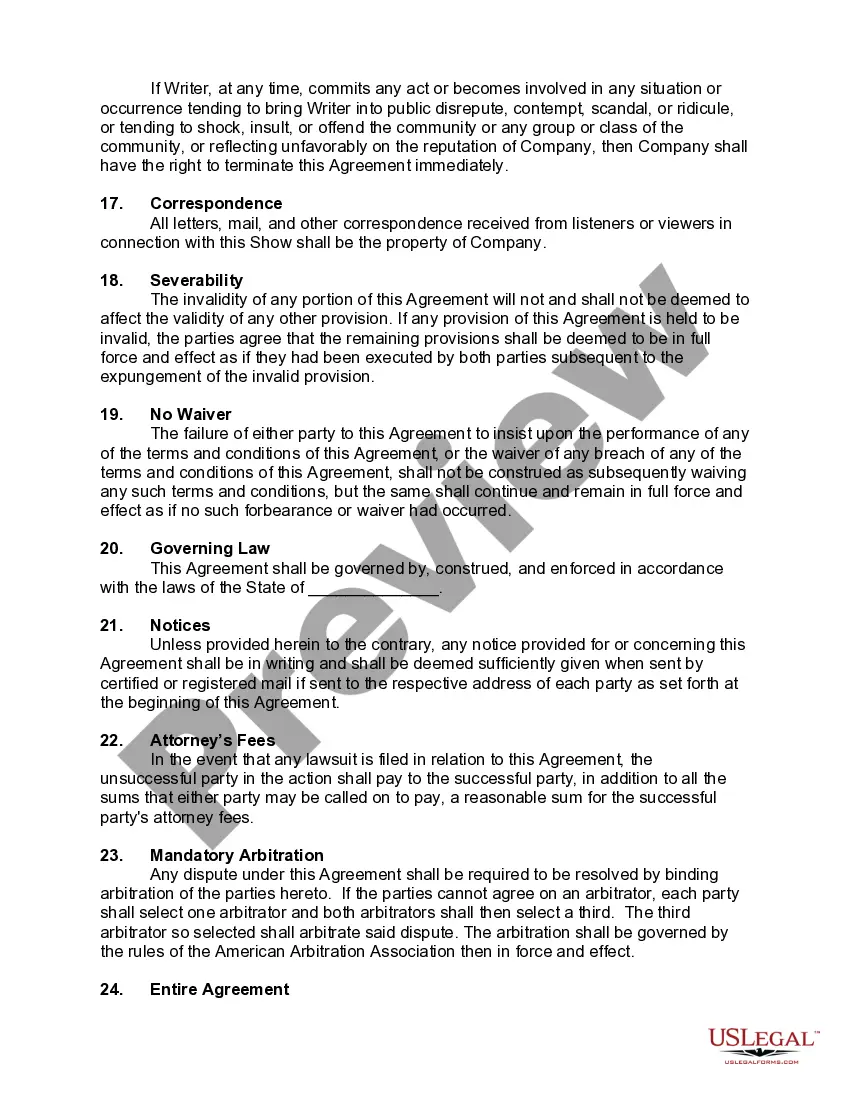
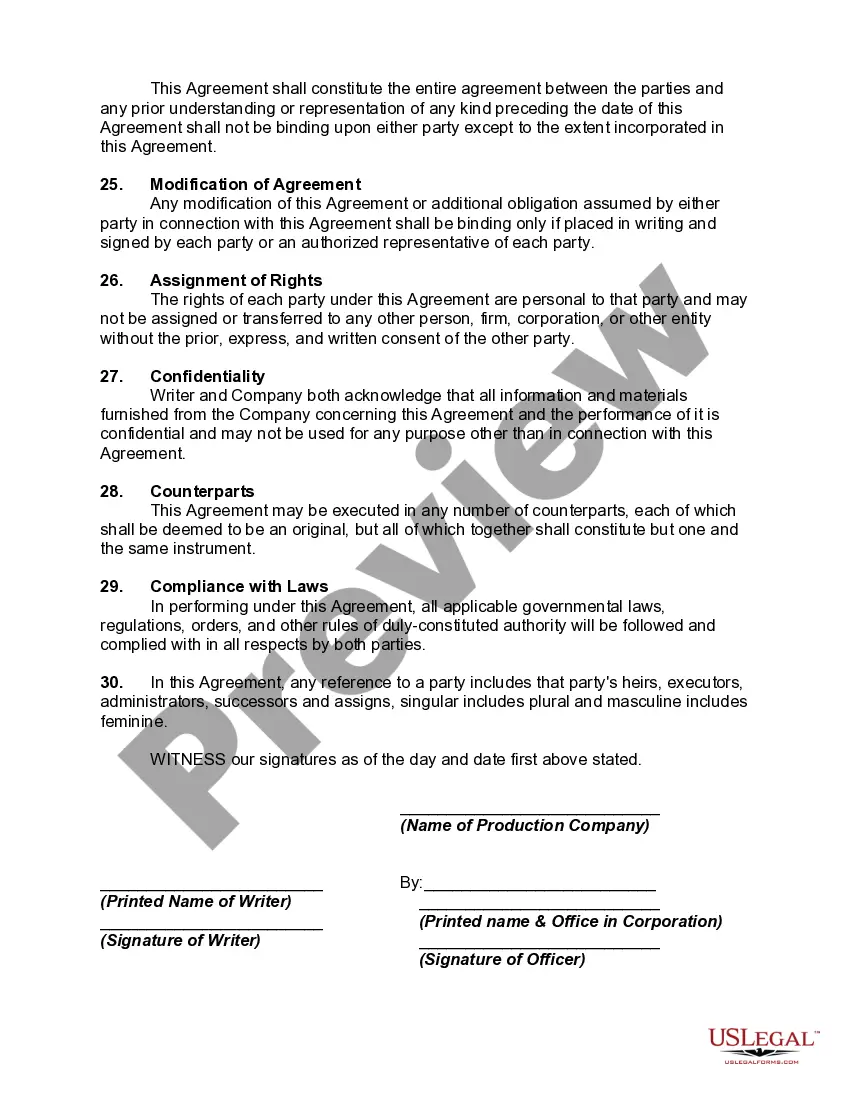
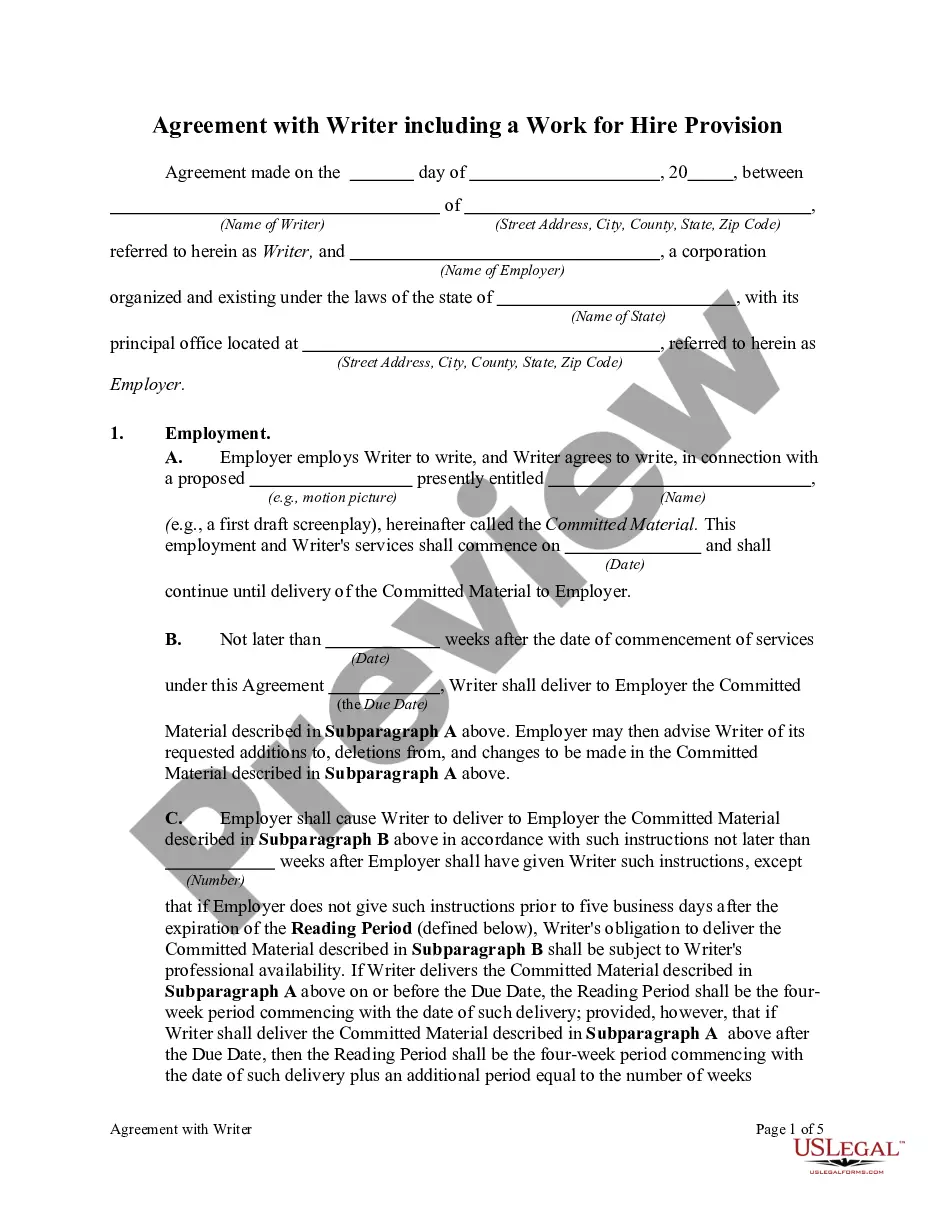
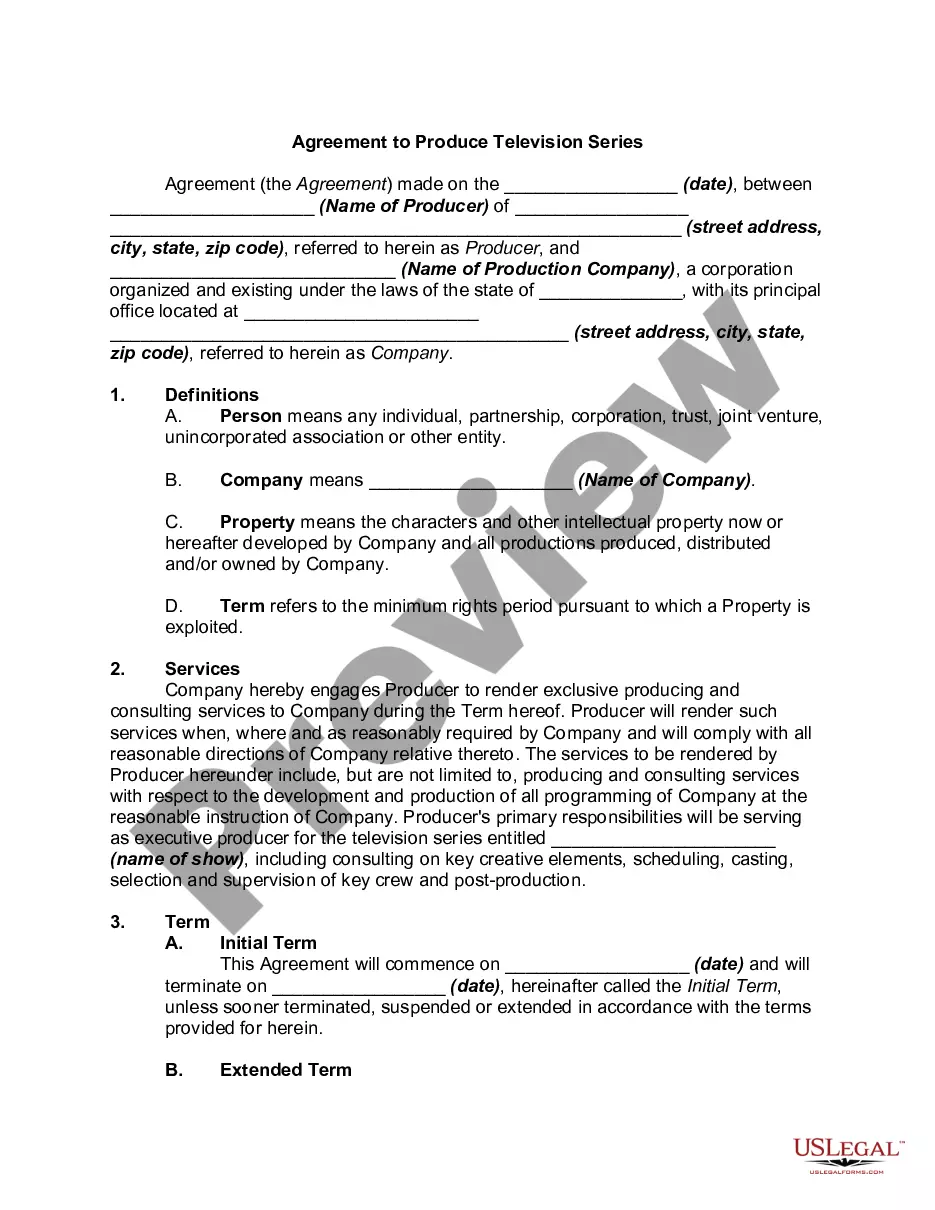
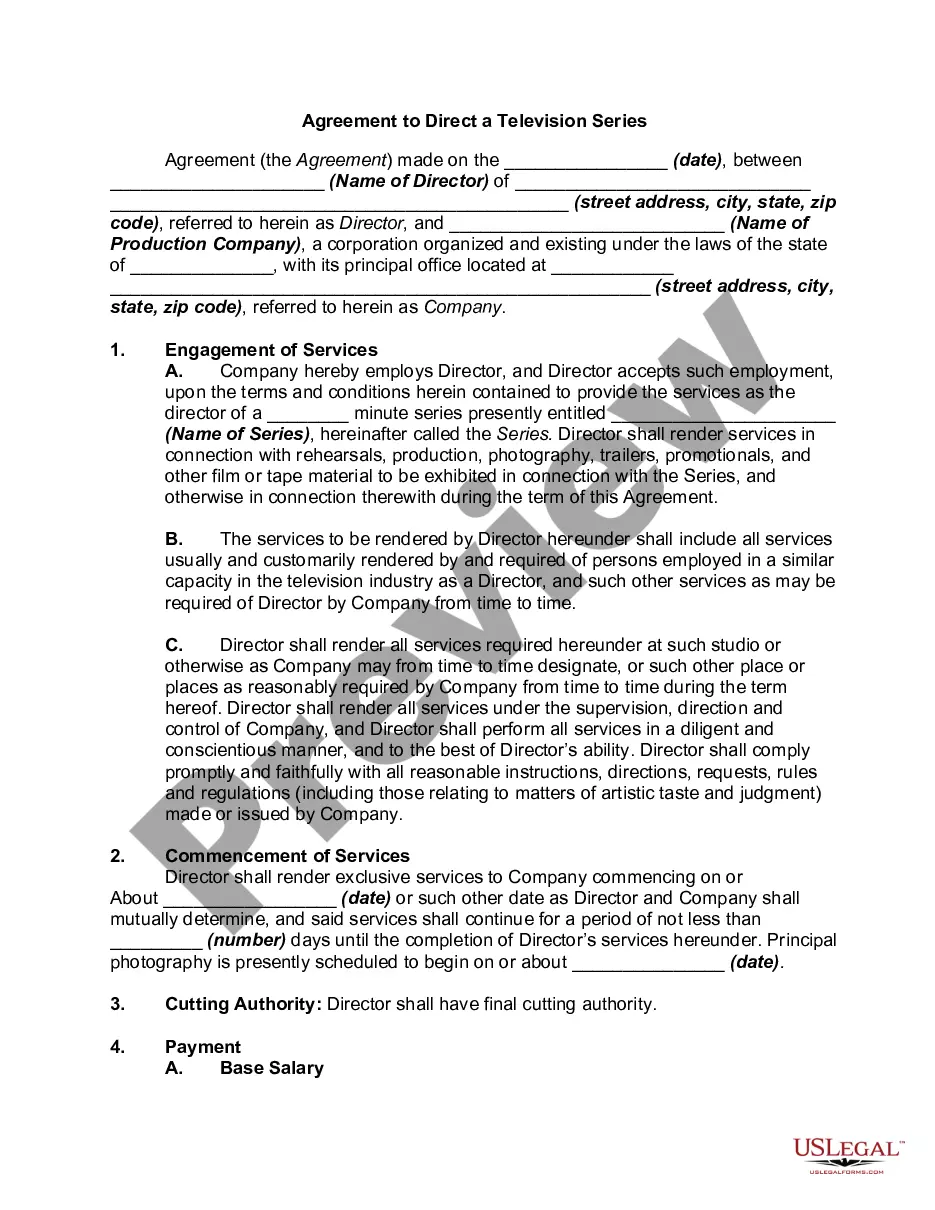
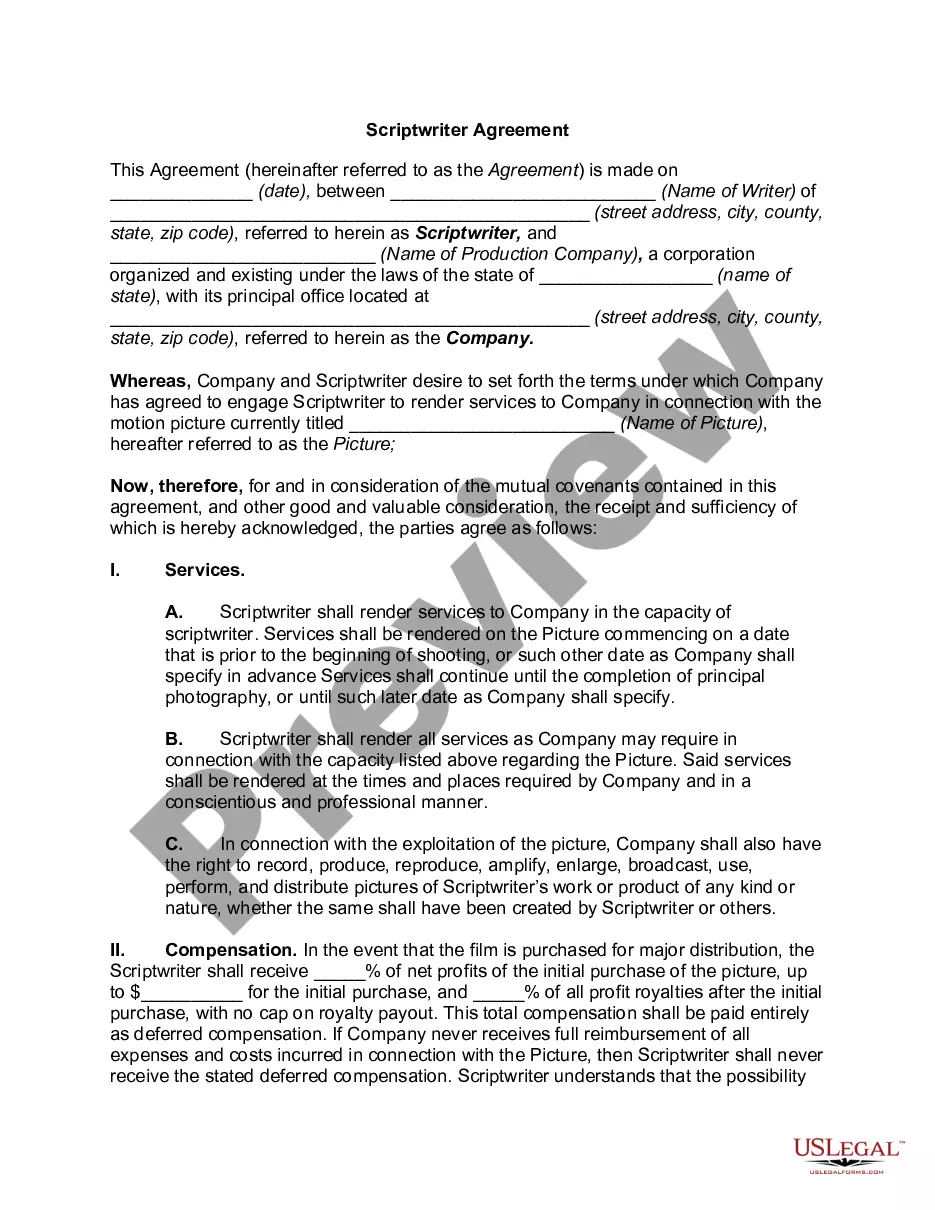
The Agreement with Writer to Write for Television Series is a legal contract between a television writer and a production company. This form outlines the responsibilities, rights, and compensation terms for the writer who creates scripts for a specific television show. It ensures that both parties understand their obligations and the expectations surrounding the writing process. This form differs from other agreements by specifically focusing on scriptwriting for television, highlighting the unique collaborative nature and timelines involved in that industry.
Form components explained
- Date of Agreement: The date when the agreement is officially signed.
- Parties Involved: Identification of the writer and the production company, including contact details and official names.
- Scope of Work: Describes the scripts the writer will deliver, including the number of episodes and timelines for submission.
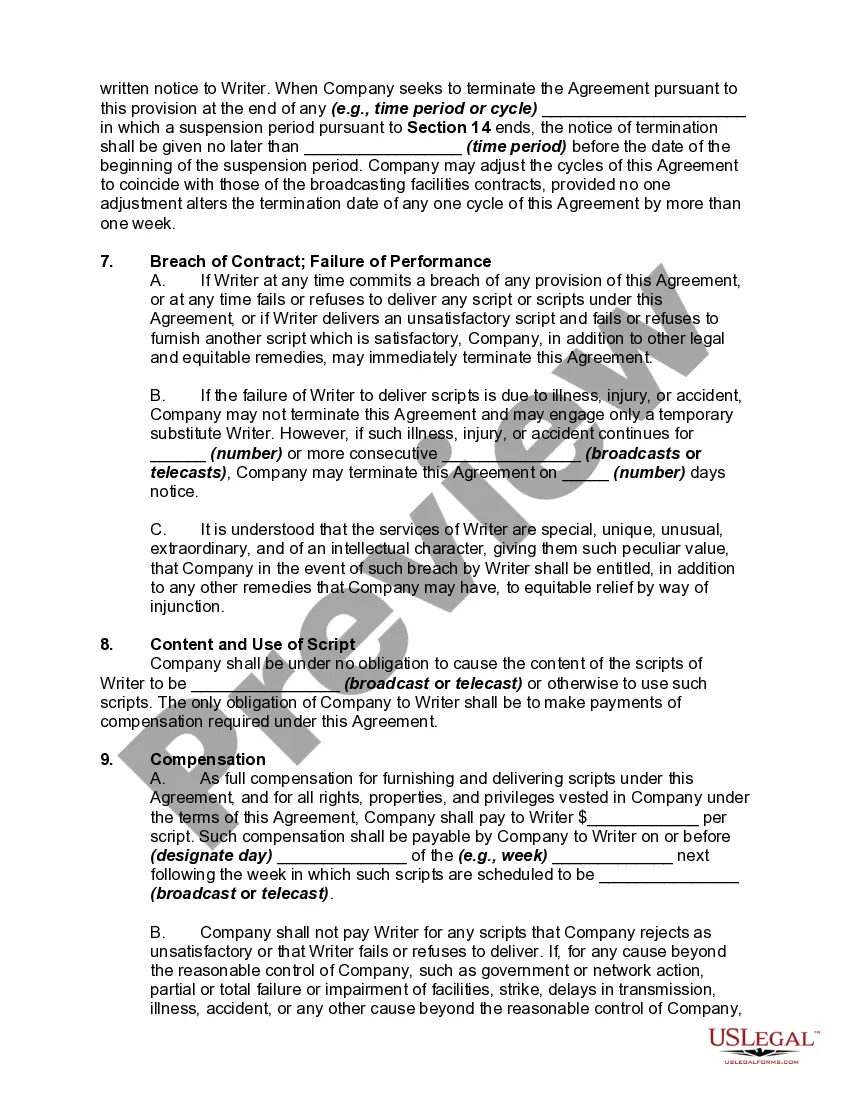
- Compensation: Details regarding payment to the writer for the scripts delivered and terms associated with rejected works.
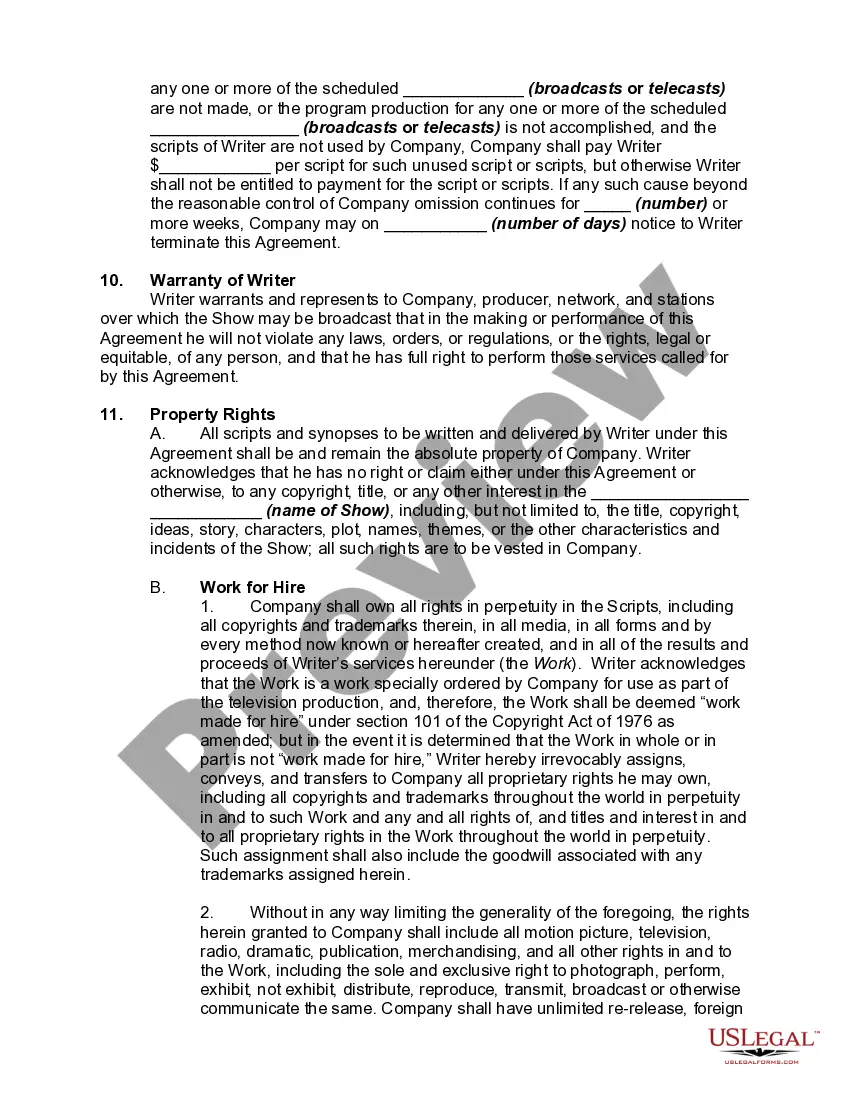
- Ownership Rights: Clarifies that the scripts created by the writer are the property of the production company.
- Term and Termination: Outlines the duration of the agreement and conditions under which either party may terminate it.
When to use this document
This form should be used when a production company hires a writer to create scripts for a television series. It is essential in situations where the production company needs a clear understanding of the writer's responsibilities, deadlines, and compensation. This agreement is particularly useful in the early stages of television production, where delineating roles and deliverables is crucial for a successful collaboration.
Intended users of this form
- Television writers who are being hired by a production company to write scripts.
- Production companies that require a formal agreement with a writer for a specific television show.
- Anyone involved in the development of television content who needs a clear contract to outline creative responsibilities and payment terms.
Completing this form step by step
- Identify the date on which the agreement is made.
- Fill in the names and addresses of the writer and the production company.
- Specify the title of the television show and the number of episodes to be written.
- Enter details regarding compensation, including payment per script and schedule for payments.
- Sign and date the agreement to make it legally binding.
Does this form need to be notarized?
In most cases, this form does not require notarization. However, some jurisdictions or signing circumstances might. US Legal Forms offers online notarization powered by Notarize, accessible 24/7 for a quick, remote process.
Get your form ready online
Our built-in tools help you complete, sign, share, and store your documents in one place.
Make edits, fill in missing information, and update formatting in US Legal Forms—just like you would in MS Word.
Download a copy, print it, send it by email, or mail it via USPS—whatever works best for your next step.
Sign and collect signatures with our SignNow integration. Send to multiple recipients, set reminders, and more. Go Premium to unlock E-Sign.
If this form requires notarization, complete it online through a secure video call—no need to meet a notary in person or wait for an appointment.
We protect your documents and personal data by following strict security and privacy standards.

Make edits, fill in missing information, and update formatting in US Legal Forms—just like you would in MS Word.

Download a copy, print it, send it by email, or mail it via USPS—whatever works best for your next step.

Sign and collect signatures with our SignNow integration. Send to multiple recipients, set reminders, and more. Go Premium to unlock E-Sign.

If this form requires notarization, complete it online through a secure video call—no need to meet a notary in person or wait for an appointment.

We protect your documents and personal data by following strict security and privacy standards.
Common mistakes to avoid
- Failing to include all necessary identifying information of both parties.
- Not clearly defining the scope of work, leading to misunderstandings about deliverables.
- Overlooking the timelines for delivery of scripts, which can lead to production delays.
- Not addressing termination conditions, which could leave writers or companies unprotected.
Why complete this form online
- Convenient access to a legally vetted template that can save time and effort.
- The ability to edit and customize key details to fit specific project needs easily.
- Ensures reliability with clauses that are consistent with current legal standards.
Legal use & context:
- This contract is legally binding and establishes clear expectations between the writer and production company.
- It helps protect both parties' intellectual property rights and mitigates disputes over script content.
- Failing to adhere to the terms outlined may result in termination of the agreement and potential legal consequences.
Main things to remember
- The Agreement with Writer to Write for Television Series is essential for formalizing writer-employer relationships in the television industry.
- Key components include delivery timelines, compensation structures, and ownership rights.
- Proper completion of the form helps avoid common pitfalls and fosters a clear understanding of roles.
Looking for another form?

Form popularity
FAQ
Breaking into TV via the network/studio writing programs. Breaking into TV as a second career. Breaking into TV by writing for other platforms, such as theatre and games. Breaking into TV via the assistant route. Breaking into TV from contest wins. Breaking into TV after finding representation.
The key to making a career in television writing is to master your craft and connect with the right people. Consider joining writers' groups, completing an internship or getting a job in the film industry to learn the ropes and grow your network.
Begin most 1/2 hour scripts by writing the name of the show, centered and capped, 6 lines from the top of the page. Double space down from the name and center the episode title in quotation marks. 6 lines below that, center ACT ONE, then A below that, also centered.
What it actually means is that anyone who worked on a treatment or any other story outline is entitled to credit for the story. You may also get this credit if you're hired to do a page one rewrite that gets you sole "Screenplay by" credit, despite the initial writer having written a complete script.
Almost all TV shows are written by a team.For example, someone could write the basic concept to an episode and will get a 'story by' credit. While someone else will go write the teleplay and get the 'teleplay by' credit. If the episode only lists a teleplay or story credit, then usually that person did both.
First, watch TVreally watch it. Study the type of show to which you feel most connected. Listen to the characters. I recommend Friends. Write a script for an existing show. Make it look right. TV is formulaic. Make your show unique. Make your show last. About the business side 2026
But contrary to the old adage that 1 page of script equals 1 minute of screen time, a 30-minute multi-camera (sitcom) script is usually around 45 pages, a 30-minute single camera script is around 34 pages, and a 1-hour drama script can be as short as 45 pages (Nip Tuck) or as long as 80 pages (Gilmore Girls.)
A shopping agreement is an agreement between the owner of IP and a producer. Under a shopping agreement, the producer obtains the right from the owner to shop the property for a defined period of time to studios, networks, distributors, financiers and other potential buyers or backers.
Taping is usually done with three (or more) pretty large TV cameras in a multi-camera setup. Unlike movies, which typically shoot scenes out of order, sitcoms are shot in chronological order because of the live audience.