Objection to Allowed Claim in Accounting
What is this form?
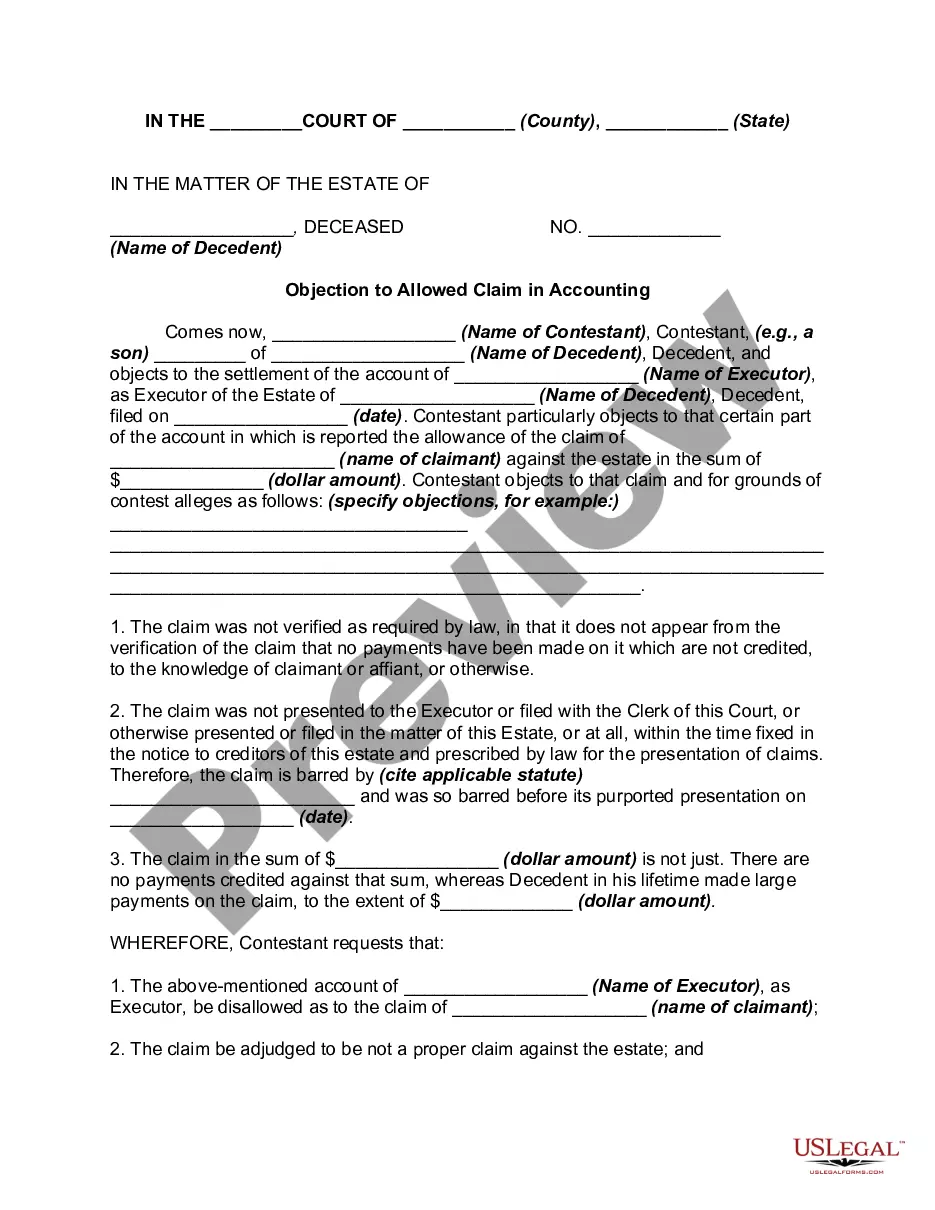
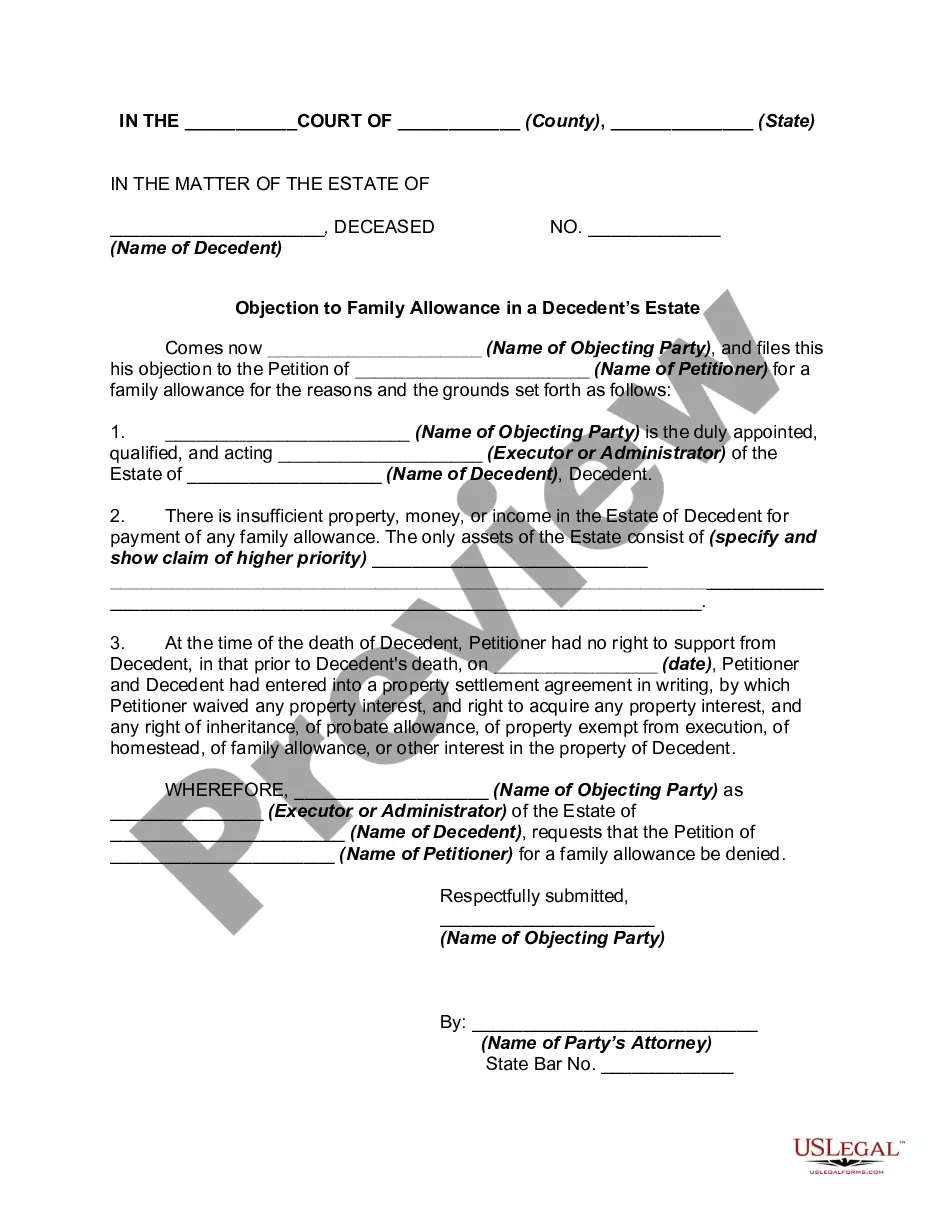
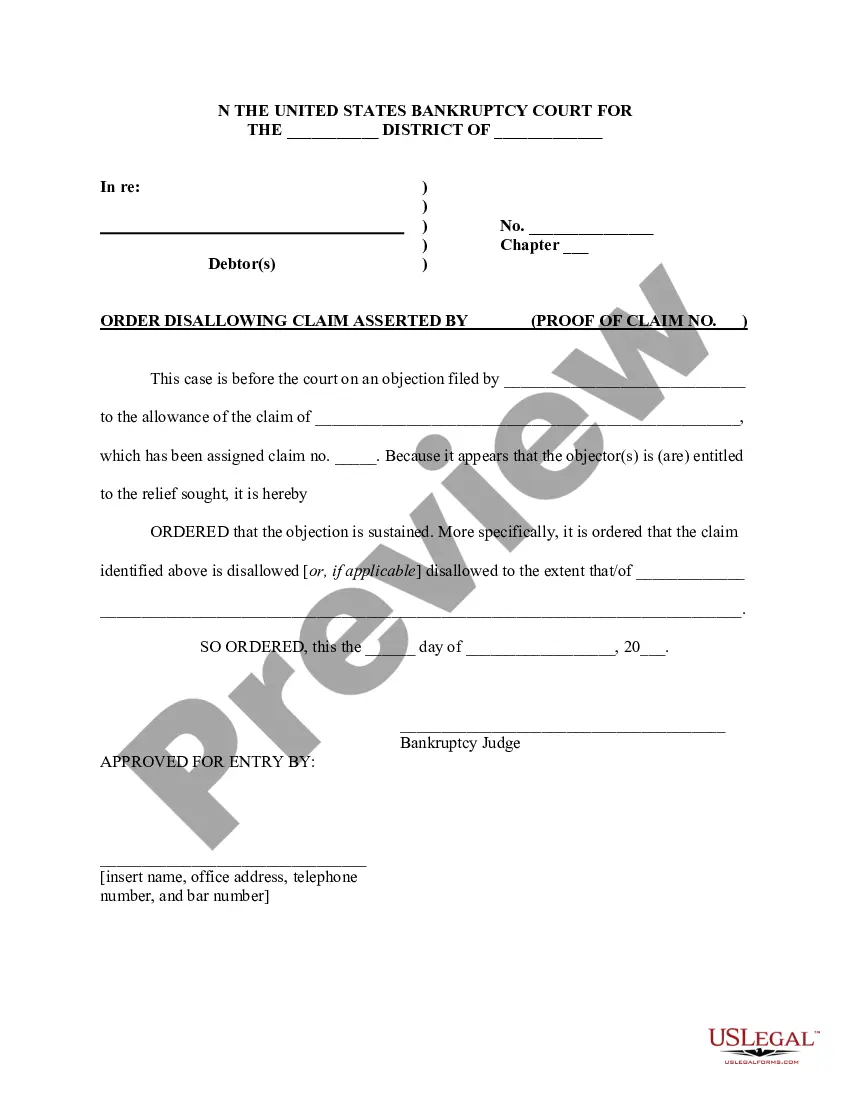
The Objection to Allowed Claim in Accounting is a legal document that enables interested parties in an estate to formally object to the executor's accounting, particularly regarding claims against the estate. This form allows individuals to dispute claims they believe are unjust or improperly verified. It is distinct from other forms as it specifically targets the settlement of claims in estate accounting, ensuring that all claims presented are valid and comply with applicable laws.
Form components explained
- Case details including the name of the decedent and the executor.
- The name of the contestant objecting to the claim.
- Specific grounds for the objection, including verification issues and timeliness of claims.
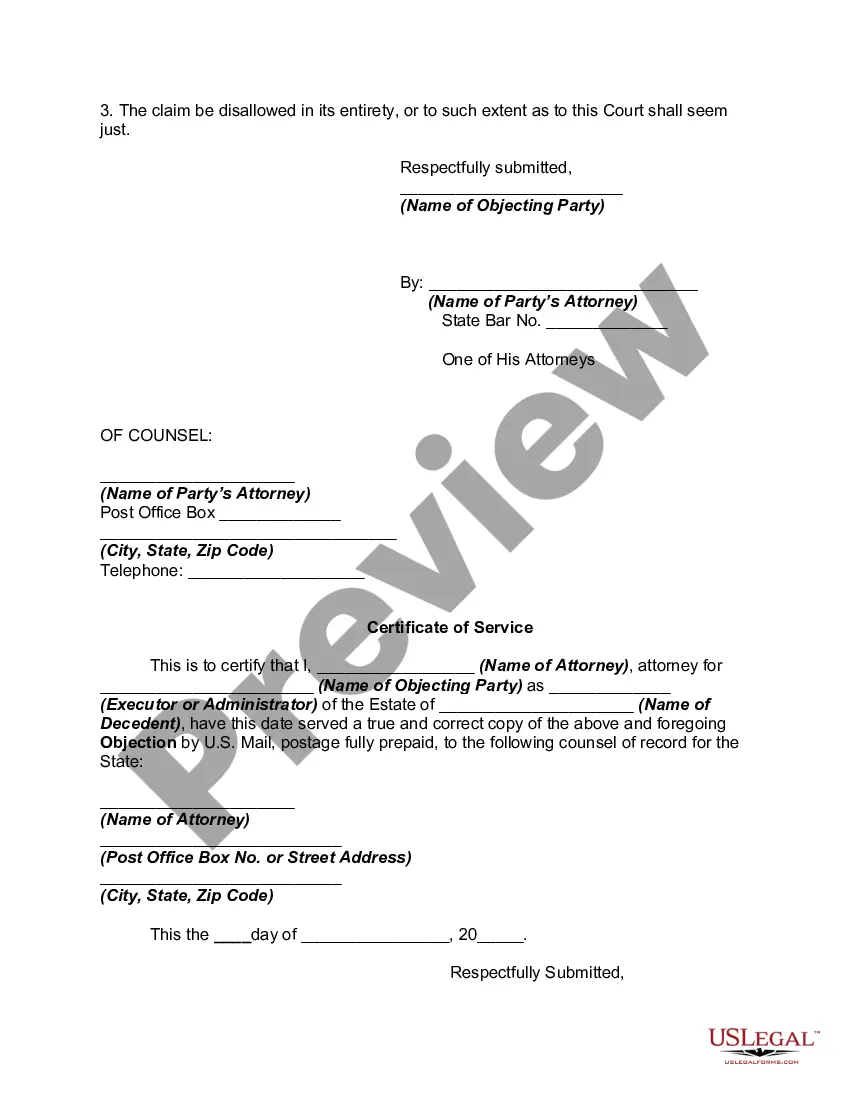
- A request for the court to disallow the claim in question.
- Certificate of service indicating the proper notification to interested parties.
When to use this document
This form should be used when a party in an estate proceeding disagrees with the claims presented in the executor's accounting. Common scenarios include instances where the contestant believes that a claim was not properly verified, was filed late, or is unjust for other reasons. Using this form helps protect the interests of heirs or other party involved by ensuring that only legitimate claims are honored.
Who this form is for
This form is intended for:
- Heirs or beneficiaries of an estate who wish to contest an executor's accounting.
- Family members or other interested parties concerned about the execution of the estate.
- Legal representatives acting on behalf of an objecting party.
Steps to complete this form
- Enter the full name of the decedent and the executor.
- Provide the date of the accounting being contested and details about the claim objected to.
- Clearly outline the specific reasons for the objection, referencing applicable laws.
- Indicate desired outcomes, such as disallowing the claim in question.
- Sign the form and include any necessary attorney information, if applicable.
Is notarization required?
This form does not typically require notarization to be legally valid. However, some jurisdictions or document types may still require it. US Legal Forms provides secure online notarization powered by Notarize, available 24/7 for added convenience.
Get your form ready online
Our built-in tools help you complete, sign, share, and store your documents in one place.
Make edits, fill in missing information, and update formatting in US Legal Forms—just like you would in MS Word.
Download a copy, print it, send it by email, or mail it via USPS—whatever works best for your next step.
Sign and collect signatures with our SignNow integration. Send to multiple recipients, set reminders, and more. Go Premium to unlock E-Sign.
If this form requires notarization, complete it online through a secure video call—no need to meet a notary in person or wait for an appointment.
We protect your documents and personal data by following strict security and privacy standards.

Make edits, fill in missing information, and update formatting in US Legal Forms—just like you would in MS Word.

Download a copy, print it, send it by email, or mail it via USPS—whatever works best for your next step.

Sign and collect signatures with our SignNow integration. Send to multiple recipients, set reminders, and more. Go Premium to unlock E-Sign.

If this form requires notarization, complete it online through a secure video call—no need to meet a notary in person or wait for an appointment.

We protect your documents and personal data by following strict security and privacy standards.
Mistakes to watch out for
- Failing to file the objection within the specified timeframe.
- Not providing sufficient grounds for the objection.
- Omitting the necessary details about the claim or the decedent.
- Neglecting to serve notice to other interested parties.
- Submitting the form without appropriate signatures or attorney information, if required.
Why use this form online
- Convenience of home or office completion without needing to visit a lawyer in person.
- Editable format allows for easy adjustments and accurate completion.
- Quick access to legal forms tailored by licensed attorneys.
- Reliable resources help ensure compliance with local laws.
Looking for another form?









Form popularity
FAQ
In a Chapter 13, an objection to confirmation is basically a written statement from the Chapter 13 Trustee or a creditor of the debtor that there is something wrong with the case that needs to be fixed before the confirmation hearing.
Disallowed Claim means a Claim, or any portion thereof, that: (a) is not listed on the Debtors' Schedules, or is listed therein as contingent, unliquidated, disputed, or in an amount equal to zero, and whose holder has failed to file a timely proof of Claim; or (b) the Bankruptcy Court has disallowed by Final Order.
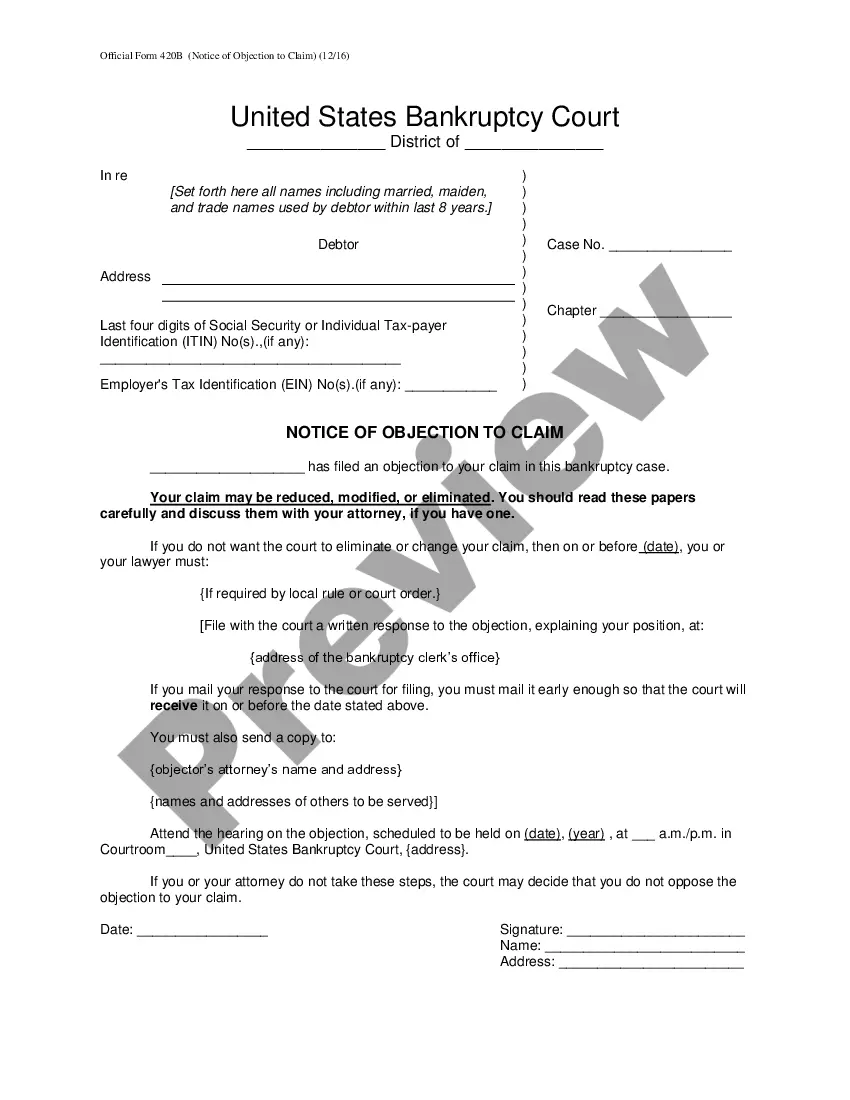
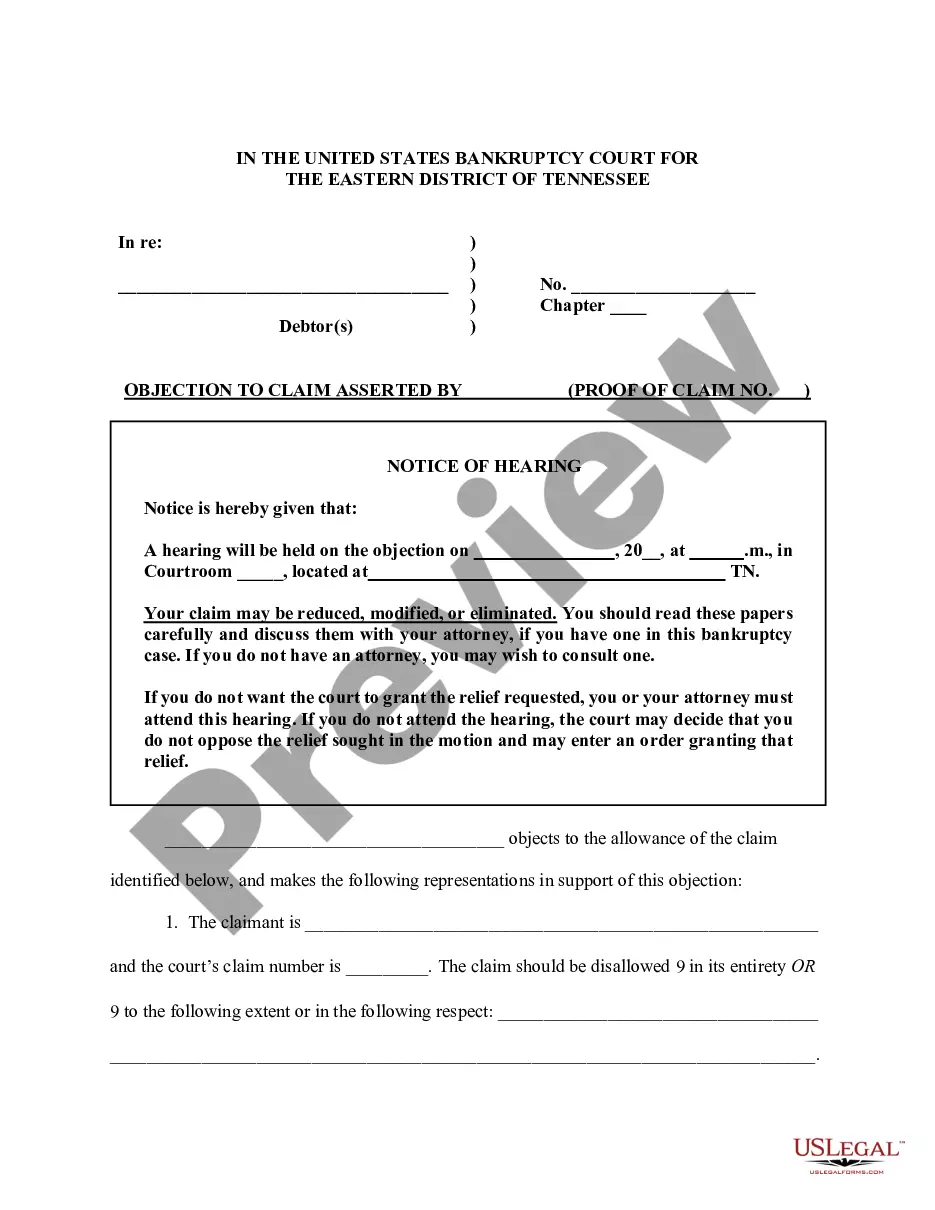
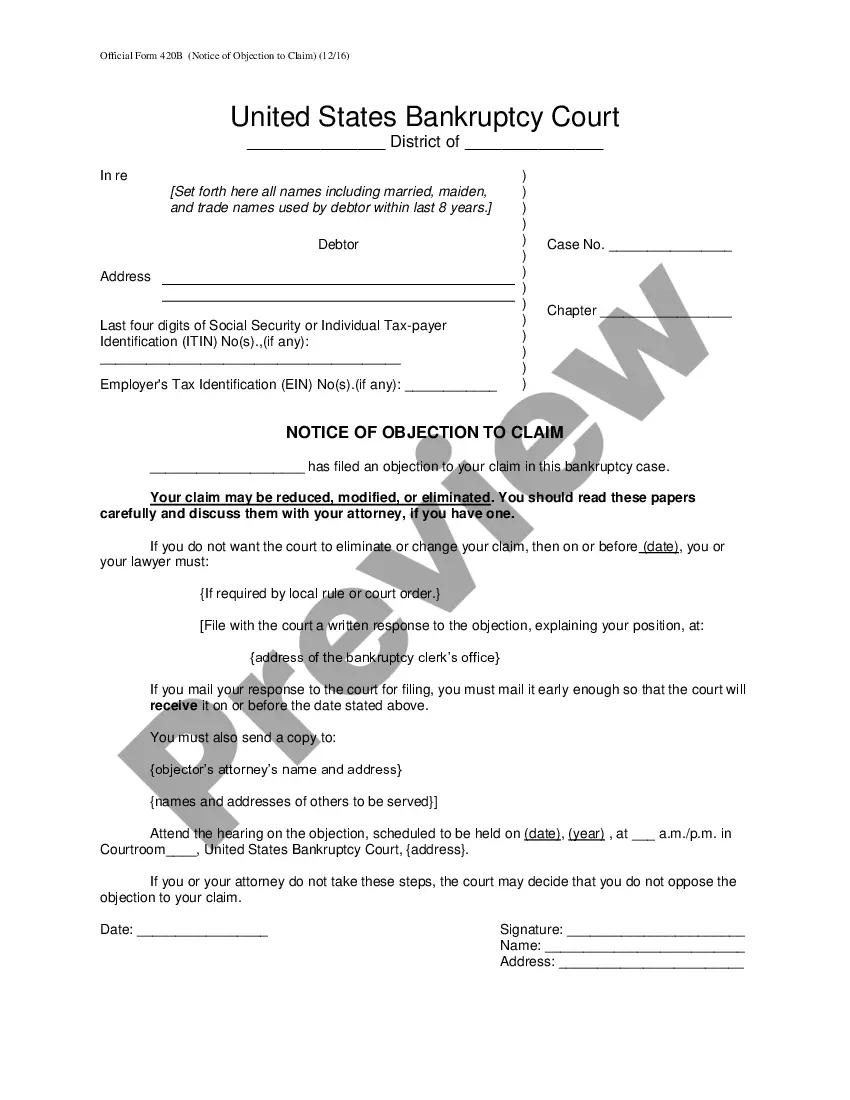
An objection to a proof of claim must be in writing and filed with the bankruptcy court. A copy of the objection and the notice of court hearing date must be mailed to the creditor, the trustee, and the debtor at least 30 days before the hearing.
An objection to claim may be filed to object to one claim or multiple claims subject to conditions in Federal Rule of Bankruptcy Procedure 3007(e). When an objection to claim objects to multiple claims, it is called an omnibus objection to claim. An omnibus objection to claim may cause the entry of multiple orders.
Objection to exemptions refer to the objections filed by the creditors in a bankruptcy proceeding questioning the exemptions given to the debtor.A debtor can respond to the objection to exemption in order to continue to retain the contested property.
If the claim is for a lower-priority debt, then if the claim is not filed on time or is successfully objected to, then it is disallowed. This means that the creditor does not get to participate in any distribution. In most circumstances, a disallowed claim is automatically discharged at the end of the bankruptcy case.
Chapter 11 creditors are not required to file a Proof of Claim because the debtor is required to file a Schedule of Assets and Liabilities.If it is not filed, the Bankruptcy Court will consider the customer's Schedule of Liabilities as accurate and make any distributions accordingly.