Conveyance of Deed to Lender in Lieu of Foreclosure
Overview of this form
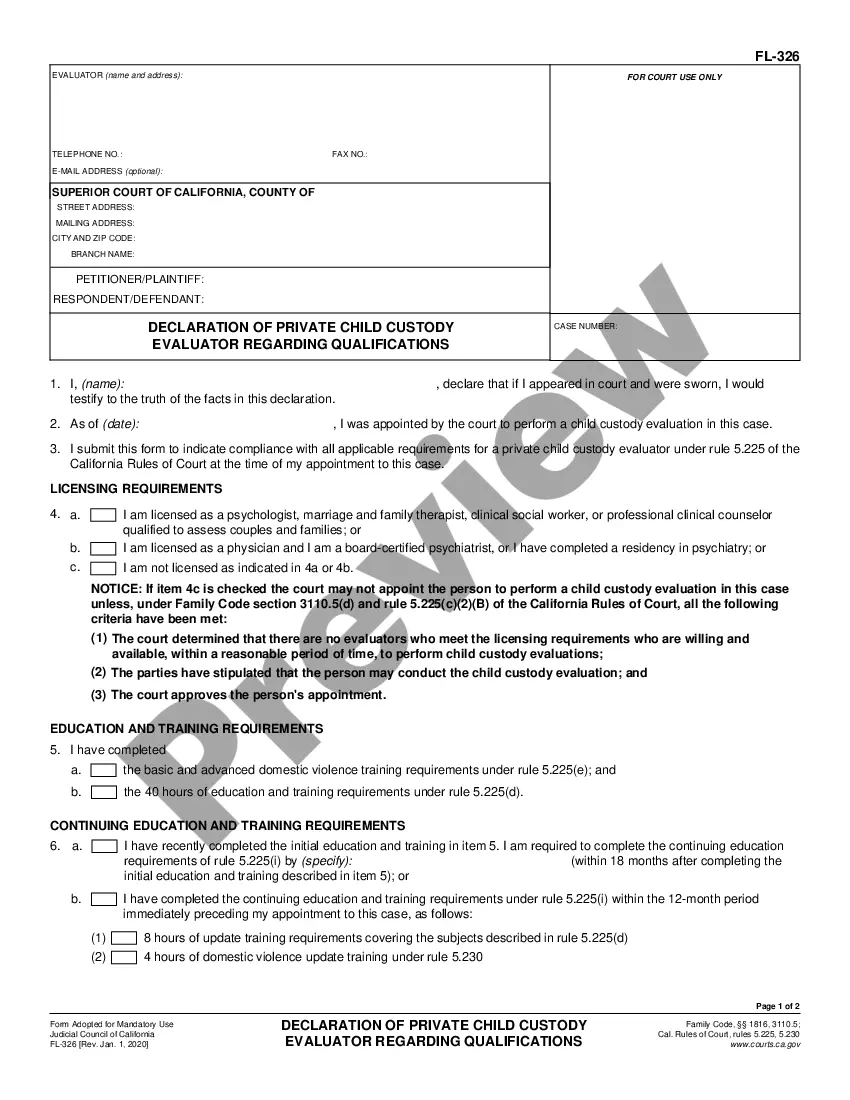
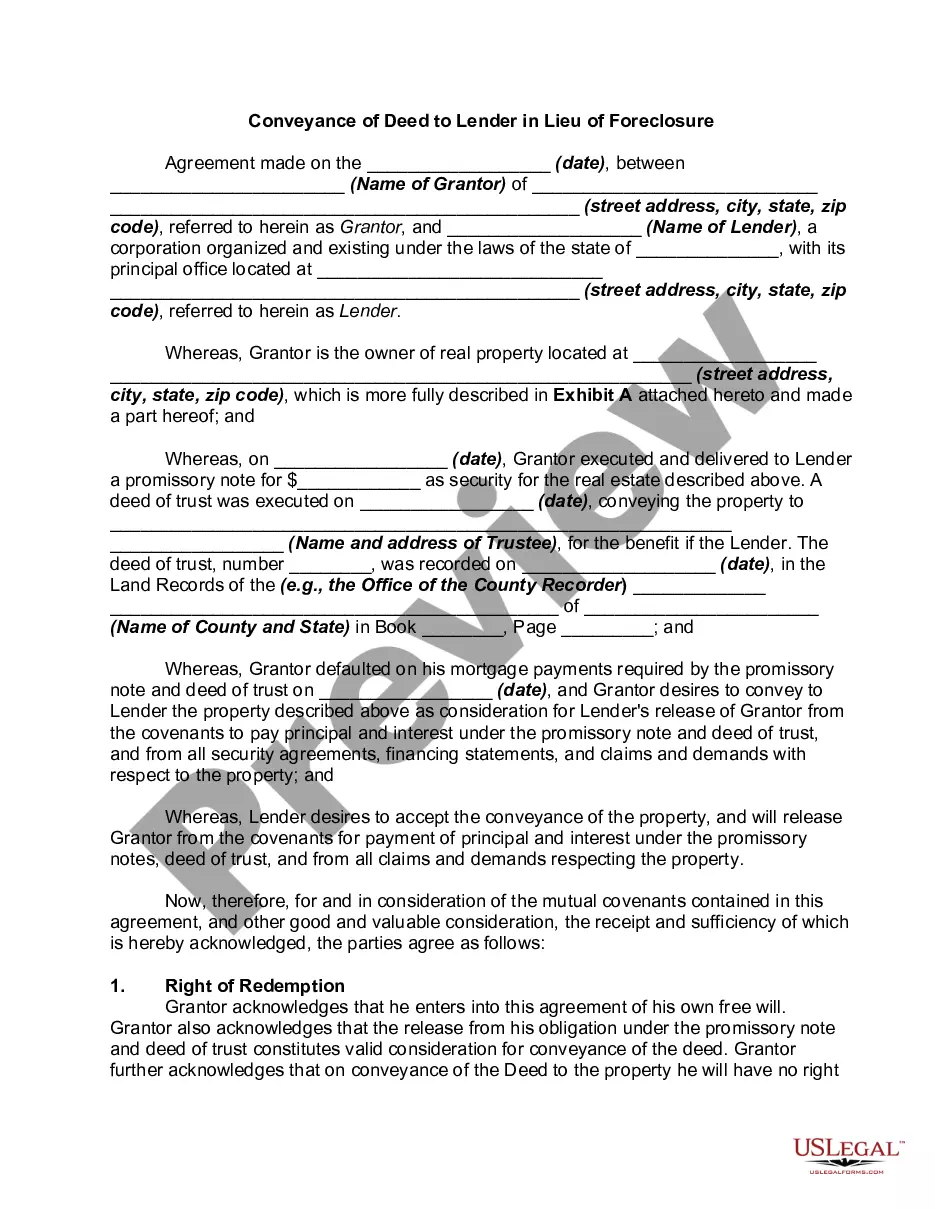
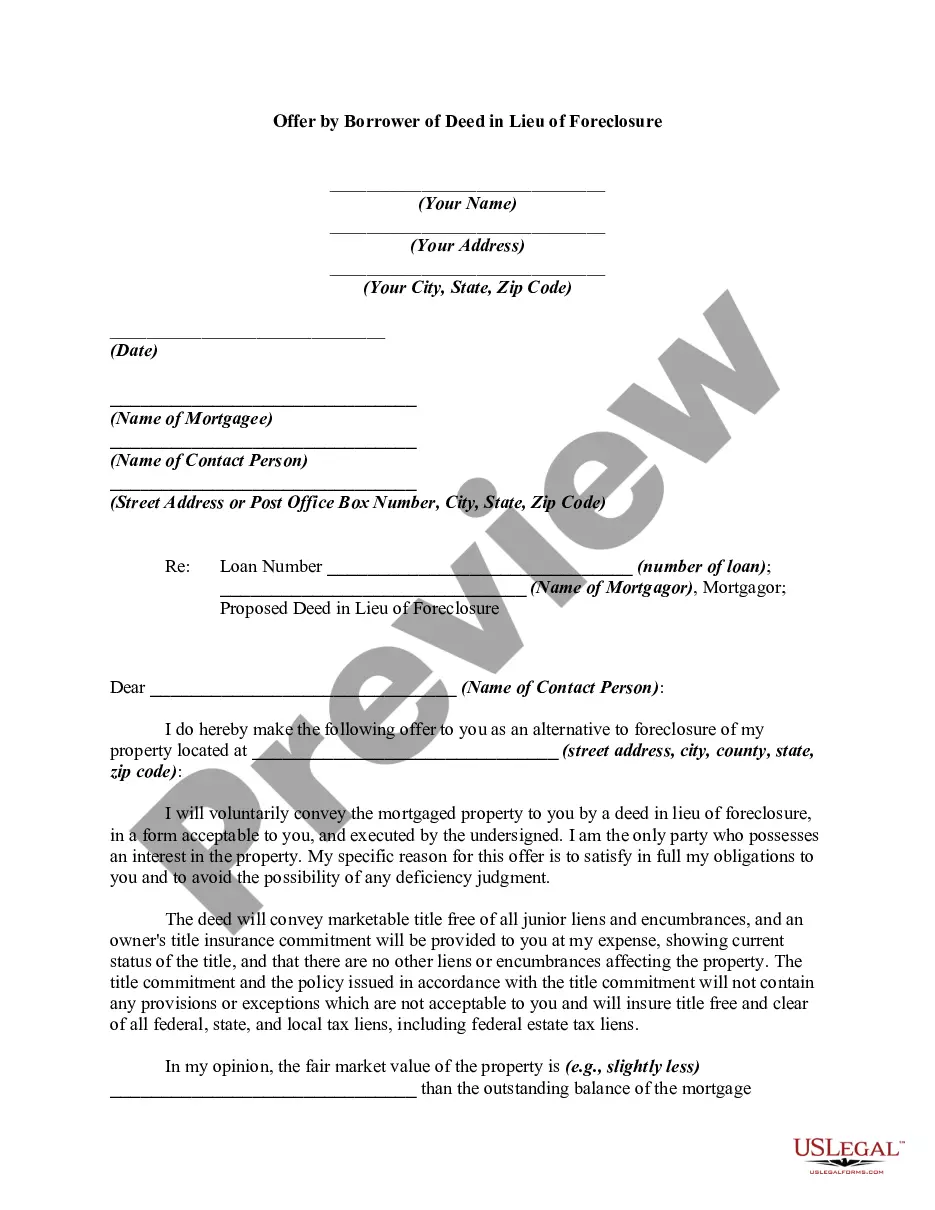
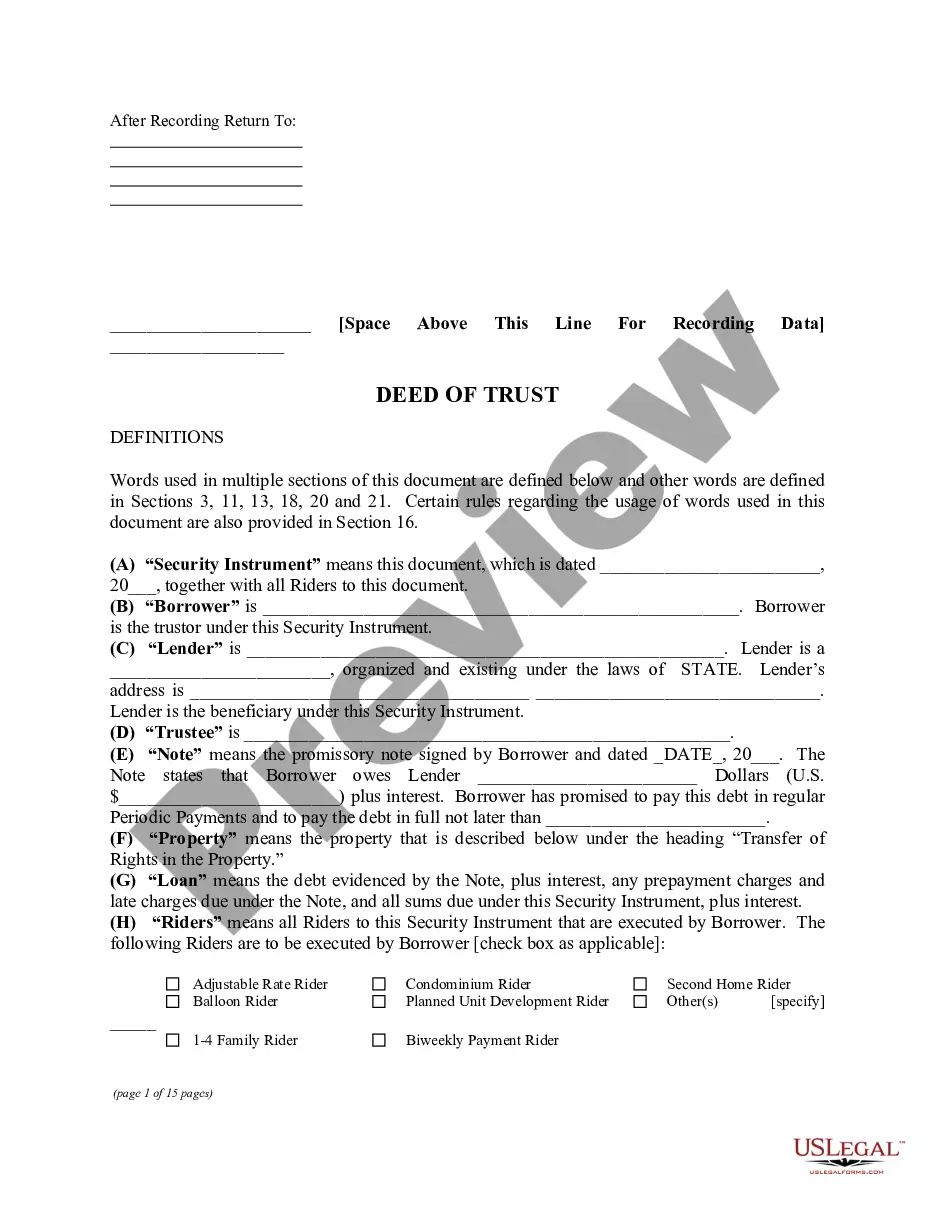
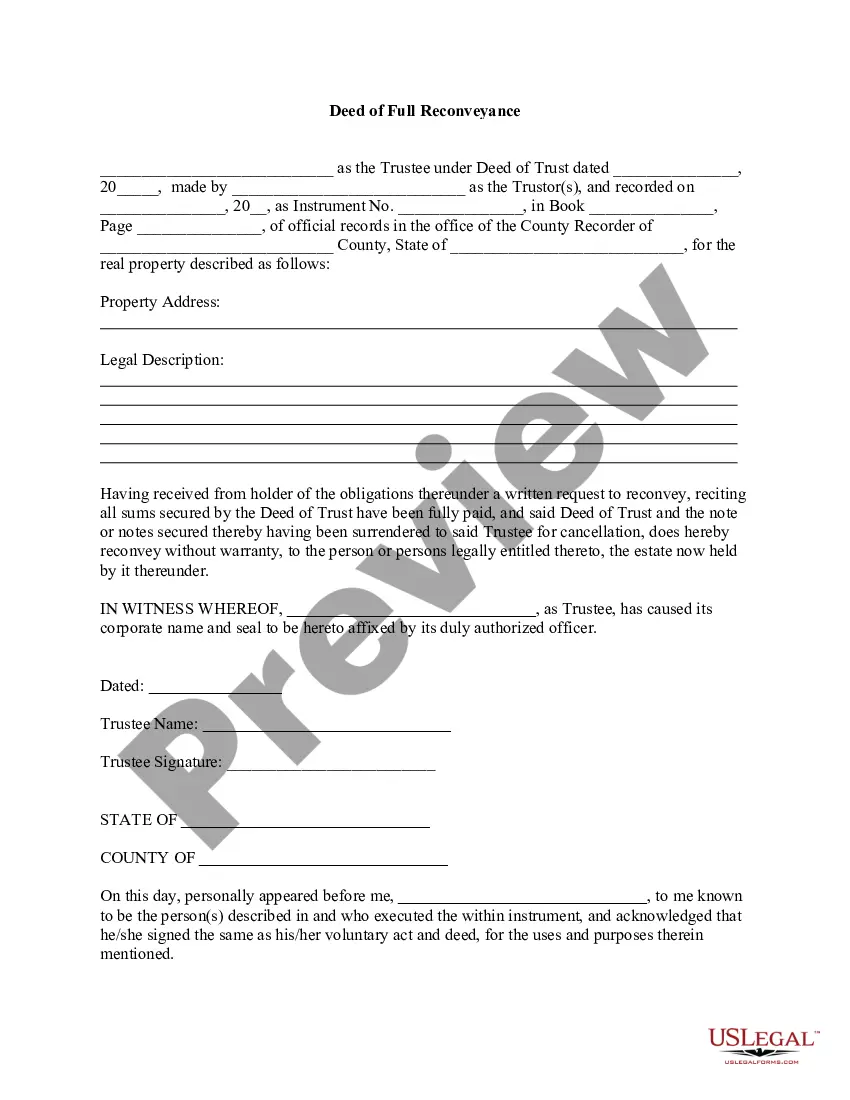
The Conveyance of Deed to Lender in Lieu of Foreclosure is a legal document that allows a homeowner to transfer their property deed to the lender. This agreement helps prevent foreclosure by enabling the lender to accept the property as full settlement for the outstanding mortgage debt. Unlike a standard foreclosure process, this arrangement can be less time-consuming and may provide a smoother transition for the homeowner. This form ensures both parties have a clear understanding of their rights and obligations during this transaction.
What’s included in this form
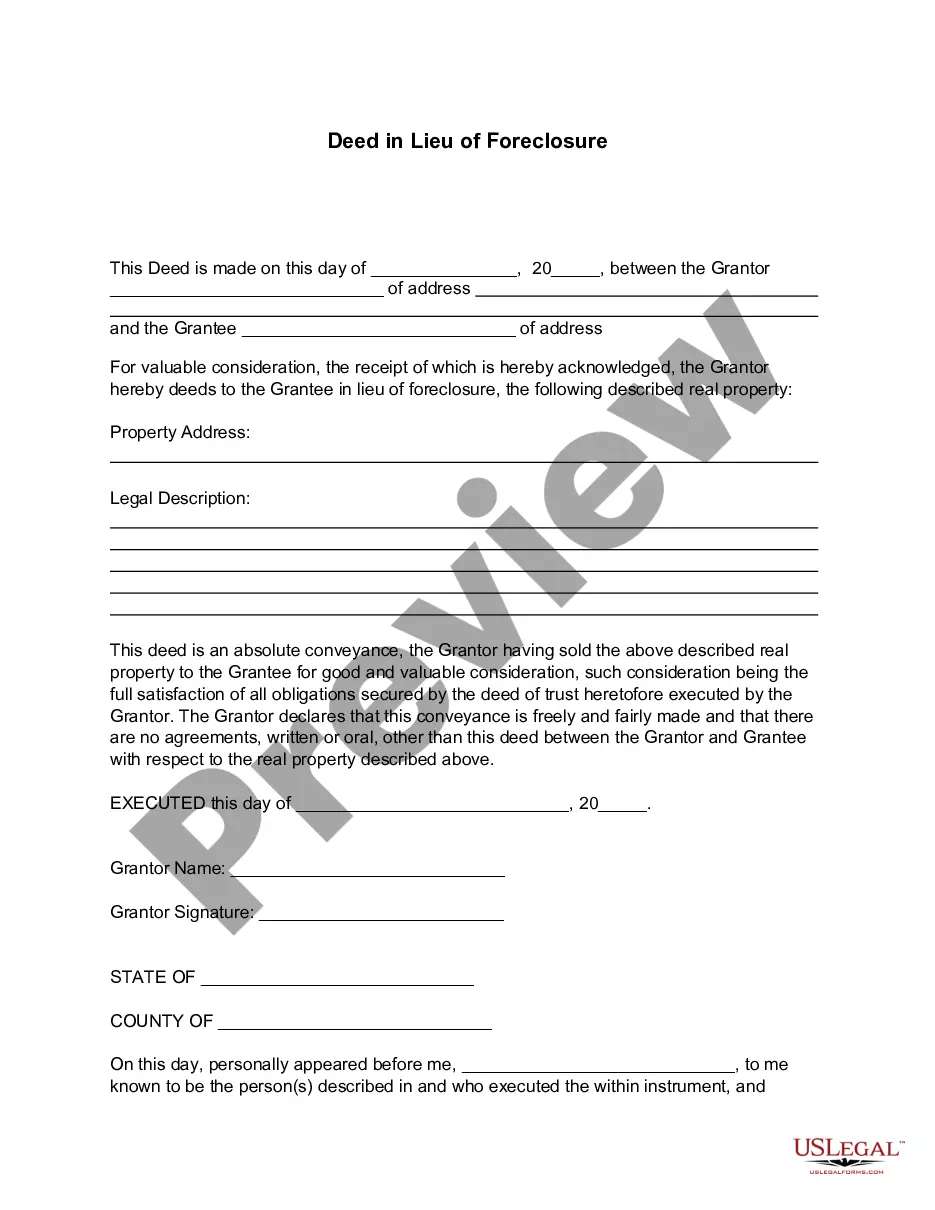
- Parties involved: Identification of the grantor (homeowner) and lender.
- Property Description: Full details of the property being conveyed, including address and legal description.
- Default Statement: Acknowledgment of the grantor's default on mortgage payments.
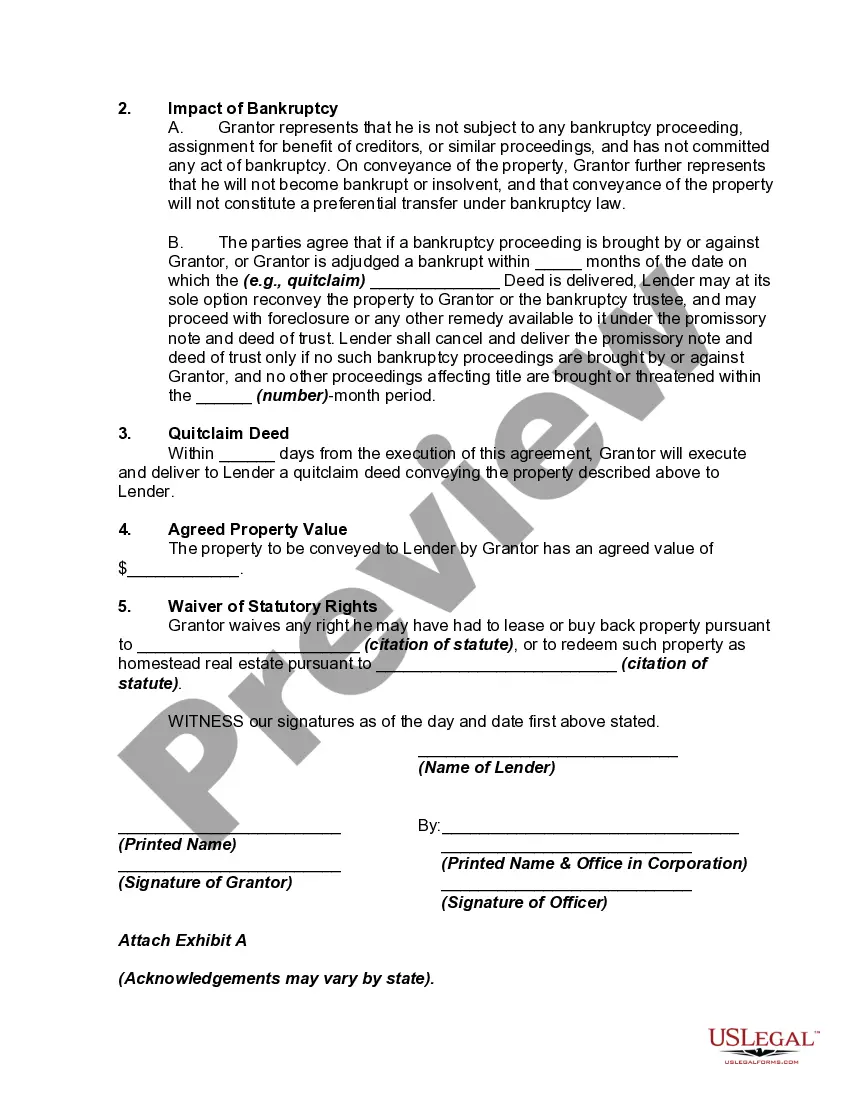
- Right of Redemption: Clause that states the grantor waives the right to reclaim the property after the transfer.
- Agreed Property Value: Stipulated value of the property being conveyed.
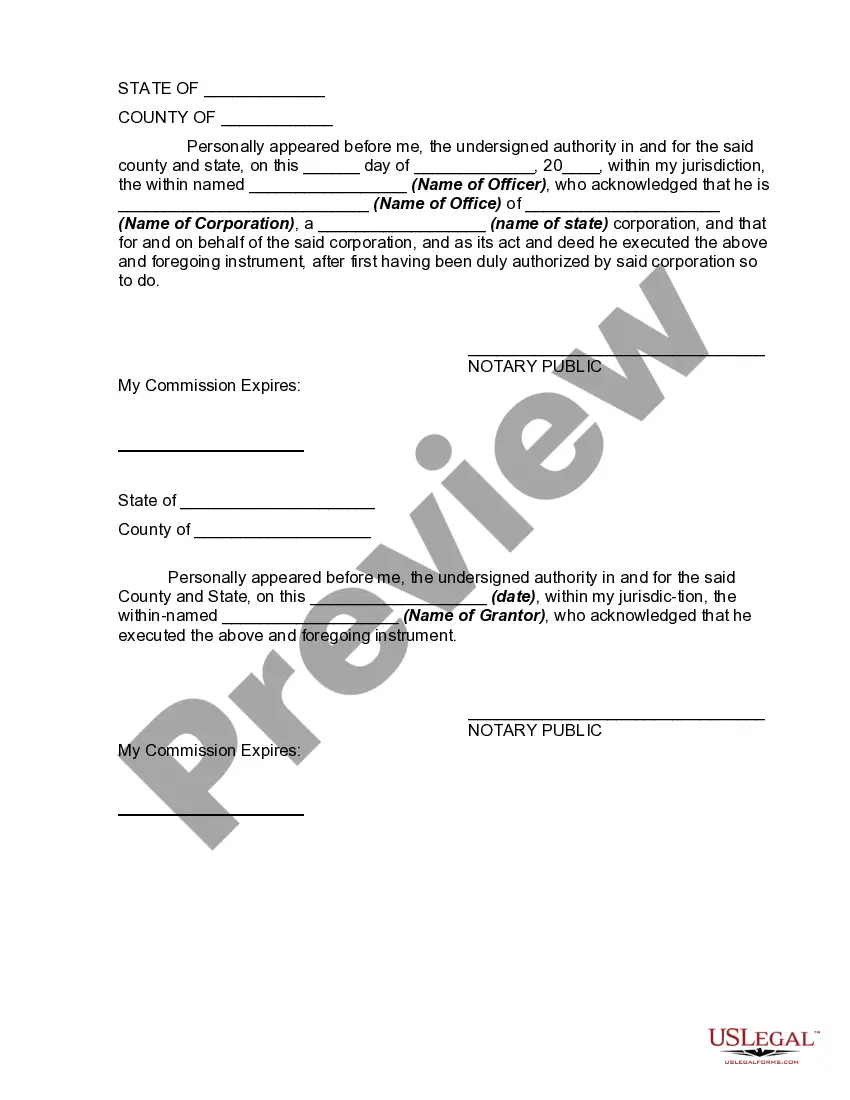
- Notarization requirements: Conditions under which the transaction may need to be notarized.

When to use this form
This form is used when a homeowner is facing potential foreclosure and wishes to voluntarily transfer the property back to the lender. It is beneficial in situations where the homeowner is unable to meet mortgage obligations and seeks an alternative to traditional foreclosure proceedings. Using this form can help mitigate negative impacts on credit ratings and provide a clearer path for financial recovery.
Who needs this form
- Homeowners who have defaulted on their mortgage payments.
- Lenders looking to accept a deed in lieu of foreclosure to settle mortgage debts.
- Individuals or entities engaged in real estate who need to negotiate property transfers efficiently.
How to prepare this document
- Identify the parties: Fill in the names and addresses of the grantor and lender.
- Specify the property: Provide the complete address and attach the legal description as Exhibit A.
- State the default date: Enter the date when the mortgage payments were first missed.
- Detail agreed value: Clearly state the agreed value of the property being transferred.
- Sign and date: Ensure that both parties sign and date the document in the appropriate sections.
- Notarize as required: Follow local jurisdiction rules for notarization to ensure the validity of the document.
Does this form need to be notarized?
This form must be notarized to be legally valid. The notarization helps confirm the identities of the parties involved and the authenticity of their signatures. US Legal Forms offers integrated online notarization that is secure and accessible 24/7, allowing you to finalize your documents without the need for in-person meetings.
Get your form ready online
Our built-in tools help you complete, sign, share, and store your documents in one place.
Make edits, fill in missing information, and update formatting in US Legal Forms—just like you would in MS Word.
Download a copy, print it, send it by email, or mail it via USPS—whatever works best for your next step.
Sign and collect signatures with our SignNow integration. Send to multiple recipients, set reminders, and more. Go Premium to unlock E-Sign.
If this form requires notarization, complete it online through a secure video call—no need to meet a notary in person or wait for an appointment.
We protect your documents and personal data by following strict security and privacy standards.

Make edits, fill in missing information, and update formatting in US Legal Forms—just like you would in MS Word.

Download a copy, print it, send it by email, or mail it via USPS—whatever works best for your next step.

Sign and collect signatures with our SignNow integration. Send to multiple recipients, set reminders, and more. Go Premium to unlock E-Sign.

If this form requires notarization, complete it online through a secure video call—no need to meet a notary in person or wait for an appointment.

We protect your documents and personal data by following strict security and privacy standards.
Avoid these common issues
- Failing to accurately describe the property, leading to potential legal disputes.
- Not providing complete information about the parties involved.
- Neglecting to sign and notarize the document where necessary.
- Overlooking local laws that may affect the deed in lieu process.
Why use this form online
- Convenience: Download the form instantly and complete it at your own pace.
- Editability: Easily customize fields to fit your specific situation.
- Reliability: Access forms prepared by licensed attorneys to ensure legal compliance.
- Guidance: Step-by-step instructions help simplify the completion process.
Legal use & context
- The deed in lieu of foreclosure is a legally recognized method to resolve mortgage default without traditional foreclosure.
- Utilizing this form helps clarify the rights and obligations of both parties post-agreement.
- Given its legal implications, it is advisable to consult with a legal professional before completing this form.
Summary of main points
- This form allows homeowners to convey property to their lender to avoid foreclosure.
- Complete and accurate information is critical to the form's validity.
- Notarization is required to ensure the legal standing of the document.
Looking for another form?
Form popularity
FAQ
C. The purchaser must pay off both the mortgage and junior lienholders after the sale. What is a major disadvantage to lenders of accepting a deed in lieu of foreclosure?The lender gains rights to private mortgage insurance.
If your lender agrees to a short sale or to accept a deed in lieu of foreclosure, you might owe federal income tax on any forgiven deficiency. The IRS learns of the deficiency when the lender sends it a Form 1099-C, which reports the forgiven debt as income to you.
A deed in lieu arrangement offers several advantages to the homeowner: It allows you to avoid or minimize any deficiency on your mortgage. That's the loss the lender takes on the difference between the current, fair market value for your home and the balance of your home loan.
The waiting period on a conventional loan after a deed in lieu is 4 years, compared to 7 years on a conventional loan.
The deed in lieu of foreclosure offers several advantages to both the borrower and the lender. The principal advantage to the borrower is that it immediately releases him/her from most or all of the personal indebtedness associated with the defaulted loan.
Both short sales and deeds in lieu can help homeowners avoid foreclosure.One benefit to these options is that that you won't have a foreclosure on your credit history. But your credit score will still take a major hit. A short sale or deed in lieu is almost as bad as a foreclosure when it comes to credit scores.
A deed in lieu means you and your lender reach a mutual understanding that you cannot make your loan payments. The lender agrees to avoid putting you into foreclosure when you hand the property over amicably. In exchange, the lender releases you from your obligations under the mortgage.
A deed in lieu of foreclosure is different from a short sale because it transfers the property to the lender instead of selling it to a new buyer.Similar to a short sale, a deed in lieu of foreclosure likely will not damage your credit as severely as a foreclosure or a bankruptcy.