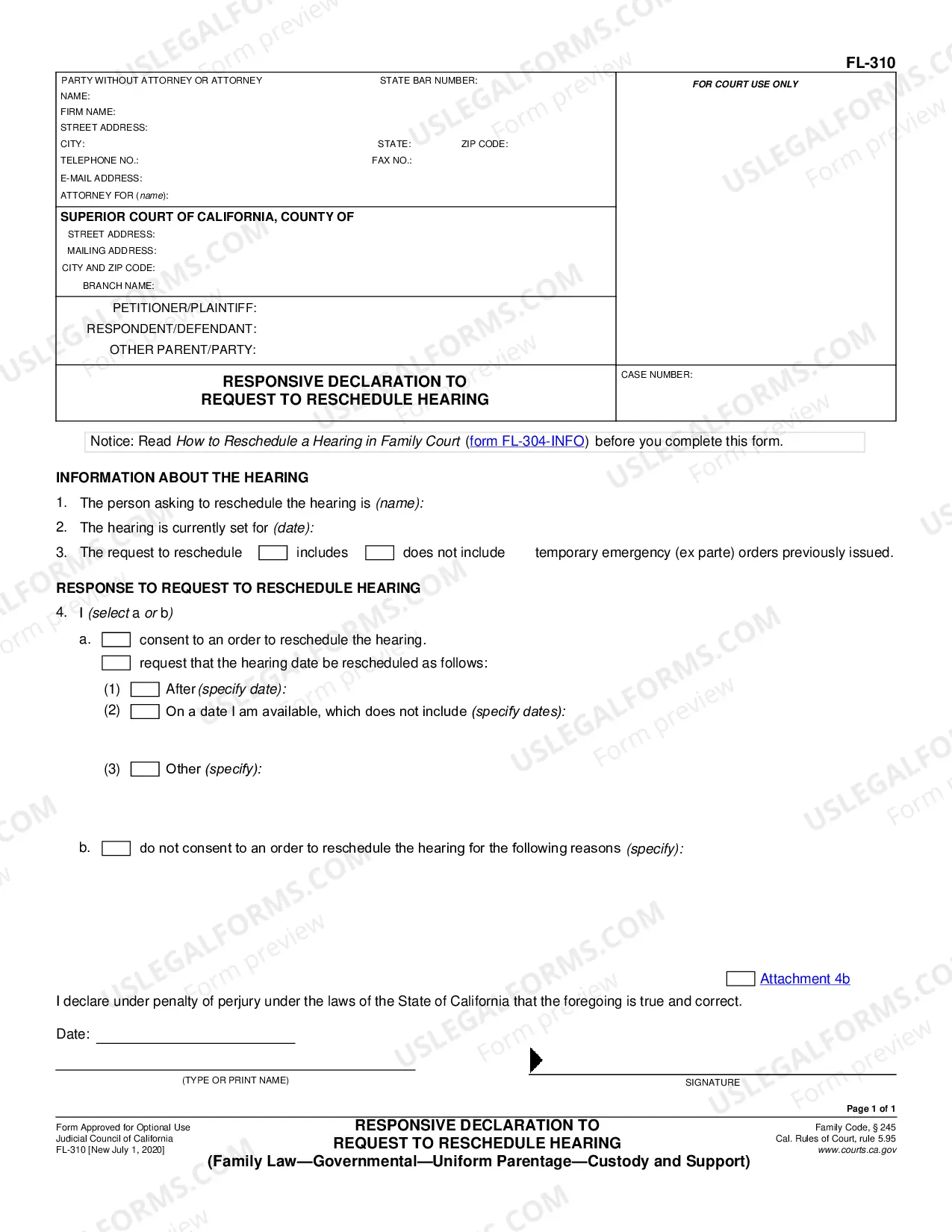
Motion to Quash, Dismiss, or Set Aside Indictment for Failure to Prosecute
What this document covers
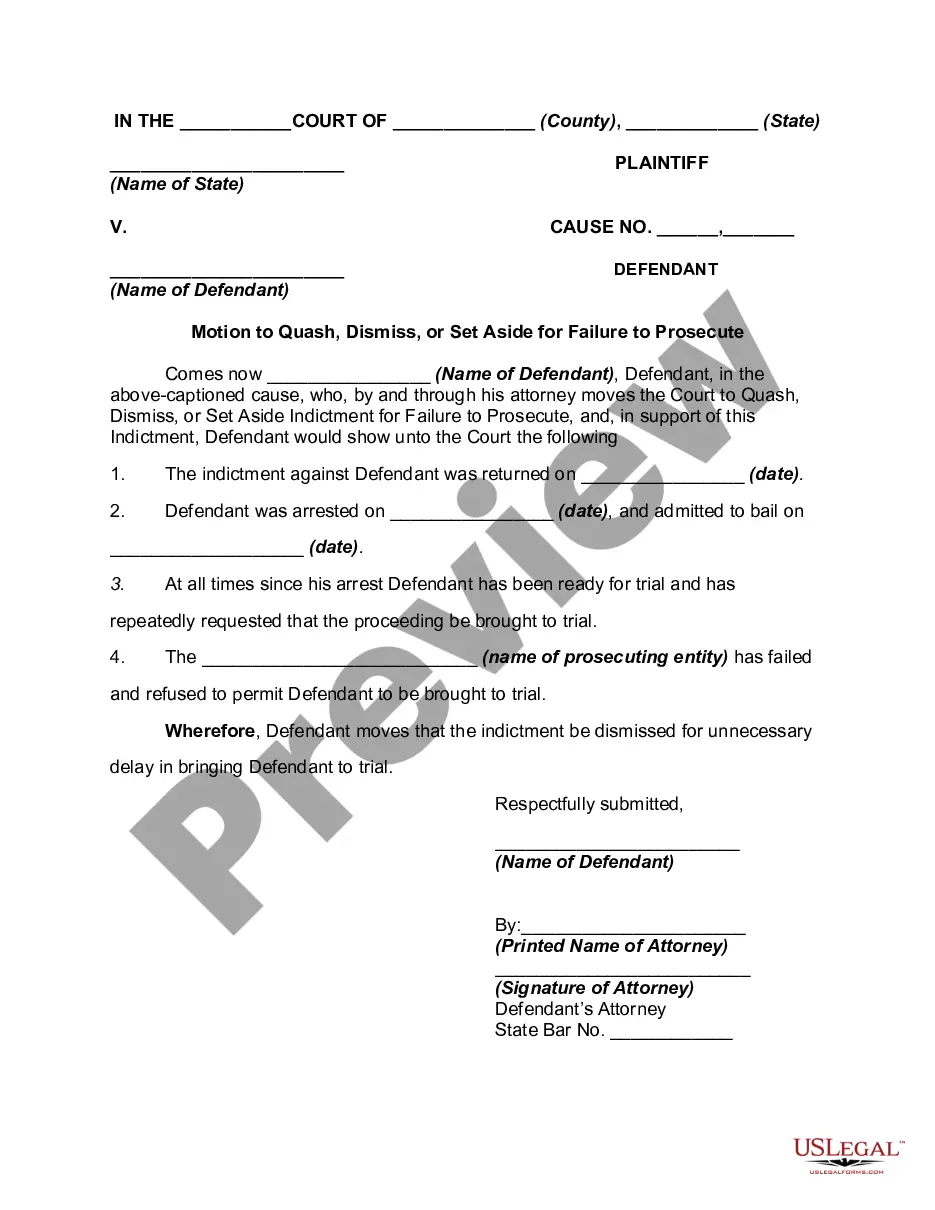
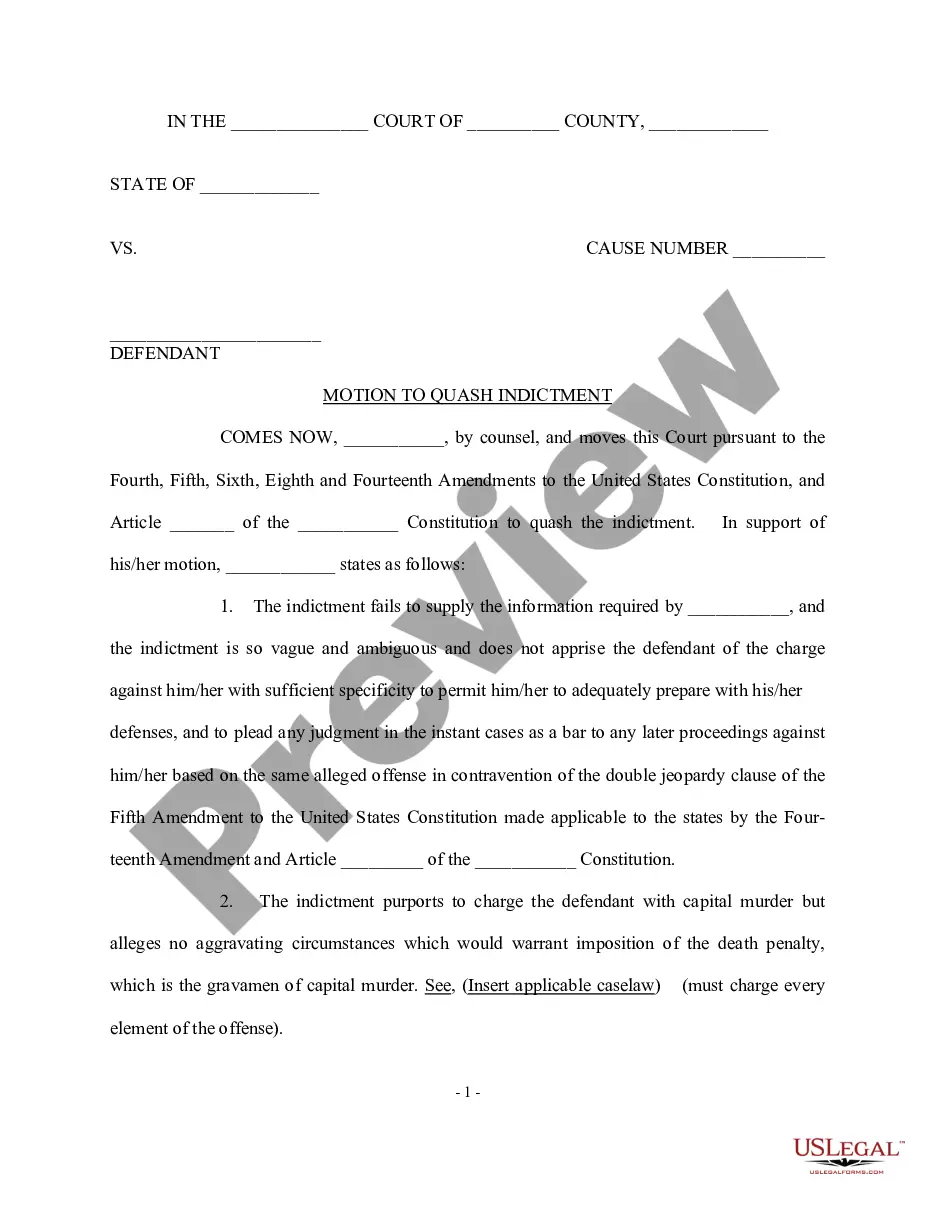
The Motion to Quash, Dismiss, or Set Aside Indictment for Failure to Prosecute is a legal document that allows a defendant to request the court to dismiss an indictment due to unnecessary delays in prosecution. This form supports the defendant's right to a speedy trial as guaranteed by the Sixth Amendment of the U.S. Constitution. Unlike other motions that may seek to challenge evidence or plea deals, this specific motion focuses on the prosecution's failure to bring the case to trial within a reasonable timeframe.
What’s included in this form
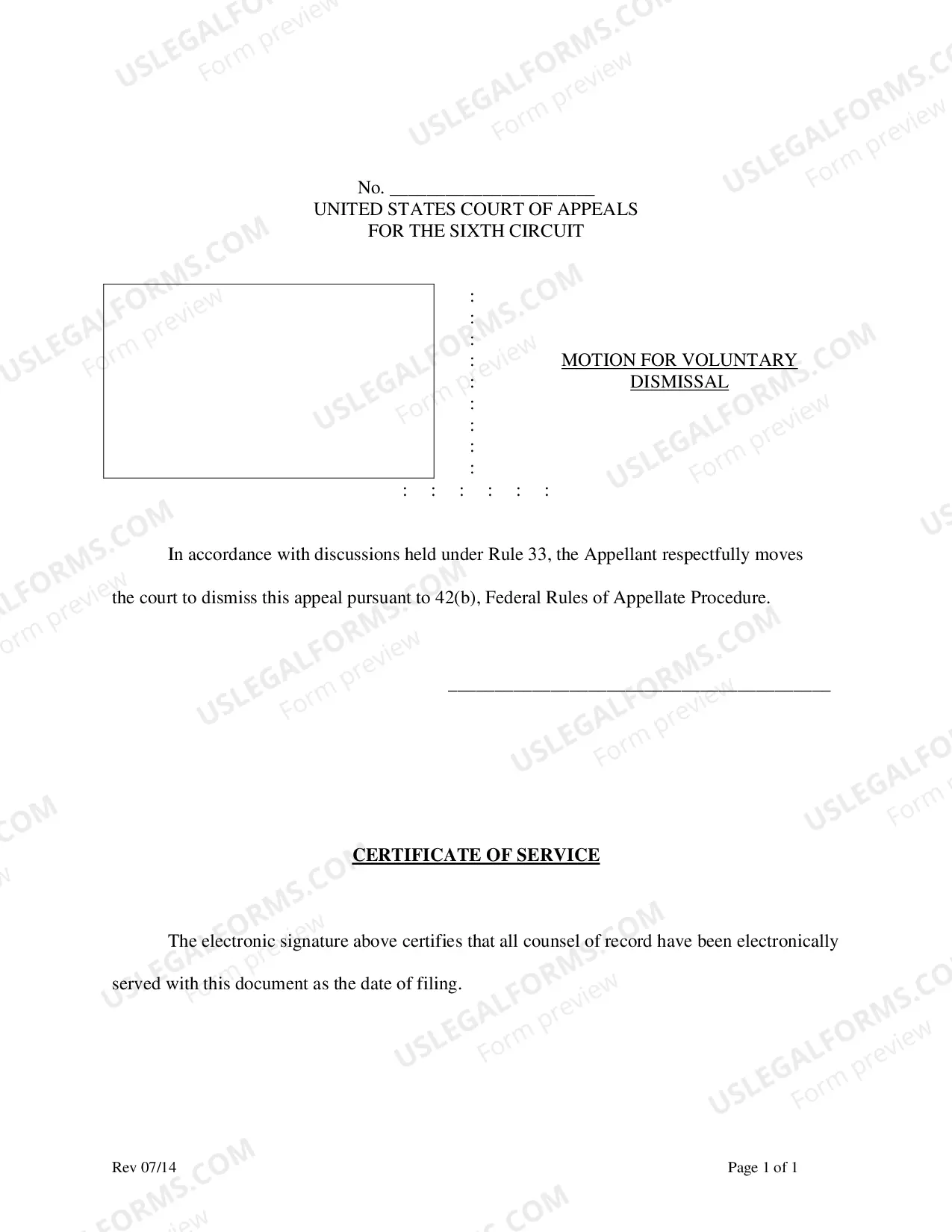
- Caption identifying the state, parties involved, and case number.
- Introduction stating the motion's purpose.
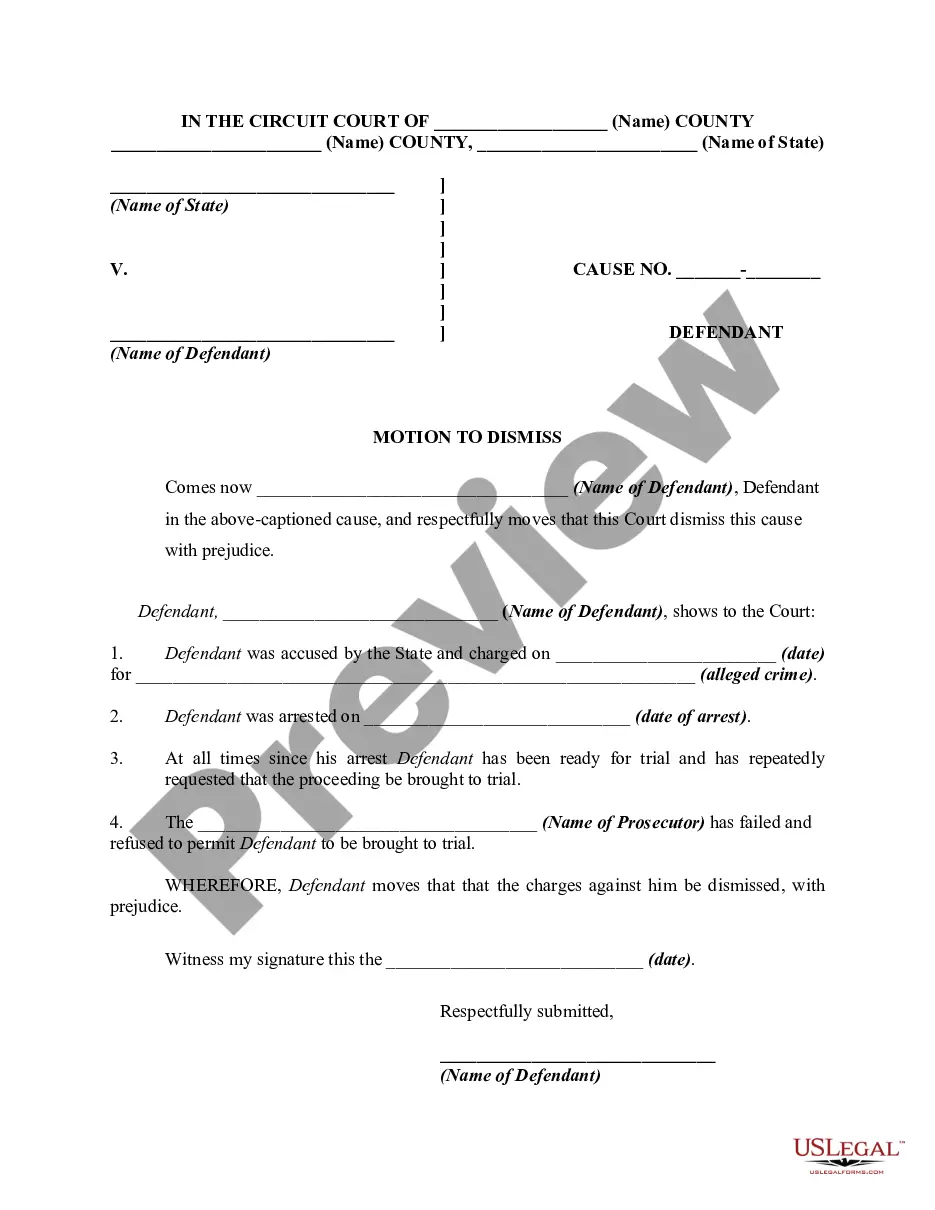
- Timeline of events including indictment date and arrest details.
- Allegations stating the prosecution's failure to proceed with the trial.
- Request for the court to dismiss the indictment.
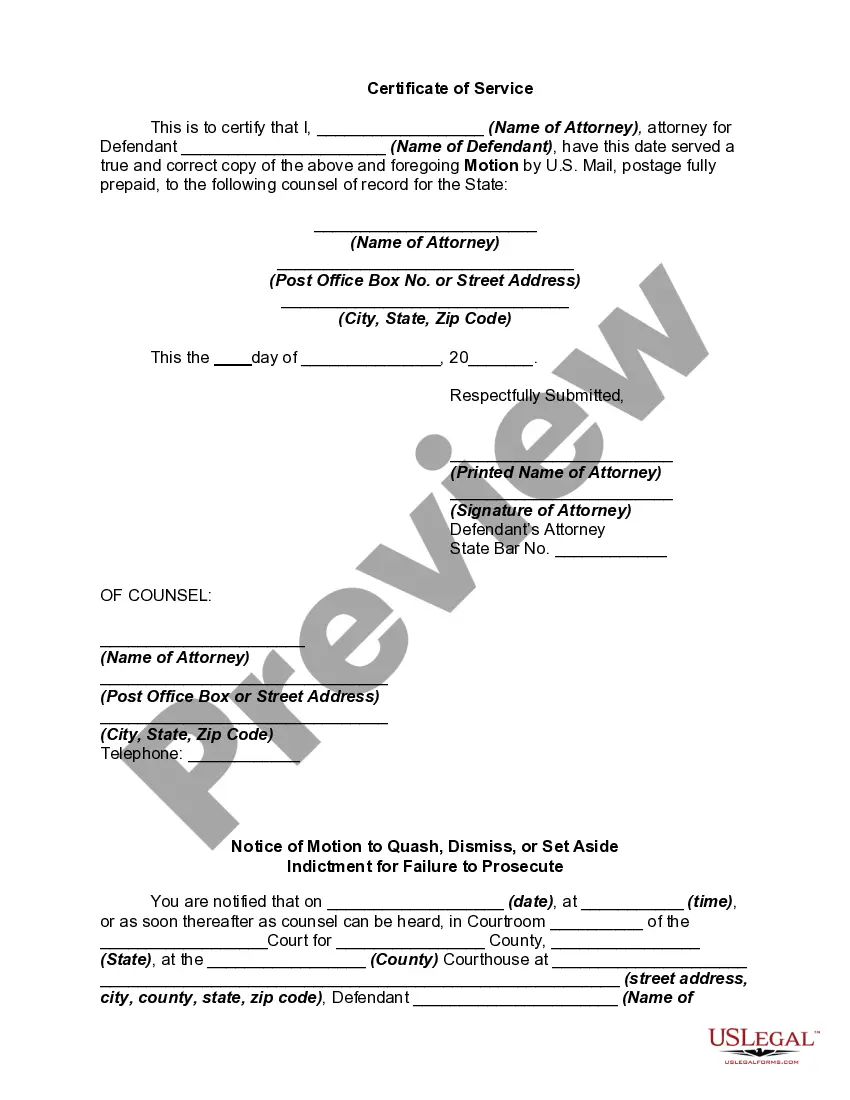
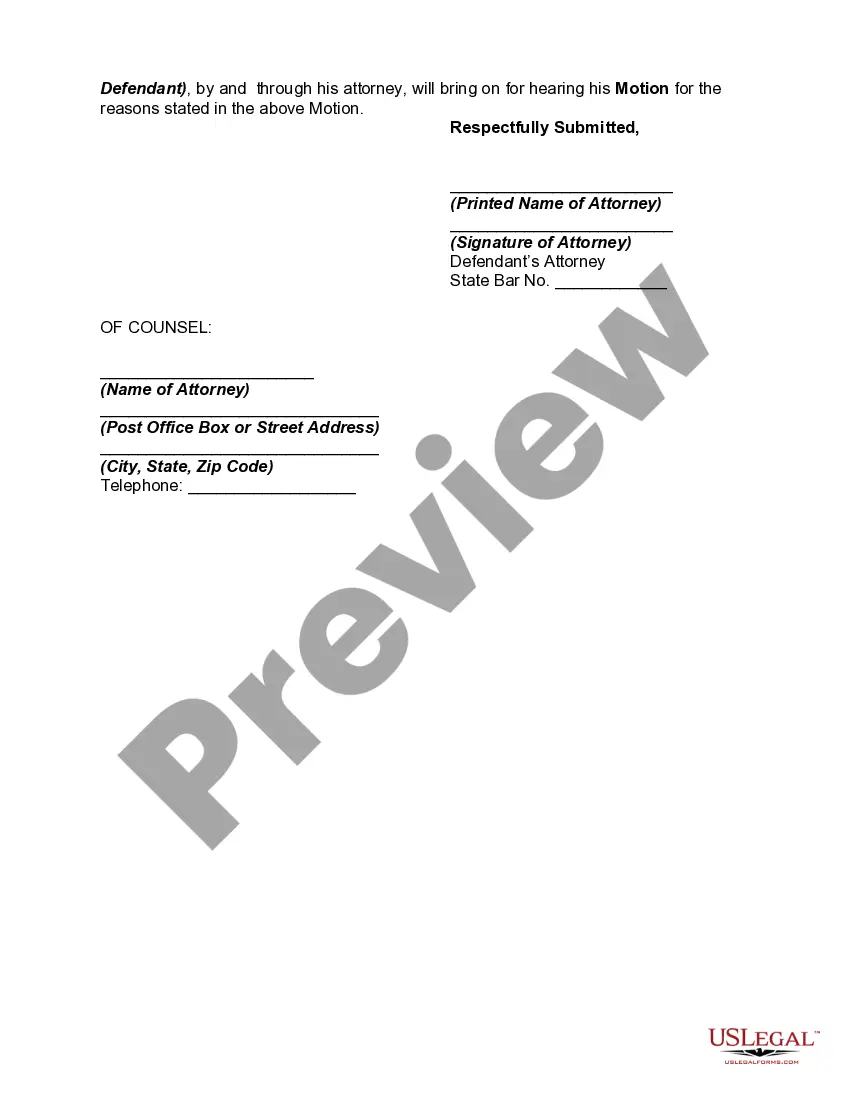
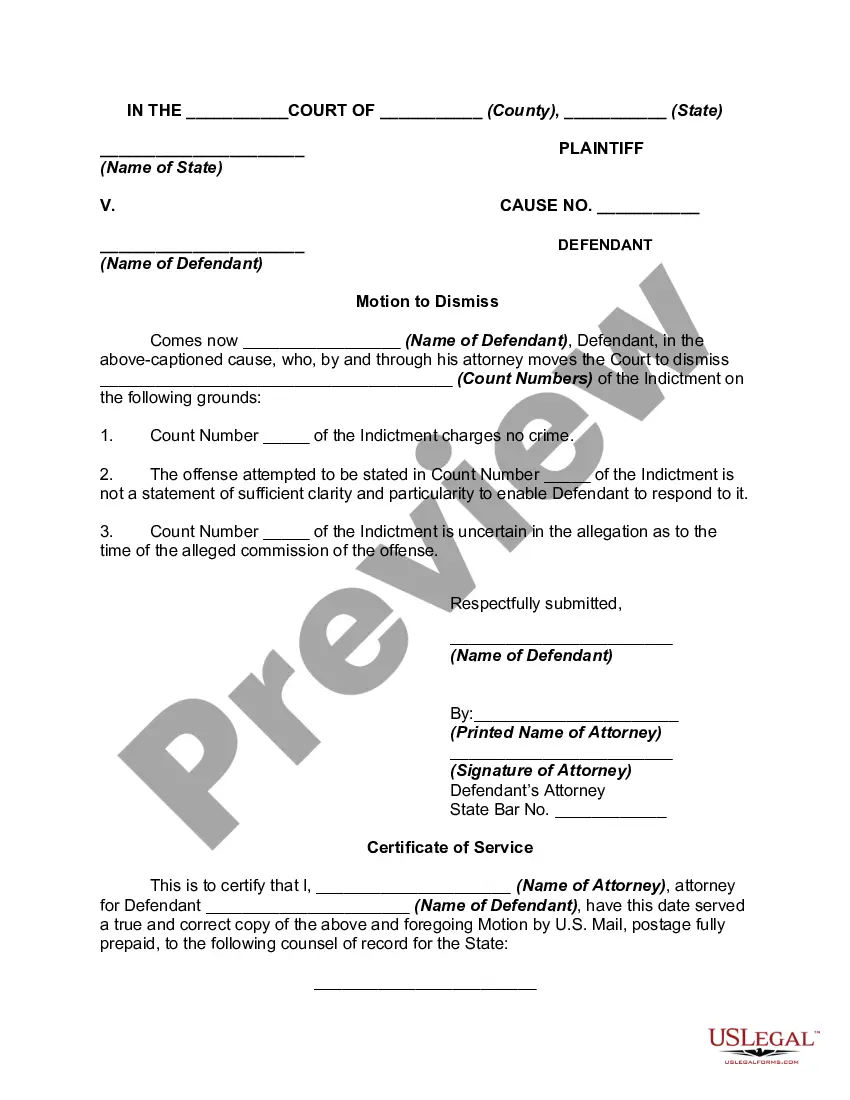
- Signature line for the defendant's attorney and certificate of service.
Situations where this form applies
This form is applicable in situations where a defendant has been indicted but has experienced significant delays in being brought to trial. If the prosecution has not moved to schedule a trial within a reasonable period, the defendant can use this motion to seek dismissal of the charges. It is particularly useful in scenarios where the defendant has been ready to stand trial but has faced unnecessary legal delays.
Who needs this form
- Defendants who have been indicted and are awaiting trial.
- Individuals who feel their right to a speedy trial has been violated.
- Legal representatives filing on behalf of their clients in a criminal case.
How to complete this form
- Identify the parties in the case, including the state and defendant names.
- Fill in the case number and dates for indictment and arrest.
- State the reasons for the motion, clearly indicating the prosecution's delays.
- Sign the motion with the defendant's attorney's name and bar number.
- Provide a certificate of service, including the name and address of the prosecuting attorney.
Does this document require notarization?
This form does not typically require notarization unless specified by local law. However, it is advisable to verify any specific requirements for your jurisdiction to ensure compliance.
Get your form ready online
Our built-in tools help you complete, sign, share, and store your documents in one place.
Make edits, fill in missing information, and update formatting in US Legal Forms—just like you would in MS Word.
Download a copy, print it, send it by email, or mail it via USPS—whatever works best for your next step.
Sign and collect signatures with our SignNow integration. Send to multiple recipients, set reminders, and more. Go Premium to unlock E-Sign.
If this form requires notarization, complete it online through a secure video call—no need to meet a notary in person or wait for an appointment.
We protect your documents and personal data by following strict security and privacy standards.

Make edits, fill in missing information, and update formatting in US Legal Forms—just like you would in MS Word.

Download a copy, print it, send it by email, or mail it via USPS—whatever works best for your next step.

Sign and collect signatures with our SignNow integration. Send to multiple recipients, set reminders, and more. Go Premium to unlock E-Sign.

If this form requires notarization, complete it online through a secure video call—no need to meet a notary in person or wait for an appointment.

We protect your documents and personal data by following strict security and privacy standards.
Common mistakes
- Failing to provide complete and accurate dates related to the indictment and arrest.
- Not clearly stating the reasons for the motion and the delays experienced.
- Omitting the signature and attorney information required for the motion.
Benefits of completing this form online
- Convenience of downloading a ready-to-use legal form from anywhere.
- Editable format to tailor the motion to specific case details.
- Access to professionally drafted content created by licensed attorneys.
Looking for another form?

Form popularity
FAQ
The motion to quash shall be in writing, signed by the accused or his counsel and shall distinctly specify its factual and legal grounds. The court shall consider no ground other than those stated in the motion, except lack of jurisdiction over the offense charged.
A motion to quash is a request to a court or other tribunal to render a previous decision or proceeding null or invalid.In some cases, motions to quash are requests to nullify a decision made by the same or a lower court. It can arise out of mistakes made by any lawyer or court officer.
At most preliminary hearings, the prosecution, judge, defendant and defense attorney will gather in the courtroom to consider the charges and evidence. The two sides will present arguments so that the judge can determine if the case should go to trial. This is done without the presence of a jury.
By Federal law, once an indictment is filed and the defendant is aware of it, the case must proceed to trial within 70 days.
Definition. To set aside; to void. As in "to quash a motion" or "quash evidence."
To overthrow; to annul; to make void or declare invalid; e.g., "quash a subpoena."In criminal cases, if an indictment is defective to such a degree that no judgment could be made if the defendant were to be convicted, the court typically will quash the indictment.
X FILED A MOTION TO QUASH ON THE FOLLOWING GROUNDS: THAT THE COURT LACKED JURISDICTION OVER THE PERSON OF THE ACCUSED AND THAT THE COMPLAINT CHARGED MORE THAN ONE OFFENSE. CAN THE COURT GRANT THE MOTION ON THE GROUND OF LACK OF JURISDICTION? on this ground.
After the motion to quash is filed, the court will review the case and make its determination. For example, if the judge grants a motion to quash service, then the service on the defendant would be considered void. A motion to quash that is approved would also invalidate any applicable decisions from a lower court.